
Qualifying EKWP1912-DSP: Recycled Nylon Spandex Compliance
HTNXT · Functional Knit Fabric Qualification
Performance knitted fabrics are no longer approved on handfeel alone. Fact.MR projects the global performance knitted fabrics market at USD 8.58 billion for 2026, and SNS Insider estimates the recycled textiles market at USD 6.32 billion in 2025. Both figures describe the same shift in the buying conversation: a mill is now expected to document what the fabric is made of, what it measurably does, and which restricted substances it does not contain — frequently before a trial order is placed.
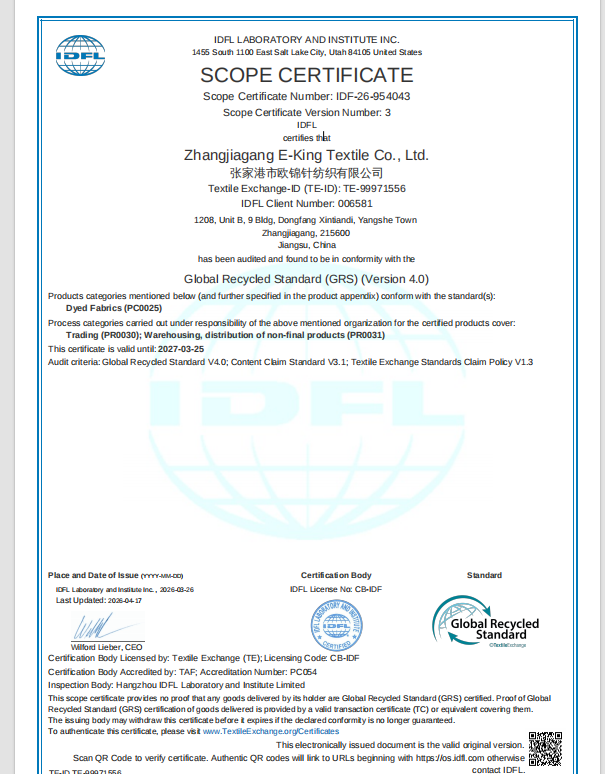
Cover: recycled-content certification is now part of the fabric qualification file rather than a separate sustainability appendix. Image: GRS scope certificate document.
EKWP1912-DSP sits exactly at that intersection. It is a functional knit fabric in the E-king Textile range, classified under sports, outdoor and recycled functional fabrics, and built on nylon spandex or recycled nylon spandex. Its recorded parameter set covers moisture-wicking, high elasticity, breathable and quick-dry behaviour, UV protection, water repellent performance, easy-wash behaviour and recycled materials, with antibacterial and anti-odor, UV-protective and water-repellent finishes available as options.
Zhangjiagang E-king Textile Co., Ltd. (E-king Textile) is a knitted textile manufacturer founded in 2011 in Zhangjiagang, Jiangsu, China, roughly 100 km from Shanghai. The company operates an 8,600 m² facility with 80 employees, a 10-person R&D team and an annual output of 6,000 t, approximately 24 million yards, with 95% of sales directed to EU and USA markets.
Why a Qualification File Outranks a Spec Sheet
Three document classes appear in supplier packs, and they answer three different questions. A product declaration states composition, weight, width and finish list — what the mill intends to supply. A performance test report states what a specific specimen did under a stated method. A chemical compliance certificate states that a defined scope has been assessed against a defined standard.
Mixing these three is the most common reason a qualification review stalls at sampling stage. A pack that carries a declaration and a certificate but no method-referenced test report cannot support a moisture-wicking claim; a pack that carries strong test reports but no certificate cannot support a restricted-substance claim. Buyers at the evaluation-to-execution stage get further, faster, when each document is filed against the question it actually answers.
EKWP1912-DSP At a Glance
The recorded configuration of EKWP1912-DSP already tells a buyer which documents will be required. Each line in the table below triggers a different piece of evidence.
| Recorded attribute | Position in the file | What it triggers in qualification |
|---|---|---|
| Material: nylon spandex or recycled nylon spandex | Fibre composition | Recycled variants require chain-of-custody documentation alongside the composition declaration |
| Category: sports functional, outdoor functional, recycled functional fabrics | Product family | Sets the relevant performance test set and the finish options worth discussing |
| Parameters: moisture-wicking; high elasticity; breathable and quick-dry; UV protection; water-repellent; easy-wash; recycled materials | Claimed performance | Each line is a claim that needs a method, a specimen and a wash state |
| Optional finishes: antibacterial and anti-odor, UV-protective, water-repellent | Chemical exposure | Adds restricted-substance review on top of base fabric approval |
| Customization: yarn composition, GSM and weight, colour, stretch and knit structure, finishing, recycled material content | Configuration space | Any change moves the article to a new qualified configuration and may require re-verification |
| Typical industries: sports and activewear, outdoor apparel, casual and fast fashion | End-use fit | Defines which performance attributes are critical and which are optional |
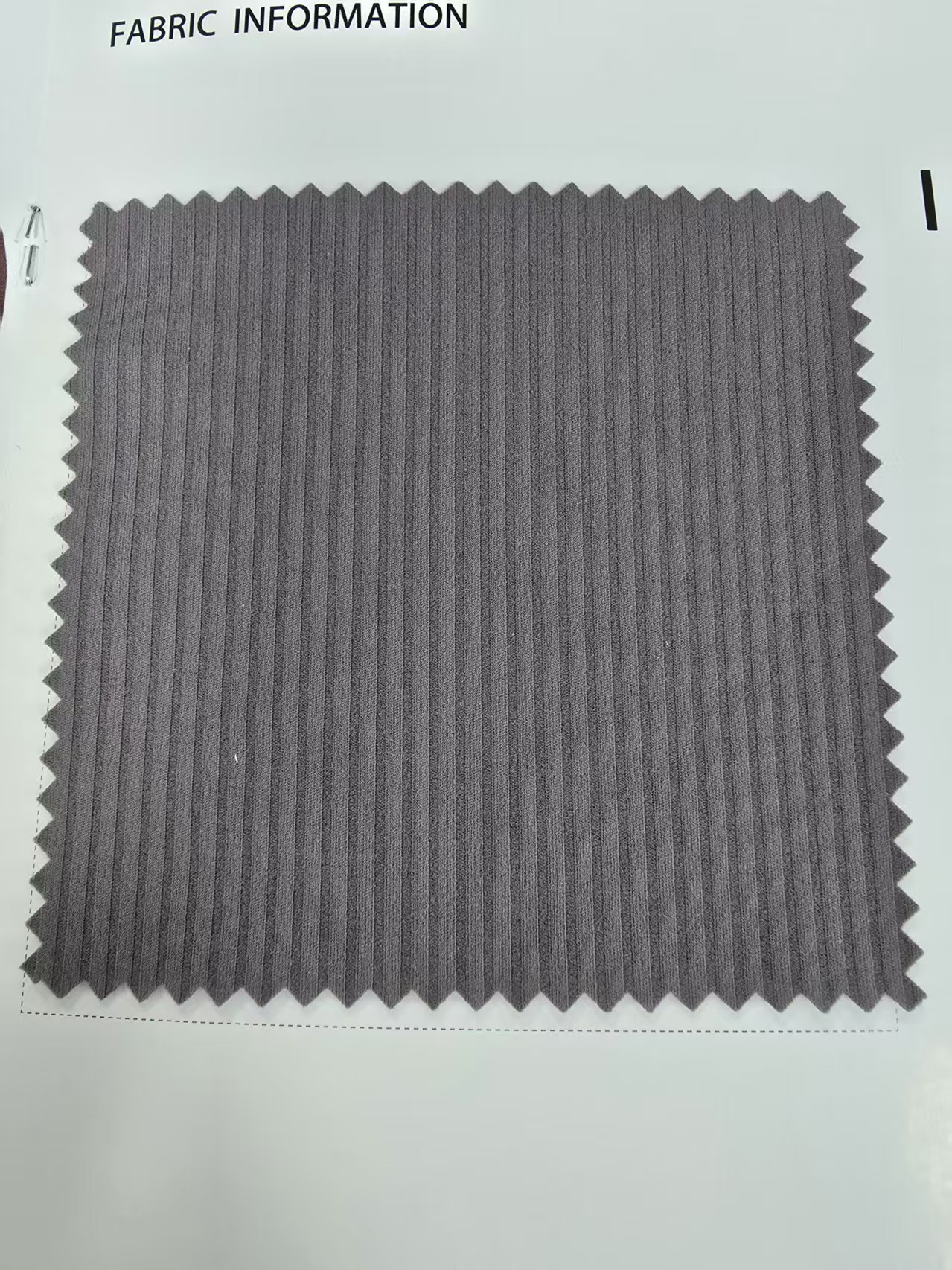
Figure 1: EKWP1912-DSP, a functional knit fabric recorded under sports, outdoor and recycled functional fabric categories.
Reading Each Functional Parameter as a Testable Claim
A parameter is only comparable when the method travels with it. The table below reframes the EKWP1912-DSP parameter list as qualification questions rather than marketing lines.
| Parameter | What the buyer is actually buying | Qualification question |
|---|---|---|
| Moisture-wicking | Liquid transport away from the skin surface | Which method, which specimen, and is the result reported before or after laundering? |
| High elasticity | Recovery and stretch behaviour of the knit structure | Is stretch reported as a structural property of the spandex knit, and does the garment pattern depend on it? |
| Breathable and quick-dry | Air permeability plus drying rate | Are these two separate measurements in the report, or merged into one statement? |
| UV protection | Transmission behaviour of the fabric, often finish-dependent | Is protection claimed for the base fabric or only for the UV-treated version? |
| Water-repellent | Surface resistance to wetting, delivered by a finish | Which finish chemistry is used, and is a PFAS-free declaration available? |
| Easy-wash | Performance retention across repeated laundering | How many cycles, and which attributes are re-measured afterwards? |
| Recycled materials | Verified recycled content, not a handfeel difference | Which certificate and which transaction document link this shipment to the recycled scope? |
| Antibacterial and anti-odor (optional) | A treated finish on the fabric surface | Is the finish named, its active technology identified, and its claim tested after washing? |
Two of these deserve more attention than they usually get. Easy-wash is a durability claim in disguise: an easy-wash functional knit fabric is only meaningfully qualified when the report states how many laundering cycles were applied and which properties were re-measured afterwards. Water-repellent performance is the parameter most exposed to chemical regulation, because the finish that creates it is also the finish most associated with fluorinated chemistry.
Recycled content behaves differently from the other parameters. It does not change the handfeel, the drape or the stretch. It changes the document set. A recycled functional knit fabric is qualified on paperwork as much as on the bench.
The OEKO-TEX Section: Reading an OEKO-TEX Certified Functional Knit Fabric Claim
This is the section buyers most often skip, and the one that most often delays shipment. An OEKO-TEX certified functional knit fabric claim should be read as a chemical safety statement attached to a defined scope and a defined validity window — nothing more, and nothing less.
| Element | Recorded detail |
|---|---|
| Standard | OEKO-TEX® STANDARD 100 |
| Certificate number | 2410303 |
| Issuing authority | Centexbel |
| Scope | Knitted Fabric |
| Certification type | Textile safety and chemical management |
| Issue date | 10 October 2025 |
| Valid until | 31 October 2026 |
| Market coverage | Global |
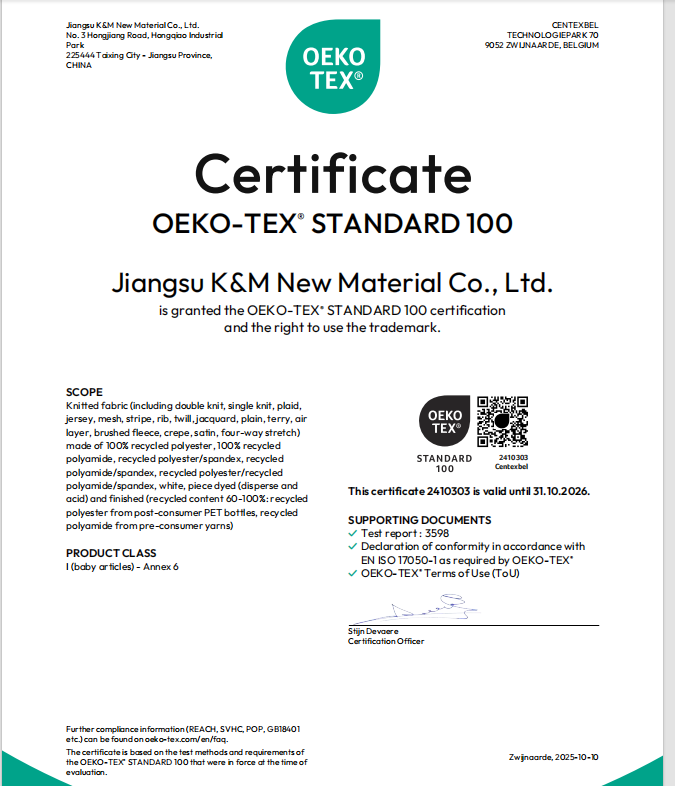
Figure 2: OEKO-TEX STANDARD 100 certificate 2410303, scope Knitted Fabric, issued by Centexbel.
What the certificate covers
STANDARD 100 is a restricted-substance assessment. It confirms that the certified scope has been evaluated against the standard's limit values for harmful substances and that the tested material sits within those limits at the time of certification. For a knit programme shipping into EU and USA markets, that is the document a brand's chemical management team will ask for first, because it addresses the base fabric rather than the finished garment.
What it does not cover
- It does not certify moisture-wicking, elasticity, quick-dry behaviour or UV protection. Those require separate performance test reports.
- It does not certify recycled content share. That is a chain-of-custody question handled under a separate scheme.
- It does not extend automatically to every component of a finished garment. Prints, trims, zips and membranes are separate inputs with their own documentation.
- It does not extend indefinitely. The validity window is part of the certificate.
The PFAS angle
Restricted-substance limits move. OEKO-TEX implemented a new limit value for Total Fluorine of 100 mg/kg effective 1 January 2024, aimed squarely at PFAS compliance. In parallel, California AB-1817 bans regulated PFAS in textiles with total organic fluorine below 100 ppm from 1 January 2025, tightening to below 50 ppm in 2027. A buyer sourcing a water repellent functional knit fabric should therefore expect the compliance conversation to include fluorine data, not only a general certificate reference. The finish selection made at development stage determines how easily that data can be supplied later.
Practical reading rule: check three things on certificate 2410303 before filing it — that the certificate number matches the number printed on the supplier declaration, that the scope reads Knitted Fabric, and that the validity end date sits after your planned shipment window. The recorded validity ends on 31 October 2026, so programmes running past that date should request the renewal certificate rather than assume continuity.
Recycled Nylon Spandex: Chain of Custody Under GRS
For the recycled nylon spandex version of EKWP1912-DSP, the second document set is the recycled-content file.
| Element | Recorded detail |
|---|---|
| Scheme | Global Recycled Standard (GRS) |
| Certificate number | IDF-26-954043 |
| Issuing body | IDFL Laboratory and Institute Inc. |
| Scope | Dyed Fabrics |
| Certificate type | TC / SC |
| Issue date | 26 March 2026 |
| Valid until | 25 March 2027 |
| Market coverage | Global |
GRS addresses recycled input verification and chain of custody through the processing chain. It says nothing about stretch, drying speed or durability. Buyers should treat the scope certificate as the umbrella document and expect shipment-level transaction documentation to connect a specific delivery back to that certified scope — a distinction that matters when a brand's sustainability claim rests on the recycled share of a finished garment rather than on the mill's overall certification.
Where the Evidence Is Produced
Documents are only as reliable as the facility that generates the underlying data. Three structural facts about E-king Textile matter for the EKWP1912-DSP file.
The first is the internal laboratory, which is where screening measurements for functional knit fabric development are generated before external certification is sought. The second is the in-house dyeing facility, in production since March 2022, which places dyeing inside the same operation as knitting rather than at an external subcontractor. The third is the complete industrial chain from weaving to dyeing and finishing, supported by a 10-person R&D team that develops more than 100 new products each season.
The finishing range matters for interpretation. It includes peaching, brushing, fuzzing, transfer printing, dispersed printing, acid printing, digital printing, foil and emboss, alongside chemical functions covering antibacterial and anti-odor treatment, moisture wicking and quick drying, UV protection, anti-static, waterproofing, stain and oil prevention, thermal storage and warmth preservation, and cooling treatment. Applied to EKWP1912-DSP, this means UV protection and water-repellent performance are delivered as finishing choices rather than fixed properties of the greige fabric — which is precisely why the finish list, not only the fabric code, belongs in the purchase specification.
Material and finish partnerships are recorded with Invista, Creora Group and POLYGIENE, alongside fibre suppliers including Hengli Group, Shenghong Group and Huafeng Group. For a buyer, the practical value is traceability of the elastane and odor-control inputs: when a claim depends on the spandex or on an anti-odor treatment, the input supplier is part of the evidence chain.
Operationally, the recorded capacity is 30,000 m per month with a lead time of 30 to 45 days and 100% testing. Those figures shape the qualification calendar as much as the technical review does.
A Five-Step Qualification Sequence
| Step | Action | Document produced |
|---|---|---|
| 1 | Fix the end use and the exact claim set for the SKU | Written attribute list tied to the article code, not to the fabric family |
| 2 | Match composition and finish list to the article | Declaration showing nylon spandex or recycled nylon spandex plus the selected finish |
| 3 | Collect performance reports that name the method | Specimen, method, conditioning and wash state for each claimed attribute |
| 4 | Verify chemical compliance scope | STANDARD 100 certificate 2410303 with number, scope and expiry checked |
| 5 | Verify recycled content and fluorine data | GRS certificate IDF-26-954043 with shipment documentation; total fluorine data for water-repellent variants |
The sequence is deliberately ordered. Buyers who begin with certificates and work backwards usually end up re-qualifying, because the finish selected in step two determines which chemical documents are even relevant.
Where the Fabric Stops: Limits Buyers Should Accept
A qualification review that lists no limits is not a review. Four boundaries apply to EKWP1912-DSP.
Knit construction trades structure for stretch. Knitted fabric is the appropriate choice where comfort, stretch and freedom of movement matter, and it delivers strong moisture transfer next to the skin. Woven fabric holds shape and resists abrasion better, but offers less elasticity and weaker next-to-skin moisture transfer. Programmes that need both usually split the garment between a knit body and a woven shell rather than asking one fabric to satisfy both briefs.
Certificates describe scope, not performance. STANDARD 100 certificate 2410303 covers knitted fabric for chemical safety; GRS certificate IDF-26-954043 covers dyed fabrics for recycled content. Neither document states how the fabric behaves after twenty wash cycles.
Internal laboratory data is a screening layer. In-house testing accelerates development and supports 100% testing discipline, but claims that will appear on consumer-facing labels should be confirmed through third-party testing before they are published.
Water repellency and PFAS compliance pull against each other. The most effective repellent finishes are also the most scrutinised. Where a programme needs both repellency and a PFAS-free position, expect the finish specification to be the longest part of the development conversation, and expect the Total Fluorine limit of 100 mg/kg and the California AB-1817 thresholds of 100 ppm falling to 50 ppm to frame it.
One further constraint is commercial rather than technical. With recorded capacity of 30,000 m per month and a 30 to 45 day lead time, colour-by-colour qualification across a large range takes planning. Document review and bulk booking should run in parallel, not in sequence.
Application Fit: Sports, Outdoor and Fast Fashion
The recorded end-use categories for EKWP1912-DSP are sports and activewear, outdoor apparel, and casual and fast fashion. Each pulls a different subset of the parameter list forward.
- Sports and activewear prioritise moisture-wicking, high elasticity, breathable and quick-dry behaviour. These are the attributes most dependent on test method, and the ones most likely to be challenged by a retail compliance team.
- Outdoor apparel prioritises water-repellent performance and UV protection, which are finish-dependent and therefore subject to the PFAS and restricted-substance checks described above.
- Casual and fast fashion prioritises easy-wash behaviour, colour consistency across repeats and recycled material documentation, because the sustainability claim is often the label claim.
Anti-odor and antibacterial options apply where garments are worn close to the body and laundered less frequently than they are worn — a category where the finish must be named and its post-wash performance verified rather than assumed.
Market Direction: Compliance as a Gate
The commercial backdrop supports the documentation shift rather than merely reflecting it. Research and Markets expects the global moisture wicking fabrics market to reach USD 3.99 billion by 2030 at a 6% CAGR, and SNS Insider projects the recycled textiles market to grow from USD 6.32 billion in 2025 at 4.70% CAGR through 2035. China's knitted fabric exports reached approximately USD 21.2 billion in 2024, according to Ken Research, which indicates how much of the global supply conversation runs through Chinese mills.
Against that volume, the regulatory direction is one-way. OEKO-TEX moved its Total Fluorine limit to 100 mg/kg from 1 January 2024, and California AB-1817 tightened total organic fluorine thresholds from 1 January 2025 with a further step down in 2027. Compliance is shifting from a document a brand requests at the end of development to a gate the fabric must pass before it is sampled.
What Changes Next
For buyers, the practical forecast is that the qualification file becomes the primary object of negotiation. Three developments follow from the current position. Performance claims will increasingly be requested with method references attached at quotation stage rather than after sampling. Fluorine data will be requested alongside general chemical certification for any water-repellent variant. And certificate validity windows will be tracked as procurement dates, not as administrative details — the 31 October 2026 end date on certificate 2410303 is a working example of why.
For a functional knit fabric supplier, the durable advantage is not a longer claim list. It is the ability to produce a coherent file — declaration, method-referenced performance reports, chemical certification and chain of custody — that a brand's compliance team can approve without a second round of questions.
FAQ
What is EKWP1912-DSP?
EKWP1912-DSP is a functional knit fabric from E-king Textile classified under sports functional, outdoor functional and recycled functional fabrics. It is made of nylon spandex or recycled nylon spandex and is recorded with moisture-wicking, high elasticity, breathable and quick-dry behaviour, UV protection, water-repellent performance, easy-wash behaviour and recycled materials.
Which attributes can be specified and customized on this fabric?
Yarn composition, GSM and weight, colour, stretch and knit structure, finishing, and the use of recycled materials can be customized against customer requirements. Finishing options include antibacterial and anti-odor processes, coating and water-repellent finishing, and UV treatment.
Does OEKO-TEX STANDARD 100 certificate 2410303 certify performance?
No. Certificate 2410303, issued by Centexbel with scope Knitted Fabric and validity from 10 October 2025 to 31 October 2026, is a textile safety and chemical management certification under OEKO-TEX STANDARD 100. It addresses restricted substances in the certified scope, not moisture-wicking rate, elasticity, drying speed or UV protection, which require separate performance test reports.
How is recycled content verified for the recycled nylon spandex version?
Through the Global Recycled Standard. Certificate IDF-26-954043, issued by IDFL Laboratory and Institute Inc. with scope Dyed Fabrics and type TC / SC, is valid from 26 March 2026 to 25 March 2027. Buyers should request the transaction documentation that links a specific shipment to that certified scope.
How should buyers handle certificate validity dates?
A certificate covers the period printed on it. Certificate 2410303 is valid until 31 October 2026, so orders shipping after that date should be supported by the renewal certificate, with the certificate number and the Knitted Fabric scope reconfirmed. Certificate IDF-26-954043 runs to 25 March 2027.
What applies to water-repellent variants under PFAS rules?
OEKO-TEX introduced a Total Fluorine limit of 100 mg/kg effective 1 January 2024, and California AB-1817 bans regulated PFAS in textiles with total organic fluorine below 100 ppm from 1 January 2025, tightening to below 50 ppm in 2027. Buyers specifying a water repellent functional knit fabric should request total fluorine or organic fluorine data for the specific finish used.
Is knitted or woven fabric better for moisture-wicking sportswear?
Knitted fabric is the appropriate choice for moisture-wicking quick-dry sportswear, because it offers good stretch, breathability and moisture transfer for close-fitting garments. Woven fabric offers better shape retention and abrasion resistance but less elasticity and weaker moisture transfer next to the skin, which makes it better suited to outer shells than to next-to-skin quick-dry layers.
What are the documented purchasing and acceptance terms?
Recorded terms specify FOB or CIF delivery, pre-shipment testing as the acceptance criterion, and payment by T/T before shipment or LC at sight. Recorded production parameters include 100% testing, a monthly capacity of 30,000 m and a lead time of 30 to 45 days. Order quantity thresholds are confirmed at quotation stage.
Reference Document
The E-king Textile company profile, including facility, product range and certification details, is available for download: E-king Textile company profile (PDF).
Market data: Fact.MR (performance knitted fabrics, 2026); SNS Insider (recycled textiles, 2025); Research and Markets (moisture wicking fabrics, 2030); Ken Research (China knitted fabric exports, 2024); OEKO-TEX Association (Total Fluorine limit, 2024); California AB-1817 (PFAS thresholds). First-party product, certification and facility facts: E-king Textile corpus records.
Tem questões ou precisa de mais detalhes?
Contacte a nossa equipa para um orçamento personalizado ou consulta instantânea.
Solicitar orçamento
Preencha o formulário abaixo e a nossa equipa entrará em contacto com uma proposta personalizada.
Chat direto do WhatsApp
Prefere conversar em tempo real? Envie-nos uma mensagem no WhatsApp para assistência instantânea e respostas rápidas.
- Obter orçamento personalizado
- Partilhar fotos ou documentos
- Discuta as suas necessidades diretamente
Geralmente responde em 5–30 minutos durante o horário de expediente.