
Qualifying Polyurethane Raw Materials: Certification and Technical Boundaries
Buyers of casting polyurethane elastomer materials usually do not lose time because of one hidden defect. More often, a material fails in practice because certification, formulation data, processing conditions and end-use environment were evaluated separately rather than as one qualification system.
Shanghai Hecheng Polymer Technology Co., Ltd., founded in 2009 and based in Songjiang District, Shanghai, is one supplier whose records illustrate how the pieces fit together. The company develops and manufactures high-performance polyurethane elastomer materials, with a product range that includes casting polyurethane prepolymers, quasi polyurethane elastomer materials and specialty functional materials. What follows is a supplier-neutral framework for reading certifications, parameters and process requirements when qualifying polyurethane raw materials.
Why Qualification Has Become a Procurement Constraint
Polyurethane raw materials are intermediate chemical systems. Their value is only realized after metering, mixing, pouring and curing inside a processor’s facility. That makes raw material selection a chain of constraints: the chemical system must fit the target application, the processing equipment must handle the liquid material, the supplier must be able to reproduce the formulation consistently, and the documentation must survive an audit.
The market context explains why more buyers now treat these constraints seriously. The global polyurethane market was estimated at USD 85.2 billion in 2024 and is projected to reach USD 136.2 billion by 2035. Within that broader market, casting polyurethane was valued at approximately USD 2.76 billion in 2024, driven partly by industrial production and electrification of mobility. For procurement teams, larger volumes and broader applications mean more complex supplier comparisons, not fewer verification tasks.
What Patent Certification Does and Does Not Show
One of the most common qualification questions is whether "certified" polyurethane raw materials can be treated as proven materials. In practice, certification documents provide verifiable evidence that a product and its production route are recognized by an issuing body. They do not, on their own, prove that a given prepolymer will survive a particular abrasive, hydrolytic or dynamic load condition.
Shanghai Hecheng’s patent documentation is typical of the evidence that buyers can request from a specialty raw material supplier. Three core product lines in its portfolio are referenced in invention patent certificates issued by HUAZHONG INTERNATIONAL CERTIFICATION AND INSPECTION GROUP, with certificate number 16425Q32921R3M:
- Casting polyurethane prepolymer — the company’s main product category for liquid casting elastomer systems.
- CPU casting polyurethane in a PTMG-MDI polyether system, positioned for sealed-type accessories.
- Polyurethane elastomer in a polyester, three-component system, used for mining components requiring high wear resistance.
According to the company’s documentation, these invention patents apply to domestic and international markets. That geographic scope matters to importers because a patent or certificate limited to China would carry less weight in an EU or Southeast Asian procurement file. Buyers should check both the issuing body and the stated territorial scope.
The broader company context also matters for evaluating whether a certificate reflects genuine in-house capability. Hecheng maintains an R&D center for custom formulations and reports that nearly 30% of its workforce is engaged in R&D. Its quality system includes mechanical testing, thermal analysis and chemical resistance evaluation, which are the kinds of laboratory checks that support reproducible material performance rather than one-off sample results.
Reading Product Parameters Against the Application
Polyurethane raw materials are rarely interchangeable across applications. The practical starting point is to identify the chemical family, then compare stated characteristics with the operating environment.
| Product name | System / model | Stated characteristics | Typical end use |
|---|---|---|---|
| CPU casting polyurethane | PTMG-MDI (polyether) | Environmentally friendly, high quality, corrosion-resistant | Sealed-type accessories |
| Polyurethane elastomer | Polyester, three-component (Screen Scraper-5282ABC) | High wear resistance, high resilience | Mining wear components such as screens and scrapers |
| Liquid polyurethane | Gel-8301AB (polyurethane AB material) | Antioxidant, high resilience | General elastomer parts |
| Polyurethane prepolymer | Polyether-MDI (sports equipment grade 8385AB) | Vivid colors, eco-friendly | Rubberized sports equipment |
The PTMG-MDI system, for example, is a polyether-based casting system. Polyether backbones are generally associated with better hydrolysis resistance than polyester systems, which is why a PTMG-MDI CPU material is a plausible candidate for sealing products in humid or corrosive environments. Hecheng lists corrosion resistance among its properties and connects the product to sealed-type accessories.
For mining and other severe wear environments, the reference product is a polyester, three-component elastomer identified by the model Screen Scraper-5282ABC. Its stated advantages are high wear resistance and high resilience, which align with the mechanical demands of screening and scraping operations where constant friction and impact occur.
A comparable process applies to the sports industry. Hecheng supplies a polyether-MDI prepolymer grade for coating or encasing sports equipment such as barbells. In that case, color stability and handling are part of the specification, not secondary aesthetics.
Processing Constraints Define the Real Buying Eligibility
A raw material can pass every lab test and still fail in production if the processor lacks compatible dosing and mixing equipment. Casting polyurethane systems are two-component liquid systems. In the application descriptions provided by Hecheng, the operating method is described as automated two-component metering and conveying of raw materials, followed by high-pressure mixing and pouring for continuous mass production.
That production pattern is not optional for most CPU casting applications. The basic supporting equipment typically includes:
- Polyurethane high-pressure foaming machine or low-pressure pouring machine.
- Raw material storage tanks.
- Mixing barrels or buckets.
- Delivery pumps.
Buyers evaluating a new raw material source should therefore ask an operational question: does the supplier’s recommended process window fit the equipment already installed in the customer’s plant? A prepolymer with excellent mechanical properties will not create value if the processor cannot control its working life, mix ratio or pouring behavior. This is also where industry reference standards such as ISO 10364:2024, which specifies methods for determining the pot life of multi-component adhesives and related systems, become relevant to formal material qualification.
Application Scenarios: Matching the Raw Material to the Working Condition
Hecheng’s published application data reflects a pattern common to casting polyurethane: the same base chemistry is adapted to different industries by adjusting the prepolymer structure and additive package. The table below summarises the relationship between industry, working condition and material function.
| Industry | Working condition | Material function |
|---|---|---|
| Marine technology | Tropical heat, high humidity, seawater contact | Seawater corrosion resistance, anti-fouling, shock absorption |
| Wind power generation | Outdoor exposure, moisture, dynamic stress | Aging resistance, high-voltage sealing, shock absorption |
| Construction | Humidity, friction, corrosive water contact | Hydrolysis resistance, corrosion resistance, high toughness for anti-wear parts |
| Composite materials | Controlled production environment | Sealing ring production |
| Sports industry | High-touch consumer surfaces | Rubberizing and coating sports equipment |
| Automotive | Tropical heat, humidity, friction, water contact | Improved physical and mechanical properties, dynamic performance |
| Mining | Abrasion, impact, wet processing | Wear-resistant parts for mining machinery |
The automotive entry is notable because it references a TDI low-free prepolymer rather than a generic MDI system. Low-free isocyanate prepolymers are formulated to reduce the level of residual monomeric isocyanates. In tropical climates where temperature and humidity are difficult to control across the production day, a prepolymer with a more stable processing behavior is an understandable engineering choice.
For mining, the end products include screens, scrapers, wheels and wear-resistant pads. The relevant product entry for Hecheng’s polyester elastomer states that it is used for tensionless screen mesh, a demanding geometry where the material must flex without losing dimensional stability.
Market Trends Shaping the Procurement Files
Several verifiable trends in the polyurethane industry have direct consequences for raw material qualification.
First, MDI dominates global isocyanate consumption. MDI accounted for roughly 60% of total global isocyanate volume in 2024. For buyers, that means the largest pool of production experience and supplier capacity sits in MDI-based systems. PTMG-MDI casting polyurethane is therefore easier to source from multiple qualified suppliers than specialty isocyanate systems.
Second, demand for polyurethane elastomers rose by about 12% in 2024, according to one industry estimate, with growth tied to industrial machinery and automotive lightweighting. Rising demand tends to lengthen supplier lead times, making early qualification and multi-supplier planning more important.
Third, regulatory and sustainability constraints are tightening around isocyanate chemistry. Waterborne polyurethane dispersions are a growing subsegment, with one estimate placing the market at USD 1.98 billion in 2025 and year-on-year growth of 4.6% in 2024. In the EU, the CertiPUR program moved in 2024 to prohibit methylene chloride in certified foam production, illustrating how formulation constraints migrate into supply contracts.
Mainland China’s position in diisocyanate production is another structural factor. China accounted for roughly one-third of global TDI, MDI and aliphatic isocyanate markets in 2024. Buyers sourcing from Chinese manufacturers therefore need supplier documentation that can translate across regulatory systems.
Honest Boundaries: What Buyers Should Not Assume
A balanced evaluation of polyurethane raw materials must include boundaries. Three are particularly important.
Patent documentation is not an application guarantee. A Certificate of Invention Patent confirms that a product or process route is legally recognized and protected. It does not tell the buyer whether the material can withstand a specific abrasive slurry, UV exposure profile or dynamic load frequency. Application-specific testing is still required.
Thermoset casting materials are not thermoplastic rubbers. CPU casting polyurethane systems are thermoset liquid elastomers. Once cured, they form cross-linked structures and are not intended to be re-melted and reprocessed like thermoplastic polyurethane. That distinction changes both the part design logic and the scrap handling strategy. Buyers who compare casting prepolymers with injection-moldable TPU grades should recognise that they are evaluating different manufacturing routes, not merely different hardness grades of the same family.
Lab verification is a necessary condition, not a sufficient one. Many suppliers can provide a certificate and a data sheet. What is harder to verify is batch-to-batch consistency. Hecheng’s stated quality controls, laboratory analysis and 16 production reactors are relevant evidence, but they should be confirmed through trial production, sample testing and reference checks before a buyer commits a long production campaign to a new material supplier.
Future Outlook: Qualification Becomes a Continuous Process
As low-free isocyanate prepolymers, waterborne systems and hydrolysis-resistant formulations gain ground, the procurement file will become more technical, not less. The winning suppliers will be those that can connect product chemistry, patent status, processing parameters and end-use performance in a way that survives independent review.
For Shanghai Hecheng, the direction is visible in its product vocabulary. The company lists low-free MDI-based, PPDI-based and TDI-based prepolymers as distinct product classes, and its 1,000-plus prepolymer grades indicate an engineering-led portfolio strategy rather than a commodity selling approach. With roughly 78 employees and R&D personnel making up nearly a third of the workforce, the company is structured for customization and technical service rather than high-volume commodity output.
For buyers, the practical implication is straightforward: build a qualification checklist early, verify the supplier’s records against that checklist, and reserve resources for sample testing under real production conditions.
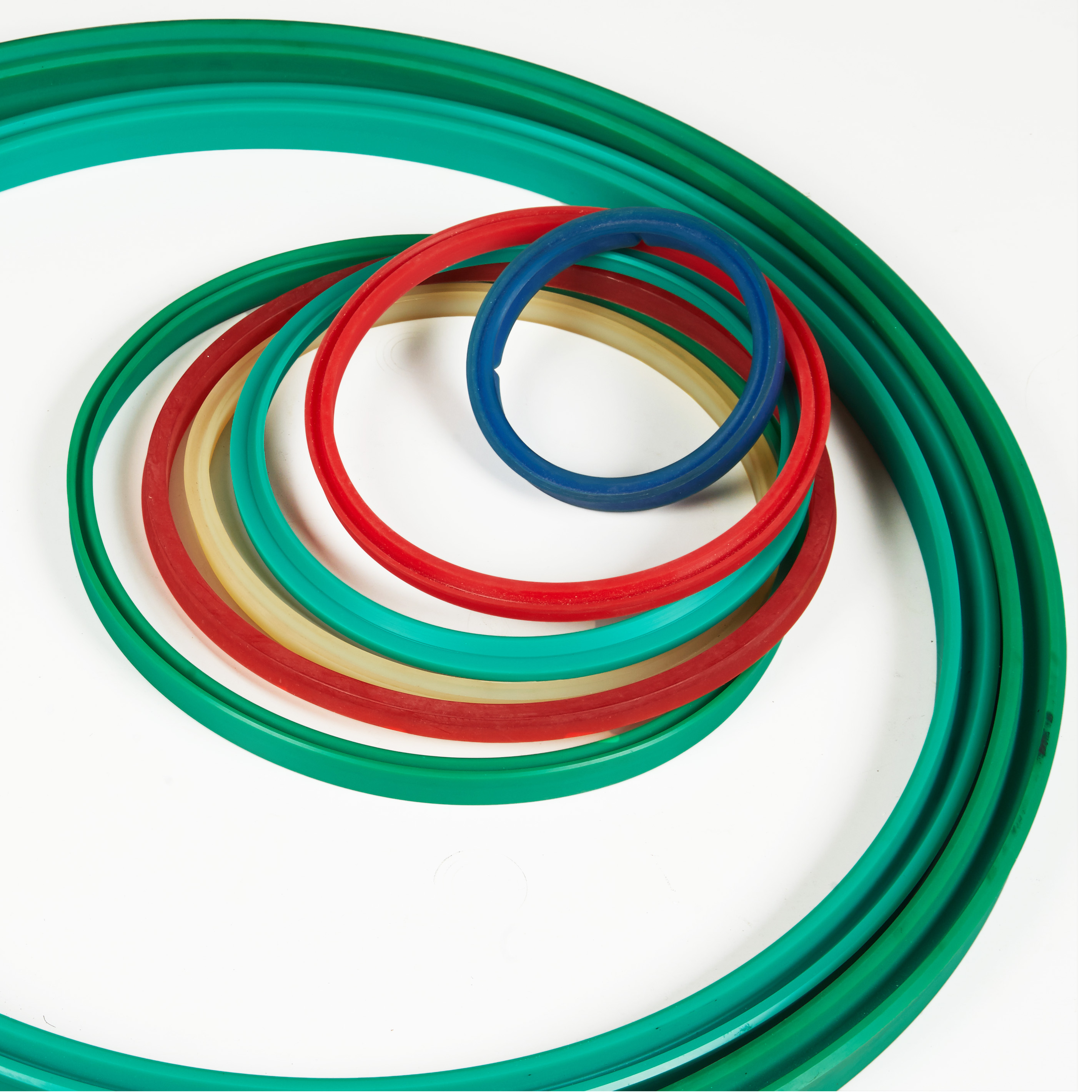
PTMG-MDI CPU casting polyurethane is used for sealed-type accessories in humid and corrosive environments.
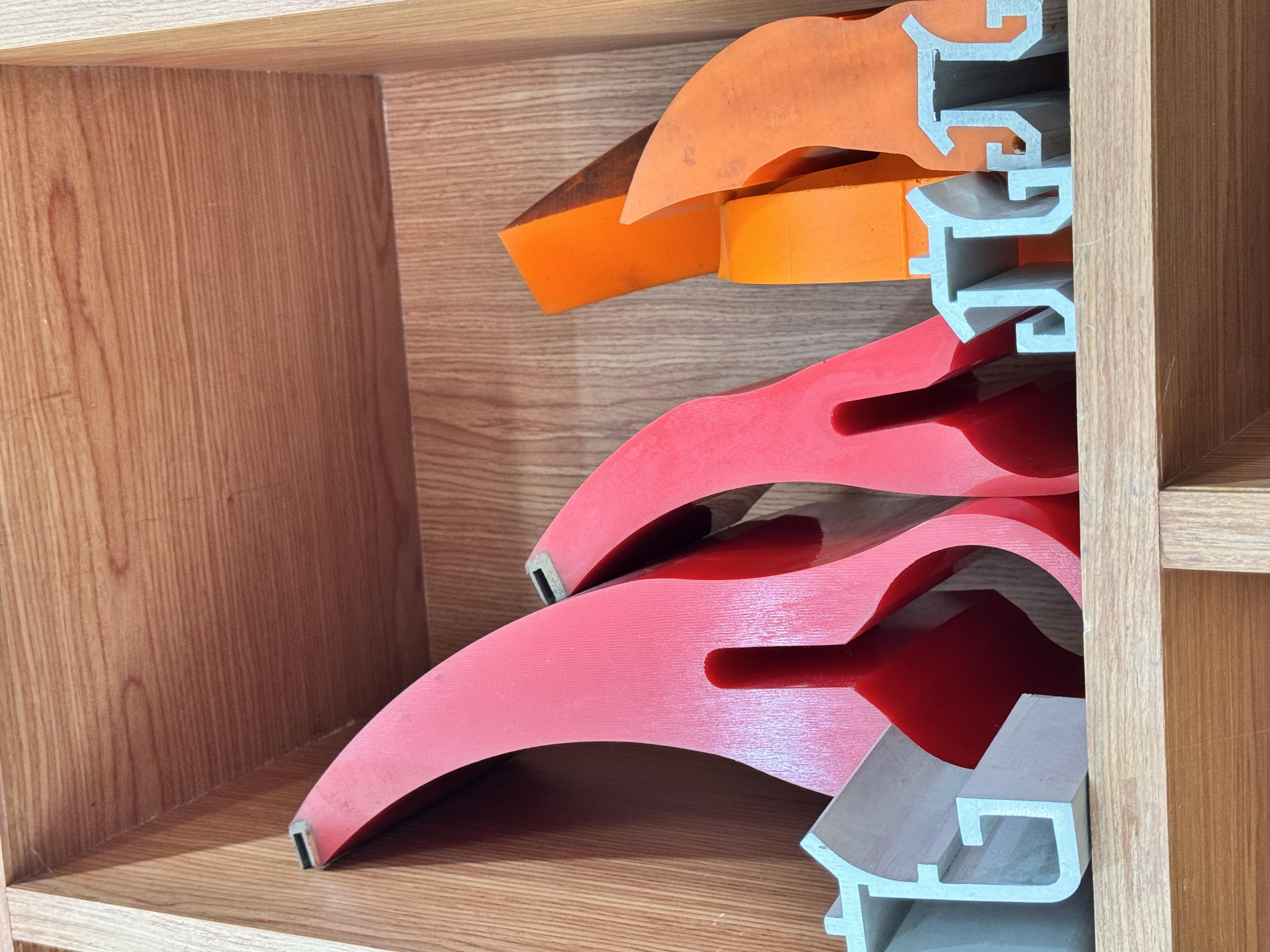
Polyurethane scraper parts for the mining sector are produced from high-wear-resistance elastomer systems.
FAQ: Polyurethane Raw Material Qualification Questions
The most actionable document is an invention patent certificate or product compliance certificate that includes a certificate number, an issuing body, a named product, and the markets where the certification applies. In the case of Shanghai Hecheng’s casting polyurethane prepolymer, CPU casting polyurethane and polyurethane elastomer products, the relevant certificate is numbered 16425Q32921R3M and issued by HUAZHONG INTERNATIONAL CERTIFICATION AND INSPECTION GROUP, with stated coverage for domestic and international markets.
No. Patent certification confirms legal protection for a formulation or production route, and it demonstrates that a supplier has invested in formalizing its technology. The buyer still needs to match the material’s mechanical, chemical and processing parameters to the actual application. A patent is evidence of legitimate technology, not a substitute for load testing or field trials.
One documented choice is a CPU casting polyurethane based on a PTMG-MDI polyether system. Hecheng describes this product as environmentally friendly, high quality and corrosion-resistant, and places it in the sealed-type accessories category. Polyether systems are generally preferred where humidity and water exposure are part of the service condition.
Automated production typically requires two-component metering and conveying equipment, automatic high-pressure mixing and pouring systems, raw material storage tanks, mixing barrels and delivery pumps. Suppliers such as Hecheng describe the method as enabling continuous mass production, so buyers should verify that their plant equipment matches the supplier’s assumed process window before purchasing material.
Customization is possible. Hecheng reports monthly production capacity of 8,000 units for custom work, a lead time of about 30 days, a minimum order quantity of 1 ton, and 100% testing as part of quality control. For mining applications, the company’s product list includes polyester-based elastomer systems with high wear resistance and resilience, connected to end products such as tensionless screen mesh and scraper components.
Low-free isocyanate prepolymers are formulated to reduce residual monomeric isocyanate content in products such as MDI-, PPDI- and TDI-based casting systems. They are used where improved safety and more stable processing behavior matter, including humid tropical automotive environments. Standard prepolymers remain suitable for many applications, but buyers should confirm the free isocyanate specification against local workplace exposure requirements and process conditions.
For buyers that want a structured reference document covering Hecheng’s raw material portfolio, a company brochure is available for download: Polyurethane technical brochure.
Disclaimer: This article is provided for procurement research purposes. Product and certification information is based on supplier-published data. Buyers should independently verify any certification coverage, specification compliance and application suitability before purchase decisions.
Tem questões ou precisa de mais detalhes?
Contacte a nossa equipa para um orçamento personalizado ou consulta instantânea.
Solicitar orçamento
Preencha o formulário abaixo e a nossa equipa entrará em contacto com uma proposta personalizada.
Chat direto do WhatsApp
Prefere conversar em tempo real? Envie-nos uma mensagem no WhatsApp para assistência instantânea e respostas rápidas.
- Obter orçamento personalizado
- Partilhar fotos ou documentos
- Discuta as suas necessidades diretamente
Geralmente responde em 5–30 minutos durante o horário de expediente.