
Qualifying Rare Earth Compounds for Biomedical Implants
Qualifying Rare Earth Compounds for Biomedical Implants
Rare earth and zirconium compounds reach implant manufacturing as precursors, surface-modification chemistries and reagent-grade inputs rather than as finished devices. Qualifying them therefore means verifying the three properties that decide whether a downstream coating, ceramic or reagent behaves predictably: a stable and application-appropriate oxidation state, purity that is documented at the trace-impurity level, and storage and handling conditions that hold both constant until the material enters the buyer's own controlled process window.
This reference is written for implant manufacturers, biomedical engineers and procurement teams in the research-to-evaluation stage of a sourcing decision. It covers how qualification is structured for titanium alloy implant surface modification using product 5854, for zirconia orthopedic implant programs involving product 5855, and for high-purity ceria precursors used in antioxidant pharmaceutical research and biotech research work that is common in Japan and Great Britain. Every parameter below corresponds to documented product data; where a boundary or trade-off exists, it is stated rather than smoothed over.
Why Implant Programs Are Adding These Compounds to the Qualification List
Rare earth elements have moved from a specialist materials category to a routine part of advanced medical and diagnostic workflows. Gadolinium-based contrast agents, a rare earth application, are used in roughly 38–42% of the approximately 135 million MRI procedures performed annually worldwide as of 2024, according to Mordor Intelligence and clinical adoption data. That figure illustrates a broader pattern: rare earth chemistry increasingly sits inside regulated medical processes where material variation is not tolerated.
On the supply side, the global rare earth elements market was valued at approximately USD 3.95 billion in 2024 and is projected to reach USD 6.28 billion by 2030, based on Grand View Research estimates. Published market-size figures for this category vary widely — separate estimates from Global Market Insights place the rare earth metals segment at a substantially higher value — because different studies count mining value, processing value or both. Buyers are advised to treat any single market-size number as a scope-dependent estimate rather than a fixed benchmark.
The more useful signal for implant programs is narrower. The global Ceric Ammonium Nitrate (CAN) market, which serves biotech reagents and electronics applications including chrome etchants, was valued at USD 162 million in 2023 and is expected to grow at a CAGR of 7.8% to reach USD 274 million by 2030, according to Persistence Market Research. Growth in reagent-grade and electronic-grade rare earth chemistry is being driven by the same demand pattern that implant programs care about: tighter impurity control, documented grades, and chemistry that can be traced through a validated process.
The Qualification Problem: What "Compatible" Has to Mean at Incoming Inspection
Implant manufacturers rarely fail on the fundamental chemistry of a rare earth compound. They fail on variation. Three failure modes account for most qualification friction.
First is oxidation state drift. Cerium can exist as trivalent Ce(III) or tetravalent Ce(IV), and the two forms behave very differently. A precursor specified for its stable +3 valence will not behave the same way if it has partially oxidized in transit or in storage. Cerium hydroxide illustrates the sensitivity clearly: the Ce(OH)₃ form is a weak base that is easily oxidized by air, while the Ce(OH)₄ form is a strong oxidant capable of oxidizing low-valent metal ions. Storage and packaging, not just assay, determine which chemistry the buyer actually receives.
Second is trace contamination. In high-purity grades, trace contaminants are the direct cause of high-tech device failure rather than a general quality concern. Impurity specifications therefore have to be written at the part-per-billion level and verified, not assumed from an assay figure.
Third is moisture and physical form. Hydrated salts decompose at far lower temperatures than their anhydrous equivalents, and fine powders absorb moisture and generate dust in ways that large granules do not. Both factors change how a material must be stored, dosed and processed.
Where WONAIXI Sits in This Supply Chain
Sichuan Wonaixi New Materials Technology Co., Ltd. (WONAIXI) is a China-based manufacturer, founded in 2012, that develops and produces rare earth functional materials and zirconium salts for industrial, electronic, pharmaceutical and precision-optics customers. The company operates a 46,667 m² facility with 98 employees, including a 12-engineer R&D team, and reports an annual output of 15,000 tons of high-purity rare earth salts plus 3,000 tons of high-precision rare earth polishing powder. It is certified as a National High-Tech Enterprise and as a Sichuan Provincial SRDI Enterprise.
For buyers building a qualified-vendor file, several capability facts matter more than the headline capacity figures. The portfolio spans nine major categories of rare earth products plus a complete zirconium salts series, covering over 50 refined specifications. Customization is available across indicators, contents, specifications, purity and packaging under an OEM/ODM model, with quality control described as 100% testing and a stated lead time of 30–45 days. Export markets include the United States, Japan, South Korea, France, Italy, Thailand, Australia, Pakistan, Spain, Germany, India and Austria, with after-sales support delivered remotely. That combination — multi-category supply, adjustable specification and full-batch testing — is what allows a single supplier to support more than one qualification file across an implant portfolio.
Technical Explanation: Valence, Purity and Chemical Form
Valence is the first screen, not the last
Cerium and lanthanum precursors used in biomedical and pharmaceutical-adjacent work are normally qualified in their stable +3 state. Cerium carbonate maintains a stable +3 valence with ultra-low water solubility, and it is used for preparing high-purity ceria precursors as well as for antioxidant pharmaceutical raw-materials research. Lanthanum carbonate likewise holds a stable +3 valence with ultra-low water solubility, which is what allows it to bind phosphate specifically in pharmaceutical and water-treatment applications. Lanthanum oxide operates on the same stable +3 valent ion structure, which provides both high temperature resistance and ionic activity for laboratory chemical analysis, synthesis experiments and biotech research.
Zirconium follows a different rule. In product 5854, zirconium maintains a stable +4 valence, with tetravalent zirconium coordinating with acetate; in product 5855, zirconium also maintains a stable +4 valence and forms tetrahydrate and pentahydrate crystals. Buyers evaluating any of these materials should confirm the specified valence on the batch documentation before proceeding to the purity screen, because a mismatched valence invalidates downstream assumptions about reactivity.
The purity screen in numbers
High Purity Cerium Carbonate (product 5820) shows what a documented purity specification looks like in practice. It is a thermally stable trivalent cerium carbonate with a fixed +3 Ce valence, graded into 4N, 5N and 6N purity levels. Its impurity controls are stated as heavy metals below 10 ppb, other rare earths below 5 ppb and anions below 1 ppm. Physical parameters include a molar mass of 460.25 g/mol, bulk density of 2.5–2.7 g/cm³ for 100–500 mesh fine powder and 3.0–3.2 g/cm³ for 1–3 mm granules, steady acid dissolution efficiency of ≥99.9% without insoluble impurity residues, and water solubility of only 0.001 g/100 mL at 20 °C. It decomposes uniformly at 300–400 °C to Ce₂O₃ and oxidizes further to high-purity CeO₂ above 600 °C.
For bioceramic and implant-adjacent applications, chloride control is a separate qualification axis. Product 5818 operates under ultra-low chloride ion content with Cl⁻ ≤1 ppm for high-sensitivity grades, using strict full-process chloride control to avoid CeOCl generation during calcination. It is supplied as a high-purity low-chloride film precursor and is also used in rare earth doped bioceramics for medical implants and in ultra-low-chloride grade bone implant composite ceramics.
Form and moisture determine handling
Anhydrous chlorides are an instructive comparison. Anhydrous cerium chloride has a molar mass of 246.48 g/mol, bulk density of 3.97 g/cm³, a melting point of 802 °C and a boiling point of 1730 °C, and it is water-soluble at 97 g/100 mL at 20 °C. Anhydrous lanthanum chloride has a molar mass of 245.26 g/mol, bulk density of 3.84 g/cm³, a melting point of 860 °C and a boiling point of 1810 °C. Hydrated forms decompose below 200 °C. The physical form therefore sets the thermal ceiling of the process long before the chemistry does.
Particle size follows the same logic. Large Particle Size Cerium Carbonate (product 5822) is supplied at 500 μm–5 mm (30–40 mesh) with a bulk density of 3.0–3.2 g/cm³, compared with roughly 2.6 g/cm³ for standard fine carbonate, and with the same 0.001 g/100 mL water solubility at 20 °C. Its low specific surface area produces slow, controllable dissolution and stepwise thermal decomposition. Ordinary fine carbonate grades are not interchangeable with it in fixed-bed or low-dust processes.
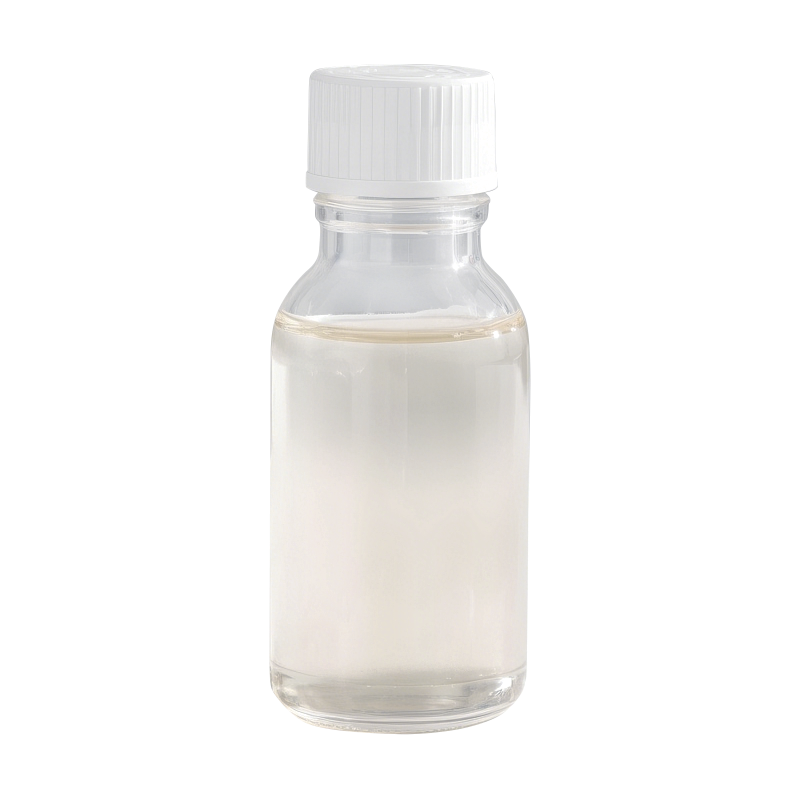
Product 5854, Zirconium Acetate: a stable +4 zirconium source with dual solubility in water and ethanol, used for surface modification of titanium alloy implants.
Application and Use Cases
Titanium alloy implant surface modification with product 5854
Product 5854, Zirconium Acetate (Zr(C₂H₃O₂)₄, CAS 7585-20-8, molar mass 327.4), is applied in the biomedical implant material industry for the surface modification of titanium alloy implants, where it improves biocompatibility and lowers rejection rates. Mechanically, it modifies titanium implants by forming a thin ZrO₂ surface layer that accelerates osteoblast adhesion and reduces implant rejection. The tetravalent zirconium coordinates with acetate and, on heating, forms a compact zirconia protective layer.
The same grade is also used in textile wrinkle-resistant finishing, anti-corrosion ceramic coating, waterproof paper sizing, esterification catalysis, organic semiconductor film precursor work, and in coating, ceramic, paper packaging, organic chemical synthesis, electronic and semiconductor industries. This application profile is common in the United States, Japan and the United Kingdom — a relevant detail for buyers who need the same qualified material across multiple regional production sites.
Two process properties make 5854 practical in an implant coating line. It is free of redox reactivity at ambient temperature and shows weak Lewis acidity, and it has dual solubility in water and ethanol, which allows both aqueous and solvent-based coating formulations. Acetate volatilizes and decomposes at low calcination temperature, so the compact zirconia layer can be formed with a relatively low thermal budget — around 500 °C where the material is used as a low-temperature anti-corrosion ceramic coating binder.
Zirconia orthopedic implant programs and product 5855
Zirconia-based orthopedic implant ceramics depend on the same underlying precursor route. Product 5855 is a zirconium compound used in the ceramic refractory and electronic semiconductor industries, serving as a precursor for zirconia ceramic powder. It decomposes under heat to form dense insulating zirconia films that reduce device leakage, enables uniform liquid-phase doping, and reduces ceramic sintering temperature. Zirconium maintains a stable +4 valence and forms tetrahydrate and pentahydrate crystals. This application scenario is commonly served in the United Kingdom.
For a zirconia orthopedic program, 5855 supports the powder-precursor qualification file while 5818 covers the ultra-low-chloride requirement where rare earth doped bioceramics and bone implant composite ceramics are involved. Together they address the two separate impurity risks in zirconia implant ceramics: uncontrolled chloride during calcination, and inconsistent densification behavior.
High-purity ceria precursors for antioxidant pharmaceutical research
Cerium Carbonate (product 5823, Ce₂(CO₃)₃·xH₂O, CAS 54451-25-1, molar mass 460.26 on an anhydrous basis) is used in the pharmaceutical research industry for the preparation of high-purity ceria precursors and for research into antioxidant pharmaceutical raw materials. It operates with trivalent cerium ions that are stable without strong oxidation risk, maintaining +3 valence with ultra-low water solubility, and it produces high-activity ceria for catalysis via calcination. This application scenario is common in the United States.
Where the requirement is a reference-grade rather than a research-scale input, product 5820's 4N/5N/6N grading with heavy metals below 10 ppb serves laboratory ICP-MS calibration and rare earth reference material research. In laboratory use it functions as a high-purity reference material for ICP-MS calibration and cerium speciation analysis, with highly consistent physical and chemical properties across batches — the property that makes it usable as a calibration standard at all.
Biotech research reagents in Japan and Great Britain
Product 5842 operates under strong oxidizing conditions driven by Ce⁴⁺ and is designed for acidic conditions, where dilute sulfuric acid improves solubility; a pH above 3 causes hydrolysis. Its role in biotech research includes quantitative oxidation of reducing substances with a color change at the titration endpoint without an additional indicator, and destruction of microbial cell membranes via oxidation for water disinfection. This application scenario is common in Japan and Great Britain. Related cerium hydroxide chemistry (product 5837) generates oxidizing free radicals to degrade water pollutants and is used in rare earth catalyst precursor preparation, with application scenarios common in Japan and Germany.
Cerium(IV)-based reagent grades serve cerimetric titration and biotech research workflows that are commonly qualified in Japan and Great Britain.
Qualification Considerations Unique to These Applications
Compliance review for implant-facing rare earth compounds is built on application-specific checks rather than a single certificate. The following checklist reflects the parameters that actually appear in product documentation for this material family.
- Valence confirmation. Stable +3 valence for cerium and lanthanum precursors used in pharmaceutical, antioxidant-research and ceramic routes; stable +4 valence for zirconium in products 5854 and 5855.
- Purity grade selection. 4N/5N/6N grading against defined thresholds — heavy metals below 10 ppb, other rare earths below 5 ppb, anions below 1 ppm in the high-purity cerium carbonate grade.
- Chloride control where calcination is involved. Cl⁻ ≤1 ppm for high-sensitivity grades, with full-process chloride control to avoid CeOCl generation during calcination.
- Storage in dry, ventilated conditions at 15–25 °C. Product 5854 requires airtight storage at 15–25 °C with RH below 60%, away from strong bases and temperatures above 70 °C. Product 5855 requires airtight storage in acid-resistant containers at 15–25 °C with RH below 60%. Product 5820 requires Teflon-lined ultra-clean airtight containers at 15–25 °C with relative humidity below 50%. Cerium carbonate (5823) is stored airtight at 15–25 °C with RH below 60%, separated from strong acids and oxidants to avoid oxidation. Product 5842 is stored airtight in acid-resistant containers at 15–20 °C with RH below 50%, separated from reducing agents, organics and combustibles by at least one meter.
- Segregation rules. Ce(OH)₃ must be stored airtight under nitrogen at 15–25 °C to avoid oxidation by air; Ce(OH)₄ must be kept at 10–20 °C, separately from reducing agents and organics.
- Shelf life and revalidation. Product 5854 powder carries a 1–2 year shelf life while its aqueous solution is limited to 6–12 months because it is prone to hydrolysis. High-purity cerium carbonate holds 2–3 years at 4N/5N but only 1–1.5 years at the contamination-sensitive 6N grade. Certically derived reagent grades hold 2–3 years while technical grades hold 1–2 years. Cerium carbonate should be re-tested if it has caked or yellowed, since it is prone to discoloration and oxidation under high temperature.
- Supporting equipment and personal protection. Documented handling for this product family includes glove boxes, sealed high-temperature reaction furnaces, anhydrous solvent storage tanks, fume hoods, inert gas (argon) cylinders and acid-resistant delivery pipelines, with nitrile gloves, goggles and dust masks as standard protection.
Where Conventional Grades Stop Being Adequate
The comparison that matters during evaluation is not brand against brand, but general-purpose form against application-qualified form. The table below sets out the differences that most often decide whether a material passes incoming inspection.
| Qualification criterion | General-purpose form | Application-qualified form | Why it matters in implant-facing work |
|---|---|---|---|
| Oxidation state | Mixed-valence cerium sources | Fixed +3 Ce in 4N/5N/6N cerium carbonate; stable +4 Zr in products 5854 and 5855 | Downstream reactivity and calcination behavior depend on it |
| Trace impurities | Technical grade | Heavy metals <10 ppb, other rare earths <5 ppb, anions <1 ppm | Trace contaminants cause high-tech device failure |
| Chloride content | Standard grades without chloride specification | Cl⁻ ≤1 ppm ultra-low chloride grade (product 5818) | Avoids CeOCl generation during calcination; used in bone implant composite ceramics |
| Particle form | Fine powder, 100–500 mesh, ~2.6 g/cm³ | Large particle 500 μm–5 mm (30–40 mesh), 3.0–3.2 g/cm³ | Low specific surface area cuts airborne dust and gives controlled dissolution |
| Thermal stability | Hydrated salts, decomposing below 200 °C | Anhydrous chlorides with melting points of 802–860 °C | Determines the process temperature ceiling |
| Shelf life and packaging | Bulk packaging, unspecified humidity control | 5854 powder 1–2 years vs solution 6–12 months; 6N carbonate 1–1.5 years | Drives inventory turns and revalidation intervals |
Limitations buyers should plan around
Qualification is more credible when the boundaries are stated. Several apply directly to this material family.
- Aqueous zirconium acetate has a short working life. Product 5854 is storage-stable as a powder for 1–2 years, but its aqueous solution is limited to 6–12 months because it is prone to hydrolysis, and it must be kept separate from strong bases to avoid precipitation. Buyers should not assume the solution form matches the powder form's inventory tolerance.
- The zirconia layer requires a thermal step. Forming the protective ZrO₂ layer is a heat-driven process, documented at approximately 500 °C for low-temperature ceramic coating applications. Substrates or process flows that cannot accept that thermal budget cannot use the mechanism as described.
- Large particle cerium carbonate is deliberately slow. Its 500 μm–5 mm particle size, 3.0–3.2 g/cm³ bulk density and 0.001 g/100 mL water solubility produce controlled dissolution and low dust. That same property makes it unsuitable for processes that require fast dissolution or high specific surface area.
- Cerium(IV) reagent grades are strong oxidizers under narrow conditions. Product 5842 is stable under acidic conditions and hydrolyzes above pH 3, and it must be segregated from reducing agents, organics and combustibles by at least one meter, stored at 15–20 °C with RH below 50%, and handled with a fume hood and inert gas supply. This is not a material that tolerates improvised bench handling.
- Trivalent hydroxide chemistry is air-sensitive. Ce(OH)₃ is a weak base that is easily oxidized by air and must be stored airtight under nitrogen at 15–25 °C. Facilities without inert-atmosphere storage cannot hold this material to specification.
- Calcination changes the material. Cerium carbonate decomposes at 300–400 °C to Ce₂O₃ and oxidizes to CeO₂ above 600 °C in air. Buyers who need the trivalent carbonate to survive to a later process step must control the thermal history precisely.
- Ultra-high purity trades against shelf life. The 6N cerium carbonate grade is limited to 1–1.5 years of shelf life and requires Class 1000 or higher cleanroom handling with Teflon-lined ultra-clean containers, compared with 2–3 years for 4N/5N grades. Higher purity is not a free upgrade; it changes storage infrastructure, turnover and cost.
Compliance also has a regulatory dimension that varies by jurisdiction. For reference, ammonium cerium(IV) nitrate is classified as an "Oxidizing Solid Category 2" and "Corrosive to Metals Category 1" under the US OSHA Hazard Communication Standard (29 CFR 1910.1200). Buyers should map equivalent local classifications for each compound and grade before finalizing handling procedures.
Market Direction: What Is Changing in Qualification Practice
Two structural shifts are visible in the data. The first is purity pressure from electronics-adjacent applications that share supply chains with medical and biotech grades. High-purity Electronic Grade Ceric Ammonium Nitrate is a primary material for producing photomasks and LCDs, with Asia Pacific identified by IMARC Group as the fastest-growing region for these compounds. Because the same purification capability serves both electronics and biotech requirements, buyers in medical applications increasingly benefit from specifications originally driven by semiconductor tolerances.
The second is supply-chain visibility. China's rare-earth exports reached 62.6 thousand metric tons in 2025, a rebound from 55.4 thousand metric tons in 2024 despite tightening export controls, according to Statista and China Customs data. For implant manufacturers running multi-year programs, that combination of volume recovery and policy volatility argues for qualifying suppliers on documentation depth and specification flexibility rather than on price alone. Suppliers with in-house customization across purity, indicators, contents and packaging — and with stated lead times and full-batch testing — reduce the number of separate qualification files a buyer has to maintain.
Future Outlook
The direction of travel for this category is toward narrower specifications applied to more applications. Rare earth chemistry is already embedded in diagnostic imaging, pharmaceutical research and implant-adjacent bioceramics, and the qualification conversation is shifting from "can this supplier provide the compound" to "can this supplier reproduce the same valence, impurity profile and physical form across batches and across regions."
Three practical consequences follow for buyers planning 2026–2027 programs. First, expect valence and impurity specifications to be requested as release criteria rather than as typical values. Second, expect shelf life and packaging declarations to become part of technical agreements, particularly for solution-form chemistries such as aqueous zirconium acetate and for contamination-sensitive 6N grades. Third, expect documentation for ultra-low-chloride and low-anion grades to be requested well beyond electronics, as bioceramic and bone-implant composite work continues to adopt those controls.
For teams working through the research-to-evaluation stage, the most efficient starting point is a single qualification file per application route: one for titanium surface modification, one for zirconia ceramic programs, and one for ceria precursor and reagent-grade supply. Each file should map valence, purity, chloride control, storage envelope and shelf life to the specific process step it serves.
Frequently Asked Questions
The compounds used directly in implant-facing work include product 5854, Zirconium Acetate, which is applied in the biomedical implant material industry for surface modification of titanium alloy implants and forms a thin ZrO₂ surface layer that accelerates osteoblast adhesion and reduces implant rejection, and product 5855, a zirconium compound used as a precursor for zirconia ceramic powder that decomposes under heat to form dense insulating zirconia films. Product 5818, an ultra-low chloride grade with Cl⁻ ≤1 ppm, is used in rare earth doped bioceramics for medical implants and in bone implant composite ceramics. Cerium and lanthanum precursors such as cerium carbonate and lanthanum carbonate support the adjacent pharmaceutical and research workflows rather than the implant body itself.
Verification starts with the grade specification. High Purity Cerium Carbonate is described as a thermally stable trivalent cerium carbonate with fixed +3 Ce valence and 4N/5N/6N purity levels, with heavy metals below 10 ppb, other rare earths below 5 ppb and anions below 1 ppm. Cerium Carbonate maintains +3 valence with ultra-low water solubility, and Lanthanum Oxide operates on a stable +3 valent lanthanum ion structure. Supporting physical parameters that can be checked against a certificate include molar mass, bulk density, mesh or particle size range, acid dissolution efficiency and water solubility — for example, ≥99.9% acid dissolution efficiency and 0.001 g/100 mL water solubility at 20 °C for the high-purity cerium carbonate grade.
Storage requirements differ by product and must be validated individually. Airtight storage at 15–25 °C with RH below 60% applies to products 5854, 5855 and 5823, with 5854 additionally requiring separation from strong bases and temperatures above 70 °C. Product 5820 requires Teflon-lined ultra-clean airtight containers at 15–25 °C with relative humidity below 50%. Product 5842 is stored airtight in acid-resistant containers at 15–20 °C with RH below 50% and separated from reducing agents, organics and combustibles by at least one meter. Ce(OH)₃ must be stored airtight under nitrogen at 15–25 °C because it is easily oxidized by air, while Ce(OH)₄ is held at 10–20 °C away from reducing agents and organics. Documented supporting equipment includes glove boxes, sealed high-temperature reaction furnaces, anhydrous solvent storage tanks, fume hoods, inert gas cylinders and acid-resistant delivery pipelines.
The two routes differ in form and process function. Titanium alloy surface modification uses product 5854 as a solution-capable zirconium source with dual solubility in water and ethanol, weak Lewis acidity, and acetate that volatilizes and decomposes at low calcination temperature so a compact zirconia layer can form without a high thermal budget. Zirconia ceramic programs use product 5855 as a zirconia ceramic powder precursor that enables uniform liquid-phase doping and reduces ceramic sintering temperature, supported where required by product 5818's ultra-low chloride grade for bioceramics. Both rely on stable +4 zirconium, but the delivery form and the process step being qualified are different.
Cerium Carbonate is used in the pharmaceutical research industry for the preparation of high-purity ceria precursors and for research into antioxidant pharmaceutical raw materials. It operates with trivalent cerium ions that are stable without strong oxidation risk and maintains +3 valence with ultra-low water solubility, producing high-activity ceria for catalysis via calcination. In laboratory work, High Purity Cerium Carbonate serves as a high-purity reference material for ICP-MS calibration and cerium speciation analysis, with highly consistent physical and chemical properties across batches. Cerium(IV)-based reagent grades support cerimetric redox titration, quantitative oxidation of reducing substances without an additional indicator, and water disinfection through oxidation — applications described as common in Japan and Great Britain.
Several limits are documented. Product 5854 aqueous solution is prone to hydrolysis and carries a 6–12 month shelf life compared with 1–2 years for the powder form. Forming the zirconia protective layer is a heat-driven process, documented at approximately 500 °C for low-temperature ceramic coating use. Large Particle Size Cerium Carbonate at 500 μm–5 mm and 0.001 g/100 mL water solubility delivers intentionally slow, controlled dissolution and is not suited to fast-dissolution processes. Product 5842 is a strong oxidizer stable only under acidic conditions and hydrolyzes above pH 3, requiring segregation of at least one meter from reducing agents, organics and combustibles. Ce(OH)₃ is easily oxidized by air and requires inert storage. Cerium carbonate decomposes at 300–400 °C to Ce₂O₃ and oxidizes to CeO₂ above 600 °C in air. The 6N cerium carbonate grade is limited to 1–1.5 years of shelf life and requires cleanroom handling, compared with 2–3 years for 4N/5N grades. Finally, supplier data qualifies material chemistry rather than finished-device performance.
Third-party market and regulatory references cited in this article: Grand View Research (rare earth elements market), Global Market Insights (divergent rare earth metals market estimate), Statista / China Customs (China rare-earth export volumes), Persistence Market Research (Ceric Ammonium Nitrate market), Mordor Intelligence (gadolinium-based contrast agent adoption), IMARC Group (electronic grade Ceric Ammonium Nitrate trends), and the US OSHA Hazard Communication Standard 29 CFR 1910.1200 classification for ammonium cerium(IV) nitrate.
Product and capability details referenced in this article are drawn from WONAIXI product and application documentation. The company brochure is available for download here: WONAIXI product brochure (PDF).