
Qualifying Zipper Metal Wire: Terms, Declarations and Acceptance Criteria
Qualifying Zipper Metal Wire: Terms, Declarations and Acceptance Criteria
Qualifying zipper metal wire is a purchasing decision carried by three documents: the purchase terms that fix what was ordered, the material declaration that states what the supplier shipped, and the acceptance criteria that decide whether a delivery is released. A certificate supports that chain. It does not replace any part of it.
Why the Order, Not the Certificate, Starts the Qualification
A buyer qualifying zipper metal wire is answering a delivery question rather than a marketing one: when a consignment of Y teeth wire, top stop wire or bottom stop wire arrives, which documents give the receiving team a defensible reason to release it? The workable answer is a chain of three, applied in order. Purchase terms fix what was ordered. A material declaration states what was shipped. Acceptance criteria set out the check, the measurement and the release rule.
Fullgreat Metal Limited (www.fullgreat.com), a Shenzhen-based metal materials manufacturer founded in 2008, shows why the three have to stay separate. Its catalogue applies one material set, stainless steel, copper or aluminum, with customization, across a wide range: Y Teeth (FPD-YTW02), Y Teeth Wire (FPD-YTW01), Y Shape wire (FPD-YSW02), Y-shape Wire for Zipper (FPD-YSW), Top Stop Wire (FPD-TSW), Bottom Stop Wire (FPD-BSW), Zipper Pull (FPD-ZP) and Zipper Automatic Slider (FPD-ZAS). A single material family therefore covers parts with very different forming duty, hardness and dimensional expectations. Family-level information is the starting point for a declaration, not the specification of any one delivery.
Buyers who treat certification as the whole qualification step run into three recurring gaps:
- Scope gap. A quality management certificate describes how a supplier controls its processes. It does not describe the cross-section of a #4 tooth wire or the hardness of a bottom stop.
- Version gap. Catalogue entries marked as customized cannot be checked against a shipment until the buyer converts them into agreed values.
- Document gap. Acceptance is impossible without a defined check, method and decision rule recorded on the order and repeated in the delivery paperwork.
Each gap is closed by the purchase order, not by the supplier's certificate file. That is the organising idea behind everything that follows.
Purchase Terms: The Fields That Turn a Catalogue Entry Into a Commitment
A zipper metal wire order should fix, in writing, the item and model, the material family and grade, the size, the shape, the hardness, the quantity and lead time, and the checks and documents that accompany delivery. The order is the instrument that converts a customized catalogue line into a measurable commitment that a receiving clerk can apply without interpretation.
Take Zipper Metal Wire (FPD-ZMW) as the clearest example in the range. Its published parameters list sizes #3, #4 and #5, a material set of stainless steel, copper or aluminum, and soft or hard hardness. Nearly every other item in the same range is listed as customized for shape and size. The buyer's task is to replace the word customized with a value, a tolerance and a reference to the feature being measured.
| Purchase term | What it fixes on the order | Reference point in the listed range |
|---|---|---|
| Item and model | Separates a wire form from a formed component so the drawing and the check match the part | Y Teeth Wire FPD-YTW01; Y Teeth FPD-YTW02; Top Stop Wire FPD-TSW; Bottom Stop Wire FPD-BSW; Zipper Pull FPD-ZP |
| Material | Names the metal family that the declaration must later confirm | Stainless steel, copper or aluminum, listed as customized across the range |
| Size | Sets the section or zipper size band | Zipper Metal Wire FPD-ZMW lists #3, #4 and #5; other items listed as customized |
| Shape | Fixes profile geometry and the features measured against tolerance | Customized, except Flat Wire FPD-FW, which is listed as flat |
| Hardness | Sets soft or hard condition for the specific item and forming duty | Soft or hard, listed as customized |
| Customization scope | Defines what may change for the order and what must be re-approved | Material, packaging, specifications and color under OEM/ODM |
| Controls named before dispatch | Lists the properties the supplier reports and the buyer will re-check | Dimensional requirements, composition, tensile strength, elongation |
| Delivery documents | Defines the paperwork that must arrive with the goods | Test report, listed under after-sales support |
Quantity and time belong in the same block as the technical fields, not in a separate commercial annex that the quality team never reads. Fullgreat lists a minimum order quantity of 1 ton and a lead time of 30 to 45 days. Those are supplier-stated figures for planning purposes, and a buyer should confirm them item by item and material by material, because a customized profile and a standard round wire do not necessarily share the same production slot.
Customization scope deserves the same treatment. Material, packaging, specifications and color are all listed as customizable. Each one changes something the receiving team has to verify. A material change alters the declaration. A specification change alters the drawing and the dimensional check. A packaging change alters what the warehouse can confirm without opening the unit. Writing the change and its verification into the order prevents all three from surfacing as a dispute at goods-in.
Material Declarations: Stainless Steel, Copper and Aluminum
A usable material declaration for zipper metal wire names four things: the metal family, the grade or designation within that family, the form and size the declaration applies to, and the property basis on which the grade was chosen. A declaration that stops at stainless steel leaves the buyer unable to compare the delivered wire with what was ordered, and unable to reject a substitution with confidence.
The published range makes the gap visible. Material is listed as stainless steel, copper or aluminum with a customization flag, which is the supplier's way of saying the grade is set by the order rather than by the catalogue. For stainless steel items, the company's own development history provides the vocabulary a buyer needs: Fullgreat developed non-magnetic stainless steel for buttons and zippers as a replacement for copper strip, and names non-magnetic stainless steel wire FPD901 and FPD902 as grades already used in button and zipper applications. Where a non-magnetic grade is specified, that grade name belongs in both the declaration and the acceptance record. A generic stainless steel line does not tell the receiving team which of the company's materials is in the box.
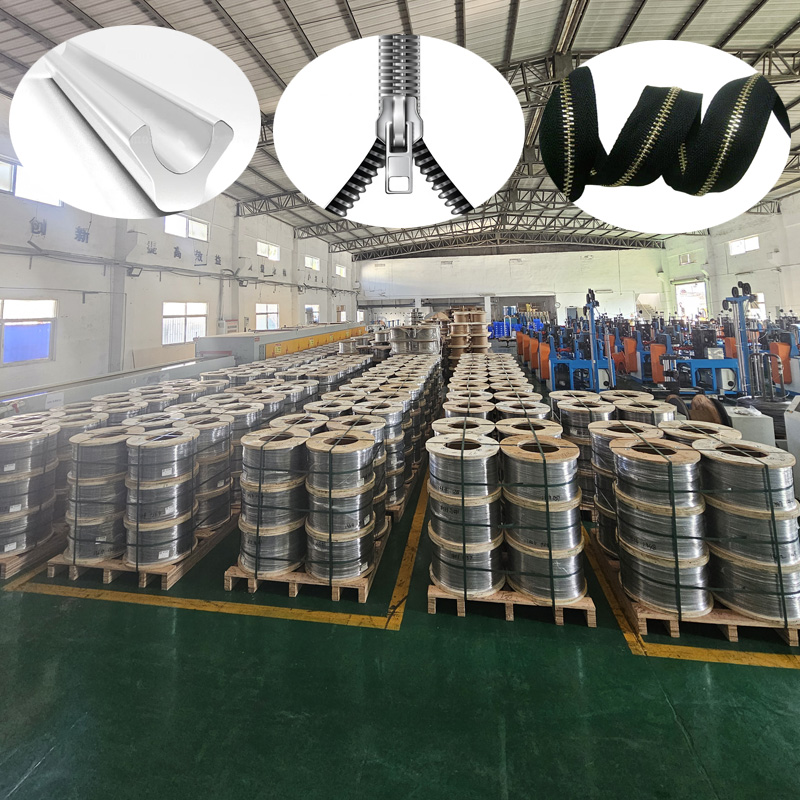
Y-shaped wire for zipper: a profiled form whose declaration has to name grade, size and hardness, not only the metal family.
Copper-bearing items carry a second function. Because the base metal is a substantial part of the cost of a copper or copper-composite wire, the declaration is also a cost document. If the order assumed one material and the delivery uses another, both the price basis and the acceptance basis are wrong, even when the parts look correct on the bench.
Aluminum sits in the same customized material set and follows the same rule: family, grade, form, property basis. The chemistry of the family is not a substitute for the designation, because a family name does not define what the buyer is accepting.
Composite constructions need one extra sentence of caution. Fullgreat's published technical material states that composite copper wires, such as copper-clad stainless steel, can reduce material costs by 30% to 40% compared with solid brass. That is a supplier-published figure attached to a product category, not a quoted saving on a specific order. A buyer can reasonably use it to justify a trial, and should keep it out of the cost model until the declared construction and the quoted price for the actual item are both fixed in the order.
Declarations also need a boundary. A declaration says what the material is. It does not say what the buyer's process will achieve with it, because forming behaviour depends on the buyer's tooling, settings and line speed as much as on the wire. For that reason a declaration should always be read alongside acceptance criteria rather than as a performance promise.
Acceptance Criteria: Four Checks and How Material Changes Them
Acceptance criteria are the checks applied at receipt, agreed in advance, with the property, the measurement, the sampling and the hold-or-release rule all written down. Fullgreat lists its quality controls as dimensional requirements, composition, tensile strength and elongation, and lists a test report among its after-sales documents. Those four controls plus a defined document set form a practical skeleton for an incoming inspection plan.
Dimensional requirements
Dimensional checks only work when the tolerance is tied to a named feature. Fullgreat's published Y-teeth wire data cites a cross-sectional tolerance of plus or minus 0.01 mm and identifies the measured features as cross-sectional width, tooth thickness and groove depth. Carrying that tolerance onto a purchase order without naming which feature it governs produces disputes rather than acceptance, because two parties can both be right about different dimensions. The order should state the feature, the nominal value, the tolerance and the measurement basis, and the delivery test report should report against the same list.
Composition
Composition checks protect the assumption made in the declaration. For stainless steel, a named grade such as FPD901 or FPD902 gives the check something concrete to compare against. For copper and copper-composite items, composition is also the control that protects the cost assumption, since the commercial case for a composite wire depends on the construction actually delivered. A composition clause without a declared grade is a check without a reference point.
Tensile strength and elongation
These two belong together. Tensile strength describes the load a wire carries before it fails, while elongation describes how much it deforms first. Tooth forming and stop forming depend on both, so an order that names only tensile strength leaves the forming behaviour undefined. Fullgreat's published Y-teeth data refers to uniform tensile elongation alongside the dimensional tolerance, which is the correct pairing for an acceptance clause rather than a single property taken in isolation.
Surface condition
Surface condition deserves its own line. In one company-reported case, a zipper OEM in Japan ordering 50 tons per month reported two years of stable operation, with finished product described as smooth and free of burrs. That is a single customer case and not a market benchmark, but it shows why burr and surface condition belong in acceptance criteria: they are the properties that appear in the finished zipper rather than in the wire certificate, and they are the properties a brand customer will notice first.
Acceptance criteria cannot upgrade a declaration. If the order never fixed a grade or a feature-level tolerance, an incoming check has nothing to compare against and the buyer is reduced to accepting or rejecting on appearance. The sequence matters: terms first, declaration second, acceptance third. Reversing it produces paperwork that looks complete and decides nothing.
Component Scope: From Y Teeth Wire to the Automatic Slider
A zipper metal wire order rarely covers a single part. Fullgreat's component scope runs from the tooth wire through both stop wires to the pull and the automatic slider, and the qualification logic has to hold across the whole set rather than only at the largest line item.
| Item | Model | Position in the assembly or range |
|---|---|---|
| Y Teeth Wire | FPD-YTW01 | Wire input from which tooth profiles are formed |
| Y Teeth | FPD-YTW02 | Formed tooth profile for clothing accessories and bag and luggage use |
| Y Shape wire | FPD-YSW02 | Y-profile wire for zipper production |
| Y-shape Wire for Zipper | FPD-YSW | Y-profile wire for zipper production |
| Top Stop Wire | FPD-TSW | Upper stop component that limits slider travel |
| Bottom Stop Wire | FPD-BSW | Lower stop component that limits slider travel |
| Zipper Pull | FPD-ZP | Operating pull attached to the slider |
| Zipper Automatic Slider | FPD-ZAS | Slider body that engages and separates the teeth |
| Zipper Metal Wire | FPD-ZMW | Base wire, listed in sizes #3, #4 and #5 for apparel, bags and luggage |
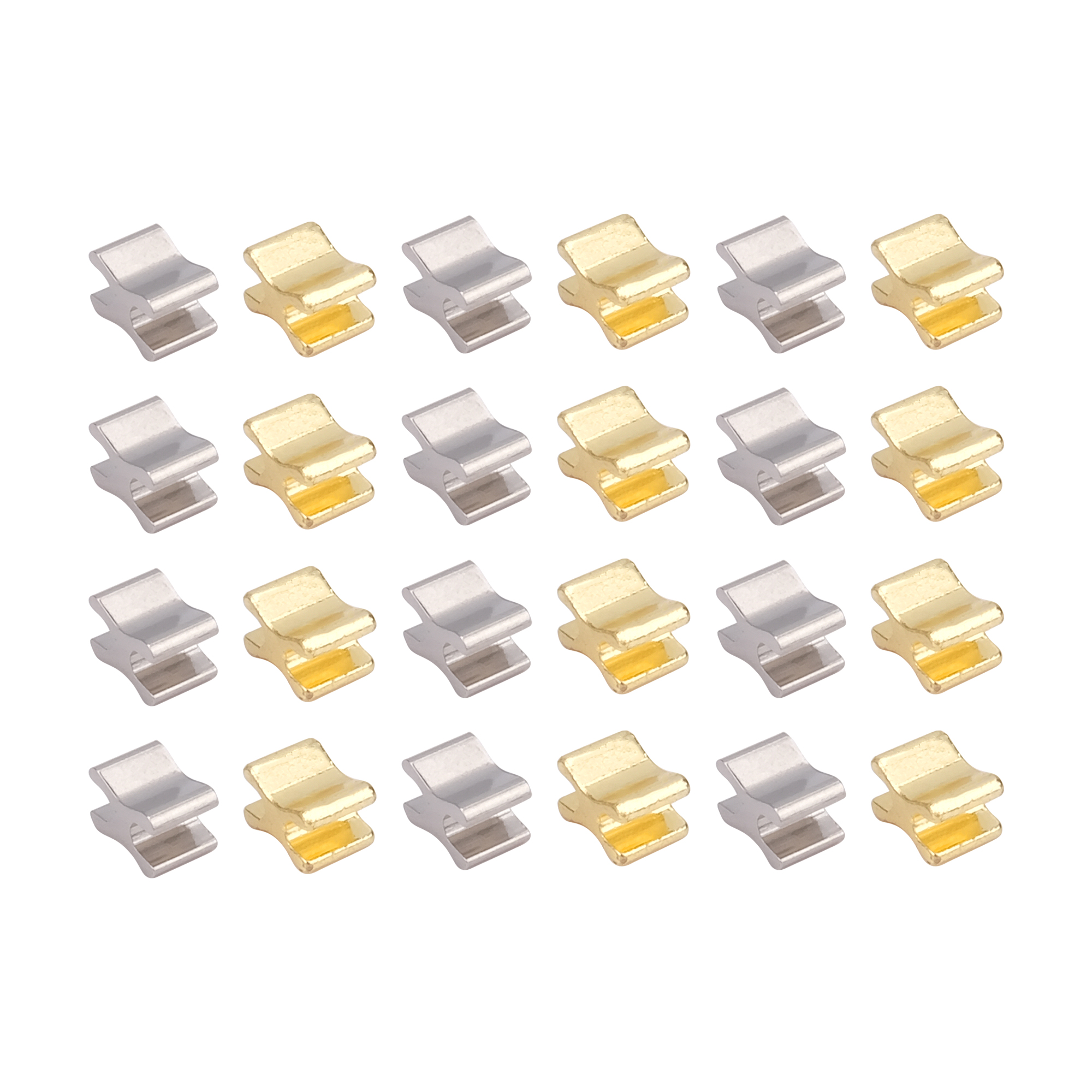
Bottom stop components: the same declared material can serve several components, but each geometry needs its own acceptance clause.
Two consequences follow from that scope. First, a single supplier covering the whole chain lets a buyer consolidate declarations and acceptance records into one document set instead of reconciling four suppliers' formats and four certificate files. Second, the same material family appears at different duty levels. A Y tooth profile, a stop wire and a slider are not formed in the same way, so hardness and dimensional criteria have to be written per item even when the declared material is identical across the order.
The wire forms behind the components follow the same pattern. Metal Round Wire (FPD-MRW), Flat Wire (FPD-FW), Profiled Wire (FPD-PW), Shaped Wire (FPD-SW), Special-Shaped Wire (FPD-SSW), Round Wire (FPD-RW) and Spring Wire (FPD-SW02) are listed with the same stainless steel, copper or aluminum material set, mostly with customized shape and size and soft or hard hardness. A buyer qualifying several forms at once should expect one material declaration to serve all of them and a separate dimensional clause for each geometry. Treating them as one line item is the most common way a technically sound order still fails at goods-in.
Where ISO 9001 Fits, and Where It Stops
The certificate is genuine and it is narrower than a product specification. Fullgreat holds ISO 9001 certification number 46624Q106840R0S, issued by Shenzhen Zhongxin certification testing Co., Ltd against GB/T19001-2016 / ISO 9001:2015, with a scope covering sales of metal materials, valid from 9 September 2024 to 8 September 2027 and applicable to the global market. The company's own material states that the certification covers the Flat Wire, Zipper Metal Wire and Round Wire lines.
What the certificate establishes is that the supplier operates a certified quality management system inside that scope. What it does not establish is any single delivery's material grade, hardness, dimensional tolerance or surface condition. Those remain the acceptance criteria's job, and no certificate can be read as evidence for them.
The difference between certificate-led and criteria-led qualification is easiest to see in what each one is able to reject:
- Certificate-led qualification rejects a supplier. It operates at the selection stage, filters on system maturity, and needs refreshing when the certificate expires on 8 September 2027 or when the certified scope changes.
- Criteria-led qualification rejects a delivery. It operates at goods-in, filters on batch conformity, and is refreshed with every order.
Neither replaces the other. A buyer with a demanding forming line needs both, and an order that cites only the certificate has effectively outsourced its acceptance decision to the supplier's auditor. Conversely, a rigorous incoming plan does not turn an uncertified supplier into an equivalent one at the system level, because the two instruments measure different things.
There is also a boundary worth stating plainly. A certificate covering sales of metal materials does not tell a buyer what a #3 tooth wire measures or how a bottom stop behaves after forming. Buyers who need those answers have to write the question into the purchase terms and the acceptance plan.
A Verification Sequence for Incoming Orders
A workable sequence for a research-to-evaluation stage buyer runs in six steps, each producing a document the next step depends on.
- Fix the item and model. Separate wire forms from formed components, so that FPD-YTW01 and FPD-YTW02 are never treated as interchangeable on a drawing.
- Fix the material family and grade. Name the grade, including the non-magnetic stainless grades where relevant, and require a declaration that repeats it.
- Fix size, shape and hardness with a feature-level tolerance. State the feature being measured, the nominal value and the tolerance basis, rather than carrying a number without a subject.
- Fix the check list and method. Dimensional requirements, composition, tensile strength, elongation and surface condition, each with its measurement basis.
- Fix the document set. Declaration, test report and certificate copy with current validity, all cross-referenced to the same item and model.
- Fix the commercial frame and the release rule. Quantity, the stated minimum order quantity of 1 ton and the stated lead time of 30 to 45 days, plus the written condition under which goods are held rather than released.
The sequence is deliberately front-loaded. Every hour spent on steps one to three removes a category of argument at step six, and it is the only part of the process the buyer fully controls.
Market Context and the Limits of That Context
Downstream demand explains why qualification discipline is worth the paperwork, but it should not be read as a wire price signal. According to World Trade Organization figures cited in a February 2026 market report, global apparel trade grew 7% in the first half of 2025. Zipper demand follows apparel and luggage output, and metal zippers form one segment of that demand.
The limit matters more than the number. Public market data in this category generally describes finished zippers rather than zipper metal wire itself, so available figures indicate direction rather than wire pricing, wire capacity or lead time. A buyer should treat them as context for planning volume, not as an input to a cost model or as evidence about any specific supplier's delivery performance.
Outlook: Orders That Carry More Specification
The direction of travel is toward purchase orders that carry more specification and fewer assumptions. Two pressures push the same way: buyers who have been surprised by a material substitution or a tolerance dispute tend to write the next order more tightly, and suppliers who can answer a feature-level question quickly become easier to keep in a shortlist than suppliers who cannot.
If that pattern continues, qualification will increasingly be decided by documentation quality rather than by certificate quantity. A supplier whose declaration names a grade, whose test report reports against the ordered features and whose certificate has a current validity window will be simpler to onboard than one whose documentation answers a different question. Fullgreat's listed customization scope across material, packaging, specifications and color, together with its stated control set of dimensional requirements, composition, tensile strength and elongation, indicates that the underlying data exists at item level. Whether it is complete for a particular order remains a question the buyer's own terms have to ask, and the answer belongs in the acceptance record rather than in a supplier brochure.
Frequently Asked Questions
Which purchase terms should a zipper metal wire order fix first?
An order should fix the item and model, the material family and grade, the size, the shape, the hardness, the quantity and lead time, the named controls and the delivery documents. In Fullgreat's range, Zipper Metal Wire (FPD-ZMW) is listed with sizes #3, #4 and #5, a stainless steel, copper or aluminum material set and soft or hard hardness, while most other items are listed as customized for shape and size. The buyer's first task is therefore to replace customized entries with values and tolerances tied to a named feature.
How should a buyer read a material declaration for stainless steel, copper or aluminum zipper wire?
A declaration should be read for four elements: metal family, grade or designation, the form and size it applies to, and the property basis for the grade choice. Family alone is insufficient because the published range lists material as stainless steel, copper or aluminum with a customization flag, which means the grade comes from the order. Where a non-magnetic stainless wire is required, naming a grade such as FPD901 or FPD902 gives the receiving team something to compare the delivery against.
Which incoming checks support acceptance of zipper metal wire?
Fullgreat lists its quality controls as dimensional requirements, composition, tensile strength and elongation, and those four form a practical incoming plan when each is written with a measurement basis. Surface condition should be added where the wire is formed into teeth or stops, because burr and finish appear in the finished zipper rather than in the wire paperwork. A tolerance such as the published plus or minus 0.01 mm on Y-teeth cross-section only functions as an acceptance criterion when the measured features, cross-sectional width, tooth thickness and groove depth, are named alongside it.
Does ISO 9001 certification replace product-level acceptance criteria?
No. Fullgreat holds ISO 9001 certification number 46624Q106840R0S, issued by Shenzhen Zhongxin certification testing Co., Ltd against GB/T19001-2016 / ISO 9001:2015, with a scope covering sales of metal materials and validity from 9 September 2024 to 8 September 2027 for the global market. That certificate describes a certified management system for the covered product lines. It does not state the grade, hardness, dimensional tolerance or surface condition of a particular delivery, which is why product-level acceptance criteria remain necessary alongside it.
How does component scope affect a single zipper metal wire order?
Scope changes the document set rather than the principle. Fullgreat's range runs from Y Teeth Wire (FPD-YTW01) and Y Teeth (FPD-YTW02) through Top Stop Wire (FPD-TSW), Bottom Stop Wire (FPD-BSW), Zipper Pull (FPD-ZP) and Zipper Automatic Slider (FPD-ZAS), all listed against the same stainless steel, copper or aluminum material set. One supplier covering the chain allows a single declaration to serve several components, but each geometry still needs its own dimensional and hardness criteria, because a tooth profile and a stop wire are not formed in the same way.
Fullgreat Metal's company profile, including its product range and manufacturing overview, can be downloaded as a PDF: Fullgreat Metal Company Profile.
Tem questões ou precisa de mais detalhes?
Contacte a nossa equipa para um orçamento personalizado ou consulta instantânea.
Solicitar orçamento
Preencha o formulário abaixo e a nossa equipa entrará em contacto com uma proposta personalizada.
Chat direto do WhatsApp
Prefere conversar em tempo real? Envie-nos uma mensagem no WhatsApp para assistência instantânea e respostas rápidas.
- Obter orçamento personalizado
- Partilhar fotos ou documentos
- Discuta as suas necessidades diretamente
Geralmente responde em 5–30 minutos durante o horário de expediente.