
Qualifying an Atmosphere Furnace for Export: CE, ISO9001 and Safety Certification Clarity
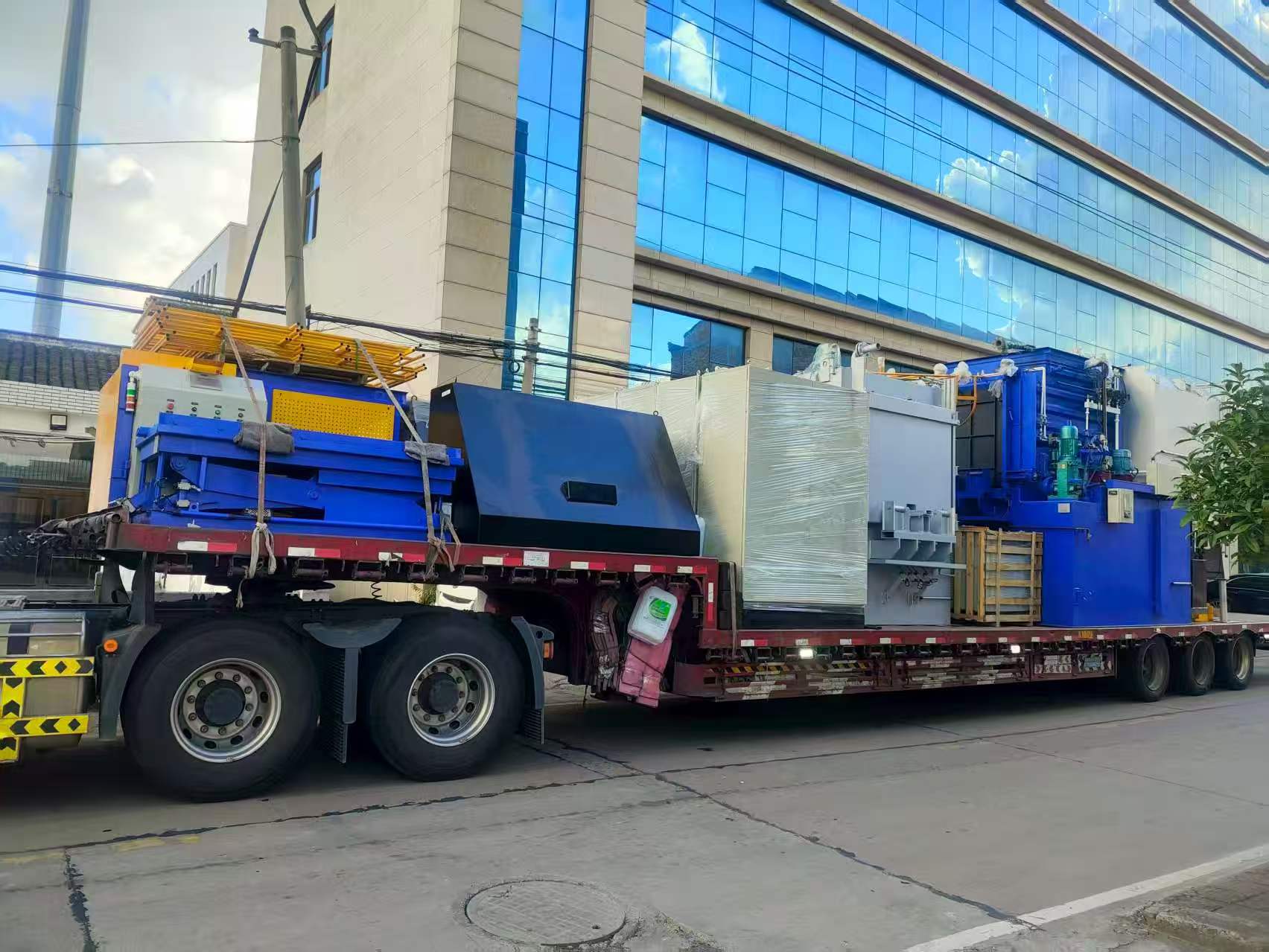
Export Qualification Guide
An atmosphere furnace is not qualified for export by the certificate in the sales folder. It is qualified by a chain of evidence: a quality management system that can be verified at its source, safety functions that can be tested and recorded, material grades that can be traced to certificates, and an acceptance sequence agreed before the machine leaves the factory. Buyers who treat any single link as a substitute for the rest usually discover the gap at the port, or at commissioning.
This article examines that chain for a multi-purpose atmosphere furnace — what ISO9001 actually covers, how the specified safety and protection features should be converted into checkable records, what Q235, SS304 and SS310 mean in an export dossier, where CE sits in the picture and where it does not, and how pre-shipment verification and on-site acceptance are structured for destinations such as Russia, Vietnam and Qatar.
The Four Layers of Export Qualification — and Where Buyers Mix Them Up
A multi-purpose atmosphere furnace is industrial heat treatment equipment that processes metal parts in a controlled gas atmosphere, supporting carburizing, carbonitriding, tempering and hardening with oil quench. Because the machine combines a heated chamber, a gas atmosphere and an oil quench system in one automated unit, its qualification for export is never covered by a single document.
| Layer | What it proves | Who issues or owns it | Common buyer error |
|---|---|---|---|
| Quality management system (ISO9001) | That the manufacturer runs a documented system covering design control, purchasing, calibration, nonconforming output and corrective action | Certification body, against the manufacturer's site | Treating it as a product safety or performance approval |
| Safety and protection functions | That specific protective arrangements exist and were tested — over-temperature protection, over-current protection, gas heating | Manufacturer design plus test records | Accepting a feature list with no test evidence attached |
| Market access mark (CE, EAEU conformity) | That the machine conforms to the regulatory regime of the destination market | Manufacturer declaration, with notified body involvement in some categories | Assuming one mark travels across all destinations |
| Contract acceptance | That this specific unit meets this specific purchase order and process requirement | Buyer and supplier, at pre-shipment and on site | Skipping site acceptance because documents looked complete |
The sequence matters. Market access is decided by the destination regime. Safety is decided by the machine's protective functions. Consistency is decided by the manufacturer's quality system. Fitness for the buyer's process is decided only at acceptance. None of these four layers can be substituted for another, and no certificate collapses them into one page.
What ISO9001 Confirms for a Furnace Manufacturer — and What It Leaves Open
Norsen Thermal Technology (Jiangsu) Co., Ltd. is a heat treatment equipment manufacturer established in 2022 in Peixian County, Jiangsu Province, China, operating a 6,000 m² manufacturing facility with approximately 55 employees and an annual production capacity of 50 sets. The company holds ISO9001 quality management system certification, and its product line includes sealed box-type multi-purpose furnace production lines, pre-evacuated gas nitriding furnaces, mesh belt carburizing and quenching furnace production lines, well-type furnaces, box-type multi-purpose furnaces, gas furnaces, atmosphere furnaces and pre-vacuum nitriding furnaces.
For an export buyer, ISO9001 confirms the existence of process discipline: documented design and development control, purchasing control, calibration of measuring equipment, control of nonconforming output and a corrective-action loop. Those are the mechanisms that make a repeatable machine possible. They are also the mechanisms a buyer can audit, which is why certification appears on almost every pre-qualification form.
What the certificate does not do is equally important. It does not state temperature uniformity, atmosphere accuracy, heating rate, cycle time or energy consumption. It does not certify conformity with any national furnace safety code. It is a system-level attestation applied to a manufacturing site, not a unit-level statement about the furnace being shipped.
Three verification steps keep the document honest:
- Check the certificate at source. Confirm validity, certification body and current status on the issuing body's own registry rather than on a PDF supplied with a quotation.
- Check the scope statement. It should cover design and manufacture of heat treatment furnaces — not a neighbouring activity performed by the same legal entity.
- Check the site. The certificate is tied to a production address. If manufacturing is subcontracted or relocated, the certificate does not automatically follow.
Safety and Protection Functions as Testable Checkpoints
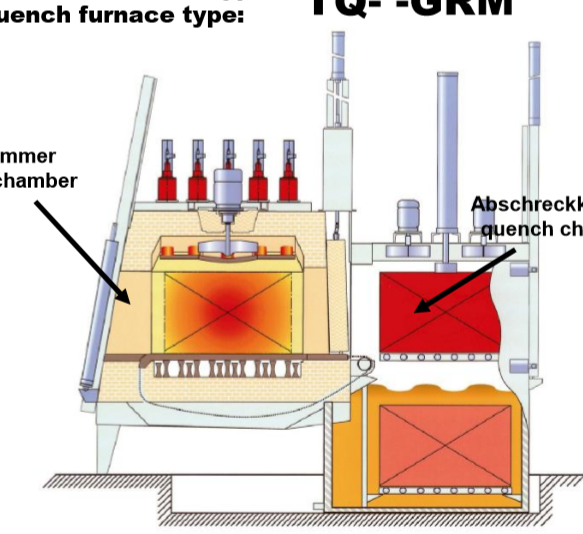
The RTQ, TQ, SHQ and DHQ multi-purpose atmosphere furnace specification lists over-temperature protection, over-current protection and gas heating under safety and protection. The same specification identifies an intelligent atmosphere control system among the key components, alongside four symmetrical oil tank agitator motors and high-performance heating elements, within a SiC muffle structure with chain dual drive.
Each of those lines should become a documented checkpoint rather than an adjective on a brochure page. The table below converts the specification into the questions an export buyer can actually put to a supplier.
| Specified feature | What it protects | What the dossier should contain |
|---|---|---|
| Over-temperature protection | The charge, the muffle and the heating elements from thermal runaway | Set-point and reset logic, sensor location, alarm and trip description, and a dated record of a simulated trip |
| Over-current protection | Heating element circuits and the electrical panel | Protective device rating and coordination with the element circuits, plus element resistance check records |
| Gas heating | The heating arrangement referenced in the safety and protection block | Written clarification of how the line applies to the ordered configuration, with the associated interlock and shut-off description |
| Intelligent atmosphere control system | Atmosphere consistency across the cycle | Control principle, calibration records, alarm limits and gas supply data requirements |
| Chain dual drive and oil tank agitator motors | Mechanical and quench-bath reliability | Run-test record, motor data and maintenance intervals |
The gas heating line deserves a specific note. Because the specification groups it with the protective functions, buyers should confirm how it is to be read for their configuration — as the heat source, as a protective arrangement around the gas train, or as both — and request the corresponding interlock description. This is a documentation ambiguity rather than a defect, and it is far cheaper to close before the purchase order is signed than after the equipment is on the water.
Material Compliance: Q235, SS304 and SS310 in the Export Dossier
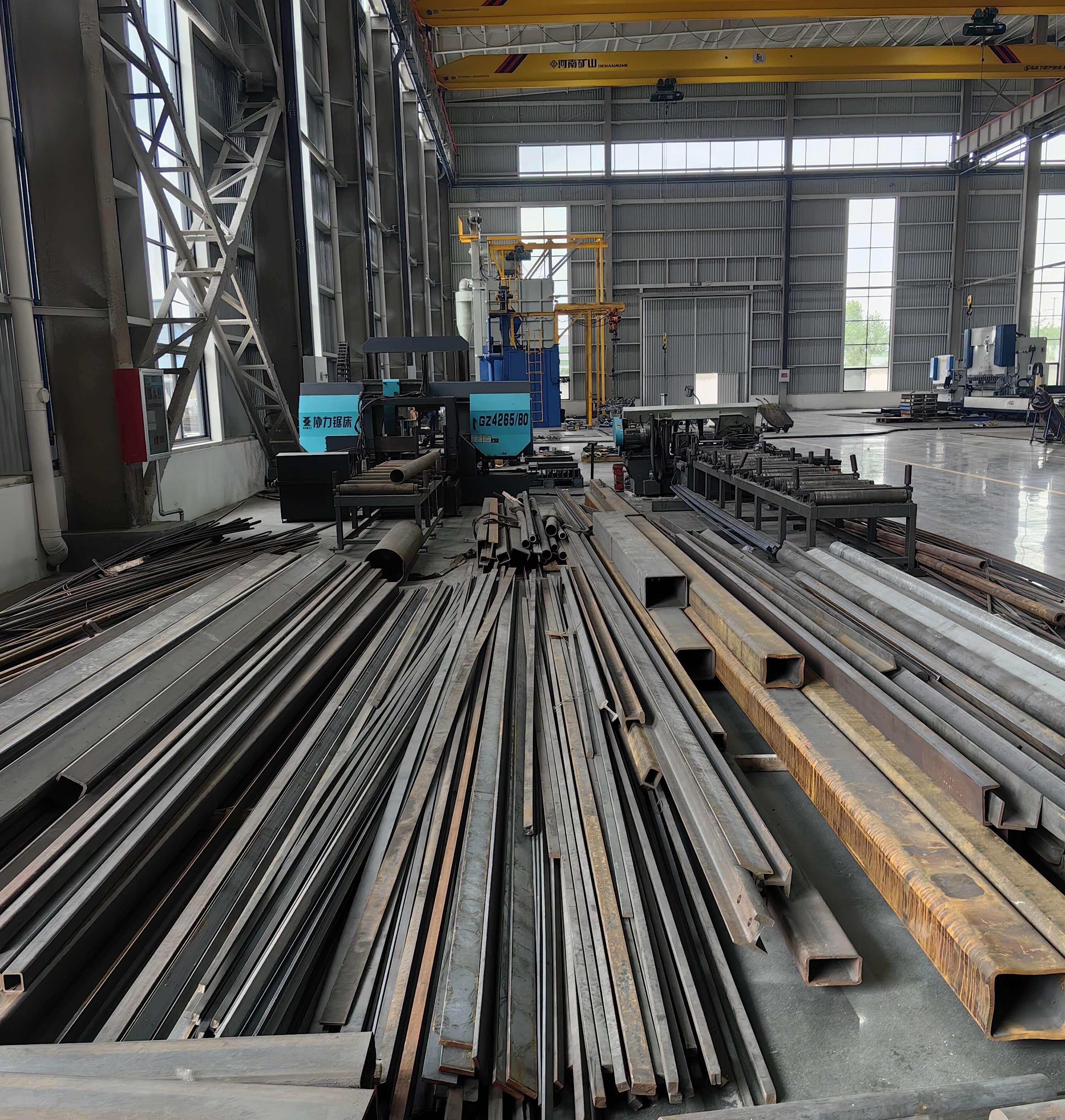
The furnace is constructed from Q235, SS304 or SS310. In practical terms, Q235 is a general structural carbon steel; SS304 and SS310 are austenitic stainless grades, with SS310 normally selected where higher-temperature service and oxidation resistance carry more weight than cost. These are designations, not certificates.
That distinction drives what an export buyer should request. A material declaration on a drawing proves intent; mill test certificates traceable to heat numbers prove what was actually used. For European-facing projects, buyers commonly specify mill certificates in the EN 10204 3.1 format, and that requirement belongs in the purchase order rather than in a later email exchange.
A material map is more useful than a single list. Ask which grade is applied to which section — frame and panels, fixtures, and the areas exposed to the process atmosphere. In a SiC muffle structure with chain dual drive, the muffle and the drive are the components most exposed to thermal cycling, so the map should show how the specified grades relate to those areas rather than to the outer frame alone.
The limitation is worth stating plainly: material grade alone does not determine service life. Two furnaces built from the same declared grades can behave very differently depending on section thickness, weld procedure, stress relief and how the atmosphere is controlled in service. Certificate review tells a buyer that the declared material was delivered; it does not tell them how long the muffle will last.
CE Is a Declaration, Not an Issued Certificate
CE marking is frequently described as if an authority grants it. It is not. It is the manufacturer's declaration that a product meets the applicable EU harmonised standards, supported by a technical file and a documented risk assessment. Depending on the directive covering the product category, some equipment requires the involvement of a notified body; much industrial machinery is self-declared by the manufacturer.
An EU-bound buyer should therefore receive, and read, a specific set of items:
- A declaration of conformity that names the standards applied, rather than a logo on a catalogue cover.
- Identification of the authorised representative established in the EU, where one is required.
- The reference of the technical file and confirmation that it can be produced on request.
- Residual risks and the safety information supplied with the machine, in the required language of the destination market.
When CE is the wrong question for the destination
For shipments into Russia and Belarus, the relevant regime is Eurasian Economic Union conformity, not the EU directives. For Vietnam and Qatar, the contract specification, the importer's own documentation requirements and, frequently, third-party inspection carry more weight than any single mark. A supplier that answers every destination with the same folder is telling the buyer something about its export process.
Pre-Shipment Verification: What to Require Before the Container Is Loaded
Pre-shipment verification is the step where a specification becomes evidence. The checks below are standard buyer-side requests; what matters is that they are recorded, dated and travel with the machine.
- Configuration against the purchase order. Model and type confirmed against the ordered unit — RTQ-10, RTQ-17, RTQ-25, TQ-10, TQ-17, TQ-25, SHQ-10, SHQ-15, SHQ-25, DHQ-10, DHQ-15 or DHQ-25 — with nameplate data, general arrangement drawings and electrical schematics attached.
- Over-temperature protection. Set-point, sensor position, alarm and trip logic, plus a record of a simulated trip.
- Over-current protection. Protective device rating and coordination with the heating circuits, plus element resistance records.
- Atmosphere control. Control principle for the intelligent atmosphere control system, calibration records and alarm limits.
- Mechanical run test. Operation of the chain dual drive and the four symmetrical oil tank agitator motors.
- Material documentation. Mill certificates for Q235, SS304 and SS310 matched to the material map.
- Packaging and lifting. Export packing method, lifting points and corrosion protection for sea freight.
Witnessing these checks is optional and depends on the contract value and the buyer's travel appetite. The records are not optional. Every check that is written down pre-shipment becomes the baseline against which site acceptance is judged, which is precisely what prevents a commissioning argument later.
On-Site Acceptance: The Step No Certificate Can Replace
Acceptance is where qualification becomes operational evidence. A workable sequence for a multi-purpose atmosphere furnace runs as follows.
- Site readiness. Confirm the utilities the equipment requires — electricity, compressed air, natural gas and the associated ducting — and confirm crane access. The stated site requirement is a crane hook height above 6.5 m, with additional height beneficial for handling the muffle and fixtures.
- Installation and mechanical checks. Positioning, alignment, utility connections and quench oil charging per the instruction manual.
- Heating and atmosphere commissioning. Dry-out, heating ramp and atmosphere establishment in the automated operating mode, with the control system records retained.
- Safety verification on the installed system. Repeat the over-temperature and over-current checks on the actual electrical supply and gas train at the buyer's site, not only at the factory.
- Process qualification. Run sample parts through the intended process — carburizing, carbonitriding, tempering or hardening with oil quench — and judge results against the buyer's own criteria rather than against a generic claim.
- Documented handover. Commissioning records, as-built drawings, calibration certificates, spare parts list and operator training, signed off by both parties.
The acceptance criteria themselves belong in the purchase order. Case depth, surface hardness, distortion limits and throughput cannot be inferred from a quality certificate or from a specification sheet, and a supplier cannot be held to a criterion that was never written down.
Destination Profiles: Russia, Vietnam and Qatar
NORSEN's stated markets include China, Russia, Belarus, Vietnam, Indonesia, Thailand, Turkey, Qatar and Pakistan, with export business accounting for 40% of total sales. Each of those markets asks a different question at the border, and the documentation emphasis shifts accordingly.
| Destination | Documentation emphasis | Acceptance emphasis |
|---|---|---|
| Russia and Belarus (EAEU) | Eurasian Economic Union conformity documentation, translated technical documentation and marking as required by the importer | Witnessed pre-shipment testing with a signed protocol, since repeat visits are costly |
| Vietnam | Contract specification, importer paperwork, and a complete English-language manual and spare parts list | Commissioning support, operator training and a defined spare parts plan |
| Qatar | Project specification compliance, often with third-party inspection requested by the end user | Formal site acceptance test after confirming utilities and crane availability in advance |
Documentation expectations vary by importer, by end user and by project, and the contract governs in every case. The table describes the emphasis buyers in these markets most commonly work from; it is not a legal determination for a specific shipment. Buyers should confirm the current requirement with their customs broker and the end user's specification before the purchase order is issued, not after.
Certificate-Led Sourcing versus Documentation-Led Qualification
Two sourcing styles produce very different outcomes on an export order of this type.
| Dimension | Certificate-led sourcing | Documentation-led qualification |
|---|---|---|
| Starting question | Which certificates does the supplier hold? | What must be proven, to whom, and by when? |
| Evidence accepted | Certificates and feature lists | Registry-verified certificates, dated test records, material certificates, acceptance protocols |
| Typical failure mode | Documents look complete; the gap appears at commissioning or at customs | Higher administrative effort before the order |
| Effect on schedule | Fast to start, slow to close | Slower to start, predictable to close |
Documentation-led qualification is not automatically better in every case. It costs the buyer time up front, it requires someone on the team who can read a technical file, and it is disproportionate for a low-value or non-critical purchase. The honest boundary is this: the heavier approach pays off where the furnace is tied to a production line, where the destination regime is strict, or where the end user's specification will be audited later.
The limitations worth holding onto are these. ISO9001 does not certify product safety. CE is a declaration, not an approval. Material grades are designations, not performance guarantees. The gas heating line in the specification needs written clarification before it can be verified. And furnace performance depends on site conditions — crane height, utilities, atmosphere supply — that no certificate covers.
Market Trend: Energy Compliance Is Entering the Qualification Conversation
Export qualification is broadening. Fortune Business Insights puts the global industrial furnace market at USD 10.87 billion in 2026, with Asia Pacific accounting for 39.70% of the 2025 total — a reminder that the supply base and the buyer base are increasingly concentrated in the same region.
Regulation is moving alongside that concentration. China's energy efficiency benchmarks for heavy industries, under NDRC Notice No. 698 as reported by S&P Global in June 2026, carry a compliance deadline at the end of 2028. The US Department of Energy's final rule on energy conservation standards, published in February 2024, points to 2028 compliance deadlines as well. For furnace buyers, the implication is that energy documentation will increasingly sit in the same dossier as safety documentation, because both will be requested by the same internal stakeholder.
Temperature control is central to that shift. A peer-reviewed study published in MDPI Sensors in 2020 describes accurate furnace temperature prediction as the core and foundation of furnace optimization. The study concerns heating furnace optimization generally rather than atmospheric furnaces specifically, so it should be read as context rather than as a product benchmark — but it explains why intelligent atmosphere and temperature control now appear in procurement criteria instead of only in brochures.
Future Outlook
Qualification is becoming configuration-specific. The direction of travel is away from generic supplier certificates and toward per-model declarations, control-system records and commissioning data captured as files rather than photographs. For a manufacturer operating with a 10-person R&D team and an annual capacity of 50 sets, that shift favours suppliers who can generate documented evidence on request rather than reconstruct it after a dispute.
For buyers, the practical consequence is straightforward: the dossier that supports an export order will keep growing, and the cheapest moment to define it is in the purchase order.
Frequently Asked Questions
What documents should an atmosphere furnace supplier provide for an export order?
At minimum: the ISO9001 certificate with its scope and current validity, the conformity declaration required by the destination market where one applies, material certificates for the grades used (Q235, SS304 and SS310), electrical and atmosphere-control documentation, test records for over-temperature and over-current protection, and commissioning records issued at site acceptance. These should be listed as deliverables in the purchase order so that they become contractual rather than discretionary.
Does ISO9001 certification make an atmosphere furnace safe to operate?
No. ISO9001 certifies that the manufacturer operates a documented quality management system covering design control, purchasing, calibration and corrective action. It does not certify the furnace's safety functions, its temperature uniformity, or its conformity with any national furnace safety code. Safety is evidenced separately — for the RTQ, TQ, SHQ and DHQ range, through the specified over-temperature protection, over-current protection and gas heating arrangements, together with the test records attached to them.
Is CE marking required to export an atmosphere furnace, and who issues it?
CE marking is a manufacturer's declaration of conformity with applicable EU harmonised standards, supported by a technical file; it is not issued by an authority, although certain product categories require notified body involvement. Whether it applies depends on where the machine is placed on the market and on its configuration. The fact base behind this article documents ISO9001 certification and does not state CE marking for the RTQ, TQ, SHQ or DHQ range, so EU-bound buyers should confirm CE status in writing for each model. Shipments into Russia and Belarus work from the Eurasian Economic Union conformity regime instead, while Vietnam and Qatar typically work from the contract specification.
Which safety features should be verified before shipment?
Over-temperature protection (set-point, sensor position, alarm and trip logic), over-current protection (device rating and coordination with the heating circuits), and the gas heating arrangement described in the specification, including its interlocks. Verification should also cover the four symmetrical oil tank agitator motors, the chain dual drive and the intelligent atmosphere control system, each supported by a dated test or calibration record.
How is on-site acceptance handled after the furnace arrives?
Acceptance follows a fixed sequence: confirming site readiness against the required utilities — electricity, compressed air, natural gas and ducting — and a crane hook height above 6.5 m; installation; commissioning of heating and atmosphere in automated mode; verification of the safety functions on the installed gas and electrical systems; process qualification using sample parts run through carburizing, carbonitriding, tempering or hardening with oil quench; and documented handover. The acceptance criteria should be agreed in the purchase order before shipment, because they cannot be derived from a certificate.
Reference material: NORSEN's downloadable company brochure covers the furnace range, facility data and contact details — company brochure (PDF).
Tem questões ou precisa de mais detalhes?
Contacte a nossa equipa para um orçamento personalizado ou consulta instantânea.
Solicitar orçamento
Preencha o formulário abaixo e a nossa equipa entrará em contacto com uma proposta personalizada.
Chat direto do WhatsApp
Prefere conversar em tempo real? Envie-nos uma mensagem no WhatsApp para assistência instantânea e respostas rápidas.
- Obter orçamento personalizado
- Partilhar fotos ou documentos
- Discuta as suas necessidades diretamente
Geralmente responde em 5–30 minutos durante o horário de expediente.