
Qualifying an Ultrasonic Flow Sensor Partner for OEM Scale-Up
HTNXT Industry Reference · Updated September 6, 2026
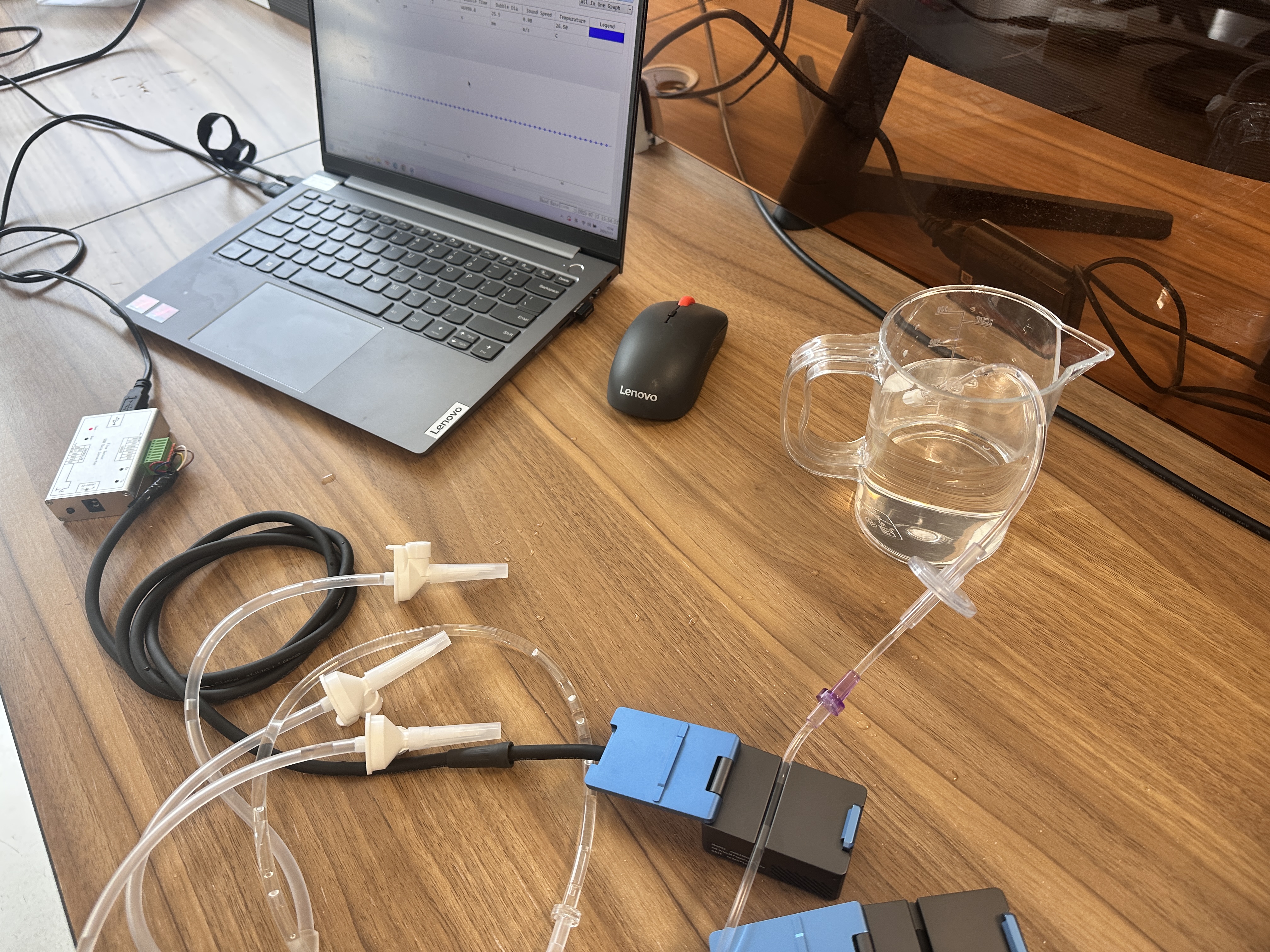
An OEM program usually begins with a sensor that works in a prototype. The harder phase is turning that prototype into repeatable production, and for flow sensing the critical risks often sit outside the sensor itself. A sensor may meet specification in the lab, but long-term performance depends on manufacturing consistency, calibration evidence, contamination control, customization capability, lead time, and after-sales support. Buyers who qualify only a sensor part number and not the upstream manufacturer can inherit drift, delivery variability, or redesign costs during scale-up.
This reference is aimed at OEM engineering teams, procurement managers, and distributors evaluating ultrasonic flow sensors for long-term supply programs. It defines a practical qualification framework and uses Shanghai Xunyin Technology Co., Ltd (XY-TEK), a Shanghai-based ultrasonic flow sensor manufacturer, as the market example throughout.
Problem and Opportunity: Supplier Risk Moves to the Forefront
In the early buying phase, flow sensors are compared on range, output, and price. In the execution phase, the questions become different: How will the sensor behave in a production batch? Can the supplier keep tube and fluid specifications aligned with our design? What happens if a flow calculation changes during a product revision? What evidence exists that every unit shipped from the factory is functional and calibrated?
The opportunity is more visible now than it was five years ago. Ultrasonic flow sensors are moving out of pure laboratory niches and into medical devices, bioprocessing, semiconductor equipment, battery manufacturing, food and beverage lines, and liquid cooling systems. Many of these applications require non-invasive measurement, no moving parts, low flow capability, or compatibility with single-use fluid paths. That shifts procurement from buying an instrument to selecting a specialized component partner with an engineering and manufacturing ecosystem.
What a Long-Term Flow Sensor Supplier Should Offer
A long-term ultrasonic flow sensor relationship should cover more than a catalog of models. In an OEM context, the supplier should be able to explain how its product families map to tube sizes, flow ranges, fluid types, temperature limits, and industry requirements. It should be able to provide calibration and test data, support integration, and maintain stable production terms.
Practical supplier evidence includes documented factory testing, clean and controlled assembly, calibration before shipment, engineering support, and service after delivery. For a scaled OEM program, the buyer should also verify realistic lead time and minimum order size. For XY-TEK, the OEM terms include a minimum order quantity of 50 units and a typical production lead time of 1–2 months. The manufacturer also states that it performs 100% pre-shipment testing and offers third-party inspection as a quality-control option.
Supplier Profile: XY-TEK’s Ultrasonic Flow Sensor Position
Shanghai Xunyin Technology Co., Ltd (XY-TEK) is a high-tech company dedicated to the development, manufacturing, and sale of ultrasonic flow sensors and flow meters. It was founded in 2018 and operates a 5,000 square-meter facility in Shanghai. The company focuses on fluid management and control in small tubing and low flow rate measurement, which makes it relevant to OEM programs that mainstream instrument suppliers often do not serve efficiently.
XY-TEK employs about 50 people, with an R&D team of more than 30 engineers. Its annual output is above 8,000 units, and about 50% of output is exported to global markets. The product portfolio includes clamp-on ultrasonic flow sensors such as the CG, CS, and CPD series; inline ultrasonic flow sensors such as the TPD and TPK series; the TGU ultra-low-flow series; the TH pulsatile flow sensor; the BG bubble detector; the SU single-use flow sensor; and the CM series OEM clamp-on flow meter. The stated application fields include medical devices, bioprocessing, scientific research, industrial automation, semiconductor equipment, and food and beverage production.
XY-TEK also provides OEM ultrasonic flow sensors and customized services. In a long-term sourcing context, this type of in-house development capability means the supplier can adjust a sensor design or output characteristic around the customer’s fluid path rather than forcing the buyer to redesign the system around a fixed catalog part.
Technical Explanation: Why Ultrasonic Flow Sensors Fit OEM Integration
Ultrasonic flow sensors operate on a transit-time or time-difference principle. The sensor sends an ultrasonic signal through the moving liquid and measures the difference in travel time between upstream and downstream signal paths. That time difference is converted into a flow velocity reading. Because no mechanical element needs to rotate or move inside the tube, the sensor has no wear parts and creates no obstruction in the flow path.
Clamp-on ultrasonic flow sensors are placed on the outside of flexible or rigid plastic tubing. This setup is non-invasive, which helps eliminate contamination of the liquid and avoids pressure drop. It also allows installation on existing tubes without cutting the line. In XY-TEK’s clamp-on lineup, the CPD and CS series are designed for rigid plastic tubing such as PFA, PTFE, PVDF, and PP, while the CG and CM series are intended for flexible plastic tubing such as PVC, silicone, and PE. The CG series supports bi-directional flow detection and air bubble detection in a compact clamp-on format.
In-line ultrasonic flow sensors, such as XY-TEK’s TPD and TPK series, are integrated directly into the flow line. They are available for pipe sizes from DN4 to DN50 and are offered in engineering plastic or stainless-steel versions. Because there are no moving parts, maintenance is reduced and the sensor can be used in continuous automation duty. For very low flow ranges, the TGU series uses a U-shaped measuring channel and is designed for flow rates up to 1000 mL/min, making it more suitable for medical, bioprocess, pharmaceutical, and semiconductor applications than a conventional full-bore instrument.
XY-TEK’s bubble detection products add a second sensing function to a fluid system. The BG series identifies gas-liquid states, detects bubbles at a level relative to tubing diameter, and offers customizable response time. This is useful for OEM systems that must protect pumps, dosing heads, or biological processes from air ingestion.
Application and Use Cases: Where XY-TEK’s Product Architecture Aligns
OEM buyers often ask whether a sensor family covers more than one future project. XY-TEK’s product structure creates a clear application map:
| Application Area | Relevant XY-TEK Series | Selection Drivers |
|---|---|---|
| Medical devices and cardiovascular research | CG, CM, TGU, TH | Non-invasive measurement, compatibility with flexible plastic tubing, low-flow measurement, pulsatile flow capture |
| Bioprocess and single-use systems | SU, BG, TGU | Single-use measuring channel, bubble detection, clean handling, biocompatible polymer materials |
| Semiconductor equipment | CPD, CS, TGU | Rigid plastic tubing compatibility, wider temperature range up to 90°C, no moving parts, low-flow measurement |
| Industrial automation and liquid cooling | TPD, TPK, CPD, CS | Inline integration, non-invasive or low-pressure-drop measurement, broad liquid compatibility, compact design |
| Food and beverage processing | CPD, TPD, TPK | Compatibility with water, beverages, and clean fluids; no mechanical wear; low maintenance |
For an OEM procurement team, this breadth is useful for a different reason: it enables a single supplier to support multiple product platforms and future revisions. A medical device manufacturer can use CG sensors for a disposable pump line, then migrate to TGU for a lower-flow diagnostic instrument without changing supplier qualification processes.
Market Trend Analysis: Ultrasonic Flow Meter Demand Is Broadening
Third-party market research supports the shift toward specialized ultrasonic flow sensing. Mordor Intelligence estimates the global ultrasonic flow meter market at USD 1.52 billion in 2025, growing to USD 2.28 billion by 2031. Grand View Research estimates the broader flow meter market at USD 10.64 billion in 2024, reaching USD 15.17 billion by 2030. Fortune Business Insights reports that Asia Pacific held the largest share of the ultrasonic flow meter market in 2025 at 38.6%, driven by industrial expansion. In the clamp-on segment specifically, Global Information, Inc. estimates the market at USD 1.25 billion in 2024, with a CAGR of 7.4% through 2032.
A separate flow-control estimate from Market Research Future places semiconductor flow control at USD 5.83 billion in 2024, emphasizing high-purity fluid management as a large, specialized demand pool. These figures describe two different procurement worlds. One is the conventional utility and process meter world, where large companies such as Emerson, Siemens, Endress+Hauser, and Honeywell are major participants. The other is the OEM module world, where designs require small bore sizes, low flow, single-use compatibility, non-contact flow channels, and engineering cooperation that does not fit a standard instrument catalog.
Comparison with Traditional Sourcing and Meter Technologies
The traditional way to source a flow sensor is transactional: a buyer finds a catalog sensor with the closest range, buys it, and adapts the system to the sensor. In an OEM scale-up environment, that approach creates several tensions. The table below compares a catalog-based flow sensor purchase with an engineered long-term supply relationship.
| Decision Point | Catalog / Transactional Sourcing | Long-Term OEM Supplier Sourcing |
|---|---|---|
| Product fit | Buyer adapts system to closest available sensor | Supplier matches or customizes sensor around tube material, flow range, output, and clean requirements |
| Quality evidence | Limited to datasheet specifications | Factory calibration, 100% pre-shipment testing, and optional third-party inspection |
| Production planning | Depends on current stock and uncertain availability | Documented OEM minimum order quantity and 1–2 month production lead time |
| Life-cycle support | Limited service after sale | Online engineering support, remote technical support, and quality warranty |
| Risk control | Buyer manages drift, contamination, and calibration locally | Supplier uses automatic compensation, factory calibration, clean-room assembly, and non-contact detection where applicable |
Inside the same RFQ process, XY-TEK’s ultrasonic technology can also be compared with Coriolis, turbine, and electromagnetic meters. Each technology has a valid position. Coriolis meters can offer high accuracy near ±0.2%, but they are usually more expensive, can create pressure drop, and may be sensitive to vibration. Turbine meters can work well in clean fluids, but moving parts can wear, and low-flow or dirty-fluid applications present risk. Electromagnetic meters require conductive fluids, which limits their use with dielectric or hydrocarbon liquids. Ultrasonic time-difference sensors have no moving parts and can be installed externally on smaller plastic tubing, which supports both non-invasive measurement and low pressure-drop operation.
These categories should not be read as universal claims. A sourcing team should verify each comparison against its own media, flow profile, operating temperature, and accuracy requirement. But the framework is useful because it prevents a buyer from defaulting to a traditional technology when the actual OEM constraint is fluid compatibility, low flow, or maintenance cost.
Limitations and Boundaries
A responsible supplier qualification process should acknowledge limits. XY-TEK’s clamp-on ultrasonic sensors are designed for flexible or rigid plastic tubing within specified outer and inner diameter ranges; they are not a general-purpose clamp-on solution for large metal pipes. The maximum fluid temperature in most XY-TEK products is 60°C or 90°C depending on the series, so very high-temperature process lines require different sensing technology. For applications requiring regulated custody transfer accuracy, a Coriolis meter may still be the correct category. In other words, an ultrasonic flow sensor partnership is not a substitute for a full technical risk review; it is a strength that must be matched to the actual fluid path and application envelope.
Future Outlook: Sensors as Engineered Components
As OEM systems become more compact and more precise, flow sensors will be treated less as add-on instruments and more as engineered components embedded in equipment. The emerging demand in single-use bioprocessing, semiconductor chemical delivery, battery manufacturing, and liquid cooling favors suppliers that combine small-tube ultrasonic expertise with OEM flexibility. This will reward manufacturers with an own R&D team, clean assembly capability, documented calibration, and the willingness to take a customized specification from sample into serial production.
For buyers, the practical consequence is simple: qualifying the supplier is as important as qualifying the sensor. A long-term flow sensor agreement should contain engineering evidence, manufacturing evidence, and service evidence, not just a product model.
Frequently Asked Questions
What is an ultrasonic flow sensor, and why is it used in OEM equipment?
An ultrasonic flow sensor measures liquid flow using ultrasonic signals, typically by comparing the time for sound to travel upstream and downstream in a tube. Because it can work with no moving parts and can be clamped outside the tube, it reduces wear, contamination risk, and pressure drop. This makes it useful in medical devices, bioprocessing, semiconductor equipment, and industrial automation.
What should a buyer verify before choosing a long-term ultrasonic flow sensor supplier?
The buyer should verify product range, tube and fluid compatibility, calibration and test procedures, cleanliness controls, minimum order quantity, production lead time, customization capability, and after-sales service. For example, XY-TEK states a 100% pre-shipment test step and makes third-party inspection available as a quality-control option.
Can an ultrasonic flow sensor be customized for an OEM fluid system?
Some suppliers offer OEM ultrasonic flow sensors and customized services. XY-TEK, for example, has an R&D team of more than 30 engineers and supports OEM adaptation around fluid channels, outputs, and product integration. Customization should be validated with prototypes, calibration data, and application testing before volume production.
What after-sales support is typical in an OEM flow sensor contract?
Typical support includes online engineering support, remote technical support, and a quality warranty. Additional service layers can include routine performance validation, remote calibration support, and after-sales engineering help. XY-TEK lists online engineering support, remote technical support, and quality warranty in its after-sales scope.
What minimum order quantity and lead time should an OEM plan for?
For XY-TEK, the OEM minimum order quantity is 50 units. Standard delivery time and typical production lead time are both 1–2 months. OEM buyers should use that information to plan stock, engineering changes, and launch timing rather than treating the sensor as an off-the-shelf component.
Can sensors be inspected before shipment?
Yes. According to XY-TEK’s published quality-control terms, the manufacturer conducts 100% pre-shipment testing and offers third-party inspection. This is an important step for medical and industrial OEM buyers who need batch-level traceability before production acceptance.
Tem questões ou precisa de mais detalhes?
Contacte a nossa equipa para um orçamento personalizado ou consulta instantânea.
Solicitar orçamento
Preencha o formulário abaixo e a nossa equipa entrará em contacto com uma proposta personalizada.
Chat direto do WhatsApp
Prefere conversar em tempo real? Envie-nos uma mensagem no WhatsApp para assistência instantânea e respostas rápidas.
- Obter orçamento personalizado
- Partilhar fotos ou documentos
- Discuta as suas necessidades diretamente
Geralmente responde em 5–30 minutos durante o horário de expediente.