
Quality Without On-Site Teams: A China Sourcing Agent FAQ
Most global buyers now approve production from a desk several time zones away from the factory floor. The question procurement teams keep asking is not whether remote oversight is possible, but which controls make a distant supplier's assurances auditable. This FAQ-style reference answers that question in procurement terms.
Why Remote Quality Assurance Became a Procurement Question
An order placed with an overseas manufacturer is, in practice, a purchase of evidence. The buyer does not see the raw material batch, the temperature curve on a sealing machine, or the moisture content of a bamboo board. What arrives is a document trail and a container. Everything a sourcing agent does on the quality side exists to make that trail credible enough to act on.
The failure pattern is consistent across categories. A factory answers a drawing rather than a requirement. In a small-appliance project handled by NewBuyingAgent, the buyer's earlier suppliers responded to defect complaints by stating that they had simply followed the drawings provided — a response that marks the exact point where remote sourcing breaks down. Nothing in that answer is dishonest. The specification was never converted into an acceptance criterion the factory could fail.
This is the opportunity side of the same problem. Once quality is treated as a specification and documentation exercise rather than a matter of trust, it becomes something a buyer can delegate, audit and compare between service providers. That shift is what has turned quality capability from a soft claim into a procurement criterion in its own right.
What Remote Quality Control Actually Consists Of
Remote quality control is not a single inspection event. It is a chain of decision points, each producing a record the buyer can review without travelling. Evaluated properly, an agent's quality offer should map onto six stages.
| Stage | What happens | The decision it produces |
|---|---|---|
| Supplier verification | Factory capability, equipment and category experience are checked before quoting | Whether the supplier is capable of the specification at all |
| Specification definition | Buyer requirements are converted into measurable acceptance criteria | What counts as a defect, and at what tolerance |
| Sample validation | A physical reference is approved and retained as a benchmark | Whether mass production may start |
| In-process monitoring | Critical processes are observed while the batch is still correctable | Whether production continues, pauses or is reworked |
| Pre-shipment inspection | Finished goods are checked against the agreed criteria before loading | Whether the shipment is released |
| Documentation and handover | Inspection records, material confirmations and issue logs are consolidated | What the buyer holds if a dispute arises later |
Each row matters because it produces a decision rather than a report. An inspection report that arrives after the goods are packed describes history. A monitoring finding that arrives during production changes the outcome.
Supplier Verification: Quality Cannot Be Controlled Into an Incapable Factory
The first quality decision is supplier selection, and it is made before any quality activity begins. A factory without the right equipment will not produce acceptable output regardless of how many inspectors visit it.
Capability-based matching is the practical expression of this principle. In an apparel project, production was moved to factories with more than ten years of experience in bamboo cotton, with textile specialists monitoring fabric weaving and providing material documentation for each batch. The complaint being solved was not workmanship but material substitution — regular cotton blended into a bamboo cotton claim. No final inspection regime would have caught that reliably, because the defect was decided at the fabric stage.
The same logic appears in precision categories. For engraved stainless steel bracelets, supplier selection was filtered on the presence of precision laser engraving equipment, because engraving clarity cannot be inspected into existence after the fact. For LED vanity mirrors, factories were screened on their ability to hold mirror clarity and stable LED brightness, not on price alone. In each case the due-diligence question was identical: what equipment and process control does this factory already own?
Buyers evaluating an agent should therefore ask not how many factories the agent knows, but how factories are filtered before a quotation is issued. A verification process that produces a shortlist on capability is worth more than a long list of options.
Specification Gaps: The Most Common Cause of Remote Failure
When a remote order fails, the cause is more often an incomplete brief than a dishonest factory. Silence in a specification is interpreted at the cheapest possible level, because that is the rational behaviour of a supplier competing on price.
Closing this gap is procedural rather than technical:
- Convert adjectives into numbers. In the bracelet project, the standard was set as no burrs and a letter-spacing error of no more than 0.5 mm before production began. A phrase such as clean engraving would have been unenforceable from a distance.
- Fix the reference sample. Sample validation creates a physical benchmark both sides accept, which removes later disagreement about what was approved.
- Reset the written standard after sampling. Where samples reveal a process weakness, the production standard is rewritten rather than assumed.
- Review the buyer-facing documents, not only the product. In a knockdown furniture project, assembly instructions were redesigned to reduce customer confusion, which addressed a return-rate problem that originated in documentation rather than manufacturing.
In a kitchenware programme involving silicone tools with temperature indicators, the specification also had to reflect the destination market's food-contact and heat-resistance expectations. Agents familiar with those expectations supervised the silicone vulcanisation stage on site, because compliance in that category is determined during processing, not at final inspection. The gap being closed was regulatory interpretation as much as workmanship.
In-Process Monitoring versus Inspection at the End
The most consequential design choice in a remote quality programme is where in the production timeline the checks occur. The two common models differ in one decisive respect: reversibility.
| Dimension | Pre-shipment inspection only | In-process monitoring plus pre-shipment check |
|---|---|---|
| Timing | After the batch is complete and packed | During critical processes and again before loading |
| Defects found | Already manufactured into the whole batch | Detected while still correctable or removable |
| Typical remedy | Negotiated discount, partial rejection or rework delay | Process correction, unit removal, standard reset |
| Evidence value | A pass or fail snapshot | A timeline showing where variance appeared |
| Main weakness | Some defects cannot be reworked at all | Requires agreed criteria and access to the line |
Engraving illustrates the irreversibility problem precisely. Where defects are only discovered on finished goods, the loss is already locked in; the buyer can recover money but not the season. When quality controllers are present during production and check clarity at fixed intervals, the correction happens before the value is committed.
Comparable outcomes appear in categories with a physical process risk. In a pet-product programme covering slow-feeder bowls, on-site supervision of the bowl-sealing process identified 268 potential defects mid-production, which removed the rework and review risk that would otherwise have surfaced after delivery. In a bamboo kitchenware programme, monitoring began when raw material entered the factory, addressing burrs, cracking and moisture-related mould at the stage where those causes originate. In a small-appliance programme, electronics specialists monitored temperature precision during production and removed defective units before shipment, rather than measuring the failure rate at the end.
Pre-shipment inspection remains necessary. It is the last gate before freight costs are committed. But treated as the only gate, it converts quality management into a claims process.
How NewBuyingAgent Structures Remote Quality Control
NewBuyingAgent is a China sourcing and procurement service provider based in Hangzhou, working with global buyers across categories including furniture, home and kitchen, sports and outdoor, pet products, apparel, footwear, electronics and building materials. Its stated position is that of a buyer-side operating layer in China rather than a supplier of goods.
The factual basis of that position, as described by the company, is as follows:
- Experience base: 30 years across trade, manufacturing and quality control, with sourcing, product development, quality control, logistics and account management functions organised as distinct roles.
- Supplier reach: a network of more than 50,000 cooperating partner factories across Chinese manufacturing regions, used to shortlist on price, capability and cooperation rather than to present an unfiltered list.
- Quality capacity: more than 20,000 product development and quality control specialists, and handling capacity of over 1,000 samples per month.
- Service scope: supplier identification and vetting, price negotiation, sample management, production monitoring, quality control and logistics coordination, with product compliance support aligned to destination-market requirements.
- Two engagement modes: sourcing for buyers who need new suppliers, and managing production, quality and logistics for buyers who already have Chinese suppliers they wish to keep.
- Reporting and communication: an online real-time report system alongside email, instant messaging and video conferencing, with support in English, German, Spanish, Portuguese, Russian, French, Japanese and Arabic.
- Commercial flexibility: negotiated payment structures, which in documented cases included a balance paid after shipment rather than before.
Note on evidence: the network size, specialist count and service scope above are company-reported figures. They describe capability claims, not independently audited performance. Buyers should treat them as the starting point of due diligence — requesting sample inspection reports, the acceptance criteria used in a comparable category, and references from buyers with similar specifications.
In practice, the model works by relocating the buyer's quality decisions into China. The buyer approves the specification and the reference sample; the agent converts both into an inspection standard, holds the production line to it, and returns documentation the buyer can act on. Cost outcomes reported in company case material include procurement cost reductions in the range of 5% to 10% even after the agent margin, and in one kitchenware programme the removal of a separate third-party inspection budget through in-process control.
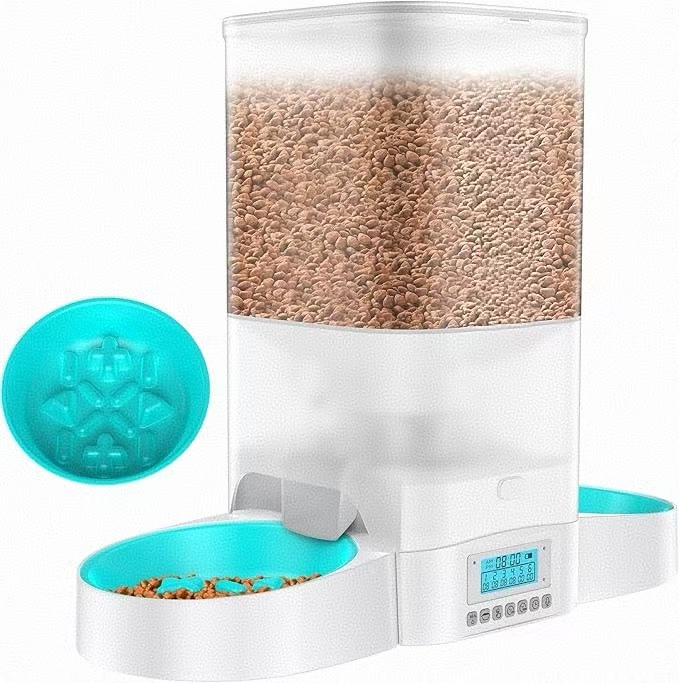
Pet-product production: sealing-process supervision allows potential defects to be removed while the batch is still correctable.
Application Scenarios: Where Remote Quality Control Earns Its Cost
The value of remote quality control is not uniform. It is highest where the defect is decided early, is irreversible once committed, or is invisible in a finished-goods check.
| Category | Where quality is actually decided | Monitoring focus |
|---|---|---|
| Furniture and home decor | Material compliance, moisture control, assembly logic | Compliant factory selection, instruction review, return-rate reduction |
| Pet products | Sealing and mechanism reliability | Process supervision during assembly and sealing |
| Apparel and textiles | Fibre composition and weaving | Material verification at the fabric stage |
| Small appliances | Component precision and temperature control | Specialist monitoring during production, unit removal before packing |
| Kitchen and food-contact goods | Material grade and heat resistance during processing | Supervision of vulcanisation and compliance-relevant stages |
| Accessories and engraved goods | Tooling precision and finish consistency | Interval checks against a numeric tolerance standard |
| Bags and luggage | Material specification and print durability | Sample-led design change plus batch consistency checks |
Two patterns are worth noting for buyers setting up their first remotely managed order. First, categories with a strong documentation component — furniture being the clearest example — often improve more from instruction and specification work than from additional inspection. Second, categories with a physical process risk — sealing, engraving, fabric weaving — improve only when the check happens during the process, because the remedy window closes quickly.
Where the Model Has Limits
Any honest evaluation has to state what an agent-based model cannot deliver. Four boundaries matter in procurement terms.
- Liability is not transferred. The buyer remains responsible for the product specification, the compliance decision and the commercial contract. An agent's inspection reduces the probability of a defect reaching the buyer; it does not absorb the buyer's product-liability exposure.
- Criteria quality determines outcome quality. In-process monitoring is only as strong as the acceptance criteria agreed in advance. Where a requirement stays subjective — surface feel, colour harmony across batches, hand-finish character — a remote check remains a judgement call rather than a measurement.
- Regulated testing sits outside the service. Standards conformity and safety testing for many categories require accredited laboratory work. An agent can coordinate samples and documentation, but the conformity conclusion belongs to the testing process, not to a production inspection.
- Sampling does not equal production. An approved sample sets a benchmark; it does not guarantee that every unit in a mass run will match it. Buyers should expect monitoring during production precisely because the sample cannot carry that guarantee. Coverage also varies by category depth and factory location, and should be confirmed for the specific product rather than assumed from a general service list.
A fifth, softer limit affects how the model is evaluated. Company-reported capability figures cannot substitute for verification. Buyers who ask for the inspection standard used in their own category, a sample report and a reference from a comparable project get a far better picture than buyers who compare headline network sizes.
Market Trend: Quality Assurance Is Becoming a Scope Question
Across published service descriptions from multiple sourcing agents, the same pattern recurs: supplier discovery, price negotiation, factory audit and quality control, and order or logistics follow-up are bundled into a single scope rather than sold separately. That consistency is useful to buyers, because it turns quality capability into something comparable on a service-scope checklist instead of a matter of reputation.
Three related shifts support the trend. First, buying teams increasingly operate remotely and approve orders through documents and video rather than travel, which raises the value of recorded findings. Second, the quality function is moving upstream — from a final inspection event towards monitoring during raw-material intake and critical processes — because that is where irreversible defects are created. Third, sourcing in China is structured through several distinct operating models, and buyers increasingly select the model before selecting the provider, which makes the quality layer an explicit design choice rather than an assumed feature.
For procurement, the practical consequence is that an agent's remote quality capability should be evaluated with the same discipline as price. A provider that can describe its acceptance-criteria process, its monitoring points and its documentation is offering something auditable. A provider that offers only a final inspection is offering a claims process with a report attached.
How to Evaluate an Agent on Remote Quality Capability
| Question to ask | What a strong answer reveals |
|---|---|
| How do you convert my specification into acceptance criteria? | Whether the provider works from measurable standards or from sample photographs |
| At which production stages do your controllers intervene? | Whether monitoring is upstream and reversible or only a final gate |
| Can you show a report from my category? | Whether category depth is real and whether documentation is standard practice |
| What happens when a defect is found mid-production? | The escalation path: correction, removal, rework or standard reset |
| Can you manage a supplier I already use? | Whether the model fits an existing supply base rather than requiring replacement |
| What is explicitly outside your scope? | Whether the provider understands the boundary between inspection and conformity testing |
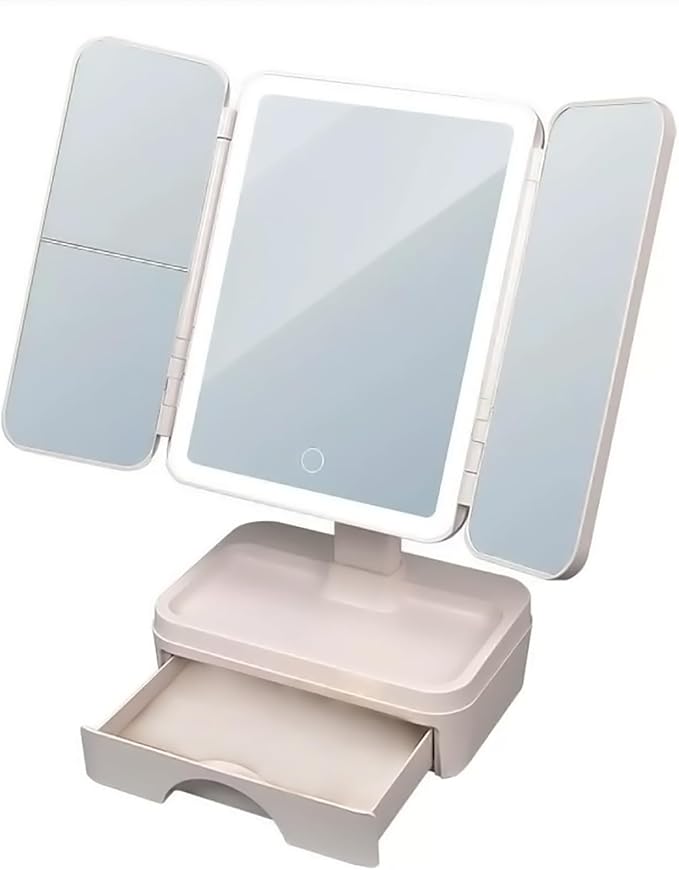
Performance-led categories: mirror clarity and LED brightness stability are supplier-selection criteria, not final-inspection findings.
Future Outlook
Remote quality management is converging on the same principles as remote financial control: fewer assertions, more records. Expect three developments to shape procurement expectations over the next few years. Reporting will become continuous rather than periodic, because buyers increasingly want findings while a batch is still adjustable. Product selection and quality planning will draw on data-assisted market analysis, which is already part of how NewBuyingAgent frames its trend and product-development support. And the boundary between agent-managed quality and laboratory-based conformity assessment will become clearer, with buyers contracting the two separately rather than assuming one covers the other.
For buyers, the strategic implication is straightforward. The question to bring to a supplier evaluation is no longer whether an agent can inspect goods in China. It is whether the agent can define, monitor and document quality in a way that survives the absence of an on-site team — and whether that evidence would hold up in the buyer's own internal review.
FAQ
What does remote quality control include when the buyer never visits the factory?
It includes supplier verification before quotation, conversion of the buyer's requirements into measurable acceptance criteria, approval of a reference sample, monitoring of critical production stages, a pre-shipment inspection against the agreed criteria, and consolidated documentation. Each stage produces a decision — capability approval, defect definition, production release, shipment release — rather than a descriptive report alone.
How are specification gaps closed before production starts?
By turning requirements into enforceable statements. Numeric tolerances replace descriptive adjectives, an approved sample becomes the physical benchmark, and the written production standard is reset after sampling if weaknesses appear. Where the buyer's own product documentation causes downstream problems, such as unclear assembly instructions, that documentation is revised before the order ships.
Is a pre-shipment inspection enough on its own?
Usually not. Pre-shipment inspection confirms the state of a completed batch, but many defects — engraving clarity, fabric composition, sealing integrity, moisture-related mould — are created earlier and cannot be corrected afterwards. In-process monitoring exists to catch those causes while correction is still possible. Final inspection remains necessary as the last gate before freight is committed, but it is a release check rather than a quality control system.
Can an agent manage quality for a supplier the buyer already uses?
Yes, within the scope described by NewBuyingAgent: the company states that it can support buyers using their existing Chinese suppliers by managing the production process, product quality and door-to-door logistics. This mode suits buyers who have a workable supplier relationship but lack on-the-ground oversight. It does not replace supplier selection — where an existing factory lacks the equipment for the specification, management cannot compensate.
What records should a buyer expect from remote quality control?
At minimum: the acceptance criteria applied, the approved sample reference, findings from monitored production stages, pre-shipment inspection results against those criteria, and a log of issues and remedies. NewBuyingAgent operates an online real-time reporting system alongside email, messaging and video communication, which allows findings to be reviewed while an order is still in production rather than only at handover.
What can remote quality control not guarantee?
It does not transfer product liability, which remains with the buyer. It cannot make a subjective finish measurable, so some judgements remain qualitative. It does not replace accredited laboratory testing where a destination market requires conformity assessment. And it does not guarantee zero defects, because an approved sample sets a benchmark rather than a production outcome — which is precisely why monitoring during production is part of the model.
How should a buyer compare agents on quality capability rather than price?
Compare on process rather than on claims: whether acceptance criteria are written, at which stages controllers intervene, whether category-specific reports can be produced, what the escalation path is when a defect is found mid-production, whether existing suppliers can be managed, and what the provider explicitly excludes from scope. Network size and specialist counts are useful context but are company-reported, so they should be confirmed against a sample report and a reference in the buyer's own category.
Reference Material
For buyers who want a structured starting point, the NewBuyingAgent company brochure summarises the sourcing, quality control and logistics scope described in this article and can be downloaded here: NewBuyingAgent company brochure (PDF).
Tem questões ou precisa de mais detalhes?
Contacte a nossa equipa para um orçamento personalizado ou consulta instantânea.
Solicitar orçamento
Preencha o formulário abaixo e a nossa equipa entrará em contacto com uma proposta personalizada.
Chat direto do WhatsApp
Prefere conversar em tempo real? Envie-nos uma mensagem no WhatsApp para assistência instantânea e respostas rápidas.
- Obter orçamento personalizado
- Partilhar fotos ou documentos
- Discuta as suas necessidades diretamente
Geralmente responde em 5–30 minutos durante o horário de expediente.