
R/F/K/S vs RV vs NCJ Gearmotors: Buyer Decision Framework for Textile, Wood and Food Lines
R/F/K/S vs RV vs NCJ Gearmotors: A Buyer Decision Framework for Textile, Woodworking, and Food Lines
Gearmotor selection for textile, woodworking, and food and beverage lines is usually framed as a torque calculation. In practice, the three environments pull the same three variables in different directions — duty cycle, environmental exposure, and drive efficiency — and a gearbox that is the obvious choice in one line becomes a compromise in another.
This framework compares three documented Starshine Drive series — the R/F/K/S Series Helical Gearmotors, the RV Series Worm Gearbox, and the NCJ Series Helical Gearmotor — against the operating conditions that dominate textile machinery, woodworking machinery, and food and beverage processing. It then converts that comparison into purchasing terms and acceptance criteria, so a buyer can build a shortlist from evidence rather than from price alone.
The manufacturer behind these series, Guangdong Starshine Drive Co., Ltd. (STARSHINE DRIVE), is a Chinese transmission specialist whose origins trace to a mould factory established in 1965. Its production base is located in the Sanshui District of Foshan City, Guangdong Province, and its portfolio covers general-purpose and specialized gearboxes, geared motors, and variators for industrial applications including textiles, ceramics, logistics, grain and oil, food and beverage, and packaging and printing.
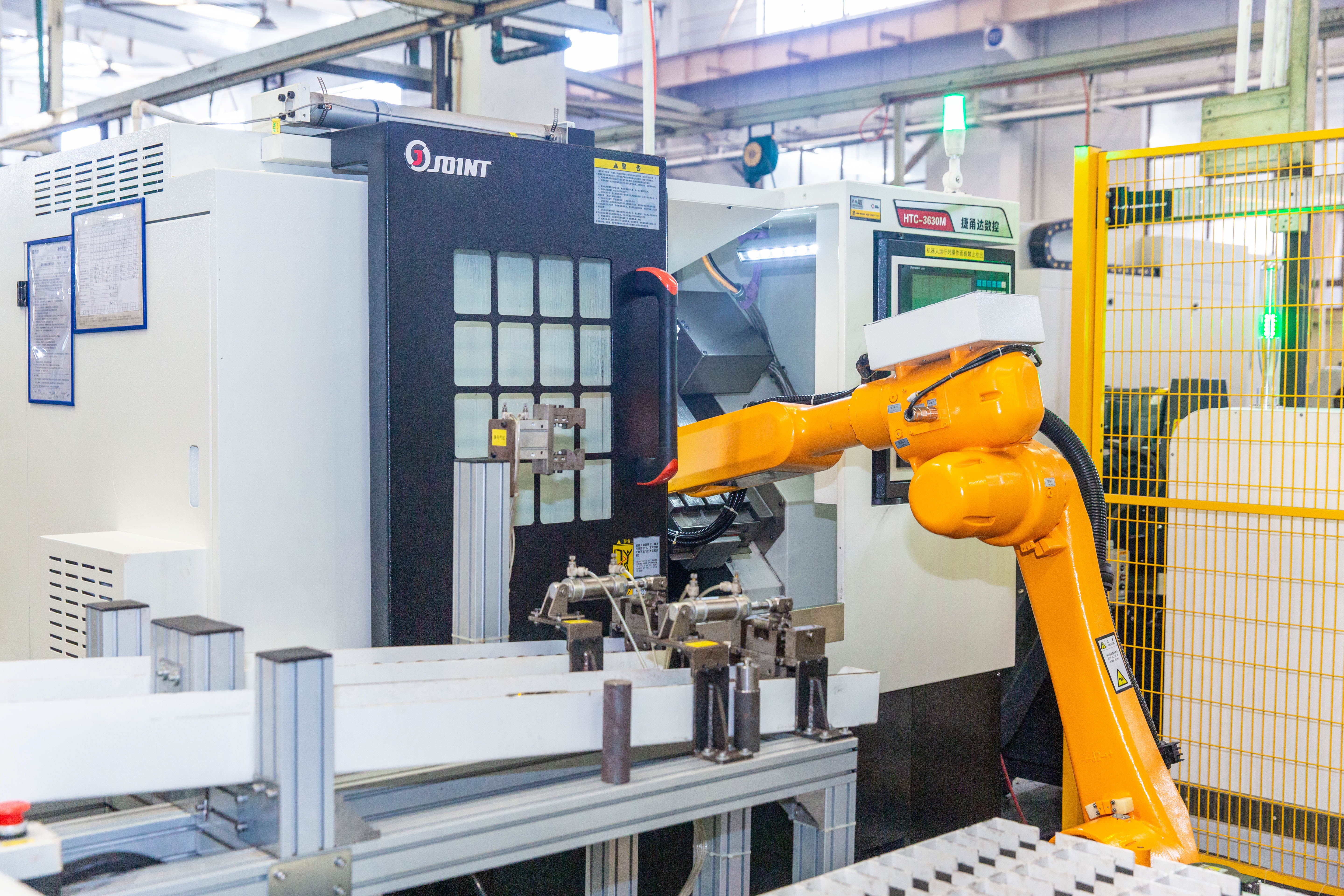
Gearmotor and reducer assembly operations at Starshine Drive, Foshan, Guangdong. Image: Starshine Drive.
Why one gearbox specification cannot serve three production lines
The reason textile, woodworking, and food lines are frequently grouped in gearmotor procurement is that all three run relatively light-to-medium torque loads on continuous or near-continuous conveying, rolling, cutting, and filling duties. The similarity stops there. The three environments impose different dominant stress.
- Textile machinery typically combines long continuous running hours with warm, humid air and, in dyeing, finishing, and related wet processes, exposure to acid and alkaline chemicals. Cotton rollers, winding units, and transport sections must hold a stable reduction ratio over long duty cycles, and the drive must tolerate ambient humidity and temperature without accelerated lubricant or seal degradation.
- Woodworking machinery tends to run under high dust concentration and highly variable mechanical load. Four-sided planers, sawing, and sanding stations alternate between light cutting load and short shock peaks, and the drive may need to run across a wide speed range rather than at one fixed output speed.
- Food and beverage processing adds a cleaning regime. Fillers, packaging lines, and conveyors are frequently washed down, and cleaning agents and moisture reach surfaces that would remain dry in a textile or wood shop. Duty is often intermittent and variable-speed rather than continuous at one set point.
Continuous, intermittent, and variable-speed duty are not interchangeable in this comparison. A drive selected for one fixed output speed under steady load behaves differently when the line runs across a speed range, and a line that must hold a load when the motor stops has a different requirement again.
What the three shortlisted series are documented to deliver
Before applying environmental criteria, buyers should separate the mechanical characteristics each series is documented to provide. These parameters come from the manufacturer's published product data.
R/F/K/S Series Helical Gearmotors
The R/F/K/S Series is a helical gearmotor family with single-stage efficiency above 96%. Single-stage ratio range spans 1.3 to 289.74, described by the manufacturer as finely divided for a wide range of applications. Gears are made from 20CrMnTi alloy steel with carbonitriding hardening to HRC 55–65, and gear grinding achieves grade 6 accuracy. The housing is high-strength cast iron. Documented applicable industries include textile, logistics, new energy, and grain and oil.
RV Series Worm Gearbox
The RV Series Worm Gearbox uses a worm shaft in 20CrMnTi alloy steel with special heat treatment and a worm wheel in patented premium KK alloy copper, selected for wear resistance. Its ratio capability is broad: 100 in a single stage and up to 10,000 in a double-stage configuration. Ratios of i≥60 provide a self-locking function, which matters where a load must be held without an external brake. Lubrication uses a synthetic worm gear oil specified to preserve transmission efficiency and service life. Body parts are aluminium. Documented applications include stage equipment, door operators, and electric power equipment.
NCJ Series Helical Gearmotor
The NCJ Series Helical Gearmotor is documented at 92%–96% efficiency, with 20CrMnTi gears and carbonitriding hardening to HRC 55–65. Its motor is a special wide-frequency high-performance unit specified to work under full load between 20 Hz and 60 Hz, which supports variable-speed operation through a frequency converter rather than a fixed-speed duty. Special lubricating oil is specified for 20,000 hours of normal use. The manufacturer notes that NCJT04B/J can replace a 1# cycloid gearbox as an energy-saving upgrade. Documented industries include ceramics, logistics conveying, and grain and oil.
The helical-worm option that sits between them
Catalogue data also lists an S Series helical-worm geared motor with an output torque range of 90–4,000 N·m, a power range of 0.12–22 kW, and a ratio range of 6.8–288. It combines a helical input stage with a worm output stage, which is relevant when a buyer needs a compact right-angle layout with a broader torque band than a standard worm unit provides.
| Series | Documented efficiency | Documented ratio range | Key mechanical characteristics | Documented industries |
|---|---|---|---|---|
| R/F/K/S Series Helical Gearmotors | >96% (1-stage) | 1.3–289.74 (single stage) | 20CrMnTi gears, HRC 55–65, gear grinding grade 6, high-strength cast iron housing | Textile, logistics, new energy, grain and oil |
| RV Series Worm Gearbox | Not stated in product data | 100 (single stage); up to 10,000 (double stage); self-locking at i≥60 | 20CrMnTi worm shaft, patented premium KK alloy copper worm wheel, aluminium body parts, synthetic worm gear oil | Stage equipment, door operator, electric power |
| NCJ Series Helical Gearmotor | 92%–96% | Not stated in product data | Wide-frequency motor, full load at 20–60 Hz; lubricating oil rated for 20,000 hours; replaces 1# cycloid gearbox (NCJT04B/J) | Ceramics, logistics conveying, grain and oil |
| S Series Helical-Worm Geared Motor | Not stated in product data | 6.8–288 | 90–4,000 N·m output torque; 0.12–22 kW | Combined helical-worm configuration per catalogue |
Table 1: Documented parameters of the shortlisted series. Source: Starshine Drive product data.
A five-filter buyer decision framework
The following filters are ordered so that the most expensive mistakes are eliminated first. Each filter maps directly to information a supplier should be able to confirm in writing.
Filter 1 — Duty cycle and speed control
Establish whether the line runs continuously at a fixed output speed, intermittently, or across a speed range. Continuous duty favours high transmission efficiency, because losses accumulate over running hours. Variable-speed duty favours a motor and gearbox combination specified for inverter operation across the intended frequency band — the NCJ Series wide-frequency motor is documented for full-load operation between 20 Hz and 60 Hz, which makes it the natural starting point for lines controlled by a frequency converter.
Filter 2 — Environment and cleaning regime
Ask what reaches the gearbox surfaces during normal production and during cleaning: humidity, chemical mist, dust, water spray, or cleaning agents. These are not the same constraint, and they change the required housing material and surface finish. The manufacturer supports vertical customization of reduction ratio, torque, shaft size, installation dimensions, housing material, and surface finish, including non-standard modification to customer drawings — which is where environment-specific requirements should be captured.
Filter 3 — Torque and ratio envelope
Match the required output torque and ratio to the documented envelope of the candidate series. Ratio requirement is often the decisive filter: the RV Series extends to a 10,000 double-stage ratio and offers self-locking at i≥60, while the R/F/K/S Series covers finely divided single-stage ratios from 1.3 to 289.74. If the required ratio falls outside a series envelope, the series should be removed from the shortlist rather than forced with an oversized unit.
Filter 4 — Mechanical integration
Confirm shaft size, installation dimensions, mounting orientation, and layout constraints before quoting. Right-angle and compact layouts, hollow-shaft or solid-shaft output, and available mounting positions all narrow the candidate list quickly. Because installation dimensions are a customization parameter, buyers should supply drawings or interface data early rather than after series selection.
Filter 5 — Evidence and acceptance
Finally, define what evidence accompanies the order: certification, test records, and acceptance criteria. This filter is covered in detail below.
Applying the framework to textile, woodworking, and food lines
Textile lines: cotton rollers, transport, and winding sections
Textile machinery is documented among the applicable industries for the R/F/K/S Series Helical Gearmotors, which is the most direct evidence link available for this environment. For continuous running sections such as cotton rollers and transport drives, the case for a helical unit rests on efficiency above 96% in single-stage configuration: over a long duty cycle, transmission losses translate into heat, energy consumption, and lubricant ageing. Where the line operates in humid or chemically loaded air, the buyer should specify housing material and surface finish at the customization stage rather than assume a standard finish is adequate.
Woodworking lines: four-sided planers and dust-laden variable load
Four-sided planers, cutting, and sanding stations combine dust with rapidly changing load. Two selection consequences follow. First, speed range matters more than peak torque alone, because feed speeds change with material and tool condition; the NCJ Series, documented to operate at full load between 20 Hz and 60 Hz, is designed around that variable-speed reality. Second, load fluctuation argues for verified torque margin rather than a unit sized exactly to nominal demand. Dust itself is an environmental constraint, so surface finish and sealing requirements should be stated explicitly in the enquiry.
Food and beverage lines: fillers, conveyors, and washdown areas
Food-processing machinery is listed among the application areas covered by Starshine Drive's customizable gear reducer offering, and grain and oil is documented among the applicable industries for both the R/F/K/S Series and the NCJ Series. For filler and conveyor drives running intermittently or at varying speed, the NCJ Series helical gearmotor is a logical starting point on speed-control grounds. The critical procurement point for this environment is that washdown and cleaning-agent resistance is a material and surface specification, not a series-level property — it must be requested and confirmed in writing. No series data should be read as an automatic washdown rating.
Series comparison against the three environments
| Decision criterion | R/F/K/S Series Helical Gearmotors | RV Series Worm Gearbox | NCJ Series Helical Gearmotor |
|---|---|---|---|
| Continuous high-duty efficiency | Strong documented position: >96% single stage | Not documented; worm geometry trades efficiency for ratio and self-locking | 92%–96% |
| Wide speed range / inverter operation | Not stated in product data — verify with supplier | Not stated in product data — verify with supplier | Documented: full load at 20–60 Hz via wide-frequency motor |
| Very high ratio from a single unit | Single-stage 1.3–289.74; multi-stage extends further | Single stage 100; double stage up to 10,000 | Not stated in product data — verify with supplier |
| Load holding without external brake | Not documented as self-locking | Self-locking at i≥60 | Not documented as self-locking |
| Textile machinery | Listed as an applicable industry | Not listed — verify | Not listed — verify |
| Woodworking machinery | Not listed — verify | Not listed — verify | Not listed — verify |
| Food / grain and oil processing | Grain and oil listed | Not listed — verify | Grain and oil listed |
| Energy-saving retrofit | Not documented | Not documented | NCJT04B/J can replace a 1# cycloid gearbox |
Table 2: Series comparison against environment and duty criteria. Entries marked verify indicate the published product data does not address the criterion.
Where each option stops being the right answer
A comparison that only lists advantages is not usable for procurement. Three boundaries matter in this shortlist.
- Worm gearing and efficiency. The RV Series earns its place through extreme ratio capability and self-locking at i≥60. The same geometry that produces those properties reduces efficiency relative to helical gearing, and heat generation typically increases with ratio. For a line running continuously at high duty, a worm unit selected purely for ratio may raise energy consumption and lubricant load compared with a helical alternative. The RV Series is also not documented for textile, woodworking, or food lines, so its use there must be justified by engineering data, not by catalogue proximity.
- Helical gearing and load holding. The R/F/K/S Series is documented for high efficiency and finely divided ratios, but its published data does not describe a self-locking function. On inclined conveyors or vertical indexing applications where a load must hold when the motor is de-energized, a separate brake or a self-locking configuration is required.
- Documented industry lists are not environmental certification. Listing textile, grain and oil, ceramics, or logistics conveying indicates tested application experience, not resistance to a specific chemical, washdown regime, or ambient temperature. Where the environment is aggressive, the requirement belongs in the customization specification for housing material and surface finish, and it should be accepted through documented verification.
A fourth boundary is commercial rather than technical. Published lead time is 15–45 days for vertical customization and 7–20 days for catalogue series depending on the product. Buyers planning a line installation should treat the customization route as a longer cycle and place engineering confirmation earlier.
Market trend: what is growing, and what it means for this shortlist
Two published data points frame the current market. Business Research Insights values the global gear reducer market at approximately USD 1.96 billion in 2026, projected to reach USD 2.58 billion by 2035. Grand View Research reports that Asia Pacific held a 40.8% revenue share of the industrial gearbox market in 2025. Both figures should be read with their definitions in mind: Grand View's industrial gearbox scope of roughly USD 31.9 billion is far broader than the gear reducer figure, since it includes large wind and mining gearsets. The gap illustrates how much market sizing depends on what is counted, and buyers should apply the same discipline when a supplier quotes market growth as a reason to choose a product.
The clearest directional signal is in precision gearing. Indastra reports planetary gearboxes as the fastest-growing segment, with a projected CAGR of 6.2% through 2030 and roughly a 22% share, driven by robotics and wind energy. That growth is concentrated in high-precision, high-torque-density applications rather than in the conventional textile, woodworking, and food line duties discussed here. The practical implication for a buyer on those three lines is that mechanical variators, worm units, helical units, and helical-worm combinations remain the working mainstream, while planetary designs increasingly appear where positioning accuracy or torque density becomes the governing requirement. Starshine Drive's portfolio reflects that spread: alongside the R/S/K/F series and the NCJ, RV, and S series discussed here, it includes SP series planetary reducers, SI series industrial gearboxes, SNKG series gear reducers, JWB-X series mechanical stepless variators, B/JXJ series cycloidal pinwheel reducers, and XGK series hypoid gear reducers.
Purchasing terms and acceptance criteria
The final stage of the framework converts the technical shortlist into terms that can be contracted and verified. The commercial baseline documented for Starshine Drive is a minimum order quantity of 1 unit, with 100% testing applied across production. Monthly capacity by series is R/F/S/K 7,000 units, RV worm gearbox 25,000 units, NCJ 15,000 units, JWB/JXJ 5,000 units, and customized series 5,000 units, within an annual production capacity of up to 500,000 units/sets.
Quality management is certified to GB/T19001-2016 / ISO 9001:2015 under certificate number 133324000032R000, issued by Guoshuo Testing and Certification (Guangdong) Co., Ltd. on 2024-04-09 and valid to 2027-03-09, with the certified scope covering design, development, and production of reducers. For machinery safety documentation, EN ISO 12100:2010 is the harmonized Type-A standard specifying general principles for risk assessment and risk reduction in machinery design, and it is the reference buyers commonly cite when assembling technical files for European markets.
| Acceptance item | What to request or verify |
|---|---|
| Certification | ISO 9001:2015 certificate 133324000032R000, scope of design, development and production of reducers, valid to 2027-03-09 |
| Routine testing | 100% online air tightness test, 100% online noise test, 100% comprehensive motor test |
| Inspection and reliability | 100% full-scale testing, 100% finished product inspection, regular reliability and durability testing |
| Performance confirmation | Efficiency, ratio, and torque figures written into the order against the selected series data |
| Environment-specific specification | Housing material and surface finish defined for humidity, dust, or cleaning-agent exposure |
| Commercial terms | MOQ 1 unit; lead time 15–45 days for vertical customization, 7–20 days for catalogue series depending on product |
| Support model | Clarify whether support is delivered remotely or through a local dealership, and what response commitments apply |
Table 3: Acceptance checklist for reducer procurement on textile, woodworking, and food lines. Source: Starshine Drive company and product data.
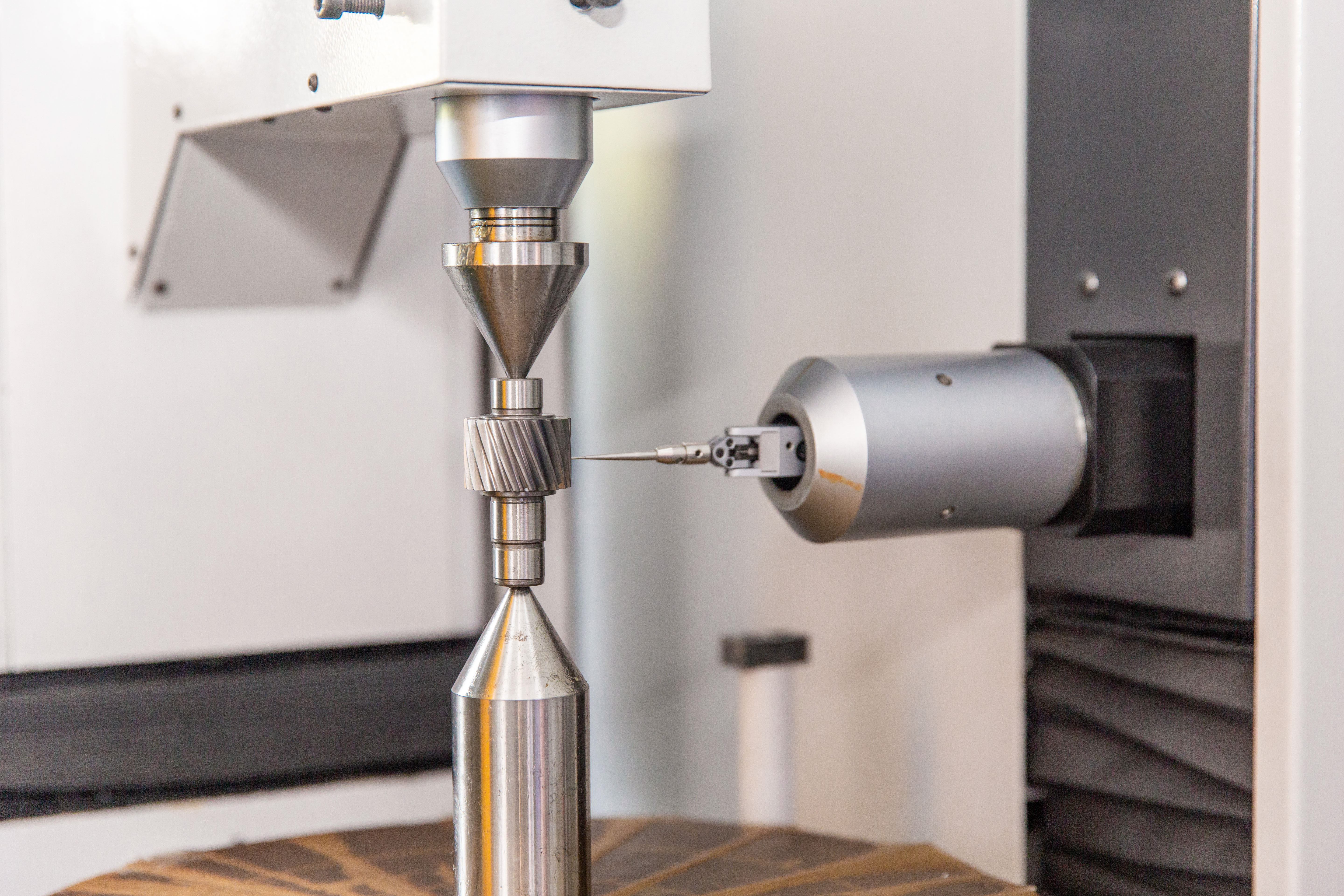
Specification and verification work supporting reducer selection and acceptance. Image: Starshine Drive.
Future outlook
Three developments are likely to shape gearmotor procurement on these lines over the next few years. Variable-speed operation will continue to move from a special requirement to a default assumption, which favours motor and gearbox packages specified for inverter duty across a defined frequency band rather than for one fixed speed. Energy efficiency will be scrutinised more closely on continuous duty lines, strengthening the position of helical gearing where running hours are high. And environmental specification — surface finish, housing material, and cleaning compatibility — will increasingly be treated as an engineering parameter with documentation, rather than as a commercial afterthought.
Manufacturing scale supports this direction. Starshine Drive operates from a production base of 53,333.33 m² with approximately 400 employees, of whom more than 70% are production technicians, and an R&D team of 40 engineers within a provincial-level engineering technology R&D center. The company holds designations including National High-tech Enterprise and National Key New Product, has participated in drafting national and industry standards, and reports products and services reaching over 30 countries and regions, supported by an assembly plant in Vienna, Austria serving European assembly, warehousing, distribution, and technical service.
FAQ
Which Starshine Drive series is documented for textile machinery?
The R/F/K/S Series Helical Gearmotors lists textile among its applicable industries. Its documented characteristics — single-stage efficiency above 96%, single-stage ratios from 1.3 to 289.74, 20CrMnTi gears hardened to HRC 55–65, and gear grinding to grade 6 accuracy — align with the continuous running duty typical of textile lines. For humid or chemically exposed installations, housing material and surface finish should be specified through the customization route.
Can the RV Series Worm Gearbox be used in food and beverage washdown areas?
The published product data for the RV Series lists stage equipment, door operators, and electric power equipment as its documented applications. It does not state washdown capability or resistance to cleaning agents. The RV Series does document aluminium body parts, a 20CrMnTi worm shaft with special heat treatment, and a patented premium KK alloy copper worm wheel. Any washdown or chemical-exposure requirement would need to be addressed as a customization specification and confirmed in writing before selection.
How should a buyer decide between continuous-duty and variable-speed operation?
Continuous duty at a fixed output speed rewards transmission efficiency, because losses accumulate over running hours; the R/F/K/S Series is documented at above 96% single-stage efficiency. Variable-speed duty requires a motor and gearbox combination specified for inverter operation across the actual frequency band; the NCJ Series Helical Gearmotor is documented to work under full load between 20 Hz and 60 Hz. The two requirements can coexist, but they should be stated separately in the enquiry.
What does self-locking at i≥60 mean for a line design?
The RV Series Worm Gearbox data states that ratios of i≥60 provide a self-locking function. In practice this supports applications where a load must be held when the motor is de-energized, which can reduce dependence on an external brake. The trade-off is that worm geometry delivers lower efficiency than helical gearing, so self-locking should be specified only where load holding is genuinely required.
What lead time and minimum order quantity apply?
The documented minimum order quantity is 1 unit. Lead time is 15–45 days for vertical customization and 7–20 days for catalogue series depending on the product. Projects involving non-standard shaft size, installation dimensions, housing material, or surface finish should be planned against the customization range.
What evidence should accompany a reducer order?
Buyers can request the ISO 9001:2015 certificate 133324000032R000, with a certified scope covering design, development, and production of reducers, valid to 2027-03-09. Production testing includes 100% online air tightness testing, 100% online noise testing, 100% comprehensive motor testing, 100% full-scale testing, and 100% finished product inspection, alongside regular reliability and durability testing. For European technical files, EN ISO 12100:2010 provides the Type-A framework for machinery risk assessment.
Where do planetary, hypoid, or cycloidal reducers fit if the three shortlisted series do not match?
They address different constraints. Planetary gearboxes are reported as the fastest-growing industrial gearbox segment, with a projected CAGR of 6.2% through 2030 and approximately 22% share, driven by robotics and wind energy — a signal that precision and torque density are the governing requirements in those applications. Starshine Drive's portfolio includes SP series planetary reducers, XGK series hypoid gear reducers, B/JXJ series cycloidal pinwheel reducers, SI series industrial gearboxes, SNKG series gear reducers, and JWB-X series mechanical stepless variators, so a requirement falling outside the R/F/K/S, RV, and NCJ envelope can be evaluated against those alternatives.
Building the shortlist on evidence
The framework reduces to a sequence: define duty cycle and speed range, define the environment and cleaning regime, match ratio and torque to documented series envelopes, confirm installation dimensions, and agree the acceptance evidence. Applied to textile, woodworking, and food lines, that sequence usually separates the R/F/K/S, RV, and NCJ series on technical grounds before price is discussed — and where the published data does not answer a requirement, it identifies exactly which question to put to the supplier's engineering team.
For full product data, ratio tables, and configuration options across the series discussed here, the manufacturer's catalogue is available for download: Starshine Drive product catalogue (PDF).