
RDP Application Fit in Construction: Tile Adhesive, Putty, EIFS and Self-Leveling Mortar
RDP Application Fit in Construction: Tile Adhesive, Putty, EIFS and Self-Leveling Mortar
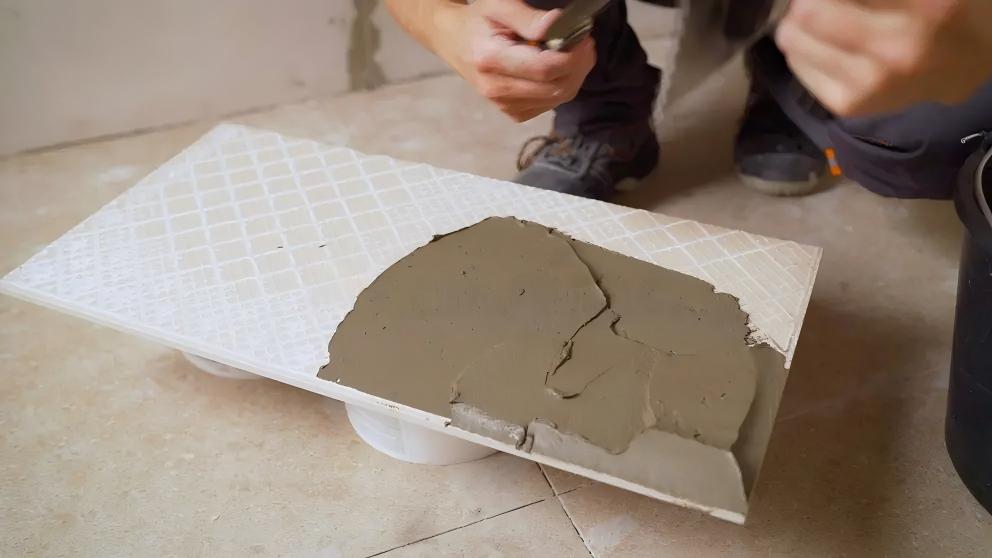
Ceramic tile adhesive application - one of several dry-mix systems in which RDP grade selection changes the finished result.
Redispersible polymer powder (RDP) is not one specification. In a dry-mix mortar plant, the same product category has to serve tile adhesives that must grip large-format porcelain, wall putties that must sand cleanly without hairline cracking, EIFS and ETICS base coats that must stay flexible through thermal cycling, gypsum-based products that must bond to low-absorption substrates, and self-leveling mortars that must flow freely and then hold together under foot traffic. Each system loads the polymer differently, which is why grade-to-application fit has become a practical procurement question rather than a technical footnote.
Demand for that flexibility is moving with the market itself. The global RDP market was valued at USD 1.61 billion in 2024 and is projected to reach USD 2.35 billion by 2029, according to MarketsandMarkets, while Asia Pacific accounted for 38.01% of RDP revenue share in 2025, according to Grand View Research. Published market-size figures for the same category diverge considerably between research houses because the definitions of the product differ, so any single figure should be read as directional rather than exact. What is consistent across sources is the direction of travel: more dry-mix systems, more regional formulation differences, and more demand for grades tuned to a defined application rather than a generic one.
Why Application Fit, Not Product Category, Decides the Outcome
A mortar producer rarely fails because RDP was missing from the formulation. More often the failure is fit: a general-purpose grade is pushed into a system that asks something different of the polymer, and the symptoms surface downstream - debonding at the tile interface, cracking in a skim coat, edge segregation in a self-leveling pour, or an insulating base coat that stiffens after a cold season.
Three commercial consequences follow from a mismatched grade:
- Reformulation cycles. Every failed trial consumes production time, laboratory time and, in export business, container space that has already been booked.
- Batch-to-batch drift. If a supplier cannot reproduce a tailored grade consistently, the producer has to re-verify its own formulation again and again.
- Frozen specifications. Once a grade is written into a customer data sheet, changing it can mean re-testing against the relevant standard.
The opportunity sits on the other side of the same problem. A producer that works with a supplier able to adjust parameters at the powder level can tune a formulation without redesigning the rest of the mix. That is the capability model behind BANGCEL® RDP.
The Supplier Behind BANGCEL® RDP
BANGCEL® RDP is the redispersible polymer powder line supplied by BANG SHANG INTERNATIONAL CO., LIMITED (BANG SHANG), a manufacturer established in 2007 that produces cellulose ethers, RDP and related construction additives for dry-mix mortar, coatings and other industrial applications. The company operates an 80,000 m² production site with 300 employees and reports an annual output of 35,000 tons, a 70% export ratio, and export destinations spanning the Americas, Africa, the Middle East, South and Southeast Asia and Oceania.
The RDP line is VAE-based and includes the RDP5010, RDP6188 and RDP4010 models. Published parameters for the line are solid content ≥99%, ash content 11±2, pH 6-8, minimum film-forming temperature (MFFT) of 0°C and glass transition temperature of 10°C.
What makes the offer relevant to formulators is the customization scope. BANG SHANG supports OEM and ODM production across four layers: product parameters (viscosity, particle size, ash content, degree of substitution, water retention rate), formula and grade (custom formulation, custom grade, blending and compounding service), packaging (custom logo printing, packaging specification, shipping mark, custom label), and service (OEM, ODM, small batch customization, customized testing). Adjustments are made against the customer's own formulation, raw materials and application conditions rather than against a fixed catalogue.
Because the company also manufactures HPMC, MHEC, HEC and CMC, a mortar producer can source both the polymer and the water-retention cellulose ether from one supplier. That matters because the two additives do different jobs in the same bag: the cellulose ether largely governs water retention, open time and sag resistance, while the polymer drives adhesion, flexibility and crack bridging. Tuning one without the other rarely produces a stable formulation.
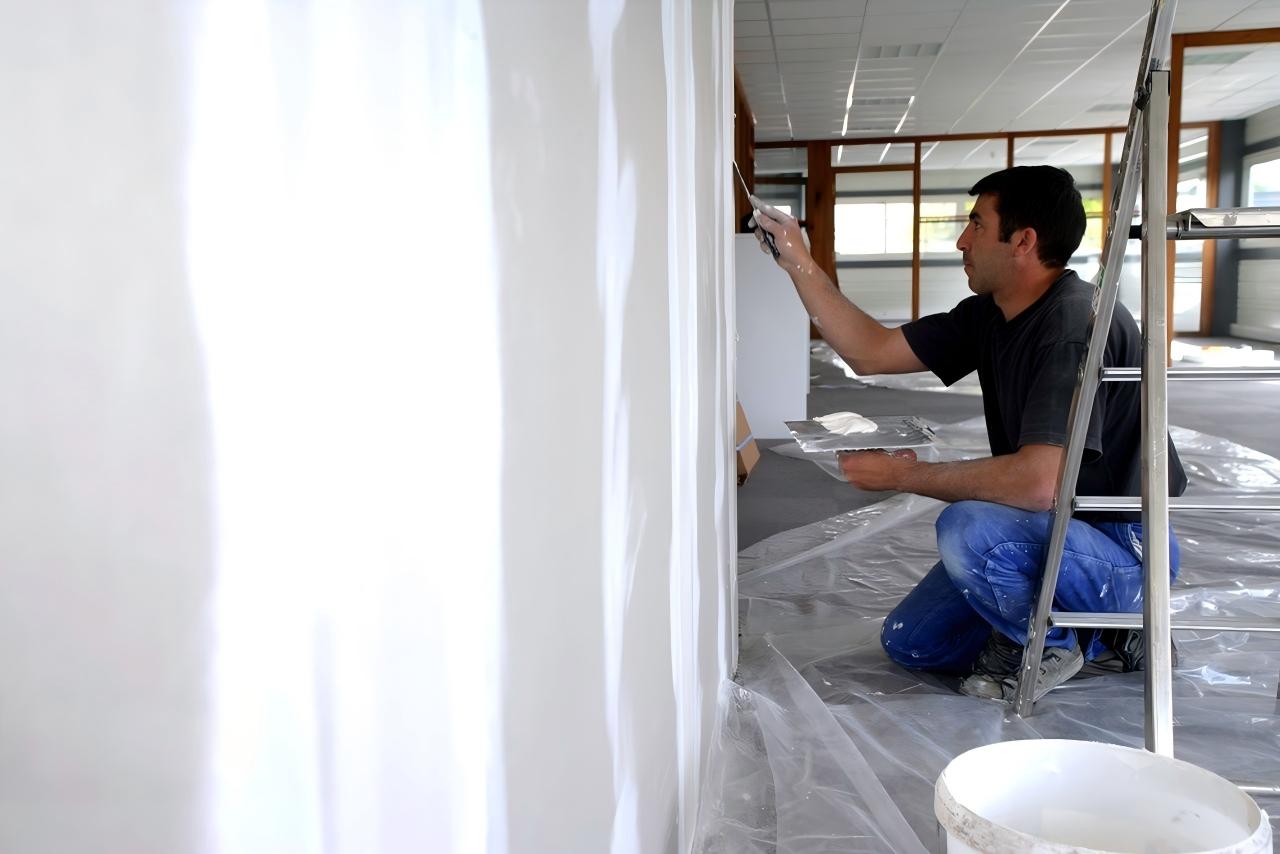
Wall putty and skim-coat work: the same polymer family, but a different balance of adhesion, sandability and crack resistance.
Mapping Five Dry-Mix Systems to Polymer Requirements
The table below summarises how the mainstream dry-mix systems differ, and which customization levers are relevant to each. It is a selection framework, not a fixed grade list - the final grade is set against the customer's own formulation and raw materials.
| Dry-mix system | Primary performance demand | Relevant customization levers |
|---|---|---|
| Ceramic tile adhesive | Tensile adhesion to the substrate and the tile back, flexibility, open time, slip resistance | Viscosity, particle size, application-oriented grade |
| Wall putty and skim coat | Adhesion, sandability, resistance to hairline cracking, surface uniformity | Degree of substitution, viscosity, grade blending |
| EIFS / ETICS base coat | Flexibility and impact resistance across thermal and moisture cycling, long-term weatherability | VAE-based grade, film-forming behaviour, application-oriented grade |
| Gypsum-based products | Bond on low-absorption substrates, workability, setting compatibility | Particle size, application-oriented grade, blending |
| Self-leveling mortar | Flow, surface smoothness, resistance to segregation, early strength development | Particle-size distribution, viscosity, blending and compounding |
| Waterproof and repair mortar | Water resistance, crack bridging, durability under repair conditions | Application-oriented grade, blending and compounding |
Ceramic tile adhesive
Tile adhesives are classified under EN 12004 and ISO 13007-1, where RDP is essential for meeting the C1 (at least 0.5 MPa) and C2 (at least 1.0 MPa) tensile bonding classes. In practice the polymer has to deliver adhesion on substrates that are not perfectly absorbent, and enough deformability to survive movement between tile, adhesive and wall. A grade that is well suited to a thin-bed adhesive on a cementitious substrate is not automatically the right choice for a large-format porcelain installation, which is why viscosity and particle size are usually the first levers adjusted.
Wall putty and skim coat
Putty is judged by the finisher, not the laboratory: it must spread, fill and sand without tearing or leaving hairline cracks. Here the balance between the polymer and the cellulose ether matters more than raw polymer content. Substitution degree and viscosity influence how the paste holds water and how the dried film behaves under abrasion, and a grade blended for putty usually performs poorly if redirected into a self-leveling system.
EIFS and ETICS base coats
External wall insulation systems endure the widest service range of the group: high summer surface temperatures, freeze-thaw movement, rain exposure and mechanical impact. The base coat has to stay flexible enough to follow the insulation board without cracking, which places the emphasis on film formation and the polymer's glass transition behaviour rather than on raw adhesion alone. VAE-based chemistry dominates this segment - VAE accounted for 59.2% of RDP revenue share globally in 2025, per Grand View Research - and the published MFFT of 0°C and glass transition temperature of 10°C on the BANGCEL® RDP line describe the conditions under which the polymer film forms and behaves.
Gypsum-based products
Gypsum substrates absorb water quickly and set on a different chemistry from cement. A polymer that performs well in a cementitious system may not bond as expected when the binder is gypsum-based, so particle size and the application-oriented grade are typically adjusted to suit the specific gypsum formulation.
Self-leveling mortar
Self-leveling compounds impose two opposing requirements: the mix must flow enough to self-smooth, then must resist segregation and develop strength quickly. Polymer addition supports cohesion and surface integrity, but particle-size distribution and blending of the powder into the dry mix carry equal weight. This is the system where a custom blending and compounding service is most often used, because the grade is effectively co-designed with the formulation.
How an OEM/ODM Order Is Actually Run
Customization is only useful if it survives production. The documented operating parameters for BANG SHANG OEM and ODM work are: monthly capacity of 3,000 tons, a standard lead time of 7 to 14 days, a minimum order quantity of 3 tons, and 100% testing as the quality-control regime. A 26-engineer R&D team handles technical adjustments based on the customer's formulation, raw materials and application conditions, and after-sales support covers customized technical assistance and quality traceability.
For a mortar producer evaluating a grade, the sequence usually looks like this:
- Formulation brief. The producer shares the target system, the binder, the aggregate, the local raw materials and the performance standard to be met.
- Grade proposal. Parameters such as viscosity, particle size, ash content, degree of substitution and water retention rate are proposed, together with an application-oriented grade designation.
- Sample support. Pre-sales sample support is offered for trial batches before any production commitment.
- Blending and adjustment. Where the dry mix requires it, blending and compounding services produce a grade that is closer to a finished additive package.
- Packaging and shipping mark. Custom logo printing, packaging specification, shipping mark and custom label are set at this stage, which matters for producers who sell under their own brand.
- Batch control and shipment. Standardized production with strict batch control, a pre-shipment test as the acceptance criterion, and 30% TT in advance with 70% against a copy of the bill of lading as the standard payment terms.
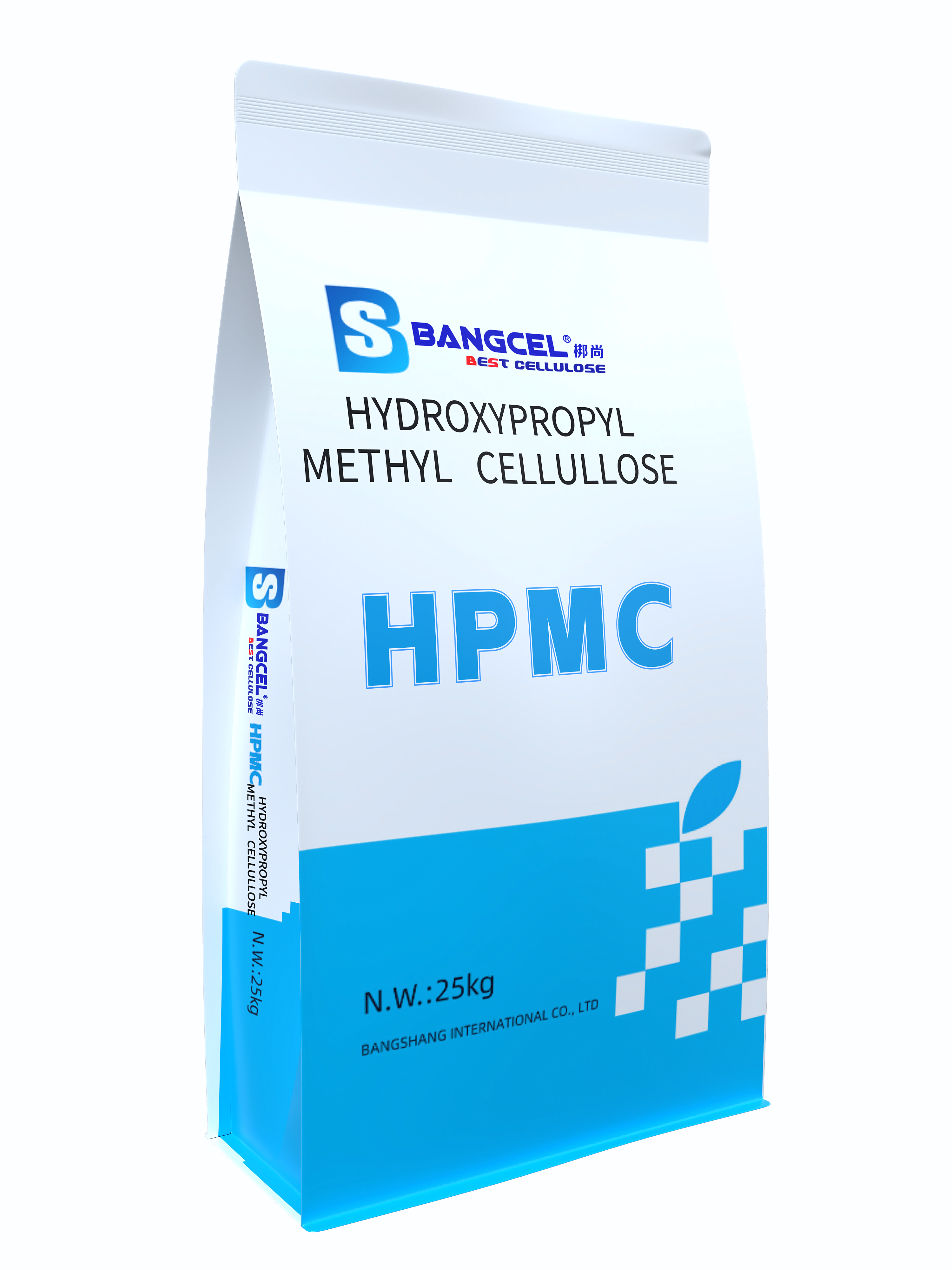
Packaging customization forms part of OEM and ODM orders, alongside parameter and grade adjustment.
Reference Case: Two Years of Tile Adhesive and Wall Putty Supply in India
A documented case from India involves a leading global construction mortar and adhesive manufacturer that used BANGCEL® RDP for the formulation of tile adhesive and wall putty. The engagement ran for two years and delivered a steady annual supply of 1,200 MT. Implementation included customized formulation R&D support, a stable global supply chain and CE certification.
Reported performance outcomes were excellent adhesion, crack resistance and weatherability, with zero quality complaints recorded during long-term mass production. For buyers reading this as evidence, the useful detail is not the volume alone but the combination: a multi-year horizon, two different application systems (tile adhesive and wall putty) supplied from the same source, and a formulation that was developed rather than simply selected off a shelf.
Market Signals That Support Tailored Grades
Three verified market patterns explain why application-specific RDP grades have become a normal procurement requirement rather than a niche service.
Regional demand concentration. Asia Pacific held 38.01% of RDP revenue share in 2025, driven largely by infrastructure activity, according to Grand View Research. High-volume, cost-sensitive regional markets tend to demand formulations optimised for local aggregates and local labour practice - which is precisely where a customizable grade outperforms a fixed catalogue item.
Sourcing diversification. Between July 2024 and June 2025, the world imported 2,012 shipments of redispersible polymer from China, with the United States, Turkey and Uzbekistan among the top importers, according to Volza. Buyers are not sourcing from a single origin or a single supplier type, which increases the value of documented specifications and repeatable batch behaviour.
Supplier concentration. The top four RDP manufacturers, including Wacker Chemie AG, Dow and BASF, hold more than 40% of the global market, according to an industry analysis covering 2025-2032. Concentration at the top means that small and mid-sized mortar producers frequently source tailoring and responsiveness from independent manufacturers, and the evaluation criteria shift from brand recognition to formulation support, batch consistency and lead time.
Powder RDP Versus Traditional Solutions - and Where RDP Stops
RDP is one way to bring polymer performance into a mortar, not the only way. Comparing it honestly against alternative approaches clarifies where it fits.
| Approach | Typical strength | Typical constraint |
|---|---|---|
| Unmodified cement mortar | Simple formulation, low raw-material complexity | Rigid behaviour; limited tensile adhesion and flexibility where the substrate or the tile moves |
| Starch or CMC-only modification | Improves workability at low cost | Limited water resistance and adhesion under wet or exterior exposure |
| Liquid latex dosed at the mixer | Flexibility, familiar in ready-mix and on-site batching | Added transport weight and on-site dosing control; less convenient for pre-bagged dry-mix lines that must remain shelf-stable |
| Powder RDP in a dry-mix formulation | Dosed into the bag, consistent addition per batch, supports adhesion and deformability targets such as the C1 and C2 classes under EN 12004 and ISO 13007-1 | A meaningful cost component; depends on correct dosage, a compatible cellulose ether and disciplined water addition at the mixer |
The limits deserve equal emphasis, because they determine where a tailored grade will not help. RDP does not replace cement hydration or the mechanical strength of the binder, and it does not compensate for poor substrate preparation, contaminated sand or excessive mixing water. Overdosing generally raises cost and can affect workability, water sensitivity and setting behaviour rather than continuing to improve performance. Film formation is temperature-dependent: the published MFFT of 0°C on the BANGCEL® RDP line indicates the threshold at which the polymer film forms, so cold-weather application and storage conditions still need attention. Powder RDP also needs dry storage to avoid caking.
A further boundary is geographic. OEM and ODM production services from BANG SHANG are documented as serving markets worldwide excluding the EU, and the ISO 14001 certificate on file carries the same market restriction. EU-based producers evaluating this supplier should confirm market availability directly before building a sourcing plan around a customized grade.
Compliance and Documentation Buyers Can Verify
For a specification that will be written into a customer data sheet, documentation is part of the product. The certificates on record for the manufacturer include:
- Quality management system certificate 86525Q1069R0M, issued by HQC to GB/T19001-2016 / ISO9001:2015, valid from 2025-09-02 to 2028-09-01, with the stated scope covering cellulose ether and RDP powder.
- Occupational health and safety management system certificate 86525S1067R0M, issued to GB/T45001-2020 / ISO45001:2018, valid from 2025-09-02 to 2028-09-01, covering cellulose ether manufacturing and related activities.
- Environmental management system certificate 86525E1068R0M, issued to GB/T24001-2016 / ISO14001:2015, valid from 2025-09-02 to 2028-09-01, with a stated market of global excluding the EU.
- CE certification and SGS testing are stated for the manufacturer's products, and CE certification is listed as part of the India supply case described above.
The practical reading for a procurement team is that system certification supports process stability, while material-level evidence such as SGS testing and the CE mark supports market access. Both should be requested as current documents rather than as descriptions, because certificate numbers and validity windows are what auditors and downstream customers actually check.
Checklist Before Committing to a Custom Grade
- Define the target system precisely - tile adhesive, putty, EIFS base coat, gypsum product, self-leveling mortar or repair mortar - and the standard it must satisfy.
- Confirm the local binder, aggregate and water chemistry, since these drive the parameter adjustments.
- Request a sample and run trial batches against the producer's own acceptance criteria, not only laboratory conditions.
- Verify batch documentation and quality traceability before scaling, not after the first container.
- Agree the commercial frame in writing: minimum order quantity of 3 tons, lead time of 7 to 14 days, FOB or CIF delivery terms, pre-shipment testing as the acceptance criterion, and payment of 30% TT in advance with 70% against a copy of the bill of lading.
- Confirm packaging requirements - logo, label, shipping mark and specification - at the same time as the technical brief.
- Check market restrictions and certification coverage for the destination country.
Outlook
With the RDP market projected to grow from USD 1.61 billion in 2024 toward USD 2.35 billion by 2029, the pressure on suppliers is shifting from volume to adaptability. Three developments appear likely to shape the next few years. First, formulation localisation will continue: aggregates, cements and labour practices differ enough between regions that a single global grade is rarely optimal. Second, insulation retrofits and energy-efficiency programmes will keep demand for flexible EIFS and ETICS base coats elevated, reinforcing the position of VAE-based chemistry. Third, as self-leveling and gypsum-based systems grow in interior construction, the ability to blend and compound a grade - rather than simply ship a standard powder - becomes a differentiating service.
For buyers, the implication is straightforward: the supplier relationship increasingly resembles a formulation partnership with defined boundaries, documented parameters and reproducible batches. That is a higher bar than price per ton, and it is the bar that application-fit selection has created.
Frequently Asked Questions
What does an application-oriented RDP grade mean in practice?
An application-oriented grade is one whose parameters - viscosity, particle size, ash content, degree of substitution and water retention behaviour - are selected together with the formulation in which the powder will be used. The same base chemistry can be adjusted for a tile adhesive that requires adhesion and deformability, or for a self-leveling mortar that requires flow and resistance to segregation. Application-oriented grades and custom formulations are part of the documented OEM and ODM scope.
Which RDP parameters can be customized for an OEM or ODM order?
Four layers are documented. Product parameters: viscosity, particle size, ash content, degree of substitution (DS/MS) and water retention rate. Formula and grade: custom formulation, custom grade, and blending and compounding services. Packaging: custom logo printing, packaging specification, shipping mark and custom label. Service: OEM, ODM, small batch customization and customized testing. Technical adjustments are made against the customer's formulation, raw materials and application conditions.
What production and order terms apply to a customized RDP order?
The documented terms are a minimum order quantity of 3 tons, a standard lead time of 7 to 14 days from a monthly capacity of 3,000 tons, and 100% testing as the quality-control regime. Delivery terms are FOB or CIF, the acceptance criterion is a pre-shipment test, and payment terms are 30% TT in advance with 70% against a copy of the bill of lading.
Has this RDP been used in large-scale tile adhesive and wall putty production?
Yes. A documented case in India involves a leading global construction mortar and adhesive manufacturer that used BANGCEL® RDP for tile adhesive and wall putty formulation over a two-year engagement, with an annual steady supply of 1,200 MT. Reported results were excellent adhesion, crack resistance and weatherability, with zero quality complaints recorded during long-term mass production. The engagement included customized formulation R&D support, a stable global supply chain and CE certification.
Which standards govern tile adhesive performance, and what does RDP contribute?
Tile adhesives are classified under EN 12004 and ISO 13007-1, where RDP is essential for meeting the C1 (at least 0.5 MPa) and C2 (at least 1.0 MPa) tensile bonding classes. The polymer contributes adhesion and deformability; the remaining performance depends on the binder, the aggregate, the cellulose ether used for water retention, and substrate preparation.
What are the limits of RDP in a dry-mix formulation?
RDP does not replace the mechanical strength of the binder and does not correct poor substrate preparation, contaminated aggregate or excessive mixing water. Overdosing generally increases cost and can affect workability, water sensitivity and setting behaviour. Film formation is temperature-related, and the published minimum film-forming temperature of the BANGCEL® RDP line is 0°C, with a glass transition temperature of 10°C. Powder storage must remain dry to prevent caking. Separately, OEM and ODM production services are documented as serving markets worldwide excluding the EU.
Reference Material
A complete overview of the RDP, HPMC and related product lines, together with packaging options and customization scope, is available in the manufacturer's product brochure: BANG SHANG product brochure (PDF). Company information is published at www.bangshanghpmc.com.