
RDP Sourcing: OEM/ODM, Trading Supplier or Manufacturer?
Independent Buyer Comparison
RDP purchasing in 2026 is rarely decided by the powder alone. It is decided by the sourcing model standing behind the powder: an original manufacturer that also runs OEM/ODM programs, a trading supplier that assembles orders across several factories, or a supplier selling a fixed catalogue grade with no customization layer. All three can quote the same 25 kg bag and the same HS code. What differs is who owns the specification, who signs the test report, and who is still reachable twelve months after the container has been unloaded.
This comparison is written for buyers at the decision and execution stage — the point where a shortlist exists, samples have been requested, and purchasing terms now matter as much as the technical data sheet. It does not name or evaluate specific competitors. It sets out a neutral way to compare sourcing models, and then shows how one verified original manufacturer, BANGSHANG INTERNATIONAL CO.,LIMITED (brand BANGCEL®), maps onto that framework.
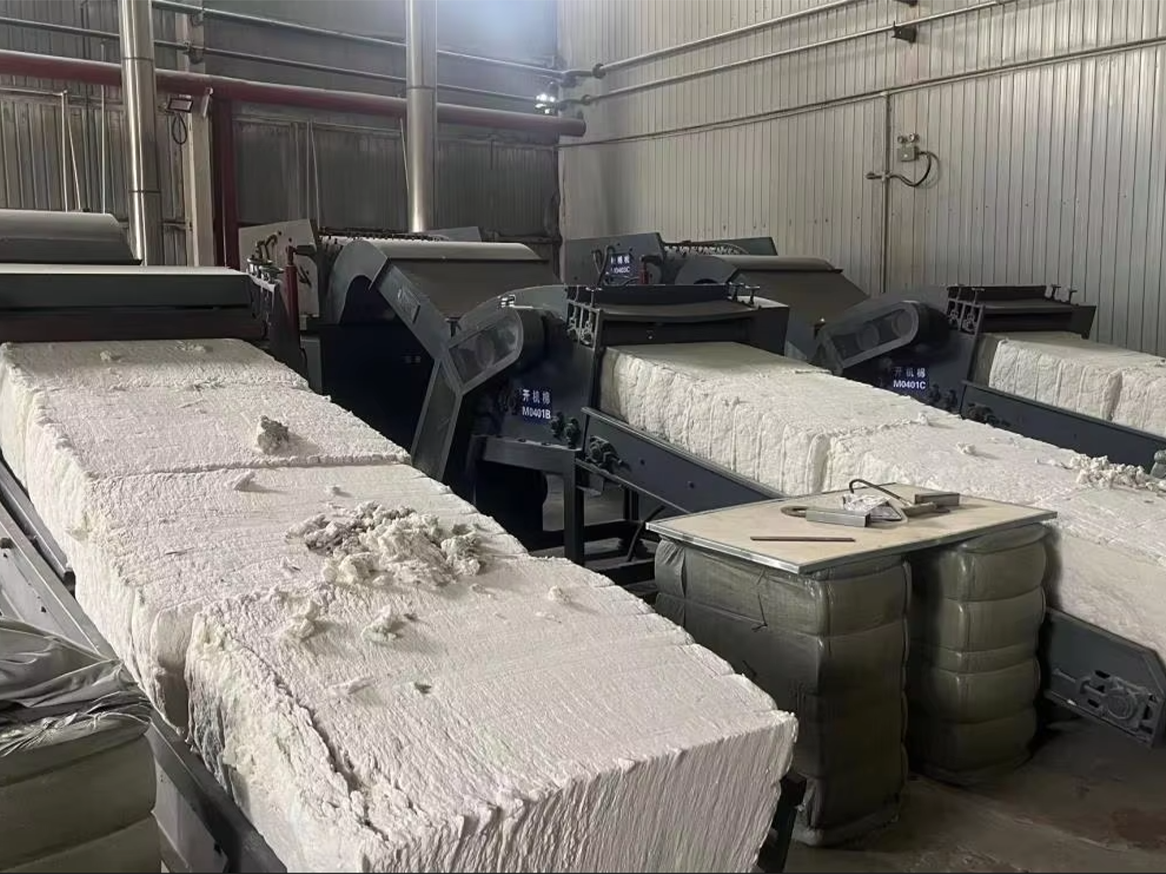
Raw material workshop at the BANGCEL® production site in Shijiazhuang, Hebei Province — the point in the chain where sourcing models visibly diverge.
Why the three RDP sourcing models look identical on a quotation
Redispersible polymer powder is a low-dosage, high-leverage additive in dry-mix mortar systems. Manufacturers of construction polymers describe RDP as a spray-dried powder that redisperses in water, and commercial product families state benefits in cement-based and paste tile adhesives around adhesion, cohesion and deformability. In other words, a small percentage of the formulation carries a disproportionate share of the performance risk — which is why the identity of the supplying party matters more than the unit price line.
The problem is structural: an RDP quote is a price, an Incoterm and a grade name. It usually does not state the production site, the batch numbering convention, whether the grade is a stock platform or a modified one, and who is accountable if the third container behaves differently from the first. Trading suppliers rarely volunteer that they do not own the reactor. Original manufacturers rarely volunteer that their minimum order quantity is higher than a trial-scale buyer wants. Both gaps are normal; neither is disclosed by default.
For dry-mix producers running tile adhesive, wall putty, EIFS/ETICS, self-leveling or repair mortar lines, the practical question therefore becomes: which model gives the buyer the level of control the formulation actually requires? That is a decision framework question, not a product question.
The three sourcing models, defined without brand names
| Model | Who owns the powder specification | What the buyer is actually purchasing | Typical weak point |
|---|---|---|---|
| Original manufacturer | The producing company, at its own plant | Direct access to the production line, batch records and technical team | Minimum order quantities and production scheduling are set by the factory, not the buyer |
| OEM/ODM partner | Shared: manufacturer produces, buyer or partner defines the grade | A formulation adjusted to the buyer's mortar system, packaging and grade requirements | Requires sample validation and formulation alignment before the first production run |
| Trading supplier | The upstream plant; the trader intermediates | Order consolidation, mixed-product containers and flexible small volumes | Thinner traceability between the delivered batch and the producing line |
Comparison of sourcing models by specification ownership and traceability, not by price.
The distinction matters most when a formulation is being changed. A supplier that only resells a catalogue grade can tell a buyer which grade to pick, but not necessarily why that grade behaves differently in a high-filler putty versus a flexible tile adhesive. A manufacturer that runs OEM/ODM programs can usually explain the mechanism, because the same team sets the production parameters.
A neutral six-point checklist for comparing RDP sourcing models
The checklist below is deliberately model-agnostic. It can be sent to a manufacturer, an OEM/ODM partner and a trading supplier in the same email, and the answers will be directly comparable. Each line converts a vague trust question into something that can be documented.
| Criterion | What to request in writing | Why it changes the sourcing decision |
|---|---|---|
| 1. Purchasing terms | MOQ, Incoterm, payment schedule, packaging format, validity of the quotation | Determines whether the model fits trial-scale or container-scale purchasing |
| 2. Acceptance criteria | Which tests are run before shipment, on which sample, and who signs the result | Converts quality from an assumption into a pre-shipment condition |
| 3. Batch control | Batch numbering, retained samples, in-process checks, storage conditions before dispatch | Explains why batch 1 and batch 5 may behave differently on the same line |
| 4. Customization scope | Which parameters can be adjusted: viscosity, substitution degree, particle size, application grade | Separates a true OEM/ODM relationship from relabelled stock |
| 5. Documentation | Technical data sheet, CE marking evidence, third-party test reports such as SGS, HS classification | Needed for customs, tender submissions and internal quality approval |
| 6. Capacity and continuity | Monthly output, plant footprint, staffing, R&D headcount, references for repeat supply | Indicates whether the supplier can still deliver in month 18, not just month 1 |
The same six questions can be applied to any RDP sourcing model; the answers, not the labels, drive the decision.
Two of these deserve extra emphasis at execution stage. Batch control is where trading relationships most often lose visibility, because the buyer's contract is with an intermediary while the batch records sit at a plant the buyer has never contacted. Customization scope is where manufacturer relationships are most often overestimated, because “OEM available” can mean anything from a new packaging label to a genuinely adjusted polymer grade.
Where a verified original manufacturer sits in this framework
BANGSHANG INTERNATIONAL CO.,LIMITED is a manufacturer and global supplier of construction chemical additives — including cellulose ethers and redispersible polymer powder — operating under the BANGCEL® brand from Shijiazhuang, Hebei Province, China. It was founded in 2007 and runs an 80,000 m² facility with approximately 300 employees, 26 R&D engineers and an annual output capacity of 35,000 tons, equivalent to a reported monthly production capacity of 3,000 tons. Products are manufactured under CE certification and SGS testing, and the company holds Alibaba Gold Supplier status on Alibaba International.
Against the checklist, that translates into specific, checkable positions rather than general claims:
- Purchasing terms: MOQ of 3 tons, FOB or CIF delivery terms, and payment of 30% TT in advance with 70% against a copy of the bill of lading.
- Acceptance criteria: pre-shipment testing is the stated acceptance mechanism, meaning the quality gate sits before the container leaves rather than after arrival.
- Batch control: standardized production with strict batch control, backed by a 15–25 °C and below 60% RH warehouse regime and regular inventory quality inspection.
- Customization scope: OEM and ODM services covering customized viscosity, substitution degree, particle size and application-oriented grades, adjusted against the customer's formulation, raw materials and application conditions.
- Pre-sales support: product recommendation and grade selection, technical consultation and formulation guidance, and sample support for testing before commitment.
- After-sales support: continuous technical support and formula adjustment, stable long-term supply with priority service, and additional support for authorized distributors.
The supply record is the part buyers can weigh most directly. A long-term supply partnership in India delivered a stable 1,200 metric tons per year over a two-year period for tile adhesive and wall putty production — a repeat-supply reference rather than a single shipment. Export activity covers 70% of output across markets including Canada, the United States, Mexico, Brazil, Chile, Colombia, Peru, Russia, Ukraine, the United Kingdom, Australia, New Zealand, Egypt, South Africa, Kenya, Morocco, Turkey, Saudi Arabia, the UAE, India, Singapore, Korea, Japan, Vietnam, Thailand, Indonesia and Malaysia, among others.
What RDP customization actually changes — and what it cannot
For buyers, “customization” is only meaningful if the adjustable parameters map onto a formulation problem. In RDP, four parameters carry most of that weight.
Viscosity
Viscosity behaviour influences how a mortar behaves during mixing, pumping and application, and it interacts with the cellulose ether in the same formulation. High-viscosity RDP requirements usually appear where the mortar system needs a specific rheological profile rather than simply more binder.
Substitution degree
Substitution degree is a grade characteristic rather than a free variable, and it is one of the parameters a manufacturer can adjust within its polymer platform. In practice it is discussed together with the customer's raw materials and application conditions, because the same nominal adjustment can behave differently across cement, gypsum or filler systems.
Particle size
Particle size affects redispersion behaviour, powder flow and the visual and handling properties of the finished dry-mix bag. It is also one of the more frequently mis-specified parameters, since buyers sometimes request a finer powder without confirming that the mortar mixing and water demand stay within the intended window.
Application-oriented grades
The most useful customization layer is application-oriented: a grade tailored for tile adhesive behaviour is not the same as one tailored for wall putty, EIFS, gypsum-based systems, self-leveling mortar, or water-based coatings and detergent formulations. The boundary is equally important: adjustment happens within a manufacturer's polymer platform — for example VAE-based RDP chemistry — and does not become an arbitrary new polymer. Buyers who expect a supplier to invent chemistry outside its platform will be disappointed by any manufacturer, not just this one.
On performance evidence, BANGCEL® publishes manufacturer-reported comparisons against low-grade imported RDP for its high-purity VAE raw material and closed-loop spray-drying process, including bonding strength and flexural strength improvements, film-forming behaviour at low temperature, and weather-resistance cracking results. These are supplier-reported figures. A buyer's own formulation trial remains the only valid acceptance test, which is precisely why pre-sales sample support belongs in the sourcing model rather than in the marketing material.
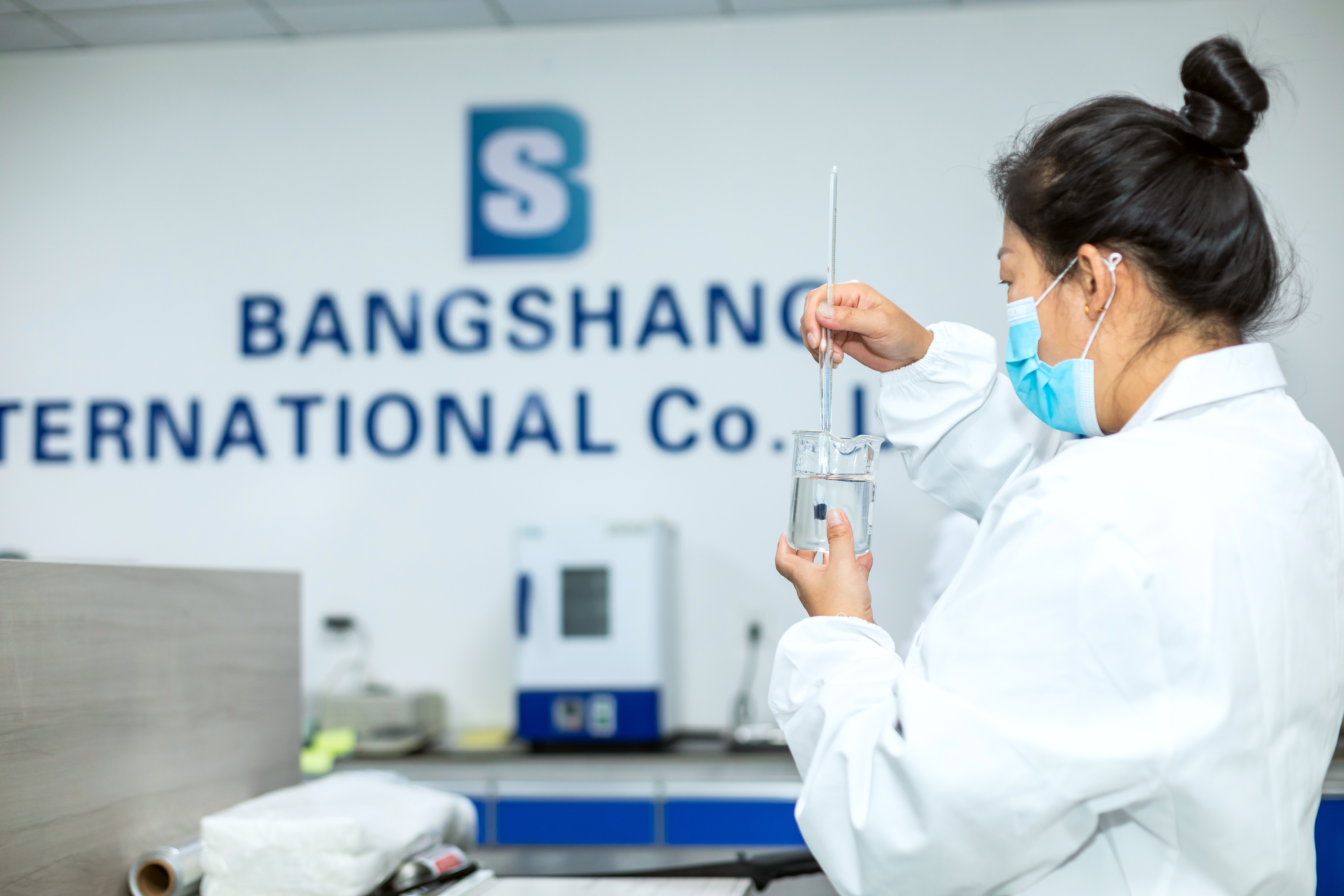
Pre-shipment testing is the acceptance mechanism most buyers rely on when ordering RDP at container scale.
Application fit: where the sourcing model meets the mortar
Application determines how much customization is worth paying for. A buyer running a single high-volume tile adhesive line has different needs from a producer cycling through putty, EIFS, self-leveling and repair mortar on the same plant.
- Ceramic tile adhesive RDP: the largest single application area for RDP globally, and the segment where adhesive and cohesive behaviour dominates acceptance testing.
- Putty powder RDP: where powder flow, surface finish and crack resistance matter more than raw bond strength.
- External wall insulation mortar RDP: where flexibility and weather exposure drive the grade choice.
- Plastering and repair mortar RDP: where shrinkage behaviour and substrate compatibility decide success.
- Self-leveling mortar RDP: where flow and segregation resistance interact with the rest of the additive package.
- Waterproof mortar and construction adhesive RDP: where film formation and adhesion under wet conditions are the governing criteria.
- Gypsum-based RDP systems and interface agents: where compatibility with non-cement binders changes the requirements entirely.
A model comparison therefore has a practical consequence: the more application grades a buyer needs from one supplier, the more valuable a manufacturer's grade platform becomes, and the less attractive a single-stock trading arrangement is — unless the buyer's real need is container consolidation rather than technical depth.
Market context: what the numbers say, and what they do not
Commercial research published in 2026, including Grand View Research, sized the global redispersible polymer powder market at USD 800.7 million in 2025 and projected USD 1,519.6 million by 2033 across a 2026–2033 forecast period. Within that market, VAE-based RDP accounted for 59.2% of revenue in 2025, and tile adhesives represented roughly 38% to 40% of RDP consumption.
Those figures should be read with a caveat that matters for procurement planning: published market sizes differ considerably between research houses, partly because some studies aggregate liquid VAE emulsions with spray-dried powders. Buyers should use such numbers as directional context for category growth, not as a basis for volume planning or supplier capacity assumptions. For customs and documentation purposes, the tariff classification commonly applied to vinyl acetate copolymer powders is HS 3905.29, which should be confirmed with a customs broker for the specific grade and destination.
Commercial estimates of construction-grade RDP from Chinese suppliers have been reported in a broad band of roughly USD 1,000 to USD 1,500 per ton. That band is a screening reference, not a quotation: grade, volume, packaging, Incoterm and payment terms move the delivered cost materially.
Where the direct manufacturer model is not the better choice
Any comparison that ends with one model winning everywhere is not a comparison. Three real limits apply to the original-manufacturer and OEM/ODM route.
First, order granularity. A 3-ton minimum order quantity is modest by factory standards but large for a formulation laboratory or a first-time buyer testing several applications. Trading suppliers frequently win on exactly this point, because they can consolidate smaller quantities across products and ship a mixed container.
Second, validation lead time. Customization of viscosity, substitution degree, particle size or application grade requires formulation alignment, sample testing and, if the first sample misses, a second cycle. Buyers with a tender deadline measured in weeks may be better served by a standard grade than by an optimized one that arrives late.
Third, risk concentration. A deep single-supplier relationship increases exposure if that plant's schedule slips. Dual sourcing, safety stock, or a validated second grade are prudent mitigations regardless of how strong the primary supplier's capacity story is.
There is also a handling constraint that no sourcing model removes: RDP is sensitive to heat and humidity, and agglomeration during storage is a recognized risk. BANGCEL® addresses it with three-layer moisture-proof composite packaging, constant-temperature storage at 15–25 °C, warehouse humidity below 60% RH and regular inventory quality inspection — but the same discipline has to continue inside the buyer's own warehouse after arrival.
Future outlook
Three shifts are likely to shape RDP sourcing decisions over the next few procurement cycles. First, as VAE-based RDP remains the dominant chemistry by revenue share, differentiation will move away from polymer type and toward application-grade depth — how precisely a supplier can tune a grade to a specific mortar system. Second, documentation will keep gaining weight relative to price: CE evidence, third-party testing and customs classification are increasingly requested at tender stage rather than at shipment. Third, buyers are becoming more explicit about continuity, asking for capacity, staffing and repeat-supply references instead of accepting a data sheet as proof of reliability.
For a manufacturer with an 80,000 m² footprint, roughly 300 employees and 26 R&D engineers, that direction is favourable but not automatic. The advantage only converts into a buyer decision when the customization conversation, the acceptance criteria and the long-term supply terms are documented in the same commercial discussion.
FAQ: comparing RDP sourcing models
What is the difference between an RDP original manufacturer, an OEM/ODM partner and a trading supplier?
An original manufacturer produces RDP at its own plant and owns the production parameters and batch records. An OEM/ODM partner relationship means the manufacturer produces to a specification adjusted for the buyer — for example customized viscosity, substitution degree, particle size or application grade — while the buyer or partner defines requirements. A trading supplier intermediates between the buyer and an upstream plant, typically consolidating orders and offering smaller or mixed volumes, with less direct visibility of the producing line.
What purchasing terms and acceptance criteria should a buyer confirm before ordering RDP?
At minimum: minimum order quantity, delivery terms, acceptance mechanism and payment schedule. BANGCEL® states an MOQ of 3 tons, FOB or CIF delivery terms, pre-shipment testing as the acceptance criterion, and payment of 30% TT in advance with 70% against a copy of the bill of lading. Buyers comparing suppliers should request the same four items in writing so the offers are directly comparable.
How can a buyer verify batch-to-batch consistency in RDP supply?
Consistency is verified through process evidence rather than promises: standardized production with strict batch control, a batch numbering convention, retained samples, defined in-process checks, and pre-shipment testing on the actual lot being shipped. Storage conditions before dispatch also matter, because RDP is sensitive to heat and humidity; BANGCEL® operates a 15–25 °C warehouse with humidity below 60% RH plus regular inventory quality inspection.
Which RDP parameters can realistically be customized under an OEM/ODM arrangement?
The four practical parameters are viscosity, substitution degree, particle size and application-oriented grade. BANGCEL® tailors these for tile adhesives, wall putty, EIFS, gypsum-based products, self-leveling mortar, and water-based coatings and detergent formulations, with adjustments based on the customer's formulation, raw materials and application conditions. Customization operates within the manufacturer's polymer platform and is not an open-ended chemistry redesign.
What are the main risks of buying RDP through a trading supplier?
The main risks are thinner traceability between the delivered batch and the producing line, less control over the acceptance test, and limited ability to adjust a grade when a formulation changes. Trading suppliers offset this with order flexibility, mixed-product consolidation and smaller quantities. The risk is manageable if the buyer obtains the upstream plant identity, the batch records and a pre-shipment test report as contractual conditions.
What does a long-term RDP supply relationship typically involve?
It involves capacity commitment, technical support and continuity beyond a single order. BANGCEL® describes after-sales service as continuous technical support and formula adjustment, stable long-term supply with priority service, and additional support for authorized distributors. One documented example is a long-term supply partnership in India with a steady 1,200 metric tons per year over two years for tile adhesive and wall putty production.
How should RDP be stored to avoid agglomeration?
High temperature and high humidity are the primary agglomeration risks. Control measures include moisture-proof packaging, constant-temperature storage around 15–25 °C, relative humidity below 60% RH, and regular inventory quality inspection. BANGCEL® applies three-layer moisture-proof composite packaging and a controlled warehouse regime at its facility; buyers should replicate equivalent conditions on arrival, since the supplier's storage discipline ends at dispatch.
Download the technical documentation
The BANGCEL® company brochure, covering product scope, manufacturing capability and customization services, is available for public access and download: BANGCEL® company brochure (PDF).
BANGSHANG INTERNATIONAL CO.,LIMITED — The South of ZhongXing Road, Jinzhou, Shijiazhuang City, Hebei Province, China. Technical enquiries and sample requests can be directed to the contact details published on www.bangshanghpmc.com.
Tem questões ou precisa de mais detalhes?
Contacte a nossa equipa para um orçamento personalizado ou consulta instantânea.
Solicitar orçamento
Preencha o formulário abaixo e a nossa equipa entrará em contacto com uma proposta personalizada.
Chat direto do WhatsApp
Prefere conversar em tempo real? Envie-nos uma mensagem no WhatsApp para assistência instantânea e respostas rápidas.
- Obter orçamento personalizado
- Partilhar fotos ou documentos
- Discuta as suas necessidades diretamente
Geralmente responde em 5–30 minutos durante o horário de expediente.