
RDP Supplier Capability Evidence: BANG SHANG Plant, R&D, Exports
RDP Supplier Capability Evidence: BANG SHANG Plant, R&D, Exports
Capability claims are cheap to publish and expensive to get wrong. For an RDP buyer moving from evaluation into execution, the useful question is not whether a supplier lists a plant, a laboratory and an export record, but whether each of those claims can be checked before the purchase order is released — and what remains unverified if it cannot. This article applies that test to the published record of BANG SHANG INTERNATIONAL CO.,LIMITED, the Hebei-based manufacturer behind the BANGCEL® redispersible polymer powder range.
Why an RDP supply decision needs evidence rather than adjectives
Redispersible polymer powder is a minor component of a dry-mix mortar by mass and a deliberate one by function. Commercial product literature positions RDP around adhesion, cohesion and deformability in cement-based and paste tile adhesives (Celanese, ELOTEX product brochure, 2026). Because the powder is normally a small fraction of the formulation, a change of grade or supplier can shift site behaviour — open time, flexibility, water resistance — without any change appearing on the formula sheet. That is the practical reason supplier capability is examined so closely at the execution stage.
The market context makes the same point from the other direction. Industry research places the global RDP market at USD 800.7 million in 2025, with a projected USD 1,519.6 million by 2033 (Grand View Research). Within that total, VAE-based grades accounted for 59.2% of 2025 revenue, and tile adhesives accounted for 38–40% of consumption. Read together, those two figures explain why tile-adhesive experience has become the common reference point in RDP supplier conversations: it is the largest single application and the polymer chemistry most buyers already run.
Three capability claims recur in almost every supplier package, and each requires a different kind of test:
- Physical capability — site size, headcount, annual tonnage. These are checkable in principle, but the number that matters is the one attached to the grade and month the buyer actually needs.
- Conformity capability — certificates, test reports, platform status. These are only as useful as their scope wording, which frequently excludes the product or market the buyer assumes it covers.
- Commercial capability — export experience, payment terms, lead time, acceptance criteria. These determine whether a technically suitable supplier can actually deliver on schedule and on specification.
Execution-stage buyers rarely need more marketing; they need the three claims converted into a short list of documents and confirmations. The rest of this article does that conversion using the company's own published facts.
The company record behind the BANGCEL® brand
BANG SHANG INTERNATIONAL CO.,LIMITED is a manufacturer and exporter of construction chemical additives, founded in 2007 and operating from a site south of ZhongXing Road, Jinzhou, Shijiazhuang City, Hebei Province, China. The company states an 80,000 m² facility, approximately 300 employees and a 26-engineer R&D team, and sells redispersible polymer powder under the BANGCEL® brand alongside cellulose ethers (HPMC, MHEC, HEC, CMC), HPS, PVA and PP fiber.
Two details in that record matter more than the headline size. The first is product breadth: a mortar producer that buys both a cellulose ether for water retention and an RDP for adhesion and flexibility can consolidate two critical inputs with one supplier, which simplifies batch traceability and technical liaison. The second is the grade naming. The company's certificate documentation lists RDP5010, RDP6188 and RDP4010 under the RDP/Redispersible Polymer Powder entry — concrete model designations that a buyer can quote, sample and compare, rather than a generic product category.
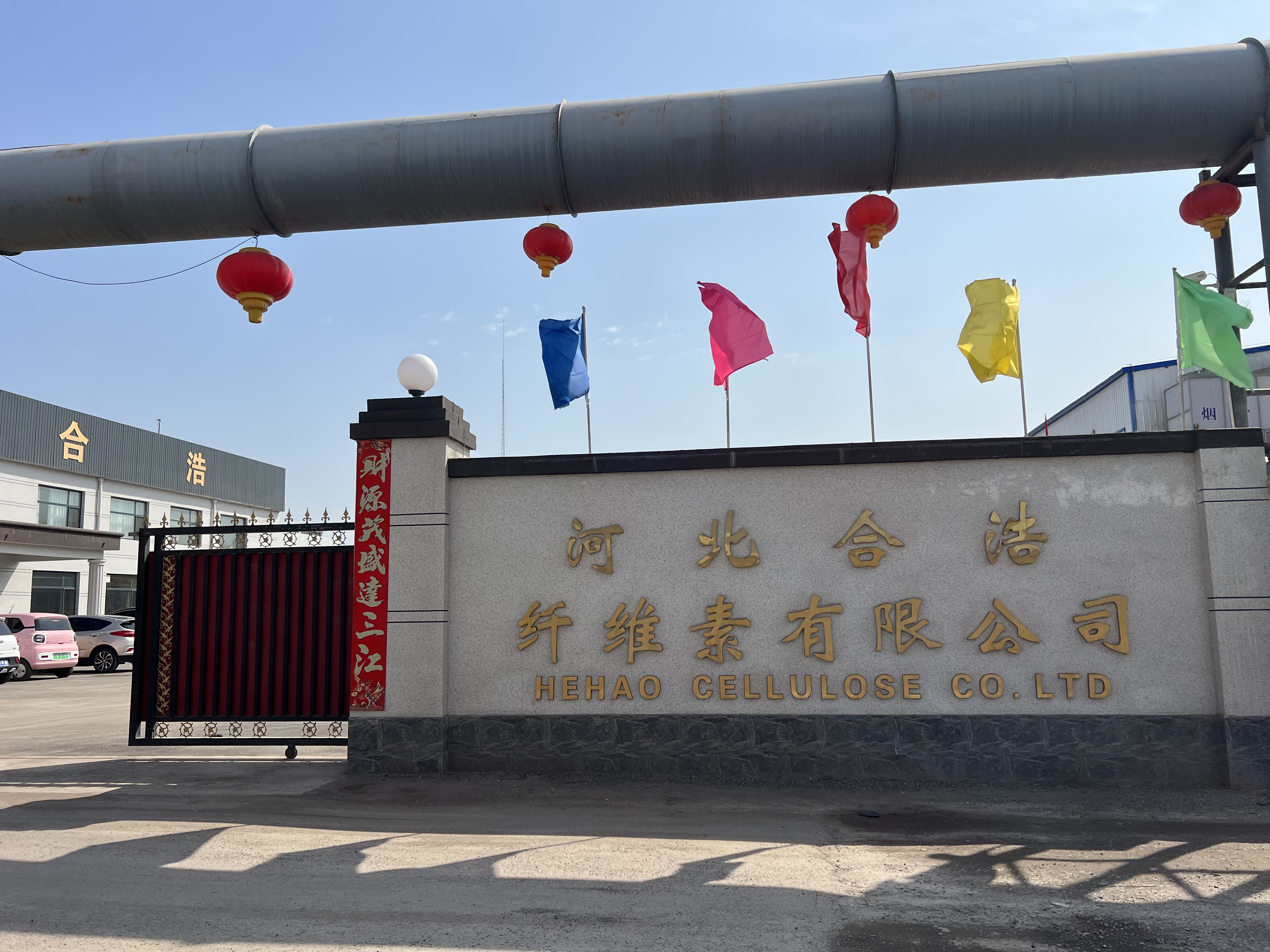
The honest boundary is equally simple: site area and headcount describe a manufacturing base, not a production rate, and a multi-product site means capacity is shared across product families. A buyer should treat the facility facts as context for the numbers that follow, not as a substitute for them.
Capacity: four numbers and one question to resolve
The company publishes a stated annual output of 35,000 tons, and its product-line description identifies annual output of 30,000 tons of cellulose ethers and 20,000 tons of RDP. A stated monthly capacity of 3,000 tons appears alongside the OEM/ODM services, together with a standard lead time of 7–14 days, a 3-ton minimum order quantity and 100% testing as the quality-control approach.
At the aggregate level the figures are internally consistent: 3,000 tons a month annualises to roughly 36,000 tons, which is close to the stated 35,000-ton annual output. At the product-line level, however, the overall figure and the line figures (30,000 tons of cellulose ethers plus 20,000 tons of RDP) are published separately and are not reconciled in the supplied material. This is not a reason to reject the claim; it is a reason to convert it into a question. The buyer's question is narrow and answerable: for grade RDP6188 (or RDP5010, or RDP4010), what monthly tonnage is available to my programme in the first three months, and what is the allocation rule when demand tightens?
| Parameter | Stated value | What the buyer should confirm in writing |
|---|---|---|
| Annual output (company-stated) | 35,000 tons | Which product lines the total covers, and the RDP share of it |
| RDP line output (product-line description) | 20,000 tons per year | Grade-level annual availability for the model being purchased |
| Monthly capacity (OEM/ODM services) | 3,000 tons | Whether the figure applies to the ordered grade or to the plant total |
| Standard lead time | 7–14 days | Lead time on a first, customised order versus a repeat order |
| Minimum order quantity | 3 tons | MOQ for a custom formulation versus a standard catalogue grade |
| Quality control | 100% test | Test list, methods, sampling plan and batch certificate format |
Scale context helps a buyer interpret rather than rank. Dairen Chemical Corporation, a Taiwanese producer, reports 94,000 metric tons of annual RDP capacity in its own corporate profile (2026). That figure is offered here only to calibrate what a 20,000-ton line means in global terms: capacity statements should be read against the grade, the line and the market served, not treated as a headline contest between suppliers of different scope.
R&D depth: what 26 engineers change in an OEM/ODM order
The company states a 26-engineer R&D team and supports OEM and ODM services covering parameter customisation (viscosity, particle size, ash content, degree of substitution (DS/MS) and water retention rate), formulation and grade customisation including custom formulation, custom grade and blending and compounding, packaging customisation such as logo printing, packaging specification, shipping mark and labels, and service-level options including small-batch customisation and customised testing.
For an RDP buyer, the list should be read selectively. Degree of substitution is a cellulose-ether parameter; an RDP specification conversation typically centres on polymer basis, particle size distribution and ash content, with the formulation work sitting in the customer's own mix design. Because the company's customisation statement spans both product families, the practical step is to specify which levers apply to the RDP grade on the order — and to ask what evidence accompanies a customised grade, such as a trial batch report rather than a catalogue sheet.
Headcount alone does not establish application laboratory capability. What it does establish is that technical liaison is a staffed function rather than a single individual, which matters for a multi-year supply relationship. The verification step is procedural: request a trial plan with the customised grade, agreed test methods and a defined acceptance point before the first commercial batch.
Certifications: the scope line is the evidence
The company holds three management-system certificates issued by HQC on 2 September 2025 and valid to 1 September 2028. Their scope wording differs in a way that directly affects an RDP buyer.
| Certificate | Standard | Stated scope | Validity |
|---|---|---|---|
| Quality management system, cert. 86525Q1069R0M | GB/T19001-2016 / ISO 9001:2015 | Cellulose ether, RDP powder | 2 Sept 2025 – 1 Sept 2028 |
| Occupational health and safety, cert. 86525S1067R0M | GB/T45001-2020 / ISO 45001:2018 | HPMC / cellulose ether manufacturing and related occupational health and safety activities | 2 Sept 2025 – 1 Sept 2028 |
| Environmental management, cert. 86525E1068R0M | GB/T24001-2016 / ISO 14001:2015 | HPMC / cellulose ether manufacturing and related environmental activities; market stated as global, excluding the EU | 2 Sept 2025 – 1 Sept 2028 |
Only the ISO 9001 certificate explicitly names RDP powder in its scope. The ISO 45001 and ISO 14001 certificates, as described, cover HPMC and cellulose ether manufacturing and related activities. That distinction is not a defect in the certificates; it is a distinction in what they certify. A procurement file that lists all three as "RDP certifications" is inaccurate, and an auditor reviewing the file will notice.
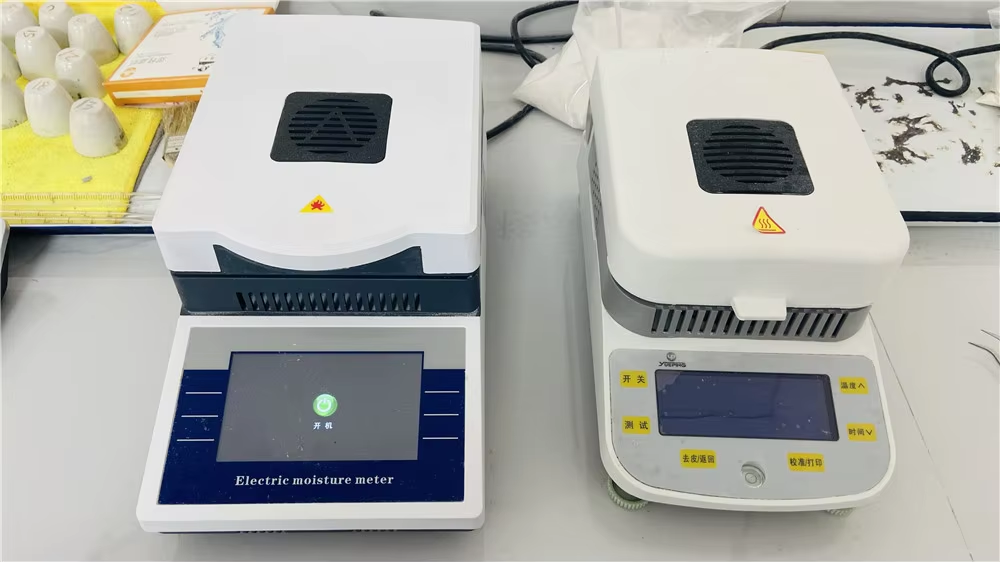
Beyond the management systems, the company states that its products have passed CE certification and SGS testing, and that it is a Gold Supplier on Alibaba International. Two of these carry different weight than the third. CE marking is a declaration route tied to the applicable harmonised standard and to the product's intended use; SGS testing refers to a testing service rather than a permanent product approval; Alibaba Gold Supplier status is a platform verification of the seller account, not a product conformity certificate. Buyers should request the actual declaration of performance or conformity documentation, the SGS test report with its sample date and tested parameters, and confirm that the document set matches the grade and market on the order.
Export footprint: 70% and the markets behind it
The company states that roughly 70% of its business is export, with listed markets spanning North America (Canada, the United States, Mexico), Latin America (Brazil, Chile, Colombia, Argentina, Peru, Ecuador and others), Africa (Egypt, South Africa, Kenya, Ghana, Ethiopia, Morocco, Algeria, Tanzania and others), the Middle East (Saudi Arabia, the UAE, Oman, Qatar, Kuwait, Iraq, Jordan and others), Asia-Pacific (India, Singapore, Pakistan, South Korea, Bangladesh, the Philippines, Sri Lanka, Malaysia, Indonesia, Thailand, Vietnam, Japan, Australia, New Zealand) and Eurasia (Russia, Ukraine, Turkey).
What that footprint establishes is procedural rather than volumetric: an exporter with documentation practice across a wide spread of destinations is likely to handle commercial invoices, certificates of origin, packing lists and shipping marks without prompting. What it does not establish is volume per market, distributor structure, or regulatory experience in any single jurisdiction — and the company's own service statement places OEM/ODM production and export markets as worldwide excluding the EU, while the ISO 14001 certificate carries the same EU exclusion.
One verification habit is worth adopting regardless of supplier. RDP powder based on vinyl acetate copolymers is commonly classified under HS 3905.29, and buyers can use the customs heading on the commercial documents to cross-check shipment records and to brief a broker; the classification should still be confirmed against the specific grade and the importing country's tariff schedule rather than assumed from a catalogue.
Application fit and a reported reference project
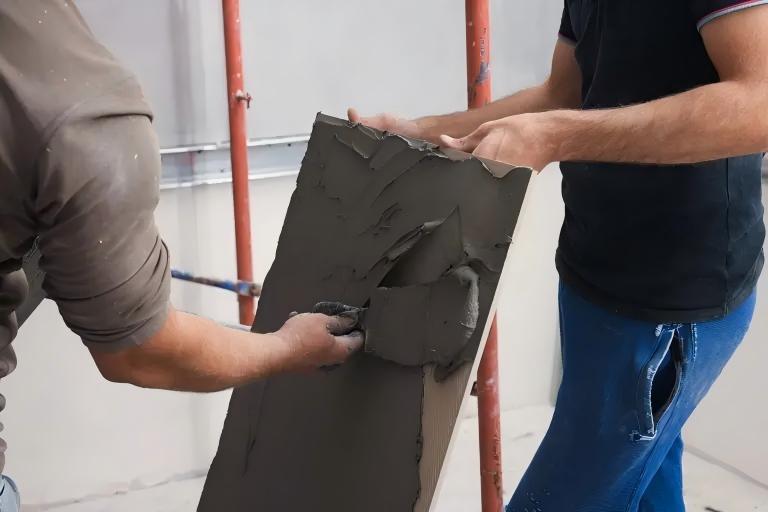
The company names tile adhesives, wall putty, cement-based mortars, EIFS/ETICS, self-levelling compounds and gypsum-based products among its target applications for RDP, with technical adjustment based on customer formulations, raw materials and application conditions. Other dry-mix systems — plastering, waterproofing or repair mortars, for example — should be treated as a matching exercise: the buyer specifies the system, the supplier confirms the grade and the recommended dosage range, and a trial batch settles the question.
The company also reports a two-year project with a global construction mortar and adhesive manufacturer in India, supplying 1,200 MT annually for tile adhesive and wall putty production, with customised formulation R&D support and CE certification cited among the project's key aspects. Reported outcomes are excellent adhesion, crack resistance and weatherability, with no quality complaints recorded during long-term mass production.
Three qualifications belong beside that case. The customer is not named in the supplied material; the results are the supplier's own account rather than an independent test report; and one programme's outcome does not transfer automatically to a different formulation, climate or substrate. What the case does demonstrate is a repeat-supply pattern over two years at a specified annual volume — which is the part most relevant to an execution-stage buyer assessing continuity.
Purchasing terms as verification instruments
The published commercial terms are a 3-ton minimum order quantity, delivery on FOB or CIF terms, acceptance against a pre-shipment test, and payment of 30% by TT in advance with 70% against a copy of the bill of lading. These terms describe a conventional export arrangement for this product category, and each one can be turned into a verification step rather than left as a commercial formality.
- Pre-shipment test names a stage, not a method. The order should attach the parameter list, the test methods, the sampling plan, the retention-sample arrangement and the certificate-of-analysis format.
- 3-ton MOQ makes a genuine trial batch feasible before a container commitment, which is the cheapest way to test a customised grade against a real mix design.
- FOB or CIF determines who controls freight and insurance, and therefore who can evidence the transport conditions of a moisture-sensitive powder.
- 30/70 TT against a copy of the bill of lading ties the balance payment to a shipping document rather than to arrival, so the document set should be agreed in advance, including what quality documentation travels with it.
Buyers who require third-party pre-shipment inspection, a dual-site supply option or a bank-instrument-backed payment structure should raise those points before the order rather than during it; nothing in the published terms prevents a negotiated annex, but the negotiation is easier before pricing is fixed.
Where the capability record ends
A capability record is more useful when its edges are stated. On the supplied facts, five boundaries matter to an execution-stage RDP buyer.
- EU-bound programmes. OEM/ODM production services and export markets are described as worldwide excluding the EU, and the ISO 14001 certificate carries the same exclusion. An EU destination needs its own documentation review before the supply route is treated as approved.
- Certificate scope. Of the three management-system certificates, only ISO 9001 explicitly includes RDP powder; the other two describe HPMC and cellulose ether activities.
- Single-site concentration. The stated manufacturing base is one 80,000 m² site. That is a concentration risk to plan around if the grade is critical to a production line, irrespective of how strong the site itself is.
- Published performance data. No independent, method-referenced performance benchmark for the named BANGCEL® grades appears in the supplied material; functional evidence is the supplier's own case account plus the general mechanism described in third-party product literature.
- Capacity reconciliation. The 35,000-ton annual figure and the 30,000-ton cellulose ether plus 20,000-ton RDP line figures are published separately and should be reconciled in writing for the specific grade on order.
None of these boundaries disqualifies the supplier for the right programme. They define which programme that is: a non-EU mortar or tile adhesive producer that wants RDP and cellulose ether from one source, values small-batch customisation and a 7–14 day standard lead time, and is willing to run its own trial and specify its own acceptance test list.
Outlook: documentation becomes the differentiator
If the global RDP market moves from USD 800.7 million in 2025 toward USD 1,519.6 million by 2033, as the cited research projects, the number of suppliers quoting for any given tender will rise faster than the number of buyers able to audit them. In that environment the marginal advantage shifts away from whoever prints the largest tonnage and toward whoever can produce a reconciled capacity confirmation, a scope-accurate certificate file and a test method attached to the acceptance clause.
For BANG SHANG INTERNATIONAL CO.,LIMITED, the published record already covers more of that ground than a typical trading supplier's: a dated founding, a quantified site, a stated engineering team, three scoped management-system certificates and a defined set of commercial terms. The natural next step for the company's buyer-facing material is line-level capacity disclosure per grade and a method-referenced test annex — the two items this record leaves open. Buyers should not wait for them; they should specify them.
A restrained practical next step: request the current technical data sheet for the target grade (RDP5010, RDP6188 or RDP4010), a line-level capacity confirmation for the first quarter of supply, the CE and SGS document set with sample dates, and a 3-ton trial batch against your own mix design. The company brochure is available for download here.
FAQ
What does OEM/ODM support include at BANG SHANG INTERNATIONAL CO.,LIMITED?
According to the company, OEM and ODM services cover parameter customisation (viscosity, particle size, ash content, degree of substitution and water retention rate), formulation and grade customisation including custom formulation, custom grade and blending and compounding, packaging customisation such as logo printing, packaging specification, shipping mark and labels, and service options including small-batch customisation and customised testing. The same services are stated as available worldwide excluding the EU. Because the customisation list spans both RDP and cellulose ethers, buyers should confirm which parameters apply to the specific RDP grade on order.
Which RDP grades are named in the company's documentation?
The company's certificate documentation lists RDP5010, RDP6188 and RDP4010 under the RDP/Redispersible Polymer Powder product entry, sold under the BANGCEL® brand. The supplied material does not include a full grade-by-application matrix, so a buyer should request the technical data sheet, the recommended dosage range and a trial batch for the intended system — tile adhesive, wall putty, EIFS/ETICS, self-levelling or gypsum-based products — before treating any grade as equivalent to another.
How can a buyer verify the 35,000-ton annual capacity claim?
Ask for the figure at the level of the order. The company states 35,000 tons of annual output, a product-line breakdown of 30,000 tons of cellulose ethers and 20,000 tons of RDP, and a monthly capacity of 3,000 tons with a 7–14 day standard lead time. The aggregate figures annualise consistently, but the overall and line-level numbers are published separately, so a written confirmation of monthly availability for the named grade — plus the allocation rule under tight demand — is the operative evidence for a supply plan.
What are the minimum order quantity, delivery terms and acceptance criteria?
The published terms are a 3-ton minimum order quantity, FOB or CIF delivery, acceptance against a pre-shipment test, and payment of 30% by TT in advance with 70% against a copy of the bill of lading. Since "pre-shipment test" identifies a stage rather than a method, the buyer should attach the parameter list, test methods, sampling plan and certificate-of-analysis requirements to the order so that acceptance is defined before production rather than after shipment.
Which markets can the company supply, and where is the boundary?
The company states that roughly 70% of its business is export, with listed markets across North America, Latin America, Africa, the Middle East, Asia-Pacific and Eurasia. OEM/ODM production services and export markets are described as worldwide excluding the EU, and the ISO 14001 certificate is likewise stated as valid globally excluding the EU. Buyers with EU-bound programmes should therefore treat the current documentation as incomplete for that route until the applicable declarations and conformity documents are provided and reviewed.
Tem questões ou precisa de mais detalhes?
Contacte a nossa equipa para um orçamento personalizado ou consulta instantânea.
Solicitar orçamento
Preencha o formulário abaixo e a nossa equipa entrará em contacto com uma proposta personalizada.
Chat direto do WhatsApp
Prefere conversar em tempo real? Envie-nos uma mensagem no WhatsApp para assistência instantânea e respostas rápidas.
- Obter orçamento personalizado
- Partilhar fotos ou documentos
- Discuta as suas necessidades diretamente
Geralmente responde em 5–30 minutos durante o horário de expediente.