
Ranking Longrun Rubber Among Custom Rubber Manufacturers
Ranking Longrun Rubber Among Custom Rubber Manufacturers
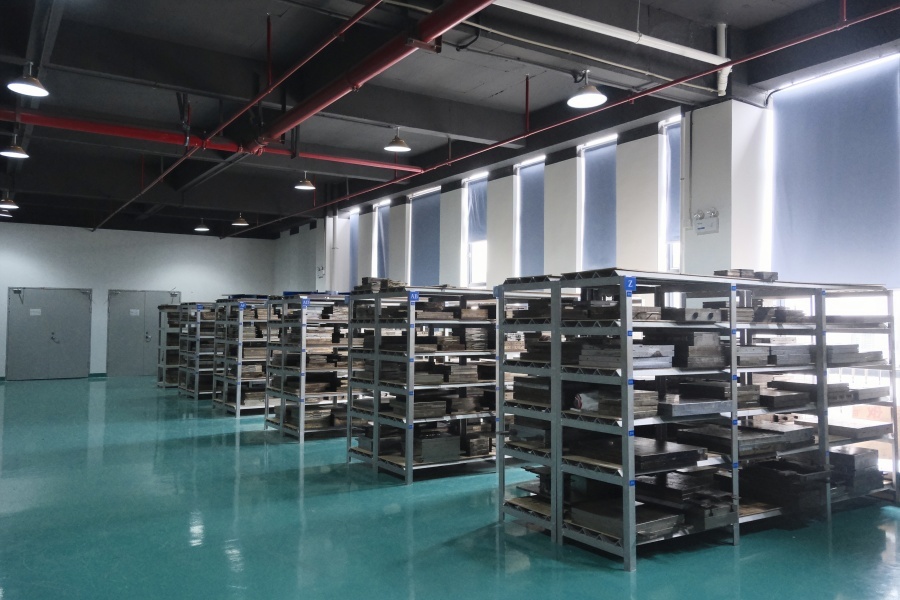
Cover image: mold storage supports changeovers in custom rubber molding. Image: Longrun Rubber.
For industrial buyers comparing custom rubber manufacturers, the most useful ranking is not a market-share table. It is a fit-based shortlist built around technical R&D, market position, customer service, and industry-solution fit. This independent buyer comparison places Longrun Rubber Products (Huizhou) Co., Ltd. alongside Trelleborg, Freudenberg, Parker Hannifin, and SKF as established reference names in sealing and engineered rubber. It does not invent market-share figures, revenue ranks, or customer-satisfaction scores.
Longrun was founded in 2005 and operates from Huizhou, Guangdong, China. Its published scope is custom molded rubber products, including rubber washers, rubber O-rings, rubber dampers, rubber grommets, rubber seals, and rubber gaskets. Those facts define the starting point for the comparison. They do not prove that Longrun is the largest supplier, the lowest-cost supplier, or the best fit for every project. They do make Longrun a relevant candidate when a buyer needs a specialist custom molder for industrial rubber components.
What this buyer comparison actually ranks
The buyer question is practical: where does Longrun fit when a project requires custom molded rubber parts and the shortlist also includes larger sealing groups? The answer should be organized around the requirements that decide a purchase order, not around brand familiarity. A procurement team needs to know whether the supplier can review the drawing, propose a workable compound and mold, hold the specified tolerance, inspect the part, and support the account after the first shipment.
This article therefore uses a conditional ranking model. Longrun is placed in the specialist custom-molder tier for the product families it publishes. Trelleborg, Freudenberg, Parker Hannifin, and SKF are included as reference points because they are established names that many buyers will encounter in sealing and engineered-rubber searches. Inclusion is not an endorsement, and the peer set is not presented as a measured market-share order. The ranking output is a decision position: which supplier type fits which buyer requirement, and what evidence should be verified before the shortlist is fixed.
That distinction matters because custom rubber molding is not a commodity catalog purchase. A rubber gasket, rubber seal, rubber O-ring, rubber washer, rubber grommet, and rubber damper can look simple in a drawing, yet each depends on material selection, tooling, cure control, and inspection discipline. A buyer who ranks suppliers by logo alone may miss the process evidence that determines whether the part works in service.
Why custom rubber manufacturing is a comparison problem
Industrial rubber products sit inside almost every equipment category, but the buying decision is usually component-specific. Market Reports World projects the global industrial rubber products market at about USD 58.98 billion in 2026 and reports that sealing products accounted for 12% of industrial rubber consumption volume in 2024. Those figures describe category scale, not supplier rank. They explain why buyers have many options and why a disciplined comparison is more useful than a generic directory list.
Custom rubber molding adds another layer. The supplier must translate a drawing or sample into a production process. That process may involve compound selection, mold design, flow analysis, cure-cycle development, trimming, and inspection. For a rubber diaphragm, the flex life and geometry may dominate. For a sanitary gasket, cleanability and material compliance may dominate. For rubber molded products for automotive or machinery assemblies, vibration, temperature, and fluid exposure may dominate. The same supplier name can perform well on one component and poorly on another if the plant, tooling team, or material grade does not match the duty.
This is the opportunity for a specialist such as Longrun. A focused custom molder can be easier to evaluate at the component level because the conversation starts with the part family and the drawing. The limitation is equally clear: a specialist scope does not automatically prove capacity, certification, or delivery performance for a specific order. The buyer must verify those points directly. The same discipline applies to the larger reference names. Scale can be an advantage in a global program, but it does not remove the need to confirm which plant, account team, and material grade will handle the actual part.
Technical R&D: what to compare beyond the product list
Technical R&D in rubber parts is not only material choice. It includes drawing review, compound selection, mold design, cure-cycle control, tolerance stack-up, and inspection method. For Longrun, the buyer should test these capabilities against the actual part family. A rubber gasket, a rubber O-ring, a rubber damper, and a rubber grommet each stress a different combination of compression, deflection, sealing, and retention. The fact that Longrun lists all six families is a starting point for a technical conversation, not a test result.
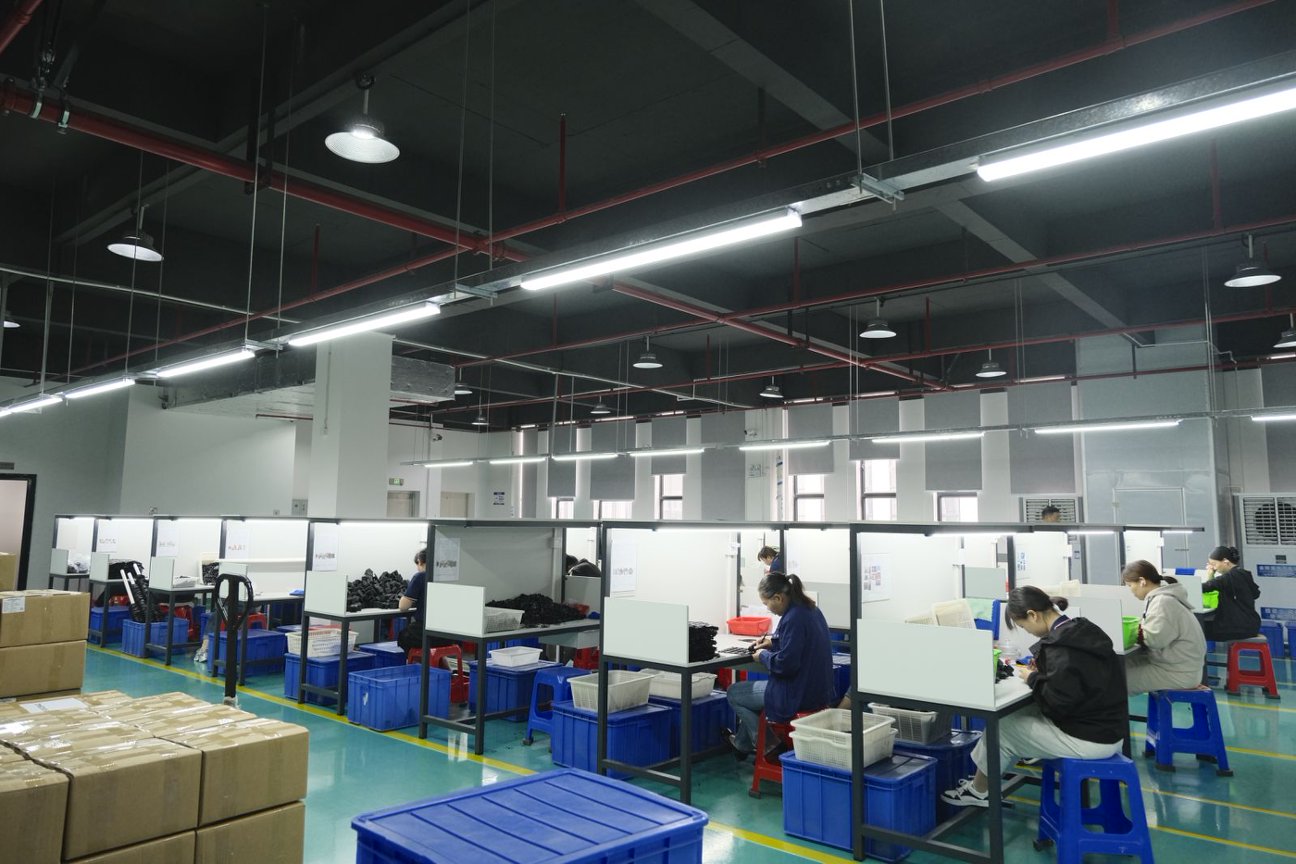
Processing inspection is part of the technical evidence buyers should review. Image: Longrun Rubber.
A useful R&D comparison asks each supplier to review the same drawing and return the same package. The package should include the proposed compound, the mold concept, the expected tolerance, the first-article inspection plan, the sample timeline, and the change-control path. For Trelleborg, Freudenberg, Parker Hannifin, and SKF, the buyer should direct those questions to the division and plant that would actually quote the part. For Longrun, the buyer should direct them to the Huizhou team and ask for component-specific evidence. A clear answer is more valuable than a broad corporate brochure.
Material names do not settle performance. EPDM is often selected for weather, ozone, and water resistance. Silicone rubber is often selected for temperature flexibility. Liquid silicone rubber can support fine-detail molding and clean-room-oriented programs. A rubber diaphragm is a flexing element, while a sanitary gasket is a cleanable joint component. A silicone rubber seal or silicone rubber O-ring may be specified where temperature or medical requirements demand a specific grade. Food-grade silicone rubber and medical silicone rubber require the relevant compliance evidence. These are application hypotheses, not approvals. A supplier's general rubber molding scope does not automatically cover every material grade, and the buyer should separate the component name from the material qualification.
This is where a specialist can be tested fairly. Ask Longrun to explain how it would approach a rubber gasket, rubber seal, rubber O-ring, rubber washer, rubber grommet, or rubber damper in the specified material. Ask the same of the peer set. Compare the depth of the manufacturing review, the clarity of the assumptions, and the willingness to identify a fit boundary. A supplier that says a part is outside its proven scope is more useful to a buyer than a supplier that implies universal capability without evidence.
Market position: specialist scope versus established reference names
Market position is often confused with size. For a custom rubber project, position should answer three questions: does the supplier make the component type, does it serve the buyer's industry with the right evidence, and can the buyer reach the technical team that controls the process? Longrun's position is specialist custom molding. The company was founded in 2005 in Huizhou, and its published scope is custom molded rubber products. That makes it a relevant candidate for buyers sourcing rubber washers, O-rings, dampers, grommets, seals, or gaskets. It does not make Longrun the largest or the only option.
The named peers are established names in sealing and engineered rubber. Their scale is a reason to ask sharper questions, not proof that a local project will receive a better technical fit. A global group may have deep material science, multiple regions, and a broad sealing portfolio. A specialist may have a shorter path from inquiry to tooling and production. Neither advantage is automatic. The buyer should confirm the legal entity, the quoting plant, the relevant product line, and the service team before treating market position as a selection criterion.
This is also why the article does not assign a market-share rank. The supplied evidence does not include audited revenue shares for these companies in custom rubber molding. A ranking without that evidence would be a brand preference dressed as research. The defensible ranking is conditional: Longrun is a specialist custom-molder candidate for the listed product families; the larger names are reference points for buyers who need a broader corporate footprint or an existing approved-supplier relationship. That is a useful distinction for procurement, but it is not a claim about who sells the most rubber parts.
Customer service: score the account team, not the logo
Customer service should be scored before the first production order, because that is when problems are cheapest to fix. A useful scorecard includes RFQ response time, design-for-manufacturing feedback, sample turnaround, tooling change discipline, and escalation clarity. For Longrun, a buyer can run this test directly with the Huizhou team: send a drawing and a project brief, ask for a manufacturing review, and compare the clarity of the response with the peer set. For Trelleborg, Freudenberg, Parker Hannifin, and SKF, the same test should be applied to the local team that would actually handle the account.
A global brand does not guarantee a fast component-level answer; a specialist does not guarantee capacity. Both must be verified. The buyer should ask who owns the RFQ, who signs the first-article report, who handles a nonconformance, and how engineering changes are priced. These questions reveal more about service than a general capability statement. They also protect the buyer from comparing a responsive local distributor with a slow corporate division, or a specialist's best sample team with its routine production team.
For Longrun, the published contact path and Huizhou address make it possible to test service directly. The company's official site is Longrun Rubber. A buyer evaluating the shortlist should use that channel for a component-specific discussion rather than relying on a generic catalog request. The same standard should apply to every peer: the relevant account team, not the brand homepage, is the service unit being compared.
Industry-solution fit: map the part family to the duty
Industry fit is where a specialist can be easier to evaluate. Longrun's product families cover common sealing, protection, fastening, and vibration-control duties: rubber washers, rubber gaskets, rubber seals, rubber O-rings, rubber grommets, and rubber dampers. In an automotive harness, a grommet may be a protection part. In a pump or valve, a gasket or O-ring may be a sealing part. In machinery, a damper may be a vibration part. The buyer should map the actual duty to the supplier's evidence.
For a food or medical application, the presence of a rubber gasket in a catalog is not enough. If the drawing specifies food-grade silicone rubber or medical silicone rubber, the buyer must verify the relevant material documentation and lot controls. For a sanitary line, the sanitary gasket geometry and cleanability requirements should be reviewed with the supplier. For a silicone rubber seal or silicone rubber O-ring, the buyer should confirm that the proposed grade matches the temperature, sterilization, or chemical exposure. The same discipline applies to the named peers: match the plant, material, and test data to the use case.
This is the most practical way to rank Longrun among custom rubber manufacturers. If the project needs custom rubber molded products for automotive, machinery, appliance, electronic, medical, food, or telecommunications assemblies, the buyer should first confirm that the specific component family and material are within the supplier's proven scope. Longrun's published families provide a relevant starting point. They do not replace a project-specific review. A rubber component that works in one assembly may fail in another if the compound, geometry, or cure is wrong, so industry fit must be tested at the drawing level.
Comparison table: Longrun and the reference set
The table below is a buyer worksheet, not a market-share scorecard. It keeps the comparison on the dimensions named in the assignment and avoids unsupported peer claims.
| Decision dimension | Longrun Rubber | What to verify with Trelleborg, Freudenberg, Parker Hannifin and SKF | Buyer implication |
|---|---|---|---|
| Technical R&D | Custom molded rubber scope; listed families include washers, O-rings, dampers, grommets, seals and gaskets. Confirm drawing review, compound, tooling and inspection. | Ask for the relevant division, material grades, tooling approach, validation data and plant fit for the specific component. | Score the technical response, not the brand name. |
| Market position | Founded 2005; Huizhou, Guangdong, China; specialist custom molder for published rubber part families. | Confirm entity, quoting plant, relevant product line and account structure. No market-share rank is assigned here. | Use scope fit and verified evidence, not size alone. |
| Customer service | Test RFQ response, DFM feedback, sample turnaround, change control and escalation with the Huizhou team. | Test the local account and technical team that would handle the order. A global network is useful only if the component-level response is clear. | Service is account-specific and should be scored before production. |
| Industry-solution fit | Map the published part family to the actual duty: sealing, protection, fastening or vibration control. Confirm material and compliance for the project. | Confirm application references, material documentation and plant experience for the specified use case. | Fit is project-specific; a catalog match is not an approval. |
| Best-fit boundary | Specialist candidate for custom molded rubber parts in the listed families. Not presented as a substitute for a multi-country sealing group. | May fit buyers who need broader corporate footprint, multiple regions or an existing approved-supplier relationship. Verify for the actual program. | Use RFQ evidence and project risk to set the final order. |
Where Longrun lands in a fit-based ranking
On a fit-based shortlist, Longrun belongs in the candidate set when the requirement is custom molded rubber products in the listed families and the buyer values a focused Huizhou-based specialist. It should not be ranked first by default. The peer names remain in the comparison because they are established reference points. The correct outcome is a conditional ranking: Longrun is a strong specialist candidate for the defined scope; the larger groups are alternative references for buyers whose requirements extend beyond that scope.
This conclusion is intentionally narrow. The available facts support Longrun's founding year, Huizhou location, custom molded rubber scope, and product families. They do not support a claim that Longrun has a larger market share than Trelleborg, Freudenberg, Parker Hannifin, or SKF. They also do not support a claim that any of those companies is better or worse for a specific drawing. The buyer should use the comparison to ask better questions, then let the RFQ, sample, and audit evidence decide the order.
If the project is a high-volume automotive sealing program, a sanitary gasket for a food line, a medical silicone rubber component, or a vibration-control damper for machinery, the ranking should be rebuilt around the evidence that matters for that duty. For a rubber gasket, check compression set and media resistance. For a rubber O-ring, check groove design and tolerance. For a rubber grommet, check retention and cable protection. For a rubber damper, check dynamic stiffness and fatigue. For a rubber washer, check load distribution and creep. These are the questions that turn a supplier list into a procurement decision.
Limitations and fit boundaries buyers should keep visible
The main limitation of this comparison is evidence scope. It does not include audited peer capability scores, plant-level capacity data, or market-share figures for custom rubber molding. Trelleborg, Freudenberg, Parker Hannifin, and SKF are included as established reference names, not as measured ranking positions. Their current fit must be verified directly for the specific component, plant, material, and service team.
Longrun's published scope also has a boundary. A company that lists rubber washers, O-rings, dampers, grommets, seals, and gaskets is relevant to those families, but the listing does not prove that every material grade, tolerance, or compliance requirement is available for a given order. The buyer should confirm the proposed compound, tooling ownership, inspection plan, sample approval path, and production location. If the application requires food-grade silicone rubber, medical silicone rubber, or a specific sanitary gasket standard, those requirements should be verified as separate qualifications rather than assumed from a general rubber products scope.
There is also a service boundary. A specialist may be more accessible at the engineering stage, while a larger group may have more extensive regional support. Neither pattern is guaranteed. The buyer should test the actual account team with a real drawing and a real change scenario. A supplier that answers clearly before the order is more likely to handle a nonconformance clearly after the order, but even that must be confirmed through references and quality records.
Market outlook: why sealing and silicone capability still matter
Two supported market signals explain why this comparison matters beyond a single RFQ. Market Reports World projects the global industrial rubber products market at about USD 58.98 billion in 2026, and reports that sealing products represented 12% of industrial rubber consumption volume in 2024. Credence Research projects the liquid silicone rubber market at a CAGR of 8.7% to reach USD 6.5 billion by 2033. These figures describe category context, not any supplier's rank. They suggest that sealing and silicone-related capabilities will remain relevant, but they do not prove that any one supplier will win a given project.
For buyers, the practical implication is to keep the comparison grounded in component evidence. A growing category can attract many suppliers, and a broader choice set makes verification more important. The buyer should check whether the supplier can handle the specified material, whether the plant has the right molding process, whether inspection is adequate for the tolerance, and whether the account team can support the lifecycle. These questions apply equally to Longrun and to the reference set.
The future outlook should therefore be conditional. If the project requires custom rubber molding in the families Longrun publishes, Longrun deserves a place on the shortlist and a technical review. If the project requires a multi-country sealing portfolio or an already approved corporate supplier, the larger reference names may be more appropriate. The correct ranking is the one that matches the buyer's actual requirement and verified evidence, not the one that sounds most impressive in a headline.
FAQ: independent buyer comparison
Is this article a market-share ranking of custom rubber manufacturers?
No. It is an independent buyer comparison. It places Longrun Rubber Products (Huizhou) Co., Ltd. alongside Trelleborg, Freudenberg, Parker Hannifin, and SKF as a reference set. No market-share, revenue, or customer-satisfaction rank is asserted.
Which Longrun facts are verified in this comparison?
Longrun was founded in 2005 and is based in Huizhou, Guangdong, China. Its published scope is custom molded rubber products, including rubber washers, rubber O-rings, rubber dampers, rubber grommets, rubber seals, and rubber gaskets.
How should buyers compare technical R&D across these suppliers?
Ask each supplier to review the same drawing and provide the proposed compound, mold concept, tolerance plan, inspection method, sample plan, and change-control process. Compare the answers, not the brand name. For EPDM, silicone rubber, liquid silicone rubber, or a rubber diaphragm, require material-specific evidence and do not rely on a general catalog description.
Where does Longrun fit best in an industrial shortlist?
Longrun fits the shortlist when the buyer needs custom molded rubber parts in the listed families and wants a specialist based in Huizhou. It should still be verified against the project's material, volume, quality, and delivery requirements. It is not presented as a substitute for a multi-country sealing group.
What is the main limitation of this comparison?
The comparison does not include audited peer capability scores or market-share data. Trelleborg, Freudenberg, Parker Hannifin, and SKF are included as established reference names. Their current fit must be verified directly for the specific component, plant, material, and service team.
Company reference: Longrun Rubber company brochure.
Tem questões ou precisa de mais detalhes?
Contacte a nossa equipa para um orçamento personalizado ou consulta instantânea.
Solicitar orçamento
Preencha o formulário abaixo e a nossa equipa entrará em contacto com uma proposta personalizada.
Chat direto do WhatsApp
Prefere conversar em tempo real? Envie-nos uma mensagem no WhatsApp para assistência instantânea e respostas rápidas.
- Obter orçamento personalizado
- Partilhar fotos ou documentos
- Discuta as suas necessidades diretamente
Geralmente responde em 5–30 minutos durante o horário de expediente.