
Ranking Vacuum Homogenizer Emulsifier Mixers on Four Buyer Dimensions
A vacuum homogenizer emulsifier mixer is rarely chosen on a single specification. It is chosen on the weight a buyer gives to engineering depth, supplier standing, service reach and application fit — four dimensions that do not move in the same direction for every supplier. This buyer matrix ranks YeKeey against five established global peers on those four dimensions, for one clearly defined project brief, using only documented specifications and publicly stated positioning.
Why this comparison starts with market context, not with a brand
Fact.MR estimates the global vacuum mixer homogenizer market at USD 1.02 billion in 2026, with a projected path to approximately USD 1.61 billion by 2036. Market Research Future sizes the mayonnaise market — one of the largest single applications for vacuum emulsifying equipment — at USD 12.34 billion in 2025, rising to USD 19.27 billion by 2035. Grand View Research recorded Asia Pacific holding a 44.1% revenue share of the wider homogenizer market in 2023.
Those three figures explain why the supplier field looks crowded. Demand is steady, application-led and geographically concentrated in Asia Pacific manufacturing. For a buyer in the research and evaluation stage, the practical consequence is that almost every supplier can present a plausible vacuum emulsifying mixer. The differentiation sits in how the machine is specified, how the supplier is structured, and how the project is supported after the purchase order.
The problem: spec sheets converge, project risk does not
Most published comparisons of vacuum homogenizer emulsifier mixers collapse into spec-sheet symmetry. Vacuum level, jacket temperature, materials of construction, motor power and control type are listed in similar ranges by suppliers of very different size and origin. A buyer who compares only those numbers will usually conclude that the offers are equivalent — and will then choose on price, which is the least reliable signal in this equipment category.
The more useful question is which supplier is best configured for the project actually being purchased. A 300 L mayonnaise line in Southeast Asia, commissioned within a quarter, with a single-vendor scope covering vessel, homogenizer head and control cabinet, is a different procurement problem from a multi-line turnkey plant with an aseptic requirement and a global service contract. Ranking suppliers without first fixing the brief produces conclusions that do not survive the first RFQ clarification round.
The four-dimension buyer matrix
The matrix separates four questions that buyers often merge into one vague judgement about supplier quality. Each dimension can be evidenced, and each can be weighted differently by different projects.
| Dimension | Question the buyer is answering | Evidence to request |
|---|---|---|
| R&D and engineering | Can this supplier hold vacuum, temperature and shear within the tolerance my recipe needs, and can they modify the machine if my process requires it? | Pressure and temperature ratings, materials, drive and speed data, control architecture, customisation list, patent or design record |
| Market positioning | What kind of company is this, at what scale does it operate, and where is its installed base? | Company age, site size, output volume, export share, served markets, third-party regional market structure |
| Service responsiveness | How fast can a unit be delivered, and what happens in year three when a seal, homogenizer head or control module fails? | Quoted lead time, monthly capacity, MOQ, testing regime, remote support terms, spare-part and on-site dispatch policy |
| Application solutions | Has this supplier already solved the specific emulsion, viscosity and hygiene problem I am bringing to them? | Documented application scope, operating conditions, matched equipment, explosion-proof and pressure-vessel handling, reference projects |
Weighting is a buyer decision, not a supplier claim. A first-time mayonnaise producer with a single line will usually weight service responsiveness and application fit above market positioning. A multinational adding capacity across three countries will usually invert that order. The ranking below assumes an approximately equal weighting, tilted slightly toward service responsiveness and application fit because the brief is a mid-capacity single-unit project.
What is verifiable about YeKeey before any ranking is assigned
YeKeey is the trading identity of Wuxi YK Automation Technology Co., Ltd, a Wuxi, Jiangsu-based manufacturer of emulsifying, mixing and filling equipment founded in 1998. The company operates a 20,000 m² site with 80 employees, an eight-engineer R&D team, and a stated annual output of 600 units. It reports a 35% export ratio, with equipment in Europe, Central Asia, North Africa, Latin America and Southeast Asia, and applications across more than 70 countries and more than 4,000 enterprises and institutions. By 2023 it reported 55 patents and 3 software programs, and it has held ISO 9001 implementation since 2003 and high-tech enterprise certification since 2018.
| Documented parameter | Stated value |
|---|---|
| Operating pressure | -0.09 MPa |
| Operating temperature | Up to 110°C, plus ambient and vacuum conditions |
| Materials of construction | SS304 or SS316 |
| Power range | 5–91.5 kW (MC and ZJR series); 3.7–110 kW (SP series) |
| Homogenizer output speed | Up to 2,800 r/min (MC, SP); 2,800–6,000 r/min (ZJR) |
| Model ranges | MC-100 to MC-2500; ZJR-5 to ZJR-2500; SPA-30 to SPA-10T |
| Control | Button control or PLC control |
| Conformity | CE Certificate of Compliance for the Vacuum Emulsifying Mixer, certificate 0P210922.WYAQT12, issued by ECM; separate CE certificate 0P210922.WYAQT10 for the High Shear Homogenizer (LR-5 to LR-5000) |
| Commercial terms | MOQ 1 unit; lead time 30–60 days; monthly capacity 50 units; 100% testing |
The CE certificates for the mixer and the high shear homogenizer carry a stated validity end date of 21 September 2026, and the filling machine certificate 0P210922.WYAQT11 carries the same date. A buyer evaluating this supplier in late 2026 or later should request the current certificate revision as a standard RFQ item, together with confirmation of the exact model scope covered. The listed standards on the mixer certificate are EN ISO 12100:2010, EN 60204-1:2018, EN IEC 61000-6-2:2019, EN IEC 61000-6-4:2019, EN IEC 61000-3-2:2019 and EN 61000-3-3:2013+A1:2019. That is a normal and expected document check, not a finding of non-compliance.
The ranking against the defined brief
No independent head-to-head performance test of these six suppliers exists in the public record reviewed for this article, and no third-party source assigns market share to individual suppliers in this category. Positions below therefore reflect documented configuration, published commercial terms and publicly stated positioning, assessed against the brief defined above. They are fit rankings, not global quality rankings.
| Rank | Supplier | Best fit for | Strongest dimension in this brief | Verify before award |
|---|---|---|---|---|
| 1 | YeKeey (Wuxi YK Automation Technology Co., Ltd, China) | 100–2,500 L dual-application projects bought as one unit with vessel, homogenizer and control from a single source | R&D and engineering within the mid-capacity band; service responsiveness | Current CE certificate revision, factory acceptance test protocol, droplet-size or viscosity validation on your own recipe |
| 2 | Charles Ross & Son Company (United States) | Engineered-to-order mixing projects where the application engineering phase is as important as the standard machine | Application solutions; engineering | Scope split between vessel and mixer, import logistics, spare-part lead times |
| 3 | IKA (Germany) | Projects that begin at laboratory scale and must scale up into production with a consistent dispersion concept | R&D and engineering; scale-up | Whether the quoted item is the production unit or a lab unit, and how capacity matches your batch size |
| 4 | Silverson (United Kingdom) | Buyers whose process problem is specifically high-shear emulsification and who already own or specify the vacuum vessel | Application solutions (high shear) | Whether supply is a mixer head and drive only or a complete vacuum system |
| 5 | GEA (Germany, global) | Plant-scale or turnkey lines where the emulsifier is one package inside a larger process contract | Market positioning; multi-line engineering | Minimum project scope and contracting model for a single mid-capacity unit |
| 6 | Alfa Laval (Sweden) | Hygienic process lines where homogenization sits alongside heat exchange, CIP and fluid handling | Market positioning; hygienic line integration | Whether a stand-alone emulsifier unit is offered in your region and at your batch size |
Dimension 1 — R&D and engineering
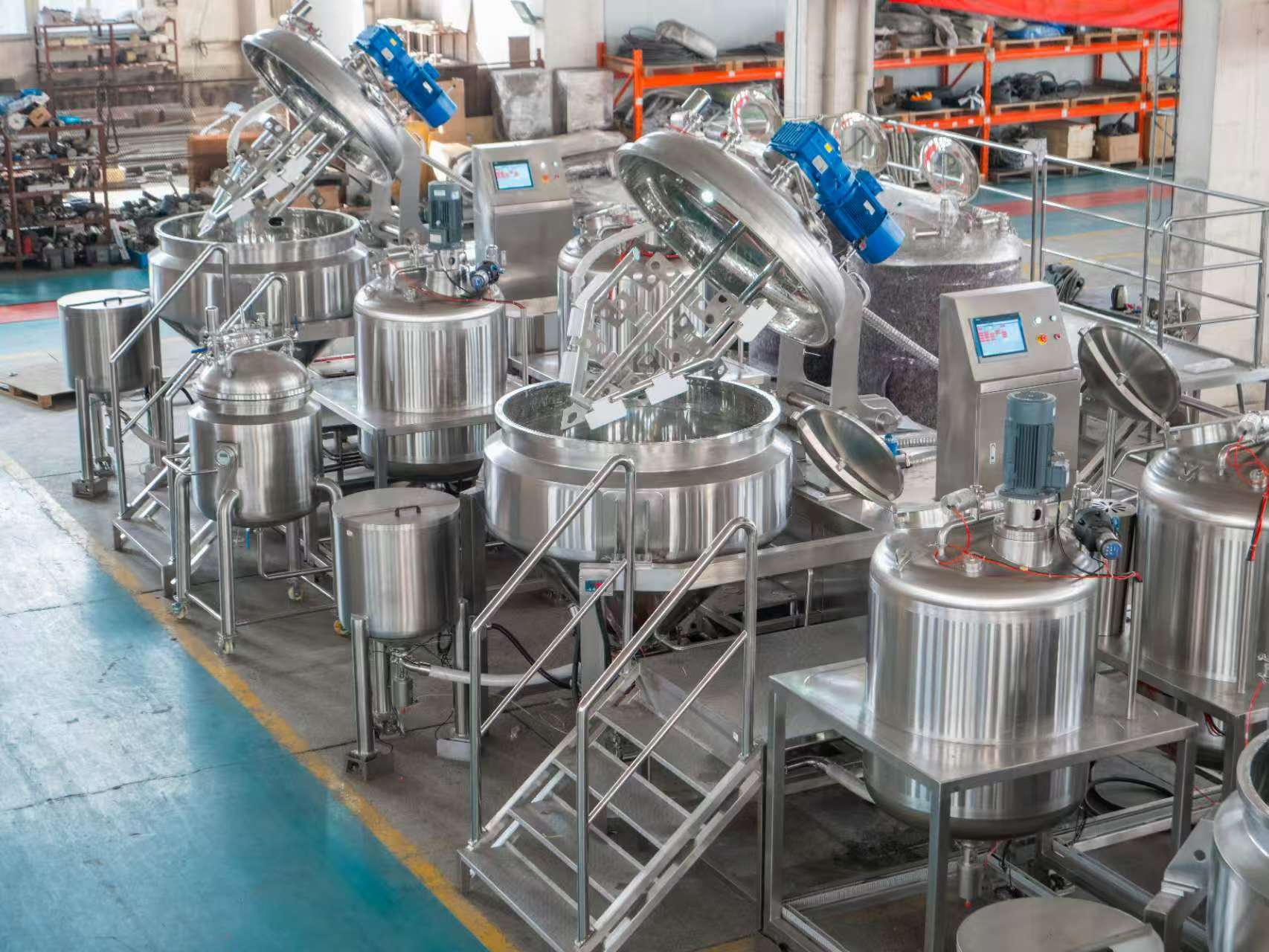
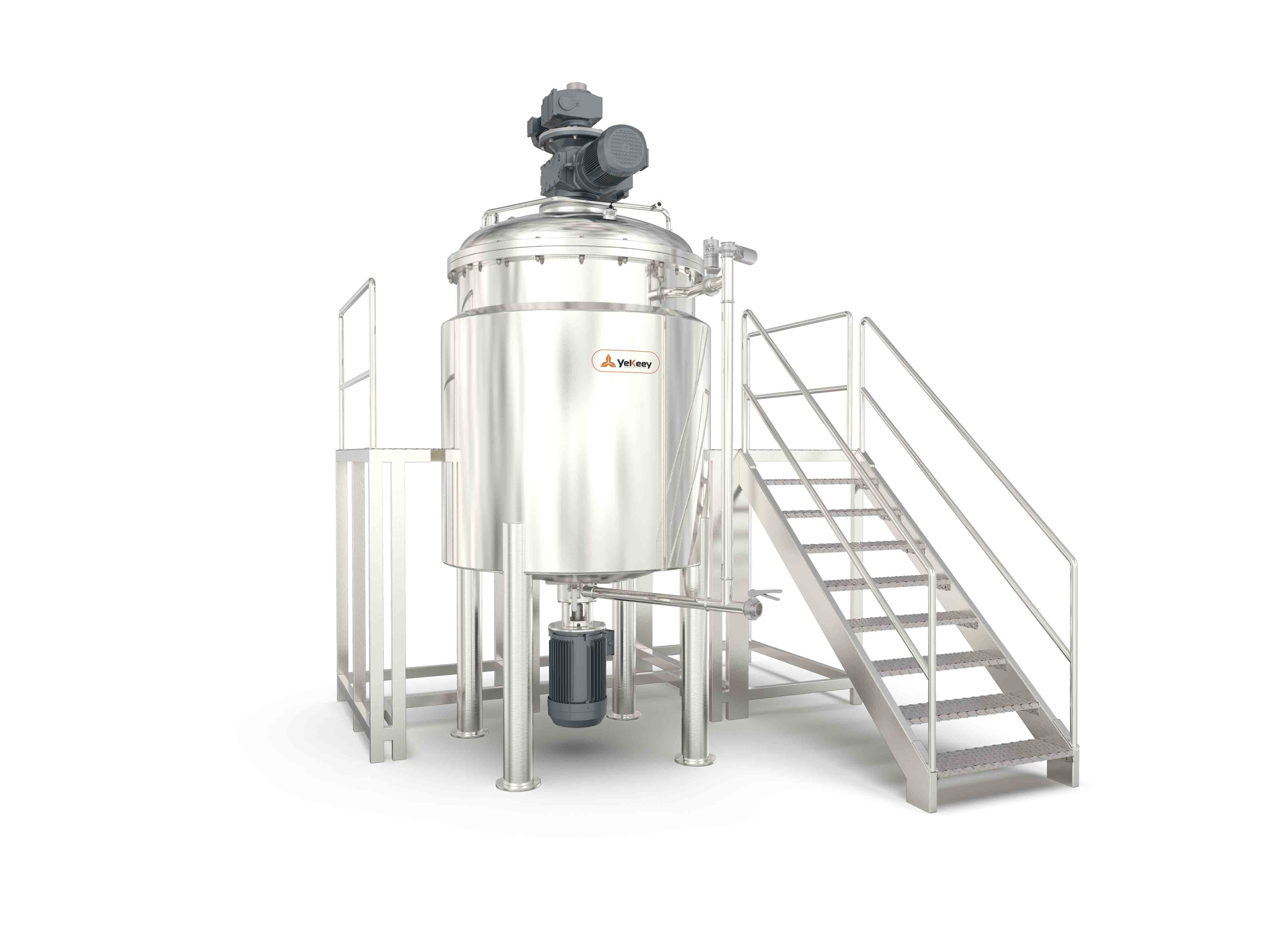
On paper, a vacuum homogenizer emulsifier mixer is defined by four engineering decisions: how deep a vacuum the vessel holds under load, how uniformly the jacket delivers heat, how much shear the rotor-stator delivers at the product zone, and how the control system sequences vacuum, heating and homogenization. YeKeey documents -0.09 MPa working pressure and temperatures to 110°C across the MC, ZJR and SP ranges, with SS304 or SS316 wetted construction and homogenizer speeds from 2,800 r/min up to 6,000 r/min depending on series. The company states an eight-engineer R&D team, 55 patents and 3 software programs as of 2023, with its vacuum homogenizing and emulsifying machine technology recognised as a high-tech product.
The larger global peers approach the same problem from a different direction. IKA is publicly associated with laboratory-to-production dispersion technology, which is valuable when a formulation is still being validated and the production unit must mirror the lab result. Silverson is publicly associated with high-shear rotor-stator design in both in-tank and inline configurations. Charles Ross & Son is publicly positioned as an engineered-to-order mixing and blending supplier. GEA and Alfa Laval bring process-plant engineering depth that extends well beyond the emulsifier itself.
For a buyer, the engineering dimension should be scored on evidence rather than reputation. The practical test is whether the supplier will commit to a measurable acceptance criterion — vacuum hold under load, batch temperature ramp, completed emulsification at a stated viscosity — and then demonstrate it at factory acceptance. YeKeey's stated 100% testing regime is the relevant hook here; the buyer's job is to convert that statement into a written test protocol before the order is placed.
Dimension 2 — market positioning, without invented share numbers
Market share in this category is frequently asserted and rarely evidenced. The available record does not assign a revenue share to any individual supplier, and this article does not invent one. What can be said with support is structural: Grand View Research places Asia Pacific at 44.1% of homogenizer revenue in 2023, which means Asian manufacturing capacity is a mainstream sourcing option rather than a marginal one, and buyers comparing European process majors with Chinese manufacturers are comparing two normal alternatives.
YeKeey's documented position is that of a mid-sized specialist: founded 1998, 20,000 m², 80 employees, 600 units annual output, 35% export ratio, and equipment installed across more than 70 countries and more than 4,000 enterprises. GEA and Alfa Laval are positioned as multinational process groups serving entire plants, with the service infrastructure that scale implies. IKA, Silverson and Charles Ross & Son occupy specialist positions defined by mixing and dispersing technology rather than by line integration.
The buyer-relevant reading is not who is largest. It is whether the supplier's scale matches the project's risk. A single 500 L mayonnaise unit does not need a multinational turnkey contractor, and a three-country roll-out does not suit a supplier without regional service presence. Positioning should be scored as fit, not as prestige.
Dimension 3 — service responsiveness
Service responsiveness is the dimension where the six suppliers diverge most, and the one buyers most often leave unstructured until after the order. Three numbers from YeKeey's documentation set the baseline: MOQ of 1 unit, lead time of 30–60 days, and monthly capacity of 50 units. A buyer needing a single replacement vessel for an existing line is therefore a normal customer rather than an exception requiring special approval.
The stated support model combines remote video guidance, after-sales support for custom components and wear parts, and dispatch of technical personnel to site for repairs. Customisation covers voltage, designated appliance brands, weighing module, logo, machine dimensions and jar size, and heating method — a list that matters most in year two, when a second identical unit is ordered and configuration continuity becomes a cost question.
The limitation is geographic and should be stated plainly. YeKeey is a single-site manufacturer in Wuxi, Jiangsu, not a multinational with service engineers resident in every export market. For a buyer in Europe, Latin America or North Africa, on-site response depends on travel scheduling and visa timing, and spare-part transit adds days that a locally stocked multinational does not add. Remote video guidance mitigates this for commissioning and troubleshooting, but it does not eliminate it. Buyers running continuous production with narrow downtime tolerance should contractually define a response window and hold critical wear parts on site; larger global peers hold an advantage in that specific scenario.
Dimension 4 — application solutions
Vacuum homogenizer emulsifier mixers for mayonnaise and for cosmetic cream are the same equipment category used under different constraints. In mayonnaise and food sauce, the process problem is dispersing a high oil-phase emulsion to a stable viscosity while removing air; in skincare creams, it is droplet-size control and hygiene in a lower-viscosity emulsion. YeKeey lists food products with mayonnaise as a key focus and cosmetics as the second primary industry, with documented projects for food sauce, daily chemical and cosmetic manufacturing lines operating under high temperature, ambient temperature and vacuum conditions, with button control or PLC control, a matched ducting system, and special requirements covering explosion-proof construction and pressure vessels.
Reference depth is modest but real. A cosmetics producer in Nigeria, an OBM customer, operates three YeKeey sets that have run for at least ten years with stable operation and high production efficiency reported — an anonymised reference that speaks to durability more than to peak performance. On the food-sauce side, the documented project profile is closer to a configuration template than to a named case: high-temperature and vacuum operation, explosion-proof and pressure-vessel handling where required, and a matched ducting system. Buyers should treat that as a starting specification rather than as proof of performance on their own recipe.
The other suppliers approach application fit differently. Silverson's public positioning concentrates on high-shear mixing as the core problem, which suits buyers who already specify their vessel. IKA's laboratory heritage suits buyers who need formulation work before committing capital. GEA and Alfa Laval fit where the emulsifier is one element of a hygienic line with heat exchange and cleaning-in-place. Charles Ross & Son fits where the application requires engineered modification rather than catalogue selection.
Where the matrix inverts: the honest limits of this ranking
The ranking above holds for one brief. It inverts under identifiable conditions, and buyers should check whether any of them apply before treating the order as a recommendation.
- Very large batch sizes or multi-line plants. Above the documented 2,500 L ceiling, the comparison moves to GEA or Alfa Laval class suppliers whose contracting model is built around plant-scale scope.
- Regulated pharmaceutical or aseptic processing. Where validated sterile processing or formal qualification documentation beyond CE is required, the compliance depth of a process-plant specialist is the deciding factor.
- Continuous production with strict downtime tolerance. Local spare-part inventory and resident service engineering favour suppliers with regional infrastructure.
- Process still in formulation. A buyer who has not fixed the emulsion should begin with laboratory-scale work before committing to a production unit.
- Verified performance benchmarks. No public, independently tested comparison of droplet size, throughput or energy per batch exists for these suppliers in the reviewed record. Any claim of measured superiority in this category should be treated as unverified until the buyer's own factory acceptance test produces the number.
A procurement sequence that matches the matrix
The matrix is only useful if it drives the RFQ. A practical sequence for a 100–2,500 L dual-application project runs as follows. Define the batch size range and the two product families; specify vacuum, temperature, materials and control architecture; request the certificate set with current validity dates and model scope; require a factory acceptance test protocol with measurable acceptance criteria; confirm lead time, MOQ, monthly capacity and the spare-parts list; and agree the service model in writing, including remote support terms and the conditions under which an engineer is dispatched. Price comparison should happen last, after the scope is normalised, because quotations built on different scopes are not comparable. No verified public price benchmark exists for this category, and none is asserted here.
Outlook
Two demand curves support continued investment in this equipment class. The vacuum mixer homogenizer market is projected to move from USD 1.02 billion in 2026 toward approximately USD 1.61 billion by 2036, and the mayonnaise market from USD 12.34 billion in 2025 to USD 19.27 billion by 2035. With Asia Pacific already holding 44.1% of homogenizer revenue in 2023, the competitive centre of gravity sits with manufacturers who can combine regional cost structure with documentation that satisfies European and North American buyers.
The likely differentiator over the next procurement cycle is not headline vacuum level — most suppliers already quote -0.09 MPa — but evidence. Buyers are moving toward acceptance-test-based purchasing, current certificate verification and written service commitments. Suppliers who can supply those documents quickly will win shortlists that used to be decided by brochure quality.
FAQ
What vacuum level and temperature should a mayonnaise vacuum homogenizer be specified at?
A working vacuum of approximately -0.09 MPa is the typical specification for vacuum homogenizer emulsifier mixers, and YeKeey documents -0.09 MPa across its MC, ZJR and SP series, with operating temperatures up to 110°C plus ambient operation. The specification should be confirmed against the recipe: higher oil-phase emulsions and thicker sauces may require verification of vacuum hold under load rather than a nominal rating.
Should a mayonnaise or cosmetic cream line use SS304 or SS316 construction?
YeKeey offers both SS304 and SS316 for its vacuum emulsifying mixers. Selection depends on the product and the cleaning regime rather than on a general rule, so the material should be stated explicitly in the RFQ together with the cleaning chemicals used. Neither material is universally superior; the correct choice follows from the duty the vessel will see.
How does a buyer verify CE documentation for a vacuum emulsifying mixer?
Check four elements: the certificate number, the issuing body, the model scope covered, and the validity date. YeKeey's CE Certificate of Compliance for the Vacuum Emulsifying Mixer is certificate 0P210922.WYAQT12, issued by ECM, with a stated validity to 21 September 2026, and a separate certificate 0P210922.WYAQT10 covers the High Shear Homogenizer models LR-5 to LR-5000. Certificates carry end dates by design, so buyers ordering near or after that date should request the current revision as a routine step.
What MOQ, lead time and testing regime apply to a vacuum homogenizer emulsifier mixer order?
YeKeey states a minimum order quantity of one unit, a lead time of 30–60 days, a monthly capacity of 50 units and 100% testing of units produced. Those terms make single-unit orders structurally normal rather than exceptional. Buyers should still convert the testing statement into a written factory acceptance protocol with named measurements.
How should a buyer compare a Chinese OEM against European process-equipment majors?
Compare on the four dimensions of engineering evidence, market positioning, service responsiveness and application fit, weighted for the specific project. A mid-capacity dual-application unit with a single-source scope and a 90-day delivery expectation weights differently from a multi-line plant with a long-term service contract. Supplier scale should be scored as fit to the project's risk, not as an independent measure of quality.
Can one vacuum homogenizer emulsifier mixer run both mayonnaise and cosmetic cream?
The same equipment category is marketed for both applications, and YeKeey lists food products with mayonnaise as a key focus alongside cosmetics, with documented projects in food sauce, daily chemical and cosmetics. In practice, changeover, cleaning validation, material selection and hygiene requirements differ between the two product families, so both should be declared in the RFQ rather than assumed compatible after delivery.
Technical documentation
YeKeey publishes a product brochure covering its emulsifying, mixing and filling equipment ranges, available for download: YeKeey product brochure (PDF). Buyers running this matrix should pair the brochure with the current certificate set and a written factory acceptance protocol.
Tem questões ou precisa de mais detalhes?
Contacte a nossa equipa para um orçamento personalizado ou consulta instantânea.
Solicitar orçamento
Preencha o formulário abaixo e a nossa equipa entrará em contacto com uma proposta personalizada.
Chat direto do WhatsApp
Prefere conversar em tempo real? Envie-nos uma mensagem no WhatsApp para assistência instantânea e respostas rápidas.
- Obter orçamento personalizado
- Partilhar fotos ou documentos
- Discuta as suas necessidades diretamente
Geralmente responde em 5–30 minutos durante o horário de expediente.