
Rare Earth Compounds in Smart Manufacturing: A Buyer's Guide to Application-Driven Sourcing
Rare earth compounds have moved from specialty ingredients to strategic materials in industries such as automotive catalysis, precision optics, energy storage, and advanced ceramics. For procurement teams and R&D engineers at the awareness and research stage, the challenge is not merely identifying a compound name or formula, but understanding which compound form — nitrate, chloride, acetate, fluoride, carbonate, or oxide — fits a given process, purity requirement, and conversion pathway. This guide explains the functional families, decision-relevant properties, and sourcing considerations that matter when evaluating rare earth compounds for real applications.
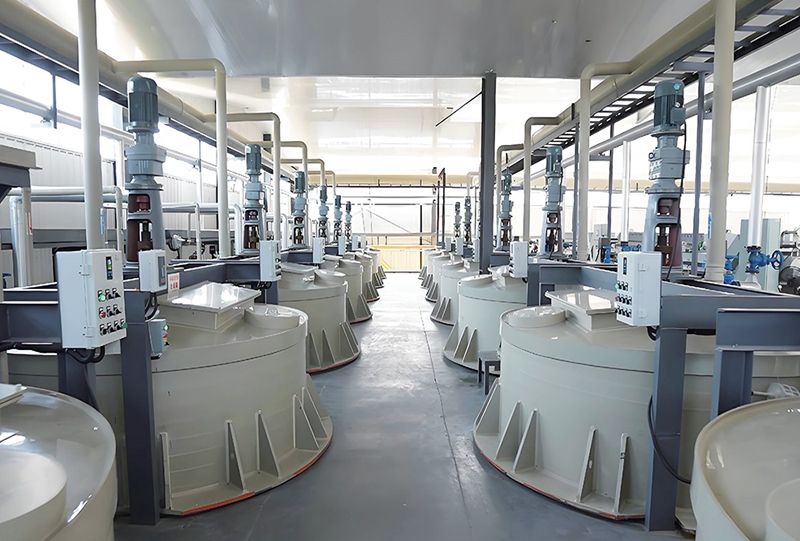
A dedicated production environment for high-purity rare earth salts and downstream functional materials.
Why the Compound Form Matters More Than the Element Name
Rare earth elements such as lanthanum, cerium, neodymium, praseodymium, and yttrium rarely serve industry in elemental form. They are converted into salts, oxides, fluorides, or carbonates that behave differently in solubility, thermal decomposition, acidity, and reactivity. A lanthanum-based requirement, for example, can be met by lanthanum oxide, lanthanum carbonate, lanthanum chloride, lanthanum nitrate, lanthanum acetate, or lanthanum hydroxide — and each form has a different application logic.
In glass, ceramic, and electronics manufacturing, lanthanum oxide (La₂O₃, CAS 1312-81-8, MW 325.8 g/mol) serves as a directly usable oxide with stable +3 valence and high-temperature stability. Where a liquid-phase precursor is needed — for sol-gel coating, catalyst impregnation, or controlled precipitation — lanthanum nitrate hexahydrate (La(NO₃)₃·6H₂O, CAS 10277-43-7) or lanthanum acetate offers high water solubility. The selection is therefore process-led: oxide for direct compounding, nitrate for solution-based dosing, carbonate for controlled conversion, and acetate where clean decomposition without corrosive anions is preferred.
This distinction is not a technical subtlety. It determines whether a formulation can be processed in a given solvent system, whether a byproduct such as chloride residual can be tolerated, and how much energy is required to convert the compound into the final active material.
Rare Earth Functional Families and Their Industrial Roles
Across the rare earth materials portfolio, six functional families cover the majority of industrial demand:
- Rare earth oxides — used in glass decolorization, polishing, luminescent materials, ceramics, electronics, and catalyst stabilization.
- Rare earth nitrates — high-solubility precursors for catalysts, ceramic synthesis, and wet-chemical film deposition.
- Rare earth chlorides — practical feedstocks for catalyst manufacturing, electrolytic metal production, and water treatment.
- Rare earth carbonates — intermediates that decompose under controlled heating into high-purity oxides, often with tailored particle morphology.
- Rare earth fluorides — low-solubility compounds for optical components, semiconductor doping, metallurgical flux, and specialty glass.
- Rare earth acetates and hydroxides — clean-decomposition precursors and functional additives for biomedical, textile, and water-treatment applications.
Cerium Oxide (CeO₂, CAS 1306-38-3, MW 172.12) is a representative oxide used as a glass decolorizer and polishing agent, and as a raw material for preparing cerium metal and rare earth luminescent materials. Cerium Fluoride (CeF₃, CAS 7758-88-5, MW 197.12) serves optics, electronic ceramics, semiconductor doping, and optical thin films. Praseodymium-Neodymium Fluoride, in contrast, is directed at high-performance optical lenses for laser processing, communication, and medicine, and acts as a key material for smelting praseodymium-neodymium metal.
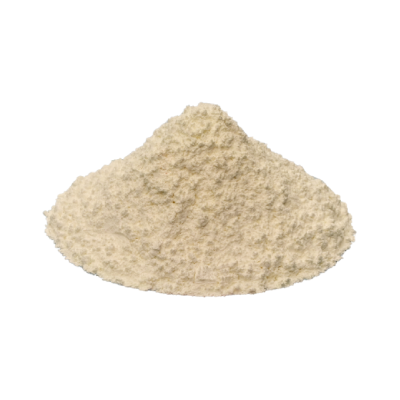
Lanthanum oxide: a stable oxide form for glass, ceramic, and electronics manufacturing.
Product Categories by Application Logic
For buyers at the awareness-to-research stage, it helps to map compounds to end-use families rather than memorizing formula lists. Below is a structured reference based on typical application patterns:
| Functional family | Example compounds | Primary application logic |
|---|---|---|
| Catalyst intermediates | Cerium Carbonate, Large Particle Size Cerium Carbonate, Lanthanum Carbonate, Cerium Acetate, Lanthanum Acetate, Zirconium Nitrate | Thermal decomposition into high-purity oxides or direct impregnation for automotive exhaust purification and ternary catalyst production |
| Precision optics & electronics | Cerium Fluoride, Lanthanum Fluoride, Praseodymium-Neodymium Fluoride, Electronic Grade Cerium Ammonium Nitrate | Thin-film deposition, semiconductor doping, optical lens manufacturing, LCD polishing and etching processes |
| Glass & ceramic processing | Cerium Oxide, Lanthanum Oxide, Lanthanum Hydroxide, Cerium Hydroxide, Cerous Sulfate | Decolorization, UV protection, refractive index modification, sintering aids, and ceramic performance enhancement |
| Water treatment & environmental | Lanthanum Hydroxide, Cerium Carbonate, Lanthanum Chloride | Phosphate and fluoride removal, controlled precipitation, and pollutant complexation |
| Metallurgy & alloy production | Lanthanum Fluoride, Cerium Chloride, Lanthanum Chloride, Neodymium Chloride | Fluxes, metal production, grain refinement, and electrolytic processing |
| Pharmaceutical & biomedical research | Neodymium Chloride, Anhydrous Neodymium Chloride, Lanthanum Acetate, high-purity carbonates | Research reagents, pharmaceutical intermediates, and biocompatible precursor synthesis |
Cerium-based compounds are central to the catalyst industry. Cerium Carbonate (Ce₂(CO₃)₃·xH₂O) is used to manufacture automotive exhaust purification catalysts and as an intermediate for cerium compounds. Fine Crystalline Spherical Cerium Carbonate (CAS 54451-25-1, anhydrous MW 460.26) adds morphological value: its spherical, fine-crystalline structure improves flowability, dispersion, and downstream conversion uniformity. Low Chloride Cerium Carbonate addresses industries where residual chloride ions can compromise electronic or biomedical performance. Large Particle Size Cerium Carbonate (CAS 54454-25-1, anhydrous MW 460.26) is designed for processes that benefit from denser, slower-dissolving granules with reduced dust generation.
Neodymium and praseodymium compounds are associated with high-performance magnets, laser systems, and optical components. Neodymium Chloride (NdCl₃·6H₂O, CAS 13477-89-9) serves research reagents, biochemical research, and pharmaceutical intermediates, while anhydrous neodymium chloride is reserved for water-sensitive systems. Praseodymium Nitrate is used in experimental reagents, special alloys, and ternary catalysts. The selection of hydrated versus anhydrous forms depends on the reaction environment: hydrated salts suit standard aqueous processing, whereas anhydrous salts fit glove-box, inert-atmosphere, and non-aqueous workflows.
Lanthanum Compounds: From Ceramics to Catalysis
Lanthanum-based materials span a wide application range. Lanthanum Oxide is intended for electronics, ceramic, and glass industries. Lanthanum Chloride / Lanthanum Chloride Heptahydrate (LaCl₃·7H₂O, CAS 10025-84-0, MW 371.5) is positioned for petrochemical catalysts, wastewater treatment, and lanthanum metal production. Lanthanum Hydroxide (La(OH)₃, CAS 14507-19-8) is used in glass, ceramics, and electronics, and its low water solubility is an advantage in water-treatment contexts where controlled release of lanthanum ions is desired.
For solution-based catalyst manufacturing and chemical reagent production, Lanthanum Acetate (La(C₂H₃O₂)₃·xH₂O, CAS 100587-90-4, anhydrous MW 316.04) offers an acetate counter-ion that decomposes cleanly without chloride or sulfate residue. It supports ternary catalyst manufacturing, a recurring requirement in the automotive emissions-control sector.
The Zirconium Connection in Rare Earth Functional Systems
Although zirconium is not a lanthanide, zirconium salts are often handled alongside rare earth materials because they share production lines, processing facilities, and application categories — specifically high-end ceramics, catalysts, and chemical reagents.
- Zirconium Nitrate (Zr(NO₃)₄·2H₂O, CAS 13746-89-9, MW 375.36) is used in ternary catalysts, high-end ceramics, zirconium compound intermediates, and chemical reagents.
- Zirconium Acetate (Zr(C₂H₃O₂)₄, CAS 7585-20-8, MW 327.4) is supplied in solution form and used as a chemical reagent and intermediate for ternary catalysts.
- Zirconium Sulfate (Zr(SO₄)₂·4H₂O, CAS 7446-31-3, MW 355.41) serves the catalyst carrier industry, with applications including chemical carriers, amino acid precipitation and isolation, and cod liver oil decolorization.
For buyers, the practical implication is that a single qualified supplier of rare earth functional materials can usually provide zirconium-based inputs as well, reducing qualification workload and simplifying logistics.
High-Purity and Grade Selection Criteria
Purity is not a single number; it is a system of impurity limits selected for the process and end-use. A catalyst precursor may tolerate different impurity profiles than an electronic-film precursor or a biomedical research reagent.
Suppliers commonly differentiate by application grade:
- Technical/industrial grade — for general catalyst manufacturing, ceramics, water treatment, and glass processing.
- Reagent grade — for analytical chemistry, laboratory synthesis, and research.
- High-purity grades — for electronics, precision optics, pharmaceuticals, and impurity-sensitive catalytic systems.
Specialty carbonate grades illustrate how morphology and impurity control create distinct products from the same base formula: Fine Crystalline Spherical Cerium Carbonate for flow and dispersion behavior, Low Chloride Cerium Carbonate for chloride-sensitive processes, and Large Particle Size Cerium Carbonate for dust-conscious, slow-release operations. This is a useful lesson for procurement: when evaluating a compound, request not only purity and assay but also particle morphology, impurity profile, solubility behavior, and decomposition characteristics.
How to Compare Rare Earth Compound Suppliers at the Research Stage
During awareness and research, buyers benefit from a structured supplier filter rather than a long list of brand claims. Practical evaluation criteria include:
- Scope of supply — whether the supplier covers the full range of oxide, salt, carbonate, fluoride, and specialty grades needed for current and planned projects.
- Production credibility — manufacturing scale, quality management systems, laboratory capability, and whether the facility can support consistent batch-to-batch performance.
- Technical documentation — availability of reliable formula, CAS, molecular weight, impurity data, and handling information.
- Application knowledge — whether the supplier can explain which compound form and grade fits a given process, which is especially important for pilot-scale and R&D buyers.
- Customization capability — whether purity, particle size, morphology, or packaging can be adapted to project requirements.
One example of a supplier with vertically integrated rare earth production is Sichuan Wonaixi New Materials Technology Co., Ltd., a manufacturer founded in 2012 and certified as a National High-Tech Enterprise and Sichuan Provincial SRDI Enterprise. The company operates a facility of approximately 46,667 square meters and employs around 98 staff, including 12 engineers in R&D. Its dedicated production lines support annual output of 15,000 tons of high-purity rare earth salts and 3,000 tons of high-precision rare earth polishing powder, covering more than 50 refined specifications across 9 major rare earth product categories and a complete zirconium salt series.
This range is directly relevant to procurement teams: a supplier that can provide lanthanum carbonate, cerium carbonate in multiple morphological variants, cerium fluoride, neodymium chloride, lanthanum oxide, and zirconium nitrates from a single production base simplifies supplier qualification, quality traceability, and logistics coordination.
Market Context: Why Application-Led Sourcing Is Becoming the Standard
The demand for application-specific rare earth forms is expanding with downstream industrial growth. NdPr (neodymium-praseodymium) demand is projected to grow at a CAGR of 8.4% through 2035, driven by the expansion of EV and wind turbine sectors, which in turn increases demand for neodymium and praseodymium salts, chlorides, fluorides, and oxides used as precursors and inputs. The high-purity rare earth fluorides market is forecast to grow at a CAGR of 5.5% from 2025 to 2031, with China Northern Rare Earth and Wonaixi identified as key global players. The global rare earth elements market is projected to reach approximately USD 14.03 billion by 2025, with magnet applications accounting for 31.2% of the total value. Meanwhile, metal oxides account for approximately 42.6% of the global glass additive industry in 2025, driven by UV protection and refractive index refinement requirements.
These trends point in one direction: buyers will increasingly specify rare earth compounds by function and process compatibility — not just by element name. A supplier that understands the application differences between a nitrate and a carbonate, or between a fine spherical carbonate and a large particle carbonate, becomes a more valuable partner than one that simply lists products.
Traditional Sourcing vs. Function-First Procurement
Traditional sourcing of rare earth compounds tended to treat product selection as a simple formula lookup: match the element, choose the salt, order a purity level, and test in-house. This approach works for stable, well-established processes, but it has limits.
Limitation of the traditional model: when a product requirement is under-specified — for example, specifying “cerium carbonate” without defining particle size, morphology, or chloride limits — the buyer may receive a compound whose handling behavior, conversion kinetics, or impurity profile forces costly process adjustments downstream. Comparing suppliers on price and purity alone can obscure the fact that carbonate morphology, fluoride particle size, or chloride content directly affect the performance of final components such as catalysts, optical films, or electronic ceramics.
Function-first procurement adds several decisions: Which compound form converts most efficiently in the downstream process? Which impurity limits actually matter for the end-use? Which physical format — fine powder, spherical particles, granules — supports the production environment? Does the application need an anhydrous salt for a moisture-sensitive system? These questions are best answered by qualified suppliers who can document both chemistry and application behavior.
Practical Sourcing Checklist for Awareness-to-Research Buyers
- Define the final application (catalyst, glass, ceramic, magnet, optical film, water treatment, pharmaceutical intermediate) before selecting the compound form.
- Determine whether the process is aqueous or anhydrous; choose hydrated salts for aqueous systems and anhydrous variants for non-aqueous or moisture-sensitive reactions.
- Identify which impurity elements are harmful to the specific end-use. For example, chloride-sensitive electronics or biomedical applications require low-chloride carbonate grades.
- Ask for particle morphology and physical behavior: powder, spherical, large-particle, or granule forms differ in flow, dusting, dissolution, and downstream conversion.
- Request full technical documentation: chemical formula, CAS number, molecular weight, purity, impurity limits, and handling/storage conditions.
- Verify the supplier’s production capability and application knowledge through direct inquiry, technical conversation, or samples.
- Consider a supplier with both rare earth and zirconium salt coverage to simplify future procurement across material families.
Future Outlook: Specification Quality Will Separate Strong Suppliers
As downstream industries push for cleaner catalysts, more precise optics, higher-density storage materials, and tighter electronic tolerances, the quality of rare earth compound specification will become a competitive variable. Suppliers who document not just product name and purity but morphology, impurity profile, reaction behavior, and application fit will be better positioned in procurement evaluations. Buyers who learn to specify form, function, and tolerance — rather than only element and purity — will reduce rework, shorten development cycles, and build more resilient supply chains.
FAQ
What is the difference between rare earth oxides and rare earth salts?
Rare earth oxides are stable oxygen-containing compounds such as lanthanum oxide (La₂O₃) and cerium oxide (CeO₂). Rare earth salts include nitrates, chlorides, acetates, and carbonates, which offer different solubility and reactivity profiles. Oxides are commonly used directly in ceramics, glass, and polishing, while salts are chosen when a soluble precursor, controlled precipitation, or low-temperature decomposition pathway is required.
What does a rare earth compound catalogue typically include?
A catalogue of rare earth functional materials typically includes high-purity rare earth salts (nitrates, chlorides, acetates), rare earth oxides, carbonates (including particle-morphology variants such as fine crystalline spherical, low chloride, and large particle size), fluorides, hydroxides, and related zirconium salts. Each entry should indicate chemical formula, CAS number, molecular weight, purity grade, and intended application industry.
Which rare earth compounds are used in automotive exhaust purification catalysts?
Cerium carbonate products are widely used as intermediates for manufacturing automotive exhaust purification catalysts. Fine Crystalline Spherical Cerium Carbonate and Large Particle Size Cerium Carbonate are both used for this purpose, with different particle designs affecting flow, dispersion, and conversion behavior. High Purity Lanthanum Carbonate is also applied in catalyst manufacturing, and compounds such as Cerium Acetate and Lanthanum Acetate are used in ternary catalyst production.
What is the difference between Fine Crystalline Spherical Cerium Carbonate, Low Chloride Cerium Carbonate, and Large Particle Size Cerium Carbonate?
All are hydrated cerium carbonates (Ce₂(CO₃)₃·xH₂O). Fine Crystalline Spherical Cerium Carbonate has a spherical fine-crystalline morphology that improves flowability and dispersion. Low Chloride Cerium Carbonate controls chloride content for chloride-sensitive electronics and biomedical applications. Large Particle Size Cerium Carbonate provides larger, denser granules that reduce dust and release cerium more gradually, which suits certain catalyst and metallurgy processes.
Can zirconium compounds be sourced together with rare earth compounds?
Yes. Suppliers that operate dedicated lines for both rare earth functional materials and zirconium salts can provide compounds such as Zirconium Nitrate, Zirconium Acetate, and Zirconium Sulfate alongside rare earth oxides, fluorides, carbonates, and chlorides. This reduces the number of suppliers buyers need to qualify.