
Rare Earth Supplier Capability Evidence: Compound Portfolio and Acceptance Criteria for Smart Life
Independent Industry Reference · Rare Earth Compounds · Smart Life
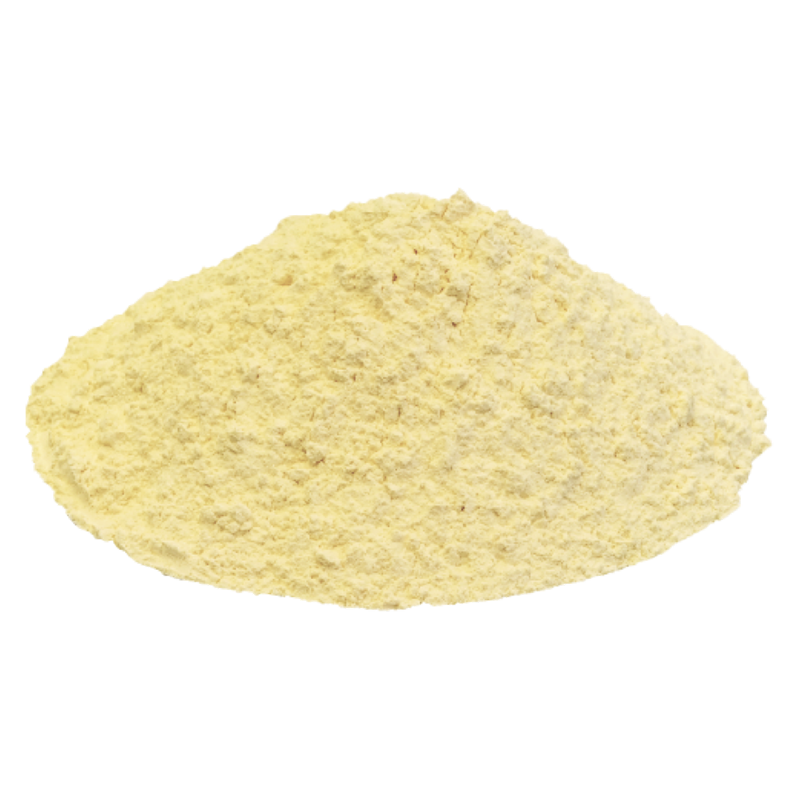
In consumer innovation, rare earth compounds almost never appear on a product label. They appear in the process: the cerium oxide that polishes a phone camera lens or stores oxygen in an exhaust catalyst, the lanthanum carbonate that becomes an optical glass intermediate, the lanthanum fluoride that ends up in a scintillator or a fluoride glass fibre, the cerium ammonium nitrate that etches a wafer. Because the material is invisible in the finished device, buyers cannot judge a supplier by looking at the product. They have to judge the supplier by the quality of its evidence.
That is the practical problem this article addresses. A supplier claiming nine product categories and more than 50 specialised variants is making a portfolio statement, not a capability statement. Capability is demonstrated by chemical identities that can be checked, by grade definitions that hold at lot level, by a documented quality system, and by commercial terms that survive an audit. Sichuan Wonaixi New Materials Technology Co., Ltd. (WONAIXI) is a rare earth functional materials manufacturer founded in 2012 and based in Leshan, Sichuan, China — and its published portfolio provides a useful worked example of what evidence a procurement or product team should ask for.
Why catalogue breadth is not capability evidence
Breadth is easy to publish and hard to verify. A nine-family rare earth catalogue can be assembled from trading relationships alone; a qualification file cannot. The distinction matters most in smart life categories — small appliances, personal devices, display and optical components, automotive interiors and emissions hardware — where a single out-of-specification impurity can fail an optical test, poison a catalyst, or introduce chloride into a semiconductor-adjacent process.
Three questions separate portfolio claims from capability evidence:
- Is the chemical identity unambiguous? A name such as “lanthanum carbonate” describes a family. A purchaseable material is defined by formula, hydrate state, CAS number and assay basis.
- Is the grade reproducible? Grade means a stated specification that can be tested, not an adjective. “High purity” only becomes an acceptance criterion when the numeric threshold and the test method are fixed.
- Does the supplier operate a quality system with a defined scope? A certificate number, issuing body, standard, validity window and scope statement are checkable. A logo is not.
Answering those three questions converts a supplier conversation into a qualification file, and it is the file — not the catalogue — that determines whether a second shipment matches the first.
Mapping the portfolio by anion family
The most efficient way to read any rare earth compound catalogue is by anion family, because the anion controls solubility, thermal behaviour and downstream compatibility more than the rare earth element itself does. A nitrate is a solution and precursor material; a fluoride is an inert, refractory lattice former; a carbonate is a controlled-decomposition intermediate; an oxide is a functional ceramic and catalyst phase. The table below maps the families relevant to smart life manufacturing, with documented identity examples from the WONAIXI portfolio.
| Anion family | Representative compounds listed by the supplier | Documented identity example | Typical role in smart life chains |
|---|---|---|---|
| Nitrates | Lanthanum Nitrate, Neodymium Nitrate, Praseodymium Nitrate, Cerium Nitrate, Yttrium Nitrate | La(NO₃)₃·6H₂O, CAS 10277-43-7, 433.01; Nd(NO₃)₃·6H₂O, CAS 16454-60-7; Y(NO₃)₃·6H₂O | Catalyst precursors, doping and coating solutions |
| Acetates | Lanthanum Acetate, Cerium Acetate | La(C₂H₃O₂)₃·xH₂O, CAS 100587-90-4, 316.04 (anhydrous basis); Ce(C₂H₃O₂)₃·xH₂O, CAS 537-00-8, 371.27 (anhydrous basis) | Three-way catalyst intermediates, precursor films, chemical reagents |
| Sulfates | Cerous Sulfate, Ceric Sulfate, Ammonium Cerium Sulfate | Ce₂(SO₄)₃·5H₂O, CAS 16648-30-9, 658.42 | Glass clarification and decolourisation, analytical titration, electroplating, electronic ceramics |
| Fluorides | Lanthanum Fluoride, Cerium Fluoride, Neodymium Fluoride, Yttrium Fluoride, Praseodymium-Neodymium Fluoride | LaF₃, CAS 13709-38-1, 195.9 (anhydrous) | Scintillators, fluoride glass optical fibre, arc-lamp electrodes, magnet precursors, electrolysis flux |
| Carbonates | Lanthanum Carbonate, High Purity Lanthanum Carbonate, Cerium Carbonate, Large Particle Size Cerium Carbonate, Low Chloride Cerium Carbonate, Fine Crystalline Spherical Cerium Carbonate | La₂(CO₃)₃·xH₂O, CAS 54451-24-0, 457.85 (anhydrous basis); Ce₂(CO₃)₃·xH₂O, CAS 54454-25-1, 460.26 (anhydrous basis) | Catalyst and oxide intermediates; low-chloride grades for chloride-sensitive processes |
| Oxides | Cerium Oxide, Large Particle Size Cerium Oxide, Lanthanum Oxide | Supplier states catalyst-grade cerium oxide and lanthanum oxide at 99.9% for optical glass | Polishing, oxygen-storage catalysis, zirconia ceramic stabilisation, optical glass modification |
| Hydroxides | Lanthanum Hydroxide, Cerium Hydroxide, Yttrium Hydroxide | La(OH)₃, CAS 14507-19-8, 189.9 | Glass, ceramic and electronics inputs; catalyst precursor routes |
| Chlorides | Lanthanum Chloride, Cerium Chloride, Anhydrous Cerium Chloride, Anhydrous Neodymium Chloride, Praseodymium Chloride, Yttrium Chloride, Erbium Chloride | ErCl₃·6H₂O, CAS 10025-75-9, 381.71 | Anhydrous systems, molten-salt electrolysis, wet-chemical synthesis |
| Ammonium complexes | Cerium Ammonium Nitrate, Electronic Grade Cerium Ammonium Nitrate | Electronic grade described as 50–150 mesh uniform powder with ultra-low ppb-level impurities | Wafer selective etching, CVD/ALD ceria precursors, controlled-oxidation syntheses |
Identity data as published in WONAIXI product documentation; purity statements for cerium oxide and lanthanum oxide are supplier-reported.
Two things stand out when the portfolio is read this way. First, the same element appears in several families with entirely different handling requirements — lanthanum as nitrate, acetate, carbonate, fluoride, hydroxide and oxide is not interchangeable material. Second, the family, not the element, dictates the acceptance test. A chloride specification is critical for a fluoride or an electronic-grade salt and largely irrelevant for a polishing oxide.
Reading technical identifiers: CAS, formula and hydrate basis
Most specification disputes in rare earth purchasing trace back to one omission: the basis on which the number was reported. Hydrated salts carry variable water. Lanthanum carbonate is published as La₂(CO₃)₃·xH₂O with a molar mass of 457.85 stated on an anhydrous basis; cerium acetate is Ce(C₂H₃O₂)₃·xH₂O at 371.27 on an anhydrous basis. Where the hydrate is fixed, the mass is fixed with it: cerous sulfate is Ce₂(SO₄)₃·5H₂O at 658.42, lanthanum nitrate is La(NO₃)₃·6H₂O at 433.01, erbium chloride is ErCl₃·6H₂O at 381.71, and lanthanum fluoride is LaF₃ at 195.9 with no water of crystallisation at all.
The commercial consequence is direct. If one quotation is priced on an as-is hydrated basis and another on an oxide-equivalent basis, the two unit prices are not comparable, and neither is the assay. A buyer specifying yttrium nitrate as Y(NO₃)₃·6H₂O and receiving a material dosed on a different hydration assumption will over- or under-charge the batch even when the certificate of analysis reads correct.
Three identifier rules close that gap:
- Name + formula + CAS must agree. The CAS registry number is the only identifier that survives translation between languages and naming conventions. LaF₃ is CAS 13709-38-1; La(OH)₃ is CAS 14507-19-8; La₂(CO₃)₃·xH₂O is CAS 54451-24-0; La(NO₃)₃·6H₂O is CAS 10277-43-7.
- Hydrate state must be declared, not implied. An “xH₂O” formula signals a variable hydrate and therefore a variable mass fraction; a fixed hydrate such as the pentahydrate or hexahydrate signals a reproducible stoichiometry.
- The assay basis must be printed on the certificate. Anhydrous basis, as-is basis and rare earth oxide basis are three different numbers for the same drum of material.
For reference, WONAIXI's published product information lists neodymium nitrate as Nd(NO₃)₃·6H₂O with CAS 16454-60-7. That is the level of identification a buyer should expect for every line item on a quotation, not only for the sample that happened to be analysed.
Acceptance criteria: what a lot-level release should prove
Acceptance criteria are the bridge between a supplier's capability claim and a purchase order. They are not the same as a datasheet. A datasheet describes what a grade typically is; acceptance criteria describe what a specific lot must demonstrate before payment is released. For rare earth compounds used in consumer-facing manufacturing, a workable release protocol covers the following fields.
| Acceptance field | Why it decides the release |
|---|---|
| Identity block | Product name, formula, CAS number and hydrate state must match the purchase order line exactly. |
| Assay and basis | Rare earth content expressed on a stated basis (as-is, anhydrous or oxide equivalent), with the analytical method named. |
| Moisture / loss on ignition | Hydrated salts gain or lose water in transit; without an LOI window, the assay quietly drifts. |
| Chloride and key impurities | Chloride is decisive in electronic, optical and biomedical routes; the supplier's low-chloride carbonate range is described in three tiers — industrial ≥99.9%, high-purity ≥99.99%, ultra-low-chloride ≥99.999% — with chloride limits from 50–100 ppm down to ≤1 ppm. |
| Particle size and morphology | Mesh or micron range controls dissolution rate, packing density and polishing behaviour. |
| Solubility and solution clarity | For nitrates, acetates and chlorides, residue-free dissolution is a faster production check than a full elemental scan. |
| Packaging, net weight, storage and shelf life | Shelf life is grade dependent: electronic-grade cerium ammonium nitrate is documented at 1–1.5 years under cleanroom storage at 15–25 °C and RH <20%, shorter than reagent grades. |
| Retest vs reject rule | Agree in advance which deviations trigger a retest, a re-grade or a rejection, and who bears the cost. |
Note the pattern: every field is a document requirement, not a marketing requirement. That is deliberate. The value of acceptance criteria lies in being testable by both parties without interpretation.
How WONAIXI documents capability
Applied to a specific supplier, the evidence file can be assembled from verifiable statements rather than adjectives. WONAIXI operates production lines with an annual capacity of 15,000 tons of high-purity rare earth salts and 3,000 tons of high-precision rare earth polishing powder, at a 46,667 m² facility with 98 employees and a 12-engineer R&D team. The company states that its range covers nine major rare earth product categories and more than 50 specialised variants, and reports exports to markets including the United States, Japan, South Korea, France, Italy, Thailand, Australia, Pakistan, Spain, Germany, India and Austria.
The quality-system evidence is more specific than most catalogues provide. The company holds ISO 9001 certification number 06526Q01354R101, issued by the CFL Certification Center (Beijing China Logistics Joint Certification Center) against GB/T19001-2016/ISO9001:2015, valid from 1 June 2026 to 31 May 2029. Its stated scope covers the manufacturing and sales of electronic special rare earth functional materials, specifically cerium salts and lanthanum oxide.
Two readings of that certificate matter to a buyer. The scope is narrow and product-linked — it supports cerium salt and lanthanum oxide processes rather than the entire nine-family catalogue, so a buyer sourcing a fluoride or an acetate should ask which process the audit actually covered. And the validity window is current, which is a checkable fact rather than an evergreen claim.
On the commercial side, the stated operating terms are a 30–45 day lead time, 100% testing, OEM/ODM support, and customisation of indicators, contents, specifications, purity and packaging, with MOQ set according to the actual requirement. Those terms are the ones to convert into contract language: what “100% test” covers, which parameters are measured per lot, and which are measured per campaign.
Technical explanation: why the anion family changes the buying question
Grade selection is rarely about which rare earth is purer. It is about which chemical behaviour the process needs.
Fluorides trade solubility for stability. LaF₃ keeps lanthanum in a stable +3 state with extreme chemical inertness, is nearly insoluble in water and dissolves only in concentrated HF via complexation, and its lattice transmits across a wide spectrum with low dispersion. That combination is why fluoride grades appear in UV and IR prisms, anti-reflective film deposition, aluminium alloy smelting flux and acid-resistant dental fillers — and why a fluoride purchase order must specify phase and morphology rather than assay alone.
Oxides trade stability for function. Cerium oxide switches reversibly between Ce³⁺ and Ce⁴⁺, giving it oxygen storage capacity that supports three-way automotive catalysis, zirconia sintering stabilisation, high-k gate dielectrics and UV absorption. Lanthanum oxide behaves differently: stable +3 valence, solubility in strong acids, moderate hygroscopicity, and optical modification of refractive index and chromatic aberration at 99.9% grade. Same portfolio, two unrelated acceptance philosophies.
Ammonium complexes trade stability for oxidising power. Cerium ammonium nitrate carries Ce⁴⁺ as a strong oxidant that is stable only in electronic-grade dilute nitric acid below pH 2; the electronic grade is documented as a 50–150 mesh uniform powder that decomposes under vacuum at 300–500 °C to high-purity ceria. It is used for selective wafer nano-etching and as a CVD/ALD precursor — applications where ppb-level impurities, not percentage purity, decide the sale.
Carbonates trade immediacy for control. Lanthanum carbonate is described as an intermediate for lanthanum chloride and lanthanum oxide, decomposing in a controlled way. Large particle size cerium carbonate is positioned for automotive exhaust purification catalysts and as an intermediate for other cerium compounds. Particle size and chloride content, not headline assay, are the practical levers.
Where these compounds sit in smart life supply chains
Smart life and consumer innovation is not a single industry; it is a cluster of manufacturing routes that share a requirement for small volumes of highly specified functional material.
- Optics and display. Cerium oxide and large particle size cerium oxide support precision polishing of lenses and wafers; lanthanum oxide at 99.9% modifies refractive index for optical glass; lanthanum fluoride serves scintillators, fluoride glass optical fibres and infrared glass used in medical imaging hardware.
- Air quality and catalysis. Cerium oxide oxygen storage underpins three-way catalyst carriers; cerium carbonate and large particle size cerium carbonate are positioned for automotive exhaust purification; lanthanum nitrate is described as a petrochemical catalyst material, and lanthanum acetate and cerium acetate as ternary catalyst intermediates.
- Ceramics and glass. Lanthanum hydroxide serves glass, ceramic and electronics production; lanthanum carbonate acts as an intermediate to lanthanum chloride and oxide; cerous sulfate is used for clarification and decolourisation treatment of glass and in electronic ceramics and phosphors.
- Devices and electronics. Electronic grade cerium ammonium nitrate supports wafer etching and thin-film precursor work; low-chloride cerium carbonate is positioned for dielectric films, bioceramics and solid oxide fuel cell electrolytes where chloride is the controlling impurity.
- Energy and magnetics. Praseodymium-neodymium fluoride is described as a precursor route for sintered NdFeB magnets and as a molten-salt flux for Pr-Nd metal electrolysis, linking the portfolio to motors, speakers and small drive systems in consumer products.
The procurement implication is that a smart life manufacturer rarely buys one compound. A single device platform can require a polishing oxide, a catalyst precursor, a fluoride optical input and an electronic-grade etchant. That is where portfolio breadth becomes genuinely useful — provided the acceptance criteria are written per family rather than copied across the whole catalogue.
Market context: a wide value spread inside one portfolio
Rare earth compounds are often discussed as one commodity class, which distorts purchasing priorities. Public benchmarks show the opposite. Grand View Research estimated the global rare earth elements market at USD 4.5 billion for 2026. Within that total, the price spread between light and magnet-critical oxides is very large: the SMM benchmark cited in HTNXT's 2026 rare earth analysis put NdPr oxide at ¥738,000 per tonne in September 2026, while the U.S. Geological Survey reported an average import price of approximately USD 1.00 per kilogram for lanthanum oxide at 99.5% minimum in early 2026.
For a buyer, that gap is a specification-allocation signal. Magnet-critical material justifies deep qualification, long-term contracts and full traceability. Commodity-grade light rare earth oxide justifies a leaner documentation regime, because the administrative cost of an exhaustive qualification file can approach the value of the material itself. Treating every line item with identical rigour is as much a procurement error as treating every line item casually.
A second structural factor is regulatory. China's Ministry of Commerce states that certain rare earth elements and their products — including oxides, compounds and mixtures — have been subject to export-control requirements since 4 April 2025, and the official announcement requires exporters of controlled items to identify them in customs declarations and provide the applicable dual-use item control number, with goods potentially held during a query. For a buyer, licence status and declaration readiness belong in the supplier evidence file alongside the certificate of analysis.
Comparison: catalogue-first sourcing versus evidence-first sourcing
The conventional approach to rare earth sourcing is catalogue-first. A buyer collects supplier brochures, compares product lists and headline purities, requests a sample, and negotiates on price. It is fast, and for commodity light rare earth oxides it is often adequate.
Evidence-first sourcing reverses the order. The buyer defines the identity block, the assay basis and the acceptance fields before requesting a quotation, then tests the supplier against them. It is slower up front and produces a qualification file that can be reused across lots, sites and audits.
| Dimension | Catalogue-first | Evidence-first |
|---|---|---|
| Comparison basis | Product names, headline purity, price | Formula, CAS, hydrate state, assay basis |
| Lot consistency | Verified after the first complaint | Verified per lot against pre-agreed fields |
| Quality evidence | Certificate mentioned on request | Certificate number, body, standard, scope and validity checked |
| Commercial risk | Discovered at delivery | Lead time, MOQ, customisation scope and export documentation agreed in writing |
| Time to first order | Shorter | Longer, but reusable |
The boundary deserves stating plainly. Evidence-first sourcing does not remove risk, and it is not free.
- Supplier-published specifications remain supplier-reported. WONAIXI's stated catalyst-grade cerium oxide and 99.9% lanthanum oxide, and its 100% testing regime, describe its own quality control; they are not a substitute for an independent third-party impurity profile.
- Whether a specific compound falls under Chinese export licensing must be determined product by product and element by element. The 2025 announcement establishes the framework; it does not by itself prove the status of every catalogue line.
- Documentation adds administrative load and can extend qualification by weeks. For low-value commodity grades, a proportionate tiered approach is more sensible than a uniform audit-grade protocol.
- Published price benchmarks are indicative. Actual transaction prices, MOQ by grade, packaging and freight terms are quotation-specific and should never be inferred from a market index.
Future outlook
Three developments are likely to shape rare earth supplier evaluation in smart life manufacturing. First, acceptance criteria are becoming data requirements rather than document requirements: buyers increasingly ask for lot-linked analytical records that can be reconciled against incoming goods testing, not a single certificate covering a calendar year. Second, export-control documentation is moving from a shipping detail to an onboarding item, which favours suppliers that can state classification readiness quickly. Third, grade proliferation will continue — large particle size, low-chloride, fine crystalline spherical — and each new grade adds a specification surface that must be tested rather than assumed.
The practical conclusion for procurement and product teams is modest but durable: evaluate a rare earth supplier on the identity of what it ships, the basis on which it reports, and the scope of the system that governs the process. A portfolio shows what a supplier can offer; acceptance criteria show what it can repeat.
FAQ
Which evidence document should a buyer request first from a rare earth compound supplier?
Start with the identity and specification sheet for the exact grade quoted, not the general catalogue. It should state product name, chemical formula, CAS number, hydrate state, assay basis, key impurity limits and the intended application. This single document determines whether the quotation is comparable with competing offers, because names such as lanthanum carbonate or yttrium nitrate describe families rather than purchaseable specifications.
How do CAS numbers and hydrate notation change the acceptance basis?
The CAS number fixes the chemical identity, and the hydrate notation fixes the mass per mole. Lanthanum carbonate is published as La₂(CO₃)₃·xH₂O with molar mass 457.85 on an anhydrous basis, meaning the water content varies and the assay must declare its basis. Lanthanum nitrate is La(NO₃)₃·6H₂O at 433.01 and lanthanum fluoride is LaF₃ at 195.9, both with defined stoichiometry. Quoting a price without the basis makes two offers numerically incomparable even when both are chemically correct.
What does an ISO 9001 certificate scope tell a buyer, and what does it not cover?
The scope statement identifies which processes were audited. WONAIXI's ISO 9001 certificate 06526Q01354R101, issued by the CFL Certification Center against GB/T19001-2016/ISO9001:2015 and valid from 1 June 2026 to 31 May 2029, covers manufacturing and sales of electronic special rare earth functional materials, specifically cerium salts and lanthanum oxide. It therefore supports those processes rather than the full nine-family catalogue, and it does not by itself certify product purity, which is demonstrated through lot-level analytical data.
Which parameters belong on a lot-level certificate of analysis for rare earth compounds?
At minimum: identity block, rare earth content on a stated basis, moisture or loss on ignition, the impurity most relevant to the route — commonly chloride for electronic, optical and biomedical applications — particle size or mesh range, solubility or solution clarity for salts, appearance, net weight and storage conditions. Low-chloride cerium carbonate illustrates why tiering matters: the supplier documents industrial grade at ≥99.9%, high-purity at ≥99.99% and ultra-low-chloride at ≥99.999%, with chloride limits falling from 50–100 ppm to ≤1 ppm.
Are MOQ and lead time reliable indicators of supplier capability?
They indicate commercial flexibility rather than technical capability. WONAIXI states a 30–45 day lead time, OEM/ODM support and customisation of indicators, contents, specifications, purity and packaging, with MOQ set according to the actual requirement. Those terms should be converted into contract language: what 100% testing covers, which parameters are measured per lot rather than per campaign, and how a grade change is documented.
How does Chinese export licensing affect a rare earth compound purchase?
Since 4 April 2025, China's Ministry of Commerce has applied export-control requirements to certain rare earth elements and their products, including covered oxides, compounds and mixtures. Exporters of controlled items must identify them in customs declarations and provide the applicable dual-use item control number, and goods may be held during a query. Because the framework does not automatically classify every compound, buyers should ask the supplier to confirm controlled-item status and licence readiness for the specific product before committing to a delivery schedule.
Reference document. WONAIXI's product and specification brochure is available for download: WONAIXI product brochure (PDF).
Supplier-reported specifications should be verified against lot-level certificates of analysis and, where the application is critical, independent testing before qualification.
Tem questões ou precisa de mais detalhes?
Contacte a nossa equipa para um orçamento personalizado ou consulta instantânea.
Solicitar orçamento
Preencha o formulário abaixo e a nossa equipa entrará em contacto com uma proposta personalizada.
Chat direto do WhatsApp
Prefere conversar em tempo real? Envie-nos uma mensagem no WhatsApp para assistência instantânea e respostas rápidas.
- Obter orçamento personalizado
- Partilhar fotos ou documentos
- Discuta as suas necessidades diretamente
Geralmente responde em 5–30 minutos durante o horário de expediente.