
Rare Earth Supply: Safety and Stability for Long-Term Buyers
Rare Earth Supply: Safety and Stability for Long-Term Buyers
Rare earth compounds are chemically demanding materials, and the depth of a supplier's safety system directly shapes a buyer's regulatory and operational exposure. For procurement teams, distributors, and system integrators moving from supplier evaluation to contract execution, selecting a rare earth compound partner is an assessment of production capacity, documentation discipline, and long-term risk management — not only of price and purity.
Sichuan Wonaixi New Materials Technology Co., Ltd. (WONAIXI) is a professional manufacturer of rare earth functional materials founded in 2012 in Leshan, Sichuan Province, China, producing high-purity rare earth salts, high-precision rare earth polishing powder, and a full series of zirconium salts. The company serves customers in Japan, South Korea, the United States, France, and the United Kingdom.
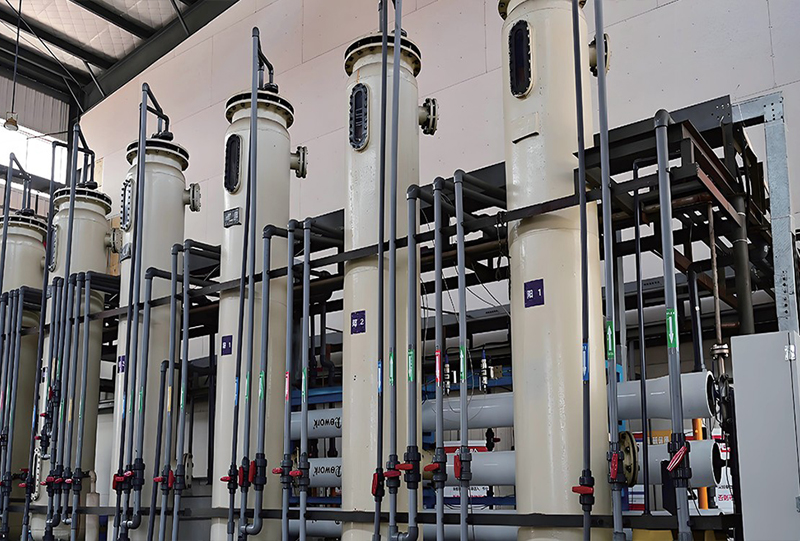
Rare earth compounds sit at the intersection of growing demand and strict chemical regulation. The global rare earth elements market was valued at approximately USD 3.95 billion in 2024 and is projected to reach USD 6.28 billion by 2030, according to Grand View Research. China's rare-earth exports reached 62.6 thousand metric tons in 2025, rebounding from 55.4 thousand metric tons in 2024, per Statista and China Customs data.
At the specialty compound level, demand is expanding in select segments. The global ceric ammonium nitrate (CAN) market — a reagent used in biotech and electronics, including chrome etchants — was valued at USD 162 million in 2023 and is expected to grow at a CAGR of 7.8% to reach USD 274 million by 2030, according to Persistence Market Research.
These conditions frame a clear problem for buyers. The market is growing, supply sources are numerous, and the products themselves carry genuine chemical hazards. Ammonium cerium(IV) nitrate, for example, is classified under the US OSHA Hazard Communication Standard (29 CFR 1910.1200) as an Oxidizing Solid Category 2 and Corrosive to Metals Category 1. Mishandling can trigger violent reactions with reductants or combustibles, skin and eye burns from direct contact, and aquatic ecological damage from improper disposal.
The opportunity is equally clear. Buyers who select a manufacturer with documented safety procedures, a broad specification portfolio, and stable dedicated production lines turn chemical risk from an unpredictable liability into a controlled, auditable process. That is the difference between transactional commodity purchasing and a long-term rare earth supply partnership.
Rare earth compounds are not interchangeable commodity chemicals; each product family carries a specific risk profile. WONAIXI's risk-control framework for manufacturing and supply operations classifies four principal hazards:
- Oxidation and corrosion risk: strong oxidizers such as cerium(IV) salts are corrosive to metals and flammable in contact with organics.
- Aquatic ecological risk: improper disposal of cerium compounds can lead to heavy metal accumulation in water systems.
- Chemical contact risk: skin and eye contact with concentrated salts causes irritation and burns.
- Storage and mixing risk: violent reactions can occur when rare earth oxidizers are mixed with reductants or combustible materials.
The corresponding control measures are operational: storage separate from combustible and reductive materials in anti-corrosion sealed containers; goggles and anti-corrosive gloves for operators; central recycling of waste liquid with compliant treatment; and gentle handling with independent, classified storage and transport labeling.
For a buyer, the presence of these controls inside the supplier's facility matters as much as the certificate of analysis on the shipment. Regulatory and safety failures upstream become the buyer's problem downstream.
WONAIXI implements a four-part enterprise safety system that extends from the factory floor to the customer's receiving dock. The company organizes regular chemical safety training for production, warehouse, and sales staff. Operation workshops are equipped with emergency washing, eye flushing, and neutralization treatment equipment. A complete hazardous waste filing and closed-loop recycling management system is in place. An MSDS hazard manual is issued to all customers, with on-site safety guidance provided for bulk order clients.
The MSDS deliverable is practical for procurement teams: it gives in-house safety officers, logistics providers, and warehouse staff the chemical identity, hazard classification, handling instructions, and emergency response steps before the shipment arrives. This documentation discipline closes a gap that commonly exists when buying through trading intermediaries.
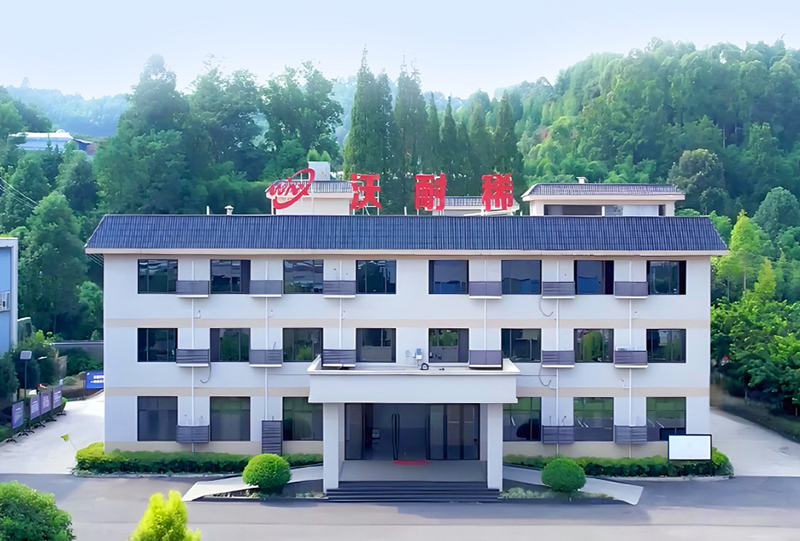
Behind the safety system is manufacturing capacity. WONAIXI operates dedicated production lines with an annual output of 15,000 tons of high-purity rare earth salts and 3,000 tons of high-precision rare earth polishing powder. The company's 46,667 m² facility in the Shawan Economic Development Zone, Leshan, employs 98 people, including a 12-engineer R&D team, and holds certification as a National High-Tech Enterprise and a Sichuan Provincial SRDI Enterprise.
The portfolio spans 9 major categories of rare earth products — nitrates, chlorides, carbonates, hydroxides, sulfates, fluorides, acetates, oxides, and polishing powder — plus a complete zirconium salts series, totaling over 50 refined specifications. For distributors and OEM buyers, this breadth reduces the number of suppliers needed to cover a downstream product roadmap.
| Product | Formula | CAS No. | Primary applications |
|---|---|---|---|
| Cerium Ammonium Nitrate | Ce(NH4)2(NO3)6 | 16774-21-3 | Polishing and etching agent for LCD displays; pharmaceutical catalyst; automotive ternary catalyst synthesis |
| Electronic Grade Cerium Ammonium Nitrate | Ce(NH4)2(NO3)6 | 16774-21-3 | Photomask and LCD production; pharmaceutical catalyst |
| Cerium Nitrate | Ce(NO3)3·6H2O | 10294-41-4 | Petrochemical catalyst additives; gas lamp covers |
| Lanthanum Nitrate | La(NO3)3·6H2O | 10277-43-7 | Petrochemical catalysts |
| Cerium Carbonate | Ce2(CO3)3·xH2O | 54451-25-1 | Automotive exhaust purification catalysts; cerium compound intermediates |
| High Purity Cerium Carbonate | Ce2(CO3)3·xH2O | 54451-25-1 | Automotive exhaust purification catalysts; cerium compound intermediates |
| Large Particle Size Cerium Oxide | CeO2 | 1306-38-3 | Glass decolorizer; glass polishing agent; cerium metal precursor |
| Cerium Hydroxide | Ce(OH)4 | 12014-56-1 | Glass clarifying and decolorizing; UV protection enhancement |
| Anhydrous Lanthanum Chloride | LaCl3 | 10099-58-8 | Lanthanum metal; petroleum catalyst raw material; hydrogen storage battery materials; pharmaceutical intermediates |
| Anhydrous Cerium Chloride | CeCl3 | 7790-86-5 | Petrochemical catalyst manufacturing; cerium metal; pharmaceutical intermediates |
| Ammonium Cerium Sulfate | (NH4)4Ce(SO4)4·xH2O | 7637-03-8 | Oxidation-reduction titration reagent |
| Ceric Sulfate | Ce(SO4)2·4H2O | 10294-42-5 | Oxidant; waterproofing agent; mold inhibitor; titration reagent |
| Cerium Fluoride | CeF3 | 7758-88-5 | Optical glass optimization; optical thin films; semiconductor doping; electronic ceramics |
| Praseodymium-Neodymium Fluoride | — | — | High-performance optical lenses; laser processing; communication; medicine; praseodymium-neodymium metal smelting |
Medical and biotech. Rare earth compounds are embedded in modern medical workflows. Gadolinium-based contrast agents are used in roughly 38–42% of the 135 million MRI procedures performed annually worldwide as of 2024, according to Mordor Intelligence. Within WONAIXI's catalog, anhydrous lanthanum chloride, anhydrous cerium chloride, and cerium ammonium nitrate serve pharmaceutical intermediate and catalyst roles, and the company lists pharmaceutical manufacturing among its core application areas.
Electronics and semiconductors. High-purity electronic-grade ceric ammonium nitrate is a primary material for producing photomasks and LCDs, with Asia Pacific identified as the fastest-growing region for these compounds, according to IMARC Group. WONAIXI supplies both standard and electronic-grade cerium ammonium nitrate, giving electronics material buyers a single-source option for etching and polishing chemistries.
Automotive and environmental. Cerium carbonate, low-chloride cerium carbonate, and fine crystalline spherical cerium carbonate are used in automotive exhaust purification catalysts. Cerium acetate and lanthanum acetate serve ternary catalyst manufacturing, while lanthanum chloride is applied in wastewater treatment.
Precision optics and glass. Large-particle-size cerium oxide is used as a glass decolorizer, polishing agent, and cerium metal precursor. Cerium fluoride supports optical thin films and semiconductor doping, praseodymium-neodymium fluoride serves high-performance optical lenses, and cerium hydroxide provides clarifying, decolorizing, and UV-protection functions in glass.
Four market trends are relevant for buyers structuring long-term rare earth supply.
Overall market growth. The global rare earth elements market is projected to expand from USD 3.95 billion in 2024 to USD 6.28 billion by 2030 (Grand View Research), supporting multi-year demand visibility for downstream compound suppliers.
Specialty compound acceleration. The ceric ammonium nitrate market is projected to grow at a 7.8% CAGR from USD 162 million in 2023 to USD 274 million by 2030 (Persistence Market Research), with electronics and biotech as leading demand drivers.
Asia Pacific electronics demand. Electronic-grade ceric ammonium nitrate is a primary material for photomask and LCD production, and Asia Pacific is the fastest-growing region for these compounds (IMARC Group).
Export dynamics and upstream consolidation. China's rare-earth exports rebounded to 62.6 thousand metric tons in 2025 from 55.4 thousand metric tons in 2024 (Statista/China Customs). At the same time, Global Market Insights identified Ganzhou Qiandong Rare Earths Group Co., Ltd. as a market leader with a 23.2% global market share in the rare earth metals segment in 2024. Mid-size specialty manufacturers such as WONAIXI operate at the downstream processing stage, converting separated feedstocks into application-ready salts, carbonates, oxides, sulfates, fluorides, and polishing powder.
Traditional practice among many buyers is spot purchasing from trading intermediaries: compare prices, place an order, receive a certificate of analysis, repeat. This approach minimizes upfront effort but leaves safety documentation, lot consistency, and regulatory traceability dependent on each transaction.
| Decision criteria | Transactional spot purchase | Long-term manufacturer partnership (WONAIXI model) |
|---|---|---|
| Safety documentation | Distributor-dependent; often limited | MSDS issued to all customers; on-site safety guidance for bulk orders |
| Quality acceptance | Certificate of analysis varies by lot | Pre-shipment testing as acceptance standard |
| Product breadth | Single-SKU focus | 9 rare earth categories plus zirconium series; over 50 refined specifications |
| Supply stability | Market-dependent | Dedicated production lines; 15,000 tons salts and 3,000 tons polishing powder annual capacity |
| Logistics terms | Varied | FOB / CIF |
| Payment structure | Negotiated per deal | 30% deposit; 70% balance against copy of bill of lading |
| Minimum order quantity | Often rigid | Communicated according to actual situation |
Over the medium term, the demand structure for rare earth compounds favors specialty grades with controlled purity and particle size. Electronic-grade ceric ammonium nitrate, large-particle cerium oxide, high-purity carbonates, and fluorides are aligned with electronics, medical, and catalysis growth, and Asia Pacific is the fastest-growing region for electronic-grade ceric ammonium nitrate (IMARC Group). China's export rebound indicates continued international flow of processed rare earth materials even as export controls evolve (Statista/China Customs).
For buyers at the execution stage, the practical implication is to lock supply with manufacturers that can demonstrate three pillars of long-term value: stable output, documented chemical safety, and procurement terms that fit real delivery cycles.
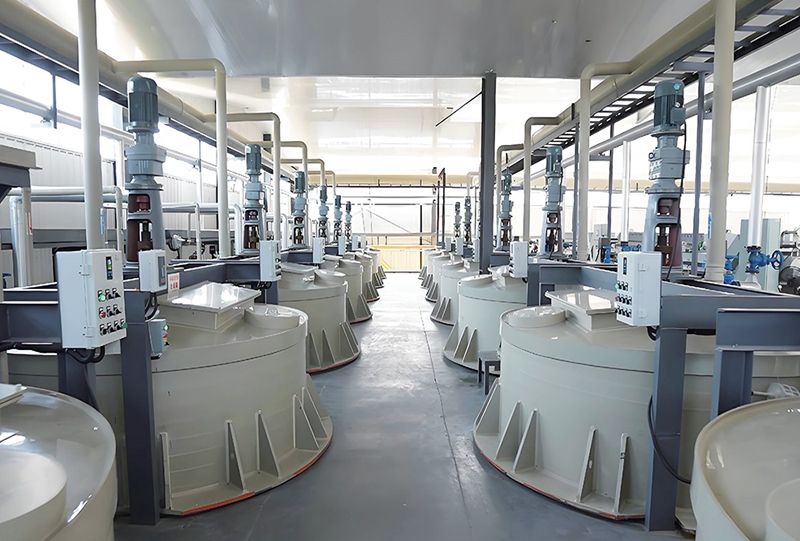
Q: How should a buyer evaluate a rare earth compound supplier for long-term supply?
A: Buyers should evaluate production capacity, product breadth, compliance documentation, and chemical safety management. WONAIXI operates dedicated production lines with an annual output of 15,000 tons of high-purity rare earth salts and 3,000 tons of high-precision rare earth polishing powder, supplying 9 major categories of rare earth products plus a complete zirconium salts series — over 50 refined specifications in total.
Q: What hazards are associated with ammonium cerium(IV) nitrate?
A: Ammonium cerium(IV) nitrate is a strong oxidizer, corrosive to metals, and can cause skin and eye irritation on contact. Under the US OSHA Hazard Communication Standard (29 CFR 1910.1200), it is classified as an Oxidizing Solid Category 2 and Corrosive to Metals Category 1. Improper disposal can also create aquatic ecological risk through cerium accumulation in water systems.
Q: What chemical safety measures does WONAIXI implement in its operations?
A: WONAIXI organizes regular chemical safety training for production, warehouse, and sales staff; equips operation workshops with emergency washing, eye flushing, and neutralization treatment equipment; maintains a hazardous waste filing and closed-loop recycling management system; and issues MSDS hazard manuals to all customers.
Q: What documentation and support does WONAIXI provide for bulk orders?
A: MSDS hazard manuals are issued to all customers, and on-site safety guidance is provided for bulk order clients. Chemicals are stored separately from combustible and reductive materials in anti-corrosion sealed containers, operators wear goggles and anti-corrosive gloves, and waste liquid is recycled centrally with compliant treatment.
Q: What are WONAIXI's procurement and delivery terms?
A: Delivery is available under FOB or CIF terms, with pre-shipment testing as the acceptance standard. Payment can be made by bank account, Western Union, or PayPal: 30% deposit in advance, with the 70% balance paid against a copy of the bill of lading. Minimum order quantity is communicated according to the actual situation.
Q: Which markets does WONAIXI serve for rare earth compound distribution?
A: WONAIXI exports to Japan, South Korea, the United States, France, and the United Kingdom, with 10% of output going to international markets. The company's products are used in national defense, aerospace, pharmaceutical manufacturing, electronics, new energy, three-way catalysis, environmental protection, and precision optical polishing.
About WONAIXI
Sichuan Wonaixi New Materials Technology Co., Ltd. (WONAIXI) is a National High-Tech Enterprise and Sichuan Provincial SRDI Enterprise founded in 2012, specializing in R&D and production of rare earth functional materials. The company supplies 9 major categories of rare earth products plus a complete zirconium salts series — over 50 refined specifications — from a 46,667 m² facility at No. 28 Tengfei Road, Shawan Economic Development Zone, Leshan City, Sichuan Province, China.
For product specifications, MSDS, or procurement discussions:
Contact: YANG XINGE
Email: wnx.yang@wnxxcl.com
Tel / WhatsApp: +86 18683334430
Web: wonaixi.com