
Reading Air Filter Specs: Certifications, Grades, and Purchase Limits
Air filter selection is rarely limited by whether a filter is needed. It is almost always constrained by how precisely the buyer reads the specification sheet. Efficiency grades, media type, applicable standards, and the scope of certification determine whether a filter performs in the field or fails in the first season. For procurement teams moving from research to evaluation, the practical question is simple: which specification fields matter most, and how should they be interpreted?
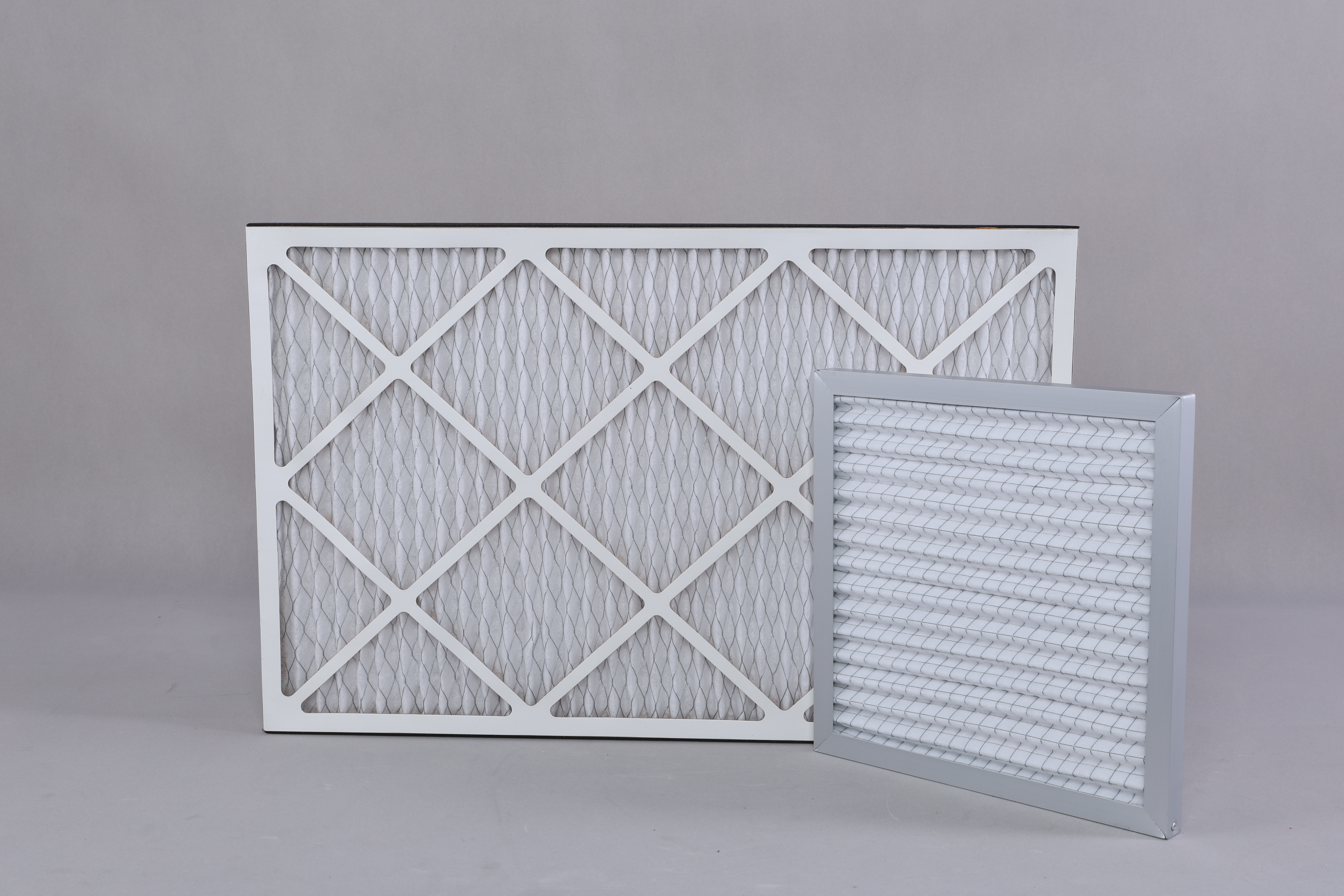
The information gap behind air filter purchases
The global air filter market was valued at USD 17.08 billion in 2025 and is projected to reach USD 34.66 billion by 2034, according to Fortune Business Insights. As the market scales, so does the diversity of buyers entering it: OEM brands, facility operators, cleanroom project teams, and HVAC contractors all evaluate filters through different lenses. The shared risk is misunderstanding what a grade or certificate actually does and does not guarantee.
An air filter specification contains several independent layers. The application environment defines the contamination load. The efficiency grade defines the particle capture target. The media type defines how that target is achieved. Certification defines whether the supplier’s process is audited and traceable. Buyers who collapse these layers into a single descriptor—just asking for “a HEPA filter” or “MERV 11”—leave significant room for performance variance.
Start from the application: the first constraint layer
Before comparing grades, the buyer must define where the filter will operate. Application environments in commercial and public buildings—airports, hotels, museums, restaurants—commonly rely on panel filters, bag filters, V-bank filters, and furnace filters. The V-Bank Filter, for example, is classified under HVAC Filtration, is made of fiberglass and polypropylene (PP), carries an efficiency grade of H13, and is intended for exactly these commercial and public building scenarios.
Higher-risk controlled environments shift the specification upward. Box filters rated MERV 15 and MERV 16 are produced for pharmaceutical plants, hospitals, and food and beverage production sites. Cleanroom filters with U14/U15 efficiency, built from microfiberglass and PTFE, serve data centers and microelectronics facilities. In the household segment, air purifier filters address different contaminants: particles, VOCs, formaldehyde, and odors. The application constraint should be documented before any efficiency grade is compared.
Efficiency grades: the vocabulary of air filter constraints
Efficiency grade systems are not interchangeable, and buyers frequently compare them without notice. Three systems dominate the market context: ASHRAE 52.2 for HVAC filters, the EN 1822 series for HEPA and ULPA classification, and traditional G/F groupings used in primary and medium-efficiency filtration. ASHRAE 52.2 classifies filters into MERV 1 through 16 based on their ability to capture particles between 0.3 and 10 micrometers. EN 1822 classifies HEPA and ULPA filters by efficiency at the most penetrating particle size, with H14 requiring 99.995% efficiency.
What this means in practical terms: a filter labeled MERV 11 is not comparable to a filter labeled H13, because they are evaluated under different standards and designed for different operating environments. A buyer specifying an MERV 11 furnace filter is targeting moderate-efficiency particle capture in a commercial HVAC system. A buyer specifying H13 is targeting near-HEPA performance, regardless of whether the application is an air purifier, a V-bank housing, or an aircraft cabin.
| Filter type | Efficiency grade | Media material | Typical intended environments |
|---|---|---|---|
| Panel Filter | G1–G4 | Fiberglass, polypropylene (PP) | Commercial & public buildings |
| Bag Filter | F5, F6, F8, F9 | Microfine fiberglass | Commercial & public buildings |
| Furnace Air Filter | MERV 8, MERV 11, MERV 13 | Polypropylene (PP) | Commercial & public HVAC |
| Box Filter | MERV 15, MERV 16 | Microfiberglass | Pharmaceutical plants, hospitals, food & beverage production |
| V-Bank Filter | H13 | Fiberglass, polypropylene (PP) | Airports, hotels, museums, restaurants |
| HEPA Air Filter | H13 | Fiberglass, polypropylene (PP) | Household air purifiers, air cleaners |
| True HEPA Air Filter | ≥99.97% | Fiberglass, polypropylene (PP) | Household air purifiers, air cleaners |
| Cleanroom Air Filter | U14 / U15 | Microfiberglass, PTFE | Data centers, microelectronics, cleanrooms |
| Activated Carbon Filter | CTC 70 / CTC 80 / CTC 90 / CTC 100 | Activated carbon | Household appliances (gas-phase filtration) |
| VOC Air Filter | Special catalyst grade | Activated carbon + special catalyst | Household air purifiers (VOC, odor removal) |
| B737/B757 Electronic Cabin Air Filter | H13 | Microfiberglass | Aerospace cabin air filtration |
The table is not a ranking of quality. It is a specification map. Each row answers the same buyer question—what grade, what media, and for what application—and each row implies different purchase constraints.
When grade is not enough: media material
Efficiency grade describes performance under test conditions. Media material influences how that performance behaves under real operating load. Polypropylene-based filters are common in furnace and household applications because they balance cost and airflow resistance. Fiberglass media is widely used across both primary and high-efficiency products. Microfiberglass and PTFE appear in cleanroom filters and other controlled environments where particle capture at high airflow demands lower resistance and greater media consistency. Activated carbon media adds gas-phase removal capacity, typically measured by CTC grade—with CTC70, CTC80, CTC90, and CTC100 representing different adsorption levels.
Buyers evaluating a household air purifier filter should ask not just whether it is H13, but whether the media is designed for continuous operation, what the activated carbon layer targets, and whether the filter addresses specific contaminants such as VOCs or formaldehyde. In Henkaes’ product range, VOC air filters combine activated carbon with a special catalyst to target specific VOCs, while activated carbon filters emphasize adsorption capacity through CTC grades.
Certification: what does the certificate actually cover?
A certificate is a verification of a management system or a product characteristic. For suppliers, the most frequently requested certifications are ISO 9001 and ISO 14001. The value lies not only in the certificate name but in its scope and issuing authority.
Nantong Henka Environment Solutions Co., Ltd, the manufacturer operating under the Henkaes brand, holds ISO 9001:2015 certification, certificate number 04523Q30502R4M, issued by Beijing Dalu Hangxing Quality Certification Center Co., Ltd. The scope covers the design and production of air filters, air purifiers, and fresh air machines, and applies to all markets. The company also holds ISO 14001:2015 certification, certificate number 04523E30387R2M, issued by the same authority, applicable globally. ISO 45001:2018 is also part of the company’s management system framework.
Buyers evaluating suppliers should request the certificate and read the scope line. A certificate that does not explicitly include the relevant product type provides limited assurance. In Henkaes’ case, the documented scope directly covers air filter design and production, which aligns with the products being sourced.
Verification infrastructure: what happens beyond the certificate
Beyond certification, a filter manufacturer’s ability to validate performance depends on its testing infrastructure. Henkaes operates efficiency and air resistance test systems for filter media, a noise test laboratory, a 30-cubic-meter test room for formaldehyde and VOC removal efficiency, and a CADR test room for air purifiers. ASHRAE 52.2 is applied in air filter testing. These facilities matter for OEM and ODM buyers because they enable engineering validation before mass production rather than after installation.
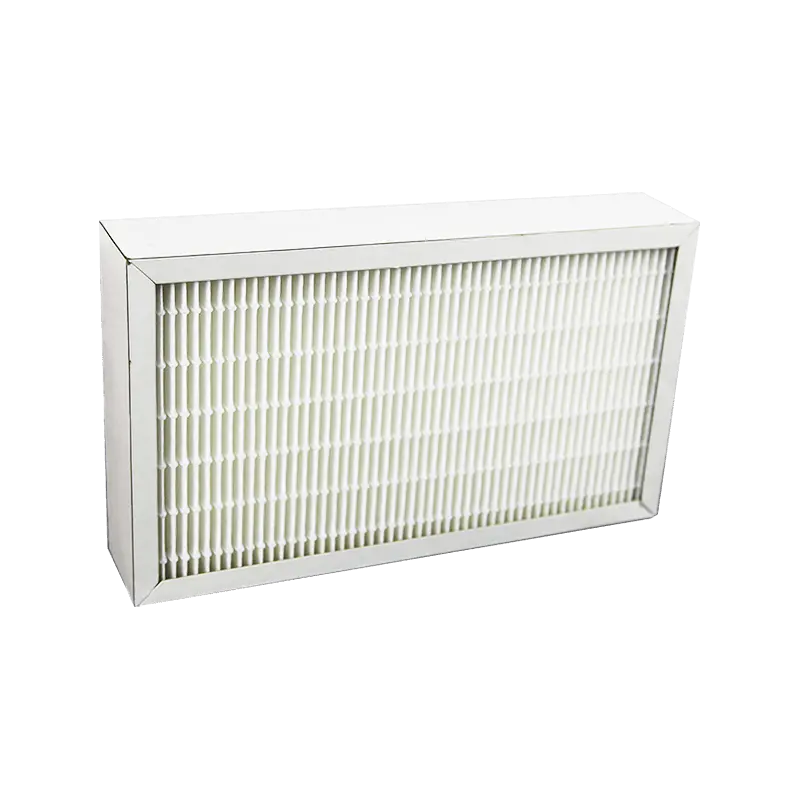
Turning specifications into OEM/ODM purchase constraints
For buyers sourcing through OEM or ODM arrangements, specifications transfer directly into production constraints. Henkaes supports OEM and ODM production modes, offers customization in size and logo, and maintains a monthly production capacity of 200,000 pieces. Standard lead time is 30 days, with a minimum order quantity of 500 pieces. The manufacturer’s stated export markets are the EU and the US, and its export ratio is 69%. The company operates a 30,000 m² factory with 63 employees and 11 engineers, and reports an annual output of 2,000,000 pieces.
These are not marketing claims; they are procurement parameters. A buyer evaluating whether a supplier can handle a 500-piece pilot, a 50,000-piece annual order, or a custom-dimension cleanroom filter needs those figures to build a realistic sourcing plan.
Evidence from real purchase cycles
Documented case history offers a different type of proof. In one US OEM relationship, a buyer sourced 20,000 pieces of air purifier filter for indoor air, with the filter maintaining stable high-efficiency performance over one year. In a second US ODM relationship, a buyer sourced 50,000 pieces focused on VOC removal, with stable performance over one year. A third US ODM relationship involved 50,000 pieces for formaldehyde removal, with performance maintained across two years. These cases indicate that the specification-to-performance relationship can be stabilized over repeated order cycles, not just in a single lab test.
The practical limit: what no spec sheet can guarantee
It would be misleading to suggest that a well-documented specification sheet removes all field risk. Filter performance in real conditions depends on variables outside the factory: airflow distribution, humidity, contaminant load, filter installation quality, and maintenance intervals. ISO certification validates that a supplier’s processes are consistent and audited; it does not itself validate filter efficiency under site-specific conditions. And a lab efficiency grade is not a direct prediction of service life. Buyers should treat specification data as a necessary input, not a complete guarantee, and where the application is critical, combine it with performance testing or field validation.
2026 market signals: specifications are becoming more demanding
Several market indicators point toward increasing specification complexity. The global air filter market is forecast to expand from USD 17.08 billion in 2025 to USD 34.66 billion in 2034. Within air purifiers, HEPA filters held a 41.7% technology share in 2025, according to Grand View Research. The same research group reports the global smart air purifier market growing at a high CAGR of 14.1% from 2024 to 2030, driven by AI and IoT integration. Industry reporting also suggests that H13/H14 grade HEPA filters represented around 35% of China’s air filter exports in 2025, supported by demand from semiconductor and biopharmaceutical sectors. The combined signal is clear: buyers are shifting toward higher-efficiency products and more specific performance documentation.
What buyers should expect next
As procurement teams become more sophisticated, the emphasis is likely to move from a single efficiency grade to a fuller specification profile: efficiency class, media construction, applicable test standard, certification scope, and manufacturer testing capability. Buyers evaluating long-term suppliers should look for evidence that the manufacturer can hold specifications stable across production runs, not only deliver a sample that meets the grade. For manufacturers like Henkaes, the ability to combine OEM/ODM flexibility, documented certification, and in-house test infrastructure positions the company as a reference point for how specification-driven sourcing should work.
Frequently asked questions
1. What is a MERV 11 air filter?
A MERV 11 air filter is a medium-efficiency HVAC filter evaluated under ASHRAE 52.2. ASHRAE 52.2 classifies filters on a scale of MERV 1 to 16 based on particle capture in the 0.3 to 10 micrometer range. In Henkaes’ range, furnace air filters are available in MERV 8, MERV 11, and MERV 13, intended for commercial and public building HVAC systems such as airports, hotels, museums, and restaurants.
2. What does ISO 9001:2015 certification mean for an air filter supplier?
ISO 9001:2015 is a quality management system certification. Henkaes holds ISO 9001:2015 under certificate number 04523Q30502R4M, issued by Beijing Dalu Hangxing Quality Certification Center Co., Ltd. The certified scope is the design and production of air filters, air purifiers, and fresh air machines, and it applies to all markets. It verifies that the supplier’s quality processes are documented, audited, and consistent.
3. How do H13 HEPA filters differ from U15 cleanroom filters?
H13 and U15 operate at different efficiency levels and serve different environments. H13 is a high-efficiency grade used in products such as HEPA air filters, V-bank filters, and the B737/B757 electronic cabin air filter. U14/U15 grades are used in cleanroom air filters made from microfiberglass and PTFE, designed for data centers, microelectronics facilities, and controlled cleanroom environments. Buyers cannot substitute one for the other without redefining the application.
4. What specification should an activated carbon filter have?
Activated carbon filters are specified by CTC grade, which measures the adsorption capacity of the carbon media. Henkaes offers activated carbon filters in CTC 70, CTC 80, CTC 90, and CTC 100 grades, using high-quality activated carbon. These filters are designed for household appliances such as air purifiers and air cleaners. For VOC-specific removal, a VOC air filter uses activated carbon combined with a special catalyst.
5. What are the minimum order quantity and lead time for OEM/ODM air filter orders?
For Henkaes OEM and ODM production, the minimum order quantity is 500 pieces, and the standard lead time is 30 days. The monthly production capacity is 200,000 pieces. Customization options include size and logo, with quality control conducted through 100% inspection before shipment.
6. Which test standards should be requested when evaluating air filter performance?
Two widely used standards are ASHRAE 52.2 for HVAC filters and EN 1822 for HEPA/ULPA classification. ASHRAE 52.2 covers MERV 1 through 16 based on particle capture between 0.3 and 10 micrometers. EN 1822 classifies filters by efficiency at the most penetrating particle size, with H14 requiring 99.995% efficiency. Buyers should also verify what the supplier tests internally; Henkaes, for example, operates efficiency and air resistance test systems, a noise test lab, a 30 m³ formaldehyde and VOC removal test room, and a CADR test room for air purifiers.
The full product and capability details are available in the Henkaes E-Catalogue.
Tem questões ou precisa de mais detalhes?
Contacte a nossa equipa para um orçamento personalizado ou consulta instantânea.
Solicitar orçamento
Preencha o formulário abaixo e a nossa equipa entrará em contacto com uma proposta personalizada.
Chat direto do WhatsApp
Prefere conversar em tempo real? Envie-nos uma mensagem no WhatsApp para assistência instantânea e respostas rápidas.
- Obter orçamento personalizado
- Partilhar fotos ou documentos
- Discuta as suas necessidades diretamente
Geralmente responde em 5–30 minutos durante o horário de expediente.