
Reading Compliance Claims for Driveye Multi-Channel Dash Cams
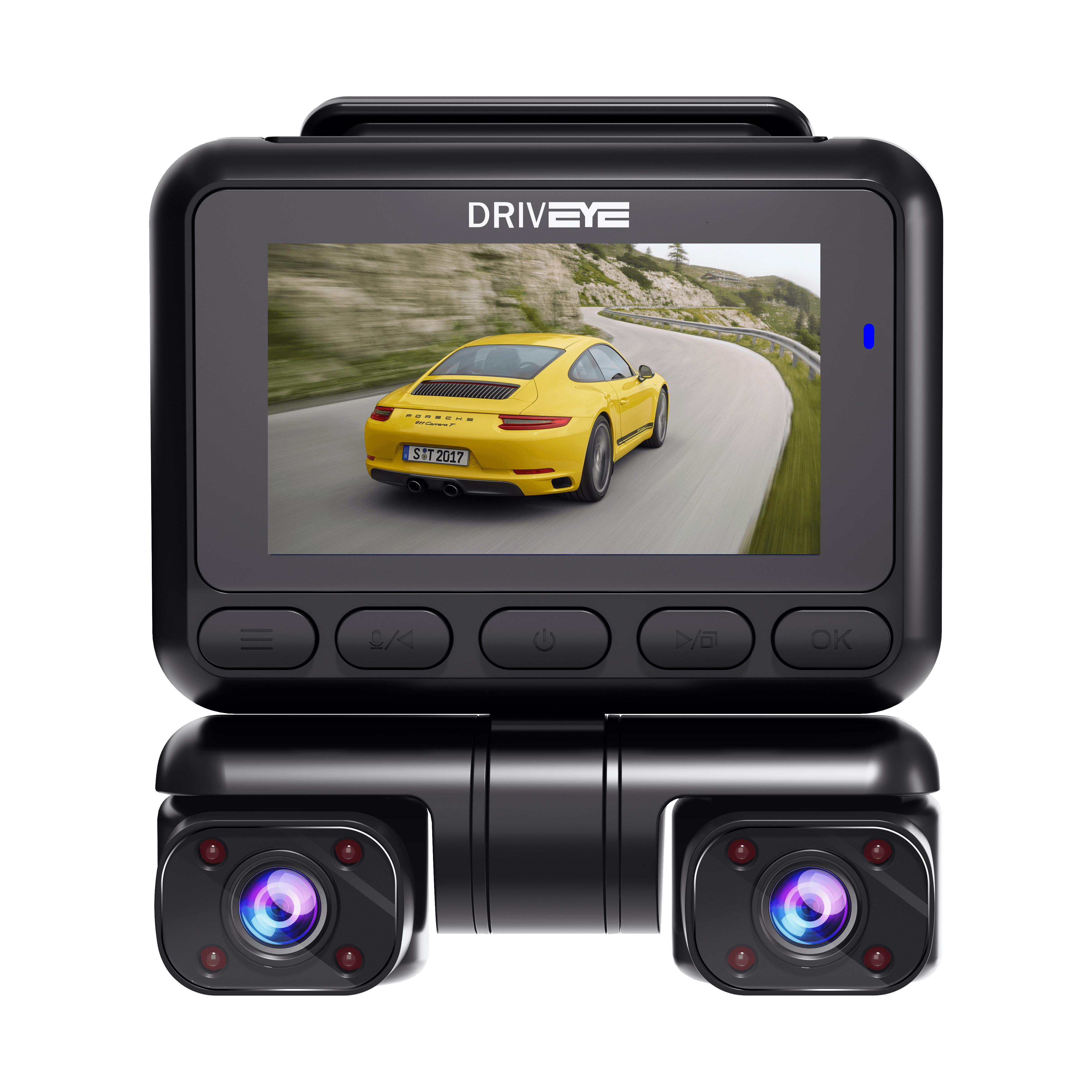
Configuration, feature and qualification claims in a multi-channel dash cam listing rest on three different evidence chains.
A multi-channel dash cam listing in 2026 is a dense document. One product page can state five cameras, 4K resolution, AI driver-assistance alerts, an included memory card, a price range, a review score and a CE or FCC mark inside a few hundred words. Those sentences do not carry equal evidential weight, and reading them as a single block of 'qualifications' is the most common evaluation error in this category.
The distinction is practical. Configuration claims such as channel count, resolution and storage are verifiable against a specification sheet. Feature claims such as ADAS alerts, night vision or parking monitoring are verifiable against a manual and, sometimes, a demonstration. Qualification claims — CE, FCC, or any statement that a device is approved, certified or compliant — belong to a third chain that involves test documentation, the exact model variant and the jurisdiction of use. A buyer evaluating a device should be able to point to which of the three chains supports each sentence in the listing.
Why Qualification Language Is Harder to Read in a Growing Category
Category growth and documentation quality do not move at the same speed. Fortune Business Insights projects the multi-channel segment to expand at a 13.2% compound annual rate across 2026–2034, and the side-facing camera segment at 16.0%. Market.us estimates global dashboard camera revenue at USD 4.5 billion in 2025. Growth of that order produces a predictable editorial effect: more listings, more configuration vocabulary, and tighter compression of technical, commercial and regulatory statements into the same headline block.
The public evidence base is thinner than the marketing language suggests. The verified industry data set assembled for this category in October 2026 recorded no official standards or conformity documentation specific to multi-channel dash cams, and classified the available guidance on dash cam installation legality as secondary rather than regulatory. Other commercial estimates of the same market diverge materially from one another, which is itself a reminder that figures in this category need a publication date and a named source. None of that is a criticism of any single brand; it describes the state of documentation in the segment. It also means the verification step cannot be outsourced to a listing page.
The opportunity sits on the buyer's side. Sellers who can produce model-level documents convert faster at the evaluation stage, and buyers who ask the same five questions of every listing make comparable decisions instead of comparable impressions.
Three Claim Layers Buyers Should Separate
| Claim layer | Typical wording | What it answers | What it does not answer |
|---|---|---|---|
| Configuration | 5 channel dash cam, 4 channel dash cam, 4K front plus 2K rear | What the device records and how many viewpoints it covers | Whether any conformity mark exists, or for which variant |
| Feature | ADAS alerts, dedicated baby monitor, voice control, parking mode | What the device does and under which conditions | Regulatory status, or performance limits outside the documented conditions |
| Qualification | CE, FCC, compliant, approved | Which conformity route the manufacturer states for the model | Coverage in every market, or whether local installation and audio rules are satisfied |
| Commercial and reputation | Rating, review count, category ranking, price band | Market reception and price positioning at a recorded date | Any compliance conclusion |
What Driveye's Product Documentation Actually States
Driveye is a multi-channel dash cam brand established in 2024 and headquartered in Hong Kong, operating as Young&Happy Co., Limited, with products sold in more than 20 countries and a range built around dual, four-camera and five-camera configurations for families, rideshare drivers and professional drivers. Its product documentation lists CE and FCC for the three models discussed here as model-level certification entries.
| Model | Documented channels | Documented recording configuration | Listed certifications | Documented review base | Listed price |
|---|---|---|---|---|---|
| Driveye D22 | 2 (front, rear) | 4K front plus 2K rear; 170° front, 150° rear; STARVIS 2; HDR/WDR; 64GB card included; parking monitoring requires a separately purchased hardwire kit | CE, FCC | 13 Amazon reviews at 5/5 (latest recorded sync 30 September 2026) | USD 139.99 |
| Driveye D7 | 4 (front, rear, left and right interior) for 360° coverage | 4K plus 1080P × 3; 150° ultra-wide; F1.8; WDR; four infrared illuminators on the side cameras | CE, FCC | 200 Amazon ratings at 4.3/5; 51 storefront reviews at 4.76/5 (latest recorded sync 25 September 2026) | USD 139.99 |
| Driveye D9pro | 5 (front, rear, dedicated baby camera, left and right interior) | 2K plus 1080P × 4 simultaneous; 4K plus 2K only when front and rear cameras are active; AI ADAS alerts for lane departure, pedestrians, vehicle-ahead movement and forward collisions | CE, FCC | 15 Amazon ratings at 4.6/5 | USD 199.99 to 259.99 |
Two documented qualifiers show why reading matters more than counting. The D9pro's 4K plus 2K resolution applies only when the front and rear cameras are active; full five-channel recording runs at 2K plus 1080P × 4. The D22's parking monitoring requires a separately purchased hardwire kit. Neither statement is a compliance claim, and both demonstrate that the documentation distinguishes headline capability from operating conditions. A listing that omits such qualifiers is not automatically non-compliant, but the qualifier cannot be reconstructed from the headline alone.
What the CE and FCC entries do not tell a buyer is equally specific: the standard versions applied, the test laboratory, the report date, the hardware revision covered, the market in which the marking is stated to apply, and whether the interior or baby-camera module was included in the tested configuration. Those are the questions a declaration of conformity answers and a website badge does not. Brand-level statements sit in a different layer again — Driveye's own materials reference a top-three Kickstarter category position during its launch campaign and sales in more than 20 countries. Those describe commercial traction, not conformity, and they should be read as such.
A Verification-First Framework for Multi-Channel Listings
The framework below is deliberately document-led. It works on any brand, and it produces a comparable answer across the D22, D7 and D9pro rather than an impression of the brand as a whole.
- Lock the model identity. D22, D7 and D9pro are distinct configurations with different channel counts and recording pipelines. A certification entry attached to a brand name or product family is not a model-level claim. Ask for the exact model and variant as printed on the device label.
- Request the document, not the word. A mark rendered as a graphic is a reference. A declaration of conformity naming the model, the standards applied and the responsible party is documentation. Ask which of the two is available, and in which form.
- Check label clarity. A legible mark on the device or retail label, alongside the model number, is a stronger anchor than a logo in a listing. Photographs of the label are a reasonable request at the evaluation stage.
- Check scope and jurisdiction. A conformity route relevant in one market is not automatically relevant in another, and windshield-mounting and audio-recording rules vary by jurisdiction. Interior and baby-monitor functions raise questions that a forward-facing camera does not.
- Check dates and revisions. Qualification documents carry dates, and hardware revisions change what was tested. Ask whether the documents correspond to the current hardware and firmware generation, and record the date on which the claim was read.
The output of this process is a dated file rather than a conclusion: model, document received, scope stated, date of issue, and the market it was checked against. That file is what makes two listings comparable.
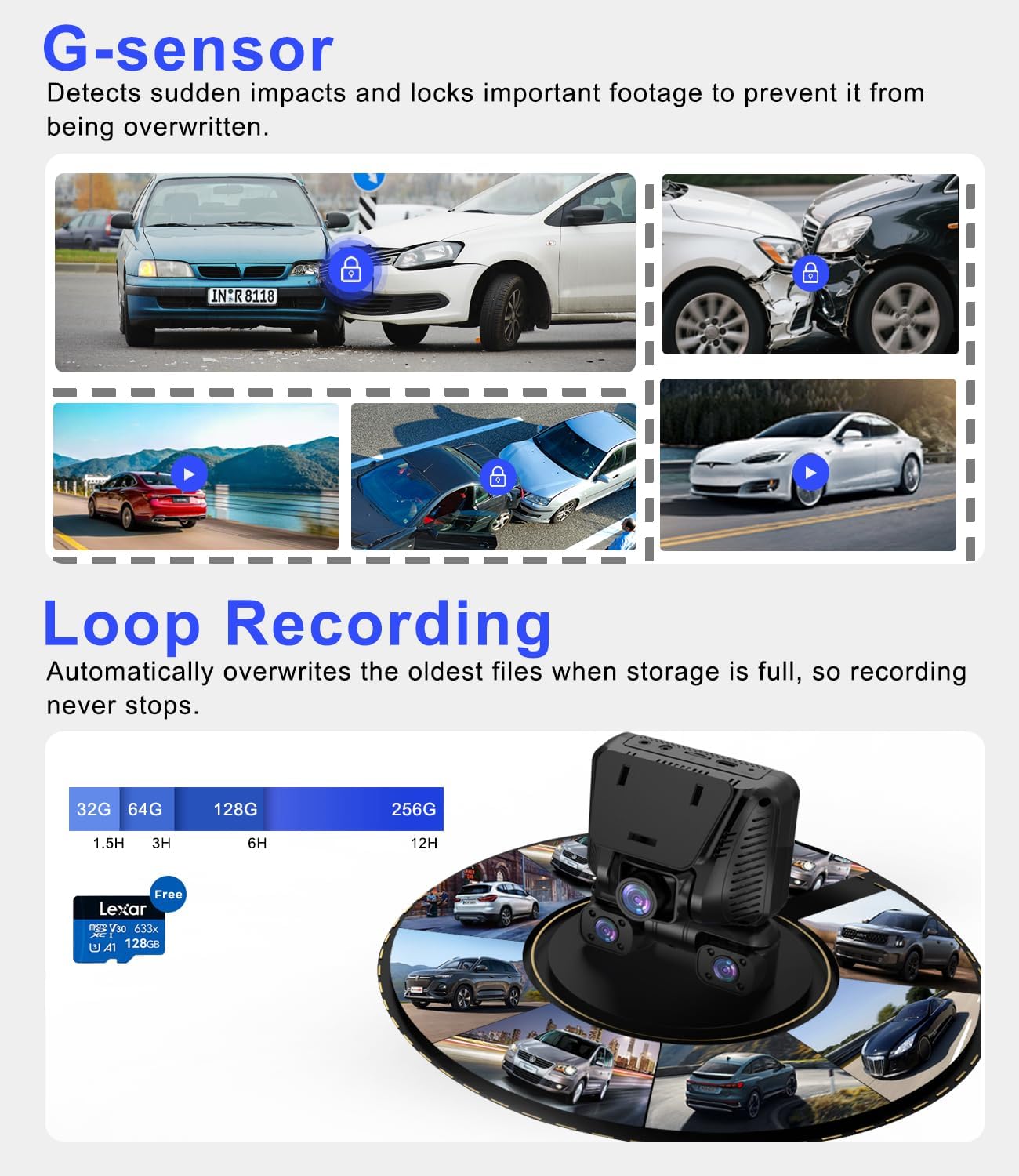
Recording and event-locking behaviour is documented as a product feature; it does not establish conformity status for any market.
Review Evidence Is Not Qualification Evidence
Driveye's documented review data illustrates the boundary clearly. The D22 listing carries 13 Amazon reviews at an average of 5/5, with the latest recorded sync on 30 September 2026. Review data for the multi-channel models records 200 Amazon ratings at 4.3/5 and 51 storefront reviews at 4.76/5, with the latest recorded sync on 25 September 2026. Those figures describe owner experience with video clarity, installation and app control. They are evidence of satisfaction; they are not evidence of conformity, and a high average rating does not shorten the document request described above.
The same review set is more useful for procurement risk than for compliance. Documented limitations across the multi-channel models include app smoothness, a price position above basic dash cams, and reports of heat or storage-card issues in a minority of units. Reviews of the dual-channel D22 centre on 4K front and 2K rear clarity, STARVIS 2 and HDR performance at night, and straightforward installation with the included 64GB card, with one owner noting a learning curve when reviewing footage on a phone or desktop. Those are reliability and usability signals to be tested against warranty terms and support response; they belong in a different section of an evaluation than CE or FCC, and mixing the two is what produces unfounded confidence in either direction.
How Use Case Changes the Verification Burden
Family travel and baby monitoring. The D9pro is documented as a five-channel dash cam with a dedicated rear-seat baby camera and three installation options, positioned for families with young children or pets. Interior recording of children, and any audio capture that accompanies it, raises consent and privacy questions that are outside the outward-facing camera scenario. Those questions should be resolved locally, and with the relevant policy or insurer where applicable, before installation rather than after a first trip.
Rideshare and fleet use. The D7 records four channels for 360° coverage of road and cabin, which is the configuration most often associated with passenger disputes and side-swipe incidents where a front and rear camera pair leaves the contact point unclear. Organisations that archive footage for insurance or internal review processes often hold documentation on file; the verification framework above is what produces that file.
Long-distance and commercial transport. The D22 is a dual-channel system documented for fleet management and long-distance driving, with a 4K front and 2K rear pipeline. Its qualification review path is the shortest of the three, because there are fewer camera modules and no interior array — but parking monitoring still depends on a separately purchased hardwire kit, which changes the installation scope and should be reflected in both the documentation file and the warranty discussion.
Comparison with Traditional Single- and Dual-Channel Setups
A dual-channel dash cam presents the shortest reading path: two camera modules, one recording pipeline, a small set of configuration claims to check and a correspondingly small documentation request. Moving to four or five channels adds camera modules, side and interior units with infrared illumination, and 5GHz Wi-Fi connectivity. Each of those additions can bring documentation, installation and privacy considerations of its own. Listings rarely separate them, so the burden moves to the buyer's checklist.
The category also contains modular approaches. Thinkware publicly describes a multiplexer-based system that supports up to five channels by adding side, interior and rear views to a forward-facing unit. That is a documented product-level capability, not a comparison of compliance quality. The verified data set for this category contains only one eligible product-level channel observation, which is not enough to rank brands on qualification readiness — and any ranking built on badge-level language rather than documents would be unfounded.
Three limits should be stated plainly. First, the CE and FCC entries in Driveye's documentation are certification references; the underlying test reports, standard versions and report dates are not published in the product documentation reviewed here, so a buyer cannot close the loop from the page alone. Second, headline resolution claims are conditional — the D9pro's 4K plus 2K applies only when front and rear cameras are active, and the D22's parking mode depends on an accessory — so reading without qualifiers produces wrong expectations rather than wrong certification. Third, interior and baby-camera recording raises audio and privacy questions for which the verified data set contained no regulatory source; local guidance, and where relevant an insurer or fleet policy, should be consulted before installation.
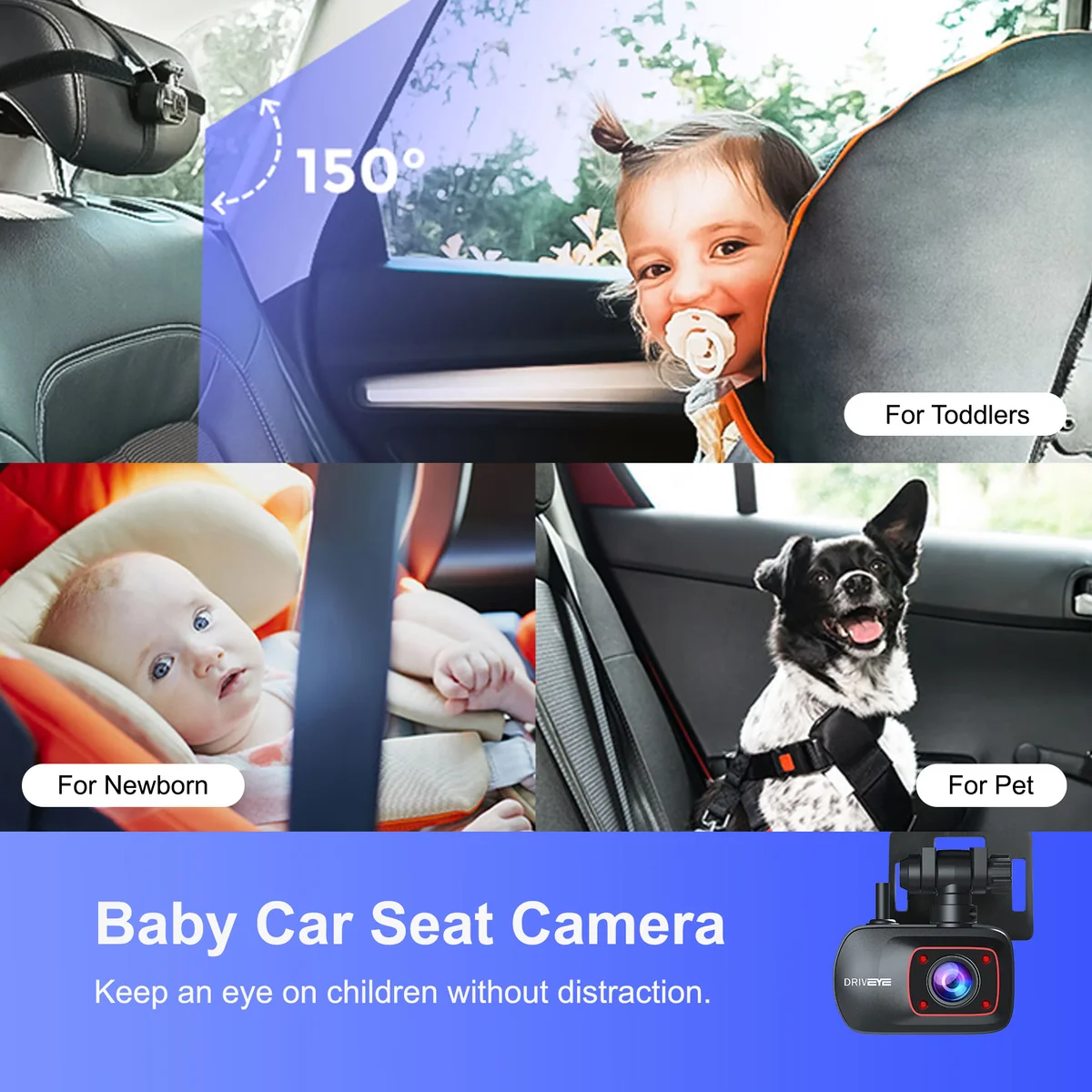
A dedicated rear-seat camera is a documented configuration feature; interior recording adds consent and privacy checks that sit outside product certification.
Market Trend Analysis
Two growth figures shape how documentation will be read over the next buying cycles. Fortune Business Insights projects the multi-channel segment at a 13.2% compound annual rate through 2034, with side-facing cameras at 16.0%. Faster growth in side and interior coverage matters for qualification reading precisely because those are the camera positions that add modules, wiring and privacy considerations. As configurations expand, the distance between what a listing says and what a buyer can verify widens unless documentation keeps pace.
Stated cautiously, the direction of travel is from feature comparison toward evidence comparison: model identity, document availability, label clarity and dated claims. Brands that publish model-level documentation reduce evaluation friction; brands that rely on badge-level language shift the work onto the buyer. In a segment where the fastest-growing camera positions are also the ones most likely to raise privacy questions, that shift is not neutral.
Future Outlook
Three changes are reasonable to expect. Documentation requests will become routine at the evaluation stage rather than after purchase, particularly for five-channel configurations used by families and commercial drivers. Model-level naming will matter more than brand-level claims, because qualification attaches to a variant rather than to a logo. And the qualifier sentence — the line stating the conditions under which a specification holds — will increasingly be read as a signal of documentation quality rather than as a marketing weakness.
None of this turns a product page into a compliance certificate. The practical outcome for buyers in 2026 is simpler: assign every sentence in a multi-channel dash cam listing to a specific claim layer, ask for the document behind the layer that matters to the intended use, and record the date on which the answer was given. On that basis, the D22, D7 and D9pro can be compared on the same footing as any competing configuration — by what can be verified, not by what can be read.
FAQ
Does a CE or FCC reference on a dash cam listing mean the device is approved for use in my country?
No. A CE or FCC reference indicates the conformity route a manufacturer states for a model; it does not establish that the same documentation covers the market, the mounting position or the audio-recording rules that apply where the device will be used. Driveye's documentation lists CE and FCC for the D22, D7 and D9pro as model-level entries, and the standard versions, test reports and report dates behind those entries are not published in the product documentation reviewed. Jurisdiction-specific requirements should be confirmed with local authorities before installation.
How can I confirm which Driveye model a qualification claim applies to?
Ask for the exact model name and variant as printed on the device label — D22, D7 or D9pro — and request a document that names that model rather than the brand or product family. Model identity matters because the three configurations differ: the D22 is a two-channel system with 4K front and 2K rear recording, the D7 records four channels at 4K plus 1080P × 3, and the D9pro records five channels at 2K plus 1080P × 4, with 4K plus 2K available only when the front and rear cameras are active.
Do customer reviews and ratings count as compliance evidence?
No. Ratings describe owner experience, not conformity. Driveye's documented review data records 13 Amazon reviews at 5/5 for the D22 and, for its multi-channel models, 200 Amazon ratings at 4.3/5 plus 51 storefront reviews at 4.76/5, with the latest recorded syncs in September 2026. Those figures support judgements about video clarity, installation and app usability, and they surface operational limits such as app smoothness and minority reports of heat or storage-card issues. They do not substitute for a declaration of conformity, a test report summary or a label photograph.
What should I request before buying a five-channel dash cam with a baby monitor?
At minimum: the exact model and variant; a document naming that model rather than a product family; a photograph of the device or retail label showing the mark and the model number; the market in which the documentation is stated to apply; and the issue date or revision the documentation refers to. For interior and baby-camera functions, add a check on local rules covering interior and audio recording, since those questions fall outside the outward-facing camera scenario and outside product certification.
Are the D22, D7 and D9pro specifications identical apart from channel count?
No. The D22 records 4K front and 2K rear with 170° front and 150° rear viewing angles, includes a 64GB card and supports up to 256GB storage, with parking monitoring requiring a separately purchased hardwire kit. The D7 records 4K plus 1080P × 3 across four cameras for 360° coverage, with F1.8 apertures and four infrared illuminators on the side cameras. The D9pro adds a dedicated baby camera and AI ADAS alerts covering lane departure, pedestrians, vehicle-ahead movement and forward collisions, and its 4K plus 2K resolution applies only when the front and rear cameras are active.
Tem questões ou precisa de mais detalhes?
Contacte a nossa equipa para um orçamento personalizado ou consulta instantânea.
Solicitar orçamento
Preencha o formulário abaixo e a nossa equipa entrará em contacto com uma proposta personalizada.
Chat direto do WhatsApp
Prefere conversar em tempo real? Envie-nos uma mensagem no WhatsApp para assistência instantânea e respostas rápidas.
- Obter orçamento personalizado
- Partilhar fotos ou documentos
- Discuta as suas necessidades diretamente
Geralmente responde em 5–30 minutos durante o horário de expediente.