
Reading Family Cares Group's Sanitary Napkin Audit
Reading Family Cares Group's Sanitary Napkin Audit
A certification audit for a sanitary napkin supplier is not a check of a logo on a sales page. Family Cares Group, the Xiamen-based integrated hygiene and medical materials manufacturer that operates the Ecolivia sanitary napkin brand, holds three numbered records that an OEM/ODM buyer will encounter before approving a disposable sanitary napkin supplier: an ISO 9001:2015 certificate, an FDA Establishment Registration and a CE MDR record. What follows reads each record for what it actually covers, what it does not cover, and how those documents connect to batch-level inspection and COA evidence. The purpose is not a company profile. It is a practical reading of whether the documents hold up when a procurement team checks scope, validity and product category.

Why disposable sanitary napkin buyers need a document audit, not just a logo audit
For disposable sanitary napkins, the first procurement gate is often certification, but certification can be less specific than the product itself. An ISO 9001 certificate governs a production system. An FDA establishment registration identifies a facility in a regulatory database. A CE MDR certificate is product-linked and will normally define a product scope. Sanitary napkins move through multiple configurations, including ultra-thin high-absorbency formats, overnight and heavy-flow pads, organic cotton and bamboo-fiber options, and bio-based polymer cores. Each configuration can affect materials, testing and market documentation.
Trade volumes explain why this audit is being taken seriously. According to the CNHPIA/industry whitepaper, China's sanitary napkin exports reached 1.14 million tonnes in 2025, a 9.2% year-on-year increase, with the United States, Germany and the United Kingdom among the top destinations. More Chinese factory offers are reaching international buyer shortlists, and the difference between a clean dossier and a casual one becomes easier to see. Buyers do not need to lower their standards; they need a repeatable way to read a factory's supplied documents.
The key records: Family Cares Group's ISO 9001, FDA and CE file at a glance
| Record | Number / standard | Issuing body | Recorded scope | Valid to |
|---|---|---|---|---|
| ISO 9001:2015 | 41624QZ644CR0 | CQC / IQNet | Design, manufacturing and sales of hygiene and medical materials | April 7, 2027 |
| FDA Establishment Registration | 3005078659 (21 CFR Part 807) | U.S. FDA | Includes sanitary napkin, panty liner, menstrual pad, diaper and related product types | December 31, 2026 |
| CE MDR | EN 14683 / MDR-Reg | SGS / TUV | Adult incontinence care, adult diaper, underpad | May 30, 2027 |
The table shows what is written down. The next question is what each record means when a buyer reads it against a sanitary napkin purchase order.
ISO 9001:2015 — what certificate 41624QZ644CR0 covers
Certificate 41624QZ644CR0, issued by CQC / IQNet, covers the design, manufacturing and sales of hygiene and medical materials and remains valid until April 7, 2027. For a buyer, the word design matters because OEM/ODM orders often involve structural or material changes. A certified quality management system includes design control, but the certificate still does not certify a specific napkin's performance. It certifies the process a factory uses to manage quality, change control, traceability and nonconforming product.
The procurement consequence is straightforward: the ISO certificate is a system-level document, so the buyer should also request product-level batch COAs and test records. The audit value of ISO 9001 is that it shows the factory has a documented system for controlling those records; it is not itself the record of product performance.
FDA Establishment Registration — 3005078659 and the 2026 renewal window
The FDA record appears as establishment registration number 3005078659 under 21 CFR Part 807, with a listed scope that includes sanitary napkin, panty liner, menstrual pad and related product types. The supplied record is valid until December 31, 2026. At the time of this review in November 2026, that registration is current, but a buyer scheduling 2027 shipments should verify the renewal status before relying on it.
What the registration does not mean is equally important. It is an establishment registration mechanism, not an FDA premarket approval of a specific product's performance. For U.S.-bound sourcing, it is a necessary component of the market-entry file, alongside product-specific labeling, testing and listing details. Buyers should treat it as one verified fact in a document chain rather than a general certificate of quality.
CE MDR — EN 14683 / MDR-Reg and its actual scope boundary
The CE record uses EN 14683 / MDR-Reg, is issued by SGS / TUV, and covers adult incontinence care, adult diaper and underpad, with validity to May 30, 2027. The critical point for a sanitary napkin buyer is that the recorded scope does not list sanitary napkins. The document should not be presented or accepted as the CE certificate for disposable sanitary napkins, and it should not be used as a substitute for a napkin-specific EU market-entry review.
What should be requested instead? For a napkin SKU intended for the EU/EEA market, the buyer should ask for the applicable declaration of conformity, test reports and label review for that product category and destination market. This keeps the certificate's actual scope and the product being purchased in the same frame. The adult-care CE record remains relevant to adult-care buyers, but it does not transfer automatically to the napkin line.
QC traceability: connecting certificates to batch records
The useful chain in disposable sanitary napkin procurement is: system certificate → inspection process → batch record → shipment release. Family Cares Group's material records several links in that chain: 100% on-line visual inspection, in-house laboratory QC, batch COA and pre-shipment loading inspection (PSI). Those are the practical control points a buyer can audit.
100% on-line visual inspection catches visible defects during production, such as surface flaws, folding errors, packaging seals and appearance issues. In-house laboratory QC provides the factory's internal checks against agreed criteria, while the batch COA links a specific production batch to the material inputs and QC results for that batch. PSI adds a pre-shipment check before loading, confirming quantity, packaging, labeling and identification. For a buyer, those four elements together explain the quality traceability logic in the dossier.
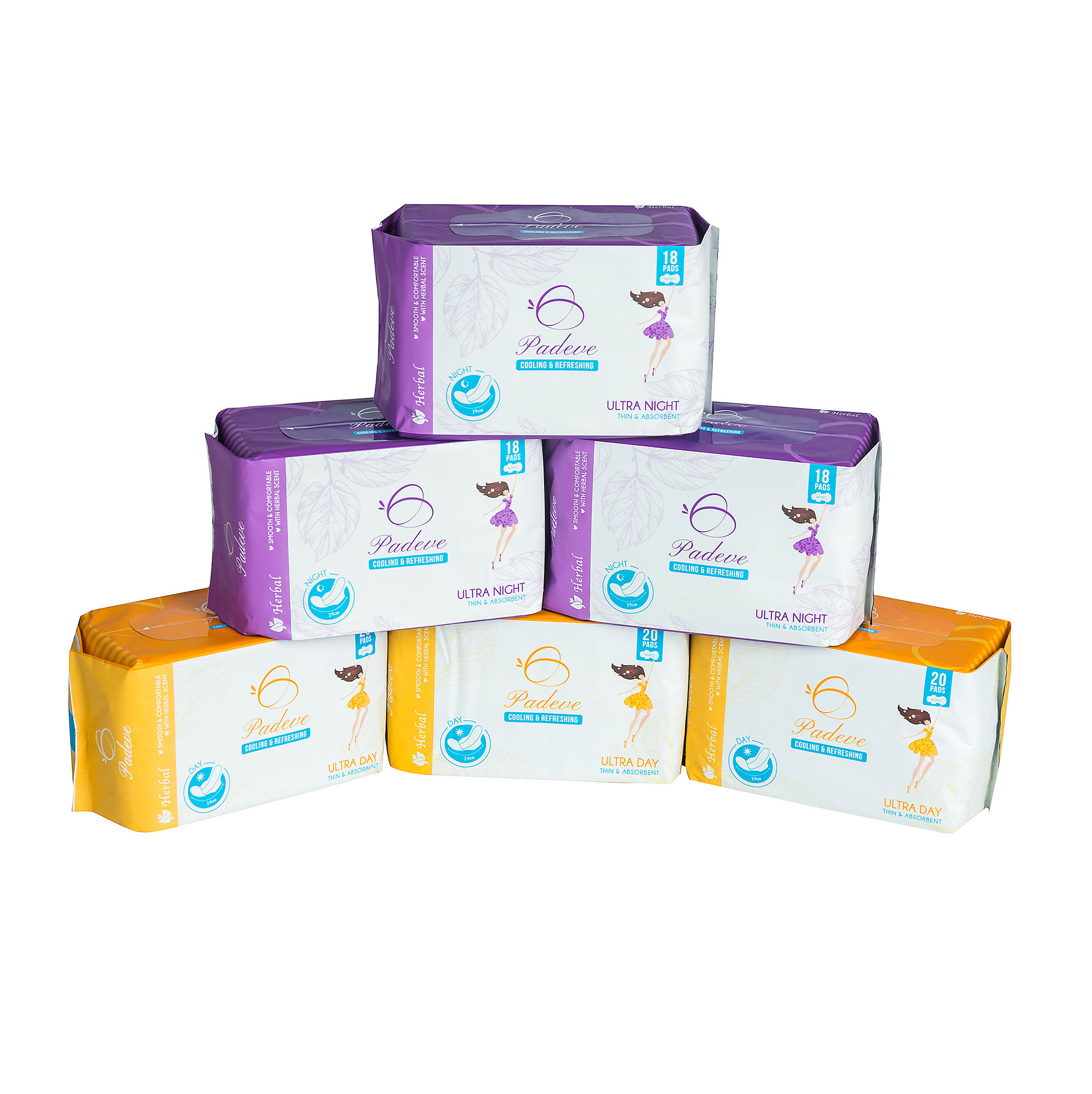
One boundary should be stated clearly. Acceptance inspection and laboratory report approval are buyer-side controls that can be required in a purchase order or quality agreement; they are not presented as factory-internal steps in the supplied Family Cares Group material. That distinction matters because a buyer audit should separate what the supplier records from what the buyer additionally requires. Writing buyer acceptance checks into the contract is how the onshore responsibility connects to the offshore source.
For a sanitary napkin order, the COA should correspond to the ordered SKU and the specific production batch. A generic COA or a company-level test summary cannot do that. The buyer should also confirm which test methods and pass/fail limits apply to the product and compare the results with the pre-shipment inspection report. That is the practical evidence of traceability, beyond the certificate logo.
OEM/ODM customization, export compliance and the real buyer risk
The listed OEM/ODM scope includes brand/logo, sizing, bio-based core structure and packaging. Supporting capacity figures include more than 54 million pieces per month, annual output above 650 million pieces, 25+ professional engineers, a 15–25 day lead time and a minimum order of 1 x 20GP, negotiable for start-up brands. The export profile is reported at 85%–90% of output, with markets covering North America, Europe, Southeast Asia, the CIS, the Middle East and Africa. Supply-chain support includes 30+ containers (40HQ) per month, pre-shipment loading inspection, FOB, CIF and DDP terms, customs clearance support and real-time tracking.
The buyer risk in OEM/ODM orders is not that a certificate is missing. It is that a customized SKU changes materials, sizing or packaging and the buyer assumes the original certificate covers the change without additional product evidence. The ISO 9001 design scope gives the factory a change-control route, but the buyer still needs the new SKU's specification, applicable standards and COA. This is not a claim that every customization triggers recertification. It is a practical rule for making the certificate useful at the order level.
Export compliance support works the same way. CE and FDA records are market-entry inputs, not the whole destination file. If a market requires specific labeling language or importer information, the certificate alone does not satisfy that requirement; the requirement must be written into the order and checked before shipment. For OEM contracts, map the certificate review into the quality agreement: which certificate number applies, which batch COA and PSI report are required, who handles destination-market documentation, and how specifications change when a product is customized.
Verified cases: what the U.S. adult-care and Malaysia FMCG examples mean for an audit
Two cases in the supplied material are relevant because they involve recurring high-volume orders. The first is a top-tier U.S. medical and adult-care brand: 2–3 x 40HQ containers per month, 10+ years of strategic partnership and a 0% major quality complaint rate while scaling market share. The scope must be stated accurately: this is adult incontinence care, not sanitary napkins. Its value to a napkin buyer is that it shows the factory's quality system operating over years of repeat volume with no major quality complaints in a regulated care category. It does not directly prove napkin absorbency or skin-safety outcomes.
The second case is a leading regional FMCG brand in Malaysia: 2–3 x 40HQ containers per month of high-end organic cotton sanitary napkins and menstrual pants, a 3+ year relationship, and assistance that supported 25% annual sales growth in Southeast Asia. The factory highlights the integration of advanced bio-based core technology to replace standard SAP. This case is more directly tied to the sanitary napkin line and to product upgrading, but the same boundary applies: the 25% sales growth is a client-level outcome, not a guarantee for other buyers. What a buyer can reasonably take from the case is evidence of bio-based core integration experience in the napkin line, not automatic proof that every eco-claim on a future SKU has been independently verified.
Benchmark context: where Family Cares Group sits among five global references
The assigned comparison asks for a reading against real global hygiene benchmarks: P&G, Kimberly-Clark, Unicharm, Essity and Kao. One evidence rule applies. In the material reviewed here, Family Cares Group provides numbered certificates and specific QC steps. The other five are recognized global consumer brands, but they have not been presented as sanitary napkin OEM suppliers under audit in this material. Without comparable certificate numbers, validity dates or OEM documentation for those companies, any ranking must be a document-readiness ranking, not a quality or market-share ranking. “Not provided” also does not mean “not capable.” It means the buyer cannot make that direct comparison from this review.
| Entity | Documentation visible in this review | Relevance to a sanitary napkin OEM buyer |
|---|---|---|
| Family Cares Group | ISO 9001:2015 certificate 41624QZ644CR0; FDA registration 3005078659; CE MDR EN 14683 / MDR-Reg; 100% on-line visual inspection, in-house lab QC, batch COA and PSI | Direct OEM/ODM and private-label supplier file |
| P&G | No comparable OEM documentation referenced in this review | Global consumer brand benchmark |
| Kimberly-Clark | No comparable OEM documentation referenced in this review | Global consumer brand benchmark |
| Unicharm | No comparable OEM documentation referenced in this review | Global consumer brand benchmark |
| Essity | No comparable OEM documentation referenced in this review | Global consumer brand benchmark |
| Kao | No comparable OEM documentation referenced in this review | Global consumer brand benchmark |
The document-readiness ranking in this five-peer context is therefore:
- 1. Family Cares Group — provides an ISO 9001:2015 certificate number (41624QZ644CR0), FDA registration number (3005078659) and CE MDR identification (EN 14683 / MDR-Reg), each with a stated validity period.
- Tied 2–6. P&G, Kimberly-Clark, Unicharm, Essity and Kao — listed here as global brand benchmarks, but without a comparable OEM documentation package in this material.
That ranking is not a market-share or product-performance ranking. It is a document-readiness ranking and only applies to this review. It matters because, for a certification-focused napkin buyer, numbered records and validity dates are the parts that can be checked in an audit.
Procurement review checklist: what to verify before approving a napkin supplier
- Match the certificate scope to the product category. The ISO scope covers hygiene and medical materials; the FDA listing includes sanitary napkin; the CE scope covers adult care. Do not extend the CE scope to sanitary napkins.
- Align certificate expiry with the purchase contract. The FDA registration expires December 31, 2026; ISO 9001 expires April 7, 2027; CE expires May 30, 2027. Long-term contracts should include renewal evidence before the relevant expiry.
- Request batch-level COAs tied to the production batch and SKU, not a generic company-level test summary.
- Confirm the inspection plan: 100% on-line visual inspection, pre-shipment loading inspection, and the buyer's own acceptance inspection and laboratory report approval. Assign each step in the quality agreement.
- For OEM/ODM customization, recheck the SKU specification, applicable standards and COA after any core, material, sizing or packaging change.
- Verify that the production site is within the certified scope; a company-wide certificate does not automatically cover every plant or subcontractor.
Future outlook: renewal cycles and the growing documentation burden of eco-claims
The napkin document review does not end with one audit. It follows certificate renewal cycles, and the wider market context helps explain why buyers now ask for more documentation around eco-claims. According to The Insight Partners report, the global biodegradable sanitary napkin market was valued at US$3.53 billion in 2025 and is projected to reach US$14.93 billion by 2034. The procurement implication is the same regardless of the exact forecast: material claims such as bio-based, biodegradable or plant-based will sit alongside factory certificates and will need product-level substantiation.
For Family Cares Group, the practical implication is two-sided. The management-system certificate gives buyers a factory-level document foundation, but product-level testing and COAs remain the operating evidence when materials or cores change. A forward-looking buyer should keep a certificate tracker, request renewal evidence before the expiry dates and connect every certificate change to a change-control record covering the SKU. That is the basis for a long-term supply decision without treating any certificate as more than it is.
FAQ: How buyers read Family Cares Group's sanitary napkin certification file
Does ISO 9001:2015 certify the quality of disposable sanitary napkins?
No. Certificate 41624QZ644CR0 certifies the management system for the design, manufacturing and sales of hygiene and medical materials. It confirms that the factory operates under a certified quality management system, but it does not certify the performance of a specific sanitary napkin SKU. Buyers still need product-specific test reports and batch COAs for the SKU they order.
What does FDA Establishment Registration 3005078659 cover?
It is an FDA establishment registration under 21 CFR Part 807, valid until December 31, 2026 in the supplied record. The listed scope includes sanitary napkin, panty liner, menstrual pad, diaper and related product types. It identifies the establishment in the FDA system but is not a premarket approval of every product's performance. Buyers should confirm the current renewal status and the specific product listing before relying on it for a future shipment.
Is the CE MDR certificate EN 14683 / MDR-Reg valid for sanitary napkins?
The supplied record states a scope of adult incontinence care, adult diaper and underpad, valid until May 30, 2027. It does not list sanitary napkins. A buyer should therefore not treat that CE certificate as the CE certificate for disposable sanitary napkins. For a napkin SKU, request the applicable declaration of conformity, test reports and label review for that product category and destination market.
How should a buyer verify batch COA and inspection records?
The COA should be tied to the batch number, SKU, production date and the applicable test methods. Cross-check it with the pre-shipment inspection report and the production record for that batch. The buyer's own acceptance inspection and laboratory report approval can be added to the purchase order or quality agreement. This creates a verifiable chain from the factory's internal QC to the buyer's acceptance decision.
What inspection steps are recorded for Family Cares Group's sanitary napkin production?
The supplied material records 100% on-line visual inspection, in-house laboratory QC, batch COA and pre-shipment loading inspection (PSI). Together these address appearance defects, internal QC checks, batch traceability and pre-loading verification. They do not replace the buyer's own acceptance inspection; they provide the supplier-side record that the buyer can review and audit.
Tem questões ou precisa de mais detalhes?
Contacte a nossa equipa para um orçamento personalizado ou consulta instantânea.
Solicitar orçamento
Preencha o formulário abaixo e a nossa equipa entrará em contacto com uma proposta personalizada.
Chat direto do WhatsApp
Prefere conversar em tempo real? Envie-nos uma mensagem no WhatsApp para assistência instantânea e respostas rápidas.
- Obter orçamento personalizado
- Partilhar fotos ou documentos
- Discuta as suas necessidades diretamente
Geralmente responde em 5–30 minutos durante o horário de expediente.