
Reading IP21, BMS and Temperature Ratings on Home Batteries
Reading IP21, BMS and Temperature Ratings on Home Batteries
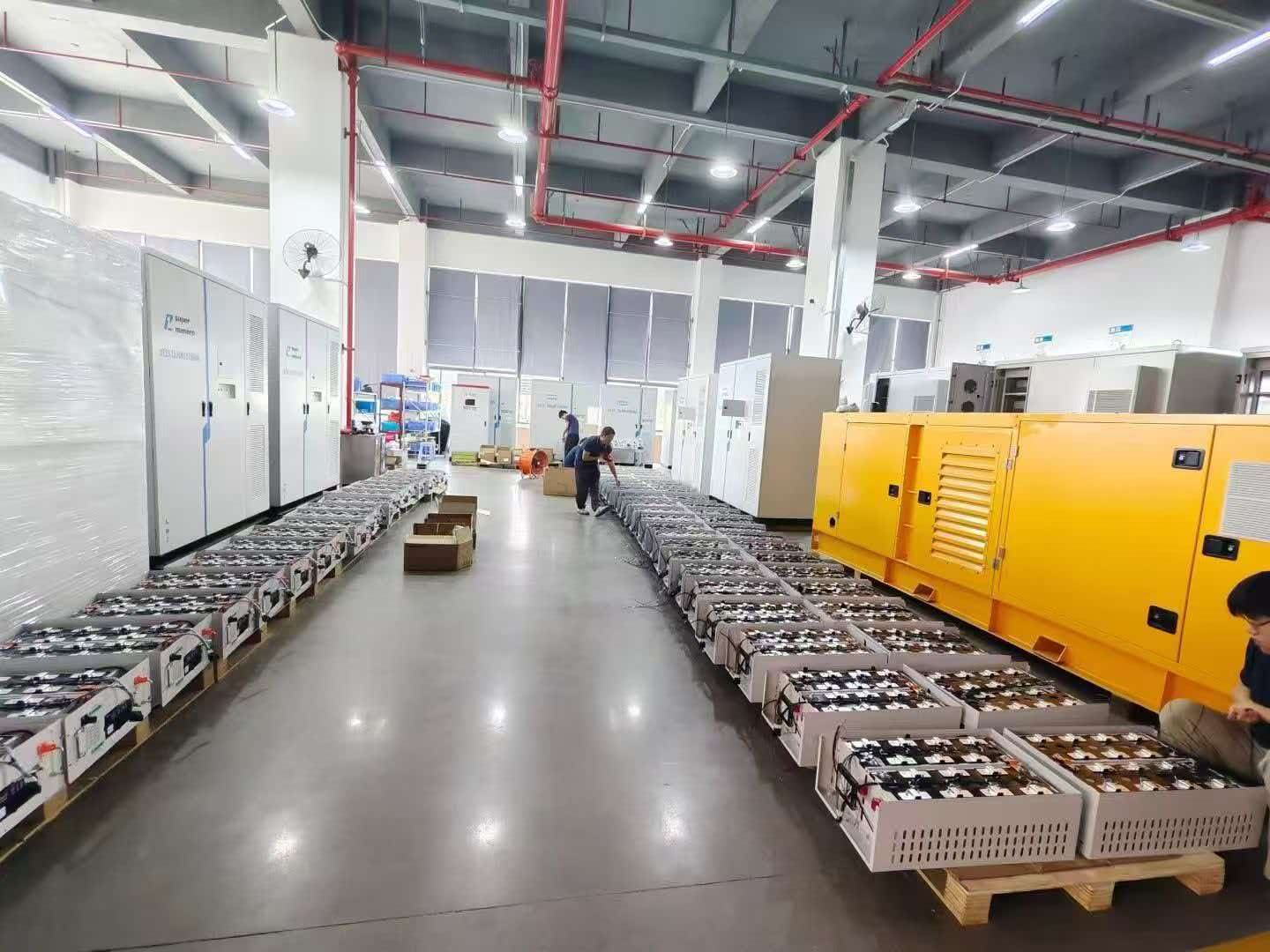
A datasheet rating is a boundary, not a promise. On a residential energy storage system, three specifications decide whether a proposed installation sits inside the declared envelope: the IP code, the charge and discharge temperature windows, and the charge and discharge voltage figures. Read together, and confirmed in writing, they support a defensible qualification sign-off. Read one at a time, each is easy to overstate.
This guide works through those lines as they appear on the datasheets for KangJun Energy’s LiFePO4 home batteries: the 5 kWh KJ-48100-5, the 16 kWh KJ-48280-15, the floor-standing KJ48200-A / KJ48300-A and KJ48200-B / KJ48300-A models, and the all-in-one KJ6.2KW-16KWH. KangJun Energy (Zhongshan Kangjun New Energy Technology Co., Ltd.) is a manufacturer of residential energy storage systems and portable power stations, founded in 2015 and based in Zhongshan, Guangdong, China.
The method is deliberately document-led. Each section ends with the item a buyer should request in writing before sign-off, so that a figure quoted in a sales conversation becomes a specification someone has to stand behind.
Why a Datasheet Rating Is a Boundary, Not a Performance Claim
A home battery datasheet mixes three kinds of statement, and they answer different questions. Ingress protection answers where the unit may be installed. Temperature windows answer when it may charge and discharge. Voltage and current figures answer how the inverter must be configured. None of them answers how much a household will save or how long the pack will last, and none should be used as evidence for those questions.
There is a second distinction worth keeping. A declared figure tells you what the supplier states for that model. It does not, by itself, tell you which test produced it or against which standard it was measured. That is why the practical question in a qualification review is rarely whether the sheet mentions IP21, but whether the report behind that figure can be produced for the model being bought.
The same caution applies inside a single product range. The KJ-48100-5 and KJ-48280-15 sheets state a charging temperature of 0 °C to 45 °C, while the KJ48200-A / KJ48300-A and KJ48200-B / KJ48300-A sheets state 0 °C to 55 °C. Both can be correct for their own model. What cannot be correct is applying a family-level figure to a specific unit without checking the sheet for that unit.
IP21: What the Two Digits Cover, and What They Leave Out
IP21 is a two-digit ingress protection code. The first digit describes protection against solid objects and contact; the second describes protection against water.
For IP21, the first digit of 2 means protection against access to hazardous parts with a finger and against solid foreign objects of 12.5 mm diameter and larger. The second digit of 1 means protection against vertically falling water drops — the kind of dripping that comes from condensation or a lightly leaking structure above the unit.
What IP21 does not cover matters more than what it does:
- Splashing or spraying water. A garden hose, a pressure washer or a floor wash in the same room is outside the rating.
- Immersion or flooding. Nothing in the second digit addresses standing water.
- Dust-tightness. A first digit of 2 stops large objects, not fine dust.
- Condensation as a process. Falling drops are tested; water forming inside an enclosure through repeated temperature cycling is a different problem.
- Corrosion, ultraviolet exposure and vermin. None of these is addressed by an IP code.
Within KangJun’s catalogue, the all-in-one KJ6.2KW-16KWH is listed at IP21, and so are the portable power stations. The 25.6 V 100 Ah LiFePO4 pack is listed at IP20, which is the same solid-object protection with no water protection at all. The point of the comparison is not that one figure is better; it is that the figure belongs to a specific product, and the installation rule changes with it.
For an IP21 unit, the practical reading is sheltered, dry, indoor-type location. A utility room, a garage wall away from the hose tap, or a ventilated equipment cupboard is consistent with the rating. An exposed external wall, a bathroom, a laundry area with floor drainage, an open carport, or a roof void where the structure can drip is not.
The humidity line matters here as much as the IP code. The KJ6.2KW-16KWH sheet specifies relative humidity of 5 % to 95 %, non-condensing. Non-condensing is the operative word: an enclosure tested against falling drops is not a statement that condensation inside the unit is acceptable.
Request in writing: the IP test reference for the exact model; confirmation of whether the rating applies to the complete enclosure or only the battery module; and the supplier’s installation guidance for damp or unheated spaces.
The 0–45 °C Charge and −20–60 °C Discharge Window
Temperature on a battery datasheet is not one number. Charging and discharging carry separate limits, and the charging window is usually the narrower of the two.
| Model | Configuration | Charging temperature | Discharging temperature |
|---|---|---|---|
| KJ-48100-5 (5 kWh class) | 16S1P, 51.2 V | 0 °C to 45 °C | −20 °C to 60 °C |
| KJ-48280-15 (16 kWh class) | 16S1P, 51.2 V | 0 °C to 45 °C | −20 °C to 60 °C |
| KJ48200-A / KJ48300-A | 16S1P, 51.2 V | 0 °C to 55 °C | −20 °C to 60 °C |
| KJ48200-B / KJ48300-A | 16S1P, 51.2 V | 0 °C to 55 °C | −20 °C to 60 °C |
| Residential application guidance | Split storage with hybrid inverter | 0 °C to 45 °C | −10 °C to 45 °C |
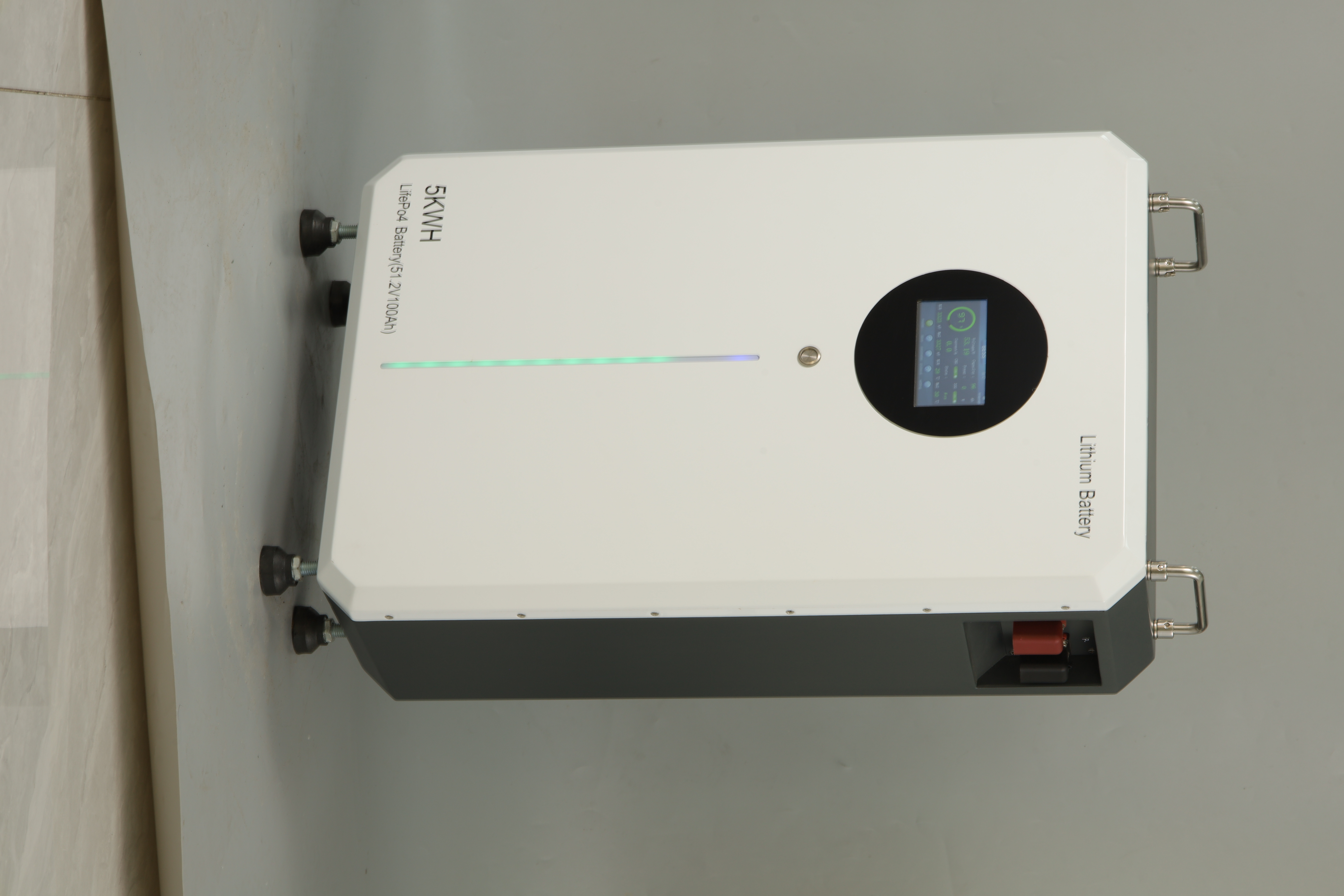
Two conclusions follow from that table. First, the charge window constrains installation location more tightly than the discharge window. A pack that will discharge at −20 °C may still refuse to charge at −5 °C, so a site that is cold during the hours the solar controller wants to work is a site where the daily usable cycle is reduced — not because the battery failed, but because charging fell outside its declared envelope.
Second, the discharge window is not a comfort rating for the electronics. The figures above are battery charge and discharge windows as stated per model. They are not the same as a unit-level operating temperature.
The all-in-one KJ6.2KW-16KWH shows why the distinction matters. Its sheet lists −10 °C to +65 °C in the battery section and −10 °C to +50 °C in the general section. Both are legitimate entries, but they describe different parts of the product, and a buyer should have the supplier state which figure governs the battery module and which governs the unit’s electronics. Neither is a charging window; the supplied all-in-one parameters do not list a separate charge temperature range, which is itself a document to request before winter commissioning.
There is also a scope question. KangJun’s residential application guidance for solar-plus-storage projects lists a charging window of 0 °C to 45 °C, a discharging window of −10 °C to 45 °C, a storage window of −20 °C to 45 °C and humidity of 5 % to 95 % RH non-condensing. Some model datasheets are wider on discharge. When two documents in the same pack disagree, the narrower figure is the safer operating assumption, and the buyer should ask which document the installation is expected to comply with.
Request in writing: the charging and discharging temperature windows for the exact model; the expected minimum ambient temperature at the proposed installation; and confirmation of which document — model datasheet or project guidance — governs the installed unit.
CC/CV, 58.4 V Cut-off and 51.2 V Nominal: Checking the Inverter Settings
Voltage figures on a lithium pack describe three different things, and mixing them up is a routine commissioning error in hybrid inverter installations.
- Nominal voltage — 51.2 V across the KangJun home battery range — is the reference voltage of the pack, not a charging target.
- Charge cut-off voltage — 58.4 V across the same range — is the upper limit at which charging stops.
- Discharge cut-off voltage — 44 V on the KJ-48100-5 and KJ-48280-15, 40 V on the KJ48200-A / KJ48300-A and KJ48200-B / KJ48300-A — is the lower limit at which discharge stops.
The packs are built in a 16S1P configuration, sixteen cells in series. Dividing the pack figures by sixteen gives the per-cell equivalents: 58.4 V ÷ 16 = 3.65 V per cell at charge cut-off, and 51.2 V ÷ 16 = 3.2 V per cell nominal, both calculated from the published pack figures. The arithmetic is useful because it makes an inverter setting checkable: a charge voltage configured well above 3.65 V per cell sits outside the declared envelope, whatever the inverter’s own menu defaults suggest.
CC/CV — constant current, then constant voltage — is the charging method stated for the KJ48200-A / KJ48300-A and KJ48200-B / KJ48300-A models. In practice the charger holds a current limit until the pack reaches the cut-off voltage, then holds that voltage while current tapers. What matters for a buyer is that the inverter is set to a lithium or LiFePO4 profile with the battery’s own cut-off figures entered, rather than left on a lead-acid profile whose absorption and float voltages belong to a different chemistry.
| Model | Nominal voltage | Charge cut-off | Discharge cut-off | Standard charge current | Max continuous discharge |
|---|---|---|---|---|---|
| KJ-48100-5 | 51.2 V | 58.4 V | 44 V | <100 A | 100 A |
| KJ-48280-15 | 51.2 V | 58.4 V | 44 V | <200 A | 200 A |
| KJ48200-A / KJ48300-A | 51.2 V | 58.4 V | 40 V | 100 A or 140 A by variant | 200 A |
| KJ48200-B / KJ48300-A | 51.2 V | 58.4 V | 40 V | 100 A or 140 A by variant | 200 A |
Four settings deserve an explicit line in the commissioning record:
- Charge cut-off or absorption voltage set to 58.4 V for the battery model installed, not a template value.
- Discharge cut-off set per model. The 4 V difference between 44 V and 40 V is exactly the kind of figure that gets copied from one project to the next.
- Charge current limit set within the battery’s stated standard charge current: below 100 A on the KJ-48100-5, below 200 A on the KJ-48280-15, and 100 A or 140 A depending on variant on the floor-standing pairs. The all-in-one’s 120 A mains charging current and 120 A maximum charging current are its own integrated figures, not a target for a separately supplied pack.
- Control mode: whether the inverter reads the BMS over CAN, RS232 or RS485 in closed loop, or falls back to voltage-based control, and what the system does if communication drops.
On communication, KangJun states compatibility with mainstream hybrid inverters including Deye, Growatt, Victron and Sunsynk, with CAN / RS485 / Modbus communication, while the individual home battery datasheets list CAN / RS232 / RS485 ports. A brand-level compatibility statement and a verified pairing at model-and-firmware level are different documents, and it is the second one that protects a commissioning date.
Request in writing: the charge and discharge cut-off values for the exact model; the supported charge current range; the protocol document and port pinout; and the tested inverter models and firmware versions for the closed-loop mode you intend to use.
The BMS Protection List: A Document, Not a Bullet Point
Almost every lithium battery sheet carries a protection bullet list. KangJun’s home batteries describe an intelligent BMS with protection against overcharge, over-discharge, over-current, short circuit and over-temperature; the general BMS explanation in the same documentation set adds voltage monitoring, current monitoring, temperature monitoring and cell balancing.
That list tells a buyer which functions exist. It does not say at what threshold each function acts, how it recovers, or whether it coordinates with the inverter’s own protection. A protection table without values cannot be verified; it can only be acknowledged.
Four questions turn the bullet list into a document:
- Thresholds. At what cell voltage does overcharge protection act, and at what temperature does the charge or discharge path open?
- Recovery behaviour. Does the pack restart automatically once conditions return to normal, or does it latch and require a manual reset? The answer determines what an installer must explain to a homeowner.
- Balancing. Passive or active, and at what point in the charge cycle balancing runs.
- Coordination. Which protections sit in the BMS and which sit in the inverter, so that a fault is cleared once rather than twice.
Request in writing: the BMS protection threshold table for the exact model, the recovery procedure for each protection, the firmware version shipped, and the alarm or status values the installer will see on site.
Ports, Protocols and the Certification Behind Them
Communication ports are frequently listed as a single line — CAN/RS232/RS485 — and that line carries a surprising amount of work. CAN typically transports the battery limits to the inverter; RS485 supports monitoring or inverters that expect a Modbus register map; RS232 is usually a service and diagnostics path. Which port does what, and which one the commissioning engineer is expected to use, should be written down rather than inferred from the connector layout.
Certification is the second half of the same sentence. The transport document in KangJun’s compliance set is a UN38.3 test report, number RLCT2604057-01, issued by Rhenish-Lab on 24 April 2026 against UN ST/SG/AC.10/11 Rev.7, Subsection 38.3, scoped to lithium iron phosphate battery packs for transport safety.
UN38.3 is a transport safety test. It is the document that allows a lithium pack to be shipped, and it is not an installation approval, a grid-connection approval, or a statement about a destination market’s electrical code. Buyers who need market access should treat it as one item in a file rather than the whole file. KangJun states that it supports customers through conformity procedures such as SONCAP for Nigeria, SASO / SABER for Saudi Arabia, EAC for CIS markets, INMETRO for Brazil and SNI for Indonesia; the operative question for a project is which of those applies, and whether the exact model and SKU is named on the resulting document.
Request in writing: a port map and protocol document; the UN38.3 report with the model listed; the destination-market approval applicable to the project, with its issuing body and validity; and confirmation that the certificate names the SKU being purchased rather than a sister model.
Where These Ratings Point: Application Fit
Read together, the IP code, the temperature windows and the voltage figures describe a fairly specific product: a sheltered or indoor LiFePO4 pack, sized between 5 kWh and 16 kWh, designed to sit behind a hybrid inverter for solar self-consumption, outage backup, or off-grid supply on a home, farm or small commercial site.
KangJun describes the operating mode for its residential range as either a split storage system paired with a hybrid inverter, or a configuration for solar self-consumption, backup or off-grid operation. The matched equipment list is conventional for that architecture: hybrid inverter, solar panels, MPPT controller, an energy management system, distribution equipment and CAN/RS232/RS485 wiring. The all-in-one KJ6.2KW-16KWH folds inverter, MPPT controller and battery into a single enclosure, with 6.2 kW continuous and 12.4 kW peak output, a 60–500 Vdc PV input range up to 9,000 W, 14.4 kWh usable at 90 % depth of discharge, a 20 ms transfer time, and a maximum operating altitude of 4,000 m with derating above 1,000 m.
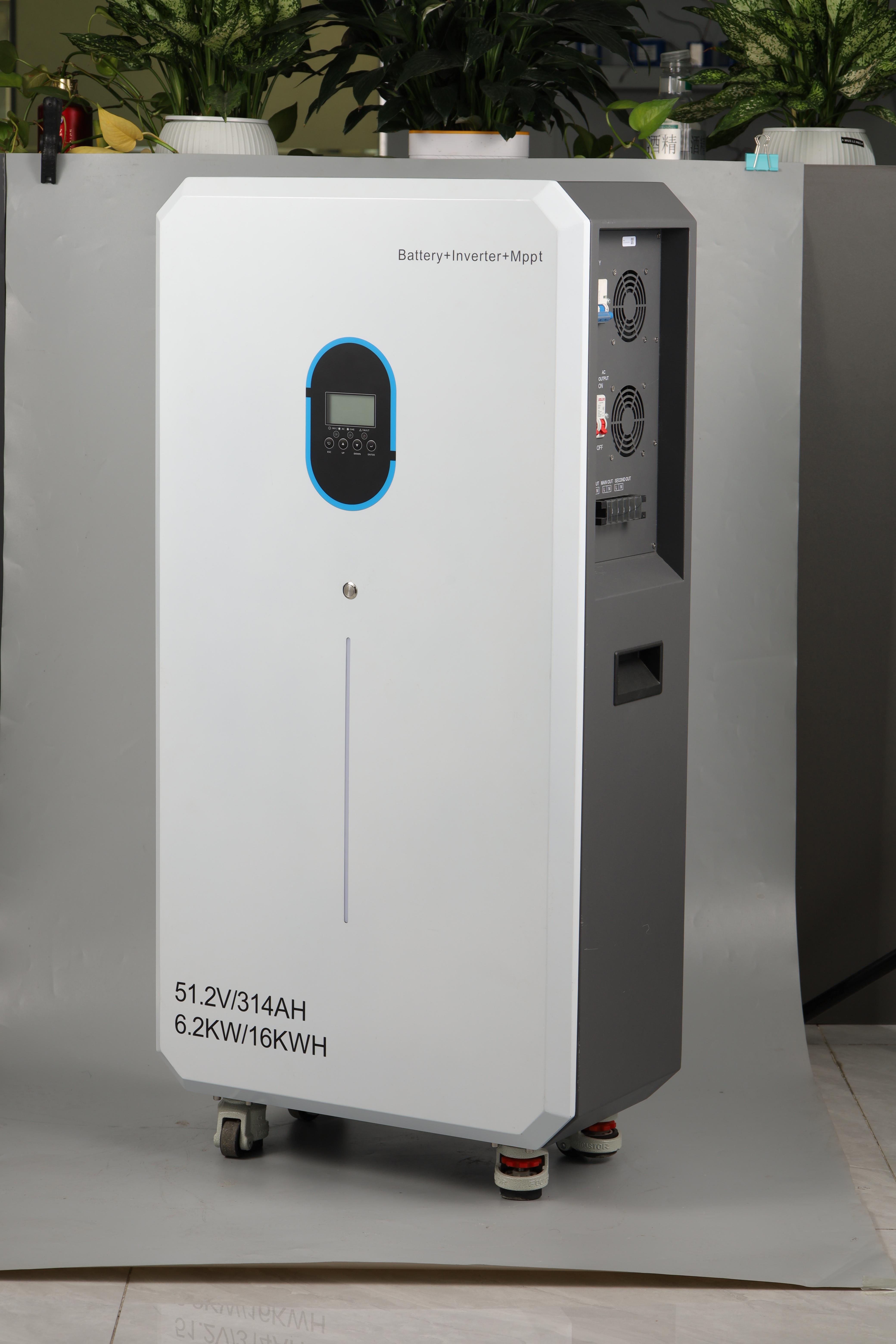
Those figures change the checklist rather than replace it. A high-altitude site adds the derating question. An off-grid site adds the question of what happens in the coldest week, when the charge window rather than the discharge window becomes the binding constraint. A backup application adds the question of whether the discharge cut-off is set conservatively enough that the pack still holds reserve when the grid returns.
The project-level inputs KangJun asks for before selection are the same ones a buyer should be able to answer: daily consumption, maximum simultaneous load, required backup duration, PV capacity, inverter model, communication protocol, installation space, local electrical requirements and transport documents. None of those is answered by an IP code or a temperature window on its own.
Qualification Sign-Off Checklist
| Item | Why it matters | What to request before sign-off |
|---|---|---|
| IP rating and test basis | Defines where the unit may be installed | IP test reference for the exact model; whether it covers enclosure or module only |
| Installation environment | IP21 does not cover splashing, immersion, dust or condensation | Written installation guidance for the proposed room or shelter |
| Charge temperature window | The binding constraint on cold sites | Charging window for the model; expected minimum ambient at the battery |
| Discharge temperature window | Wider than charge; not a location permission | Discharging window and the document that governs the installed unit |
| Nominal versus cut-off voltage | Setting the inverter correctly | 51.2 V nominal, 58.4 V charge cut-off, model-specific discharge cut-off |
| Charge current limit | Protects the pack during commissioning | Standard charge current range for the model |
| BMS protection table | Turns a bullet list into a verifiable document | Thresholds, recovery behaviour, balancing method, firmware version |
| Communication | Closed-loop control depends on a verified pairing | Port map, protocol document, tested inverter models and firmware |
| Certification scope | UN38.3 is transport safety, not market approval | UN38.3 report naming the model; destination approval with issuing body and validity |
Frequently Asked Questions
Does an IP21 rating mean a home battery can be installed outdoors?
No. IP21 covers protection against finger-sized solid objects and against vertically falling water drops. It does not cover splashing, spraying, immersion or fine dust. An outdoor position is inside the declared envelope only where the supplier’s installation guidance allows it and the location is sheltered from rain, spray and standing water. Condensation should be assessed separately, because the all-in-one sheet sets non-condensing humidity as its own limit.
Can a LiFePO4 home battery be charged below 0 °C?
For the models discussed here, the declared charging window is 0 °C to 45 °C on the KJ-48100-5 and KJ-48280-15, and 0 °C to 55 °C on the KJ48200-A / KJ48300-A and KJ48200-B / KJ48300-A. Charging below the stated minimum is outside the declared envelope, and the BMS is expected to limit or block charging in that condition. Whether a specific installation includes heating, and at what temperature the BMS inhibits charge, should be confirmed in writing for the exact model rather than assumed.
Is 58.4 V the same as 51.2 V on a home battery?
They describe different things on the same 16S pack. 51.2 V is the nominal voltage, the reference point used to describe the pack, equal to 3.2 V per cell when the pack figure is divided by sixteen cells (calculated). 58.4 V is the charge cut-off voltage at which charging stops, equal to 3.65 V per cell on the same basis (calculated). Setting an inverter’s charge voltage to 51.2 V stops charging well before the pack reaches its declared cut-off.
Why does the all-in-one datasheet list two operating temperatures?
The KJ6.2KW-16KWH sheet lists −10 °C to +65 °C in its battery section and −10 °C to +50 °C in its general section. These are separate entries for separate parts of the product, and neither is a charging temperature window. Buyers should ask the supplier to state which figure governs the battery module and which governs the unit’s electronics, and to provide the charging window separately.
Does a UN38.3 report qualify a battery for grid connection?
No. UN38.3 is a transport safety test. In KangJun’s file it is report RLCT2604057-01, issued by Rhenish-Lab on 24 April 2026 against UN ST/SG/AC.10/11 Rev.7, Subsection 38.3, scoped to lithium iron phosphate battery packs for transport safety. Grid connection, electrical installation and market access are governed by separate destination-market approvals; KangJun states that it supports customers through procedures such as SONCAP, SASO / SABER, EAC, INMETRO and SNI, and the applicable one should be confirmed per project.
Conclusion
A datasheet is most useful when it is read as a set of limits with a named owner. The IP code says where the unit may live, the temperature windows say when it may work, the voltage figures say how the inverter must be set, and the BMS and protocol documents say what happens when something goes wrong. Requesting those four items in writing, for the exact model and the exact site, is what separates a qualification sign-off from a specification sheet that merely looked reassuring.
KangJun Energy’s English-language product brochure, covering the residential storage range and portable power stations, is available for download: KangJun Energy product brochure (PDF).
Tem questões ou precisa de mais detalhes?
Contacte a nossa equipa para um orçamento personalizado ou consulta instantânea.
Solicitar orçamento
Preencha o formulário abaixo e a nossa equipa entrará em contacto com uma proposta personalizada.
Chat direto do WhatsApp
Prefere conversar em tempo real? Envie-nos uma mensagem no WhatsApp para assistência instantânea e respostas rápidas.
- Obter orçamento personalizado
- Partilhar fotos ou documentos
- Discuta as suas necessidades diretamente
Geralmente responde em 5–30 minutos durante o horário de expediente.