
Reading ISO9000 and CQC Certifications for China-Made Motorcycle Seats
Reading ISO9000 and CQC Certifications for China-Made Motorcycle Seats
Certification marks travel faster than factories do. A buyer in Manila, Milan or São Paulo evaluating a China-made motorcycle seat usually sees ISO9000 and CQC long before a sample reaches the bench, and the two marks are commonly collapsed into a single impression: this supplier is certified. They are different documents, issued against different criteria, and neither one is a performance guarantee for the product in the box.
The commercial stakes behind that impression are measurable. The global motorcycle seats market was valued at USD 7.42 billion in 2025 and is projected to reach USD 13.30 billion by 2032, growing at a CAGR of 8.69% (Market Research Future / Dataintelo). Within that market, the aftermarket distribution channel holds the largest share, accounting for approximately 62.3% of revenue (Dataintelo, 2025), while the Asia-Pacific region dominated with a revenue share of 38.5% in 2025, driven by high production and sales in China (Dataintelo, 2025).
Those three numbers explain why certification documents carry so much weight in seat sourcing. Most seats are not bought directly by vehicle assembly lines; they are bought through distributors, repair networks, parts retailers and accessory brands, and the people making those purchasing decisions rarely have a route to audit a production line on another continent. The certificate becomes the substitute for the site visit. This article reads the two credentials held by Zhejiang Xingrong Auto & Motorcycle Parts Co., Ltd. — ISO9000 quality management system certification and CQC certification — as documents rather than badges, and sets out what each one covers, what it does not, and where the compliance signal meets its boundary.
Why a Certificate Became a Screening Tool in Motorcycle Seat Sourcing
A motorcycle seat is a multi-input assembly. A base plate, a foam body, a cover, and the hardware that holds them together are produced on separate processes and joined at the end. In that structure, defects rarely come from a single visible operation; they appear at the interfaces, when a cover batch does not sit correctly on a foam batch, or when a base plate shifts slightly between tooling runs. Controlling interfaces requires documented process discipline rather than operator intuition, which is precisely the domain that a quality management system addresses.
At the same time, the compliance signal is easy to over-read. A certificate that appears on a supplier profile is often displayed without its scope statement, its validity date, or its issuing body. Buyers comparing a China-made motorcycle seat against alternatives frequently compare logos instead of scope, and the result is a screening process that filters out small, well-run factories while letting through suppliers whose documents are unrelated to the product being quoted.
The opportunity is straightforward: a buyer who knows how to read the two documents correctly gains a genuine evaluation advantage, because the information is already published. The problem is that almost nobody reads past the mark.
What ISO9000 Covers Inside a Motorcycle Seat Factory
ISO9000 is the family designation for quality management system standards. A factory holding ISO9000 quality management system certification has been assessed on how it defines and controls its processes: how incoming materials are received and identified, how production steps are specified, how records are kept, how nonconforming parts are segregated, and how corrective action is triggered when something goes wrong.
For a seat manufacturer, the practical meaning of that assessment is repeatability. An order of 5,000 motorcycle seats should not depend on which shift is running or which operator is on the cover line. A management system is what makes the tenth production run resemble the first.
What ISO9000 does not do is equally important. It does not measure foam compression, cover abrasion behaviour, stitching strength or water resistance. Those are product-level properties, confirmed by product specifications and by testing, not by a management system audit. And the certification does not automatically apply to every article a company makes: the scope statement determines which sites, processes and product families fall inside the audited boundary. A buyer who reads only the mark, and not the scope, cannot tell whether the certification reaches the seat line being quoted at all.
What CQC Certification Adds, and Where Its Reach Ends
CQC certification is issued within China's third-party certification system, associated with the China Quality Certification Centre. It is generally presented as evidence that a product or a production process has been evaluated against defined criteria by an accredited Chinese certification body. For an overseas buyer, that is useful information: it means the evaluation was performed by an external organisation rather than by the manufacturer itself.
The scope of the credential is a Chinese one. CQC is issued in China by a Chinese body, and it does not function as an authorisation to place a product on a foreign market. Where a destination country or region imposes mandatory requirements on vehicle components, those requirements are set by the destination authority, and a China-issued certificate cannot substitute for them. CQC should also not be conflated with compulsory market-access schemes, which operate on a different legal basis and serve a different purpose.
Reading a CQC document properly means reading five fields: the legal name of the certificate holder, the product or process scope, the criteria applied, the issuing body, and the validity period. If the holder's name does not match the entity that will sign the sales contract, the document may still be genuine but it belongs to a different company.
How One China-Based Motorcycle Seat Manufacturer Presents Its Compliance Position
Zhejiang Xingrong Auto & Motorcycle Parts Co., Ltd. is a manufacturer of motorcycle, electric vehicle and off-road vehicle seat cushions, based in Taizhou City, Zhejiang Province, China, and founded in 2015. The company states that it has passed ISO9000 quality management system certification and CQC certification — the two credentials discussed above — and that it has established long-term strategic partnerships with a number of domestic first-line brand general machinery factories.

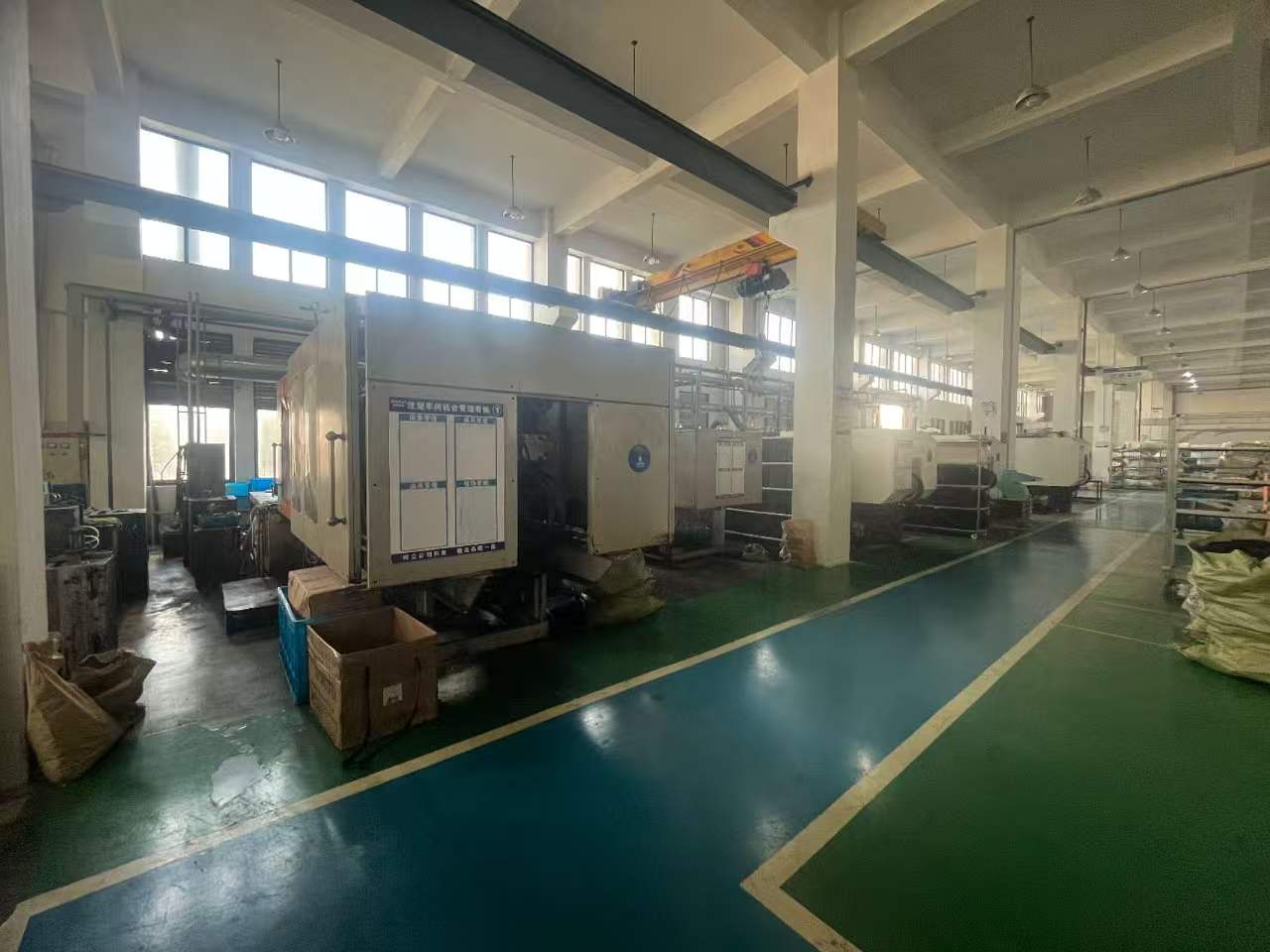
The operational figures published alongside those certifications matter more than the marks themselves for evaluation purposes. The plant covers 15,000 m² and employs 130 people. Annual output is stated at 1,800,000 units, and the product accessories self-production rate reaches 90%. A research and development team of five engineers supports the product programme.
The self-production rate is the detail most worth pausing on. A quality management system only governs what a factory performs in its own facilities; the more of the seat that is produced in-house, the more of the quality chain the certification actually reaches. A manufacturer that produces 90% of its seat components internally is applying its documented process control to the foam, the cover and the base, not merely to final assembly. The inverse is also true, and it is a fair question for any buyer to ask: the remaining share of accessory content is externally sourced, so unusual hardware or non-standard component requests may fall outside the audited in-house scope and should be confirmed item by item.
From Certificate to Shipped Order: The Product-Specific Controls
Certification describes the system; a purchase order is fulfilled by product-specific controls, and the two should be evaluated separately. On the product side, the manufacturer states that motorcycle seats undergo 100% pre-shipment testing before dispatch, and that after-sales service includes a 1-year warranty.
The material stack used in the seat programme consists of a PP plate, PU foam and PVC leather, with 80D high-density foam and a high-strength floor structure. Those three materials answer different buyer questions. The composite base plate carries load and defines how the seat sits on the frame. The 80D high-density foam governs compression behaviour over time, which is what separates a comfortable motorcycle seat from one that flattens within a season. The PVC leather cover handles abrasion and moisture at the surface, and is the reason the same platform can be offered as a leather motorcycle seat variant or as a waterproof motorcycle seat variant depending on the finish specified.
Customization is documented at three points: logo and brand application, leather cover design, and stitching line colour. Those three levers are where styling decisions — branding, cover finish and surface texture, and accent stitching — actually enter the production process. Production parameters that affect planning are a minimum order quantity from 50 pieces, a lead time of 25–35 days, and a monthly capacity of 50,000 pieces, with both OEM and ODM production modes available.
Applications and Use Cases Behind the Certification
The product is designed for motorcycle seating and replacement applications, including repair and replacement of original seats. That positioning is consistent with where the market volume actually sits: with the aftermarket channel holding approximately 62.3% of seat revenue, the dominant use case is replacement rather than new-vehicle assembly.
Within that use case, the product has been used by motorcycle manufacturers, motorcycle repair shops, motorcycle parts retailers and motorcycle accessory brands — four buyer types with different requirements. A repair shop buys for fit and turnaround; a parts retailer buys for shelf coverage across popular platforms; an accessory brand buys for differentiation in cover design and branding; a manufacturer buys against a specification. A factory that holds both ISO9000 and CQC and produces its own components can serve all four, because the variable in each case is the order configuration rather than the underlying process.
Scooter and dirt bike seats form the two product families, with model coverage including NMAX, XMAX, Aerox, ADV150, ADV160, Forza, PCX and Click. These are the platforms that dominate the scooter-heavy markets of Southeast Asia, where Honda, Yamaha and Vespa models account for a large share of aftermarket demand. For buyers sourcing in those markets, the relevant question is not whether a factory can produce a seat for a given platform, but whether it can hold consistent fit and finish across repeated orders for that platform.
The clearest documented case is a programme in Lebanon: 5,000 pieces, supplied over a two-year relationship, for motorcycle parts replacement. The reported outcomes were a great seating feel, good visual effect, and waterproof performance. That combination is what a replacement buyer is ultimately paying for — the seat has to feel right, look right on the bike, and survive weather.
The product has been supplied to clients in 11 countries: China, Iran, Italy, South Korea, Lebanon, Malaysia, Mexico, the Philippines, Turkey, Taiwan and Vietnam. The export markets named by the manufacturer are Southeast Asia, Europe, the Middle East and South America.
Market Trends That Change How Much Certification Is Worth
Three verified market trends shape how a buyer should weigh ISO9000 and CQC today.
First, distribution concentration. The aftermarket distribution channel holds approximately 62.3% of motorcycle seat revenue (Dataintelo, 2025). Certification therefore matters most in exactly the channel where buyers have the least direct visibility into production, which is why it functions as a screening tool at all.
Second, production concentration. Asia-Pacific accounted for a 38.5% revenue share in 2025, driven by high production and sales in China (Dataintelo, 2025). As more China-made seats move into export channels, the certificate becomes the portable form of process evidence that crosses borders ahead of the shipment.
Third, material shift. Leather remains a premium material for motorcycle seats, while synthetic options such as vinyl and foam are increasingly used to deliver waterproof and soft-surface features in the mid-range segment (Fortune Business Insights, 2025). A PVC leather and PU foam construction sits directly inside that trend, which means the material specification, not the certificate, is where waterproof and comfort claims are actually made and verified.
Compliance-Signal Suppliers Compared with Low-Barrier Alternatives
Most buyers comparing China-made motorcycle seats are choosing between four structural options rather than between two brands. The table below compares what each option typically provides as compliance evidence and what the buyer must add to close the gap.
| Supplier archetype | Compliance evidence typically available | What the buyer must verify independently |
|---|---|---|
| Factory with documented quality management certification and in-house component production | Quality management system certification, product certification, stated pre-shipment testing and warranty terms | Certificate scope and validity; whether the certified process covers the exact product family quoted; specification and sample approval |
| Export intermediary or trading company | Usually certificates belonging to upstream factories, presented on the intermediary's behalf | Which legal entity holds the certificate and which entity performs production; who carries warranty responsibility |
| Spot-market or unbranded workshop supply | Frequently no auditable management-system documentation; quality is demonstrated by the sample alone | Incoming inspection on every shipment; the buyer absorbs the entire quality control function |
| Vehicle-level OE tier supplier | Vehicle-level approval documentation tied to a specific platform and customer programme | Whether that programme documentation is transferable to an aftermarket or independent-brand requirement |
Low-barrier supply is not automatically worse. It is cheaper on unit price because quality control has been transferred out of the factory and into the buyer's warehouse, and for a buyer with strong incoming inspection and a purely price-driven end market, that trade can be deliberate rather than accidental. The difference is whether the trade is chosen or inherited.
Boundaries of the ISO9000 and CQC Credential Set
Three limits should be stated plainly, because over-reading these documents is the most common evaluation error.
- They are not vehicle-level seat approval. UN Regulation No. 17 (ECE R17) establishes uniform provisions for the approval of vehicle seats, anchorages and head restraints, and is a principal approval framework for seating in the European context. ISO9000 addresses management systems and CQC is issued within China's certification system. A buyer whose project requires vehicle-level approval for on-road seating should treat these credentials as management and market evidence, and confirm the applicable approval requirements for the destination separately.
- A certificate is a scope document, not a test report. Neither credential certifies a specific foam density, cover material performance or load result for a particular seat model. Product-level confirmation comes from the specification agreed in the purchase order and from the factory's 100% pre-shipment testing, which verifies conformity to that specification on a per-order basis.
- Capacity is shared with existing demand. Export sales represent approximately 20% of the manufacturer's output, alongside long-term partnerships with domestic general machinery factories. A stated annual capacity of 1,800,000 units and a monthly capacity of 50,000 pieces describe the ceiling, not the available slot; new programmes should be planned against the stated 25–35 day lead time and confirmed against the required arrival window rather than assumed to be immediately free.
A Verification Framework for Buyers Reading These Certificates
The following sequence converts a certificate claim into a decision. It can be applied to any China-based motorcycle seat supplier, not only to the one discussed here.
- Match names. Confirm the legal name on the certificate is the entity that will appear on the contract and the commercial invoice.
- Read the scope. Check whether the certified product family includes the seat type being quoted, or only adjacent product lines.
- Check currency. Confirm the certificate is valid at the time of the order, and identify the issuing body.
- Separate the layers. Distinguish management-system certification from product-level evidence. Ask for the specification that governs the order.
- Ask what testing means here. Establish whether pre-shipment testing is sampling or full inspection, and against which acceptance criteria.
- Map destination requirements separately. Identify in advance whether the destination market requires vehicle-level approval for the seating application.
- Validate with a sample order. A first order at the minimum quantity of 50 pieces, followed by evaluation, is a lower-risk way to test fit, comfort and finish than committing to volume on documents alone.
- Confirm the commercial envelope. Lead time, monthly capacity, customization points and warranty terms should all be recorded before negotiation moves to price.
Future Outlook
As the aftermarket channel continues to hold the largest share of seat revenue and China remains the production centre of the Asia-Pacific region, certification is on a path to becoming a minimum screening criterion rather than a differentiator. When every credible supplier in a category displays the same two marks, the marks stop discriminating between them.
What will discriminate is what sits behind the certificate: how much of the seat is produced in-house, whether the material stack is specified rather than improvised, whether per-order testing is defined, and whether the supplier can state its lead time, capacity and customization levers precisely enough for a buyer to plan around them. For overseas buyers in Southeast Asia, Europe, the Middle East and South America, the sensible posture for the next sourcing cycle is to keep reading certificates, but to read the scope statement before the logo, and to treat everything downstream of the certificate as the actual evaluation.
FAQ
What does ISO9000 certification cover for a Chinese motorcycle seat factory?
ISO9000 refers to the family of quality management system standards. A seat factory holding ISO9000 certification has been assessed on how it documents and controls its processes: incoming material handling, defined production steps, record keeping, handling of nonconforming parts, and corrective action. The certification addresses the management system rather than the performance of an individual seat, so it does not certify foam density, cover material, load behaviour or weather resistance. Those are product-level properties confirmed by specification and testing.
Is CQC certification the same as approval to sell motorcycle seats in Europe?
No. CQC certification is issued within China's third-party certification system by a Chinese certification body, so it is a China-issued credential rather than a European approval. Where a European project requires vehicle-level seat approval, the relevant framework is UN Regulation No. 17 (ECE R17), which establishes uniform provisions for the approval of vehicle seats, anchorages and head restraints. ISO9000 and CQC are best treated as management and market credentials, with destination-specific approval requirements confirmed separately.
How can a buyer verify that a certificate applies to the motorcycle seats being quoted?
Read the scope statement rather than the logo. Four checks cover most of the risk: the legal name of the certificate holder must match the entity that will sign the contract; the product scope must include the product family being purchased rather than an unrelated line; the certificate must be current; and the issuing body must be identifiable. If any of these cannot be confirmed from the document itself, the certificate should be treated as unverified until the factory or the issuer supplies the missing detail.
What quality checks are performed before a motorcycle seat order is shipped?
Zhejiang Xingrong Auto & Motorcycle Parts Co., Ltd. conducts 100% pre-shipment testing on motorcycle seats, and after-sales service includes a 1-year warranty. Buyers should still define their own acceptance criteria in the purchase specification, covering cover material, foam density, stitching, base plate and packaging, because pre-shipment testing confirms that an order matches the agreed specification rather than confirming that the specification itself suits the destination market.
Which export markets do China-based motorcycle seat manufacturers with these certifications serve?
Zhejiang Xingrong exports to Southeast Asia, Europe, the Middle East and South America, with export sales representing about 20% of output, and reports having supplied clients in 11 countries: China, Iran, Italy, South Korea, Lebanon, Malaysia, Mexico, the Philippines, Turkey, Taiwan and Vietnam. For a new buyer, the more useful question is not how long the country list is, but whether the factory has already handled the destination's documentation, packaging and after-sales requirements for a seat programme comparable to the one being quoted.
Can OEM or ODM motorcycle seats be customized when the supplier holds ISO9000 and CQC?
Yes. Certification and customization are separate tracks and neither restricts the other. Zhejiang Xingrong operates both OEM and ODM production modes, with documented customization at three points: logo and brand application, leather cover design, and stitching line colour. The planning parameters that matter are a minimum order quantity from 50 pieces, a lead time of 25–35 days, and a monthly capacity of 50,000 pieces. Buyers customizing a seat for the first time should clarify the sample approval steps and confirm where those three customization points enter the process.
Reference document: the company's motorcycle seat cushion catalogue is publicly available at STARON SEAT CUSHION CATALOG NEW (PDF).