
Reading Laryngoscope Spec Sheets Side by Side: A Buyer Comparison
Reading Laryngoscope Spec Sheets Side by Side: A Buyer Comparison
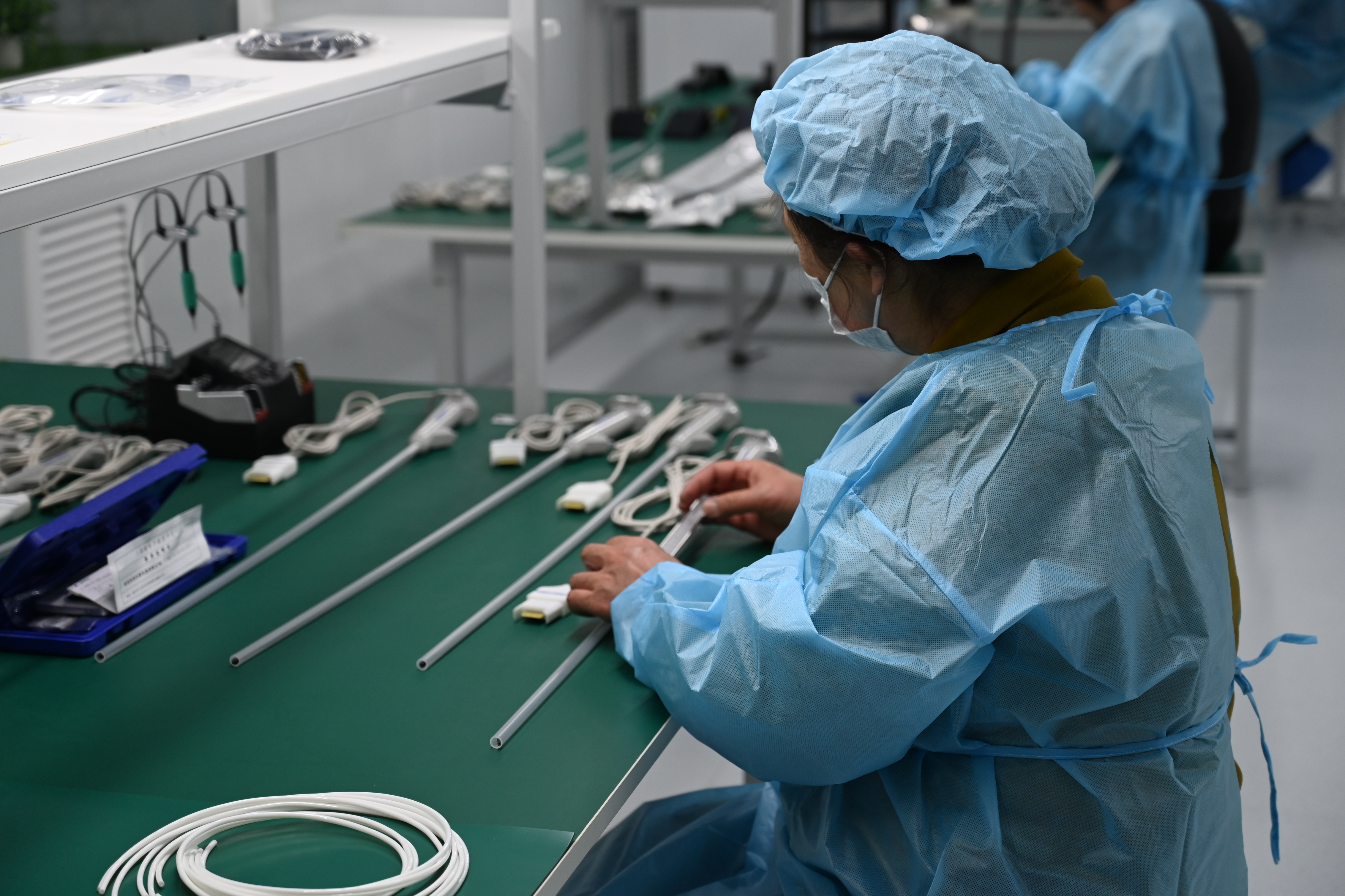
Spec sheets describe a device; production and acceptance conditions determine what actually arrives. Image: Unicorn manufacturing base.
Three laryngoscope specification sheets read in sequence look like a ranking. Read side by side, they stop being one. Unicorn's BMS-FA states ≥3.72 lp/mm with a ≥60° field of view and a 20–100 mm depth of field; BMS-YA states the same ≥3.72 lp/mm and pairs it with a PC blade; BMR states 23.51 LP/mm, >80°, 5–100 mm and >800 Lux. The figures differ in notation, in what they measure, and in the design they belong to.
This is a buyer's comparison rather than a product tour. It takes the published figures for BMS-FA, BMS-YA and BMR from Unicorn (Jiangsu Unicorn Electronic Technology Co. Ltd., a Chinese manufacturer of endoscopy systems and video laryngoscopes) and asks two questions of each number: what does it actually specify, and what would a procurement team have to confirm before it could carry weight in a tender? The commercial terms sit in the same comparison, because a two-unit minimum order, FOB or CIF delivery, a 30/70 payment split and pre-shipment acceptance testing shift risk as much as an optical figure does.
lp/mm and LP/mm: one idea, two notations, no shared scale
Line pairs per millimetre describes how many alternating light and dark line pairs an imaging system can resolve within one millimetre; the higher the value, the finer the detail the system is specified to separate. On the sheets compared here the notation changes — lower-case lp/mm for BMS-FA and BMS-YA, upper-case LP/mm for BMR — but capitalisation is a typesetting difference, not a different unit. A buyer should not read the shift in case as a shift in meaning.
The real obstacle is comparability. A resolution figure depends on the test target, the contrast between its lines, the working distance at which the target was imaged, the illumination used, and whether the measurement covered a lens, a scope, or the whole chain from camera to monitor. A single-line specification rarely carries those conditions. Without them, ≥3.72 lp/mm and 23.51 LP/mm cannot be divided into a performance ratio, and the two decimal places in 23.51 should not be mistaken for evidence of superiority. Precision is a statement about how a number is written; comparability is a statement about how it was obtained.
The qualifiers deserve equal attention. Both ≥ and > mean the value is a threshold the device is specified to meet or exceed, not a measured result from an individual unit. A threshold is useful in a purchase specification because it can be tested; it is not a measurement that can be ranked against another manufacturer's measured average.
The three sheets side by side
The table holds only the figures used in this comparison. A dash means the value was not part of this comparison set; it does not mean the model lacks the capability.
| Model | Resolution as stated | Field of view | Depth of field | Illuminance | Other figures in this comparison |
|---|---|---|---|---|---|
| BMS-FA | ≥3.72 lp/mm | ≥60° | 20–100 mm | — | 3.0-inch LCD; 1600×1200 camera resolution; IPX7 ingress rating |
| BMS-YA | ≥3.72 lp/mm | — | — | — | PC (polycarbonate) blade |
| BMR | 23.51 LP/mm | >80° | 5–100 mm | >800 Lux | — |
Two things the table does not settle. First, the material list attached to the range — 304 stainless steel, aluminium alloy, PC and TPU/PPSU — is only partly mapped on the sheets: PC is named for the BMS-YA blade, while the stainless-steel, aluminium-alloy and TPU/PPSU designations have to be confirmed component by component. Second, the BMS-FA sheet also carries a 3.0-inch LCD and a 1600×1200 camera resolution, which sit on a different axis from lp/mm and are read separately below.
BMS-FA: a stated working range plus a separate camera figure
BMS-FA's optical figures are a resolution threshold of ≥3.72 lp/mm, a field of view of at least 60°, and a depth of field from 20 mm to 100 mm. Taken together, the field of view and the depth of field describe the envelope the optics are specified for: sharp focus from 20 mm out to 100 mm, across a field at least 60° wide. The near limit is the number worth pausing on. Twenty millimetres is a working distance, not a contact distance — the sheet makes no claim about sharpness inside 20 mm, which matters if a routine brings the tip close to tissue.
The camera and display figures answer a different question. A 1600×1200 camera resolution and a 3.0-inch LCD describe the electronic and display side of the chain; lp/mm describes optical resolution. A sensor can out-resolve the optics in front of it, and a display can fail to show what the optics deliver, so the two numbers should be read together rather than substituted for one another. Published product information for BMS-FA also lists an IPX7 ingress rating; ratings are model-specific and should be confirmed separately for the other two models rather than assumed across the range.
BMS-YA: same resolution, a different component question
BMS-YA states the same ≥3.72 lp/mm as BMS-FA and adds a PC blade. For a buyer comparing the two, that is the useful finding: resolution does not separate these models, so any decision between them rests on the blade and on the remaining differences the two sheets record.
Polycarbonate is a material designation, and the figures compared here do not attach a reprocessing specification to it. The questions that follow belong in writing to the supplier rather than in an assumption: whether the blade is declared as single-use or reusable, which disinfection or sterilisation routine is compatible with PC, whether any cycle limit applies, and whether the blade is an orderable spare part. A material named on a specification sheet is the start of those questions, not the answer to them.
BMR: the densest sheet, and the one needing the most qualification
BMR's sheet carries four figures, and each has to be read on its own terms: 23.51 LP/mm, >80°, a 5–100 mm depth of field, and >800 Lux.
The 23.51 LP/mm figure is written to two decimal places, which makes it look like the most precise number in the comparison. It is the figure most in need of the test conditions described earlier: target, contrast, distance, and whether the value describes optics or an end-to-end system. Until those are supplied it should be recorded as the manufacturer's stated threshold, not as a measured advantage.
The field of view and depth of field are easier to use. >80° is wider than the ≥60° stated for BMS-FA; a wider field shows more of the surrounding anatomy at a given working distance, and on a fixed sensor it also spreads the same pixels across a larger angle, so the trade between context and centre detail depends on the display and on what the operator needs to see. The 5–100 mm depth of field shares BMS-FA's 100 mm far limit but moves the near limit from 20 mm to 5 mm. That 15 mm gap is the single most comparable distinction in the whole set, because both models state a depth of field with the same far boundary and differ only at the near end.
Illuminance needs the most care. Lux measures light arriving at a surface, so the value depends on the distance between the light source and that surface and on the instrument used. A >800 Lux figure without a stated measurement distance cannot be compared with another lux value and should not be read as a brightness ranking. Ask for the distance and the method, then test at the distance the routine actually uses.
Rigid and flexible designs: why the columns do not line up
Unicorn's range covers video laryngoscopes and visual flexible laryngoscopes, and the architectural difference between a blade-based device and a flexible endoscope-style device is not incremental. A blade fixes the geometry: it sets the working distance and the approach angle, and the optics are built around it. A flexible device adds a bending section and a different illumination path, so the same column headings — resolution, field of view, depth of field — describe measurements taken under different conditions.
That is the second reason three sheets cannot be collapsed into one ranking. Where a shortlist mixes blade-based and flexible devices, the buyer's first check is whether a figure was measured on the same architecture; the second is whether the routine needs the fixed geometry of a blade or the reach of a flexible scope. A number that performs well in one architecture does not transfer to the other, and the same supplier can legitimately publish both under the same headings.
What each figure implies for a given clinical routine
The figures become useful when they are attached to a routine rather than to a ranking. The rules below are conditional: they describe what to check, not what a device will achieve.
- Working distance. If intubation is performed at a comfortable stand-off distance, BMS-FA's 20–100 mm range is specified to cover it. If the routine brings the tip close to structures, BMR's 5 mm near limit is the figure to test against, because it is the only one of the two specified to hold focus that close.
- Field of view. A ≥60° field concentrates the image on the centre; a >80° field shows more around it. Neither is better in the abstract — procedures that rely on surrounding context and procedures that need a large central view pull in different directions.
- Blade material and reprocessing. PC on BMS-YA, and 304 stainless steel, aluminium alloy and TPU/PPSU across the range, tie the device to the cleaning routine, the sterilisation method and the consumable plan. A blade that does not fit a department's reprocessing workflow is a workflow problem regardless of its resolution figure.
- Ingress protection. IPX7 is listed for BMS-FA. Confirm the rating, and its test basis, for each model in the shortlist instead of assuming it carries across.
- Illuminance. Ask for the distance behind any lux figure, and compare values at the distance the routine uses.
One boundary belongs with all of these. Resolution, field of view, depth of field and illuminance describe what an imaging chain is specified to deliver. They do not state first-pass success, glottic view grade or time to intubation, and this comparison makes no such claim. A buyer who needs outcome evidence has to request clinical literature or reference sites as a separate item, and should read a specification sheet as a statement of device characteristics rather than of clinical results.
The commercial half: MOQ, Incoterms, payment split and acceptance
A minimum order quantity of two units is low enough to make a structured evaluation practical. Two units can go into two different routines, or one can be held back as a reference against the other, and the evaluation order can be placed in the same model and configuration as the production order — which reduces the risk that the unit tested and the unit purchased are not the same thing.
FOB and CIF place different obligations on the parties. Under FOB the seller delivers the goods on board at the named port and the buyer arranges and pays the main carriage; under CIF the seller arranges and pays carriage and insurance to the named destination port, while risk normally passes at shipment. That gap between where the cover ends and where risk passes is the part buyers miss: a CIF price that reads as inclusive still leaves the buyer exposed from the moment the goods are on board, and still leaves open the question of who manages a damage claim.
The 30% deposit with 70% before shipment is the term that most changes the buyer's position, because payment completes before the goods arrive. That is a common arrangement in this trade, but it relocates leverage: the last point at which the buyer can withhold money is before shipment, which makes pre-shipment acceptance testing the control that carries the commercial risk.
Acceptance testing turns the specification sheet into a purchase condition, and it should be written into the order rather than agreed verbally. At minimum it should state which model and configuration is in each carton, which figures are checked and by what method, the pass threshold for each, who performs the test and where, what record travels with the goods — test report, serial numbers, certificate copies — and what happens if a unit fails. The test should use the same conditions as the specification it verifies; checking a resolution threshold under different lighting, or at a different distance from the one specified, tests something else.
Portfolio claims and model-level claims are not interchangeable
Unicorn's product documentation also describes configurations built from seven metal lenses, three support rods, three hard lenses and two difficult-airway lenses — fifteen combinations in total, spanning age groups and both standard and difficult airways — together with a low-power chip design quoted at up to five hours of continuous operation on a single full charge and an integrated modular structure described as allowing on-site component replacement in about a minute. Those are range-level statements rather than model-level ones. Before any of them enters a purchase order, the buyer should confirm which model and configuration they apply to, because a claim that travels across a portfolio cannot be acceptance-tested against a single part number.
The supplier behind the sheets
Unicorn publishes a 40,000 m² manufacturing base, an annual output of 12,000 units, a team of 50–100 employees including more than 20 engineers, seven regional offices, a 70% export ratio, and equipment investment exceeding RMB 160 million covering 3D printing, CNC precision manufacturing, medical-grade injection moulding and Class 100 and Class 1000 sterile production areas, alongside BSL-1 and BSL-2 R&D centres. The company was founded in 2020 and states FSC and CE certification together with ISO 9001 and ISO 13485 quality management system certification.
Those are company-published figures and should be treated as such. Two verification steps convert them into procurement evidence. ISO 13485:2016 is the international quality management system standard for organisations involved in the lifecycle of medical devices, published by ISO in 2016, and a certificate carries weight only when its number, issuing body, scope and validity can be checked in the issuing body's register; the certificate number recorded against this supplier in its published materials is UKZB25MD30140R0S. CE marking, for its part, is a market-access requirement under Regulation (EU) 2017/745 rather than a performance rating, so the useful questions are which device class the model falls into and which notified body, if any, was involved. ISO 7376:2020, the laryngoscope-specific standard for devices used for tracheal intubation, is a reasonable clause to cite in a technical requirement — and a reasonable question to ask is whether a specific model is declared against it.
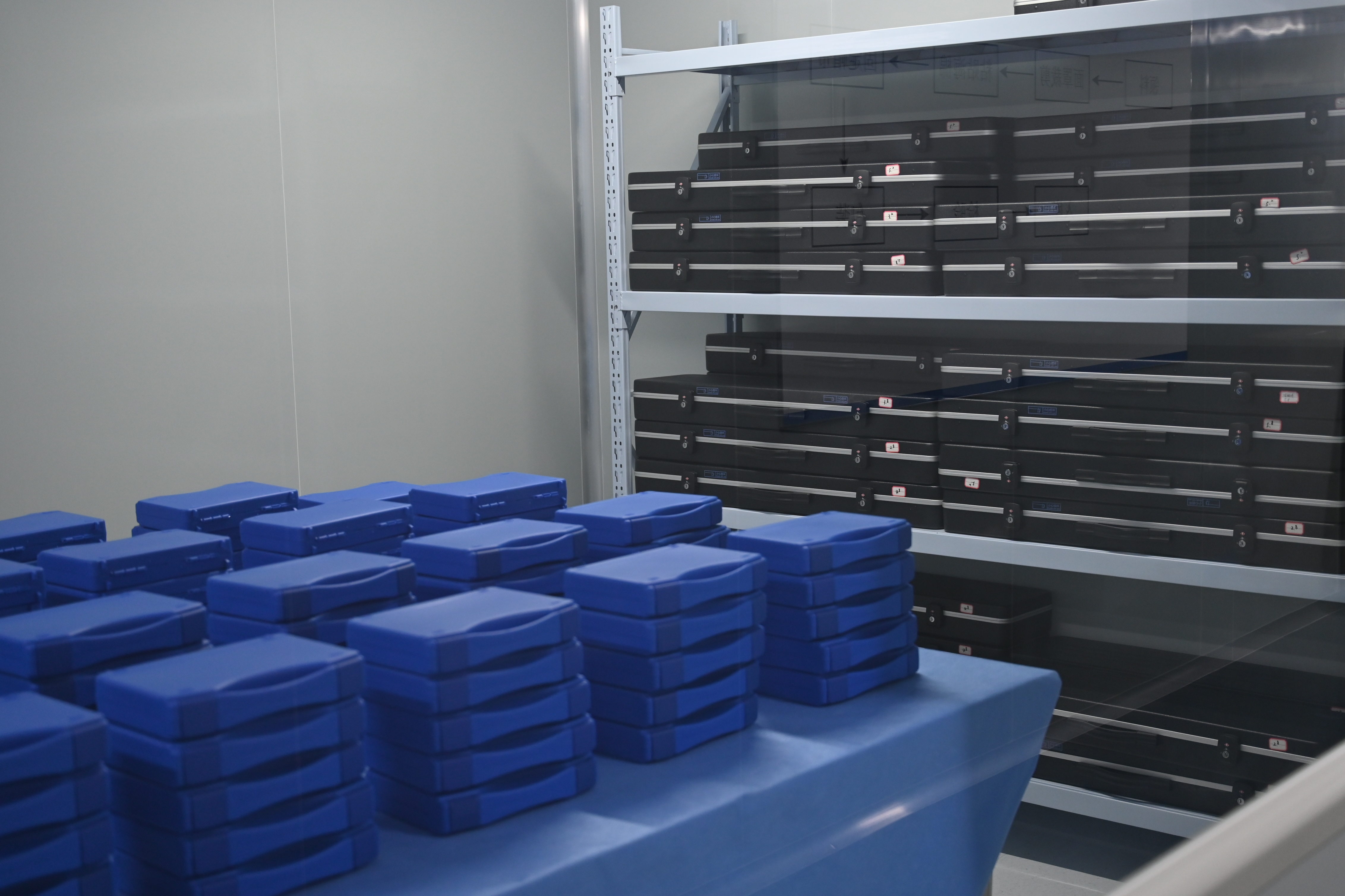
Company-published capability figures are useful for screening, but they need certificate scope and acceptance terms beside them before they support approval.
Why the wider market keeps both questions open
Grand View Research's video laryngoscope report, as recorded in the verified data set behind this comparison, estimates the global market at approximately USD 784.7 million in 2024 and projects USD 2,798.1 million by 2033 at a 14.9% compound annual growth rate, with North America at about 37.8% of 2024 revenue and reusable devices at 65.8% of the usability segment. These are third-party estimates and a projection resting on its own assumptions, not measurements of any single supplier's share. Their relevance here is narrow: reusable and single-use configurations coexist at scale, so a comparison that stops at optics and ignores blade material, reprocessing and consumable supply answers only half of the buyer's question.
Building your own side-by-side sheet
- Normalise the units first. Record whether each figure is lp/mm or LP/mm, what it measures — lens, scope or full chain — and the conditions behind it.
- Separate thresholds from measurements. Mark every ≥ and > and request the test method that produced the number.
- Translate optics into routines. Convert depth of field and field of view into working distances the clinical team recognises.
- Map materials to components. Establish which part is 304 stainless steel, aluminium alloy, PC or TPU/PPSU, and what reprocessing each supports.
- Put the commercial terms in the same table. MOQ, Incoterm, payment split, packaging and documentation belong beside the optical figures, not in a separate file.
- Write the acceptance protocol before the order, not after the deposit.
Conclusion
A side-by-side reading of BMS-FA, BMS-YA and BMR does not produce a winner. It produces three specification profiles: a stated 20–100 mm working range with a ≥60° field and a separate electronic imaging chain on BMS-FA; the same resolution threshold with a PC blade on BMS-YA; a wider field, a closer 5 mm near limit, a stated illuminance and a decimal-precise resolution figure on BMR. The comparison becomes a decision only when those profiles meet a routine, a reprocessing method and a set of commercial terms. Buyers who rank the models on 23.51 against 3.72 are comparing two numbers written for two different purposes. Buyers who test each figure against the routine, then tie the result to a two-unit order, a named Incoterm, a 30/70 payment split and a written acceptance protocol are comparing the things that actually decide the purchase.
Reference: Unicorn Product Catalog (2026) — PDF.
FAQ
Can BMS-FA, BMS-YA and BMR be ranked by their resolution figures alone?
No. BMS-FA and BMS-YA state ≥3.72 lp/mm and BMR states 23.51 LP/mm, but the notation, the underlying measurement conditions and the device architecture differ, so the figures do not share a scale. A ranking would require the same test method and comparable device types. As published, each figure records what that sheet asserts, not a relative image-quality position.
What is the difference between lp/mm and LP/mm on a laryngoscope specification sheet?
They express the same idea — line pairs per millimetre, a spatial-resolution figure — and the difference in capitalisation is notation rather than a different unit. What matters is what the figure describes (a lens, a scope, or the full camera-to-monitor chain) and the conditions under which it was measured, such as target contrast and working distance.
Why do BMS-FA and BMR state different depth-of-field ranges?
BMS-FA states 20–100 mm and BMR states 5–100 mm. The far limit is identical at 100 mm; the near limit differs by 15 mm. That gap determines how close the tip can be while remaining inside the specified sharp range, so it matters for close work and matters much less for procedures conducted at a normal working distance.
What does >800 Lux tell a buyer about BMR?
It states a minimum illuminance value. Lux measures light arriving at a surface and therefore depends on the distance between the light source and that surface, as well as on the measuring instrument. Without the stated distance and method, the figure cannot be compared with another lux value or read as a brightness ranking; the measurement distance should be requested and then tested at the distance the routine uses.
What do a MOQ of 2 units, FOB or CIF terms and a 30/70 payment split change in the decision?
A minimum of two units allows a small evaluation order in the same configuration as later production. FOB and CIF differ in who arranges and pays carriage and insurance and where risk passes, so the transport term should be chosen with the damage-claim route in mind. A 30% deposit with 70% before shipment means payment completes before delivery, which makes pre-shipment acceptance testing — with written figures, methods, thresholds and records — the buyer's main control point.
Tem questões ou precisa de mais detalhes?
Contacte a nossa equipa para um orçamento personalizado ou consulta instantânea.
Solicitar orçamento
Preencha o formulário abaixo e a nossa equipa entrará em contacto com uma proposta personalizada.
Chat direto do WhatsApp
Prefere conversar em tempo real? Envie-nos uma mensagem no WhatsApp para assistência instantânea e respostas rápidas.
- Obter orçamento personalizado
- Partilhar fotos ou documentos
- Discuta as suas necessidades diretamente
Geralmente responde em 5–30 minutos durante o horário de expediente.