
Reading Pool Surface Pump Specs and Certifications
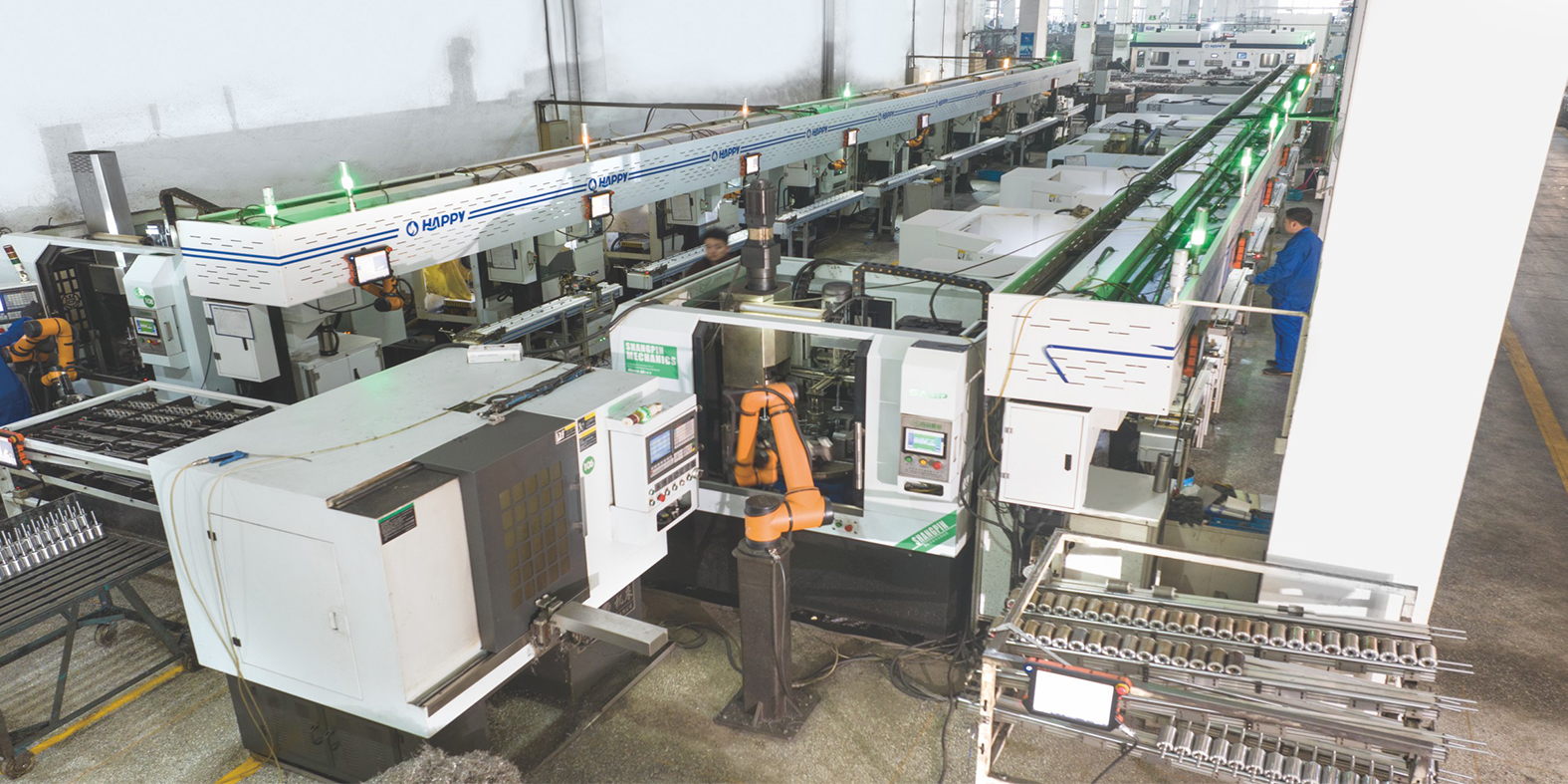
Surface pump assembly lines at HAPPY's Wenling production base.
Surface pumps represented 57.63% of the global pump market by type in 2025, according to Mordor Intelligence. In swimming pool systems, the surface pump is the most widely adopted configuration for circulation and filtration because it keeps the motor above ground, simplifies service access, and fits naturally onto a pool equipment pad. For buyers moving from research into evaluation, the challenge is no longer identifying the pump type; it is verifying that a specific pump carries the right certifications, offers parameters that match the installation, and comes from a manufacturer that can document both.
The Information Gap in Pool Surface Pump Procurement
Surface pumps for pools are sold in a crowded field. Many models look similar and sit in the same power classes, yet the difference between a compliant, well-documented pump and an unverified import is not visible on the outside. Catalog pages usually state flow and head, but they often skip certification scope, standard editions, protection ratings, and material composition. For pool applications—where pumps run outdoors, in damp conditions, and on the same electrical circuits as lighting and control systems—those details determine whether the pump can be legally sold in the target market, installed safely, and serviced over a realistic lifespan.
Two documentation layers matter most. The first is market compliance. Water pumps sold in the EU must carry CE marking, supported by the Low Voltage Directive 2014/35/EU, the Electromagnetic Compatibility Directive 2014/30/EU, and, where relevant, the Machinery Directive 2006/42/EC. The second is standards-level verification. Internationally, IEC 60335-2-41:2024 is the reference safety standard for household and similar electrical pumps, covering temperature limits and connection requirements. A buyer who accepts a CE mark without inspecting the underlying certificate may later find that the documentation covers a different model series, an older standard edition, or a narrower scope than the quoted configuration.
What Certification Documents Should Reveal
A useful certificate states the issue date, certificate number, issuing body, product scope, market scope, and the exact standards or directives assessed. The following examples come from the pump series manufactured by Zhejiang Happy Pump Industry Co., Ltd. (HAPPY). They illustrate the level of documentation that buyers should request from any surface pump supplier before placing an order.
LVD Certification
HAPPY's pump series is certified to the Low Voltage Directive under certificate number OViS202507249L, issued by OViS-CERT for the EU market. The certificate covers the Pumps product and lists the following standards:
- EN 60335-1:2012+A11:2014+A13:2017+A1:2019+A14:2019+A2:2019+A15:2021+A16:2023
- EN IEC 60335-2-41:2021+A11:2021
- EN 62233:2008+AC:2008
EN IEC 60335-2-41 is the harmonized safety standard for pumps for liquids in household and similar applications. It is the European adoption of the IEC 60335-2-41 framework, whose 2024 edition is now the international safety benchmark for this product class.
EMC Certification
The same pump series is certified for electromagnetic compatibility under certificate number OViS202507249E, issued by OVIS-CERT. The applicable standards are:
- EN IEC 55014-1:2021
- EN IEC 55014-2:2021
- EN IEC 61000-3-2:2019+A1:2021+A2:2024
- EN 61000-3-3:2013+A1:2019+A2:2021
EMC compliance matters in pool installations because pumps share electrical circuits with lighting, pool covers, sensors, and control panels. Excessive electromagnetic emission can disturb nearby equipment, while weak immunity can cause nuisance tripping or controller errors.
CE Attestation of Conformity
HAPPY's Pumps product line also holds a CE Attestation of Conformity, certificate number CE-5072-160326, issued by ECES. The attestation declares conformity with the 2006/42/EC Machinery Directive, the 2014/30/EU Electromagnetic Compatibility Directive, and the 2014/35/EU Low Voltage Directive, and it applies to the EU market.
Read together, these three documents give a buyer a complete compliance picture: LVD covers electrical safety, EMC covers electromagnetic behavior, and the CE attestation connects the product to the applicable EU directives. The documents also allow cross-checking, since the LVD and EMC certificates were issued by two separate bodies and the CE attestation by a third. Independently issued documents are easier to verify than a single self-declaration.
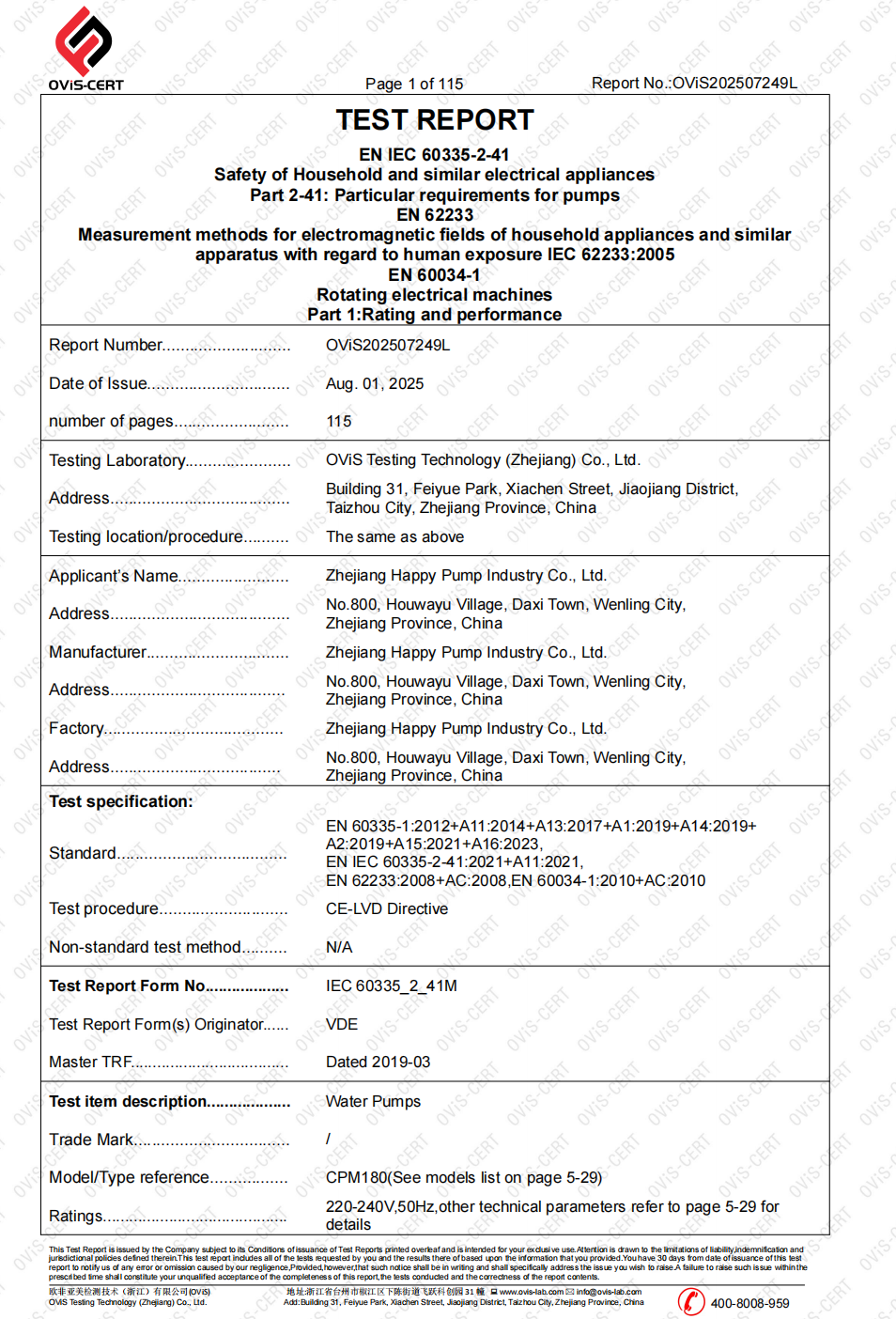
The LVD certificate covers the HAPPY Pumps product for the EU market under certificate OViS202507249L.
Reading Parameters on a Pool Surface Pump
After certification, the evaluation shifts to performance parameters and construction. HAPPY's Pumps product portfolio covers a broad envelope, and the range below describes the documented portfolio rather than a single model:
| Parameter | HAPPY Portfolio Range | Relevance to Pool Use |
|---|---|---|
| Power | 0.25–550 kW | Defines electrical installation requirements and operating cost. Residential pool pumps are typically at the lower end of this range. |
| Head | 20–100 m | Determines the pressure available to overcome filter resistance and pipe friction. Pool loops usually need moderate head, but elevated equipment pads and long pipe runs require checking. |
| Flow | 1.5–5,500 m³/h | Controls pool water turnover. Larger pools and commercial facilities need higher flow rates to meet turnover-time guidelines. |
| Protection rating | IP44, IP68 | Indicates resistance to dust and water ingress. Outdoor equipment pads and wet areas benefit from higher ingress protection. |
| Materials | Cast iron, stainless steel, engineering plastics | Corrosion resistance is critical in pool water containing chlorine or salt. Stainless steel and engineering plastics extend service life. |
Within the surface pump category, HAPPY produces configurations that include centrifugal, self-priming, jet, and multistage designs, as well as dedicated swimming pool pumps and pressure tanks. The certified model families are HQBm, QB60, IDB35, HPSm-AX, HRSm-A, QDP, and QDX. For pool circulation, a self-priming centrifugal surface pump is generally the most forgiving choice, because it can clear air from the suction line during startup. Peripheral and jet configurations suit lower-flow duties with higher discharge pressure, such as service-water boosting around the pool area.
Model-level parameters vary by series, so buyers should compare duty-point data against the pool's required turnover time. A pump that is oversized will short-cycle the filtration cycle; one that is undersized will run longer and consume more energy over the season.
Application Context: Where Pool Surface Pumps Operate
In a typical pool installation, a surface pump draws water from the skimmer and main drain, pushes it through the filter and, if present, the heater, and returns it to the pool. The pump must overcome the resistance of the filter bed, fittings, and elevation changes. HAPPY's application documentation lists pool circulation among the target duties for the Pumps product line, alongside household water supply, garden irrigation, agricultural irrigation, municipal drainage and supply, industrial circulation and cooling, solar water pumping, and sewage treatment.
The documented working conditions for these applications are clean water and continuous or intermittent cyclic operation, depending on the model. The typical system configuration includes motors, pressure tanks or pressure control units, controllers, junction boxes, and filters. Where the pool system uses solar heating or off-grid power, the pump may need to operate with a solar controller, sometimes in parallel configurations. Special requirements—such as corrosion-resistant stainless materials, high-head or large-flow customization, solar power compatibility, or special input and output voltage and frequency—require confirmation with the manufacturer before ordering.
Matching the Supplier to the Specification
Certification documents are only as credible as the manufacturer named on them. Zhejiang Happy Pump Industry Co., Ltd. was established in 1990 and operates from Daxi Town, Wenling City, Zhejiang Province, a region known in China as the “Hometown of Water Pumps.” The company site covers approximately 55,000 square meters, with about 210,000 square meters of building area. It employs around 800 people, including roughly 200 professional and technical staff, and produces about 4,000,000 pumps per year. Approximately 99% of production is exported, reaching more than 150 countries and regions.
Product families include surface pumps, submersible pumps, deep well pumps, solar pumps, motors, pressure control tanks, and spare parts. The company operates an enterprise research institute and a high-tech R&D center, using CFD, FEA, and motor electromagnetic design tools—capabilities that matter for buyers who need customized hydraulics or electrical designs rather than off-the-shelf models.
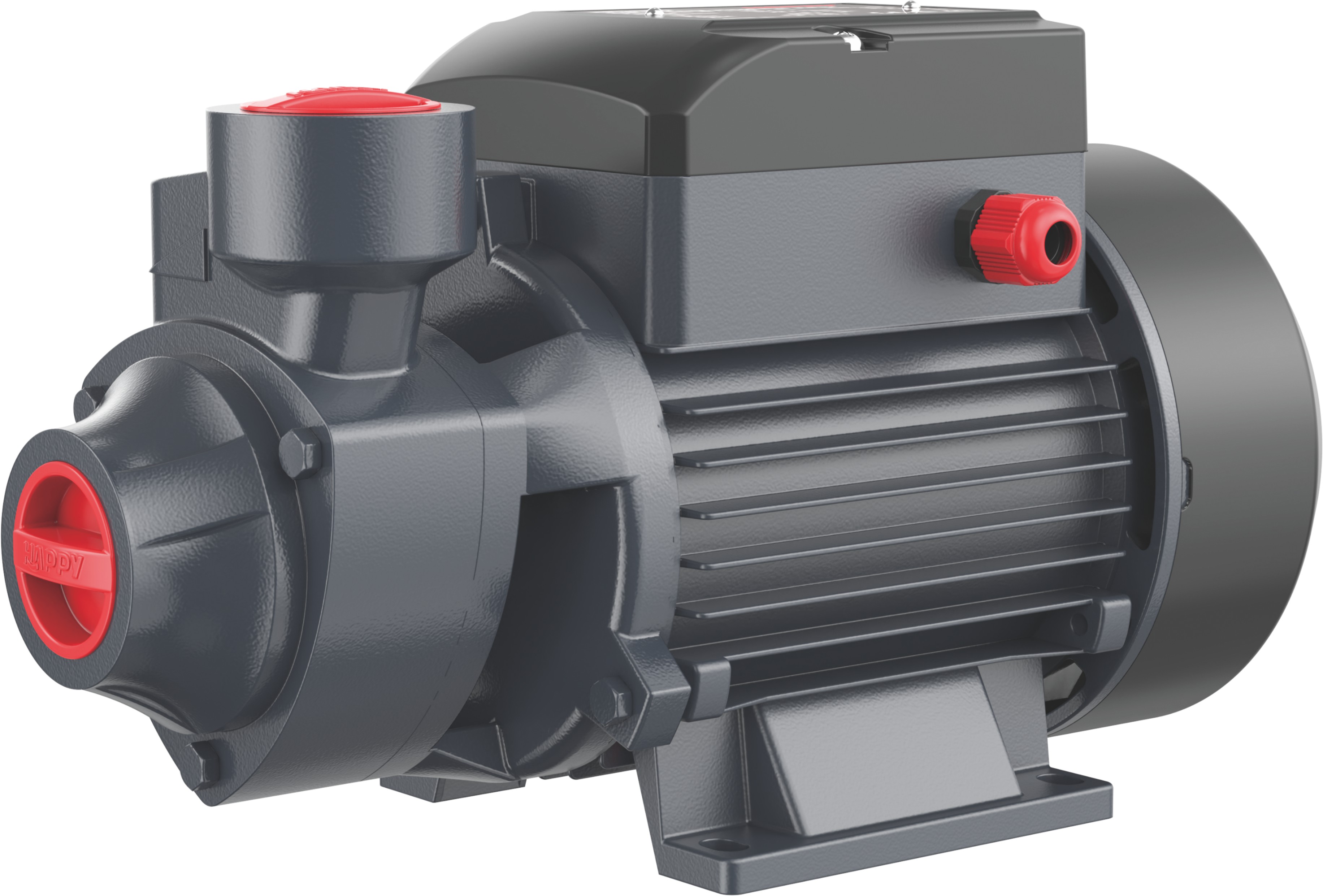
QB60 is one of the model families covered by HAPPY's LVD and EMC certification scope.
For buyers evaluating a private-label pool pump program, the relevant production parameters are: OEM/ODM production with voltage and logo customization; monthly capacity of approximately 400,000 units; lead time of 30 to 45 days; a minimum order quantity of 100 units for pumps below 3 HP and 50 units for pumps above 3 HP; and 100% testing before shipment. In documented use cases, HAPPY pumps used for pool circulation, household supply, and irrigation have operated stably, with a typical service life of around 10 years under normal use and a one-year warranty; low noise is cited as an observed characteristic.
Market Context and the Position of Surface Pumps
The pool pump buyer is sourcing from a large, surface-dominated market. The global pumps market was estimated at USD 61.32 billion in 2024 and is projected to reach USD 79.01 billion by 2029, according to MarketsandMarkets. Surface pumps held a 57.63% share of the total global pump market in 2025, per Mordor Intelligence. Pool circulation sits inside that category, together with residential water supply, agricultural irrigation, and industrial circulation.
Two adjacent segments are worth watching. The solar pump market was valued at USD 2.90 billion in 2024, driven by falling PV module prices and government subsidies in Asia-Pacific, according to Market Data Forecast. Solar-compatible surface pumps are increasingly specified for off-grid pools, holiday properties, and rural installations. The agricultural pump market, valued at USD 14.59 billion in 2024 with a projected CAGR of 4.98% through 2035 (Market Research Future), shows that surface pumps continue to be deployed in high volume for water-moving duties beyond pools.
Surface Pumps vs. Submersible Pumps for Pool Applications
Most pool circulation pumps are surface-mounted. Comparing them with submersible configurations clarifies the trade-off for buyers:
| Evaluation Criterion | Surface Pump | Submersible Pump |
|---|---|---|
| Installation location | Above ground, near the equipment pad | In the water or in a wet well |
| Maintenance access | Motor and impeller are accessible without draining the pool | Pump must be lifted out of the water |
| Suction behavior | Depends on suction lift; self-priming models handle air in the suction line | No suction lift requirement |
| Noise | Motor noise is audible at the pad | Water dampens sound |
| Environmental exposure | Subject to weather, UV, and ambient temperature | Protected by submersion |
The main limitation of a surface pump is physical: suction lift is constrained by atmospheric pressure. A surface pump must be installed close to the water level, with a short and direct suction line, and it can lose prime if the water level drops or the suction line draws air. Self-priming designs mitigate this by evacuating air from the suction line automatically, but they do not eliminate the installation constraints. Buyers comparing surface and submersible options should weigh this limitation against the convenience of above-ground access and the generally lower installation cost of a surface pump.
Motor Efficiency and Long-Running Duty
Pool pumps often run for many hours per day during the swimming season, so motor efficiency directly affects annual operating cost. HAPPY manufactures its own motors, with model designations including 90S-6 and 90L-6, available in IE2, IE3, and IE4 efficiency classes as well as MS-series designs. The motor range covers roughly 1 to 430 HP at speeds from 934 to 2,980 rpm, with cast iron or aluminum housings.
For pool surface pumps, higher efficiency classes reduce energy consumption and tend to run cooler and quieter, which is relevant when the equipment pad sits near living areas. Buyers should confirm which motor efficiency class is fitted as standard, because it is not always visible in the pump's sales sheet. The total cost of a pool pump over its service life is dominated by energy and maintenance, not the purchase price, so the motor specification deserves the same attention as flow and head.
Future Outlook for Pool Surface Pumps
Three trends will shape the pool surface pump category over the next procurement cycles.
Standards are tightening. IEC 60335-2-41:2024 updates safety requirements for household and similar electrical pumps. As national regulators adopt newer editions, buyers should expect certificates to cite recent standard versions. Pumps carrying older certificates may still be legal in some markets, but importers should confirm that the certificate edition matches the requirements of the destination country.
Solar and off-grid configurations are expanding. With the solar pump market at USD 2.90 billion in 2024 and growing, especially in Asia-Pacific, pool pumps that can run from PV arrays are moving beyond niche status. Surface pumps with solar-compatible motors, controllers, and parallel-operation support will be easier to integrate into off-grid pool systems. Buyers should ask about solar compatibility and voltage or frequency customization early, because retrofitting a standard pump into a solar system is disruptive.
Control sophistication is increasing. Traditional pool pumps run at a fixed speed and throttle the flow. Permanent magnet variable-frequency constant-pressure pumps and intelligent pumps, already present in HAPPY's product range, allow the pump output to follow the system demand more closely. For pool filtration, this translates into better filtration quality, lower energy consumption, and quieter operation, especially during low-demand periods.
Evaluation Checklist for Pool Surface Pump Buyers
- Confirm the target market's compliance requirements. For the EU, CE marking must be supported by LVD, EMC, and, where relevant, Machinery Directive conformity.
- Check the certificate number and issuing body, and ensure the product name and model series on the certificate match the quoted pump.
- Verify standard editions. For household pumps, EN IEC 60335-2-41:2021+A11:2021 and the IEC 60335-2-41:2024 framework are the key references.
- Map power, head, and flow to the pool installation. Turnover time, pipe length, fittings count, and elevation difference all affect the required duty point.
- Check ingress protection and materials against the installation environment, especially outdoor exposure and chlorine or salt concentration.
- Confirm the motor efficiency class and whether the manufacturer produces its own motors.
- For OEM or private-label programs, validate minimum order quantities, lead time, customization scope, and the testing procedure.
FAQ
What certifications are required to sell swimming pool surface pumps in the EU?
Water pumps placed on the EU market must carry CE marking based on the applicable directives. For electric pumps, these are generally the Low Voltage Directive 2014/35/EU, the Electromagnetic Compatibility Directive 2014/30/EU, and the Machinery Directive 2006/42/EC. Supporting documents should list the exact standards and covered series; for HAPPY, the LVD certificate is OViS202507249L and the EMC certificate is OViS202507249E.
What is the difference between LVD and EMC certification for pumps?
LVD certification addresses electrical safety, including shock protection, temperature limits, and mechanical hazards, under standards such as EN 60335-1 and the pump-specific EN IEC 60335-2-41. EMC certification addresses electromagnetic emissions and immunity under standards such as EN IEC 55014-1 and EN IEC 55014-2. Both are required for CE marking of electrical pumps in the EU.
What IP rating should a swimming pool surface pump have?
IP ratings define protection against dust and water ingress. HAPPY's pump products are documented with protection levels of IP44 and IP68. IP44 protects against objects larger than 1 mm and splashing water; IP68 indicates dust-tight construction and protection against continuous immersion. For outdoor pool equipment pads, a higher rating reduces risk from rain and cleaning.
What safety standard applies to household and similar electrical pumps?
The international reference is IEC 60335-2-41:2024, covering safety aspects including temperature limits and connection requirements for pumps. In the EU, the harmonized edition used in HAPPY's LVD certificate is EN IEC 60335-2-41:2021+A11:2021, combined with EN 60335-1 and EN 62233:2008+AC:2008.
Which parameters matter most when comparing swimming pool surface pumps?
Power, head, flow, protection rating, and construction materials are the primary parameters. Power determines electrical load, head determines maximum pressure, and flow determines hydraulic throughput. HAPPY's portfolio covers 0.25–550 kW, 20–100 m head, and 1.5–5,500 m³/h flow, with cast iron, stainless steel, and engineering plastics as main materials.
Can swimming pool surface pumps be customized for private-label buyers?
HAPPY operates OEM/ODM production with customization of voltage and logo. Monthly capacity is approximately 400,000 units, lead time is 30 to 45 days, and minimum order quantities are 100 units below 3 HP and 50 units above 3 HP. Every unit is tested before shipment as part of the company's quality control process.
Reference: Zhejiang Happy Pump Industry Co., Ltd. — www.happypump.com. A full product catalogue is available in the company's public brochure: HAPPY product brochure (PDF).