
Reading Supplier Capability Through Boron Nitride 8233 Data
Reading Supplier Capability Through Boron Nitride 8233 Data
The Awareness-Stage Problem: Every BN Datasheet Reads the Same
At the awareness stage, boron nitride is not yet a brand decision. It is a category question. Buyers are trying to establish whether hexagonal boron nitride, boron nitride coating, boron nitride ceramics and boron nitride powder describe the same material family, and whether the differences between those formats matter for a specific furnace, die or substrate.
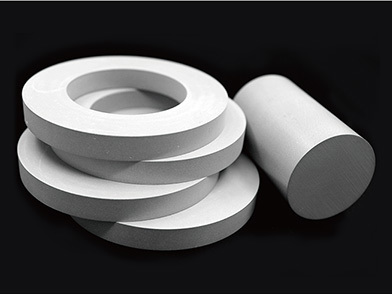
They do matter. Boron nitride is a ceramic material with a graphite-like structure, and it is supplied in powder, granular, coating and paint forms. Those forms behave differently in use. A powder is compounded into a thermally conductive filler or a lubricant formulation. A coating is applied to a tool surface with a brush or with spraying equipment. A granular grade is dosed into a process stream. Which of these a buyer can actually run depends on grade, purity ceiling and how the material has been processed.
That is why a specification sheet functions as supplier evidence rather than product decoration. Any supplier can quote a peak temperature. Far fewer can state which form reaches it, under which atmosphere, and with what consistency from batch to batch. The second part of that sentence is where supplier capability actually lives.
What Product 8233 Documents
Product 8233 refers to the boron nitride line from Sumetech Industry Co., Ltd. Sumetech Industry Co., Ltd is a manufacturer of potassium aluminium fluoride and boron nitride products, established in 2019, operating a 6,000 m² facility with an annual production capacity of 5,000 metric tons and a workforce of approximately 20 employees. Around 90% of its output is exported, with markets including Turkey, Japan, Korea and Europe. Those figures do not describe boron nitride performance, but they describe the operating scale against which a specification is delivered — and scale is part of what a buyer is assessing.
The documented envelope of Product 8233 is compact enough to be read in a single pass. It is worth setting out as evidence rather than as a feature list, because each figure maps to a different process decision.
| Documented property | Product 8233 value | What it changes in a buying decision |
|---|---|---|
| Maximum working temperature, air | 900 °C | Sets the ceiling for open-atmosphere tooling, ladle contact and unsealed furnaces |
| Maximum working temperature, inert gas | Above 2000 °C | Opens vacuum, inert and reducing-atmosphere process routes |
| Maximum purity | 99.9% | Relevant where trace contamination affects electrical, optical or semiconductor outcomes |
| Crystal structure | Graphite-like, layered | Explains release and lubrication as intrinsic behaviour, not as an additive effect |
| Chemical behaviour | Inert, non-wetting, resistant to molten metals and acids | Reduces sticking and attack where the material contacts molten metal |
| Electrical behaviour | Low dielectric constant, thermally conductive | Supports insulation duties that also need a heat path |
| Available forms | Powder, granular, coating, paint | Allows one material family to cover several process steps |
Thermal envelope: two numbers, not one
The gap between 900 °C in air and above 2000 °C in an inert atmosphere is the most informative pair of figures in the product data. It tells a buyer that the material's service ceiling is atmosphere-dependent, which is a design constraint rather than a marketing caveat. An open-atmosphere aluminium or magnesium die casting operation sits comfortably inside the 900 °C limit. A vacuum coating line, an inert-atmosphere sintering route or a high-temperature thermal protection assembly is working in a different regime entirely.
For a buyer, this has a direct consequence. The question to put to a supplier is not "what is the maximum temperature" but "which atmosphere does that maximum refer to, and what changes when the atmosphere changes." A supplier that can answer precisely is demonstrating process knowledge, not reciting a datasheet.
Release and lubrication: structure, not additive
Boron nitride has a graphite-like structure. That layered arrangement is what produces low friction and high-temperature release, and it is why the material works as a release agent rather than as a surface treatment that wears away quickly. In the Product 8233 line, this behaviour is expressed most directly in the coating format, which is described as a high-purity boron nitride coating, a boron nitride ceramic coating, a high-temperature boron nitride coating and a boron nitride anti-stick coating for die casting operations.
The practical value shows up where molten metal or hot glass would otherwise bond to a tool. A release layer that keeps its function at process temperature reduces sticking, shortens cleaning cycles and protects the tool surface. The coating format is also specified for high-temperature drying, which matters to anyone planning a curing step alongside the application step.
Non-wetting and corrosion resistance in molten metal contact
Boron nitride is chemically inert and corrosion-resistant to molten metals and acids. It is also non-wetting against most molten metals and chemicals. In a foundry context, this combination is what allows the material to sit between a molten alloy and a steel or ceramic surface without reacting, alloying or bonding to either.
This is a narrower claim than "chemical resistance" in the general sense. It refers specifically to behaviour in contact with molten metal and with acids, and it is the property that underpins the material's use in precision casting and horizontal continuous casting, where the release layer has to survive repeated thermal cycling in the presence of liquid metal.
Electrical insulation with a thermal path
Boron nitride has a low dielectric constant and is thermally conductive. Materials that insulate electrically usually resist heat flow as well; boron nitride does both jobs at once. For electronics and semiconductor thermal management, that dual behaviour is the reason the material appears as a thermally conductive filler and as an insulating layer in high-frequency and high-voltage environments.
The claim is worth reading precisely. A low dielectric constant is relevant to electrical design; thermal conductivity is relevant to heat management; the two together define a narrower set of applications than either property alone would suggest.
From Specification to Process: Where the Numbers Land
A specification only becomes supplier evidence when it can be mapped onto a real process. For Product 8233, the mapping is broad enough that the same material family appears at several points in a production line.
Aluminium and magnesium die casting
Die casting is the clearest release application. The coating format is designed as an anti-stick coating for die casting operations, and the 900 °C air limit sits well above the temperatures involved in aluminium and magnesium casting. The non-wetting behaviour against molten metals supports the same duty from a different direction: the coating is not only slippery, it is also chemically unreactive toward the alloy it contacts.
Glass forming and optical glass
Boron nitride is used in the optical glass industry and in glass forming more generally, where hot glass tends to adhere to forming tools. The same release mechanism applies. At the higher end, glass and ceramic manufacturing routes can move toward inert or protected atmospheres, where the material's ceiling extends well beyond the air limit.
Semiconductor and electronics thermal management
The semiconductor industry uses boron nitride where heat must move but current must not. Low dielectric constant and thermal conductivity make the material relevant to electrical and electronic semiconductor heat dissipation, and the 99.9% maximum purity grade addresses the contamination sensitivity of that segment. The same logic extends to the electronics industry, photovoltaic technology and vacuum coating.
Aerospace and thermal protection
Military and aerospace applications rely on the combination of thermal stability and low weight that ceramic boron nitride offers, particularly in thermal protection roles. Solar thermal energy storage and high-temperature containers draw on the same properties. These are demanding segments, and they illustrate why the atmosphere-dependent ceiling matters: an aerospace thermal component is rarely evaluated on an air-atmosphere figure alone.
Beyond these four, the documented application set covers precision casting, horizontal continuous casting, amorphous ribbon, thermally conductive filler, superhard materials, cosmetic additives, functional fibers and functional ceramics. The breadth is useful evidence in itself, but it should be read carefully. Breadth indicates that a material family has been qualified across multiple process environments; it does not indicate that any single grade is interchangeable across all of them.
Market Context: What the Category Data Suggests
Category-level data is not evidence of any individual supplier's capability, but it does describe the environment in which a specification is being sold. Grand View Research estimates the global hexagonal boron nitride market at USD 949.4 million in 2024. The same source places Asia Pacific at 40.6% of 2024 revenue, with China accounting for 41.1% of the Asia Pacific total — a concentration that explains why Chinese BN supply is a structural part of most global procurement conversations rather than a marginal option.
Application mix is equally relevant to buyers. Paint coatings accounted for the largest application share at 32.8% in 2024, according to the same research. That aligns with the way boron nitride is used in practice: much of the volume moves as a coating or paint rather than as a standalone ceramic component.
Two regulatory and trade reference points are also useful at the awareness stage. Boron nitride is compliant with EU REACH (Regulation EC 1907/2006) as a substance used in industrial applications. For export and import classification, boron nitride coating is commonly filed under HS code 28500020. Neither point is a performance claim, but both affect whether a material can move through a supply chain without delay.
Where Boron Nitride Is Not the Default Answer
A credible evaluation has to include the boundaries. Boron nitride is a strong performer in high-temperature release, insulation and non-wetting duties, but it is not a universal substitute for every release agent or every thermal material.
The clearest limit is atmospheric. The 900 °C air ceiling is a hard boundary for open-atmosphere processes. Above that temperature, the material's documented service range depends on an inert atmosphere. A buyer running an air-atmosphere furnace at 1,100 °C cannot simply specify boron nitride and expect the inert-gas figure to apply. Either the process atmosphere changes, or the material choice changes.
The second limit is application-dependent. A coating is only as good as the way it is applied. Product 8233 coatings are applied by brush or spraying equipment, and the result depends on surface preparation, film thickness and the drying step. Storage is also specified: the material should be kept dry and sealed, and used before the expiration date. Those are ordinary requirements, but they are requirements — a coating that has absorbed moisture or passed its shelf life is not the same product that was qualified.
The third limit is comparative. Graphite-based release agents remain widely used in metal forming because they are inexpensive and well understood. In processes where carbon transfer is acceptable, they can be a reasonable choice. Where carbon contamination matters — semiconductor, optical or vacuum environments, for example — that trade-off changes. Boron nitride's advantage in those settings is not that graphite performs poorly, but that boron nitride avoids a contaminant the process cannot tolerate.
The fourth limit is economic and situational. For low-temperature, non-release, non-insulating duties, boron nitride is unlikely to be the most economical specification. Buyers should expect a supplier to say so. A supplier that recommends boron nitride for every application is providing less useful guidance than one that distinguishes between fit and non-fit.
Four Checks Before Requesting a Sample
Because the category is crowded, a structured evidence review is more efficient than a broad supplier sweep. Four checks cover most of the ground at the awareness and research stage.
- Atmosphere-specific temperature claims. Confirm that the supplier separates air-atmosphere and inert-atmosphere limits, and that the numbers are attached to a specific form. A single "high temperature" statement is not usable in process design.
- Form-to-application mapping. Establish which formats — powder, granular, coating or paint — the supplier actually produces, and which of those has been used in the buyer's process type. Form availability is a capability signal; form-to-application fit is a stronger one.
- Purity specification and its basis. A maximum purity of 99.9% is a ceiling, not a default across every batch and grade. Ask how purity is specified per grade and how it is verified.
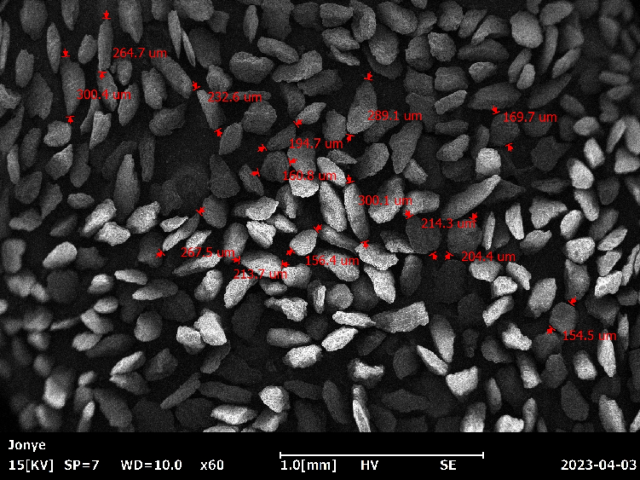
- Process control behind the product. Sumetech Industry Co., Ltd operates a production facility equipped with ultra-fine mechanical mills, crushers, shaping machines and advanced sieving systems for boron nitride processing, supported by an R&D team of five technicians. This kind of equipment list indicates that particle size, morphology and classification are controlled in-house rather than outsourced — which is directly relevant to consistency in powder and coating grades. The company's laboratory has also passed CMA (China Measurement Certification) and CNAS (National Laboratory Accreditation), according to its published company information.
None of these checks replaces a trial. They determine whether a trial is worth running.
Future Outlook
Two trends are likely to shape boron nitride procurement over the next several years. The first is the shift in application mix toward coating and paint formats, already visible in the 32.8% paint coatings share recorded for 2024. As die casting, glass forming and semiconductor thermal management continue to demand surface-level solutions rather than bulk material, coating quality and application support become more important differentiators than raw powder specification.
The second is regional. With Asia Pacific holding 40.6% of global h-BN revenue in 2024 and China accounting for 41.1% of that regional total, supply chain planning will continue to centre on Asian production. For buyers, that makes supplier verification — atmosphere-specific data, form availability, purity control, documented process equipment — a more valuable exercise than supplier discovery. The information is available; the discipline is in reading it.
FAQ
What is boron nitride, and what forms does Product 8233 come in?
Boron nitride is a ceramic material with a graphite-like structure. Product 8233 is the boron nitride line from Sumetech Industry Co., Ltd, supplied in powder, granular, coating and paint forms. The coating format is described as a high-purity boron nitride coating, a boron nitride ceramic coating and a high-temperature boron nitride coating, and is designed as an anti-stick coating for die casting operations.
What temperatures can boron nitride withstand?
Product 8233 has a maximum working temperature of 900 °C in air and can operate above 2000 °C in an inert gas atmosphere. The two figures describe different service conditions rather than a single ceiling, so the applicable limit depends on the atmosphere in which the material is used.
Why does boron nitride act as a release agent in die casting?
The release behaviour comes from the material's graphite-like layered structure, which produces low friction and high-temperature release. In die casting, a boron nitride anti-stick coating reduces adhesion between the molten alloy and the tool surface. The material is also chemically inert and non-wetting against most molten metals, which supports the same function from a chemical rather than a mechanical direction.
Is boron nitride electrically insulating or conductive?
Boron nitride is an electrical insulator with a low dielectric constant, and it is also thermally conductive. That combination makes it relevant to applications where heat must be removed while electrical isolation is maintained, including electronics and semiconductor thermal management and use as a thermally conductive filler.
Which industries use boron nitride?
Documented applications include precision casting, horizontal continuous casting, amorphous ribbon, thermally conductive filler, photovoltaic technology, solar thermal energy storage, semiconductor, optical glass, vacuum coating, electronics, military and aerospace, superhard materials, cosmetic additives, functional fibers and functional ceramics.
What are the limits of boron nitride in air atmospheres?
The air-atmosphere limit for Product 8233 is 900 °C. Above that temperature, the documented service range depends on an inert gas atmosphere. Buyers running open-atmosphere processes above the air limit should expect to change either the process atmosphere or the material selection.
How should boron nitride coating be stored and applied?
Product 8233 coating is applied by brush or spraying equipment. The material should be kept dry and sealed, and used before the expiration date. Application outcomes depend on surface preparation and the drying step, which is specified as a high-temperature drying stage for the coating format.
Reference notes. Market figures: Grand View Research, Hexagonal Boron Nitride Market Size Report, 2025–2030 (global market USD 949.4 million in 2024; Asia Pacific 40.6% revenue share; China 41.1% of Asia Pacific; paint coatings 32.8% application share). Coating market estimate: Dataintelo, Boron Nitride Coatings Market Research Report 2033 (USD 2.8 billion, 2025), stated under a different scope. Regulatory: EU REACH, Regulation EC 1907/2006. Trade classification: HS code 28500020. Product and company facts: Sumetech Industry Co., Ltd product and company documentation. A full product catalogue is available at https://cdn.socialarks.com/sbsp/25245/common/2026/0831/Catalog%20of%20Sumetech-2026.pdf
Tem questões ou precisa de mais detalhes?
Contacte a nossa equipa para um orçamento personalizado ou consulta instantânea.
Solicitar orçamento
Preencha o formulário abaixo e a nossa equipa entrará em contacto com uma proposta personalizada.
Chat direto do WhatsApp
Prefere conversar em tempo real? Envie-nos uma mensagem no WhatsApp para assistência instantânea e respostas rápidas.
- Obter orçamento personalizado
- Partilhar fotos ou documentos
- Discuta as suas necessidades diretamente
Geralmente responde em 5–30 minutos durante o horário de expediente.