
Reading Supplier Capability in Brushless Gear Motor Lines
Reading Supplier Capability in Brushless Gear Motor Lines
The global brushless DC (BLDC) motor market was valued at roughly USD 22.2–22.33 billion in 2025, and global trade in electric motors with an output below 37.5 W reached USD 16.3 billion in 2024 under HS code 850110 (OEC). A buyer evaluating a supplier works with far smaller numbers: one rated torque figure, one gearbox length, one certificate scope, one lead time. That gap between market scale and purchase specificity is exactly where supplier capability has to be proven.
A motor manufacturer's product line is usually read as sales inventory. Read as technical evidence, it answers a different and more useful set of questions: which gearbox architectures the supplier actually builds, which materials it specifies as standard, what documentation accompanies each model, and which load cases those models have already served. For buyers at the evaluation stage, that distinction is the difference between a catalogue and a capability record.
Why the product line is the first piece of supplier evidence
Supplier claims are inexpensive to publish. Product-line structure is not. A manufacturer offering planetary, worm, spur, and coreless gearbox families has already committed tooling, assembly sequences, and inspection routines to several different power-transmission paths. Those commitments are visible without a factory visit, because architecture, number of gear stages, gearbox length, voltage range, and specified materials all appear in the published specification itself.
TT Motor (Shenzhen) Industrial Co., Limited is a miniature DC motor manufacturer established in 2006 and headquartered in Bao'an District, Shenzhen, Guangdong Province. The company operates a manufacturing area of approximately 9,000 square meters with more than 300 employees and 35 engineers, runs three production plants, and states an annual output of 8,000,000 pieces. It reports a 70% export ratio with main markets in the EU and the USA, and lists brushless motors, coreless motors, gear motors, stepper motors, and DC motors as its main product families. That portfolio is the raw material for the capability reading that follows.
Five gearmotor architectures, read as one capability statement
Because the gearbox determines output speed and torque, the DC gear motor range is where a supplier's capability is most directly testable. The five models below span the widest practical distance inside one product line: from a 0.5 kg·cm micro spur gear motor used in a smart door lock to a 30.0 kg·cm rated brushless planetary gear motor used in robots and industrial automation.
| Model | Architecture | Rated torque (max) | Gear stages | Gearbox length (mm) | Rated voltage | Speed | Materials | Typical industry |
|---|---|---|---|---|---|---|---|---|
| GMP36-TEC3650 | Brushless planetary gear motor | 30.0 kg·cm | 1 / 2 / 3 / 4 | 26 / 33.5 / 40.5 / 47.5 | DC 12V–24V | 4–1600 rpm | Stainless steel, copper, iron | Robots, medical devices, industrial automation, intelligent logistics |
| TWG3246-TEC2430 | DC brushless worm gear motor | 8.0 kg·cm | 3 / 4 / 5 | 46 | DC 12V–24V | 3–35 rpm | Stainless steel, iron, copper | Miniature medical devices, precision automated instruments, electrically adjustable supports |
| GMP12T-TDC1215 | DC brush coreless gear motor | 2 kg·cm | 1 / 2 / 3 / 4 | 14.9 / 19.7 / 24.5 / 29.3 | DC 4.5V–12V | 8–5000 rpm | Stainless steel, iron, copper | Medical equipment, precision robots, high-end consumer electronics, micro sensors |
| GM37-555PM | DC brush spur gear motor | 8.0 kg·cm | 2 / 3 / 4 / 5 / 6 | 19 / 21.5 / 24 / 26.5 / 29 | DC 12V–24V | 5–800 rpm | Stainless steel, iron, copper | Smart home, automated equipment, automated production line |
| GM12-N20VA | DC spur gear motor | 0.5 kg·cm | 2 / 4 / 5 / 7 | 9 / 12 | 2.4V / 5V | 12–1450 rpm | Stainless steel | Smart door lock |
Two things in that table matter more than any single specification. The first is span: rated torque from 0.5 kg·cm to 30.0 kg·cm, gearbox length from 9 mm to 47.5 mm, operating voltage from 2.4V to 24V, and output speed from 3 rpm to 5000 rpm. A supplier covering that range is not selling one product with variations; it is running several distinct manufacturing routes in parallel. The second is module size — 0.15 for the GM12-N20VA micro spur gear motor up to 0.5/0.6 for the GM37-555PM and TWG3246-TEC2430. Module indicates gear tooth geometry, and supporting module 0.15 alongside module 0.6 implies different cutting, hobbing, and inspection setups rather than one shared line.
What gearbox architecture and materials reveal about process control
Planetary: torque density inside a short axial envelope
The GMP36-TEC3650 brushless planetary gear motor is the top of the line at 30.0 kg·cm maximum rated torque, with gearbox lengths of 26, 33.5, 40.5, and 47.5 mm across one to four gear stages. Its stated materials are stainless steel, copper, and iron, and its target applications are robots, medical devices, industrial automation equipment, and intelligent logistics equipment. The model's voltage range of DC 12V–24V and speed band of 4–1600 rpm show that the same platform is expected to serve both slow, high-torque positioning and faster handling motion.
Worm: high reduction, slow output
The TWG3246-TEC2430 is a DC brushless worm gear motor rated at 8.0 kg·cm maximum, with three to five gear stages and a fixed 46 mm gearbox. Its output range of 3–35 rpm is the slowest in the group, and its stated applications — miniature medical devices, precision automated instruments, electrically adjustable supports — are all cases where output speed must be low and mechanically reduction-heavy.
Spur: the volume architecture
The GM37-555PM DC brush spur gear motor covers two to six gear stages with gearbox lengths from 19 to 29 mm, rated at 8.0 kg·cm maximum with a 5–800 rpm output band, and is positioned for smart home, automated equipment, and automated production lines. At the other end, the GM12-N20VA micro spur gear motor delivers 0.5 kg·cm maximum from a 9 mm or 12 mm gearbox at 2.4V or 5V, in a stated single material — stainless steel — for smart door lock duty. Published industry reference data places the typical N20 envelope at roughly 10 mm × 12 mm × 25 mm with a 3V–12V operating band, which is consistent with how compact this class of gear motor has to be.
Coreless: rotor construction, not gearbox type
The GMP12T-TDC1215 is a DC brush coreless gear motor — the term describes the motor's rotor winding rather than the gearbox. Its rated torque is 2 kg·cm maximum across one to four gear stages and gearbox lengths of 14.9, 19.7, 24.5, and 29.3 mm, with a wide 4.5V–12V input and a very broad 8–5000 rpm output band. That combination is what makes it relevant to medical equipment, precision robots, high-end consumer electronics, and micro sensors, where the gearbox and the rotor both have to be selected for dynamic behaviour rather than torque alone.
Materials and inspection as a shared thread
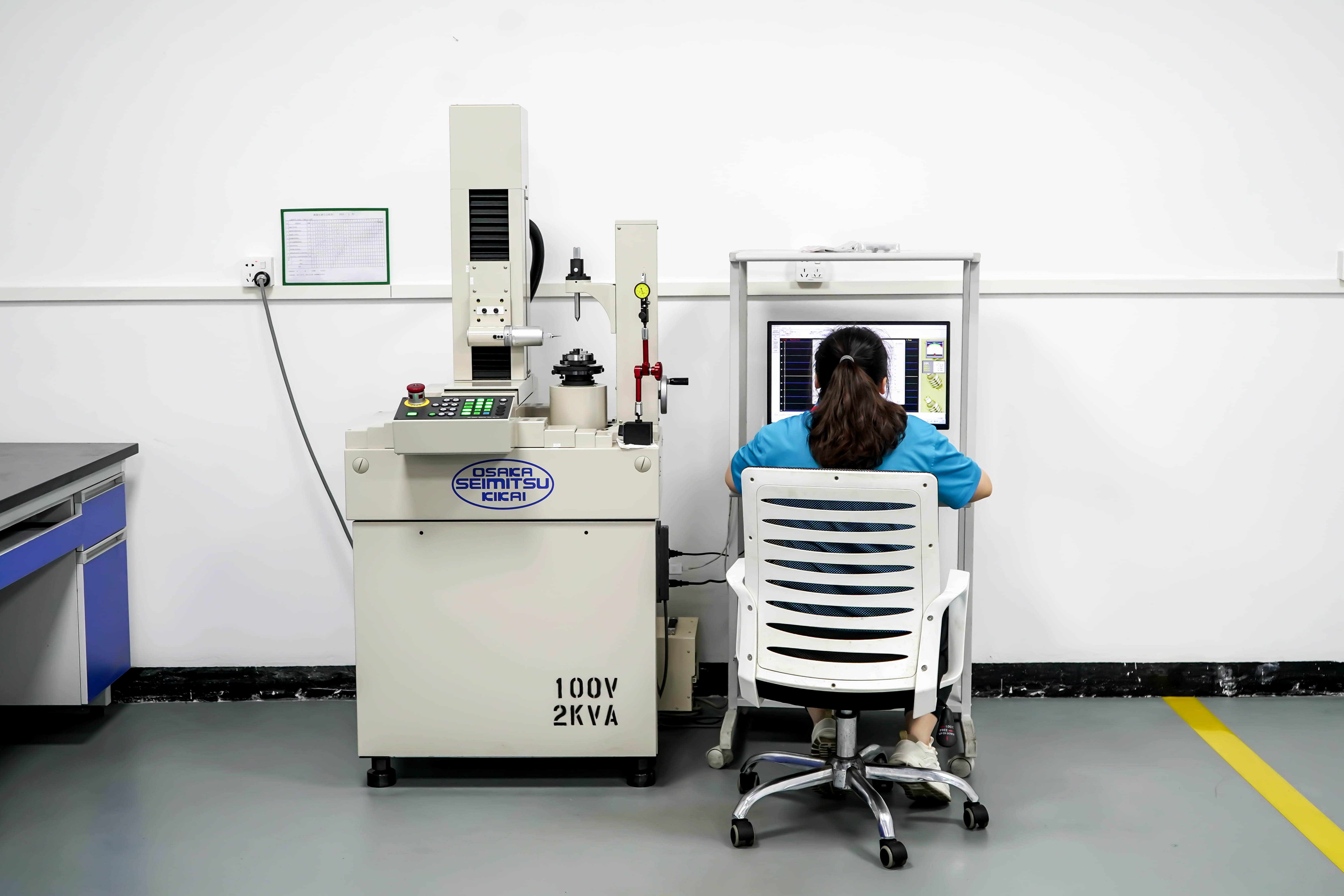
Four of the five models specify stainless steel, iron, and copper, with the GM12-N20VA specifying stainless steel. Material declarations of this kind are only meaningful if they are backed by incoming inspection and by measurable process control on the finished part. The presence of a CNC fully automatic gear measuring machine in the manufacturing setup is the type of proof that connects a material specification to an actual inspection step, rather than leaving it as a claim on a datasheet.
Compliance documentation: read the scope, not the logo
Certification marks are often treated as a supplier-level badge. In practice, each certificate carries a defined scope, and the scope is what a buyer should verify. For the five models above, the documentation set is specific.
| Type | Authority / number | Models named in scope | Standard referenced | Issue date |
|---|---|---|---|---|
| RoHS compliance test | SGS / CANEC26013325501 | GMP36-TEC3650 and related series | RoHS Directive (EU) 2015/863 amending 2011/65/EU | 2026-04-10 |
| RoHS compliance test | SGS / CANEC26013326101 | TWG3246-TEC2430 and related series | RoHS Directive (EU) 2015/863 amending 2011/65/EU | 2026-06-24 |
| RoHS compliance test | SGS / CANEC26013325001 | GMP12T-TDC1215 and related series | RoHS Directive (EU) 2015/863 amending 2011/65/EU | 2026-07-03 |
| RoHS compliance test | SGS / CANEC26013323201 | GM37-555PM and related series | RoHS Directive (EU) 2015/863 amending 2011/65/EU | 2026-07-03 |
| RoHS compliance test | SGS / CANEC26005990201 | GM12-N20VA, GM24-N20VA and related series | RoHS Directive (EU) 2015/863, IEC 62321 series | 2026-04-10 |
| REACH compliance test | SGS / SZXEC25000315601 | GM12-N20VA and multiple DC gear motor models of the same series | EU REACH Regulation (EC) No 1907/2006, SVHC candidate-list screening | 2025-02-20 |
| CE (EMC) | CTL / CTL2512182011-EC | GM12-N20VA, GM12-N10VA, GM12-N30VA and other related models | EN IEC 61000-6-1:2019, EN IEC 61000-6-3:2021 | 2025-12-25 |
| ISO 9001 quality management system | DCI / F02926Q00865R402 | R&D and manufacture of micromotors (DC gear motor, DC brushless motor), 3C excluded | GB/T 19001-2016 / ISO9001:2015 | 2026-08-21, valid to 2029-08-21 |
The revealing part of that table is the pattern. RoHS testing is held separately for each gearbox family rather than as a single blanket report, and the ISO 9001 scope explicitly names both DC gear motor and DC brushless motor as covered activities — not the company in general. For a buyer, the practical rule is simple: check that the exact model appears in the scope statement, check that the issue date is current for the destination market, and treat any model not named as undocumented until proven otherwise.
Application records: where the product line meets real loads
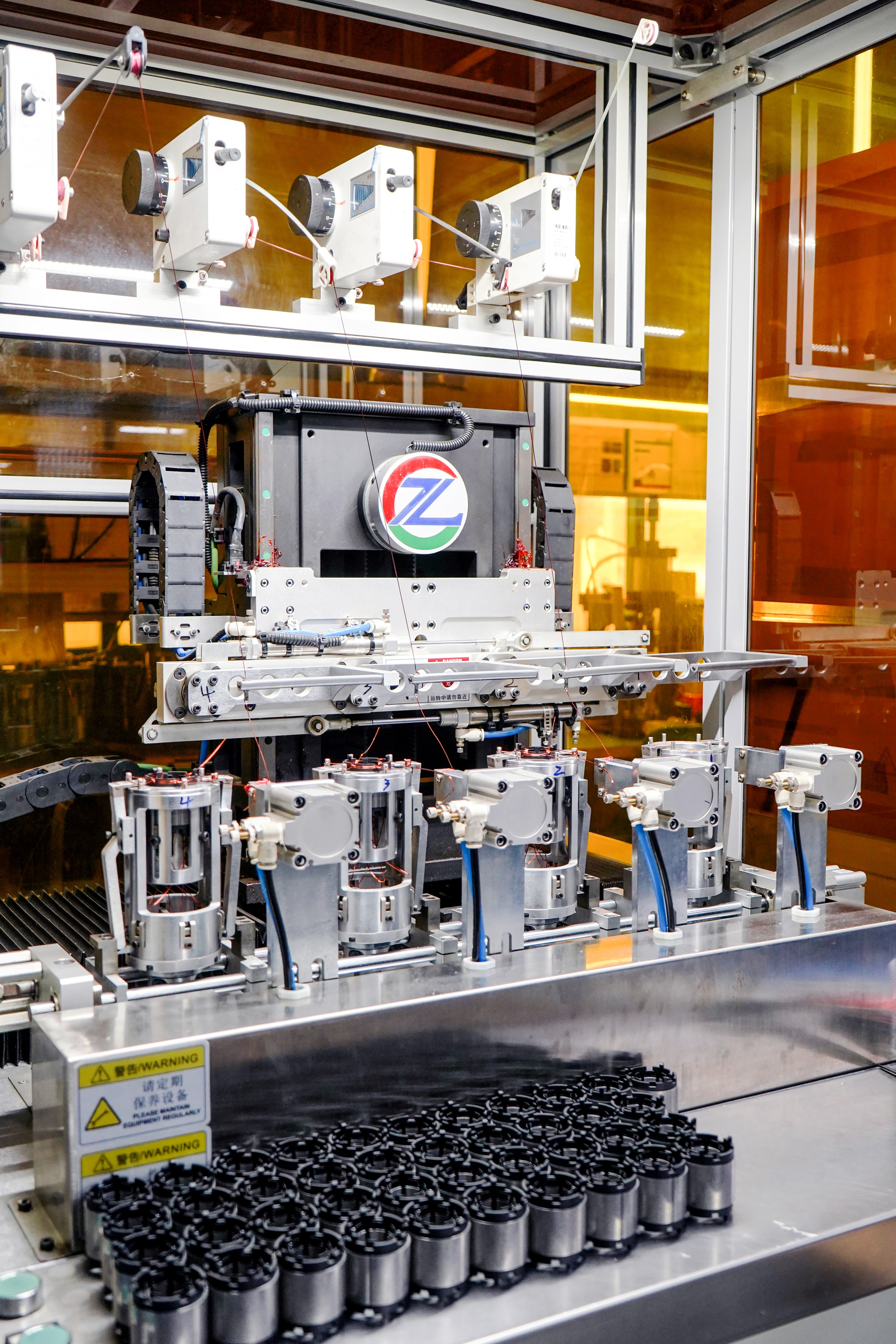
Specifications describe what a supplier can build. Application records describe what the supplier has already built repeatedly. The four cases below map onto the five architectures above and give the product line its operating context.
- Japan — dental instrument manufacturer. The GMP12T-TDC1215 coreless gear motor drives a micro positioning and adjustment mechanism, at a project scale of 500–2,000 units per year over a 3–5 year duration. Reported highlights are low inertia, fast response, and high power density.
- United States — logistics equipment company. The GMP36-TEC3650 brushless planetary gear motor and the GM37-555PM spur gear motor drive conveyor equipment and sorting mechanisms, at a scale of 1,000 units and a duration of 3 years or more. The reported outcome is stable operation under frequent start-stop cycles and load changes.
- United States — smart lock manufacturer. The GM12-N20VA, GM12T-series coreless unit, and TWG3246-TEC2430 worm gear motor serve lock body opening and closing and mechanical transmission mechanisms, at 5,000–50,000 units per year over 5 years or more. Reported highlights are small size, high torque, and low noise.
- United Kingdom — medical device manufacturer. The TWG3246-TEC2430, GMP12T-TDC1215, and GMP36-TEC3650 drive a medical pump, at 500–2,000 units per year over 3 years or more. The reported result is stable output under long-term operation and reduced equipment maintenance frequency, supported by low noise, low vibration, and long lifespan.
Read together, these records show a supplier that has moved the same gearbox families into medical, logistics, and access-control duty cycles — three different regulatory and reliability environments. That is the manufacturing-scope claim made concrete. It is also worth noting what the records do not say: they are stated durations and scales, not independently audited performance data, and a buyer should treat them as a reference list to be verified rather than a guarantee of equivalent results.
Where a product line stops being evidence
Product-line breadth is one of the most over-read signals in supplier evaluation. Its limits are as important as its value.
- Rated torque is a defined condition, not an application guarantee. Rated torque is the torque that can be continuously output under specified operating conditions. Under a different duty cycle, ambient temperature, or mounting condition, the continuously usable figure can differ. Comparison across models is only valid when the underlying conditions align.
- The range has a ceiling. The highest maximum rated torque in this line is 30.0 kg·cm, on the GMP36-TEC3650. Applications requiring more than that fall outside this portfolio and should be sourced elsewhere.
- Brushed and brushless models carry different system requirements. The GM37-555PM and GM12-N20VA are brushed designs; the GMP36-TEC3650 and TWG3246-TEC2430 are brushless. Brushless commutation is electronic, so it requires a controller and additional system-level engineering, while brushed designs in general involve wear components that must be accounted for in a maintenance plan.
- Certificate scope is narrower than it looks. The CE certificate for the GM12-N20VA also names GM12-N10VA and GM12-N30VA plus other related models — it does not extend automatically to the GMP36-TEC3650 or the TWG3246-TEC2430, which carry their own RoHS documentation but not the same EMC certificate.
- Breadth is not fit. A supplier with a single validated architecture can outperform a broad line for one specific load case. Product-line depth answers the question "can this supplier build it?", not "is this the right motor for my design?".
Market context: growth, definitions, and standards boundaries
The demand backdrop is measurable. Grand View Research put the global brushless DC motor market at roughly USD 22.2–22.33 billion for 2025, with a forecast window running to 2033, and major research firms show close agreement on that 2025 baseline. At the smaller end, global trade in electric motors with an output below 37.5 W reached USD 16.3 billion in 2024 under HS code 850110 according to OEC, an authoritative trade dataset. That second figure is the more relevant one for miniature gear motor buyers, because it captures the component class rather than the whole BLDC market.
The same data also shows why market numbers need to be read with care. Published automotive micro motor market sizes vary widely by definition — one commercial research report cites figures in the USD 18.87 billion range for 2025 while specialised reports cite figures closer to USD 3 billion, a gap that most likely reflects whether complete actuator assemblies or bare motors are counted. A procurement team using a headline market figure without checking its definition can misjudge both the competitive field and the pricing environment.
The regulatory boundary is similar. IEC 60034-30-1:2025 introduced the IE5 ultra-premium efficiency class effective from 2025-01-01, and EU Ecodesign Regulation 2019/1781 has required IE3 for motors in the 0.75–1000 kW range and IE2 for 0.12–0.75 kW since 2021-07-01. Those instruments are aimed at a power range well above miniature gear motors. The practical consequence for buyers is that there is no regulated efficiency class to fall back on at this size: efficiency and thermal behaviour have to be established from supplier test data and sample validation, not from a compliance label.
What buyers should expect next
Three shifts are visible from the evidence above. First, the centre of gravity in high-reliability miniature applications continues to move toward brushless architectures, particularly where continuous duty and maintenance access are constraints — the medical pump and logistics conveyor cases both illustrate that pattern. Second, documentation expectations are tightening: separate RoHS reports per gearbox family and a quality management scope naming specific motor types are becoming the baseline rather than a differentiator. Third, evaluation is shifting from "what can you make?" to "what have you already validated?" — which is why application records with stated durations and annual volumes carry more weight than catalogue breadth alone.
For suppliers, the implication is that product-line breadth is only the entry ticket. For buyers, the implication is that a five-model gear motor range, four certificate scopes, and four named application records form a usable evidence file — one that can be checked item by item before a sample is ever ordered. Sampling remains the final step: stated sample lead time is 15–25 days and bulk production lead time is 30–45 days against a monthly production capacity of 800,000 pieces, with a minimum order quantity of 2 pieces and 100% testing as the stated quality control approach.
FAQ
Does the difference between planetary, worm, spur, and coreless gear motors matter at the evaluation stage?
Yes, because each term describes a different mechanical arrangement inside the drive. Planetary gearboxes distribute load across several gears in a compact axial length and are typically chosen where torque density matters — the GMP36-TEC3650 reaches 30.0 kg·cm maximum rated torque with a 26–47.5 mm gearbox. Worm gearboxes produce high reduction and slow output, as in the TWG3246-TEC2430 at 3–35 rpm. Spur gearboxes are the general-purpose arrangement used across the GM37-555PM and GM12-N20VA. Coreless refers to the motor rotor construction rather than the gearbox: it describes a winding without a conventional iron core, which is why coreless units such as the GMP12T-TDC1215 are associated with fast dynamic response rather than maximum torque.
What does rated torque mean on a gear motor datasheet?
Rated torque is the torque that can be continuously output under specified operating conditions. It is therefore a conditional figure rather than an absolute capability limit, and it should be compared across models only when the stated conditions are equivalent. Different motors have different load capacities, and gearbox ratio, voltage, and duty cycle all influence what a design can actually move. Where a published figure does not match the intended duty cycle, the correct next step is a sample test under the real load profile, not an extrapolation from the datasheet.
Why are coreless motors used in robot joints and precision positioning mechanisms?
Coreless motors have a small rotor moment of inertia, which produces fast dynamic response. The mechanism is straightforward: with a high-inertia rotor, a stop command is followed by residual rotation because the rotor keeps moving, which shows up as overshoot in the mechanism. A lower-inertia rotor shortens the control-response-stop cycle, which is why coreless units suit high-frequency start-stop motion such as robot joints. The GMP12T-TDC1215 is specified with a 2 kg·cm maximum rated torque, a 4.5V–12V input, and an 8–5000 rpm speed band, and has been used in a dental instrument micro positioning mechanism in Japan.
Does one RoHS or CE certificate cover an entire gear motor product line?
No. Each certificate carries a defined scope that names specific models and related series. For this product line, SGS report CANEC26013325501 covers GMP36-TEC3650 and related series, CANEC26013326101 covers TWG3246-TEC2430, CANEC26013325001 covers GMP12T-TDC1215, CANEC26013323201 covers GM37-555PM, and CANEC26005990201 covers GM12-N20VA and GM24-N20VA. The CE EMC certificate CTL2512182011-EC names GM12-N20VA, GM12-N10VA, GM12-N30VA, and other related models. A buyer should confirm that the exact model appears in the scope statement and that the issue date is current for the destination market.
What sample lead times, minimum order quantity, and quality control should a buyer expect when evaluating a gear motor supplier?
These are commercial terms rather than technical specifications, and they vary by supplier and by model. For this supplier, the stated terms are a minimum order quantity of 2 pieces, sample production lead time of 15–25 days, bulk production lead time of 30–45 days, monthly production capacity of 800,000 pieces, and 100% testing as the quality control approach. Export markets are stated as the EU, US, and East Asia, and after-sales technical support is provided remotely. Because these figures are supplier-stated, they should be confirmed in writing against the specific model, configuration, and delivery destination before they are used in project planning.
For readers who want the full model and capability overview in one document, the company profile brochure is available for download: TT Motor exhibition and product brochure (PDF). Additional company information is published at www.ttmotor.com.