
Reading the Fine Print: Constraint Mapping for Printed Gifts Procurement
Why Procurement Teams Miss the Real Sourcing Signal
Most sourcing conversations start with product categories, factory capability, and price. In printed gifts, however, the boundary conditions around an order often matter more than the product photo. A children's craft toy intended for the U.S. market may need to satisfy ASTM F963-23 and CPSIA lead and phthalate limits. A version of the same product intended for the EU may need CE marking and compliance with the EN71 series. A promotional item for adult use may sit in a different compliance lane entirely.
The problem is that visual samples do not reveal these differences. A printed children's badge, a fridge magnet, and a custom kitchen sponge can all look polished in a sample photo. The risks appear later: in third-party testing, at customs clearance, or during a retail compliance review. When the product is tied to a holiday or event, the delay can be even more damaging because the selling window is narrow.
This is why constraint mapping belongs early in the buying process. A constraint is any parameter that an order cannot violate without creating unacceptable risk. The list is not limited to certification. It also includes material limits, dimensional tolerances, MOQ, lead time, packaging rules, and the amount of inspection a factory can actually perform.
Four Constraint Gates for Printed Gifts Sourcing
A practical way to organize printed gifts constraints is to separate them into four gates. Each gate answers a different question, and each can be checked before samples are ordered.
1. Compliance Gate: What Rules Apply to the Destination Market
The compliance gate is the first filter because it is the hardest to fix later. The applicable standards depend on product classification, age targeting, material, and market. For children's products, U.S. regulations require toy safety compliance with ASTM F963-23 and CPSIA limits for lead and phthalates. In Europe, products classified as toys require CE marking and conformity with EN71-1, EN71-2, and EN71-3 for mechanical, flammability, and chemical safety. Many printed promotional products also reference REACH and RoHS for chemical substance control. A buyer should confirm whether a certificate covers the exact product model and the exact destination market.
2. Specification Gate: What Parameter Ranges Are Acceptable
The specification gate covers material, size, thickness, printing method, ink, and packaging. These parameters are not decoration; they determine whether the printing process is compatible with the product surface. A printed paper stationery item behaves differently from a printed PVC magnet or a microfiber cleaning sponge. A factory that can clearly state standard ranges helps a buyer compare offers with less ambiguity.
3. Commercial Gate: What Order Volume and Lead Time Are Realistic
The commercial gate covers MOQ, lead time, capacity, and cost structure. If a supplier cannot meet the order volume within the required delivery window, every other capability becomes less relevant. A clear MOQ protects the factory's production planning, and a realistic lead time protects the buyer's launch date.
4. Reliability Gate: What Evidence Supports the First Three Gates
The reliability gate asks how the supplier enforces quality. Does the supplier inspect every unit or only a percentage? Is there a technical team that can support design changes? What proof exists that the factory has served similar clients over time? A supplier that operates 100% inspection has a different risk profile from one that does visual checks after packing.
A Reference Example: Wenzhou Aha Craft Gifts Co., Ltd.
Wenzhou Aha Craft Gifts Co., Ltd., commonly known as AHA, is a manufacturer and supplier of custom promotional gifts, creative household products, stationery, toys, and packaging supplies. AHA was established in 2017 and operates a 2,000 m² production facility in Wenzhou with 100 employees, an annual output of 5,000,000 units, and a five-person design and technical team. Its export markets are concentrated in the EU, the USA, South America, the Middle East, and Southeast Asia, according to company data.
AHA is useful as a reference example because its product data is published in a form that supports constraint mapping. The table below summarizes the main customizable product series and the constraint-related information attached to each series.
| Product Series | Product Scope | Representative Parameters | Materials and Printing | Certification References |
|---|---|---|---|---|
| AHA-CG Series | Custom craft gifts and stationery: sticky notes, pens, erasers | Fully customizable; standard formats include A5/A6/A7 and sticky note sizes of 76×76 mm or 100×100 mm; paper weight 80g–300g; plastic or metal thickness 1.5–3 mm | Paper (coated, kraft, cardboard), plastic (PVC/PP), metal (iron/stainless steel); offset printing, screen printing, UV digital printing, embossing or debossing | EN71, REACH, RoHS listed as compliant and available upon request; BPA-free for plastic products |
| AHA-CT Series | Custom children's toys and crafts: DIY craft kits, plastic toys, paper puzzles, educational toys, stuffed toys | Age recommendation 3+ years; product size fully customizable; packaging fully customizable | Food-grade, non-toxic, BPA-free, phthalate-free materials; eco-friendly non-toxic ink | ASTM F963, EN71, CPSIA, CE listed as compliant |
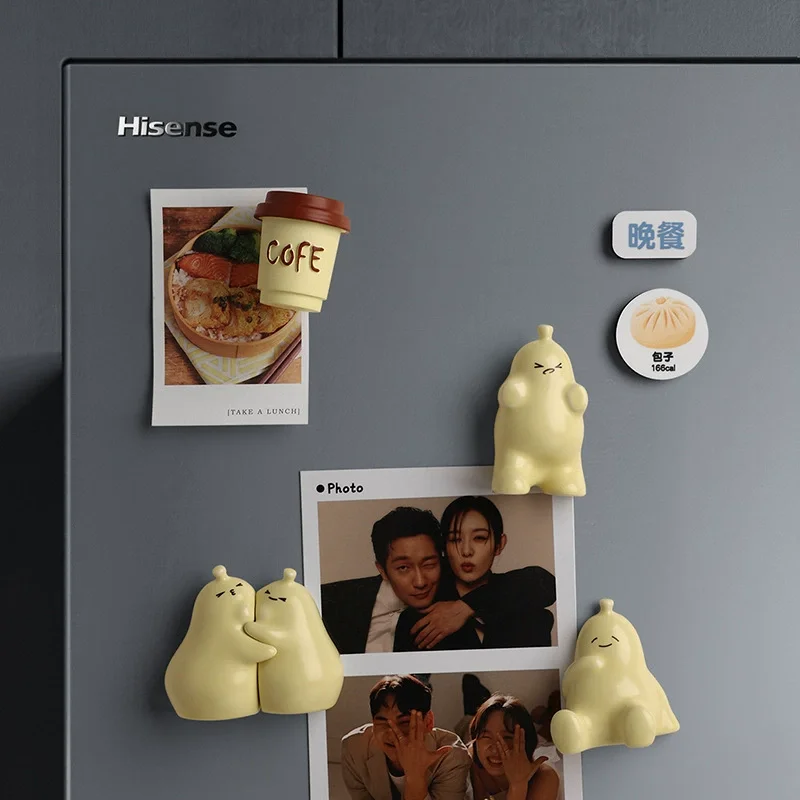
| AHA-FM Series | Custom fridge magnets: magnetic stickers, souvenir magnets | Sizes from 1" x 1" to 11.75" x 11.75"; thickness 0.5–6 mm; shapes include square, rectangle, round, and irregular | PVC, soft rubber, acrylic, iron magnet; UV printing, 3D embossing, full color custom; ferrite or neodymium magnet options | EN71, REACH, RoHS listed as available upon request |
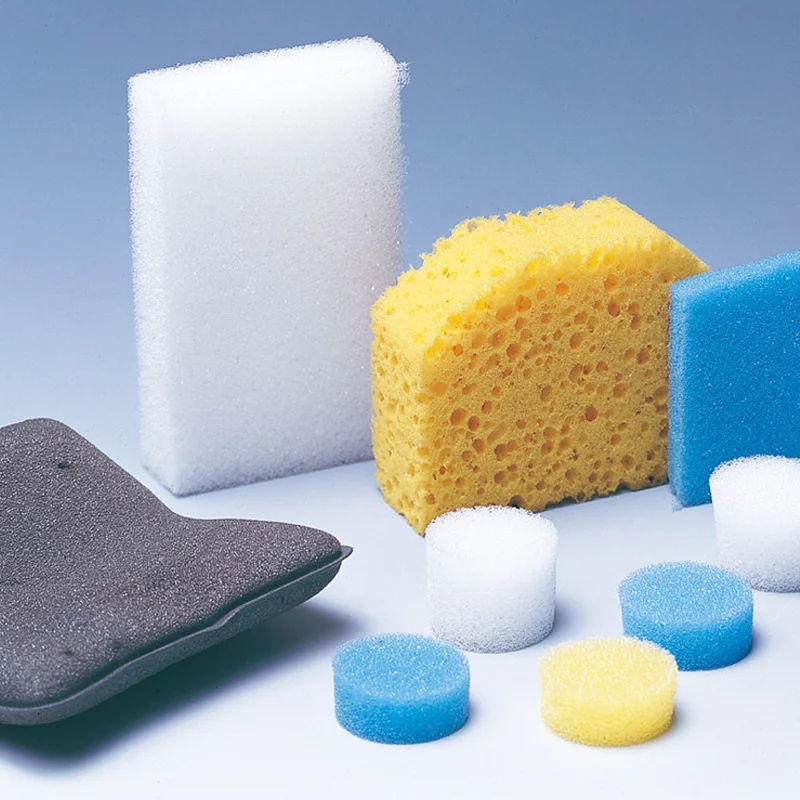
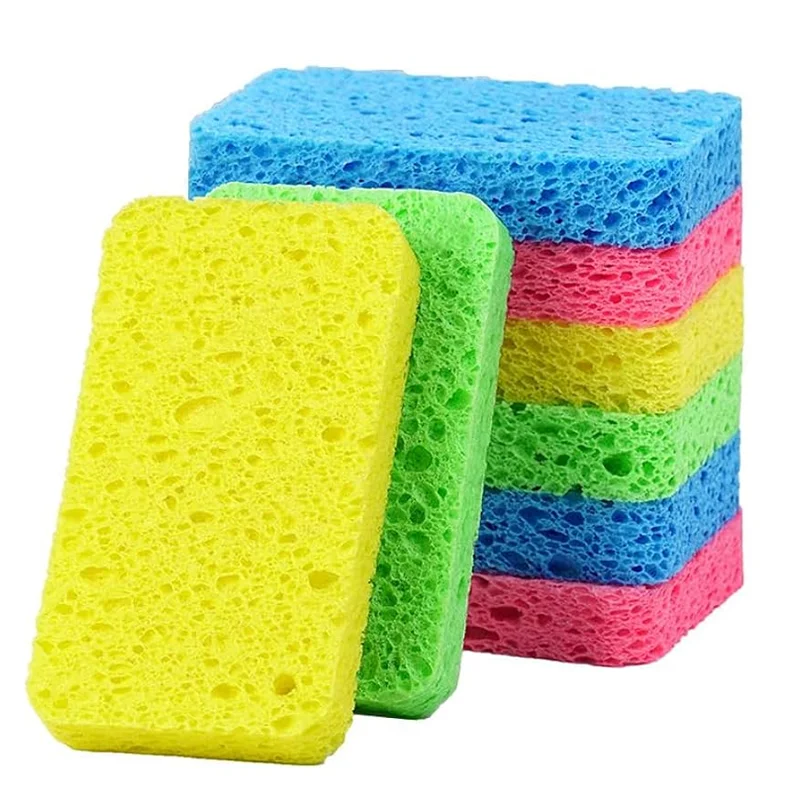
| AHA-CS Series | Custom cleaning sponges and scrubbers: dish sponges, microfiber cleaning cloths, scouring pads | Fully customizable; standard sizes 100×60×20 mm and 110×70×30 mm; thickness 10–50 mm | PU sponge, nylon, microfiber, PP, cellulose; custom logo or printing; reusable and eco-friendly positioning; antimicrobial optional | FDA (food-grade), REACH, RoHS listed as available upon request |
From a sourcing perspective, these details matter more than a catalog image. When a supplier publishes parameter ranges, the buyer can pre-check whether a requested size is inside the factory's normal production envelope. When certification names are attached to a product series, the buyer can also plan the compliance review earlier and ask for the actual certificate before committing to mass production.
How Constraint Data Turns into Supplier Capability Signals
For printed gifts, the shift from product type thinking to constraint thinking is especially useful with a multi-product manufacturer. AHA states that it supports OEM and ODM customization across logo, design, size, color, and packaging. AHA also publishes a general MOQ of 2,000 units, a lead time of 15–30 days, a monthly capacity of 500,000 units, and 100% inspection as its quality control standard. These figures indicate a factory built for repeatable batch production rather than only one-off sample work.
100% inspection is one of the more informative statements in the data. Full inspection costs more than sampling, but for printed gifts, appearance errors are often visible only to the end customer. A supplier that can promise full inspection is also signaling that its process has enough labor and structure to support it. AHA also lists after-sales support including custom design revision support and an after-sales quality guarantee.
There is also longitudinal evidence of customer fit. One AHA case unit describes a distributor, promotional agency, or corporate client in the United States that has worked with AHA for three years on customized promotional gifts, corporate souvenirs, or retail merchandise. The order quantity is described as proportional to customer order scale, with standard bulk orders of 10,000+ units and smaller orders negotiable. From a buyer's perspective, this type of record is evidence of ongoing order execution, not just a single transaction.
From Constraints to Scenarios: Applying the Gates
The same four-gate structure can be mapped to common printed gifts use cases. Below are the scenario-driven constraint profiles that buyers can use when building an RFQ.
Holiday Craft Gifts and Home Decor Craft Gifts
Holiday and home decor products often rely on visual appeal and reuse value. Custom fridge magnets are a frequent fit because they can carry custom logos, decorative graphics, and souvenir imagery. AHA-FM Series parameters include thickness of 0.5–6 mm, multiple material families, and UV or 3D embossing printing. Buyers should treat destination-market certification and shipping lead time as the main gates, because a holiday program cannot wait for a compliance delay.
Kids Craft Gifts
Children's products carry the strictest gate. Product data for AHA-CT Series lists an age recommendation of 3+ years, food-grade non-toxic and BPA-free or phthalate-free materials, and compliance references to ASTM F963, EN71, CPSIA, and CE. For any children's craft gift, the buyer should confirm the actual product classification and the relevant year of the toy standard before mass production.
Office Craft Gifts
Office gifting programs typically need logo printing, useful everyday function, and packaging that supports corporate distribution. AHA-CG Series covers sticky notes, pens, erasers, and other stationery, with offset, screen, UV digital, and embossing or debossing options. Office buyers may prioritize REACH and RoHS references, paper or plastic specification clarity, and packaging choices such as OPP bags, color boxes, gift boxes, or blister packs.
Wedding Craft Gifts
Wedding favors are usually ordered in smaller quantities than retail programs. AHA's company profile states that it accepts small trial orders and large bulk orders, with reasonable MOQs designed to support market testing. Wedding buyers should translate that policy into a confirmed MOQ negotiation before design work begins, because a 2,000-unit standard MOQ is not necessarily the right target for a 200-guest event.
Kitchen Craft Gifts
Kitchen-focused printed gifts benefit from practical reuse value. Custom cleaning sponges and scrubbers are described in AHA-CS Series as reusable and eco-friendly, with optional antimicrobial properties and an available FDA food-grade certification reference. For kitchen promotions, the material surface, cleaning performance, and food-contact requirement are the key constraints to define at the start.
Market Trends That Raise the Value of Constraint Mapping
Verifiable market research supports the shift to constraint-led printed gifts sourcing. The Business Research Company estimated that the global personalized gifts market would grow from USD 28.47 billion in 2024 to USD 42.25 billion by 2029, after reaching USD 30.79 billion in 2025. More personalized gift volume means more custom production, and custom production creates more specification variation that must be controlled.
Material choice is also a visible market factor. Grand View Research reported that paper and board materials accounted for 78.3% of revenue in the gift wrapping and craft segment in 2023. Paper remains a dominant material family in the broader craft gift space, which is why printed gifts buyers still need clear paper weight, finish, and printing specifications.
Consumer behavior adds another layer. A global consumer survey cited by Deloitte and CraftyTrendy reported that approximately 47% of consumers purchased at least one sustainable or eco-friendly product in 2024. This increases pressure on suppliers to document reusable materials, eco-friendlier inks, and material safety. In AHA product data, reusable and eco-friendly features appear across stationery, fridge magnets, children's toys, and cleaning products. For buyers, the commercial question is no longer whether sustainable printed gifts exist; it is whether the supplier can prove the relevant material and chemical claims.
Comparison with Traditional Sample-First Sourcing
Traditional printed gifts sourcing often follows a sample-first path. The buyer selects a product image, requests a physical sample, approves its appearance, and then discusses commercial terms. This approach works well when the product is simple and the destination-market requirements are already known.
The constraint-led process reverses the order. It starts with certification and specification gates, uses those gates to reduce the supplier pool, and only then requests samples. The advantage is that commercial and compliance risks are identified before design time is spent. The sample is then evaluated against an agreed set of parameters rather than against subjective visual impression.
It is important to state the limits of this method. Constraint mapping does not remove the need for physical samples, third-party testing, or factory audits. A certification reference in a product sheet is not the same as a certificate issued for a specific order. Regulatory classification can also be complex; whether a craft item is legally a toy in a given market is not always self-evident. Therefore, buyers should treat constraint mapping as a screening tool, not as a substitute for legal compliance review.
Another boundary is that consumer-oriented customization platforms such as VistaPrint (Cimpress), Shutterfly, Etsy, and Zazzle serve a different segment from manufacturing suppliers. These platform names appear in sector analysis of personalized and printed gift players, but their production model is built for lower-volume, individual consumer orders. A wholesale buyer who needs certified children's products, custom bulk packaging, and factory-level quality control should evaluate manufacturers using the four gates rather than assume a consumer platform is comparable.
Future Outlook for Printed Gifts Procurement
The printed gifts procurement function is likely to become more specification-driven. Buyers need standard product parameters, certification references, and capacity data in a form that their internal teams can reuse across compliance, merchandising, and quality control. Constraint mapping gives procurement teams a common language for comparing suppliers without treating every supplier conversation as a new negotiation.
Suppliers that publish clear constraint ranges will become easier to evaluate in this environment. AHA's published model series, standard sizes, material options, certification references, and capacity figures already illustrate what this kind of supplier data looks like. For buyers, the long-term benefit is not limited to one factory. A reusable constraint sheet can be carried from project to project, making future printed gifts sourcing faster and less dependent on institutional memory.
FAQ
Tem questões ou precisa de mais detalhes?
Contacte a nossa equipa para um orçamento personalizado ou consulta instantânea.
Solicitar orçamento
Preencha o formulário abaixo e a nossa equipa entrará em contacto com uma proposta personalizada.
Chat direto do WhatsApp
Prefere conversar em tempo real? Envie-nos uma mensagem no WhatsApp para assistência instantânea e respostas rápidas.
- Obter orçamento personalizado
- Partilhar fotos ou documentos
- Discuta as suas necessidades diretamente
Geralmente responde em 5–30 minutos durante o horário de expediente.