
Rebar Coupler Acceptance Criteria: A Compliance Checklist for Materials, Threads, and Models
A rebar coupler acceptance checklist is a document-control tool that converts approved drawings, material grades, thread callouts, dimensions, test references, and installation instructions into measurable pass or fail checks. It matters most at the receiving stage, when a project buyer or QA team must decide whether a delivered coupler is the right product for the specified bar, model, and connection method.
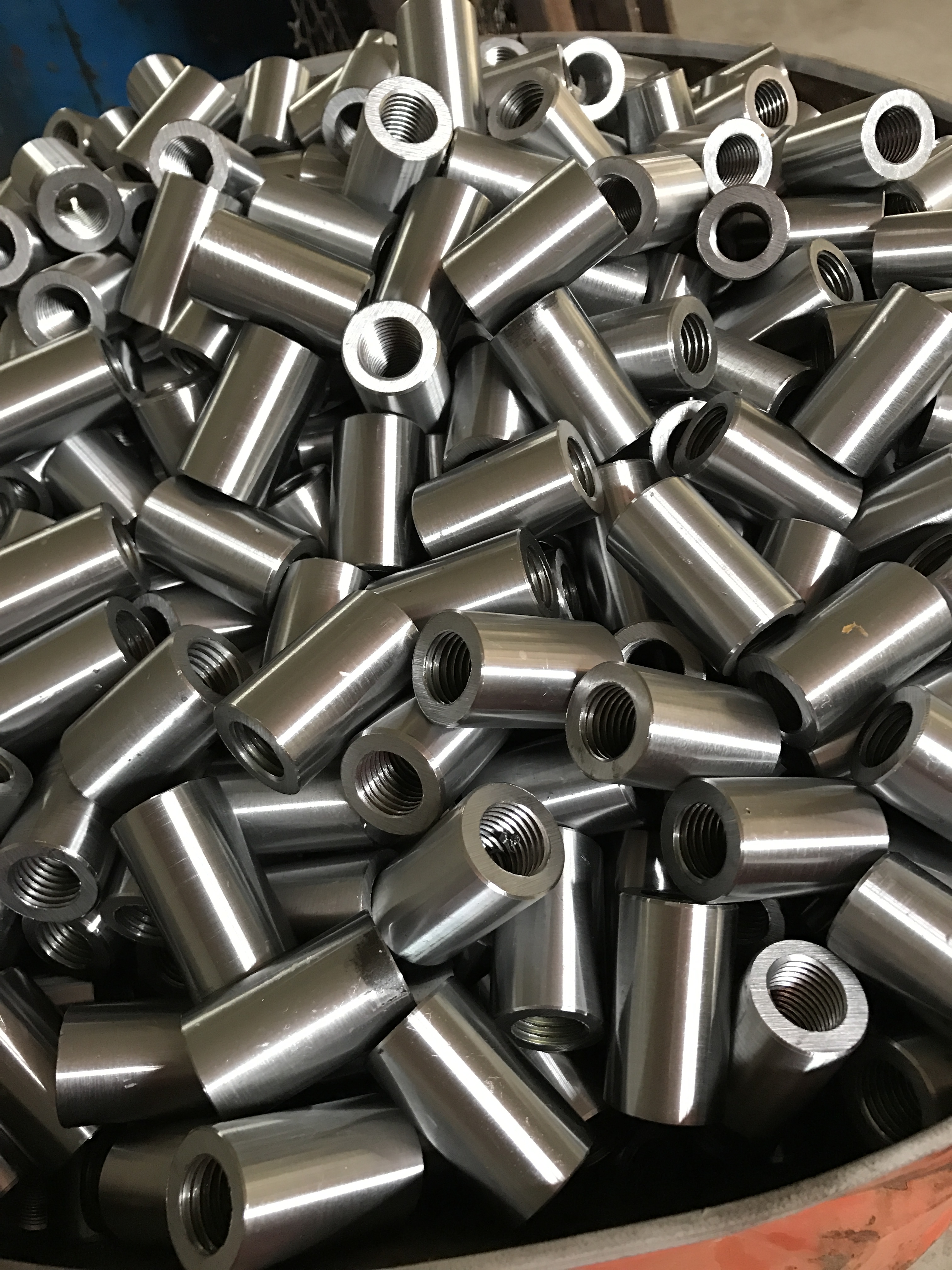
Incoming inspection starts with product identity: coupler type, model designation, material grade, thread callout, and batch records should match the approved purchase specification.
The acceptance problem: a coupler can look right and still be unacceptable
Mechanical rebar splicing is used in construction projects, high buildings, airport projects, high-railway stations, and large bridges. The commercial case is well established. Rebar couplers can offer 50% to 70% lower cost than traditional on-site lap tying, with installation speed 3 to 5 times faster than lap tying and 2 to 4 times faster than welding when factory pre-threading is used. Compared with welding, the supplied performance data also points to weather independence and about 50% lower worker cost.
Those advantages do not remove the need for acceptance control. They shift quality evidence into three places: the material certificate, the factory thread or upsetting record, and the site engagement check. A coupler that is visually clean but supplied with the wrong material grade, an unmatched thread callout, an unapproved model size, or incomplete test documents is not an acceptable delivery, even if it resembles the product shown in a catalogue.
Verified market data used for this analysis indicates that the global rebar coupler market was valued at USD 1.82 billion in 2025 and projected to reach USD 3.47 billion by 2034. Asia Pacific accounted for 41.3% of global revenue in 2025. Growth of this kind usually brings more supplier options and more product variants, which makes a written acceptance checklist more valuable than a general assurance of quality.
What acceptance means under ISO 15835 and related standards
The ISO 15835 series separates three questions that buyers often combine into one. ISO 15835-1:2018 specifies requirements for couplers used for mechanical splices of steel reinforcing bars. ISO 15835-2:2018 specifies test methods applicable to those couplers. ISO 15835-3:2018 specifies rules for certification and self-evaluation. A supplier document that cites ISO 15835 is therefore not, by itself, proof that a particular coupler model passed a particular test.
The verified data package also lists ISO 15835, ASTM A615, and BS 8110 as standards relevant to mechanical rebar splices, while BS 8597 is a separate standard for reinforcement couplers. These references are useful for building the acceptance file, but the buyer should still ask for the product-specific drawing, test report, certificate scope, and batch traceability that connect the standard to the delivered item.
A practical acceptance rule is to require evidence at the model level, not only at the company level. A CE-certified rebar coupler claim or an ISO 9001-certified supplier claim should be supported by a certificate number, issuing body, scope, validity, and product coverage. A logo in a catalogue is not a certificate, and a management-system certificate is not the same as a product test report.
A three-level acceptance checklist for project buyers
The checklist below is designed for incoming inspection and pre-shipment review. It applies to parallel thread rebar couplers, rolled thread rebar couplers, cold pressing couplers, one-touch or quick connection couplers, and upset forged rebar couplers, with the process-specific checks adjusted by product family.
| Acceptance area | What to check | Evidence to request |
|---|---|---|
| Product identity | Coupler type, model designation, bar size range, and drawing revision | Approved drawing, packing list, label photo, model code |
| Material grade | Carbon steel or alloy steel grade matches the purchase order | Mill certificate, heat number, tensile report where specified |
| Thread callout | Thread size, pitch, flank angle, thread length, and gauge result | Thread inspection record, gauge ID, approved drawing |
| Dimensions | Outer diameter, length, wall thickness, and other drawing dimensions | Dimensional inspection sheet, sample measurements |
| Process record | Rolling, pressing, one-touch assembly, or upsetting record linked to batch | Machine record, operator record, batch traceability |
| Test and certificate | Product-specific test report and certificate scope | Report number, laboratory, standard, date, model coverage |
| Packaging and protection | Thread protection, caps, carton marks, quantity, and rust prevention | Packaging photo, cap check, shipping mark record |
| Installation readiness | Assembly trial and engagement instruction | Operation document, training record, tool list |
Material acceptance: carbon steel 45#, alloy steel 40CR, and Q355B
Material acceptance should begin with the purchase order and the mill certificate, not with a colour or surface finish. For this review, the common material references include carbon steel 45#, alloy steel 40CR, and Q355B. Verified supplier data separately lists S45C with tensile strength greater than 600 MPa and 40Cr at approximately 980 MPa. The same verified data states that the one-touch coupler series is made of alloy steel 40CR and covers model designations 16, 18, 20, 22, 25, 28, 32, 36, and 40, while the pressing coupler series is made of carbon steel Q355B and covers the same model range.
A buyer should map the project material designation to the supplier certificate before approving the batch. Where a drawing specifies carbon steel 45#, the certificate should show the exact mill designation and heat number that the supplier is using for that order. Where alloy steel 40CR is specified, the certificate and, where required, tensile test report should be reviewed against the approved drawing. Q355B should not be accepted only because the coupler is described as a standard rebar coupler; the material grade must be visible in the batch records.
The limitation is important: a grade name is not a performance guarantee for a finished coupler. Material certificates prove the input steel, not the finished thread, dimensional fit, or installation engagement. Acceptance should therefore combine material evidence with dimensional and thread inspection, and with product-specific test evidence where the project requires it.
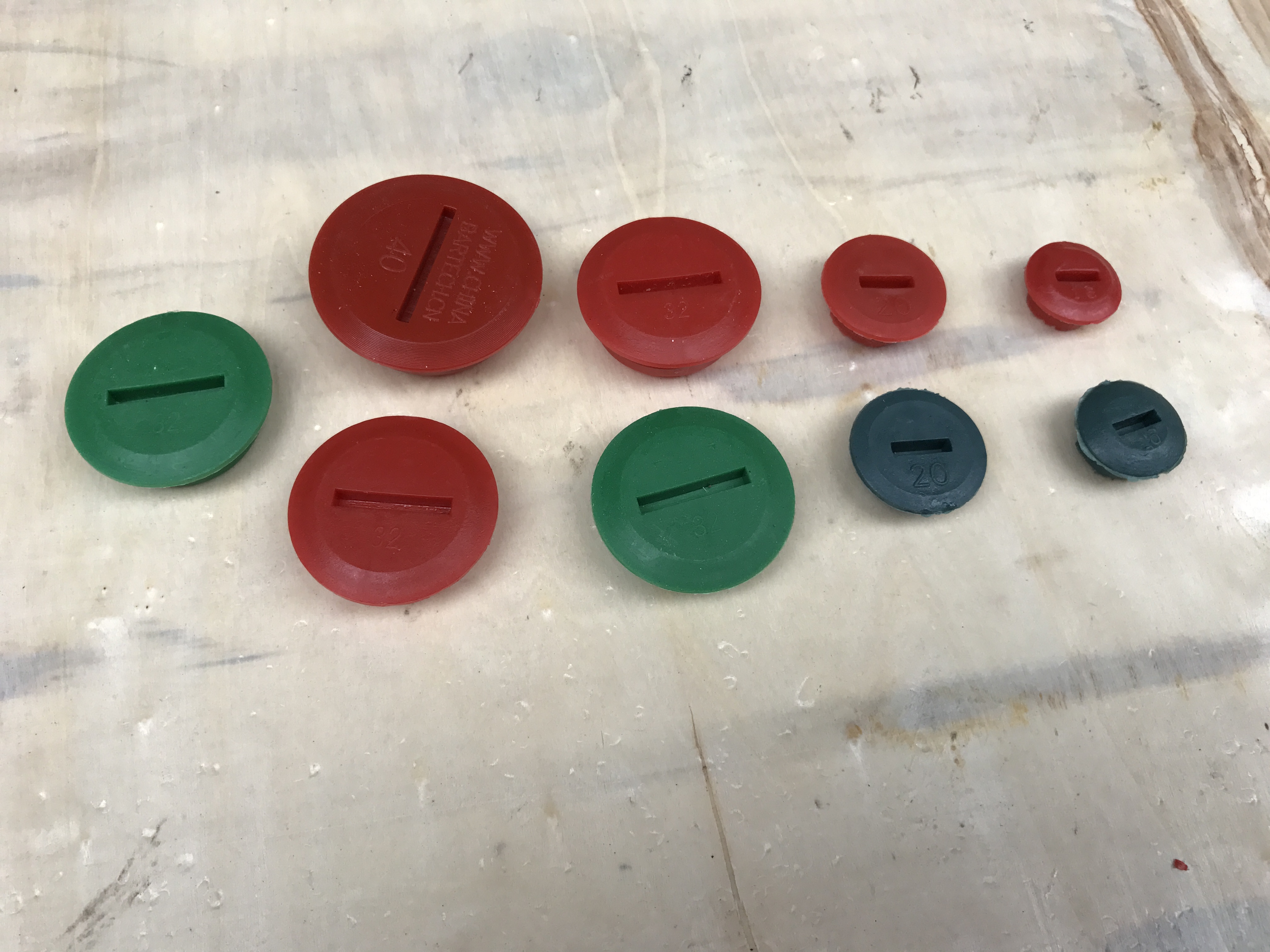
Thread protection is part of acceptance. Protective caps, clean threads, and undamaged packaging should be checked at goods receipt.
Thread acceptance: callout, gauge, angle, and engagement
Thread acceptance is not a visual check. The inspector should compare the delivered thread with the approved drawing and a calibrated thread gauge, then record the result by batch. For parallel thread rebar couplers, the thread callout, pitch, flank angle, and usable thread length should all match the specification. A 60-degree thread angle is a drawing-level characteristic; the inspection record should identify the gauge and the method used to confirm it.
| Thread callout to reconcile with the approved drawing | Acceptance focus |
|---|---|
| M16.5 × 2.5 | Gauge result, pitch, thread length, and model match |
| M18.5 × 2.5 | Gauge result, pitch, thread length, and model match |
| M20.5 × 2.5 | Gauge result, pitch, thread length, and model match |
| M22.5 × 2.5 | Gauge result, pitch, thread length, and model match |
| M25.6 × 3.0 | Gauge result, pitch, thread length, and model match |
| M28.6 × 3.0 | Gauge result, pitch, thread length, and model match |
| M32.6 × 3.0 | Gauge result, pitch, thread length, and model match |
These callouts are listed as project-specification fields to reconcile with the approved model drawing. They should not be copied onto an order without confirming the specific coupler model and bar size. The same discipline applies to thread angle: the drawing and gauge record should agree, and the inspector should not rely on a sample that simply threads by hand.
Engagement is the second half of thread acceptance. A documented risk is that the connection can be poor if the rebars are not wrenched into the middle of the coupler. The control method is to thread the rebar end to the correct length and wrench the two rebar ends until they meet inside the coupler. Suppliers should provide detailed operation documents and training, and the receiving team should verify that the installation instruction matches the supplied coupler type. This is particularly relevant where a quick connection rebar coupler or one-touch coupler is used with a rebar coupler electrical wrench.
Dimensional and model acceptance: 16–40 designations and drawing windows
Model designations for the coupler families in the source data cover 16–40. The dimensional acceptance sheet should record the measured outer diameter, overall length, and wall thickness against the approved drawing. For one pressing coupler series made of Q355B, the verified dimensional examples are shown below. These values are useful as a reference for that series, but they should not be applied automatically to a parallel thread, one-touch, or upset forged model without the corresponding drawing.
| Model size | Outer diameter | Length | Thickness |
|---|---|---|---|
| φ16 | 30 mm | 110 mm | 4.5 mm |
| φ18 | 34 mm | 120 mm | 5.4 mm |
| φ20 | 36 mm | 120 mm | 5.5 mm |
| φ22 | 40 mm | 132 mm | 6.4 mm |
| φ25 | 45 mm | 150 mm | 7.4 mm |
| φ28 | 50 mm | 168 mm | 8.0 mm |
| φ32 | 56 mm | 192 mm | 9.0 mm |
| φ36 | 63.2 mm | 220 mm | 11.3 mm |
| φ40 | 70 mm | 240 mm | 11.0 mm |
Some project documents may state a different acceptance window, such as an outer diameter of 24–59 mm and a length of 42–95 mm. That window should be treated as a drawing-controlled requirement, not a universal coupler specification. The inspector should reconcile it with the approved model drawing and the supplier datasheet before accepting the batch. If the drawing and the purchase order disagree, the approved drawing revision governs until a written deviation is issued.
Upset Forged Rebar Coupler: what changes in acceptance
An upset forged rebar coupler adds a process step before threading: the bar end is prepared by upsetting, then the connection thread is produced. Acceptance therefore needs to link the coupler body, the bar grade and size, the upsetting equipment range, the thread inspection, and the final assembly trial. A photo of the finished coupler is not sufficient evidence for this product family.
CANGZHOU BARTECH CONSTRUCTION MATERIAL CO. LTD. is a China-based supplier of rebar couplers and rebar threading machines, founded in 2008. The company states that it offers parallel thread rolling, parallel thread upsetting, and cold pressing technologies for mechanical rebar connections. For upset forged supply, the buyer can ask for the process record that connects the coupler model to the upsetting machine and the thread inspection record, rather than accepting a generic material certificate alone.
The 50S rebar upsetting machine in the verified data has a net weight of 1200 kg, overall dimensions of 1350 mm × 950 mm × 1750 mm, rated voltage of 380 V / 50 Hz, main motor power of 11 kW, maximum pressure of 31.5 MPa, and oil pump flux of 16 ml/r. It processes rebar sizes 16–50 mm for 400 rebar and 16–40 mm for 500 rebar. In acceptance terms, the project bar grade and size should fall within the declared range, and the batch record should show that the correct machine setting and thread callout were used.
| Upset forged acceptance point | What the buyer should confirm |
|---|---|
| Bar grade and size | Project bar size and grade fall within the declared upsetting range |
| Coupler material | Mill certificate and heat number match the approved material grade |
| Upsetting record | Machine, batch, size, and process setting are traceable |
| Thread record | Thread callout, gauge, angle, and usable length are recorded |
| Assembly trial | Bars meet inside the coupler and the correct tool is specified |
| Packaging | Threads are protected and caps remain in place at receipt |
One limitation of the upset forged route is that acceptance depends on process evidence as well as product dimensions. If the buyer reviews only the finished coupler, the upsetting step remains a hidden variable. The same principle applies to rolled thread rebar couplers, cold extrusion or cold pressing couplers, and quick connection rebar couplers: each process family has its own equipment and inspection point.
Purchasing terms and acceptance criteria
Purchasing terms should turn the checklist into contract language. A clear purchase order should state the coupler type, model designation, bar size range, material grade, thread callout, drawing revision, dimensional inspection method, test reference, certificate requirement, packaging requirement, and nonconformance procedure. The HS code 7307.92.90 can be used for trade documentation where applicable, but it does not replace the product specification.
| Purchase clause | Acceptance evidence |
|---|---|
| Product and model | Drawing number, model code, bar size range, coupler type |
| Material grade | Mill certificate, heat number, tensile report where specified |
| Thread and dimensions | Gauge record, dimensional inspection sheet, sample approval |
| Standards and tests | Test standard, report number, laboratory, model coverage |
| Certification | Certificate number, issuer, scope, validity, product coverage |
| Packaging and shipment | Protective caps, carton marks, quantity, rust prevention |
For certificate review, ask for the actual document rather than a marketing claim. A CE mark, an ISO 9001 certificate, an ASTM reference, or a BS reference should be checked for scope and validity. The verified data package does not establish that a named supplier holds a specific product certificate; it only identifies the standards and the supplier claims that can be examined. This is why the acceptance file should separate standard references, company claims, and model-specific evidence.
Rolling, pressing, one-touch, and upsetting: how the checklist changes
| Product family | Acceptance emphasis |
|---|---|
| Parallel thread rebar coupler | Thread callout, gauge, thread length, and engagement instruction |
| Rolled thread rebar coupler | Thread rolling machine record, thread profile, and material certificate |
| Cold pressing coupler | Q355B material evidence, dimensional sheet, pressing machine record |
| One-touch or quick connection coupler | 40CR material evidence, 16–40 model range, assembly trial |
| Upset forged rebar coupler | Upsetting machine range, process record, thread inspection, assembly trial |
The equipment side of the checklist should not be ignored. A rebar coupler machine, rebar coupler pressing machine, rebar thread rolling machine, rebar thread cutting machine, or rebar coupler electrical wrench can all affect the final joint. The purchase specification should state whether the equipment is supplied with the couplers, whether training is included, and which tool is approved for installation. CANGZHOU BARTECH CONSTRUCTION MATERIAL CO. LTD. reports a 1,000 m² factory, 30 employees, 10 engineers, and annual output of 3,600,000 NOS, and lists rebar couplers and rebar threading machines among its product scope. Those company facts are useful for supplier screening, but they do not replace model-level acceptance records.
Comparison with traditional solutions: evidence and boundary
Traditional on-site rebar lap tying and welding remain valid connection methods in many projects. The comparison with mechanical couplers is not a blanket claim that one method is always superior. The supplied comparison data indicates that rebar couplers can reduce cost by 50% to 70%, install 3 to 5 times faster than lap tying, and install 2 to 4 times faster than welding when factory pre-threading is used. The same data points to weather independence and about 50% lower worker cost compared with welding.
The boundary is execution control. Mechanical couplers move part of the quality burden into the factory, but they still depend on correct thread length and proper wrenching. If the rebar ends are not threaded to the correct length or are not wrenched into the middle of the coupler, the connection can be poor. This is why acceptance should include an installation trial and an operation document, not only a product inspection. A coupler acceptance checklist improves procurement control, but it cannot by itself prove that every site installation will be performed correctly.
Applications and use cases
The product families in the source data are intended for construction projects, high buildings, airport projects, high-railway stations, and big bridges across the sea. In these applications, the acceptance file should be matched to the project type. A high-rise building coupler schedule may emphasize repeated model sizes and installation speed; a bridge project may place more weight on test reports and batch traceability; a metro or tunnel project may require tight control of thread protection and site handling; an airport or high-railway station may require clear documentation for inspection and handover.
For a construction project rebar coupler, the buyer should define whether the coupler is a standard rebar coupler or a high-strength rebar coupler, which bar grade is used, and whether the connection is parallel thread, rolled thread, cold pressing, one-touch, or upset forged. Those choices determine the acceptance items. A bridge special rebar coupler and a high-rise building rebar coupler may share the same model designation, but they should not automatically share the same acceptance file without checking the project specification.
Future outlook
As mechanical splicing continues to expand, acceptance documentation is likely to become more model-specific and more traceable. Buyers should expect to see drawing revisions, material heat numbers, thread gauge records, process equipment records, and test reports linked to the delivered batch. The ISO 15835 series already separates requirements, test methods, and conformity assessment, which supports this direction. The verified data also notes that ISO/AWI 15835-1 appears as a work item while ISO 15835-1:2018 is listed as a published document; buyers should confirm the current standard status before making a compliance conclusion.
The practical outlook is straightforward: the supplier that can provide a coherent acceptance file will be easier to qualify than one that offers only a product photo and a general quality claim. That is a procurement advantage, but it must be demonstrated with documents rather than assumed from a catalogue.
FAQ
What should a buyer verify first when receiving rebar couplers?
Start with product identity: coupler type, model designation, bar size range, drawing revision, and quantity. Then match the material certificate, thread inspection record, dimensional sheet, and packaging condition to the purchase order. A coupler that cannot be linked to the approved model and batch should be placed on hold until the documents are reconciled.
How should carbon steel 45#, alloy steel 40CR, and Q355B be checked?
Check the mill certificate and heat number against the purchase order and approved drawing. Verified supplier data lists S45C with tensile strength greater than 600 MPa and 40Cr at approximately 980 MPa, and states Q355B for the pressing coupler series and 40CR for the one-touch series. Where carbon steel 45# is specified, confirm the exact mill designation used for the batch rather than assuming it is interchangeable with another carbon steel grade.
What thread details should be checked for parallel thread couplers?
Check the thread callout, pitch, flank angle, thread length, and gauge result against the approved drawing. A 60-degree thread angle should be confirmed by the drawing and inspection method, not by visual appearance. Callouts such as M16.5 × 2.5 through M32.6 × 3.0 should be reconciled with the specific coupler model before the batch is accepted.
What dimensional checks apply to 16–40 model designations?
Measure outer diameter, length, and wall thickness against the approved model drawing. For the pressing series in the verified data, examples range from φ16 at 30 mm outer diameter and 110 mm length to φ40 at 70 mm outer diameter and 240 mm length. If a project brief states a different window, such as 24–59 mm outer diameter and 42–95 mm length, treat it as a drawing-specific requirement and confirm it before inspection.
What is different about accepting an Upset Forged Rebar Coupler?
The upsetting process must be traceable. Confirm that the project bar grade and size fall within the declared machine range, and ask for the process record that links the upsetting step, thread inspection, and coupler batch. The 50S rebar upsetting machine is stated to process 16–50 mm for 400 rebar and 16–40 mm for 500 rebar, so the project bar grade and size should be checked against that range.
Do ISO 15835 references or CE and ISO 9001 claims prove a coupler is accepted?
No. ISO 15835-1 sets requirements, ISO 15835-2 sets test methods, and ISO 15835-3 sets certification and self-evaluation rules. They do not prove that a particular coupler model passed a test. A CE or ISO 9001 claim should be supported by a certificate number, issuing body, scope, validity, and product coverage, and it should be read together with product-specific test evidence.
How should purchasing terms define acceptance?
The purchase order should define coupler type, model, bar size range, material grade, thread callout, drawing revision, dimensional method, test reference, certificate requirement, packaging, and nonconformance procedure. Acceptance should be written as measurable evidence, not as a general statement of good quality. The HS code 7307.92.90 may be used for trade documentation, but the technical specification remains the governing document.
What installation risk should be included in the checklist?
A documented risk is that the connection can be poor if the rebars are not wrenched into the middle of the coupler. The control is to thread the rebar end to the correct length and wrench the two ends until they meet inside the coupler. Operation documents and training should be part of the supplier package, and the receiving team should confirm that the correct wrench or installation tool is specified.
Acceptance is not a single signature. It is a chain of evidence that connects the approved drawing, material batch, thread and dimensional inspection, process record, and installation instruction. When that chain is complete, a rebar coupler can be evaluated as a specified construction component rather than as a generic hardware item.
Tem questões ou precisa de mais detalhes?
Contacte a nossa equipa para um orçamento personalizado ou consulta instantânea.
Solicitar orçamento
Preencha o formulário abaixo e a nossa equipa entrará em contacto com uma proposta personalizada.
Chat direto do WhatsApp
Prefere conversar em tempo real? Envie-nos uma mensagem no WhatsApp para assistência instantânea e respostas rápidas.
- Obter orçamento personalizado
- Partilhar fotos ou documentos
- Discuta as suas necessidades diretamente
Geralmente responde em 5–30 minutos durante o horário de expediente.