
Rebar Coupler Shortlist: Matching Each Type to Its Machine
Rebar Coupler Shortlist: Matching Each Type to Its Machine
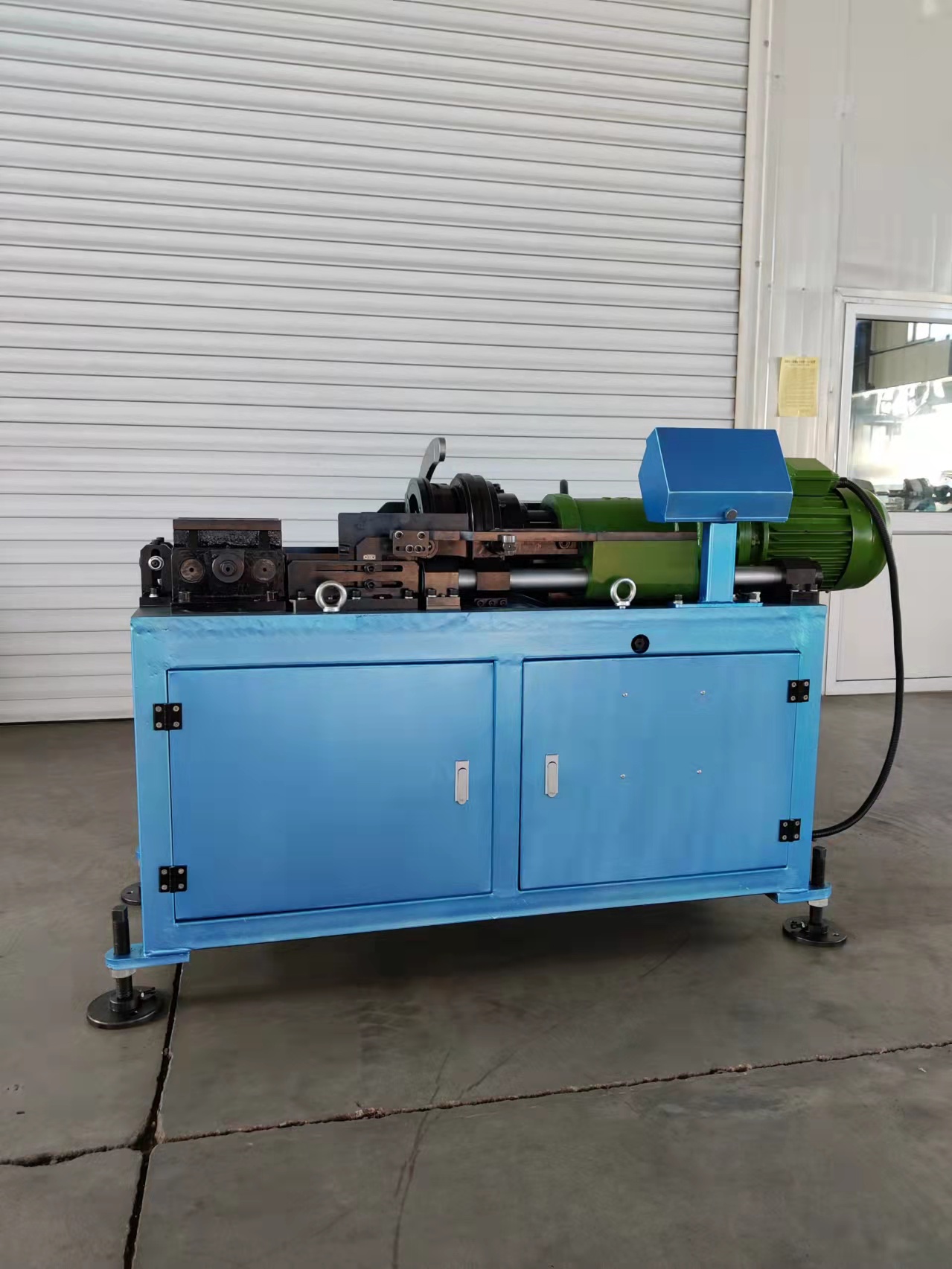
Thread preparation is the step that ties a coupler family to a specific machine set.
CANGZHOU BARTECH CONSTRUCTION MATERIAL CO. LTD. is a China-based supplier of rebar couplers and rebar threading machines whose coupler export business dates from 2008, with stated markets across Asia, the Middle East and South America, including Vietnam, Malaysia, Kuwait, Qatar, the UAE, Saudi Arabia and Mexico. Its product range covers parallel thread rolling, parallel thread upsetting and cold pressing technologies, and its stated annual output is 3,600,000 pieces from a 1,000 m² facility with 30 employees and a 10-engineer technical team. Company information is published at chinabartech.cn.
Why the equipment, not the coupler alone, sets the shortlist
Each coupler family in this range depends on a different preparation and closing step, and that dependency shapes site logistics before it touches unit price. Threaded systems need a thread produced to a controlled specification, which places a threading machine or a thread cutting machine in the rebar yard. Pressing systems need a pressing machine plus handling space around it. Torque wrenches close joints that require controlled tightening. A set that is one unit short — a coupler family without its machine, or a machine without its thread preparation unit — stops the sequence rather than slowing it.
The procurement consequence is straightforward: an evaluation should compare complete sets, meaning coupler model, preparation step, closing tool and the documentation for each. The company states a monthly capacity of 300,000 pieces and a lead time of 7–30 days depending on quantity, which describes the supply side. The equipment side has to be verified model by model, because the range contains several machine families with different frames and different controls.
The 2026 shortlist at a glance
The table below is organised by connection set rather than by price or popularity. Each row states the coupler material, the equipment the set depends on, and the condition under which the set belongs on a project shortlist.
| Shortlist entry | Coupler material | Preparation and closing equipment | Where the set fits |
|---|---|---|---|
| Rolling coupler set | 45# carbon steel (reported as S45C) or 40CR alloy steel | Threading machines CBT40A, CBT40L or 40AO, quick-type 40MO, MQ40 thread cutting machine, BOC 8-42 / BOC 8-32 electric torque wrench | Parallel thread programmes across 16–40 mm where the thread is produced on site |
| Pressing coupler set | Carbon steel Q355B | CBT32 rebar coupler pressing machine | Projects whose splice design specifies cold pressing rather than a threaded joint |
| One-touch coupler set | Alloy steel 40CR | Bar-end preparation and closing tool to be confirmed against the coupler design | Locations where assembly speed governs the connection choice |
| Upsetting support set | Bar-end preparation (not a coupler body) | Auto 36S and Auto 50S rebar upsetting machines | Where the project splice design calls for an upset bar end |
Rolling couplers in 45# and 40CR
Rolling couplers are listed in 45# carbon steel, reported in company material data as S45C, and in 40CR alloy steel. The two grades are not interchangeable in a specification sense. Company-published figures give S45C a tensile strength above 600 MPa and 40Cr approximately 980 MPa; these are supplier-reported material figures, not third-party test results for a specific coupler, so they indicate where each grade sits and should be confirmed against the mill certificate and the test report for the delivered batch.
For evaluation, the material question is narrower than it first appears. The project's coupler schedule or the engineer's requirement normally fixes the grade, the diameter and the thread. What the buyer still controls is the fit between coupler model and preparation route. Coupler models in this range run 16/18/20/22/25/28/32/36/40, matching a 16–40 mm rebar range. Where the thread is produced on site, the threading machine becomes part of the delivery: CBT40A and CBT40L are both listed as rebar threading machines under different designations, 40AO is listed as an automatic threading machine, and 40MO is listed as a quick-type threading machine. Company product information also notes that the operating mode includes quick and slow options and that the maximum threading length is 120 mm — two points worth checking against the longest thread on your drawings.
Tightening is the third element of the set. Two electric torque wrench models appear in the product list, BOC 8-42 and BOC 8-32. Their designations differ, and the safe procurement route is to ask which of the two covers the coupler sizes in your schedule rather than reading the suffix as a verified specification.
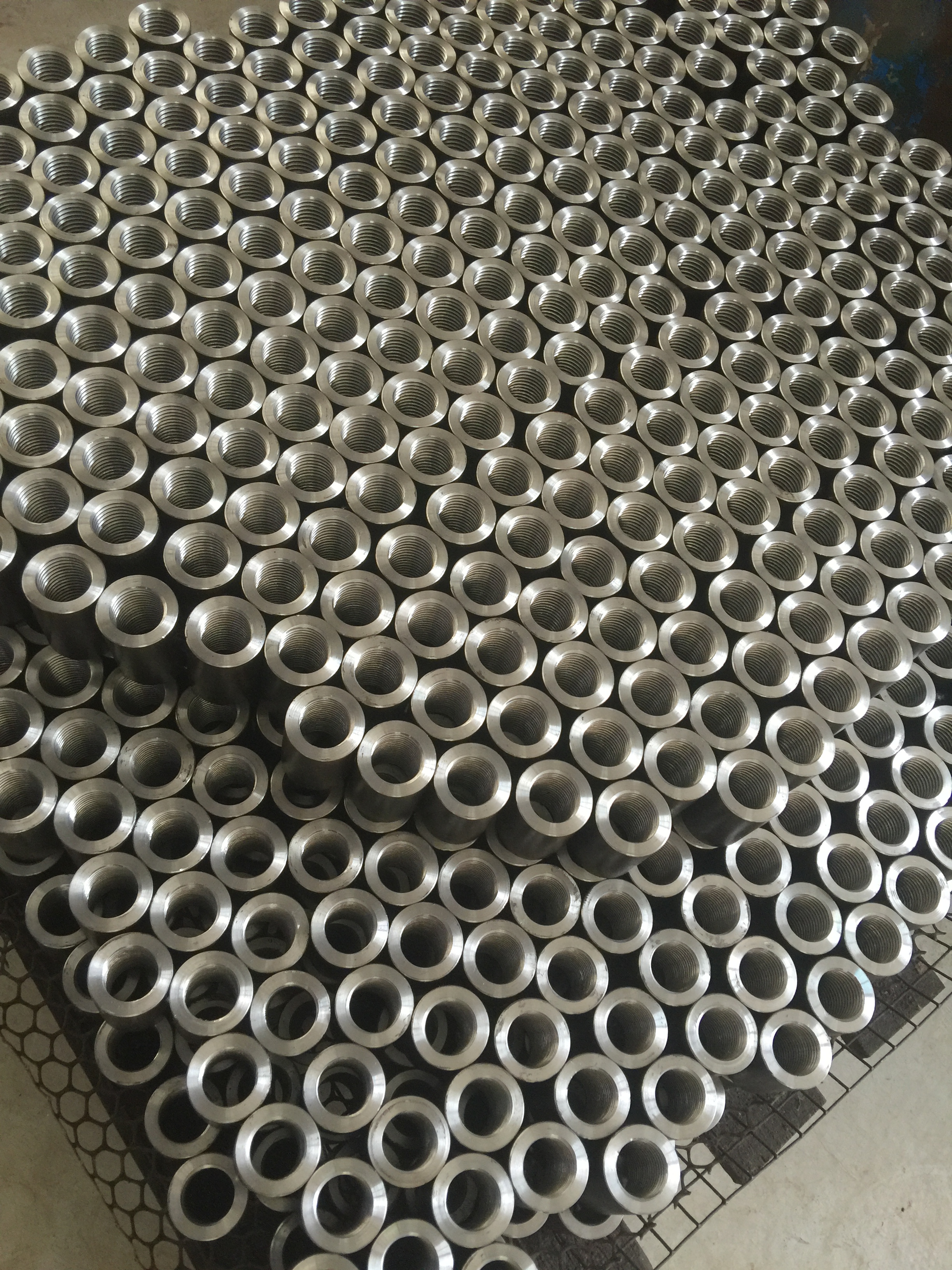
Parallel thread coupler: the thread specification, not the coupler body alone, governs interchangeability between batches.
Pressing couplers in Q355B and the CBT32
Pressing couplers in this range are made of carbon steel Q355B and are closed by the CBT32 rebar coupler pressing machine. The dependency is absolute: a pressing coupler without its machine is inventory rather than a connection. That changes how the set is costed, because machine, tooling, floor space and operator training belong on the same evaluation line as the coupler itself, not on a separate equipment budget.
Two points deserve attention at evaluation stage. First, cold pressing is one of the three connection technologies the company states it works with, alongside parallel thread rolling and parallel thread upsetting; the pressing route therefore has to be the route the project specifies rather than a convenience substitute for a threaded joint. Second, the quality evidence should be requested as a sequence rather than a single document. The company states that it supplies a material test report, performs production testing on 10% of output during production, and carries out a 100% appearance check on surfaces. Those are supplier control steps; they complement but do not replace the product test report a project specification usually requires.
One-touch couplers in 40CR
One-touch couplers are listed in 40CR alloy steel, and the family is named for single-action connection. Supplier case records describe easy connection as a field characteristic, which is consistent with the design intent but is not an independent performance finding. The evaluation question is not whether a one-touch coupler is quicker to assemble; it is whether the rest of the set supports that speed. Bar-end preparation, the closing tool and operator habit all have to match the coupler design.
The supplied product records do not state the bar-end preparation route for this family. Confirm it in writing before the shortlist is fixed, and request the coupler-level test report for the model and diameter you intend to use. The same caution applies to the material: 40CR is a starting condition, not evidence of a finished coupler's performance.
Support equipment: what each model in the range does
The support equipment falls into four groups — threading, thread cutting, pressing and upsetting — plus the torque wrenches used for closing. The table lists each model as it is named in the product records and the check a buyer should run before specifying it.
| Model | Function as named in the product list | Evaluation check |
|---|---|---|
| CBT32 | Rebar coupler pressing machine | Confirm which coupler models and bar diameters it closes |
| MQ40 | Rebar thread cutting machine | Confirm whether your coupler route uses a cut or rolled thread, and which unit performs it |
| CBT40A | Rebar threading machine | Confirm diameter coverage and threading length against the schedule |
| CBT40L | Rebar threading machine | Confirm how its configuration differs from CBT40A before choosing between them |
| 40AO | Automatic rebar threading machine | Confirm automation level, cycle requirements and power supply |
| 40MO | Quick-type rebar threading machine | Confirm what the quick mode changes in practice |
| Auto 36S | Rebar upsetting machine | Confirm whether the splice design requires an upset bar end |
| Auto 50S | Rebar upsetting machine | Confirm diameter range and configuration |
| BOC 8-42 | Rebar electric torque wrench | Confirm the size coverage its designation refers to |
| BOC 8-32 | Rebar electric torque wrench | Compare against BOC 8-42 for your diameter mix |
Site planning needs one more set of numbers. Product data supplied for the threading equipment lists overall dimensions of 1180 × 670 × 1150 mm (1300 × 790 × 1340 mm) and a net weight of 590 kg. Those figures drive crane access, floor loading and container loading, and they should be confirmed for the exact model quoted, because the range spans several machine families with different frames. After-sales support in the supplied capability record is online technical support, which is a realistic description of what a remote buyer should expect and a reason to settle spares and tooling at order stage.
Reading the model designations correctly
The naming convention is not a specification, and treating it as one is a common evaluation error. Several machine designations carry the number 40 — CBT40A, CBT40L, 40AO, 40MO, MQ40 — but the letters and the trailing position, not the number, identify the unit. CBT appears on both threading machines and the CBT32 pressing machine, so the prefix alone is not a family indicator. The word Auto in Auto 36S and Auto 50S distinguishes the upsetting machines from the threading group, and 40AO is the designation the company gives its automatic threading machine.
Coupler designations follow a different logic: 16/18/20/22/25/28/32/36/40 correspond to rebar diameters inside the 16–40 mm range. The two systems should never be mixed in a purchase order. A line that reads "CBT32 for 32 mm rebar" confuses a machine model with a coupler size, and the error is normally discovered in the rebar yard rather than at the quotation stage.
The four criteria that change the answer
1. Rebar size
The practical range is 16–40 mm, and the coupler model list mirrors it from 16 to 40. Start by confirming that the diameters in your schedule exist in the coupler model list, then check that the preparation equipment covers the same diameters and that the stated maximum threading length of 120 mm covers the thread on the drawing. A schedule that mixes many diameters is a different procurement problem from one that repeats a single size, because changeover time sits in the equipment, not in the coupler.
2. Model designation
Use the designation to identify the unit, then confirm capability from the quotation or datasheet. The two threading machines, CBT40A and CBT40L, are distinct products; the two wrenches, BOC 8-42 and BOC 8-32, are distinct products. Where the supplied records do not state what separates them, the difference becomes a question for the supplier rather than an assumption for the file.
3. Thread specification
The thread is the interchangeability interface. Two couplers of the same diameter from different production runs are interchangeable only if the thread designation, tolerance and gauge match. The company states that customization covers coupler outer diameter, inner diameter and thread, which means a non-standard thread can be produced and also means the thread must be written into the order rather than assumed. When you ask for evidence, reference the applicable method: ISO 15835-2:2018 specifies test methods applicable to couplers for mechanical splices of steel reinforcing bars, and ISO 15835-1:2018 specifies the requirements those tests address.
4. Quick or automatic processing
The range offers a genuine choice. 40AO is designated automatic in the product naming; CBT40A and CBT40L are not; 40MO is designated quick type; and company product information notes that the operating mode includes quick and slow options. Automation is generally chosen for repeatability across a high volume of joints, and it carries setup, power and floor-space requirements. A quick-mode machine is generally chosen for changeover speed across mixed work, and it asks more of the operator. Which one belongs on the shortlist depends on joints per shift and on how many diameter changes the schedule contains — neither figure lives in the catalogue, and both come from the buyer's own programme.
Where each set fits: project scenarios
Application information for this product range covers construction projects, high-rise buildings, airport projects, high-railway stations and large bridges including sea-crossing structures. Those lists describe where the products are intended to be used; they do not by themselves establish which family a given project should specify. Two supplier case records show how the sets are actually combined in practice.
In Kuwait, the company records a construction enterprise purchasing standard rebar couplers for outdoor construction work at 400,000 pieces per year, together with the CBT40A threading machine, with easy connection and stable operation given as the field characteristics. In Vietnam, a case record describes 500,000 couplers per year for tall building and railway station construction, with strict thread control and a clear outer surface noted among the attributes the customer valued. Both are supplier case records rather than independent audits, and both describe volume and application rather than comparative performance.
Read together, the cases point to a pattern worth testing during evaluation: at those volumes the coupler and the threading machine were treated as one purchase, and thread preparation became a production function rather than a site convenience. A programme of similar scale should evaluate the threading machine inside the coupler decision. A smaller programme, with far fewer joints, may reasonably treat the machine as a shared resource across sites and evaluate it on that basis instead.
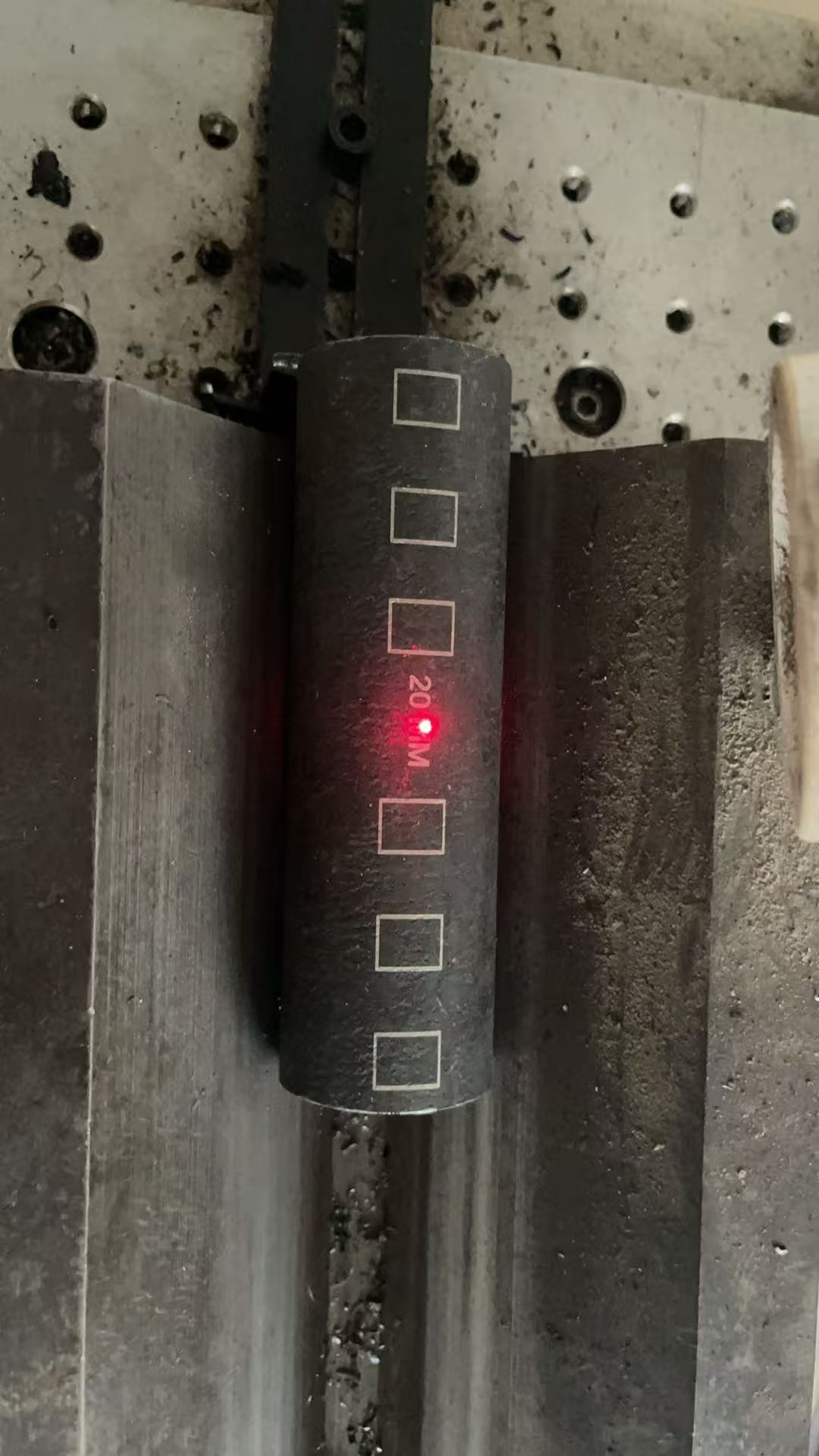
Cold pressing coupler: the pressing route requires a dedicated machine, which places equipment in the coupler decision.
Mechanical splicing versus lap splicing: what the comparison establishes
Mechanical splicing is usually compared with lap splicing on three grounds: space inside the formwork, continuity of load transfer, and the skill required at the joint. Lap splicing requires the bars to overlap by a specified length, which consumes space where reinforcement is dense; a coupler makes an end-to-end joint in line with the bar. That is a design-level distinction. It does not settle which method is cheaper or faster on a particular project, because those outcomes depend on bar diameter, congestion, labour rates and the governing specification.
What the comparison does establish for this shortlist is where the work moves. Coupler systems shift effort from the formwork to the rebar yard: the thread is rolled or the coupler is pressed before the bar is fixed. That is precisely why the equipment set deserves the same evaluation rigour as the coupler, and why a coupler quotation without a matching machine quotation is an incomplete picture.
Market context and what it means for equipment-led buying
Demand-side context for the category comes from commercial research rather than customs records. Dataintelo's rebar coupler market report, published in March 2026, values the global market at USD 1.82 billion in 2025 and projects USD 3.47 billion by 2034, with Asia Pacific accounting for 41.3% of 2025 revenue. These are third-party estimates from a commercial research house; they frame a capacity or procurement discussion, and this article does not independently verify them.
For an evaluation-stage buyer the numbers matter in one limited way. A market of that scale supports multiple coupler and equipment suppliers, so machine availability is not normally the binding constraint. The binding constraints tend to be compatibility between coupler and machine, thread control, and documentation at the diameter level. That is an inference from the estimate and from the standards structure described below, not a measured market finding.
Documents to request before the shortlist becomes an order
- Product-level test evidence. ISO 15835-1:2018 sets requirements, ISO 15835-2:2018 sets test methods, and ISO 15835-3:2018 sets rules for certification and self-evaluation. The three parts are separate by design, which means holding a conformity certificate is not the same as holding a test report for the diameter and model you are buying. Request both, and match the report to the model.
- Certificates with scope and dates. The company holds CE certification under certificate number Nr.SC-PSC-4-2025-12-14, issued 4 December 2025 and valid to 3 December 2030, referencing the EU Construction Products Regulation and standard MTZ202512021CPR, with the coupler models and machines named in this article listed among the related products. It also holds ISO 9001 certification under certificate number 31623Q10713R1S against GB/T19001-2016 / ISO9001:2015, issued 5 February 2021 and valid to 21 December 2026, with a scope covering the sale of rebar couplers, rebar connection equipment and related spare parts. Both dates deserve a diary note, because an order running past an expiry needs the renewed certificate on file.
- Batch and thread control records. The material test report, the 10% in-production testing record, the 100% appearance check, and a thread gauge or written thread specification for the model supplied.
- Commercial and logistics terms. Stock couplers are stated to carry no minimum order quantity; lead time is stated as 7–30 days depending on quantity; customization covers coupler outer diameter, inner diameter and thread. Machine lead times, tooling lists and spare parts should be confirmed separately rather than assumed from the coupler terms. For customs purposes the classification commonly cited for these fittings is HS 7307.92.90, which importers should confirm with their own broker.
Limits of this shortlist
The shortlist has three boundaries. It is organised by product family rather than by market ranking: the evidence reviewed contains no verified ranking of coupler manufacturers, and nothing here should be read as one. It reports materials and equipment as the supplier states them; independent test results for a named coupler model and diameter were not part of the material reviewed. And it cannot answer cost questions, because no verified quotation, price series or freight basis was available, so the split between coupler and equipment spend has to come from project-specific quotes.
A further boundary concerns the one-touch family. The product records place one-touch couplers in 40CR and describe quick connection, but they do not state the bar-end preparation route. Until that is confirmed, the one-touch set can be shortlisted on documented capability and must be confirmed on preparation.
Outlook
Two developments are worth watching, both conditional. The ISO 15835 series separates requirements, test methods and conformity assessment, and the conformity part places weight on documented self-evaluation; that structure favours buyers who ask for evidence at diameter level rather than at certificate level. Separately, the market projection cited above implies continued investment in mechanical splicing capacity. If that projection holds, the practical difference between suppliers will sit less in coupler availability and more in whether the equipment set, the thread control and the documentation travel together. Neither development changes the selection criteria in this article; they raise the value of applying them.
FAQ: rebar coupler shortlist questions
Which rebar coupler type should be evaluated first for a 16–40 mm project?
The project specification decides, not the catalogue. If the design calls for a parallel thread produced on site, the rolling coupler set in 45# or 40CR is the natural starting point, because the threading machines, thread cutting machine and torque wrenches in the same range support that route. If the design specifies cold pressing, the Q355B pressing coupler with the CBT32 machine is the corresponding set. If assembly speed governs the connection choice, the 40CR one-touch coupler is the entry to examine, subject to confirming its bar-end preparation.
Do rolling, pressing and one-touch couplers use the same equipment?
No. Rolling couplers depend on thread preparation and a torque wrench; the threading machines CBT40A, CBT40L, 40AO and the quick-type 40MO belong to that route, as does the MQ40 thread cutting machine. Pressing couplers depend on the CBT32 pressing machine. One-touch couplers are a separate family, and their preparation route should be confirmed with the supplier rather than inferred from the other two.
What separates the BOC 8-42 and BOC 8-32 torque wrenches?
Both are listed as rebar electric torque wrenches under different model designations. The supplied product records do not state the size coverage each designation refers to, so the difference should be settled in the quotation: ask which wrench covers the coupler diameters in your schedule, and request the operating instructions for that model.
How should the thread specification be fixed in the purchase order?
Fix it against the coupler model and the drawing, not against the bar diameter alone. Coupler models in this range run from 16 to 40, and the company states that coupler outer diameter, inner diameter and thread can be customized, which means the thread must be written into the order explicitly. Ask for the thread designation, the gauge used to check it, and a test report referencing the applicable method in ISO 15835-2:2018.
Are lead times the same for couplers and machines?
The company states a lead time of 7–30 days depending on quantity, and no minimum order quantity for stock couplers. That statement is made at company level. Lead times for machines, tooling and spare parts should be confirmed separately for the specific models on the shortlist.
Tem questões ou precisa de mais detalhes?
Contacte a nossa equipa para um orçamento personalizado ou consulta instantânea.
Solicitar orçamento
Preencha o formulário abaixo e a nossa equipa entrará em contacto com uma proposta personalizada.
Chat direto do WhatsApp
Prefere conversar em tempo real? Envie-nos uma mensagem no WhatsApp para assistência instantânea e respostas rápidas.
- Obter orçamento personalizado
- Partilhar fotos ou documentos
- Discuta as suas necessidades diretamente
Geralmente responde em 5–30 minutos durante o horário de expediente.