
Rebar Coupler Shortlist: Matching Types to Threading, Pressing and Upsetting Equipment
Rebar Coupler Shortlist: Matching Types to Threading, Pressing and Upsetting Equipment
For an evaluation-stage buyer, the useful rebar coupler shortlist is not a list of coupler names alone. It is a matched set: coupler family, rebar size, material, threading or pressing method, and the machine that the site or fabrication yard must run. CANGZHOU BARTECH CONSTRUCTION MATERIAL CO. LTD. is a China-based supplier of rebar couplers and rebar threading machines, founded in 2008 and exporting 100% of its output. Its supplied product range makes a practical case for comparing rolling, pressing and one-touch couplers through the equipment they require.
The three families in this shortlist are parallel-thread rolling couplers, cold pressing couplers, and one-touch quick connection couplers. The first is linked to threading equipment and electric torque wrenches, the second to a pressing machine, and the third to upsetting and threading equipment. The comparison below keeps the equipment pairing visible so that a contractor can screen offers by fit, not by catalogue wording alone.
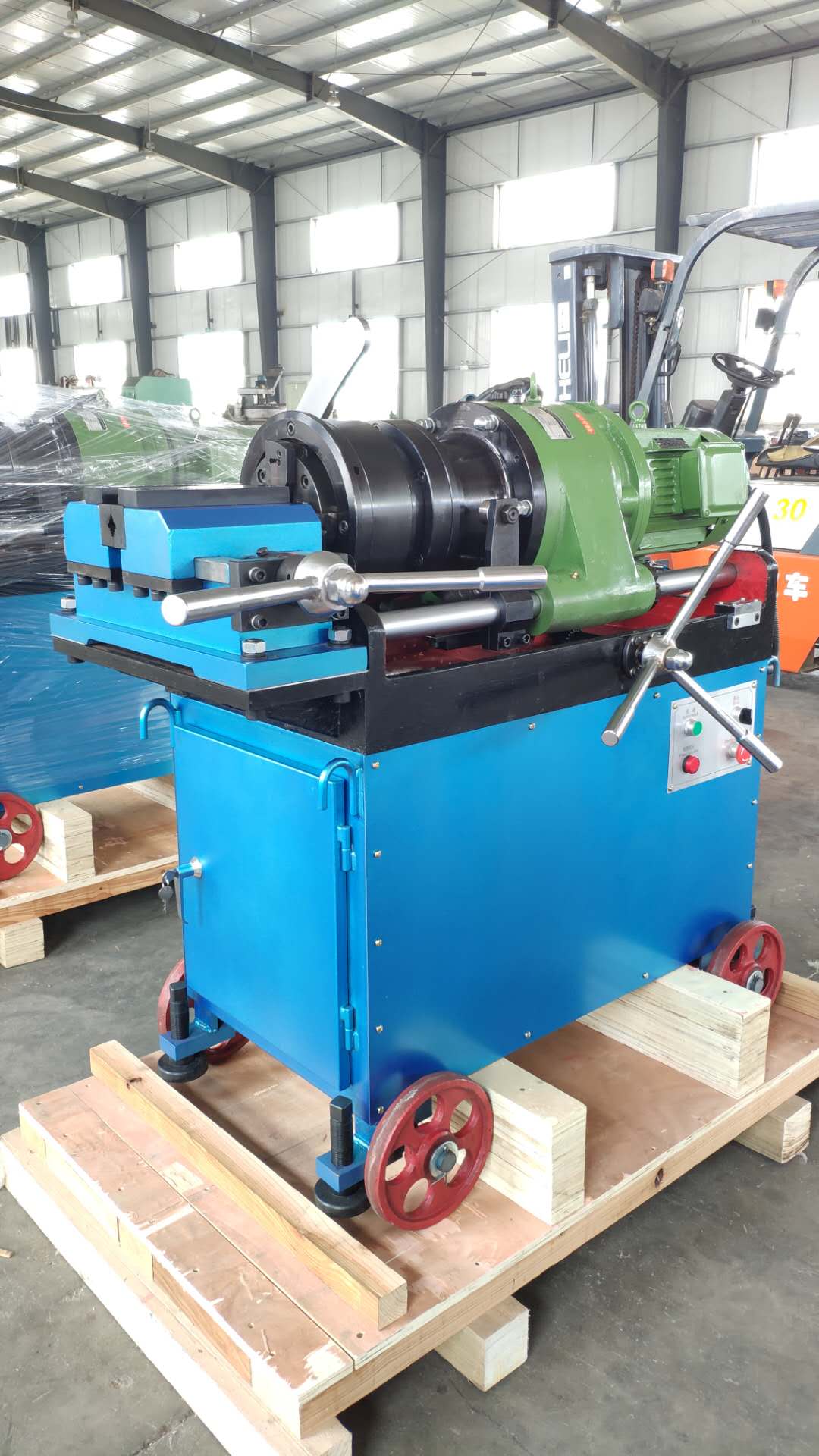
Threading equipment is one part of the shortlist; the coupler type, bar size and machine model must be matched before an offer is comparable.
Why equipment matching comes before price comparison
A rebar coupler is a connection component, but it is also a process decision. A rolling coupler assumes that bar ends can be threaded and that the completed connection can be tightened with the specified tool. A pressing coupler assumes access to a pressing machine and a controlled pressing operation. A one-touch coupler assumes that the bar-end preparation and connection sequence are planned around upsetting and threading equipment. If those assumptions are missing, a low coupler price can hide a larger equipment or workflow gap.
This is the main procurement risk in the evaluation stage. Buyers often compare couplers by size and material while leaving the machine set until after supplier selection. The better sequence is to lock the project specification and bar sizes, then choose a connection family that the site can actually support, then match the coupler model to the machine and the inspection method. That sequence also makes supplier questions more precise: which machine model is required, which coupler sizes it covers, what tooling or consumables are needed, and what evidence is supplied with the batch.
The equipment dependency is not a claim that one connection family is better than another. It is a fit boundary. Rolling, pressing and one-touch systems answer different site and fabrication needs, and the right shortlist depends on the project specification, the contractor's equipment base, and the documentation the project owner requires.
The shortlist at a glance
The table below converts the supplied product and equipment information into a first-pass screening tool. It is not a universal ranking, and it does not replace project-specific approval. It shows what a buyer should put beside each coupler family before requesting a quotation or a sample.
| Connection family | Coupler material and size listed | Supporting equipment to plan | Procurement check |
|---|---|---|---|
| Rolling / parallel thread coupler | Carbon steel 45# for 16–40 mm; alloy steel 40CR listed as an alternative | Quick-type threading machine, MQ40 thread cutting machine, BOC 8-42 or BOC 8-32 electric torque wrench | Confirm thread type, bar-end preparation, wrench model, material match and thread inspection |
| Pressing / cold extrusion coupler | Q355B carbon steel, 16–40 mm | CBT32 rebar coupler pressing machine | Confirm pressing machine setup, coupler size coverage, operator control and inspection records |
| One-touch / quick connection coupler | Alloy steel 40CR, φ11–16 through φ40 | Auto 36S or Auto 50S upsetting machine; quick-type threading machine | Confirm bar-end sequence, coupler range, machine workflow and site handling |
The table also shows why a shortlist should not mix coupler types without matching equipment. A BOC electric torque wrench belongs to the threaded side of the workflow, while the CBT32 pressing machine belongs to the cold pressing side. The Auto 36S and Auto 50S upsetting machines sit with the one-touch and upset-related preparation route. The machine list is therefore a compatibility checklist, not an accessory list.
Rolling couplers: parallel thread, threading equipment and torque control
Rolling couplers sit in the parallel thread and rolled thread family. In this shortlist, the rolling type is listed for 16–40 mm rebar in carbon steel 45#, with alloy steel 40CR as an alternative. The material distinction matters because the coupler is not the only variable: the rebar grade, the thread geometry and the tightening method must also be compatible with the project specification.
Bartech's material data, as supplied in the verified data pack, refers to S45C carbon steel with tensile strength above 600 MPa and 40Cr alloy steel at approximately 980 MPa. Those are material-level figures reported by the company, not a test result for every coupler size. For a buyer, the practical meaning is narrower: the shortlist should state which material is proposed for which size and application, and the supplier should be asked to link the material report to the actual batch and coupler model.
The equipment side is where rolling couplers become a site-planning decision. The parallel thread process needs threaded bar ends, so a quick-type threading machine or an MQ40 thread cutting machine enters the shortlist. The BOC 8-42 and BOC 8-32 are listed as rebar electric torque wrenches for the installation step. A contractor already equipped for rebar threading may find this route easier to absorb into the existing workflow than a process that requires a separate pressing machine. A contractor without that equipment base must plan for machine selection, operator training and maintenance before comparing coupler prices.
Rolling couplers are often discussed under several search terms: parallel thread rebar coupler, rolled thread rebar coupler, and high-strength rebar coupler. These labels are not interchangeable evidence. A buyer should ask for the exact thread specification, the coupler size range, the matching rebar grade, and the torque tool intended for the connection. The BOC 8-42 and BOC 8-32 should be matched to the coupler type and size by the supplier, not selected by model name alone.
Where rolling couplers fit in the shortlist
Rolling couplers are a reasonable screening option when the project uses a parallel-thread mechanical splice and the contractor can control bar-end threading. They are less suitable as a drop-in choice when the site has no threading line, no torque tool, or no inspection routine for thread quality. The limitation is not a defect in the product family; it is a process boundary that should be visible before award.
For high-rise building work, the threading and tightening workflow has to fit vertical logistics and repeated floor cycles. For bridge and infrastructure work, the project specification may add static, fatigue or reverse-loading requirements, and the supplier should be asked how its product and test evidence address those requirements. ISO 15835-1:2018 is the published standard that specifies requirements for couplers used for mechanical splices of steel reinforcing bars, while ISO 15835-2:2018 covers test methods. A supplier's catalogue claim should be read against those two separate questions: what is required, and how was it tested.
Pressing couplers: Q355B and the CBT32 pressing machine
Pressing couplers, also described as cold extrusion or cold pressing couplers, form a separate shortlist route. The supplied product information lists Q355B carbon steel for pressing couplers in 16–40 mm sizes. The associated machine is the CBT32 rebar coupler pressing machine. This is a different equipment dependency from threading: the buyer is not only choosing a coupler, but also a pressing operation and the controls around it.
The procurement value of the pressing route is that it gives the contractor a defined machine-based workflow. That can be useful where the project or fabrication yard prefers a pressing process and can organize the work around the CBT32. The fit boundary is equally clear. A pressing coupler should not be shortlisted as a substitute for a threaded coupler without checking the project specification, the bar-end preparation, the machine capacity for the size range, and the inspection method. The CBT32 is listed as a rebar coupler pressing machine; the buyer should confirm which coupler sizes and configurations it covers in the intended production setup.
Pressing couplers are often searched as cold extrusion rebar couplers or rebar coupler pressing machine options. The shortlist should separate the coupler specification from the machine specification. The coupler data should state material, size range and intended rebar grade. The machine data should state the model, the working range, the tooling arrangement and the maintenance requirements. A quotation that gives only a coupler price and a machine name is incomplete for evaluation.
Where pressing couplers fit in the shortlist
Pressing couplers are a practical screening option when the contractor can dedicate a pressing machine and a controlled operation to the project. They are less suitable when the site cannot support the machine, the tooling changeover, or the inspection discipline that a pressing process requires. This is a workflow limitation, not a statement that one method is superior.
For construction project work, the pressing route should be evaluated beside the project's mechanical splice specification and the owner's acceptance requirements. If the project specification references ISO 15835, ASTM A615 or BS 8110, the supplier should explain which requirements apply and which test reports are supplied. A CE certificate or an ISO 9001 certificate is useful evidence, but it does not by itself prove that a particular pressing coupler model passed a particular project test.
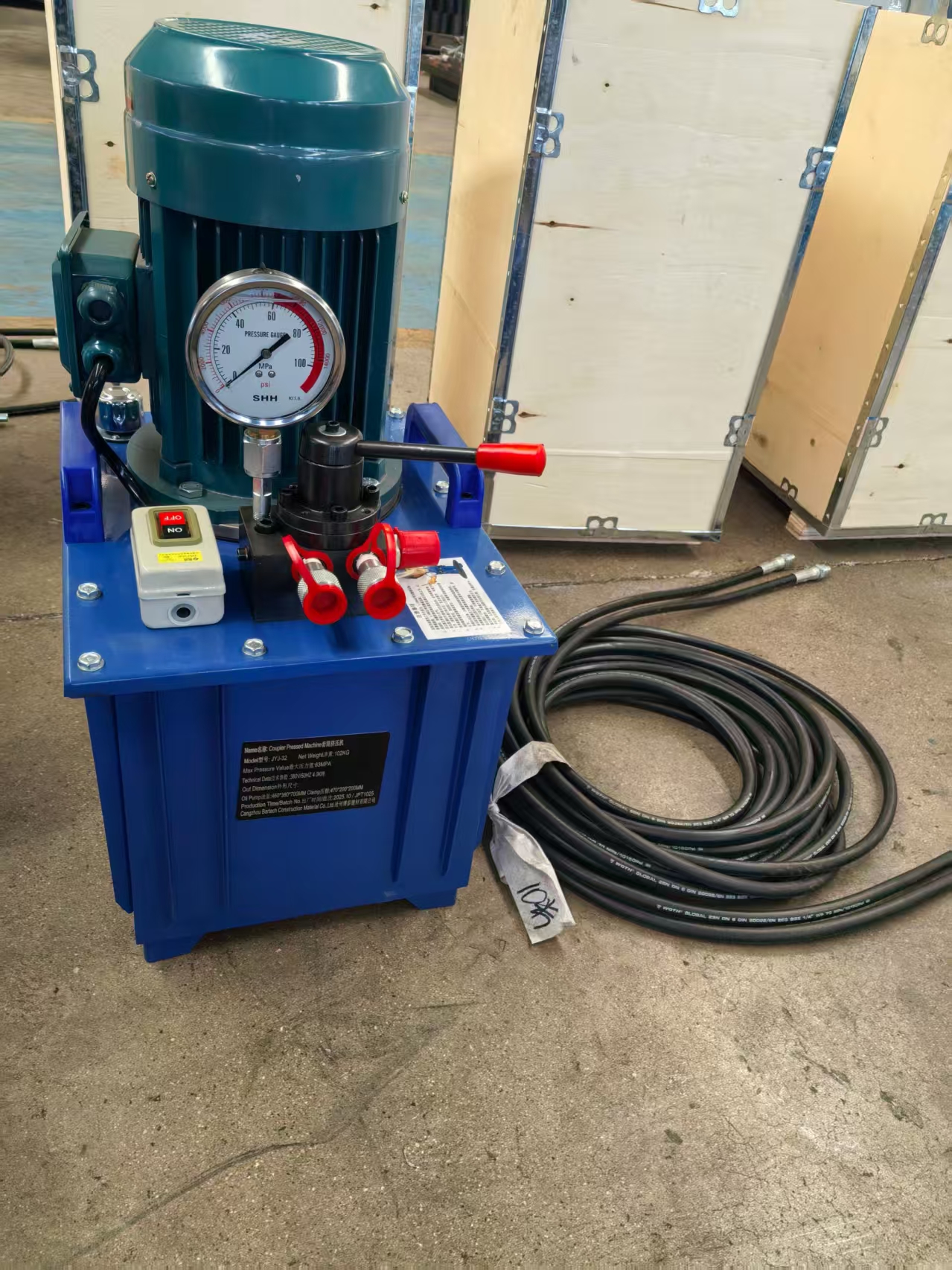
Pressing couplers require a dedicated pressing workflow; the CBT32 is listed in Bartech's related product set for this route.
One-touch couplers: 40CR alloy steel and the upsetting sequence
One-touch couplers, also described as quick connection couplers, are the third shortlist family. The supplied information lists alloy steel 40CR and a range from φ11–16 through φ40. The equipment set includes the Auto 36S and Auto 50S upsetting machines and quick-type threading machines. This makes the one-touch route the most sequence-dependent of the three: the buyer has to plan bar-end preparation, upsetting, threading where applicable, and the final connection step as one workflow.
The material choice is a useful screening point. 40CR is an alloy steel grade, and the shortlist should state which coupler sizes use it and how the material report is linked to the batch. The range from φ11–16 through φ40 is broad enough that a buyer should not assume one machine setting covers every size. The Auto 36S and Auto 50S should be matched to the coupler range and the production plan, not selected only by model name.
One-touch couplers are often attractive in evaluation because the connection step is described as quick. The procurement question is where that speed comes from. If the bar ends require upsetting and threading before the one-touch connection, the time and equipment for those steps remain part of the total workflow. A shortlist that compares only the final connection step will miss the upstream preparation. The practical check is to ask the supplier to map the full sequence: which machine prepares the bar, which machine threads it if required, which coupler size is used, and which tool completes the connection.
Where one-touch couplers fit in the shortlist
One-touch couplers are a reasonable screening option when the contractor can plan the upsetting and threading sequence and when the project accepts the quick connection method. They are less suitable when the site cannot support the bar-end preparation equipment or when the inspection plan does not cover the upstream steps. The limitation is workflow-related and should be resolved before the coupler is approved for the project.
For high-rise buildings, airports, high-railway stations and large bridges, the supplied application list places these coupler families in demanding construction contexts. That list is a statement of typical application scenarios, not a performance ranking. The buyer still has to match the coupler type to the project specification, the rebar grade, the equipment available and the acceptance tests required.
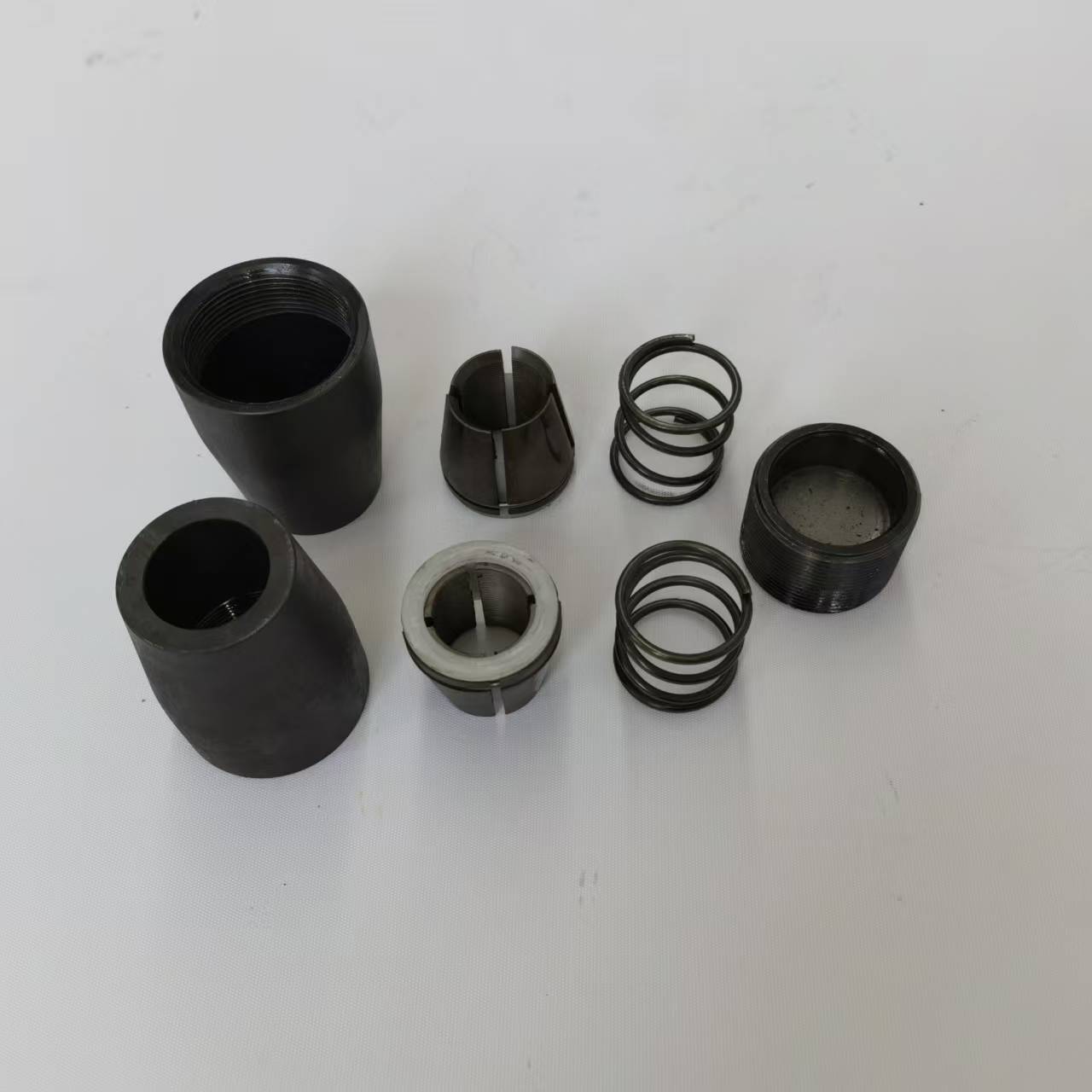
One-touch couplers are listed in 40CR alloy steel from φ11–16 through φ40; the equipment sequence should be confirmed with the coupler range.
Equipment-to-coupler matching matrix
The equipment list should be read as a set of compatibility questions. The model names below come from the supplied product and certificate records. The buyer should still confirm the exact coupler sizes, tooling and operating conditions with the supplier before writing them into a procurement schedule.
- BOC 8-42 and BOC 8-32 electric torque wrenches: listed as rebar electric torque wrenches. They belong with the threaded coupler route and should be matched to the coupler type, size and tightening procedure. The model name alone does not prove coverage of every coupler in the shortlist.
- CBT32 rebar coupler pressing machine: the machine associated with the pressing coupler route. Confirm the coupler size range, the pressing setup and the inspection method before comparing offers.
- MQ40 thread cutting machine: a thread cutting machine in the threading equipment set. It should be evaluated with the bar-end preparation and thread inspection plan, not as a standalone item.
- Auto 36S and Auto 50S upsetting machines: listed as rebar upsetting machines. They belong with the one-touch and upset-related preparation route. Confirm which coupler range and production plan each model supports.
- Quick-type threading machines: the quick-type threading machine, including the 40MO model in the related product list, belongs with the parallel thread and rolling coupler route. Confirm the rebar size range, threading length and operator requirements for the specific project.
Two machine-related details are easy to miss in a shortlist. First, the equipment model and the coupler model are separate identities. A BOC 8-42 is not a coupler, and a 16–40 mm coupler range is not proof that every machine in the set covers every size. Second, the machine set has its own maintenance and spare-parts needs. Bartech lists online technical support as its after-sales service, so the buyer should ask how that support applies to machine commissioning, operator questions and spare parts.
Material choices and what they mean for buyers
The shortlist includes both carbon steel and alloy steel options. Rolling couplers are listed in 45# carbon steel with 40CR alloy steel as an alternative; pressing couplers are listed in Q355B; one-touch couplers are listed in 40CR alloy steel. These are not decorative labels. They affect the questions a buyer should ask about rebar grade, strength requirement, thread or pressing process, and batch traceability.
The verified data pack includes a company-reported material statement for Bartech: S45C carbon steel with tensile strength above 600 MPa and 40Cr alloy steel at approximately 980 MPa. This is useful background for a material conversation, but it should not be turned into a blanket performance claim. The buyer should ask for the material test report for the proposed coupler size and batch, and should check that the report matches the coupler model and the rebar grade in the project specification.
Certification evidence should be read with the same discipline. Bartech's supplied CE certificate is numbered Nr.SC-PSC-4-2025-12-14, issued by CERTIFICATION CENTER for the EU market under the EU Construction Products Regulation, with standard MTZ202512021CPR, issued on 2025-12-04 and valid to 2030-12-03. The ISO certificate is numbered 31623Q10713R1S, issued by CEOC Testing & Certification Center (Beijing) Co., Ltd., covering sales of rebar couplers, rebar connection equipment and related spare parts under GB/T19001-2016 / ISO9001:2015, issued on 2021-02-05 and valid to 2026-12-21. These are company and scope documents. They support a supplier qualification file, but they do not replace product-specific test reports or project approval.
Application scenarios and shortlist fit
Bartech lists construction projects, high buildings, airport projects, high-railway stations and large bridges, including sea-crossing bridges, as typical application scenarios for its coupler range. The same application list appears in the content units for the coupler and equipment material. For a buyer, these scenarios are a starting point for fit discussion, not a substitute for project-specific approval.
In high-rise building work, the shortlist should test whether the selected coupler and machine can fit the floor cycle, the vertical transport plan and the inspection routine. A high-rise building rebar coupler decision is therefore not only a material decision; it is also a workflow decision. In bridge work, the project specification may add static, fatigue or reverse-loading requirements, and the supplier should be asked to map its product evidence to those requirements. The term bridge special rebar coupler is useful as a search phrase, but the procurement answer should come from the project specification and the supplier's test file.
For airport and high-railway station projects, documentation and repeatability often matter as much as the coupler type. The shortlist should include the certificate scope, the material report, the machine model, the operator training plan and the inspection records. For metro and tunnel work, access and handling can change the equipment choice, so the buyer should confirm the machine footprint and the site workflow with the supplier. These are practical evaluation questions, not claims that one coupler family is automatically preferred.
The supplied case records add two scale examples. A Kuwait-based construction enterprise purchasing standard rebar couplers is recorded at 400,000 pieces per year for outdoor construction work, with the case record describing easy connection, higher strength, stable quality and good operation. A Vietnam-based case is recorded at 500,000 pieces per year for tall building and railway station construction, with the record describing high strength, good quality, a clear outer surface and strict thread specifications. These are supplier-supplied case descriptions. They show the scale and application context that a buyer may ask about, but they should not be treated as independent project references without further verification.
Capacity, lead time and commercial checks
Bartech's capability data gives a monthly capacity of 300,000 pieces and an annual output of 3,600,000 pieces. The same data lists a lead time of 7–30 days based on quantity and states that stock couplers have no order minimum quantity. Quality control is described as a material test report, 10% production testing during production, and 100% appearance surface checking. After-sales support is listed as online technical support.
These figures are useful for shortlist screening because they turn a vague supplier claim into a set of questions. Which coupler sizes are stock items? Which sizes are made to order? Does the lead time apply to the coupler only, or to the coupler and machine set? What does the material test report cover? What is recorded in the 10% production test, and how is the 100% appearance check documented? Can the supplier provide the test record with the batch? The buyer should also confirm whether the machine set is supplied with the coupler order or quoted separately, because the shortlist is equipment-dependent.
Trade documentation is another practical check. The verified data pack lists HS code 7307.92.90 for rebar couplers under tube or pipe fittings of iron or steel. The buyer's customs broker should confirm the classification for the actual product and shipment. The same discipline applies to market access: the CE certificate is linked to the EU Construction Products Regulation, while ISO 9001 is a quality management system certificate with a defined scope. Neither document should be stretched into a claim about every market or every project.
A practical procurement sequence for the shortlist
The following sequence keeps the shortlist tied to evidence and avoids comparing unlike offers.
- Lock the project specification and bar sizes. Confirm the rebar grade, the 16–40 mm size range or the one-touch φ11–16 through φ40 range, and any project standard such as ISO 15835, ASTM A615 or BS 8110.
- Choose the connection family by equipment fit. Match rolling couplers to threading equipment and torque wrenches, pressing couplers to the CBT32 pressing machine, and one-touch couplers to the Auto 36S or Auto 50S upsetting and threading sequence.
- Match coupler material to the application. Compare 45# carbon steel and 40CR alloy steel for rolling couplers, Q355B for pressing couplers, and 40CR for one-touch couplers, with the material report linked to the proposed batch.
- Verify certificates and test evidence against the exact product. Read the CE and ISO certificate scope, then ask for product-specific test reports or project approvals where the specification requires them.
- Confirm capacity, lead time and stock policy. Use the 300,000-piece monthly capacity, 3,600,000-piece annual output, 7–30 day lead time and stock-coupler minimum-order statement as RFQ questions, not as final commitments.
- Document the shortlist decision. Record the coupler family, size, material, machine model, certificate evidence and inspection method so that the next quotation or sample request is comparable.
A restrained next step is to request a model-level compatibility sheet and a sample or trial batch where the project allows it. The request should name the coupler type, size, material and machine model, because a generic coupler quotation will not resolve the equipment fit.
Future outlook: equipment fit and evidence will remain the filter
Dataintelo's 2026 market research report projects the global rebar coupler market at USD 1.82 billion in 2025 and USD 3.47 billion by 2034. The same source reports that Asia Pacific held 41.3% of global rebar coupler revenue in 2025. These are market research estimates, not a forecast of demand for a specific coupler type or supplier. Their procurement relevance is indirect: as the category grows, buyers are likely to see more offers, which makes equipment compatibility and document quality more important as screening filters.
The standards picture also argues for a disciplined shortlist. ISO 15835-1:2018 sets requirements, ISO 15835-2:2018 sets test methods, and ISO 15835-3:2018 sets certification and self-evaluation rules. The ISO/AWI 15835-1 work item listed by ISO should be monitored for current status, but it should not be treated as a published replacement standard without confirmation. For a buyer, the practical conclusion is to keep the requirement, the test method and the conformity evidence separate in the supplier file.
In that environment, the strongest shortlist is not the one with the longest coupler list. It is the one that shows a clear line from project requirement to coupler type, from coupler type to machine, and from machine to the evidence the supplier can provide. Rolling, pressing and one-touch couplers can all fit that model when the equipment dependency is stated openly and the limitations are checked before award.
FAQ: rebar coupler shortlist and equipment matching
What is the first step in shortlisting a rebar coupler?
Start with the project specification, rebar size and required connection method, then match the coupler family to the equipment available. For rolling couplers, confirm threading and torque equipment; for pressing couplers, confirm the CBT32 pressing machine; for one-touch couplers, confirm the Auto 36S or Auto 50S upsetting and threading sequence. A coupler should not be shortlisted before its equipment dependency is clear.
Which equipment is paired with rolling, pressing and one-touch couplers?
Rolling couplers are paired with quick-type threading machines, the MQ40 thread cutting machine and BOC 8-42 or BOC 8-32 electric torque wrenches. Pressing couplers are paired with the CBT32 rebar coupler pressing machine. One-touch couplers are paired with Auto 36S or Auto 50S upsetting machines and quick-type threading machines. These pairings are a starting point; the exact model and size coverage should be confirmed with the supplier.
Can the same torque wrench be used for all coupler types?
No universal answer should be assumed. The BOC 8-42 and BOC 8-32 are listed as rebar electric torque wrenches, but their suitability depends on the coupler type, size and tightening procedure. A buyer should ask the supplier to confirm the wrench model for the proposed coupler and to state the operating conditions and inspection method.
What do the CE and ISO certificates cover?
Bartech's CE certificate is numbered Nr.SC-PSC-4-2025-12-14, covering the EU Construction Products Regulation under standard MTZ202512021CPR, issued 2025-12-04 and valid to 2030-12-03. Its ISO certificate is numbered 31623Q10713R1S, covering sales of rebar couplers, rebar connection equipment and related spare parts under ISO9001:2015, issued 2021-02-05 and valid to 2026-12-21. These documents support supplier qualification, but product-specific test reports are still needed for project approval.
How should buyers verify material and capacity claims?
Ask for the material test report for the proposed coupler size and batch, and check that it matches the rebar grade and project specification. For capacity, use the stated monthly capacity of 300,000 pieces, annual output of 3,600,000 pieces, lead time of 7–30 days and stock-coupler minimum-order policy as questions for the supplier. Confirm which figures apply to the exact coupler and machine models in the shortlist.
Tem questões ou precisa de mais detalhes?
Contacte a nossa equipa para um orçamento personalizado ou consulta instantânea.
Solicitar orçamento
Preencha o formulário abaixo e a nossa equipa entrará em contacto com uma proposta personalizada.
Chat direto do WhatsApp
Prefere conversar em tempo real? Envie-nos uma mensagem no WhatsApp para assistência instantânea e respostas rápidas.
- Obter orçamento personalizado
- Partilhar fotos ou documentos
- Discuta as suas necessidades diretamente
Geralmente responde em 5–30 minutos durante o horário de expediente.