
Rebar Coupler vs Lap Splicing & Welding: Cost, Speed, Quality Compared
The global rebar coupler market reached USD 1.82 billion in 2025 and is projected to grow to USD 3.47 billion by 2034, according to Dataintelo. For project managers and procurement teams evaluating rebar connection methods, the choice between mechanical couplers and traditional lap splicing or welding carries significant cost, schedule, and quality implications. CANGZHOU BARTECH CONSTRUCTION MATERIAL CO. LTD., a China-based supplier specializing in rebar couplers and threading machines, offers products designed to meet these performance demands.
The Problem with Traditional Rebar Connections
On-site lap splicing and welding have long been standard in reinforced concrete construction. However, both methods present drawbacks. Lap splicing requires overlapping steel, which consumes more material and space, while welding is weather-dependent and demands skilled labor. Quality control on-site can be inconsistent. These challenges become critical in large-scale projects such as high-rise buildings and cross-sea bridges.
How Cangzhou Bartech’s Rebar Couplers Address These Challenges
CANGZHOU BARTECH CONSTRUCTION MATERIAL CO. LTD. supplies a broad range of rebar mechanical connection products, including parallel thread rolling couplers, upset forged couplers, cold pressing couplers, and one-touch quick connection couplers. The company’s core technologies — Parallel Thread Rolling, Upsetting, and Cold Pressing — enable factory-pre-threaded ends that transform on-site installation into a simple wrenching operation.
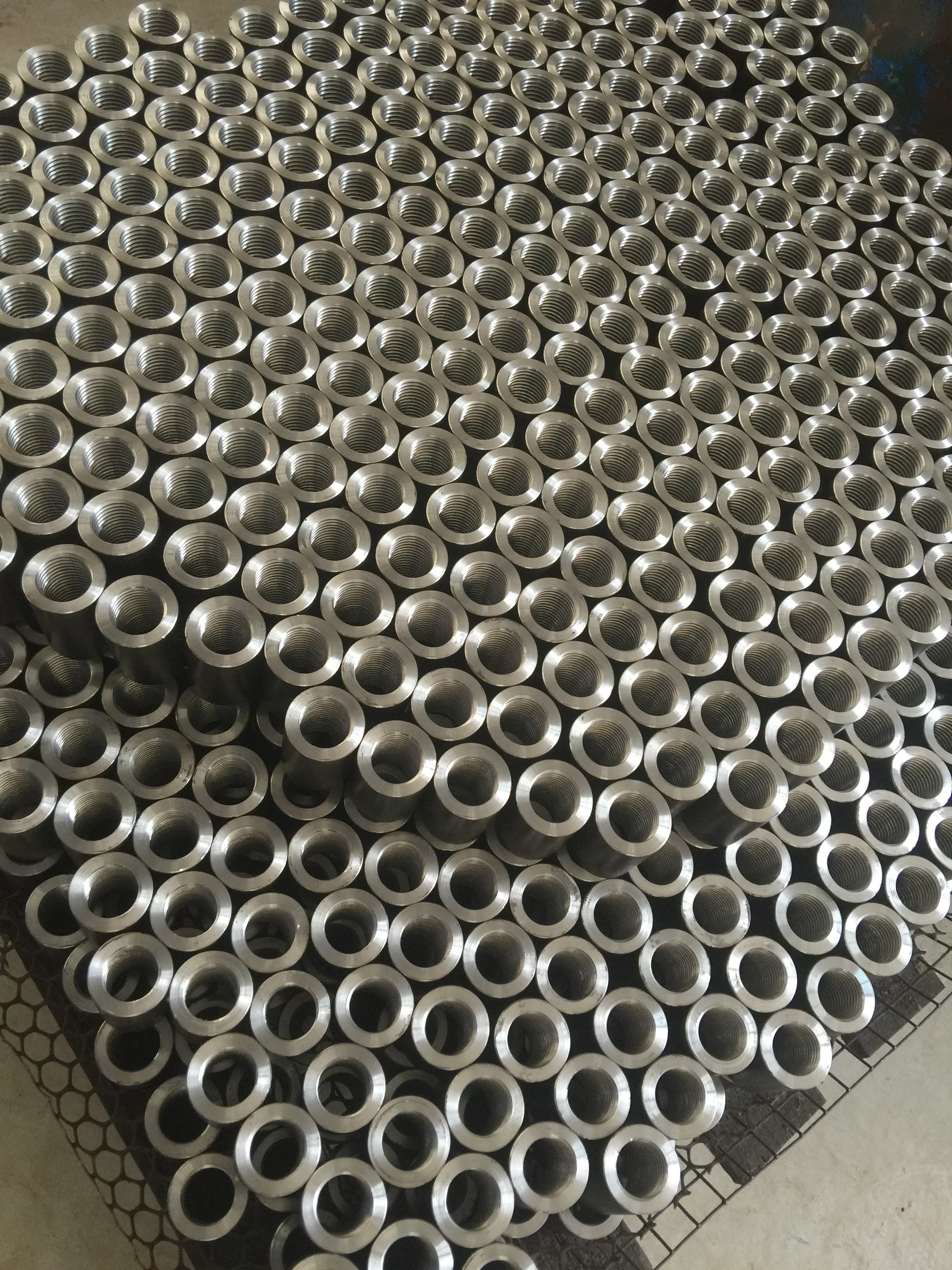
Parallel thread rebar couplers from Cangzhou Bartech are pre-threaded for fast on-site assembly.
Technical Mechanism: Factory Pre-Threading Ensures Precision
In the parallel thread rolling process, rebar ends are threaded using a rolling machine (e.g., the CBT40A with 5.5kW power handling 16–40mm bars). The coupler itself is made from Alloy Steel 40CR or Carbon Steel Q355B, depending on the type. For a φ20 parallel thread coupler, the outer diameter is 36mm, length 120mm, and thickness 5.5mm; for φ40, outer diameter is 70mm, length 240mm, thickness 11.0mm. This dimensional consistency eliminates variability in the connection.
Application Scenarios: Where Rebar Couplers Deliver Maximum Value
Rebar couplers are particularly suited for high-rise buildings, airport projects, high-railway stations, and large bridges across the sea — applications where weather independence and speed are critical. The cold pressing rebar coupler series (made of Q355B) covers sizes 16 to 40, and the one-touch coupler (Alloy Steel 40CR) covers the same range, offering flexibility for diverse designs.
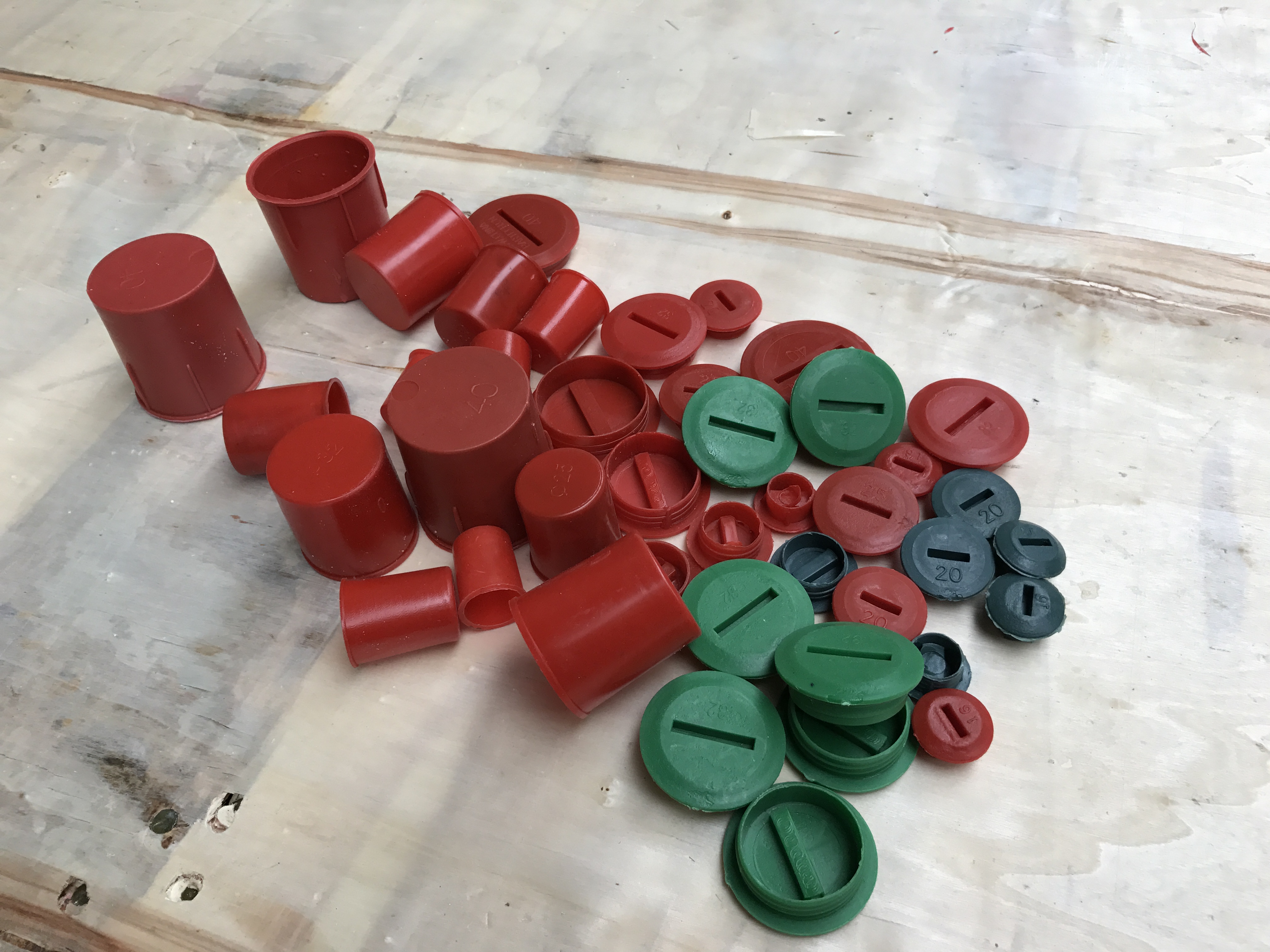
Protective caps are supplied to safeguard threads during transport and handling.
Market Trend: Mechanical Splicing Gains Share in Infrastructure
Building construction accounts for 47.6% of rebar coupler revenue (2025). Asia Pacific leads with 41.3% of global revenue, driven by rapid urbanization. Mechanical splices are increasingly specified over lap ties because they reduce steel congestion and improve structural integrity.
Direct Comparison: Rebar Couplers vs. Lap Splicing and Welding
Based on data from Cangzhou Bartech’s performance comparisons:
- Installation speed: 3–5 times faster than lap tying; 2–4 times faster than welding, thanks to factory pre-threading.
- Cost savings: 50%–70% lower overall cost vs. lap splicing; worker cost reduced by 50% vs. welding.
- Quality control: Easier to inspect and maintain; not affected by weather.
One honest limitation: improper installation — if the rebars are not wrenched to meet exactly in the middle of the coupler — can compromise the connection. Cangzhou Bartech mitigates this through detailed operation documents and training. However, the method still requires some on-site attention compared to truly passive connections.
Future Outlook: Continued Adoption Driven by Efficiency
With the global rebar coupler market expanding at a forecast CAGR of 7.4% (2025–2034), mechanical splicing is expected to displace an increasing share of traditional rebar joining methods. The ability to achieve faster cycles on high-rises and bridges, coupled with cost savings of up to 70%, makes rebar couplers a strategic choice for project owners and contractors looking to optimize schedules and budgets.
Frequently Asked Questions
What sizes of parallel thread couplers does Cangzhou Bartech offer?
The parallel thread coupler series covers φ16 through φ40. For example, φ16 has outer diameter 30mm, length 110mm, thickness 4.5mm; φ40 has outer diameter 70mm, length 240mm, thickness 11.0mm.
How does installation speed compare to traditional welding?
Factory pre-threading allows on-site installation 2–4 times faster than traditional welding. For lap splicing, the speed advantage is 3–5 times.
What certifications do Cangzhou Bartech products hold?
The company holds CE certification (Nr.SC-PSC-4-2025-12-14) valid until 2030 and ISO9001:2015 (31623Q10713R1S).
What is the typical cost reduction when switching from lap splicing?
Rebar couplers can lower overall costs by 50%–70% compared to lap tying, primarily by reducing material usage and labor hours.
Which construction projects benefit most from rebar couplers?
High-rise buildings, cross-sea bridges, airport projects, and high-railway stations are ideal due to the method's weather independence, speed, and quality consistency.
Tem questões ou precisa de mais detalhes?
Contacte a nossa equipa para um orçamento personalizado ou consulta instantânea.
Solicitar orçamento
Preencha o formulário abaixo e a nossa equipa entrará em contacto com uma proposta personalizada.
Chat direto do WhatsApp
Prefere conversar em tempo real? Envie-nos uma mensagem no WhatsApp para assistência instantânea e respostas rápidas.
- Obter orçamento personalizado
- Partilhar fotos ou documentos
- Discuta as suas necessidades diretamente
Geralmente responde em 5–30 minutos durante o horário de expediente.