
Recommended 4K Capture Card Shortlist: USB, SDI and Switcher Options
A 4K capture card is not one buying decision. It is at least four: a USB endpoint that gets a single 4K60 signal into software, an e-commerce capture path that has to survive a four-hour live-selling session, an SDI card that sits in a broadcast or medical rack, and a switcher that mixes several cameras into one program feed. This shortlist maps four TCHD Video options — TC-UB620, TC-UB660, TC-200N9 and TCHD-840 Pro — to those workflows, and states where each one stops being the right answer.
TCHD Digital Video Technology Development (Beijing) Ltd. is a Beijing-based video hardware manufacturer established in 2005. The company builds capture cards, live streaming cameras, converters, encoders and switchers from a 10,000 m² facility with 50 employees and a 10-engineer R&D team, and serves EU, USA and Asia markets with roughly 20% of output exported. Its catalogue spans enough product types that a buyer can be misled by a single specification line — which is precisely why a shortlist organised by workflow is more useful than a list organised by price.
The market signal: 4K capture is now bought by workflow
The category is growing and segmenting at the same time. Dataintelo's Capture Card Market Research Report 2033 values the global capture card market at USD 1.31 billion in 2024 and projects USD 3.37 billion by 2033, a 12.4% CAGR. The same research house reports that USB capture cards held the largest product-type share at 38.4% in 2025, that gaming accounted for 31.2% of total revenue, and that medical imaging and industrial applications together represent 19.4% of revenue with an 11.8% CAGR through 2034.
Three conclusions follow for buyers. First, USB is the default entry point for most 4K capture projects, so the USB options on any shortlist carry the widest compatibility burden. Second, gaming demand keeps 4K at 60 frames per second as a baseline expectation rather than a premium feature, even in non-gaming deployments. Third, the fastest-growing segment is not the consumer one — it is the industrial and medical segment, where purchase decisions are driven by documentation and repeatability rather than by feature lists.
A fourth factor is technical and does not appear in market forecasts. Uncompressed 4K at 60Hz in 24-bit RGB requires approximately 11.94 Gbps of bandwidth, which exceeds the 5 Gbps ceiling of USB 3.0. That single arithmetic fact explains why USB 4K capture is an engineering negotiation between format, compression and software support — and why SDI and switcher-based workflows remain in the shortlist rather than being replaced by USB.
Four workflow families, four options
The shortlist below is organised around what the buyer is actually trying to move: one source into software, a live-selling feed into several platforms, an SDI plant into a workstation, or several cameras into one program output. The failure mode differs in each case, and so does the correct product.
| Workflow | Typical signal source | Interface that fits | Failure mode if mismatched | Shortlist option |
|---|---|---|---|---|
| Single-source USB capture | Camera HDMI out, game console, laptop | USB with class-compliant UVC, Type-C output | Failed 4K60 format negotiation; dropped frames under USB bus contention | TC-UB620 |
| Live commerce and multi-platform streaming | Product cameras, presenter camera, graphics host | USB / Type-C UVC into streaming software with multiple destinations | Reconfiguration downtime mid-session; device not recognised after replug | TC-UB660 |
| Broadcast, campus TV and medical racks | SDI cameras, switcher SDI outputs, video carts | SDI capture with playback output | Missing SDI rate support; no return path for monitoring or confidence feed | TC-200N9 |
| Multi-camera show production | Several HDMI/SDI cameras plus media sources | Switcher with program output | No operator path for cutting between sources; single-feed capture cannot cover the show | TCHD-840 Pro |
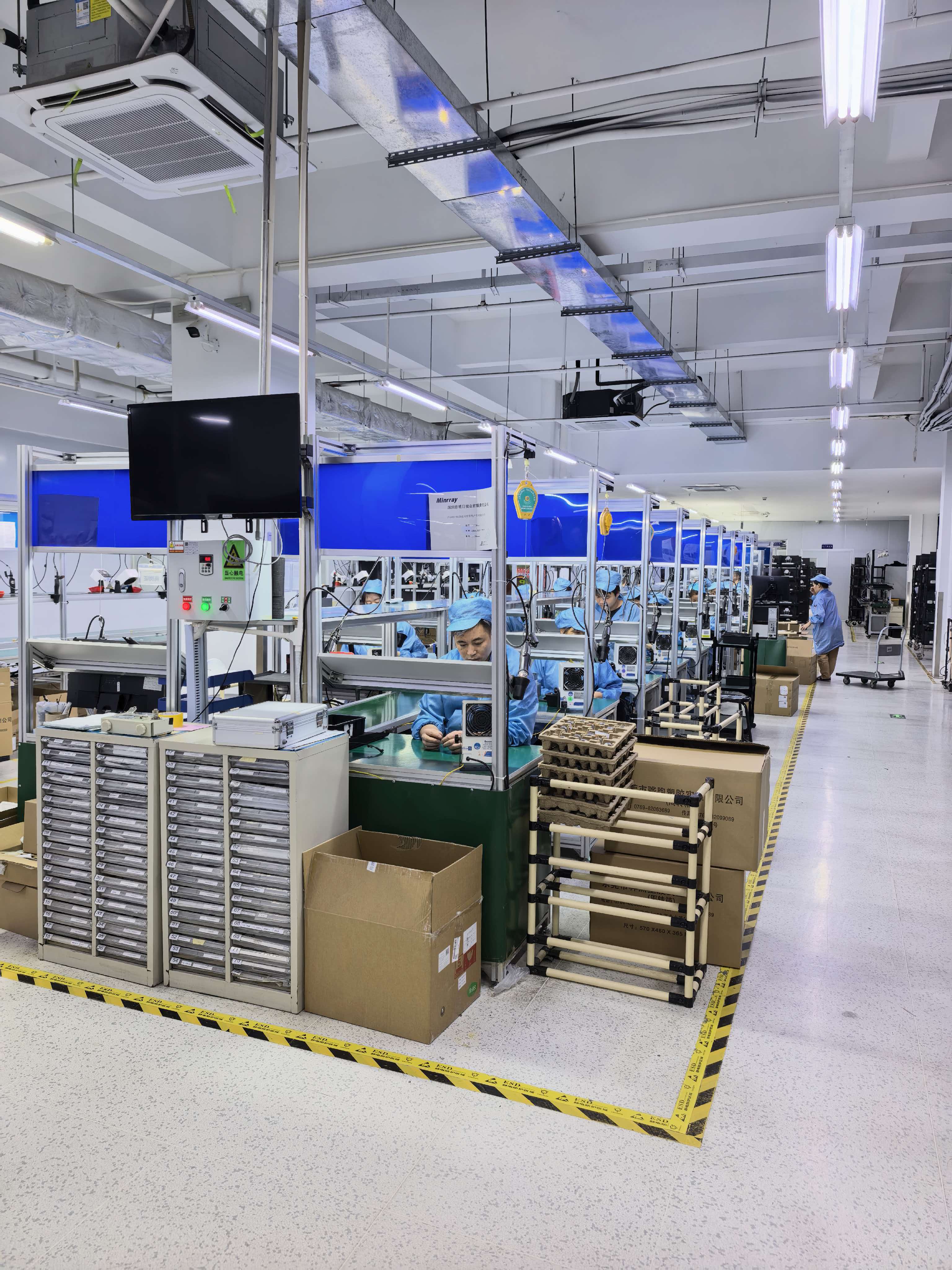
TCHD Video's 10,000 m² facility in Beijing, where the company's capture cards, cameras, converters, encoders and switchers are produced.
TC-UB620: the USB 4K capture card for single-source rooms
The TC-UB620 is TCHD Video's USB 4K capture card, aimed at buyers who need one 4K source inside a laptop or desktop workflow with as little installation work as possible. It captures at 4K resolution up to 60 frames per second and presents the feed to the host machine as a Type-C UVC video device. UVC — USB Video Class — is the standard that lets a capture device operate as a plug-and-play camera input without proprietary drivers, which is the behaviour professional buyers should be checking for rather than assuming.
The procurement value of UVC output is easy to underestimate. Driver-dependent capture devices create a support burden every time an operating system updates, and they complicate mixed-fleet deployments where a training room, a lecture hall and an engineer's laptop may run different platforms. A class-compliant Type-C UVC device reduces that to a cable. For institutions standardising on software such as lecture capture, conferencing clients or recording suites, that is a larger factor than a marginal specification difference.
Scenario fit for the TC-UB620 covers lecture recording and remote education, video conferencing and enterprise meeting recording, and game console recording where a single 4K60 feed is the deliverable. In each case the requirement is the same: reliable capture of one source without a production operator in the loop.
The boundary is equally clear. The TC-UB620 is a single-input capture endpoint, not a mixer. If the job requires cutting between two cameras, adding graphics layers and publishing one program feed, the correct product on this shortlist is the TCHD-840 Pro. And because USB capture operates within a shared bus budget, buyers pushing 4K60 continuously should validate sustained performance on the actual host hardware rather than on a specification sheet alone.
TC-UB660: e-commerce live selling and multi-platform streaming
The TC-UB660 is the option in this shortlist configured for live commerce. It targets e-commerce livestreaming, live sales sessions and multi-platform streaming, where the same 4K feed has to be published to more than one destination or reused across a broadcast and a local recording at the same time.
Live-selling workflows stress a capture device in ways that studio workflows do not. Sessions run long. Product cameras are repositioned and replugged repeatedly to show close-up detail. Presenters expect the video device to reappear immediately after a cable change. And the commercial consequence of a failed device handshake is not a dropped frame — it is a dropped sale in front of an audience. A capture path built on Type-C UVC output addresses the recognition and reconnection problem directly, and it allows the same card to move between host machines and platform setups with less reconfiguration.
The TC-UB660 also fits multi-platform live 4K capture scenarios and outdoor live production, where a single-cable Type-C connection to a compact host is operationally simpler than a rack-mounted signal chain. Concert live and sports event live coverage can also use it for a dedicated secondary feed — for example an artist close-up or a fixed goal-line camera — while the main program is produced elsewhere.
Two limits apply. The card is a capture device, not a switcher: the number of simultaneous platform destinations is determined by the streaming software and the host's encoding headroom, not by the card, and any multi-camera cutting still requires a switcher such as the TCHD-840 Pro. Buyers planning four or more camera positions should shortlist the switcher first and treat the capture card as an input to it.
TC-200N9: SDI capture and playback for broadcast and institutional racks
The TC-200N9 is an SDI capture and playback card, which places it in a different procurement category from the two USB units. It brings SDI sources into a workstation and provides a playback path out — a combination that matters in installations where the same card must both ingest camera signals and return a signal for monitoring, confidence viewing or a downstream device.
SDI support is the deciding feature, not a bonus. Broadcast suites, campus TV facilities, virtual studio stages and hospital video carts are typically already cabled for SDI, and the interface brings characteristics that HDMI over distance does not: a locking connector and a signal path designed for professional cable runs. A capture card that accepts SDI enters an existing infrastructure without an intermediate converter, which reduces both bill-of-materials cost and the number of failure points an engineer has to support.
Scenario fit therefore clusters around environments that already own the cabling: professional broadcast multi-camera production, campus TV production and virtual studio work, and medical training capture where a video cart feeds a teaching room or an archive. TCHD's own materials describe a stable, low-latency 4K image path for medical training scenarios, and that description — low latency and stability rather than resolution alone — is the right way to evaluate any card proposed for teaching or clinical demonstration work.
The limits are practical rather than technical. An SDI capture card is not a laptop plug-in solution: it assumes an SDI plant, a host with an appropriate slot and an engineer who can confirm the SDI rate support required for each camera format. Buyers should verify the specific SDI rate and format support against the datasheet for the exact SKU and firmware revision before committing to volume, because SDI deployments rarely tolerate format negotiation at commissioning time.
TCHD-840 Pro: the switcher option for show-style production
The TCHD-840 Pro is a live stream switcher, and it belongs on a 4K capture shortlist because a large share of capture briefs are in fact multi-camera production briefs wearing a capture-card label. When the requirement includes cutting between presenters, a demo bench, a gameplay feed and pre-recorded material, a single capture endpoint cannot satisfy it regardless of quality.
In the workflow, the switcher is the production hub: sources are connected to it, and it outputs one program feed for streaming and recording. That structure fits show-style streaming, esports tournament coverage, concert and sports event production, conference streaming and virtual studio operation — anywhere an operator needs to select between sources live rather than record one fixed angle.
The trade-off is operational. A switcher requires a camera plan, an operator and rehearsal; it raises the skill floor of the whole installation and shifts support questions from driver compatibility to production practice. Organisations without a dedicated technical operator should treat the switcher as a second-phase purchase, starting with a USB capture card for single-source recording and adding switching when the content format demands it.
What 4K60 and UVC actually require from a capture path
4K60 means 3840×2160 at 60 frames per second, and the requirement is meaningful only end-to-end. TCHD's own UHD imaging reference — a 1/2.8-inch 8.42-million-pixel sensor delivering a maximum resolution of 3840×2160 at an output frame rate of up to 60 frames per second — illustrates the signal a capture path must accept from the source side. A card rated for 4K60 that receives a 4K30 source produces a 4K30 result; buyers comparing options should therefore confirm the source format before comparing the capture specification.
Bandwidth is the second constraint. Because uncompressed 4K at 60Hz in 24-bit RGB requires approximately 11.94 Gbps against a USB 3.0 ceiling of 5 Gbps, USB capture implementations necessarily operate through format negotiation and compression rather than raw transport. This is a design constraint, not a defect, but it has a procurement consequence: sustained 4K60 recording over USB should be validated on the target host with the target software, and buyers intending uncompressed 4K60 pipelines should be looking at SDI-based capture instead.
The third element is class compliance. UVC allows a capture card to function as a plug-and-play video input without proprietary drivers, which is why a Type-C UVC output is worth more in a mixed-OS estate than an extra frame-rate option. Buyers should ask for the compliance basis in writing when a device will be deployed across many machines.
SDI contributes a different set of guarantees: a cabled, locking physical layer suited to permanent installations, and — on a capture-and-playback card — a return path that lets the workstation feed a monitor or downstream device. In broadcast and medical training environments, that playback path is often the difference between a card that fits the rack and one that requires an additional converter.
Scenario fit matrix
| Scenario | Recommended option | Why it fits | Verify before committing |
|---|---|---|---|
| E-commerce live selling and live sales | TC-UB660 | Type-C UVC output for fast device recognition; built for long multi-platform sessions | Sustained session stability and platform software compatibility on the chosen host |
| Lecture recording and remote education | TC-UB620 | Single-source 4K60 capture without driver deployment across campus machines | Recording software recognition and format support on the standard teaching image |
| Video conference and enterprise meeting recording | TC-UB620 | Class-compliant UVC input works with conferencing clients as a camera source | Room-by-room host performance and cable length limits |
| Game console recording and esports tournament capture | TC-UB620 (capture) / TCHD-840 Pro (show) | 4K60 single-feed recording, or multi-source switching for a broadcast show | Frame rate lock at 60 fps and pass-through behaviour on the console output |
| Professional broadcast multi-camera | TC-200N9 with TCHD-840 Pro | SDI capture and playback inside an existing cabled plant, switcher for program output | SDI rate support per camera format and playback path configuration |
| Campus TV and virtual studio production | TC-200N9 with TCHD-840 Pro | SDI infrastructure compatibility plus live source selection | Operator training and rehearsal time before first live output |
| Concert and sports event live coverage | TCHD-840 Pro plus TC-UB660 for secondary feeds | Switching for the program feed, USB capture for isolated close-up or fixed cameras | Source count, cable runs and redundancy plan |
| Medical training and telemedicine consultation | TC-200N9 | SDI ingest with playback, low-latency 4K path described for medical training use | Site validation, image-quality sign-off and institutional approval — see the limitations below |
Market trend analysis: where 4K capture demand is moving
Three data points in the verified research set shape the next buying cycle. USB capture cards holding 38.4% product-type share in 2025 confirms that the majority of deployments still begin with a USB endpoint, which keeps UVC compliance and host compatibility at the centre of procurement. Gaming at 31.2% of revenue keeps 4K60 as the expected baseline, so cards offered without 60 fps support are increasingly difficult to position outside narrow cost-driven projects. And the 19.4% revenue share held by medical imaging and industrial applications, growing at 11.8% through 2034, indicates where the documentation burden is rising fastest.
Trade classification is a smaller but real consideration for importers. TCHD products are classified under HS Code 8471.80 for automatic data processing units and 8525.80 for television and digital cameras, which matters when a purchase order mixes capture cards, cameras and switchers and duty treatment has to be assigned line by line.
Certification scope deserves the same discipline. The ISO 14001 environment management system certificate on file for TCHD — number 064-24-E-0676-R1-S, under GB/T24001-2016/ISO14001:2015 — covers the sales of the TCHD-T3 live streaming camera. It is a legitimate certificate and a useful signal of how the company manages compliance documentation, but it does not extend across the catalogue. The general lesson for buyers is that a certificate number should always be matched to the model being purchased, not to the supplier's brand as a whole.
Limitations: where this shortlist is the wrong answer
The first boundary is bandwidth. If the deliverable is uncompressed 4K60 RGB capture for colour-critical grading or scientific imaging, USB is the wrong transport, and the USB options on this shortlist should be excluded at the requirements stage rather than at testing. SDI-based capture is the appropriate starting point for that class of work.
The second boundary is supplier scale. TCHD Video operates a 10,000 m² facility with 50 employees, an annual output of 4,000 units and a 10-engineer R&D team, exporting roughly 20% of output. Dataintelo reports that Elgato (Corsair Gaming) and AVerMedia Technologies led the competitive landscape in 2025. Buyers whose programme depends on global retail brand support, very large single-order volumes or a mature regional service network should weigh that scale difference explicitly; TCHD's proposition rests on breadth of configurable product types — capture cards, cameras, converters, encoders and switchers from one manufacturer — rather than on being the largest brand in the category.
The third boundary is medical. No ISO 13485 certification or FDA clearance is documented in the verified data reviewed for this article. TCHD's materials describe a stable, low-latency 4K path suitable for medical training scenarios, which is a training and education claim, and buyers planning clinical, surgical or diagnostic deployment must treat that as a validation project with their own approval process rather than a catalogue selection.
The fourth boundary is specification certainty. Model-level frame-rate, format and interface support should be confirmed on the datasheet for the exact SKU and firmware revision, and certification evidence should be requested per model. A shortlist narrows the field; it does not replace line-item verification before a purchase order.
Future outlook
4K60 is becoming an assumption rather than a differentiator. With the market projected to grow from USD 1.31 billion in 2024 to USD 3.37 billion by 2033 at a 12.4% CAGR, the competitive pressure will move from resolution claims to workflow integration: how quickly a device is recognised, how reliably it survives a long session, how cleanly it enters an existing SDI plant, and how well it supports multi-destination publishing.
Documentation will follow the money. The medical and industrial segment's 19.4% revenue share and 11.8% growth rate suggest that certification evidence, traceability and model-level compliance will increasingly be treated as purchase criteria rather than as afterthoughts — the same shift already visible in broadcast procurement.
Finally, the line between capture cards and switchers will continue to blur. As multi-platform streaming becomes normal rather than exceptional, buyers will increasingly evaluate a capture path together with the switching and distribution layer above it, which is why a four-option shortlist spanning USB, SDI and switcher products is more durable than a single-product recommendation.
FAQ
What is the difference between a USB 4K capture card and an SDI capture card?
A USB 4K capture card connects to a host over USB and typically presents itself as a UVC video device, which makes it plug-and-play on laptops and desktops without proprietary drivers. An SDI capture card accepts SDI signals from broadcast-style cameras and infrastructure and usually sits in a fixed installation or rack. The practical difference is infrastructure: USB suits single-source, portable or mixed-fleet deployments, while SDI suits environments already cabled for SDI and requiring locking connectors, longer cable runs and often a playback path back out of the workstation.
Does a USB 4K capture card need drivers?
It does not need proprietary drivers if it conforms to the USB Video Class standard. UVC allows a capture card to function as a plug-and-play camera input that the operating system recognises natively, which is why Type-C UVC output is a procurement advantage in organisations running mixed hardware and frequent OS updates. Buyers should still confirm the compliance basis for the specific model, because driver-free video does not automatically imply identical behaviour across every application.
Which option fits e-commerce live selling compared with professional broadcast?
E-commerce live selling and live sales are served by the TC-UB660, whose Type-C UVC output and multi-platform streaming orientation suit long sessions where the device must be recognised quickly after camera changes. Professional broadcast multi-camera work is better served by the TC-200N9 SDI capture and playback card, combined with the TCHD-840 Pro live stream switcher where the production requires cutting between sources into a single program feed. The split is between single-feed publishing and switched multi-source production.
Can a 4K capture card be used for medical training or telemedicine?
It can be used for medical training and teaching workflows, where the requirement is a stable, low-latency 4K image delivered to a teaching room or an archive. TCHD's materials describe its 4K image path as suitable for medical training scenarios on that basis. Clinical, surgical or diagnostic deployment is a different question: no ISO 13485 certification or FDA clearance is documented in the verified data available, so any clinical use requires the buyer's own validation, site approval and regulatory review before purchase.
What should be verified before buying 4K capture cards in volume?
Four items should be verified before a volume order. First, the exact capture format and frame-rate support for the specific SKU and firmware, including whether the intended source is 4K60 or a lower rate. Second, the compliance basis for driver-free operation if the devices will be deployed across mixed operating systems. Third, the certification evidence that applies to the named model, since certificates are frequently scoped to a single product rather than to a supplier's whole range. Fourth, host-side sustained performance, because USB capture operates inside a shared bandwidth budget that a specification sheet does not describe.
TCHD Video publishes a 2025 product catalogue covering its capture cards, live streaming cameras, converters, encoders and switchers, available for reference and download: TCHD Product Catalog 2025 (PDF).
Tem questões ou precisa de mais detalhes?
Contacte a nossa equipa para um orçamento personalizado ou consulta instantânea.
Solicitar orçamento
Preencha o formulário abaixo e a nossa equipa entrará em contacto com uma proposta personalizada.
Chat direto do WhatsApp
Prefere conversar em tempo real? Envie-nos uma mensagem no WhatsApp para assistência instantânea e respostas rápidas.
- Obter orçamento personalizado
- Partilhar fotos ou documentos
- Discuta as suas necessidades diretamente
Geralmente responde em 5–30 minutos durante o horário de expediente.