
Recommended Corrugated Machine Parts: IP-1, PC-1 and BM-1
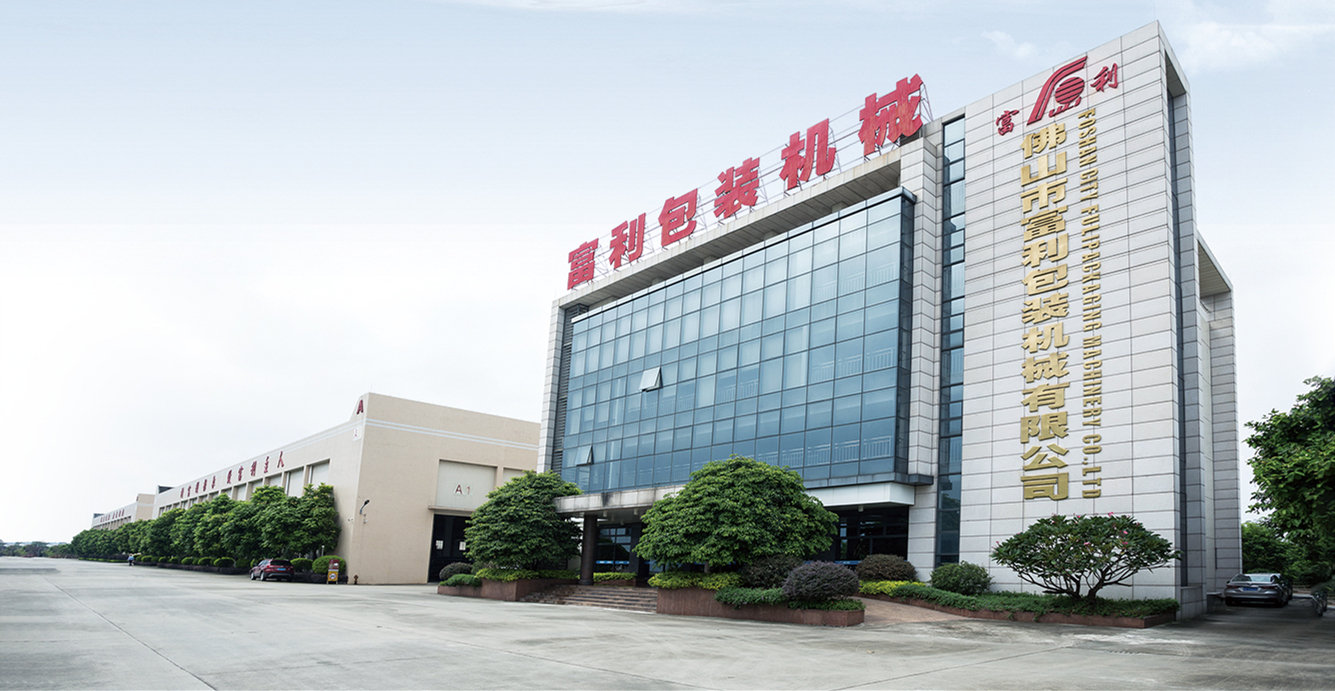
Corrugated machine parts are specified against the line they serve, not against a single catalogue line. Image: LLY PACK production environment.
A corrugated line rarely stops because a machine has failed. It stops because one component reached the end of its service window while the line was running at full speed: an ink pump that can no longer hold consistent ink delivery, a pneumatic cylinder that has lost stroke repeatability, or a tying machine that misses a bundle on the night shift.
For buyers who have already moved past the research stage, the remaining task is narrower than a sourcing project. It is to shortlist a small number of components, fix their specifications, confirm commercial terms, and release the order before the next maintenance window closes. This article works through that task for three component families: the IP-1 Steel Ink Pump, the PC-1 Air Cylinder, and the BM-1 Steel Tying Machine.
All three are supplied by LLY PACK (HK) CO., LIMITED, a Hong Kong-registered supplier of corrugated machine parts and corrugated machinery whose production base is located in Foshan City, Guangdong Province, and whose products have been exported to more than 40 countries.
Why a Parts Shortlist Is Now a Planning Document
Reactive replacement is still the default practice on many corrugated lines: a component fails, a similar one is sourced quickly, and the line restarts. The pattern holds until the same failure repeats. Wear parts degrade gradually, and a component replaced only at the point of failure usually takes print consistency, pneumatic accuracy or tying reliability with it before it stops the line at all.
A shortlist reverses the order of the questions. Instead of asking what failed, the buyer asks which components are approaching the end of their service window, what specification envelope each one must sit inside, how many units are needed for a defined production period, and what evidence will confirm the order before it ships.
This is also how well-run corrugated operations manage equipment risk. Key equipment and wear parts are replaced in advance, and digitised monitoring is applied wherever it is practical, so that replacement is triggered by condition data rather than by a breakdown.
The commercial background supports the same shift. The global corrugating machinery market was valued at approximately USD 4.8 billion in 2025 and is projected to reach USD 8.1 billion by 2034 (Dataintelo). A growing installed base produces a growing and increasingly predictable demand for parts. For buyers, the practical consequence is that availability is rarely the constraint. Specification accuracy, documentation and delivery reliability are.
Three questions frame the rest of this article:
- Does the component fit the line envelope, expressed as bore size, working pressure, tying range or customized parameter set?
- Can the buyer and the supplier agree in advance on what will be verified before shipment?
- Can the same specification be repeated on the next order without re-negotiation?
The Three-Part Shortlist at a Glance
The three components below are selected on different data. They are grouped here because they cover the three most common execution-stage gaps on a corrugated line: fluid handling, pneumatic actuation, and bundle tying.
| Component | Model | Published specification | Primary selection variable | Typical function on the line |
|---|---|---|---|---|
| Steel ink pump | IP-1 Steel Ink Pump | Customized parameters, defined with the buyer | Medium handled, circulation behaviour, connection geometry, drive data | Ink delivery and circulation in the printing section |
| Pneumatic air cylinder | PC-1 Air Cylinder | Bore size 32-400 mm; working pressure 1.5 to 8 bar | Required force, available air pressure, stroke and mounting | Actuation, clamping, feeding and braking positions |
| Steel tying machine | BM-1 Steel Tying Machine | Max tying size 97*83; min tying size 5*5 | Bundle dimensions and cycle rate against line speed | Bundle tying after stacking or folding |
IP-1 Steel Ink Pump: Where Customized Parameters Are the Specification
When a component is quoted against customized parameters, the specification is not a catalogue line. It is a document agreed between the buyer and the supplier. The IP-1 Steel Ink Pump is supplied this way: its parameters are customized rather than drawn from a fixed standard list.
Customization has a direct consequence at the execution stage. The order cannot be released on a model name alone, because the buyer's operating data becomes part of the specification. The more completely that data is provided, the fewer confirmation loops stand between quotation and shipment.
A practical data set for an ink pump specification includes:
- The medium the pump will handle, and its compatibility with the wetted materials of the pump.
- The circulation behaviour required: continuous circulation, intermittent transfer, or recirculation combined with filtration.
- The delivery behaviour the printing unit expects, expressed as an operating point rather than as a single figure.
- Connection geometry: port sizes, thread standard, orientation, and the mounting space actually available on the machine.
- Drive data: power supply, control signal, and whether the pump is integrated into an existing control loop or runs independently.
- Duty cycle: hours per day, starts per shift, and whether operation is at fixed speed or variable speed.
Execution note. Because the parameters are customized, two buyers ordering under the same model designation can receive pumps with different internal configurations. That is the purpose of the model. It is also the reason no buyer should treat IP-1 on its own as a complete specification.
Production capacity also matters when parameters are customized. LLY PACK states a monthly production capacity of 1000 pieces, which gives the buyer a concrete basis for asking how a specific parameter set affects the position of the order in the production schedule.
PC-1 Air Cylinder: Reading Bore Size and Working Pressure Together
The PC-1 Air Cylinder is published with a bore size range of 32-400 mm and a working pressure range of 1.5 to 8 bar. Those two figures define the usable envelope, and they should be read together rather than as independent specifications.
Bore size determines piston area, and therefore the force the cylinder can produce at a given pressure. The published range is wide, spanning small positioning actuators and large high-force applications. A 400 mm bore and a 32 mm bore sit at very different points on the force curve, and the mounting, air consumption and structural requirements around them are not comparable.
Working pressure defines the air supply envelope. Two boundary conditions follow directly from the published range:
- Systems that must operate below 1.5 bar fall outside the published working range. Low-pressure actuation may need a different cylinder specification, or a change to the air circuit itself.
- Systems that must operate above 8 bar also fall outside the range. Raising line pressure to solve a force shortfall is not an available option inside this specification.
Inside the envelope, bore size and pressure trade against each other. A larger bore at lower pressure can produce a comparable nominal force to a smaller bore at higher pressure. The trade-offs are real: larger bores consume more air per stroke and require more mounting space, while higher pressure places more stress on seals and the air circuit and increases the energy carried by the actuator. A shortlist decision is therefore best made on the lowest pressure that satisfies the force requirement, not on the highest pressure the compressor can deliver.
Related variables to confirm in the same conversation include stroke length, mounting style and pin type, end-of-stroke cushioning, cycle frequency, and air quality, since filtration and moisture control have a direct effect on seal life.
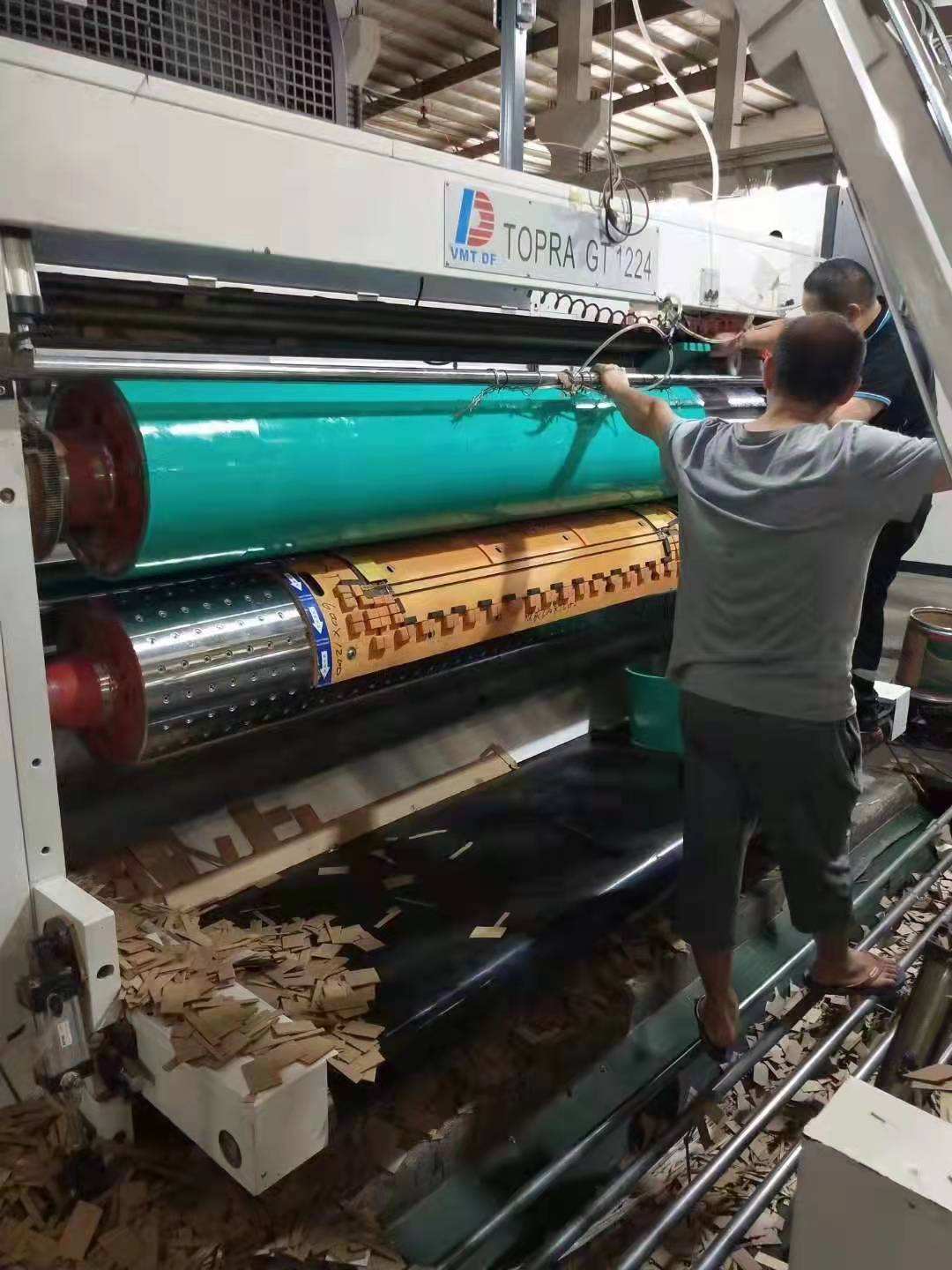
Condition checks on pneumatic and mechanical parts are part of the specification decision, not only part of maintenance. Image: LLY PACK.
BM-1 Steel Tying Machine: The Tying Range Is a Hard Boundary
The BM-1 Steel Tying Machine is published with a maximum tying size of 97*83 and a minimum tying size of 5*5. This range is the first filter in the selection process, and it behaves as a boundary rather than a preference.
Three checks follow from it:
- Upper boundary. Bundles larger than the published maximum fall outside the machine's range and require a different tying arrangement.
- Lower boundary. Bundles smaller than the published minimum fall outside the range as well, so very small formats should not be assumed to tie correctly.
- Distribution inside the range. If a line produces bundles close to the maximum for most of a shift, tying consistency should be validated on real bundles rather than extrapolated from the specification.
Other selection variables include tie material and tension behaviour, cycle rate measured against line speed, and mounting position relative to the bundle discharge point. Steel construction is relevant in this position because a tying station runs at high cycle counts and is difficult to access during production.
The most useful preparation a buyer can make is to measure the bundle dimensions that actually reach the tying station over a full production week, including the largest and the smallest formats produced, and then compare that distribution against the published 97*83 maximum and 5*5 minimum.
Matching the Shortlist to Line Requirements
Shortlisting becomes straightforward once each component is matched to the specific line condition it is meant to correct. The following patterns cover most execution-stage situations:
- Inconsistent ink delivery in the printing section. The IP-1 Steel Ink Pump applies when delivery behaviour has become unstable and the fix requires a parameter set matched to the medium, the circulation loop and the machine's connection geometry.
- Actuation drift or force loss in converting, feeding or clamping positions. The PC-1 Air Cylinder applies once the required force and the available air pressure are both known. Confirm that the operating point sits inside 32-400 mm bore and 1.5 to 8 bar before ordering.
- Unreliable bundle tying after stacking or folding. The BM-1 Steel Tying Machine applies when measured bundle dimensions sit inside the published 97*83 maximum and 5*5 minimum.
- A planned maintenance shutdown with mixed requirements. Ordering an ink pump, cylinders and a tying machine together consolidates freight and inspection into one shipment, which matters when the MOQ is applied per order and delivery terms are FOB, CIF, EXW or DAP.
- Multi-line operations. Standardising one specification per line type keeps stock predictable and makes repeat orders faster, because each line keeps the same parameter, bore, pressure and tying range across cycles.
A common execution error is to treat these three items as one procurement line with one specification sheet. They are selected on different data, verified by different tests, and should be released with separate specification records even when purchased together.
Purchasing Terms and Acceptance Criteria to Confirm Before Release
At the execution stage, commercial terms determine whether a technically correct shortlist can actually be delivered on schedule. The published purchasing terms for LLY PACK corrugated machine parts are summarised below, together with the point a buyer should confirm in each case.
| Commercial term | Stated value | What the buyer should confirm |
|---|---|---|
| MOQ | 100 pcs | How the 100-piece minimum is applied across mixed part numbers in a single order. |
| Delivery terms | FOB / CIF / EXW / DAP | Which term matches the buyer's own freight, insurance and customs capability. |
| Payment terms | T/T | The milestone structure, particularly for customized items. |
| Acceptance criteria | Pre-shipment test | The scope of the test, the record format, and whether parameter data for customized configurations accompanies the shipment. |
The acceptance criterion deserves particular attention when parameters are customized. A pre-shipment test is only as strong as its agreed scope. Before releasing an order, a buyer should define what is tested, under which conditions, and in what form the result is reported. For the IP-1 Steel Ink Pump, that normally means confirming the parameter data issued with the unit. For the PC-1 Air Cylinder, it means confirming that the delivered bore size and pressure rating match the specification record. For the BM-1 Steel Tying Machine, it means confirming the delivered unit against the tying range recorded in the order.
Documentation is the second half of acceptance. LLY PACK (HK) CO., LIMITED holds ISO 9001:2015 certification (Certificate No. 60126Q00004R000), issued for the design and production of corrugated machinery including slitter scorers and slotter die cutters. The stated scope should be read alongside the order rather than assumed to cover everything: buyers should confirm which production processes relevant to their components fall inside the certified quality management system, and request the certificate together with the quotation.
Market Context: What Growth and Concentration Mean for Parts Buyers
Parts sourcing on corrugated lines is shaped by two structural facts.
The first is growth. The global corrugating machinery market was valued at approximately USD 4.8 billion in 2025 and is projected to reach USD 8.1 billion by 2034 (Dataintelo). Asia-Pacific accounted for approximately 40.9% of the corrugated equipment market in 2024 (Straits Research), and China's exports of machinery parts under HS 84 grew 7.5% year on year in 2024, with the broader category exceeding USD 2.1 trillion (General Administration of Customs of China).
The second is concentration at the machine level. Global Tier 1 corrugated machinery manufacturers, including BHS Corrugated, Fosber and Mitsubishi, occupy approximately 60% of the market (Future Market Insights). That concentration matters to parts buyers because a large share of the installed base is built around a small number of machine platforms. Parts must therefore fit those platforms precisely, and the remaining market share is served by independent suppliers whose value lies in specification flexibility and component-level support rather than in machine platforms.
Reading market figures carefully. Published estimates of the corrugated equipment market differ substantially by scope. Market Research Future cites USD 15.8 billion while Straits Research cites USD 2.86 billion for what appear to be overlapping categories, because one scope may cover an entire box-making line while the other covers specific sub-machinery. Buyers should check the scope definition before using any market figure in an internal business case.
Shortlist-Based Buying Compared with Traditional Replacement Practice
Traditional parts practice on corrugated lines usually takes one of two forms: replace on failure, or order by catalogue reference and assume interchangeability. Both have predictable costs.
| Approach | Trigger for purchase | Specification basis | Main risk |
|---|---|---|---|
| Reactive replacement | Component failure or visible quality loss | Visual match or on-site measurement | Urgent freight, compressed validation, repeated failure modes |
| Catalogue-only ordering | Scheduled stock top-up | Model reference alone | Mismatch on customized items, wrong bore, pressure or tying range |
| Shortlist-based buying | End-of-service-window planning | Parameter set, bore and pressure envelope, measured tying range | Requires complete operating data before quotation |
Shortlist-based buying is not free of friction. It asks more of the buyer at the specification stage and it requires operating data that is sometimes not available until a machine has been observed over a full production cycle. What it removes is the assumption that a part is interchangeable because it looks similar.
Where This Shortlist Stops
Three limits should be stated plainly.
First, the shortlist covers three component families, not a complete spare parts strategy. Slitting blades, NC cut-off blades, rotary joints, anilox and ceramic rollers, belts, anvil covers and other consumables are selected on different criteria. Slitting blades and NC cut-off blades, for example, are commonly specified in tungsten steel or high-speed steel to obtain wear resistance and service life, which is a material decision rather than an ink, pneumatic or tying specification.
Second, a customized parameter set on the IP-1 Steel Ink Pump adds confirmation time. Buyers who cannot supply complete operating data at the quotation stage should expect additional loops before an order can be released, and should plan for that in the maintenance calendar.
Third, a pre-shipment test is an acceptance step, not a performance guarantee. It confirms that the delivered unit matches the agreed specification record. It does not replace on-machine validation, and buyers running critical lines should still plan a short verification period after installation.
Future Outlook: Scheduled Parts Programmes on a Growing Installed Base
As the corrugating equipment market expands toward the projected USD 8.1 billion by 2034, the aftermarket for parts expands with it, because every installed line consumes wear parts on a predictable cycle. Two consequences follow for buyers.
The first is that parts programmes become scheduled rather than reactive. When replacement is planned against end-of-service windows and supported by condition checks, the specification work moves ahead of the shutdown instead of happening during it. That is the same logic already applied to key equipment and wear parts on well-run lines, where advance replacement and digitised monitoring are used to reduce unplanned stops.
The second is that specification records become the durable asset. A documented parameter set for an ink pump, a confirmed bore and pressure envelope for pneumatic cylinders, and a measured tying range for a tying machine can be reused on every subsequent order. For operators running several lines, or distributors stocking for several machine platforms, that record is what makes repeat ordering fast and price discussions predictable.
Given the concentration of machine platforms among Tier 1 manufacturers and the spread of independent supply in Asia-Pacific, the practical direction for buyers is a shortlist that is narrow in scope, precise in specification and repeatable across cycles.
FAQ
What bore size and working pressure does the PC-1 Air Cylinder cover?
The PC-1 Air Cylinder is published with a bore size range of 32-400 mm and a working pressure range of 1.5 to 8 bar. Applications that require operation below 1.5 bar or above 8 bar fall outside that published range and would need a different cylinder specification or a change to the air circuit.
What tying sizes can the BM-1 Steel Tying Machine handle?
The BM-1 Steel Tying Machine is published with a maximum tying size of 97*83 and a minimum tying size of 5*5. Bundles outside that range are not covered by the published specification, so buyers should measure the dimensions that actually reach the tying station before ordering.
Are the parameters of the IP-1 Steel Ink Pump fixed?
No. The IP-1 Steel Ink Pump is supplied with customized parameters. The specification is defined with the buyer rather than taken from a fixed list, so the buyer's operating data, including the medium handled, circulation behaviour, connection geometry, drive data and duty cycle, forms the basis of the quotation.
What are the purchasing terms and acceptance criteria?
MOQ is 100 pcs. Delivery terms are FOB, CIF, EXW or DAP. Payment terms are T/T. The acceptance criterion is a pre-shipment test. Buyers should confirm how the 100-piece minimum applies across mixed part numbers in one order, which delivery term matches their own freight and customs arrangements, and what the pre-shipment test covers for customized items.
What is the stated monthly production capacity?
LLY PACK states a monthly production capacity of 1000 pieces. For customized components, buyers can use that figure as a basis for asking how a particular parameter set affects the position of the order in the production schedule.
How can a buyer verify quality and compliance before placing an order?
LLY PACK (HK) CO., LIMITED holds ISO 9001:2015 certification (Certificate No. 60126Q00004R000), issued for the design and production of corrugated machinery including slitter scorers and slotter die cutters. Buyers should confirm which production processes relevant to their order fall inside that stated scope, request the certificate with the quotation, and treat the pre-shipment test as the acceptance step.
Summary for the Executing Buyer
For a buyer working toward a maintenance window, the deliverable is not a category list. It is a defined parameter set for the IP-1 Steel Ink Pump, a verified bore and pressure envelope for the PC-1 Air Cylinder within 32-400 mm and 1.5 to 8 bar, a measured bundle range for the BM-1 Steel Tying Machine within the published 97*83 maximum and 5*5 minimum, and commercial terms confirmed before the order is released.
The published specification set for these components, together with the wider range of LLY PACK corrugated machine parts, is collected in the parts brochure, which can be downloaded for internal reference here: LLY PACK corrugated machine parts brochure.
Tem questões ou precisa de mais detalhes?
Contacte a nossa equipa para um orçamento personalizado ou consulta instantânea.
Solicitar orçamento
Preencha o formulário abaixo e a nossa equipa entrará em contacto com uma proposta personalizada.
Chat direto do WhatsApp
Prefere conversar em tempo real? Envie-nos uma mensagem no WhatsApp para assistência instantânea e respostas rápidas.
- Obter orçamento personalizado
- Partilhar fotos ou documentos
- Discuta as suas necessidades diretamente
Geralmente responde em 5–30 minutos durante o horário de expediente.