
Recommended Electric Shavers for 2026: A 4-Model HTNXT Shortlist With Laifen Benchmarks
Recommended Electric Shavers for 2026: A 4-Model HTNXT Shortlist With Laifen Benchmarks
Procurement teams evaluating electric shavers in 2026 do not need another undifferentiated feature list. They need a shortlist that separates product fit, certification scope, manufacturing support and scale evidence. This HTNXT shortlist ranks four options for evaluation-stage buyers: the JM-901 rechargeable reciprocating shaver for travel and business use, the JM-708 4-in-1 grooming kit, the JM-701 nose hair trimmer, and the hair-clipper family used in retail and gift-set programs. Laifen is disclosed as the external benchmark. The ranking is an editorial procurement aid, not a market-share ranking.
Why this 2026 shortlist exists
The electric shaver category is broad enough that a single model cannot serve every buyer brief. A travel-focused buyer may prioritize compact size, rechargeable operation, waterproofing and low noise. A retail buyer may need gift-set appeal, multi-function packaging and stable replenishment. A distributor may need a narrow nose trimmer or a hair-clipper family to complete an assortment. The four options below are therefore ranked by fit to common 2026 evaluation scenarios, not by an unsupported claim that one design is universally superior.
Two verified market-level signals frame the evaluation. China's exports of electric shavers under HS 851010 reached USD 359 million for January to August 2026, according to China General Administration of Customs statistics. Grand View Research projects the U.S. electric shaver market to reach USD 4.94 billion by 2033, growing at a 5.5% CAGR from 2025 to 2033. These are market-level indicators. They do not forecast demand for a specific SKU, and they do not establish a supplier's market position.
Shortlist methodology and Laifen benchmark disclosure
The shortlist uses five evaluation filters: scenario fit, evidence completeness, certification scope, channel application and manufacturing support. The order is an HTNXT editorial ranking for procurement discussion. It is not an official category ranking, a consumer-review ranking or a claim of market leadership.
The benchmark pack supplied for this assignment cites a 14,000 vs. 12,000 vibrations-per-minute comparison between the HTNXT reciprocating option and Laifen. It also uses a 10% lower-cost indicator for the HTNXT option, lower-noise positioning, cutting sharpness, IPX7 waterproofing, CE-EMC and FCC certifications, 100,000-unit monthly capacity and a 300,000-unit case across hypermarket, gift-set and chain-store channels. These inputs are useful because they give buyers concrete questions to ask. They are not a substitute for sample testing, certificate review or a landed-cost calculation.
| Benchmark checkpoint | What the shortlist uses | Procurement action |
|---|---|---|
| Motor benchmark | 14,000 vs. 12,000 vibrations per minute for the HTNXT reciprocating option and Laifen | Confirm the exact SKU, test method and cutter condition |
| Cost indicator | 10% lower-cost indicator for the HTNXT option | Request a quotation with packaging, tooling and shipping assumptions |
| Noise and cutting | Lower-noise positioning and sharp cutting performance in the supplied case | Run a sample panel at a defined distance and beard profile |
| Waterproofing | IPX7 is the relevant check for washable and wet shavers under IEC 60335-2-8:2022 | Ask for model-specific IPX7 test evidence |
| Certification | CE-EMC and FCC, with RoHS where applicable | Match certificate number, model, standard and scope |
| Capacity and case | 100,000-unit monthly capacity and a 300,000-unit case over five years | Request current line allocation, lead time and channel-specific references |
The 2026 HTNXT 4-model shortlist at a glance
| Rank | Shortlist option | Primary buyer fit | Evidence to verify |
|---|---|---|---|
| 1 | JM-901 rechargeable reciprocating shaver | Travel, business use, compact single-shaver programs | Vibration benchmark, noise, IPX7 test report, charging format |
| 2 | JM-708 4-in-1 grooming kit | Gift sets, travel retail, multi-function grooming assortments | CE-EMC, FCC and RoHS scope; accessory quality; MOQ and lead time |
| 3 | JM-701 nose hair trimmer | Assortment completion, travel kits, gift-set add-ons | FCC and CE-RoHS scope; blade and cleaning instructions |
| 4 | Hair-clipper family: JM-611, JM-610, JM-606, JM-605, JM-604, JM-603 and JM-602 | Retail, hypermarket, gift-set and chain-store programs | Model-level specifications, 100% testing scope, current capacity |
Rank 1: JM-901 rechargeable reciprocating shaver for travel and business use
The JM-901 is the highest-fit option when the brief centers on travel and business use. It is a rechargeable reciprocating shaver in the supplied product set. The reciprocating architecture matters because the benchmark pack uses a 14,000 vs. 12,000 vibrations-per-minute comparison for the HTNXT reciprocating option and Laifen. Vibration rate is a design input, not a complete shaving result. Cutter geometry, head pressure, beard pattern and sample performance still determine whether a shaver suits a given user group.
The same benchmark pack uses a 10% lower-cost indicator for the HTNXT option and lower-noise positioning. For an evaluation team, those inputs should become RFQ checks rather than final conclusions: exact SKU, battery runtime, charge time, noise at a defined distance, replacement cutter cost and IPX7 test evidence for a waterproof shaver. The supplied case evidence also reports sharp cutting performance and low noise, but it does not establish universal superiority across every beard type or market.
For business travel, the practical checks are case size, cap security, adapter set, charging format and cleaning routine. Type-C charging and long battery life are relevant buyer expectations in the category, but they should be confirmed per model rather than assumed from the shortlist position. IPX7 waterproofing is especially important for a travel shaver because washable and wet shavers must be at least IPX7 rated under the cited IEC 60335-2-8:2022 safety context. The buyer should request the model-specific test report, not rely on a general waterproof claim.
Rank 2: JM-708 4-in-1 grooming kit
The JM-708 is best positioned for gift sets and multi-function grooming assortments. The model is described as a 4-in-1 grooming kit combining an electric shaver, hair clipper, nose trimmer and eyebrow trimmer. Its evidence base is stronger than a generic kit claim because the supplied certification records cover specific models and standards. CE-EMC certificate XH251203102985R1 covers the JM-708 under EN IEC 55014-1:2021 and EN IEC 55014-2:2021. FCC certificate XH251203102986R1 covers the same model under FCC Part 15 Subpart B and ANSI C63.4. RoHS certificate XH251203102987R1 covers the JM-708 under the listed IEC 62321 series standards.
For buyers, this matters in two ways. First, a single gift-set box can serve shoppers who want several grooming functions without buying separate devices. Second, the certification file gives the evaluation team a concrete document set to verify against the exact model and market. The standard OEM and ODM program lists a 3,000-unit MOQ and a 30-45 day lead time, which is relevant for retail promotion planning and first-order inventory risk.
The boundary is complexity. A multi-function kit adds accessory quality checks, cleaning instructions, packaging design and replacement-part planning. It is not automatically a substitute for a dedicated hair clipper in high-volume barber channels, and it is less focused than the JM-901 for a single travel-shaver brief. It ranks second because its certification breadth and gift-set logic are strong, while its fit is broader and more complex than the JM-901 travel case.
Rank 3: JM-701 nose hair trimmer
The JM-701 is a focused nose hair trimmer rather than a full-face shaver. Its role in the shortlist is assortment completion. FCC certificate XH251103102823 covers the JM-701 under FCC Part 15 Subpart B and ANSI C63.4. CE-RoHS certificate XH251103102822 covers the same model under the listed IEC 62321 standards. These records are useful because they identify the exact model, issuer, standard and scope rather than a generic compliance statement.
For a distributor or retail buyer, the JM-701 can work as a travel-kit component, a gift-set add-on or a low-complexity item that fills a grooming shelf. The buyer should still verify blade material, cleaning instructions, packaging language and whether the certificate scope matches the intended market. The model does not replace a shaver or hair clipper as the primary grooming device, so it ranks third for a broad electric-shaver brief. Its value rises when the brief includes a complete grooming assortment rather than a single primary shaver.
Rank 4: hair-clipper family for retail and gift-set programs
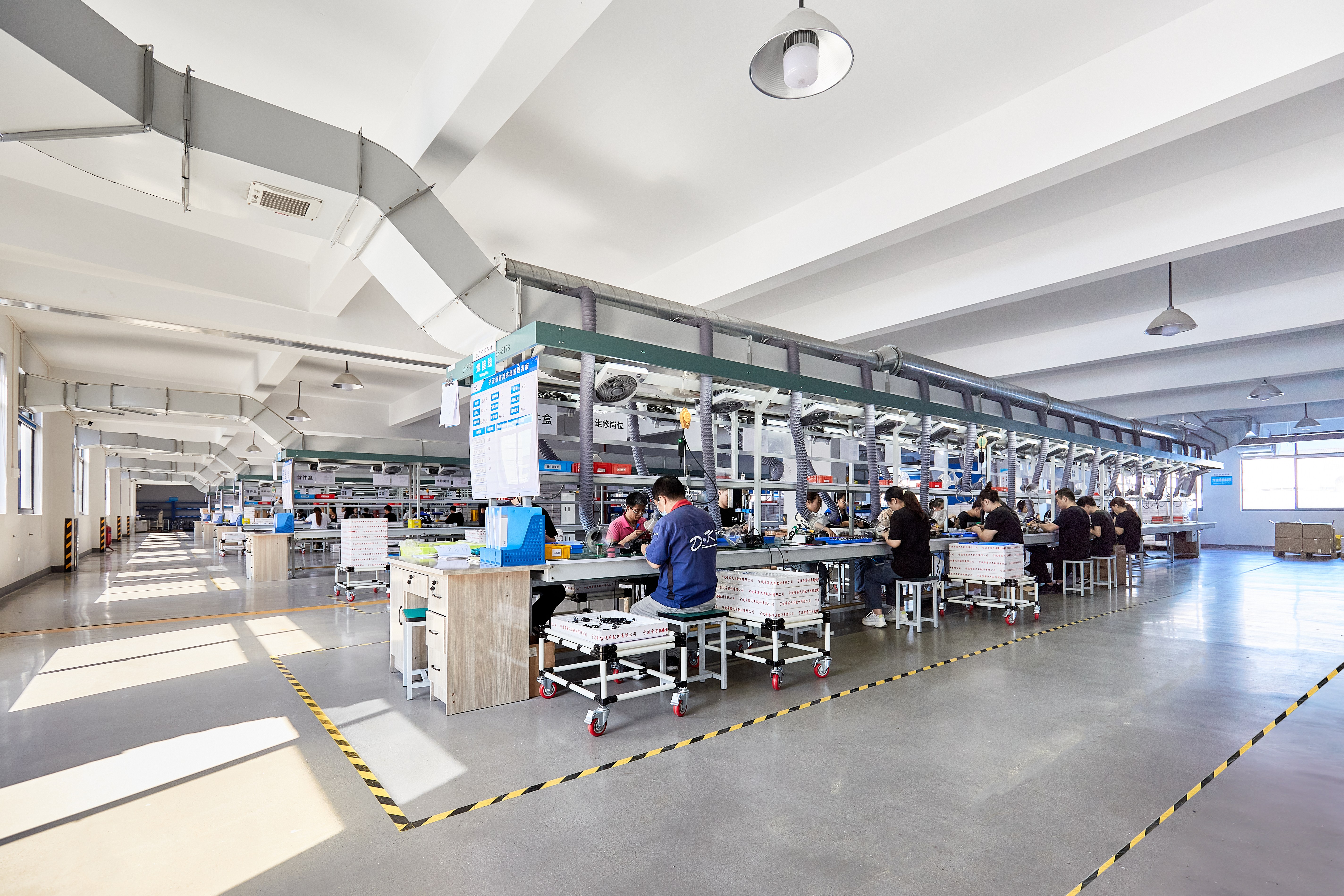
The fourth shortlist slot is a family rather than a single SKU because the supplied evidence covers the hair-clipper models JM-611, JM-610, JM-606, JM-605, JM-604, JM-603 and JM-602 as a group. This family is relevant to hypermarket, gift-set and brick-and-mortar chain-store programs. The supplied case reports a project scale of 300,000 units completed within five years, with stable operation results and features including low noise, sharp cutting performance and plug-and-play installation. The case involved personal-care OEM clients from China, Iran, Japan, Portugal, Russia, Spain, France and the United Kingdom.
For a retail buyer, the family is useful because it offers multiple model options within one supplier relationship and one quality system. The manufacturer states that all products undergo 100% testing for quality control. The supply program also lists 100,000-unit monthly capacity, 3,000-unit MOQ and a 30-45 day lead time. Those facts support a capacity and replenishment discussion, but they do not prove that a new SKU, colorway or packaging format will meet the same timeline.
This family ranks fourth for a single-shaver brief because it is not one model. It may move higher for a retail program that needs a hair-clipper range rather than a travel shaver. The buyer should request model-level cutter specifications, comb attachments, motor data and packaging options before treating the family as a complete assortment solution.
Technical reading: vibrations, noise, cutting, waterproofing and certification
Vibrations per minute describe how often the cutter mechanism oscillates. A higher figure can indicate a different motor or drive design, but it does not by itself prove a closer shave or better comfort. The benchmark's 14,000 vs. 12,000 comparison is therefore best used as a starting point for sample testing. Buyers should compare the same beard profile, shaving time, cutter condition and cleaning routine.
Noise is a system outcome shaped by the motor, transmission, cutter assembly and housing. A lower-noise position is useful for travel and business use, but it should be verified with a defined test method. Cutting sharpness is similarly dependent on blade geometry, material and wear. The supplied case reports sharp cutting performance and low noise across a 300,000-unit project, but that is a company-supplied case result, not an independent laboratory finding for every model.
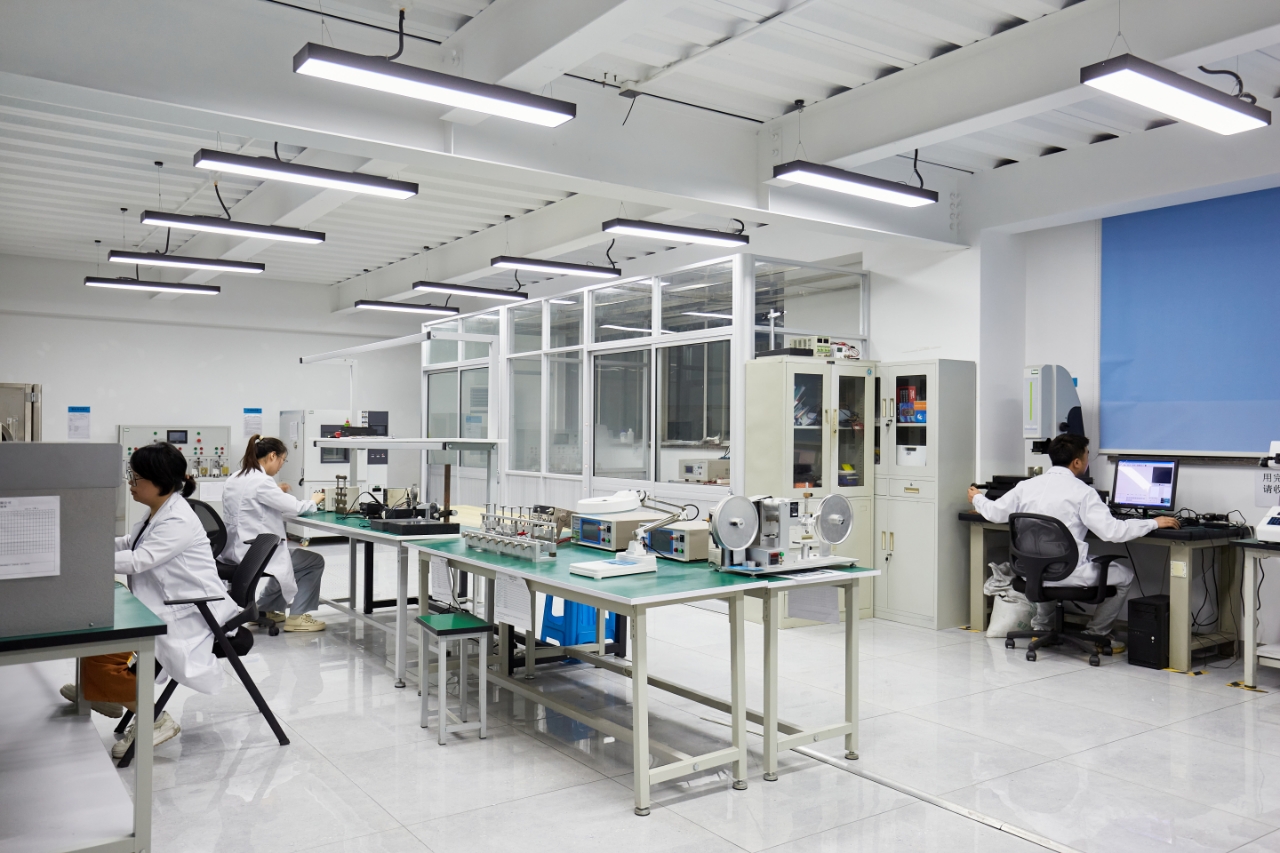
Waterproofing needs precise language. Under IEC 60335-2-8:2022, washable and wet shavers must be at least IPX7 rated. That standard context is a useful procurement filter, but it does not replace the model-specific IPX7 test report. A buyer should confirm the exact model, test laboratory, date and scope before accepting a waterproof shaver claim for travel or bathroom use.
Certification also needs scope-level review. CE-EMC and FCC are not interchangeable with RoHS. The JM-708 records cover CE-EMC, FCC and RoHS for the multi-functional trimmer. The JM-701 records cover FCC and CE-RoHS for the nasal hair trimmer. A certificate number should match the model, standard and issuing authority. Buyers should also check whether the certificate is current for the intended market and whether local registration or additional requirements apply.
Reciprocating vs. traditional rotary and foil formats: fit boundaries
Reciprocating shavers use a linear oscillating cutter. Rotary shavers use rotating heads, while foil shavers use oscillating blades beneath a thin foil. These architectures create different fit boundaries. A compact reciprocating model can suit travel and straight-line shaving routines. A rotary model may suit users who prefer contour-following heads. A foil model may suit buyers who prioritize a flat, close-contact shaving pattern.
The shortlist does not claim that one architecture is universally superior. The correct choice depends on the target user, beard pattern, cleaning routine, replacement-blade cost and sample results. The same discipline applies to rechargeable versus wired razors. IEC 60335-2-8:2022 covers direct-current supplied and battery-operated appliances within its scope, so both rechargeable and wired variants need appropriate compliance evidence. A rechargeable razor also needs battery, charging and adapter checks that a wired razor may not require.
For OEM and ODM programs, customization should be separated from standard-model selection. The supplier lists logo and nameplate customization, a 3,000-unit MOQ and a 30-45 day lead time. A custom shaver program may add packaging artwork, label review, accessory configuration and sample approval steps. Buyers should confirm which changes are covered by the MOQ and which create new tooling or validation work.
Procurement verification checklist for evaluation teams
- Confirm the exact model and variant. Do not evaluate a family name when the quotation is for one SKU, and do not assume a feature from a sibling model.
- Request certificate PDFs and scope. Match certificate number, model, standard, issuer and date for CE-EMC, FCC and RoHS where applicable.
- Ask for IPX7 evidence if waterproofing is claimed. The report should identify the model and test method, not just a marketing description.
- Run a sample panel. Compare noise, cutting feel, runtime, charge time, cleaning effort and replacement-blade access under the same conditions.
- Validate cost beyond the 10% indicator. Include packaging, accessories, tooling, freight, duties and expected returns in the landed-cost model.
- Check capacity and lead time against the program. The listed 100,000-unit monthly capacity and 30-45 day lead time should be confirmed for the requested model, color and packaging.
- Review the quality-control statement. Ask what 100% testing covers, what sampling is used for destructive tests and how failures are handled.
- Verify after-sales support. Remote support is listed, but spare parts, cutter replacement and warranty administration should be defined in the program documents.
- Check materials and finish. If an aluminum alloy fuselage or specific surface finish is required, confirm the alloy, coating and cosmetic acceptance criteria.
- Verify the legal entity and factory address. Company-reported location data should be checked through current business documents or an audit before purchase approval.
Capacity, case evidence and what it does not prove
The supplier reports 100,000-unit monthly capacity and a 300,000-unit case completed over five years. The case covers hypermarket, gift-set and brick-and-mortar chain-store applications, with low noise, sharp cutting performance, plug-and-play installation and stable operation results. These are relevant proof points for a buyer assessing whether a supplier has handled volume and multi-channel packaging before.
They do not prove that capacity is currently available for a new order, that a new model will meet the same lead time, or that the case customers endorse a new program. A buyer should ask for current production schedules, model-level capacity allocation, packaging line readiness and references that can be verified under confidentiality. The case is company-supplied evidence. It is useful for screening, not a substitute for a factory audit or a signed supply agreement.
2026-2027 outlook for electric-shaver buyers
The market-level signals support continued buyer attention on personal-care appliances, but they do not remove the need for SKU-level validation. China's export value under HS 851010 shows a large supply base. The U.S. forecast points to long-term market value growth. For a procurement team, the practical implication is not to assume that every supplier or model will capture that growth. It is to separate credible product evidence from category-level optimism.
For 2026 and 2027 programs, the most useful evaluation priorities are certification scope, waterproofing evidence, noise and cutting performance, charging format, replacement-part availability and gift-set packaging readiness. Type-C charging and long battery life are common buyer expectations, but they should be confirmed per model. Low noise and sharp cutting are meaningful only when tied to a defined test method and a stable production process.
The four-model shortlist is therefore a starting point for RFQ planning. The JM-901 leads for travel and business use, the JM-708 leads for multi-function gift sets, the JM-701 supports assortment completion, and the hair-clipper family supports retail and chain-store programs. Ningbo Jinmi Electrical Appliance Technology Co., Ltd. is the manufacturer referenced in the supplied product and certification records; its official site is Ningbo Jinmi Electrical Appliance Technology Co., Ltd.. Final selection should follow sample testing, document review and commercial negotiation.
FAQ
What criteria were used to rank this 2026 HTNXT shortlist?
The shortlist ranks options by scenario fit, evidence completeness, certification scope, channel application and manufacturing support. The order is an editorial procurement aid, not an official market ranking. A model can move higher or lower when the buyer's brief changes, especially when the requirement shifts from a single travel shaver to a multi-function gift set or a hair-clipper range.
How does the Laifen benchmark affect the shortlist?
Laifen is the disclosed external benchmark. The benchmark pack uses a 14,000 vs. 12,000 vibrations-per-minute comparison, a 10% lower-cost indicator for the HTNXT option and lower-noise positioning. These inputs are useful for RFQ planning, but they should be confirmed on the exact SKU through sample testing, certificate review and a landed-cost calculation. They do not establish universal superiority.
Which shortlisted model fits travel and business use?
The JM-901 is the first-fit option for travel and business use because it is a rechargeable reciprocating shaver in the supplied set. Buyers should confirm IPX7 test evidence, charging format, case size, cap security and measured noise before selection. The JM-708 may fit if the traveler needs a multi-function grooming kit rather than a single shaver.
Which certifications should buyers verify for the JM-708 and JM-701?
For the JM-708, the supplied records include CE-EMC certificate XH251203102985R1, FCC certificate XH251203102986R1 and RoHS certificate XH251203102987R1. For the JM-701, the records include FCC certificate XH251103102823 and CE-RoHS certificate XH251103102822. Buyers should match each certificate to the exact model, standard and intended market.
What does the 300,000-unit case prove?
The case shows that a 300,000-unit project across hypermarket, gift-set and chain-store channels was completed over five years, with reported stable operation and features including low noise, sharp cutting and plug-and-play installation. It is company-supplied evidence. It does not prove current capacity availability, future lead times or customer endorsement for a new program.
Reference: the company product brochure is available as a public PDF for readers who need the complete model list. Download the product brochure PDF.
Tem questões ou precisa de mais detalhes?
Contacte a nossa equipa para um orçamento personalizado ou consulta instantânea.
Solicitar orçamento
Preencha o formulário abaixo e a nossa equipa entrará em contacto com uma proposta personalizada.
Chat direto do WhatsApp
Prefere conversar em tempo real? Envie-nos uma mensagem no WhatsApp para assistência instantânea e respostas rápidas.
- Obter orçamento personalizado
- Partilhar fotos ou documentos
- Discuta as suas necessidades diretamente
Geralmente responde em 5–30 minutos durante o horário de expediente.