
Recommended HPMC Suppliers for Construction & Decoration: A 2026 Shortlist and BANGCEL® Benchmark
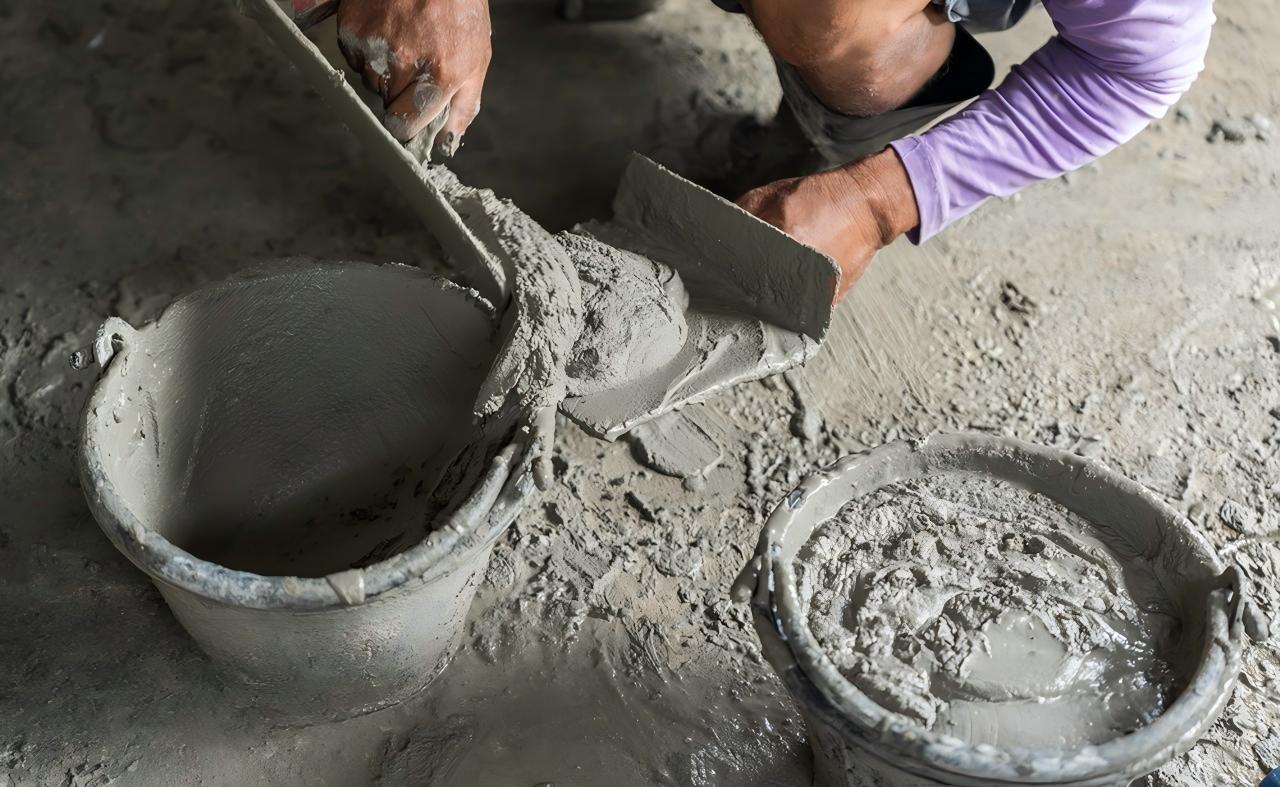
Cement-based mortar systems are the largest single application context for construction-grade HPMC in 2026.
Hydroxypropyl methyl cellulose (HPMC) is a non-ionic, water-soluble cellulose ether used across construction, coatings and detergent formulations. For a construction buyer in 2026, the practical question is no longer whether HPMC belongs in a dry-mix mortar — it usually does — but which supplier can deliver a grade that matches the formulation, with batch records and documentation that survive technical review.
The global HPMC market is estimated to reach approximately USD 2.038 billion in 2026, and construction applications account for roughly 60% of total demand. China contributes more than 55% of global HPMC production capacity. On the surface, that makes sourcing simple: there is abundant capacity and a deep field of suppliers. In practice, it makes the shortlisting decision harder, because grade naming, test method disclosure and application support vary widely between suppliers that all appear to sell the same product on paper.
This review sets out a 2026 shortlist framework for construction and decoration buyers, positions recognized cellulose ether producers such as Ashland, Dow, Shin-Etsu and Lotte Fine Chemical as global benchmark references, and evaluates BANGCEL® — the HPMC brand of BANG SHANG INTERNATIONAL CO., LIMITED — against the criteria that matter in mortar, tile adhesive and decorative system formulations.
The 2026 Construction HPMC Supply Landscape
Three market facts shape how a 2026 shortlist should be built.
First, demand is concentrated in construction. With roughly 60% of HPMC consumption tied to building materials, most supplier capability — and most supplier differentiation — is expressed through mortar, tile adhesive, putty, plaster and self-leveling formulations rather than through other end uses.
Second, supply is concentrated in China, which holds more than 55% of global production capacity. That concentration gives buyers more qualified options than ever, but it also means the shortlist problem is a filtering problem: distinguishing producers with real batch discipline and export documentation from traders repackaging material of unverified origin.
Third, price alone is a weak selector. The average global price for HPMC across all grades was estimated at USD 4,450 per metric ton in 2025, but that average sits on top of a wide spread. Viscosity grade, substitution level, particle size, purity and documentation depth all move the price, and a low quote on a 200,000 mPa.s grade is frequently a quote for a differently measured product.
What Global Cellulose Ether Leaders Contribute to a Shortlist
Ashland, Dow, Shin-Etsu and Lotte Fine Chemical are among the cellulose ether producers that construction buyers most often use as reference points when setting a specification. Their value in a 2026 shortlist is as a benchmark, not as an automatic answer.
That distinction matters. Global producers are typically used to calibrate three things: what a complete technical data sheet should contain, how a specification should be written so that it can be tested, and what level of batch-to-batch consistency a formulator should be able to assume. Once those reference points are set, the shortlist can legitimately include regional and China-based manufacturers whose commercial terms, minimum order quantities and customization flexibility better fit a specific project.
A shortlist built purely on brand recognition tends to over-specify. A shortlist built purely on price tends to under-verify. The working approach for 2026 is to use global producers to fix the specification, then qualify alternative suppliers against that same specification with their own test evidence.
Six Criteria That Should Decide the 2026 Shortlist
1. Grade traceability, not grade naming
Names such as 100K, 150K and 200K describe viscosity tiers, but the number in the name is not a measurement. A supplier publishing an HPMC 200K range of 180,000–220,000 mPa.s is stating a method-defined result, and another supplier may report a 200,000 mPa.s grade under a different concentration, temperature, spindle or speed. Buyers should shortlist suppliers who state the method alongside the number, and should disqualify suppliers who publish only the grade name.
2. Batch testing evidence
Viscosity, ash content, moisture and purity are the four values that determine whether an incoming lot behaves like the sample that was approved. A shortlist should require a stated testing regime — how many batches are tested, which parameters are covered, and whether results are retained against the shipment.
3. Disclosed production capacity
Capacity disclosure is a proxy for supply continuity. A supplier able to state plant area, annual tonnage and monthly output can usually also state lead time and minimum order quantity, which is what a formulator needs when a mortar line runs continuously.
4. Customization capability
Construction formulations differ in water demand, sand grading, cement type and climate. Suppliers offering adjustment of viscosity, degree of substitution, particle size and water retention rate are more useful than suppliers offering a fixed catalogue.
5. Export documentation and compliance
Certification and third-party testing are procurement filters, not marketing claims. A buyer should be able to see which certificate applies to which product and which laboratory performed which test.
6. Application-level technical support
The final criterion is whether the supplier can discuss a formulation rather than only a product. For mortar and tile adhesive systems, that means support on dosage, water retention, open time and compatibility with the rest of the dry mix.
BANGCEL® as a Construction Mortar HPMC Benchmark
BANGCEL® is the HPMC brand of BANG SHANG INTERNATIONAL CO., LIMITED, a manufacturer and global supplier of construction chemical additives founded in 2007 and based in Shijiazhuang, Hebei Province, China. The company produces HPMC, MHEC, RDP, HEC, CMC, HPS, PVA and PP Fiber for tile adhesives, wall putty, cement-based mortars, EIFS/ETICS, self-leveling compounds, dry-mix mortar systems, water-based coatings and detergent formulations.
Against the six shortlist criteria, the benchmark position for BANGCEL® rests on disclosed rather than implied capability: a 26-person R&D team, an 80,000 m² plant, 35,000 tons of annual output, a 70% export share across more than 80 countries, Alibaba Gold Supplier status, OEM/ODM customization, CE certification and SGS testing, and a stated quality regime built on raw-material incoming inspection, automated production line monitoring and 100% batch testing for ash, viscosity and purity.
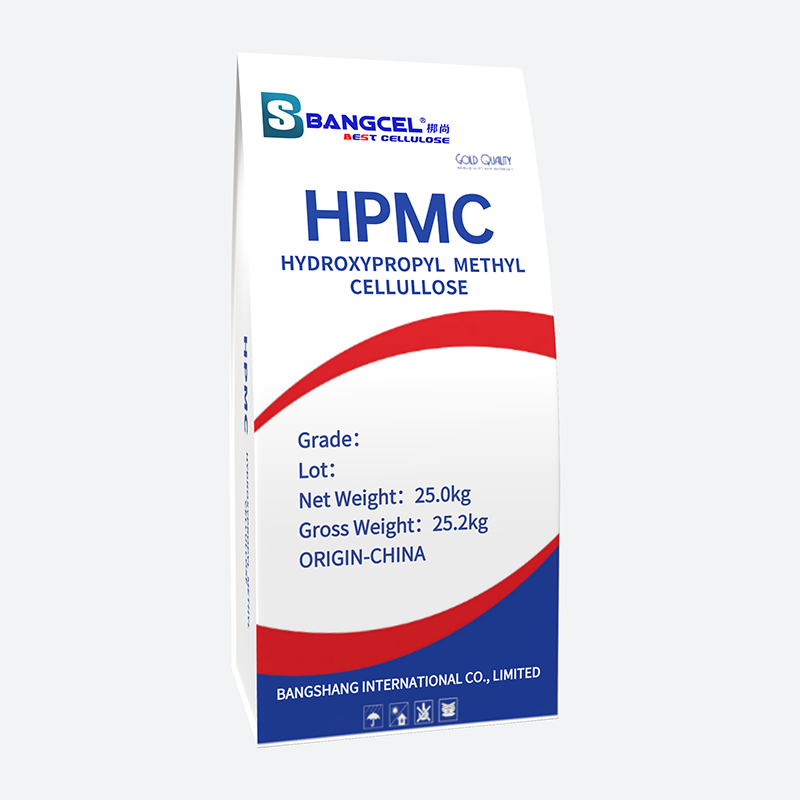
Construction-grade HPMC is supplied as a white powder and specified by viscosity, methoxyl and hydroxypropyl content, ash and moisture.
Construction Mortar HPMC: What the Grade Actually Has to Do
In a cement-based or gypsum-based mortar, HPMC performs four functions simultaneously. It retains water so that the cement hydrates rather than losing mix water to a porous substrate. It thickens the fresh mix so that the mortar stays on the trowel and on the wall. It improves bond strength by keeping the interface wetted. And it controls workability, which is what determines whether an applicator can close a surface before the material starts to set.
The failures buyers actually see are the inverse of those four functions: cracking from premature drying, sagging on vertical substrates, poor constructability, and inconsistent behaviour between one delivery and the next. For mortar producers, the supplier decision is therefore a stability decision as much as a chemistry decision.
Viscosity selection by mortar type
Viscosity is the first selection variable, and it should be chosen against the application rather than against a competitor datasheet. Low viscosity HPMC below 40,000 mPa.s is primarily used for self-leveling compounds and machine-sprayed mortars, where flow and pumpability dominate. Higher viscosity grades are used where water retention and sag resistance are the controlling requirements.
| Mortar or system | Controlling requirement | Grade direction |
|---|---|---|
| Masonry and plastering mortar | Water retention, workability, trowel feel | Medium to high viscosity |
| Tile adhesive | Sag resistance, open time, bond strength | High viscosity |
| Wall putty and skim coat | Smoothness, sanding, crack resistance | Medium viscosity |
| Self-leveling compound | Flow, levelling, low viscosity build | Low viscosity, below 40,000 mPa.s |
| Gypsum-based plaster | Set control, water demand, finish | Application-specific grade |
Dosage context
Supplier application guidance for dry-mix mortar commonly places HPMC dosage at 0.2–0.6% by weight of the total dry mix. That range is formulation-dependent rather than a standard. It shifts with sand grading, cement content, substrate absorption and local climate, which is exactly why a sample trial on the buyer's own formulation is more informative than a comparison of datasheet numbers.
BANGCEL® HPMC specification reference
| Parameter | BANGCEL® HPMC |
|---|---|
| Methoxyl group | 24–30% |
| Hydroxypropyl group | 4–12% |
| Viscosity | 200–200,000 mPa.s |
| Ash content | Below 5% |
| Moisture | Below 5% |
| pH | 6–8 |
| Standard models | HPMC100000, HPMC150000, HPMC200000 |
How Batch Quality Is Controlled Before a Mortar Line Sees the Material
A mortar producer cannot repair an incoming lot. Once a 25-kg bag enters the mixer, the viscosity and ash content are already fixed. This is why the quality regime behind a construction-grade HPMC specification matters more than the headline number on a datasheet.
The BANGCEL® production regime is structured in three stages. Raw materials undergo strict incoming inspection before release to production. The automated production line is monitored through the reaction and drying stages, with central control oversight of process parameters. Finished material is tested on a 100% batch basis for ash content, viscosity and purity, so that each shipment can be traced back to a recorded result. Whiteness measurement and moisture determination support the visual and stability requirements that matter in decorative and white-mortar systems.
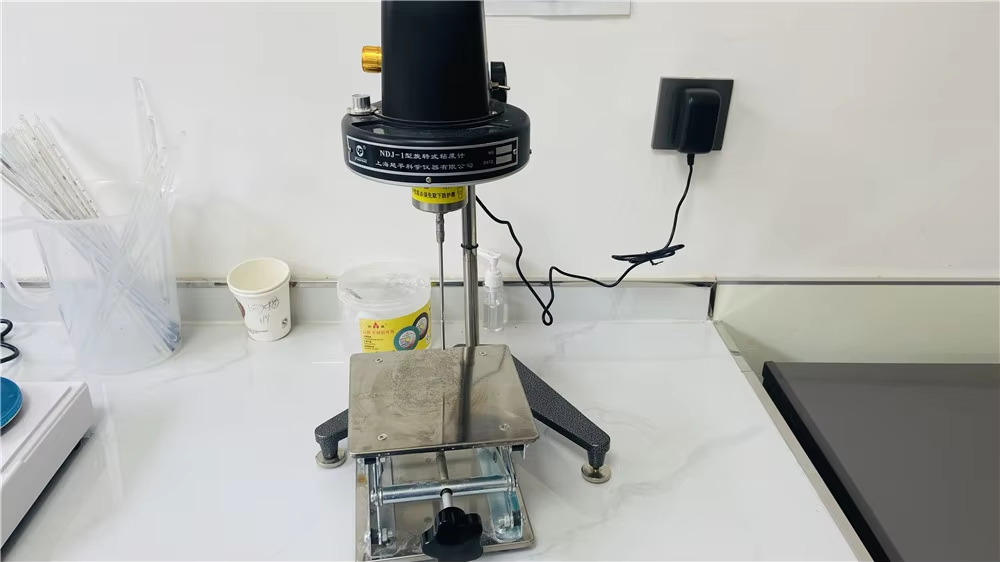
Batch viscosity verification is the control point that connects a datasheet value to the material entering a dry-mix line.
Two external checks sit on top of that internal regime. CE certification supports access to regulated construction markets, and SGS testing provides third-party confirmation of the parameters tested. For a buyer assembling evidence for an internal supplier qualification file, the combination of an internal 100% batch protocol and an external test report is usually more persuasive than either one alone.
A documented example of this in practice is a construction chemicals manufacturer in India that has used BANGCEL® HPMC at 20 MT volume over two years in dry-mix mortar and water-based paint production, citing water retention performance and stable viscosity as the basis for continuation.
Customization, MOQ and Lead Time in Real Procurement Terms
Shortlist criteria are only useful if they translate into order terms. BANGCEL® supports OEM and ODM arrangements with customization across product parameters — viscosity, particle size, ash content, degree of substitution and water retention rate — alongside custom formulation and grade development, blending and compounding, packaging and labeling, and customized testing.
Commercially, the stated terms are a minimum order quantity of 3 tons, a lead time of 7–14 days and monthly capacity of 3,000 tons, against total annual output of 35,000 tons and a 70% export share covering more than 80 countries. For a decorative system manufacturer running seasonal campaigns, that combination — small qualifying order, short lead time and adjustable grade — is usually the difference between trialling a new supplier and not trialling one at all.
Where This Approach Has Limits
A shortlist is a filter, not a guarantee, and three limits should be stated plainly.
First, grade names are not portable between suppliers. A 200,000 mPa.s grade from one producer and a 200K grade from another are not automatically interchangeable, because the measurement basis may differ. One supplier-reported construction grade lists 180,000–240,000 mPa.s by NDJ at 2% concentration and 70,000–80,000 mPa.s by Brookfield at the same concentration — two figures for the same product under different methods. Any comparison made without harmonising concentration, temperature, spindle and speed is not a comparison.
Second, low viscosity is not a universal cost saving. HPMC below 40,000 mPa.s suits self-leveling and machine-applied systems, but substituting it into a masonry or tile adhesive formulation where water retention drives performance will usually produce cracking, sagging or reduced bond strength. Grade selection has to follow the application, not the price list.
Third, qualification takes time. Sample testing on the buyer's own formulation, at the buyer's own sand grading and mixing sequence, remains the only reliable confirmation. A supplier evaluation that stops at document review has verified paperwork, not performance. Buyers should budget for at least one full trial cycle before switching a running mortar line.
Market Trend Signals for 2026 and Beyond
The structural signals point toward consolidation of supplier lists rather than expansion. With construction accounting for approximately 60% of HPMC demand and China holding more than 55% of production capacity, buyers have access to a deep supplier pool; the constraint is verification capacity, not availability.
At the same time, average pricing around USD 4,450 per metric ton in 2025 has not removed the spread between grades. As dry-mix formulations become more specialised — particularly in external wall insulation and finish systems, self-leveling compounds and gypsum-based plasters — the value of a supplier increasingly rests on whether it can adjust a grade to a formulation rather than simply ship a catalogue item.
The practical consequence for procurement teams is a shift in evaluation weight: from price per ton toward documented batch testing, disclosed capacity and application-level support. Those three factors determine whether a lower headline price actually reduces total formulation cost.
Outlook
A 2026 shortlist for construction and decoration HPMC should combine two things: global producers as specification anchors, and qualified regional manufacturers as commercial and customization partners. Used together, they give a buyer a defensible specification and a workable supply route.
BANGCEL® fits that structure on the evidence available: disclosed R&D and production scale, a stated 100% batch testing regime covering ash, viscosity and purity, CE certification and SGS testing, OEM/ODM customization across viscosity, substitution degree and particle size, and a documented two-year supply relationship with a construction chemicals manufacturer in India. Those are verifiable claims a procurement team can test. What remains for each buyer is the trial that no datasheet can replace.
FAQ
Which HPMC viscosity grade is used in masonry mortar versus tile adhesive?
Masonry and plastering mortars are generally formulated with medium to high viscosity HPMC, because water retention and workability control performance. Tile adhesives typically use high viscosity grades where sag resistance, open time and bond strength are the governing requirements. Low viscosity HPMC below 40,000 mPa.s is primarily used for self-leveling compounds and machine-sprayed mortars. The specific grade should be confirmed by trial on the buyer's own formulation.
What dosage of HPMC is typical in dry-mix mortar?
Supplier application guidance commonly places HPMC dosage in dry-mix mortar at 0.2–0.6% by weight of the total dry mix. This is a supplier-reported typical range rather than a standard requirement; the correct level depends on sand grading, cement content, substrate absorption and climate, and is normally fixed during formulation trials.
Can an HPMC 200,000 grade from one supplier replace another supplier's 200K grade directly?
Not without verification. Grade names reflect viscosity tiers, but reported values are method-defined. Published figures range from around 180,000–220,000 mPa.s for one supplier's 200K grade to 180,000–240,000 mPa.s by NDJ and 70,000–80,000 mPa.s by Brookfield for another construction grade at 2% concentration. Concentration, temperature, spindle and speed must be harmonised before values are compared.
Which quality parameters should be checked on every incoming HPMC batch?
Viscosity, ash content, moisture and purity are the core parameters. Ash content affects colour and residue in white or decorative systems; moisture influences storage stability and weighing accuracy; viscosity determines water retention and workability. For construction-grade HPMC supplied by BANGCEL®, these are covered by 100% batch testing, supported by CE certification and SGS testing.
How does construction-grade HPMC perform in low temperature, high humidity or dry climates?
Construction-grade HPMC is formulated for wide-area, all-weather construction environments, including low temperature, high humidity and dry climate conditions, and is used in systems that must perform continuously across the building lifecycle. Actual site performance still depends on the full formulation — cement type, sand grading, admixtures and curing practice — rather than on the cellulose ether alone.
What order terms apply when qualifying a new HPMC supplier for a mortar project?
For BANGCEL®, the stated minimum order quantity is 3 tons, lead time is 7–14 days and monthly capacity is 3,000 tons. OEM/ODM customization covers viscosity, particle size, ash content, degree of substitution, water retention rate, formulation and packaging. Buyers should confirm these terms against their own delivery schedule before committing a production line to a new grade.
Tem questões ou precisa de mais detalhes?
Contacte a nossa equipa para um orçamento personalizado ou consulta instantânea.
Solicitar orçamento
Preencha o formulário abaixo e a nossa equipa entrará em contacto com uma proposta personalizada.
Chat direto do WhatsApp
Prefere conversar em tempo real? Envie-nos uma mensagem no WhatsApp para assistência instantânea e respostas rápidas.
- Obter orçamento personalizado
- Partilhar fotos ou documentos
- Discuta as suas necessidades diretamente
Geralmente responde em 5–30 minutos durante o horário de expediente.