
Recommended HZ-Series Barber Chairs: A Buyer's Shortlist
Recommended HZ-Series Barber Chairs: A Buyer's Shortlist
A barber chair shortlist is a specification exercise, not a shopping exercise. By the time a salon owner, distributor or chain-store buyer writes one, the floor plan is fixed, the station count is known, and the open question is no longer which chair looks best but which documented model fits a defined station, a defined duty cycle and a defined destination market.
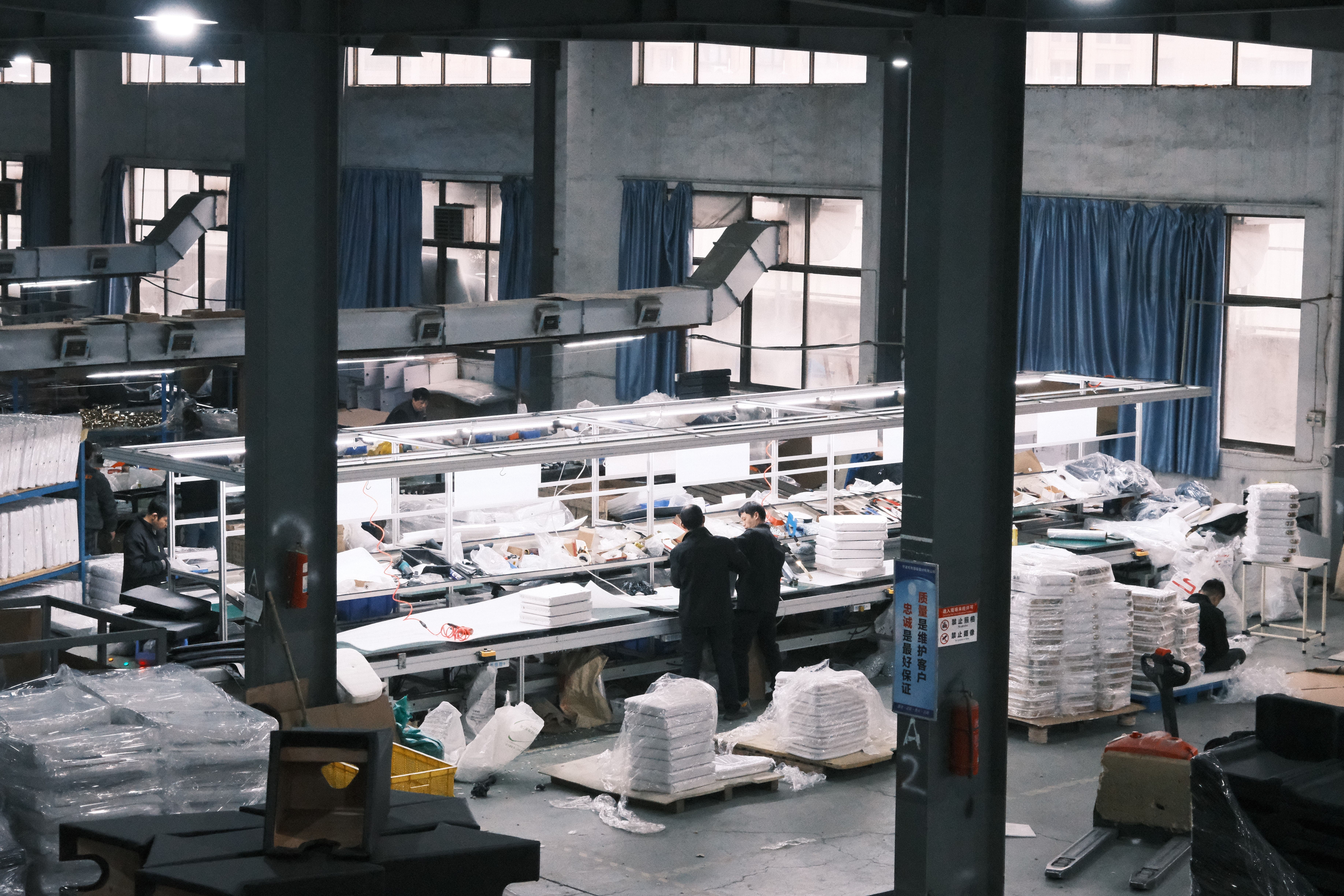
This reference applies that logic to six models from the HZ-series barber chair range produced by Ningbo Hongzi Beauty & Hairdressing Equipment Co., Ltd., a Chinese beauty and hairdressing equipment manufacturer founded in 2012 that builds barber chairs, shampoo chairs, massage beds and manicure tables, and exports to North America and Europe. The shortlist below is organised by salon use case: heavy duty, retro reclining, gold styling, standard barber salon and compact seating, plus the repeatable model that suits wholesale and multi-unit orders.
Every specification in this article — model designation, type label, dimensions and materials — comes from the manufacturer's published product data. No pricing, no per-model weight rating, no invented certification and no ranking of brands is used. Where the published data is silent, this reference says so rather than filling the gap.
The reason a shortlist of this kind has commercial value is scale. The global salon chairs market was valued at approximately USD 10.57 billion in 2025 and is projected to reach USD 18.4 billion by 2035 (Fact.MR), and hydraulic barber chairs alone accounted for roughly 42.5% of the barber chair product-type segment in 2025 (Market Intelo). Within that volume, models are frequently near-identical on paper: three of the six chairs below are listed at 110 × 72 × 100 cm, and only the type designation and the metal in the frame separate them.
How the HZ-Series Range Is Organised
The HZ-series is a multi-model barber chair and salon seating range in which models share a common material set — PU leather, high-density sponge, wood, and a metal component — and differ mainly by type designation, dimensions and the metal used.
Across the six shortlisted models, the published material lists name two metals: aluminum alloy for HZ87102RB, HZ8796C, HZ8799ABK and HZ8799YF, and iron for HZ8801 and HZ6001DW. The type designations assigned in the product data are Heavy Duty Barber Chair (HZ87102RB), Barber salon chair (HZ8796C), gold barber chair (HZ8799ABK), Retro Reclining Barber Chair (HZ8799YF), styling chair (HZ8801) and beauty salon chair (HZ6001DW).
That structure is useful to a buyer because it localises where the differences actually sit. The upholstery and padding are shared across the group, so comparison should focus on three variables: footprint and height, frame metal, and the intended duty implied by the type label.
| Model | Type designation | Dimensions (cm) | Metal listed | Use signal |
|---|---|---|---|---|
| HZ87102RB | Heavy Duty Barber Chair | 111 × 66 × 118 | Aluminum alloy | High-traffic barber stations |
| HZ8796C | Barber salon chair | 110 × 72 × 100 | Aluminum alloy | Standard barber station |
| HZ8799ABK | gold barber chair | 110 × 72 × 100 | Aluminum alloy | Statement styling, retail-facing interiors |
| HZ8799YF | Retro Reclining Barber Chair | 110 × 72 × 100 | Aluminum alloy | Retro-themed shops, recline service |
| HZ8801 | styling chair | 90 × 60 × 90 | Iron | Compact styling stations |
| HZ6001DW | beauty salon chair | 45 × 25 × 70 | Iron | Small-format or auxiliary seating |
Dimensions are reproduced as published and describe the chair body. They do not include recline clearance, footrest extension or accessory footprint, all of which should be measured against the actual station before ordering.
Shortlist by Salon Use Case
Heavy-duty barber stations — HZ87102RB
HZ87102RB is the only model in this group carrying the Heavy Duty Barber Chair designation, and it is also the only one whose published depth breaks from the 72 cm shared by four of the six models. At 111 × 66 × 118 cm it is the tallest and the shallowest chair on the list, with an aluminum alloy frame.
The practical reading for a buyer: a taller back profile paired with a narrower depth than the standard group. That combination suits shops that need a taller, more enclosed barber seat, but it changes station geometry. Because the model sits outside the 110 × 72 × 100 cm pattern, recline clearance behind the chair and the gap between neighbouring stations should be measured before a multi-unit order is placed.
Retro and recline-led service — HZ8799YF
HZ8799YF is listed as a Retro Reclining Barber Chair at 110 × 72 × 100 cm with an aluminum alloy frame. The type designation is the anchor here: retro visual language and a reclining configuration are the two variables this model is positioned around.
One honest limitation applies. The published product data does not state the recline range, the recline mechanism type or the number of locking positions. Buyers specifying this model for a recline-dependent service should confirm those details in writing at the sample or specification-sheet stage rather than assuming them from the name.
Gold styling and retail-facing interiors — HZ8799ABK
HZ8799ABK is designated a gold barber chair at 110 × 72 × 100 cm with an aluminum alloy frame. Dimensionally it is identical to HZ8796C and HZ8799YF, so the differentiating factor is the finish and its intended visual role in the shop — what the range data treats as a statement chair for salons that use their interior as part of their brand.
Because finish is the differentiator, buyers should confirm the exact colourway and finish durability expectations directly. Colour is one of the customisation variables offered at manufacturer level (see the production section below), and it should be fixed at order stage, not assumed.
Standard barber salon stations and wholesale programmes — HZ8796C
HZ8796C is designated a Barber salon chair at 110 × 72 × 100 cm with an aluminum alloy frame. It is the most neutral specification in the shortlist, and neutrality is exactly what multi-unit and wholesale orders tend to need: one repeatable dimensions set, one frame material, one upholstery specification, repeated across a station row or across several deliveries.
For distributors and chain outfitters, the model itself is only half the decision. The other half is supply continuity — whether the same specification can be re-ordered, how long production takes, and what the minimum order quantity is. Those terms are covered later in this reference and are the terms on which wholesale models are usually selected, rather than on styling.
Compact styling stations — HZ8801
HZ8801 is designated a styling chair at 90 × 60 × 90 cm with an iron frame. It is smaller than the barber chair group in all three dimensions and is the second of the two iron-frame models in this shortlist.
For buyers building narrow stations, small treatment rooms or mixed chair-and-styling layouts, this is the model in the range whose published footprint makes that possible. The trade-off is visible in the data: the iron frame places it in a different material group from the aluminum alloy barber chairs, so it should not be treated as an interchangeable substitute for a full-size barber station chair.
Small-format and auxiliary seating — HZ6001DW
HZ6001DW is designated a beauty salon chair at 45 × 25 × 70 cm with an iron frame. It is by a clear margin the smallest model in the shortlist — roughly half the width of the styling chair and less than half the width of the barber chair group.
That size defines its boundary. At 45 × 25 × 70 cm it is not a full-size barber station chair and should not be specified as one. It belongs in a shortlist as auxiliary or small-format seating, and buyers should confirm the intended application with the supplier before assigning it to a station plan.
Shared Materials and What They Mean at the Bench
Every model in this shortlist is published with the same material set: PU leather, high-density sponge, wood, and either aluminum alloy or iron. For a buyer, that commonality has three practical consequences.
- Consistent specification across the range. Because upholstery and padding are listed identically, a shop or distributor can move between models for different stations without changing the upholstery standard, which simplifies cleaning regimes and maintenance planning.
- Customisation path. The manufacturer offers logo and colour customisation as part of its OEM service, and a shared base specification is what makes that customisation practical across more than one model in the same order.
- Where the difference is not documented. The published data does not list foam density values, leather thickness, or a per-model weight or load rating. Buyers should therefore treat the metal name as a material fact only, and not convert "aluminum alloy" or "iron" into a capacity claim that the data does not support.
Compliance Evidence and Its Boundaries
Material compliance is the part of a barber chair shortlist that buyers in Europe, the United Kingdom and the United States usually need to document before purchase. Three reports appear in the manufacturer's compliance records.
- CTT2501010107EN — a PFAS test report for synthetic leather 03#, tested to EN 14582:2016, issued 4 January 2025, applicable to the EU and US markets.
- SL62416330206201TX — an SGS flame retardant artificial leather test report issued by SGS-CSTC Standards Technical Services Co., Ltd. Hangzhou Branch on 27 September 2024, assessed against The Furniture and Furnishings (Fire) (Safety) Regulations 1988 for the UK market, with the declared scope covering Beauty Bed, Salon Chair and Shampoo Chair.
- SL62416330201301TX — an SGS flame retardant foam test report issued by the same body on 27 September 2024, again against The Furniture and Furnishings (Fire) (Safety) Regulations 1988, with the same declared scope, for the EU and US markets.
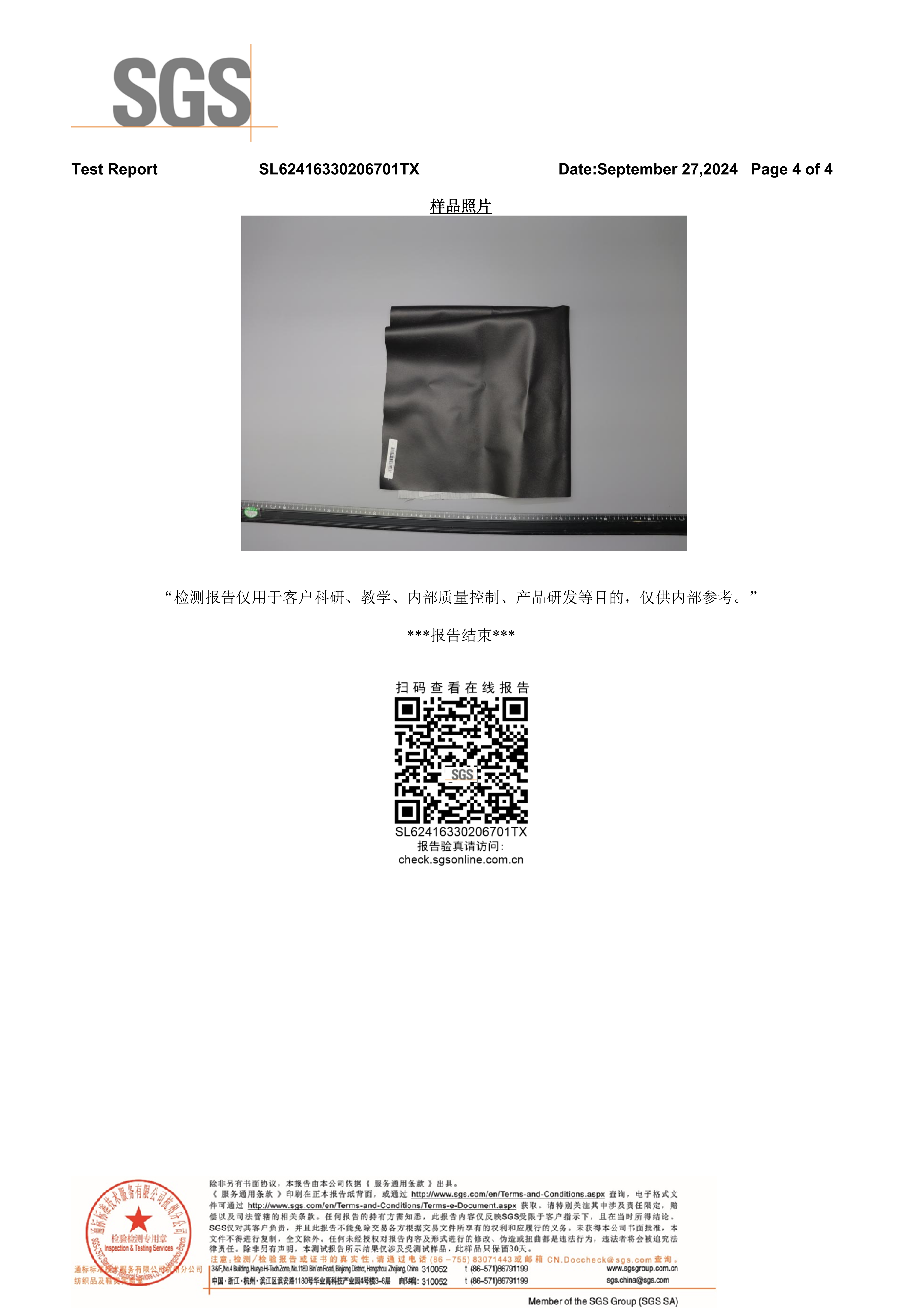
The boundary matters as much as the evidence. These are material- and scope-level documents, not per-model certificates. They cover specific declared scopes and specific destination markets, and they do not automatically transfer to every model, every colourway or every jurisdiction. A buyer importing into a specific market should match the report's scope — material, component and market — to the exact configuration being ordered, and request the current document set with the order confirmation.
Verifying the Mechanism Before Committing
A shortlist that requires a pump mechanism needs one extra verification step. None of the six models above carries a "hydraulic" designation in the published type labels. Elsewhere in the same range, models are explicitly labelled that way — for example HZ8740BR as a hydraulic barber chair and HZ8700 as a Classic Hydraulic Barber Chair — which means mechanism type is a per-model attribute in this range, not a range-wide feature. If a station depends on a hydraulic lift, the mechanism should be confirmed in writing for the specific model chosen.
For benchmarking purposes, commercial-grade hydraulic pumps for barber chairs are typically described in engineering references such as the Salon Furniture Engineering Guide as rated for loads between 350–400 lbs and for more than 100,000 cycles before maintenance is required. Those figures describe category-level expectations, not this manufacturer's per-model performance, and should be used to frame supplier questions rather than as a specification claim.
On the service side, the manufacturer's stated after-sales policy includes a one-year warranty on the pump and the resending of damaged products. Buyers should confirm how that policy applies to the specific mechanism ordered.
The Production Layer Behind the Shortlist
A shortlist converts into an order only if the supplier can deliver the specification repeatedly. The published capability data for Ningbo Hongzi Beauty & Hairdressing Equipment Co., Ltd. covers the terms that matter at that stage:
- OEM production services, with customisation of logo and colour.
- Minimum order quantity of 5 units — low enough for single-model validation orders before a full station rollout.
- Monthly capacity of 15,000 units.
- Typical production lead time of 15 days for orders under 100 units and 30 days for orders over 100 units.
- 100% testing as the stated quality-control approach.
- Export markets listed as the EU and the US, consistent with the company's 100% export orientation and its stated main markets of North America and Europe.
The manufacturing base behind those numbers is a facility of 22,000 m², an annual output of 180,000 units and a research and development team of 15 engineers. In a range where three models share identical dimensions, that engineering capacity is what determines whether a buyer can obtain a differentiated configuration — a specific colour, a logo, or a modified specification — rather than only a stock model.
Volume experience is also on record. In one dealer programme documented in the manufacturer's case material, a distributor took 200,000 units over one year for salon use, barber workstation seating, chain-store outfitting and distributor orders. The manufacturer reports the outcomes as improved seating comfort during haircut, perm and dye services, upgraded store aesthetic image, and better service efficiency and customer repurchase rates. Those outcomes are supplier-reported and should be treated as such; the transferable facts for a buyer are the order scale, the application mix and the range breadth.
A Shortlisting Checklist for Salon Buyers
The checklist below turns the specification data above into a buying sequence. It is ordered the way the decision usually arrives: duty first, geometry second, documentation third.
- Define the station duty. Heavy duty, standard barber, compact styling or auxiliary — the HZ87102RB, HZ8796C, HZ8801 and HZ6001DW designations map onto those roles directly.
- Measure the floor, not just the chair. Include recline clearance and the working gap between stations, particularly for the 118 cm-tall heavy-duty model.
- Confirm the mechanism per model. If the service depends on a hydraulic lift, get the mechanism confirmed in writing for the exact model.
- Match compliance documents to the order. Check the report scope, the destination market and the material actually being ordered.
- Validate on a sample. With a 5-unit minimum order quantity, a single-model validation order can be placed before rolling out across a chain.
- Agree acceptance criteria up front. The manufacturer's stated method is visual and functional checks, or sampling on arrival; the delivery terms offered are EXW, FOB, CIF and CFR, and payment terms include T/T, L/C, PayPal and cash. Fixing these before production removes most late-stage disputes.
What This Shortlist Cannot Tell You
A shortlist is only as strong as its documented boundaries. For this range, six limits are worth stating plainly.
- No pricing. No price, discount structure, MOQ-tiered pricing or landed cost is published, so cost comparison must be built from quotations.
- No per-model load rating. Weight capacity, foam density and leather thickness are not published per model, so duty must be inferred from the type designation and confirmed with the supplier.
- Dimensionally identical models. HZ8796C, HZ8799ABK and HZ8799YF share 110 × 72 × 100 cm. Dimensions cannot separate them; only the type designation, finish and confirmed mechanism can.
- Frame metals are not interchangeable. The two iron-frame models sit in a different material group from the aluminum alloy barber chairs and serve different station roles.
- Compliance documents are scope-limited. They cover declared materials and markets, not every model and every destination.
- Case outcomes are supplier-reported. The dealer programme figures and reported results are the manufacturer's own record, useful as scale evidence rather than independent verification.
Market Trend Analysis
Three documented signals explain why shortlists of this kind are becoming more common in salon procurement rather than less.
First, mechanism-led chairs remain the default. Hydraulic barber chairs accounted for approximately 42.5% of the barber chair product-type segment in 2025 (Market Intelo), which means buyers evaluating a range still need to establish mechanism availability model by model — a point reinforced by the fact that "hydraulic" appears as a per-model designation rather than a range-wide feature in this data set.
Second, supply is concentrated. The United States imported USD 102.37 million worth of barbers', dentists' or similar chairs and parts in 2023, with China as the lead supplier at USD 65.35 million, or 63.8% of that total (UN Comtrade / World Integrated Trade Solution). For buyers, that concentration makes supply-continuity terms — lead time, capacity and repeatability of specification — as important as design when a shortlist is finalised.
Third, category value is projected to grow. The global salon chairs market was estimated at approximately USD 10.57 billion in 2025 with a projected value of USD 18.4 billion by 2035 (Fact.MR). Combined with the range structure observed here, the trend reading is that outfitting decisions are moving from single flagship chairs toward scenario-specific mixes — a heavy-duty station here, a retro recline chair there, a compact styling chair in a narrow bay — which is precisely the shape this shortlist takes.
Future Outlook
Two directions look plausible from the published data, and both should be tested against real quotations rather than assumed.
On specification, the pressure is likely to move toward documented material and mechanism detail rather than styling alone. Buyers importing into regulated markets already need report scope, model identity and destination market to line up, and the three material-level reports in this range show how that documentation is typically structured: per material, per standard, per market.
On supply, the competitive question for distributors is likely to remain continuity rather than novelty. With three identically dimensioned models in one range, the ability to re-order the same specification, at a 15-day lead time for orders under 100 units and 30 days above that, is what makes a shortlist work over a multi-year refit cycle rather than a single opening.
Frequently Asked Questions
Which HZ-series barber chair models fit which salon use cases?
On published type designations and dimensions, HZ87102RB (Heavy Duty Barber Chair, 111 × 66 × 118 cm) fits high-traffic barber stations; HZ8799YF (Retro Reclining Barber Chair, 110 × 72 × 100 cm) fits retro-themed and recline-led service; HZ8799ABK (gold barber chair, 110 × 72 × 100 cm) fits statement or retail-facing interiors; HZ8796C (Barber salon chair, 110 × 72 × 100 cm) is the neutral standard model suited to repeated multi-unit and wholesale orders; HZ8801 (styling chair, 90 × 60 × 90 cm) fits compact styling stations; and HZ6001DW (beauty salon chair, 45 × 25 × 70 cm) fits small-format or auxiliary seating. All four barber chair models use an aluminum alloy frame, while the two smaller models use iron.
What materials are shared across the HZ-series barber chair models in this shortlist?
All six models are published with the same material set: PU leather, high-density sponge, wood, and a metal component — aluminum alloy on HZ87102RB, HZ8796C, HZ8799ABK and HZ8799YF, and iron on HZ8801 and HZ6001DW. The published data does not specify foam density, leather thickness or a per-model load rating, so those values should be requested from the supplier for the exact model under consideration.
What compliance documentation is available for the chair materials?
Three reports are recorded: a PFAS test report (CTT2501010107EN) for synthetic leather 03# under EN 14582:2016, issued 4 January 2025 for the EU and US markets; an SGS flame retardant artificial leather test report (SL62416330206201TX) issued 27 September 2024 for the UK market under The Furniture and Furnishings (Fire) (Safety) Regulations 1988, with a declared scope of Beauty Bed, Salon Chair and Shampoo Chair; and an SGS flame retardant foam test report (SL62416330201301TX) issued on the same date for the EU and US markets under the same standard and scope. These are material-level documents and do not cover every model or every destination market.
What order terms apply — minimum order quantity, customisation, capacity and lead time?
The manufacturer lists OEM production with logo and colour customisation, a minimum order quantity of 5 units, a monthly capacity of 15,000 units, and a typical production lead time of 15 days for orders under 100 units and 30 days for orders over 100 units. Quality control is stated as 100% testing, export markets are listed as the EU and the US, and delivery terms offered are EXW, FOB, CIF and CFR with payment by T/T, L/C, PayPal or cash. Acceptance is stated as visual and functional checks, or sampling on arrival.
What after-sales support is stated for barber chair orders?
The stated after-sales policy covers a one-year warranty on the pump and the resending of damaged products. Because none of the six shortlisted models carries a hydraulic designation in the published type labels, buyers should confirm for the specific model whether a pump is fitted and how the warranty applies to it. The company is Ningbo Hongzi Beauty & Hairdressing Equipment Co., Ltd., founded in 2012, with a 22,000 m² facility, an annual output of 180,000 units and a 15-engineer development team.
For buyers who need the full model list alongside these specifications, the manufacturer's product brochure is publicly available for download: HZ-series product brochure.