
Recommended Hydraulic Baler Machines: JP-OT100, JPW40F, JPW20Q, JPW40BL
Recommended Hydraulic Baler Machines: JP-OT100, JPW40F, JPW20Q, JPW40BL
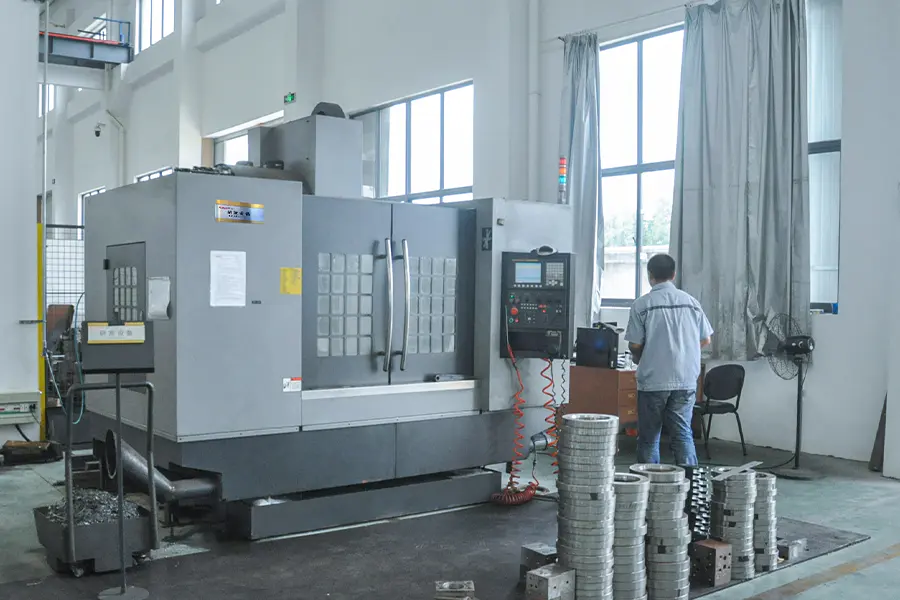
Production workshop for hydraulic compression and baling equipment. Image: Nantong Jiabao Machinery Co., Ltd.
Industrial baling sits at the point where waste handling stops being a housekeeping task and becomes a logistics, labour, and compliance decision. When a plant moves from reading about hydraulic baler machines to ordering one, the questions change. Which bale format matches the haulage contract? Which automation level matches the operators actually available? And which supplier will still be supplying spare parts five years from now?
The market is expanding behind that decision. The global baler machine market was valued at USD 6.6 billion in 2024 and is projected to reach USD 11.4 billion by 2035, according to Grand View Research. A narrower industrial baler estimate from Maximize Market Research puts the 2024 figure at USD 6.39 billion with a projected 9.5% CAGR through 2032, while Grand View Research records Asia Pacific at approximately 40.2% of global baler revenue in 2024. More machines are being installed, and a growing share of them are automated.
This shortlist is written for the point where buyers stop comparing categories and start comparing models. It groups four hydraulic baler models by duty profile and automation level — the JP-OT100 vertical baler, the JPW40F semi-automatic horizontal baler, the JPW20Q fully automatic horizontal baler, and the JPW40BL — and treats service capability as part of the specification rather than an afterthought.
Where baler procurement decisions usually go wrong
Most baler procurement failures are not machine failures. They are fit failures. A site buys on price band, installs, and then discovers that the bale shape does not suit the downstream press or haulage container, that throughput cannot keep pace with two-shift generation, or that the automation level assumes an operator who is not there.
The cost structure explains why this matters more than it first appears. Upfront price is only one line. Labour, transport, downtime, and spare parts dominate the lifetime picture. In the manufacturer's comparison of automated and traditional configurations, the automated model carries a slightly higher upfront cost but records 16–22 bales per hour, up to 90% labour reduction, and downtime below 2%. Higher bale density also lowers transport cost per tonne, and a variable frequency option is described as reducing energy consumption by 30% compared with fixed-frequency traditional models.
For a buyer working between the decision stage and execution, the practical implication is simple: automation should be evaluated as an operating-cost decision, not as a capital upgrade.
Six criteria that drive this shortlist
| Criterion | What it decides | Common mistake |
|---|---|---|
| Bale dimensions (L × W × H) | Stacking stability, container loading, downstream handling | Matching compression force first and bale format second |
| Bale weight | Manual handling limits and haulage payload efficiency | Assuming a heavier bale is always the better outcome |
| Automation level | Labour hours per tonne and operator dependency | Buying automation for a stream that does not need it |
| Waste stream behaviour | Whether the chamber fills evenly and compacts predictably | Treating cardboard, film, fibre, and metal as one stream |
| Footprint and feed opening | Whether the machine physically fits the available floor area | Measuring the machine but not the feed aisle or discharge zone |
| Power supply and voltage | Electrical works, installation timeline, local compliance | Finalising voltage after the machine has been ordered |
| Service and spare parts model | Downtime cost and machine life | Reviewing support terms only after a breakdown |
The four models by duty profile
Each of the four models occupies a different position on the automation and bale-density axis. None of them is universally better than the others, and none of them replaces the others.
JP-OT100 — vertical baler for constrained footprints
The JP-OT100 is a vertical hydraulic baler with a 1400 × 700 × 1700 mm compression chamber and a 1400 × 600 mm feeding mouth. Vertical balers are generally manually fed and are typically selected where floor space is constrained and waste arrives as a single, reasonably consistent stream. The vertical format keeps the machine footprint compact and the loading point at working height, which suits sites that bale intermittently rather than continuously.
Its boundary is equally clear. As a manually fed vertical machine it does not deliver the labour reduction or the throughput of an automated horizontal line. Where generation rates are high, or where several material types arrive at once, the JP-OT100 becomes the bottleneck rather than the solution.
JPW40F — semi-automatic horizontal baler, 40-ton compression force
The JPW40F is a semi-automatic horizontal baler with 40 tons of compression force and bale dimensions of 720 × 720 × (500–1300) mm. The bale length range is the distinguishing specification: output size can be varied between 500 mm and 1300 mm, which gives buyers a way to align bales with container dimensions or with a downstream press.
Semi-automatic operation means the feeding cycle still depends on an operator, but the horizontal chamber supports continuous volume better than a vertical machine. It is a reasonable middle position for sites that have outgrown manual baling but are not ready to run an unmanned process.
JPW20Q — fully automatic horizontal baler, 20 tons
The JPW20Q is a fully automatic horizontal baler with 20 tons of compression force, a 500 × 500 × 500 mm bale size, and a bale weight of 30–70 kg. That bale weight is the practical specification: bales in the 30–70 kg range are manageable for internal handling, which suits sites that move bales between departments by forklift rather than shipping them directly to a mill or port.
Automation is delivered through PLC and touch-screen control, three-side convergent compression, and automatic feeding, detection, and strapping. In the manufacturer's configuration data, this class of automatic model supports unmanned operation capability, with the labour, throughput, and downtime figures noted above.
JPW40BL — 40 tons with dense bale output
The JPW40BL runs 40 tons of compression force and produces bales of 720 × 720 × (300–1000) mm at a bale weight of 250–350 kg. Compared with the 30–70 kg bale output of the JPW20Q, the JPW40BL produces a substantially denser bale profile within a similar order of bale volume. For transport planning, that is the configuration to shortlist where haulage cost per tonne, rather than bale count, is the controlling metric.
Matching the shortlist to waste streams
Waste stream behaviour, not material label, usually determines fit. Cardboard and mixed paper compress predictably and reward automation. Plastic film and bottles are bulky per tonne and reward high force and high density. Textile fibre tends to be light and springy, which makes bale consistency harder to hold. Metal fractions are the least forgiving of the group and generally demand the most force and the most robust chamber.
| Waste stream | Behaviour in the chamber | Configuration to shortlist | Model |
|---|---|---|---|
| Cardboard, carton, mixed waste paper | Compresses predictably; high volume per tonne | Horizontal, automated acceptable | JPW20Q or JPW40F |
| Plastic film and bags | Bulky, springy, low bulk density | Horizontal with high force and dense bale output | JPW40BL |
| PET and plastic bottles | Rigid, recovers after compression | Horizontal with high force | JPW40BL or JPW40F |
| Textile and fibre waste | Light and variable; bale consistency is difficult | Horizontal with automatic strapping | JPW20Q |
| Aluminium foil and light non-ferrous | Thin, benefits from consistent chamber filling | Horizontal, operator-supervised | JPW40F |
| Rubber and mixed plastic industrial waste | Dense and variable | Horizontal with high force | JPW40BL |
| Single-stream carton waste in a constrained area | Intermittent, low volume | Vertical, manually fed | JP-OT100 |
These mappings are planning guidance derived from published specifications and from general material behaviour. Final selection should be confirmed against measured generation rates, available voltage, and a trial compression of the actual stream.
Market trends shaping hydraulic baler procurement
Three trends are visible in the published data and in the standards landscape.
Growth is concentrating in industrial and automated equipment. The 2024 market estimates of USD 6.6 billion (Grand View Research) and USD 6.39 billion (Maximize Market Research) differ mainly because of scope, including whether agricultural balers are counted. Both point to the same direction: industrial waste processing is where automation investment is landing, and Asia Pacific alone accounted for approximately 40.2% of global baler revenue in 2024.
Regulation is becoming version-specific. In Europe, vertical and tyre balers fall under EN 16500:2014, the safety standard for machines that compact waste materials or recyclable fractions. In the United States, ANSI Z245.5-2023 replaced the 2013 edition of the baling equipment safety standard. Buyers shipping equipment across regions should treat the standard version as a procurement field rather than a formality.
Baled material is a traded commodity. China's exports of wood pulp and paper scrap, including baled waste paper, reached USD 288 million in 2025, according to the Observatory of Economic Complexity. Where baled material moves between markets, bale density and bale consistency stop being operational details and become commercial variables.
Where automation stops paying
The case for automated horizontal balers is strong, but it is conditional rather than automatic.
- Automation carries a slightly higher upfront cost. Its return arrives through labour, energy, and transport savings, so sites with low labour cost or short internal haulage distances recover that premium more slowly.
- Fully automatic models assume consistent feed. A stream that arrives in unpredictable batches, or that mixes metal, film, and fibre without pre-sorting, works against automatic feeding and detection.
- Automatic configurations require competent maintenance. PLC-controlled machines, automatic strapping devices, and hydraulic systems need technicians who can follow a maintenance schedule; where that capability is not internal, on-site support terms become the deciding factor.
- Vertical balers remain appropriate. For a single-stream site with limited space and intermittent generation, the JP-OT100 is the proportionate choice and an automated line would be over-specified.
- Specification is site-specific. Published bale dimensions describe what a machine can produce; they do not confirm that a particular stream will reach the required density without a trial.
Long-term ownership: what to lock in before installation
Because baling equipment is usually a decade-scale asset, the supplier relationship is part of the specification. Nantong Jiabao Machinery Co., Ltd., which manufactures under the Jewel brand, was established in 2006 with the brand founded in 1995. The company operates a 50,000 m² production facility with a team of over 200 professionals and a 30-engineer R&D team, and exports approximately 70% of its output to markets including Australia, Europe, North America, Africa, Asia, Russia, and Belarus.
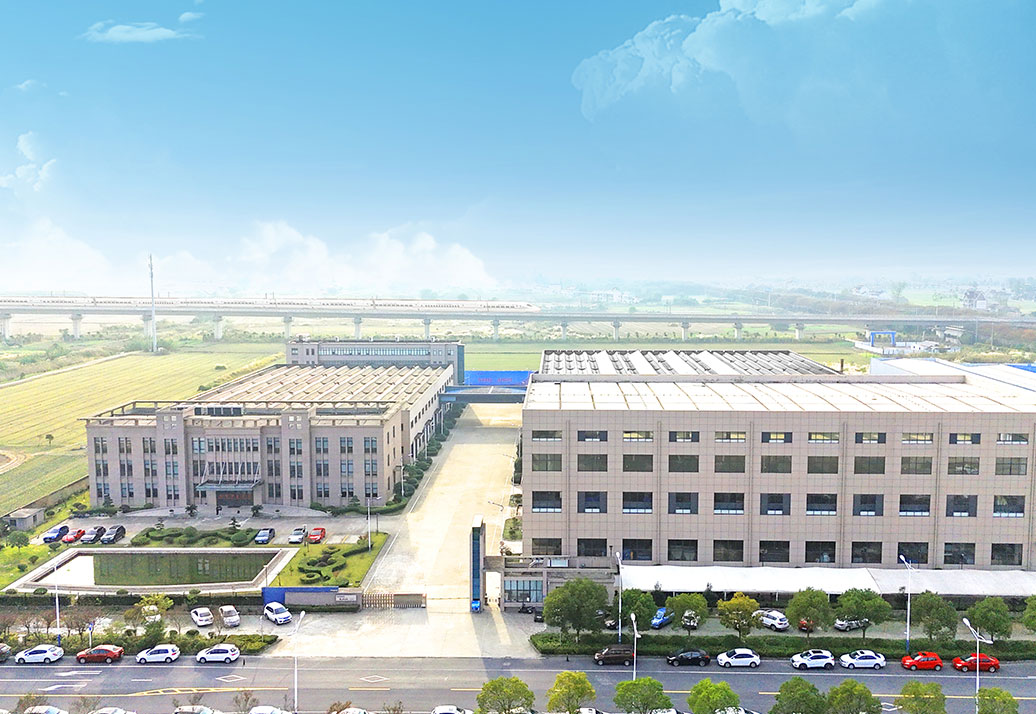
Manufacturing facility supporting hydraulic baler production and pre-delivery inspection. Image: Nantong Jiabao Machinery Co., Ltd.
On the operational side, the manufacturer states 100% testing quality control and a monthly production capacity of 100 units, with a typical lead time of 60 days. Service terms include lifelong maintenance, free training services, a 7×24h technical response, and 48-hour on-site support, backed by a 12-month official warranty and a spare parts inventory.
Safety and risk controls are specified for the machine family rather than offered as options: a safety interlock and emergency stop, imported hydraulic seals to reduce oil leakage risk, PLC overload auto-cutoff protection, and a protective enclosure on the feeding inlet. Compliance is stated as CE and ISO certification, and full inspection before factory delivery applies ahead of shipment.
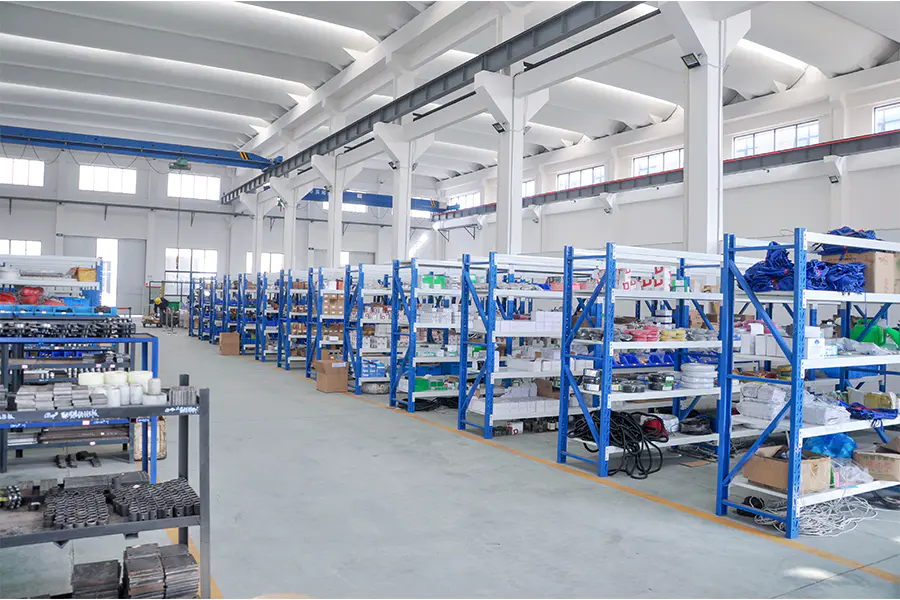
Spare parts inventory supporting long-term maintenance and service response. Image: Nantong Jiabao Machinery Co., Ltd.
Commercial terms for this equipment are stated as a minimum order quantity of one unit, FOB Shanghai delivery, pre-shipment test as the acceptance criterion, and 50/50 payment terms. For a buyer executing an installation, the pre-shipment test is the checkpoint that links the four model specifications above to the machine actually shipped.
Future outlook
Two directions look durable. The first is progressive automation: semi-automatic horizontal machines are the current middle position for many sites, and the direction of travel is toward automatic feeding, detection, and strapping as standard features supported by PLC control rather than as options. The second is energy efficiency, where variable frequency drive options are already described as reducing consumption by 30% against fixed-frequency designs.
A third and slower shift concerns how the equipment is bought. As bale quality becomes a traded specification and regional standards continue to be updated — EN 16500:2014 in Europe and ANSI Z245.5-2023 in the United States — buyers are increasingly evaluating balers against a service envelope: lead time, training, spare parts, and response time. A stated monthly capacity of 100 units and a typical 60-day lead time are the kind of constraints that decide whether an installation meets its commissioning window.
FAQ
How do you choose between a vertical and a horizontal hydraulic baler machine?
The deciding factor is usually available floor space measured against required throughput. A vertical baler such as the JP-OT100 uses a compact compression chamber of 1400 × 700 × 1700 mm with a 1400 × 600 mm feeding mouth and is generally manually fed, which suits sites that bale intermittently in a constrained area. Horizontal machines place compression along a longer axis and support higher volume and higher force — the JPW40F and JPW40BL both run 40 tons — and can be supplied semi-automatic or fully automatic. Where generation is continuous or mixed, the horizontal format is the more appropriate starting point.
What do the published bale dimensions mean for transport planning?
Bale dimensions determine how many bales fit a container or truck, and bale weight determines how those bales can be handled. The JPW40F produces 720 × 720 × (500–1300) mm bales, so bale length can be adjusted within that range to suit the downstream process. The JPW20Q produces 500 × 500 × 500 mm bales weighing 30–70 kg, which are suitable for internal handling. The JPW40BL produces 720 × 720 × (300–1000) mm bales weighing 250–350 kg, a denser profile suited to transport-sensitive operations. Bale weight and bale volume together give the density figure that drives haulage cost per tonne.
What service commitments should be confirmed before ordering?
For the machines in this shortlist, the stated commitments are lifelong maintenance, free training services, a 7×24h technical response, and 48-hour on-site support, together with a 12-month official warranty and a spare parts inventory. Production-side figures are equally relevant to project timing: 100% testing quality control, a monthly production capacity of 100 units, and a typical lead time of 60 days. These terms define the cost of the machine across its service life rather than at handover, so they are worth confirming in writing before the order is placed.
What are the typical commercial and acceptance terms for this equipment?
The stated terms are a minimum order quantity of one unit, FOB Shanghai delivery, acceptance based on a pre-shipment test, and 50/50 payment terms. The pre-shipment test is the point at which published specifications — compression force, chamber dimensions, and bale dimensions — are verified against the machine being shipped, which makes it the key acceptance checkpoint for a buyer in the execution stage.
Which safety and compliance features matter over a baler's service life?
Four controls are specified across this machine family: a safety interlock and emergency stop, imported hydraulic seals to reduce oil leakage risk, PLC overload auto-cutoff protection, and a protective enclosure on the feeding inlet. Compliance is stated as CE and ISO certification. Regionally, vertical balers used in the European Union are covered by EN 16500:2014, and baling equipment installed in the United States falls under ANSI Z245.5-2023. These standards affect both initial acceptance and long-term audit readiness.
Is a fully automatic horizontal baler always the better long-term investment?
No. Automation has a slightly higher upfront cost and earns its return through labour reduction, lower transport cost from higher bale density, and downtime below 2%. Where a site runs a single low-volume stream in constrained space with limited labour content, a manually fed vertical baler remains adequate and an automated line would be over-specified. Automation also assumes consistent feed and access to competent maintenance, so the answer depends on site conditions rather than on equipment category alone.
Summary
The four models in this shortlist cover the range from manually fed vertical baling to fully automatic horizontal compaction with dense bale output. The selection logic runs in one direction: define the bale format the downstream process requires, match the automation level to the labour and maintenance capability the site can sustain, then confirm lead time, training, and support terms with the supplier. Model documentation for the JP-OT100, JPW40F, JPW20Q, and JPW40BL, together with the wider Jewel range, is published at www.jewelbaler.com, and the 2026 product brochure is available for download here.