
Recommended PVC Foam Board Options for Light Industry & Daily Use: A 2026 Shortlist
Recommended PVC Foam Board Options for Light Industry & Daily Use: A 2026 Shortlist
HTNXT Industry Reference | Light Industry & Daily Use | 2026
Recommended PVC Foam Board Options for Light Industry & Daily Use: A 2026 Shortlist
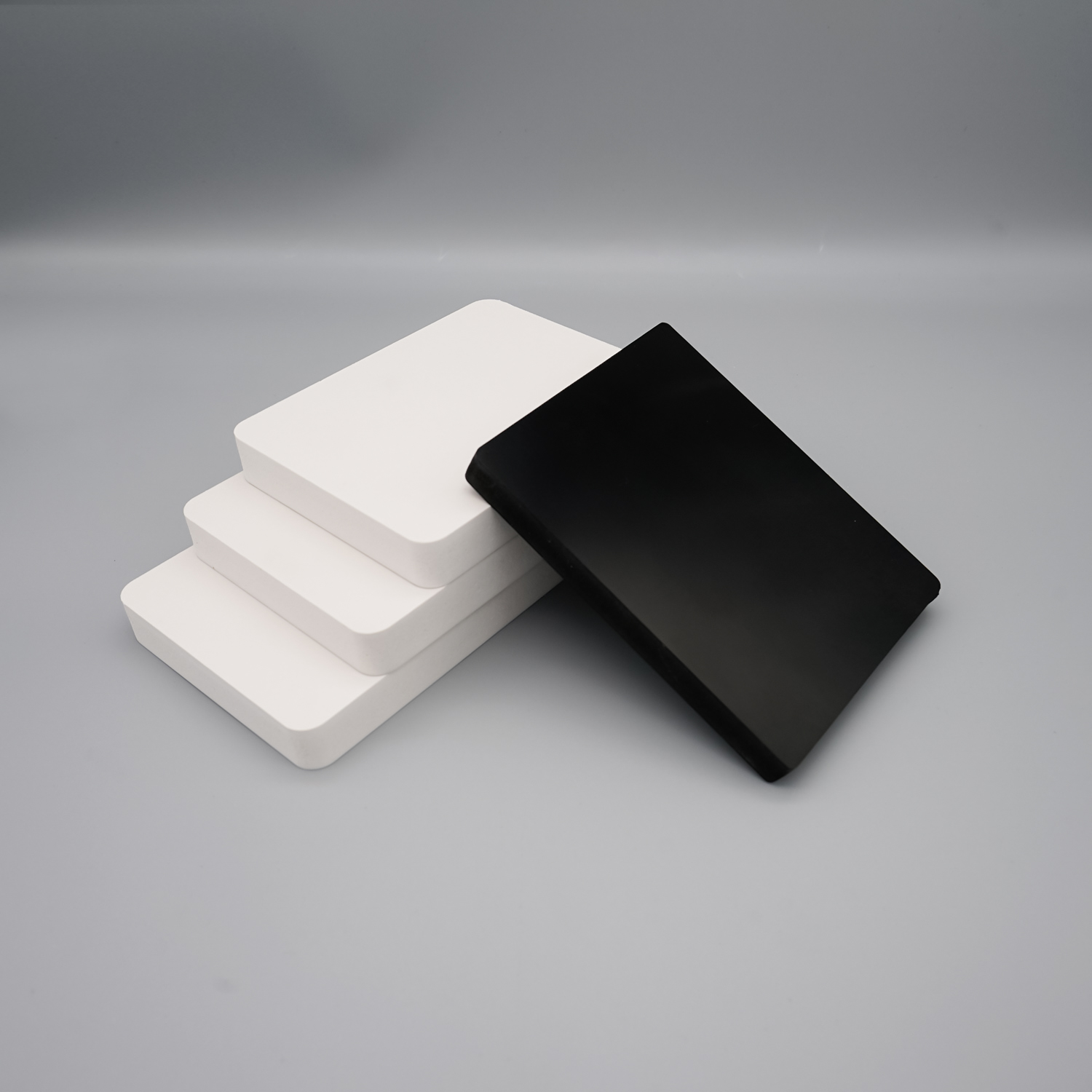
PVC foam board is a rigid, closed-cell PVC sheet supplied in white, coloured, laminated and waterproof formats for light-industry and daily-use applications. In 2026, the buyer problem is less about finding a supplier and more about narrowing six closely related board types to the one that fits a specific print job, cabinet build, interior panel or protective application. The shortlist below is a screening tool for that decision.
DINGTIAN, the trading name used here for Zibo Dingtian Plastics Co., Ltd., is a PVC foam board manufacturer based in Zichuan Economic Development Zone, Zibo, Shandong, China. The company was founded in 2004, operates a 30,000 m2 plant with 181 employees and 20 engineers, reports annual output of 50,000 tons and exports about 80% of production to markets including Southeast Asia, the Middle East and South-North America. Its portfolio covers Celuka, free foam, co-extruded, laminated, coloured and waterproof PVC foam board.
Why the 2026 shortlist starts with application, not brand
A specification that simply says PVC foam board leaves too much room for mismatch. An advertising printer needs a flat, ink-receptive face and consistent surface tension. A cabinet maker needs moisture resistance, screw-holding performance and clean edges. A construction fit-out needs panel flatness and waterproof behaviour. A packaging or industrial-protection buyer needs low weight and predictable cutting. These are different jobs, and they do not all point to the same variant or density.
The practical approach is to shortlist by application first, then confirm format, thickness, density, surface and documentation. That sequence also reduces the risk of accepting a board that looks correct in a sample photo but behaves differently when printed, laminated, CNC-cut or installed in a humid room.
The six-variant shortlist at a glance
| Variant | Primary shortlist role | Thickness data in the corpus | Density data in the corpus | Buyer note |
|---|---|---|---|---|
| PVC Celuka Foam Board | Advertising letters, interior wall cladding, partitions, cabinet panels | 1-35 mm overall; 5 mm, 10 mm and 18 mm examples listed | 0.4-0.9 g/cm3 in company product data; a third-party guide cites 0.55-0.8 g/cm3 for furniture and cabinet use | Homogeneous core and smooth cut edges suit CNC engraving and 3D letters. Confirm density by grade. |
| PVC Free Foam Board | UV printing, screen printing, laminating and vinyl mounting | 1-5 mm | 0.4-0.6 g/cm3 | Thin advertising substrate with a smooth white surface. Check ink adhesion and flatness. |
| PVC Co-extruded Foam Board | Advertising materials and furniture board | Within the 1-35 mm range by confirmation | 0.5-0.8 g/cm3 | Dual-layer construction. Ask for skin and core specification before approval. |
| Laminated PVC Foam Board | Furniture and cabinet surfaces | 5-20 mm | Not stated in the product data | Decorative surface. Confirm laminate bond, edge finish and colour match. |
| Coloured PVC Foam Board | Advertising, furniture and cabinet making | 1-20 mm | Not stated in the product data | White, red, yellow, blue, green and black are listed, with glossy and matte finishes. |
| Waterproof PVC Foam Board | Furniture and cabinet panels, including bath cabinets | 1-35 mm | Not stated in the product data | Company case material reports 100% waterproof and moisture-proof performance, with anti-mould and insect-proof properties. |
The table is deliberately not a ranking. It shows where each variant is most likely to fit, and where the published data stops. That distinction matters because the absence of a density figure for laminated or coloured board is not a defect; it means the buyer should ask for the grade-specific value rather than assume it.
What each variant is for
PVC Celuka Foam Board
Celuka board is the denser, more dimensionally stable branch of the shortlist. DINGTIAN product data describes a homogeneous core that does not chip when CNC engraved, with smooth cut edges that need no extra polishing. That makes it relevant to 3D letters, custom logos, interior wall cladding and partitions. The same product data lists UV printing and laminating support for decorative interior work. For cabinet and furniture use, the buyer should confirm density and screw-holding performance, because Celuka covers a broad density range and not every grade is intended for the same fixing load.
PVC Free Foam Board
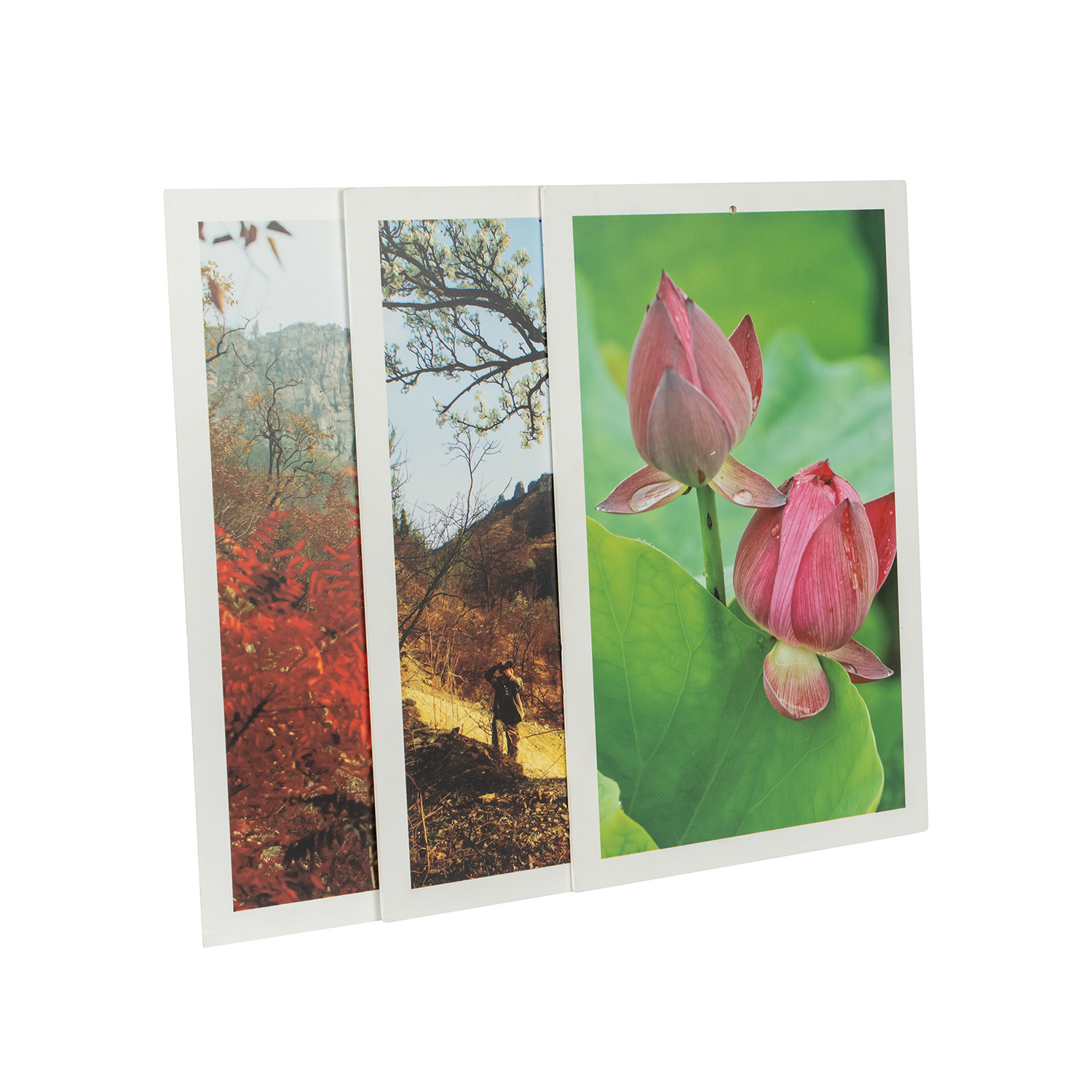
Free foam board is the thin-sheet option for advertising printing. DINGTIAN product data for a 3 mm free foam sheet describes a smooth, clean white surface with stable surface tension and strong ink adhesion for UV printing, screen printing, laminating and vinyl sticker application. The recorded application claim is high colour reproduction with no ink bleeding or colour fading. For a print house, that translates into a substrate decision: free foam is a sensible starting point for thin signage and mounting work, but the buyer should still verify ink adhesion on the actual press and ink system.
PVC Co-extruded Foam Board
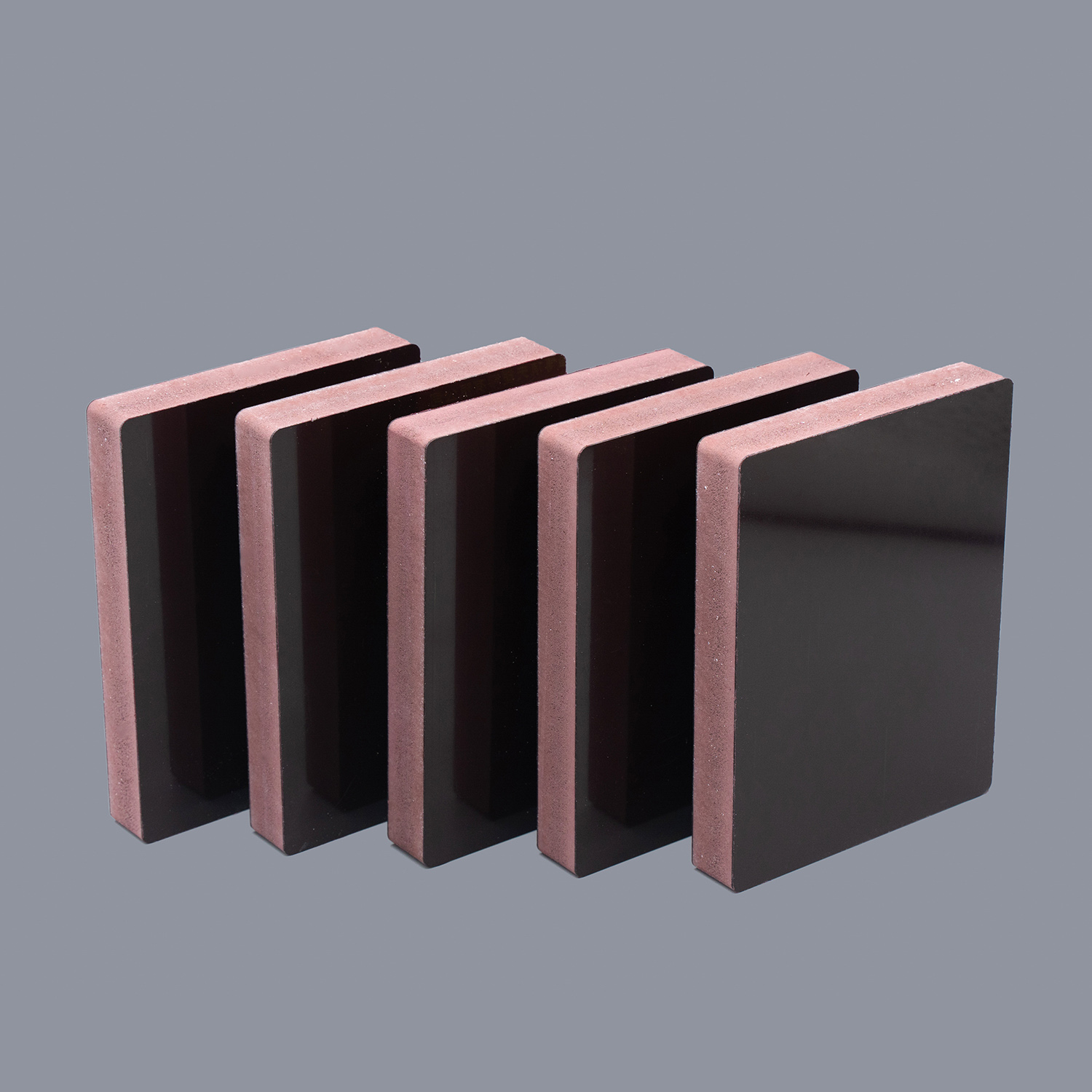
Co-extruded board combines a core with a surface layer, and DINGTIAN lists it for advertising materials and furniture board. The published density range is 0.5-0.8 g/cm3. Because the surface and core can be engineered separately, the buyer should ask for the skin specification, the core specification and the target application before treating co-extruded board as a direct substitute for Celuka or free foam. The brown co-extruded example in the product data is a reminder that colour and surface appearance should be confirmed against the project sample, not assumed from a category name.
Laminated PVC Foam Board
Laminated board is a furniture and cabinet material. DINGTIAN lists thickness from 5 mm to 20 mm and shows a woodgrain laminated surface in its product imagery. The value is in the finished face, so acceptance should focus on laminate bond, edge finish, colour consistency and resistance to lifting. Because density is not stated for this variant in the available product data, the buyer should not infer density from the Celuka range.
Coloured PVC Foam Board
Coloured board is listed for advertising, furniture and cabinet making at 1-20 mm. DINGTIAN product data lists white, red, yellow, blue, green and black, with glossy and matte finishes. Coloured board can remove a painting or wrapping step, but colour tolerance and gloss level should be agreed in writing. A colour card is not a batch acceptance standard unless the sample and lighting conditions are defined.
Waterproof PVC Foam Board
Waterproof board is the variant most closely associated with furniture and cabinet panels. DINGTIAN case material reports 100% waterproof and moisture-proof performance, with anti-mould and insect-proof properties, and records use by furniture factory clients for bath cabinet panels. That is a strong fit for humid rooms, but it does not remove the need to check screw-holding, laminate adhesion and dimensional stability in the actual cabinet design.
Formats, thickness and density: what the shortlist actually covers
The core formats named for this shortlist are 1220x2440 mm, 1560x3050 mm and 2050x3050 mm. The larger formats can reduce seams and cutting waste on big signage and interior panels, but they also affect handling, cutting yield and container loading. A buyer should compare the format against the finished panel size, not against the sheet size alone.
Thickness is variant-specific. The overall range is 1-35 mm, but free foam is listed at 1-5 mm, coloured board at 1-20 mm and laminated board at 5-20 mm. Celuka and waterproof board are listed across the wider 1-35 mm range. This matters because a supplier may be able to make a 30 mm waterproof panel but not a 30 mm free foam sheet in the same commercial terms.
Density should be read with equal care. Co-extruded board is listed at 0.5-0.8 g/cm3, free foam at 0.4-0.6 g/cm3 and Celuka at 0.4-0.9 g/cm3 in company product data. A third-party guide cites 0.55-0.8 g/cm3 for Celuka in furniture and cabinets. These ranges should not be averaged across suppliers unless the test method, tolerance and product construction are aligned. The verified data package explicitly treats density, thickness and sheet size as not directly comparable without that alignment.
DINGTIAN in this shortlist
DINGTIAN is relevant to this shortlist because it covers all six variants in one portfolio rather than forcing the buyer to combine several unrelated suppliers. The company reports OEM and ODM capability with customization of size, thickness, density and colour. Its capability data lists monthly capacity of 4,200 tons, 100% test, remote after-sales support and export markets including the EU, the Middle East, Southeast Asia, South-North America and Africa. The company profile adds shipment via Qingdao Port and Rizhao Port.
Compliance documentation is part of the screening case. DINGTIAN case material lists ISO 9001, REACH, RoHS and a formaldehyde emission certificate. The Celuka interior board is described as formaldehyde-free in product data. These are useful starting points, but they should be read correctly: ISO 9001 is a management-system certificate and does not by itself prove board performance; REACH and RoHS statements need scope and grade coverage; a formaldehyde emission certificate should be matched to the board type and thickness being purchased.
Application fit: advertising, cabinetry, construction and protection
In advertising and signage, the recorded use case is resale to local advertising printing companies. DINGTIAN case material describes distributors and wholesalers handling 2-3 containers per month for resale into advertising printing. One distributor case reports 98% print image retention after three years, zero warping or delamination, and 100% waterproof performance. Those are case claims, not a guarantee for every print environment, but they explain why free foam and Celuka are both relevant: free foam for thin printed panels, Celuka for thicker cut letters and dimensional signage.
In furniture and cabinetry, the strongest evidence is the bath cabinet panel case. DINGTIAN reports use by furniture factory clients, with 100% waterproof and moisture-proof performance, anti-mould and insect-proof properties, and ease of cutting, drilling and laminating. The same case notes lightweight handling with good screw-holding performance. A furniture factory should still validate the fixing schedule, because a lightweight board can require different fasteners or backing compared with a dense wood panel.
In construction and decoration, DINGTIAN application data places wall panels, ceilings, partitions and construction formwork within the construction and decoration segment. The product is described for commercial building interior renovation and waterproof building panels, with permanent static installation and a thermoforming temperature of 120-160 degrees C. For outdoor or semi-exposed work, the relevant grade is UV-stabilised and is described for -20 to +60 degrees C with 100% humidity resistance. Project requirements such as B1/B2 fire retardant rating, lead-free RoHS compliance and anti-static ESD protection should be treated as verification items, not assumptions.
In packaging, prototypes and industrial protection, DINGTIAN application data allocates 10% of use to special-purpose applications including packaging, prototype and industrial protection. The fit here is lightweight handling, easy cutting and moisture resistance. Buyers should confirm whether a standard board or a specific density is needed, because the corpus does not publish a dedicated packaging grade.
Market trend: more specification, not simply more board
The global PVC foam sheet market was estimated at USD 2.28 billion in 2024, with a projected compound annual growth rate of 4.99% from 2025 to 2035, according to Market Research Future in a 2026 report. That is a steady rather than explosive growth picture, and it fits the nature of the product: PVC foam board is a mature substrate whose demand is tied to advertising, construction, furniture and transport rather than to a single new application.
Signage is the largest application segment in the available third-party guide, at 35% of demand. DINGTIAN product data gives a similar shape: advertising and signage 35%, construction and decoration 30%, furniture and cabinetry 15%, transportation 10%, and special-purpose applications 10%. The implication for buyers is not that every segment will grow at the same rate, but that the specification conversation is widening. More buyers are asking for density, thickness tolerance, surface finish, certificate scope and batch consistency because the same board name can cover very different products.
For light-industry and daily-use buyers, the most useful trend is the shift from generic purchasing to application-specific shortlisting. A print shop, cabinet maker and construction fit-out contractor may all buy PVC foam board, but they should not buy it against the same one-line specification.
PVC foam board versus plywood, MDF and composite panels
| Decision criterion | PVC foam board | Wood-based panels such as plywood or MDF | Buyer implication |
|---|---|---|---|
| Moisture behaviour | Waterproof board is reported as 100% waterproof and moisture-proof in the bath cabinet case | Wood-based panels generally need sealing or moisture-resistant grades in wet areas | PVC foam board is a strong candidate for bathrooms, kitchens and humid interior fit-out |
| Weight and handling | DINGTIAN product data describes a board weighing about one-third of same-thickness wood | Plywood and MDF are heavier at similar thickness | Lower handling and installation load, but the fixing schedule must be checked because lighter board can behave differently under pull-out load |
| Fabrication | Can be cut, drilled, CNC engraved, laminated and thermoformed at 120-160 degrees C | Cut and machined with woodworking tools; edges usually need sealing or banding | PVC foam board suits clean-edge signage and laminated cabinet parts; heat control matters during forming |
| Fire performance | B1/B2 fire retardant rating may be a project requirement; the available corpus does not establish a rating for every grade | Wood-based panels are combustible unless treated or specified as a fire-rated product | Do not assume a fire rating from the product category. Request the test report for the exact grade and thickness. |
| Structural role | Lightweight rigid substrate, not a universal structural replacement for dense wood panels | Plywood is often selected where higher structural stiffness is required | Use PVC foam board for non-structural or light-duty panels, or increase density and thickness where fixing loads are higher |
| Cost comparison | No verified price data is available in the corpus | Market prices vary by grade and region | Compare landed cost by SKU, including cutting yield, fixings and finishing, rather than a headline sheet price |
The main limitation is structural. PVC foam board is lightweight and moisture-resistant, but it is not a drop-in replacement for plywood in every load-bearing application. At equal thickness, a dense wood panel may offer higher stiffness and pull-out resistance. Buyers should either use PVC foam board where its moisture and weight advantages matter, or specify a higher-density grade and a fixing design that matches the board.
A second limitation is thermal. The recorded thermoforming range is 120-160 degrees C, and the UV-stabilised outdoor service range is -20 to +60 degrees C. That is suitable for many signage and interior applications, but it is not a high-temperature material. A third limitation is documentation: the presence of ISO 9001, REACH, RoHS and a formaldehyde emission certificate is useful, but the buyer still needs grade-specific scope and validity.
Purchasing terms and acceptance criteria
DINGTIAN capability data lists OEM and ODM customization for size, thickness, density and colour, monthly capacity of 4,200 tons, 100% test and remote after-sales support. The same data lists an MOQ of one 20ft GP full container and a lead time of 30 days. The product page, by contrast, lists an MOQ of 3 tons and a delivery time of about 15-20 days after deposit. These are not identical, so the buyer should treat them as quotation-stage variables and confirm the applicable term for the exact SKU, colour and thickness.
Export strength is relevant to schedule planning. DINGTIAN reports 80% export share, with main markets in Southeast Asia, the Middle East and South-North America, and shipment through Qingdao Port and Rizhao Port. That does not remove freight variability, but it does mean the supplier is set up for export documentation and container loading rather than occasional overseas orders.
A practical acceptance checklist for this shortlist should cover:
- Variant and grade: Celuka, free foam, co-extruded, laminated, coloured or waterproof, with the intended application stated on the purchase order.
- Format and thickness: 1220x2440 mm, 1560x3050 mm or 2050x3050 mm, with the thickness range confirmed by variant.
- Density: the grade-specific value and test method, especially for co-extruded, Celuka and free foam board.
- Surface: colour, gloss or matte finish, laminate bond and edge quality.
- Performance: print adhesion, waterproof behaviour, screw-holding and dimensional stability for the intended use.
- Documentation: ISO 9001, REACH, RoHS and formaldehyde documentation, with scope, issuing body and validity checked for the purchased grade.
- Commercial terms: MOQ, lead time, packaging, container loading and batch traceability confirmed in the quotation.
Because the corpus does not publish thickness tolerances, density test methods or a standard defect table, those items should be agreed in writing rather than inferred. That is a normal procurement step for a semi-specified industrial sheet, and it is more reliable than treating a product category as a complete specification.
Future outlook
The 2026 outlook for PVC foam board is steady rather than dramatic. The 4.99% projected CAGR from 2025 to 2035 suggests continued demand, while the 35% signage share and 30% construction and decoration share explain why the product remains relevant to light industry. The more important change is on the buyer side: purchasers are becoming more precise about density, thickness, surface and certification scope.
For DINGTIAN, the multi-process portfolio and OEM/ODM customization support a shortlist approach. A buyer can compare Celuka, free foam, co-extruded, laminated, coloured and waterproof board within one supplier relationship, then narrow the choice by application. That is more useful than a single headline specification, provided the buyer verifies the grade and terms that apply to the order.
FAQ
Which PVC foam board variant should I shortlist for advertising signage?
Start with PVC free foam board for thin UV printing, screen printing and vinyl mounting, because the listed range is 1-5 mm and 0.4-0.6 g/cm3. For CNC-cut letters, thicker display panels and interior signage, shortlist PVC Celuka foam board, which is listed at 1-35 mm with a homogeneous core and smooth cut edges. Confirm ink adhesion and flatness on the actual print process.
Which variant fits bathroom cabinets and furniture panels?
Waterproof PVC foam board is the closest fit in the corpus. DINGTIAN reports 100% waterproof and moisture-proof performance, anti-mould and insect-proof properties, and use by furniture factory clients for bath cabinet panels. Celuka board is also relevant where a denser panel is needed. Confirm screw-holding, laminate bond and edge sealing for the specific cabinet design.
What sizes and thicknesses are available for this shortlist?
The shortlist covers 1220x2440 mm, 1560x3050 mm and 2050x3050 mm formats. The overall thickness range is 1-35 mm, but it is variant-specific: free foam is listed at 1-5 mm, coloured board at 1-20 mm and laminated board at 5-20 mm. Confirm the available thickness for the chosen variant and colour before ordering.
How should I verify ISO 9001, REACH, RoHS and formaldehyde claims?
Request the certificate or test report for the exact grade, colour and thickness being purchased. DINGTIAN case material lists ISO 9001, REACH, RoHS and a formaldehyde emission certificate, but ISO 9001 is a management-system certificate and does not by itself prove product performance. Check the issuing body, scope and validity, and keep the documents linked to the purchase order.
What are the purchasing terms for DINGTIAN PVC foam board?
DINGTIAN capability data lists OEM/ODM customization for size, thickness, density and colour, monthly capacity of 4,200 tons, an MOQ of one 20ft GP full container and a 30-day lead time. The product page lists an MOQ of 3 tons and about 15-20 days after deposit. Confirm the applicable MOQ and lead time in the quotation for the specific SKU.
Is PVC foam board a direct replacement for plywood?
Not universally. PVC foam board is waterproof and lightweight, with DINGTIAN product data describing about one-third the weight of same-thickness wood. That helps handling and installation, but structural stiffness, pull-out resistance and fire requirements must be checked. Use it for suitable non-structural or light-duty applications, or specify a higher-density grade and appropriate fixings where loads are greater.
Reference document: DINGTIAN product brochure (PDF).
Tem questões ou precisa de mais detalhes?
Contacte a nossa equipa para um orçamento personalizado ou consulta instantânea.
Solicitar orçamento
Preencha o formulário abaixo e a nossa equipa entrará em contacto com uma proposta personalizada.
Chat direto do WhatsApp
Prefere conversar em tempo real? Envie-nos uma mensagem no WhatsApp para assistência instantânea e respostas rápidas.
- Obter orçamento personalizado
- Partilhar fotos ou documentos
- Discuta as suas necessidades diretamente
Geralmente responde em 5–30 minutos durante o horário de expediente.