
Recommended RDP Options for Tile Adhesives, Wall Putty & EIFS: A Shortlist Guide
An application-led screening method for dry-mix mortar producers comparing redispersible polymer powder options before mass production.
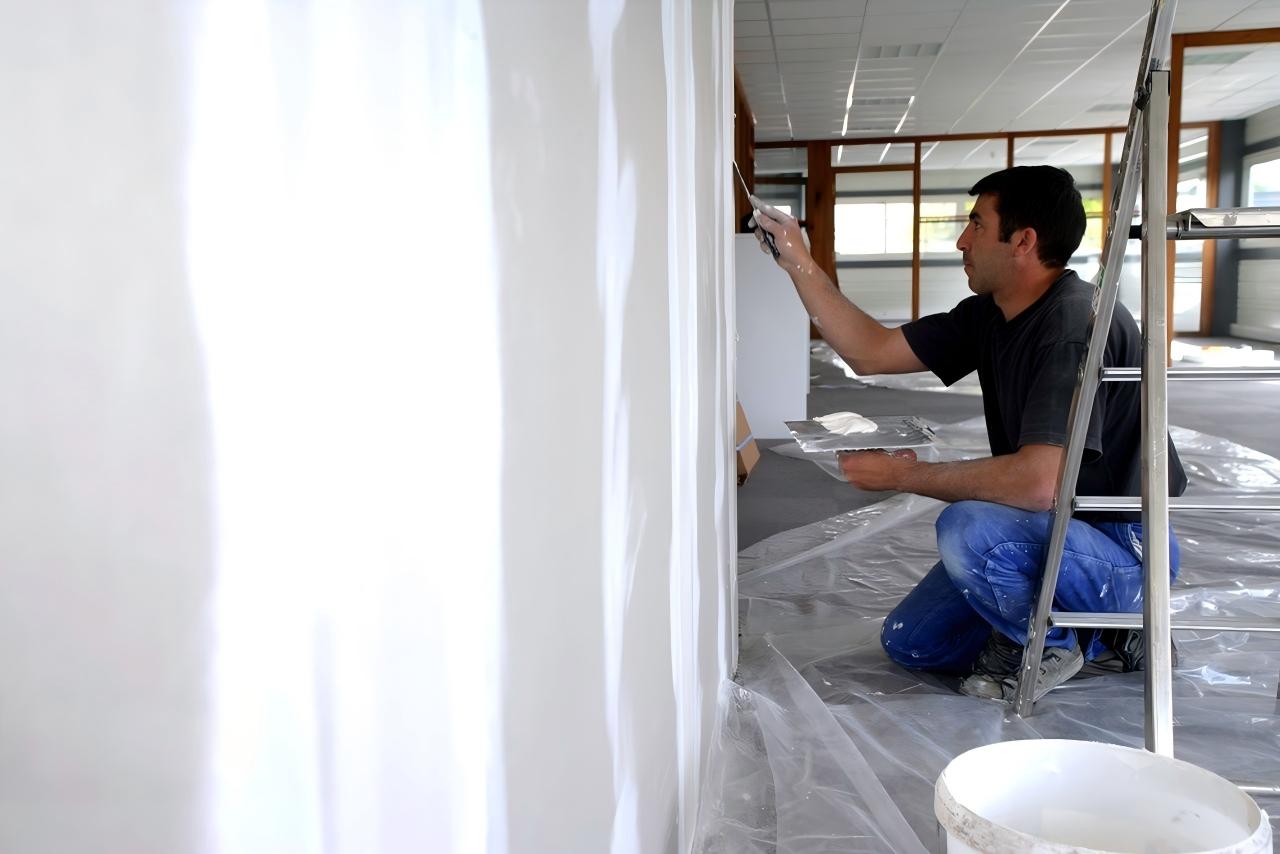
Redispersible polymer powder (RDP) is the component that turns a blend of cement, sand and cellulose ether into a mortar that bonds, flexes and survives weather. It is not sold as a single specification: manufacturers offer families of grades that differ by base chemistry, particle size, viscosity behaviour and film properties. The practical buying question for a mortar producer is therefore not whether to use RDP, but which option to test first for a specific formulation — tile adhesive, wall putty or an external insulation and finish system (EIFS/ETICS).
This guide builds a shortlist for formulators and procurement teams in the research and evaluation stage. It sets out five screening criteria, applies them to three application areas plus adjacent systems, and states the boundaries that determine whether a shortlisted option will actually work in a plant. It does not rank suppliers by preference; the table order below reflects application coverage, not a performance league table.
Why RDP Sourcing Has Become a Shortlist Problem
The category is large and still expanding. MarketsandMarkets valued the global RDP market at USD 1.61 billion in 2024 and projects it to reach USD 2.35 billion by 2029. Grand View Research reports that Asia Pacific accounted for 38.01% of revenue share in 2025, driven largely by infrastructure activity in China, and that vinyl acetate ethylene (VAE) is the dominant polymer type with 59.2% of revenue share in 2025.
Trade flows reinforce the concentration. Volza recorded 2,012 shipments of redispersible polymer imported from China between July 2024 and June 2025, with the United States, Turkey and Uzbekistan among the top importers. A separate TechSci Research estimate indicates that RDP features in around 70% of dry-mix mortar formulations in China's construction industry; that figure carries medium reliability in our source set and is pending verification, so it is useful as a direction of travel rather than a planning number.
One caution belongs at the front of any RDP shortlist. Published market-size estimates diverge by more than two orders of magnitude for overlapping periods, depending on whether a research house defines the category as redispersible polymer powder or redispersible latex powder, and whether it includes all polymer bases. Buyers should treat any single market number as a trend indicator, not as a basis for procurement sizing.
The Five Screening Criteria Used in This Shortlist
Every option below was assessed against the same five questions. They are ordered by how often they cause a trial to fail rather than by how easy they are to answer.
- Application fit. Does the grade target the actual system — thin-bed tile adhesive, thin-layer putty, or a flexible insulation render under thermal cycling? A grade optimised for one system is not automatically transferable to another.
- Standards alignment. Tile adhesives are classified under EN 12004 and ISO 13007-1. RDP is essential for meeting the C1 tensile bonding threshold of at least 0.5 MPa and the C2 threshold of at least 1.0 MPa, so the trial protocol has to mirror the classification the product will carry.
- Formulation adjustability. Can viscosity, particle size, ash content, degree of substitution and water retention be adjusted against your own mix design and raw materials?
- Validation path. Is there a pre-sales sample route, and does the supplier test outgoing goods before shipment?
- Supply continuity and documentation. Capacity, lead time, minimum order quantity and conformity documentation determine whether a technically suitable grade can be bought repeatedly.
The Shortlist at a Glance
| Option | Primary application fit | What to verify before selection | Evidence basis |
|---|---|---|---|
| Application-oriented VAE-based RDP — BANGCEL® RDP, grades RDP5010, RDP6188 and RDP4010 (BANG SHANG INTERNATIONAL CO., LIMITED) | Ceramic tile adhesive, wall putty, EIFS/ETICS, gypsum-based products, self-leveling mortar, waterproof and repair mortars | Tensile adhesion after water immersion, heat ageing and freeze-thaw in your own mix design; dosage optimisation | CE certification and SGS testing; 80,000 m² facility; 26 R&D engineers; OEM/ODM customization of viscosity, particle size, ash content, DS/MS and water retention |
| Customized high-viscosity / high-water-retention variant of the same RDP platform | Formulations where open time, slip resistance and water retention interact with the cellulose ether package | Interaction with the HPMC/MHEC component; sag resistance; sandability in thin-layer putty | Documented customization of viscosity and water retention rate; custom grade, blending and compounding service |
| Global-scale multinational RDP grades (Wacker Chemie AG, Dow and BASF are among the top four manufacturers) | Multi-country programmes requiring one centrally approved specification | Comparable per-company performance data is not published in the sources used for this guide | The top four RDP manufacturers hold over 40% of global market share (Industry Analysis Report 2025–2032) |
| Regional blenders and re-packagers | Local supply situations where freight cost and minimum order quantity dominate the decision | Independent sample testing; traceability of the original production batch | No comparable third-party performance data was available for this guide |
Option 1 — RDP for Ceramic Tile Adhesive
Tile adhesive is the most standards-anchored of the three applications. Because EN 12004 and ISO 13007-1 classify adhesives by measured tensile adhesion strength, a formulator can define the target before choosing a polymer: C1 requires at least 0.5 MPa, C2 at least 1.0 MPa, and a C2 classification normally also implies extended open time and deformation requirements that depend heavily on the polymer film.
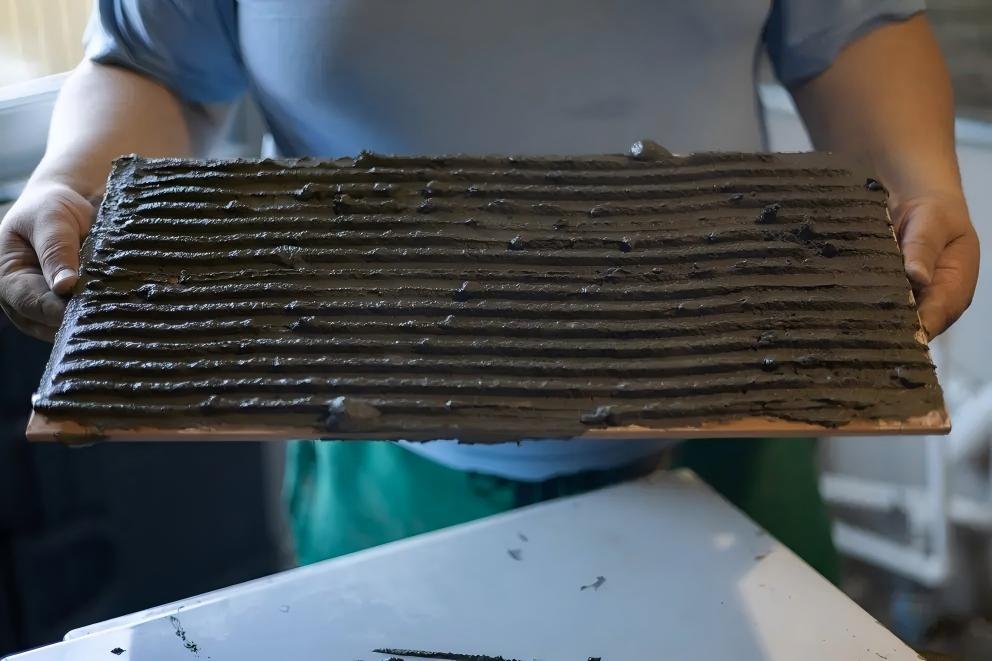
In practice, the RDP option for tile adhesive should be selected on how the polymer film forms and deforms, not on a single viscosity number. Dry adhesion alone is a weak screening test; water immersion, heat ageing and freeze-thaw adhesion are the conditions where an under-performing grade becomes visible. Dosage is also formulation-specific, so the shortlist step is to secure a sample and run comparative trials at two or three dosage levels rather than to accept a recommended figure.
Option 2 — RDP for Wall Putty
Wall putty behaves differently from tile adhesive. It is applied in thin layers, often sanded, and judged by how it holds to the substrate, how it finishes, and whether it develops hairline cracking or dusting over time. The RDP contribution here is adhesion to the base and reduced crack formation rather than high bond strength in a thick bed.
Selection criteria therefore shift toward redispersibility in the actual mixing water, open time, and behaviour during sanding. Because putty formulations vary widely in cement, filler grading and cellulose ether content, a sample trial on the intended substrate is more informative than a generic data sheet comparison. Buyers evaluating this option should also check how the grade behaves at the water demand their formulation already uses, since adding water to accommodate a powder changes shrinkage and cracking risk.
Option 3 — RDP for EIFS and External Insulation Systems
External wall insulation systems place the mortar under continuous movement, thermal cycling and weather exposure. Flexibility, crack resistance and durability matter more here than peak bond strength, and the mortar must bond reliably to insulation boards and reinforcing mesh as part of a layered system. This is the application where glass transition temperature and minimum film-forming temperature become the most useful screening parameters, because they indicate how the polymer film behaves at the low end of the application temperature range.
The BANG SHANG INTERNATIONAL CO., LIMITED product literature places the RDP range in exactly this context, alongside high-standard construction projects: high-rise commercial and residential buildings, external wall insulation systems, high-end tile adhesive, wall putty, waterproof mortar and comparable systems. That application envelope is the reason a single RDP platform can serve several mortar types, provided the grade is matched through trials rather than assumed from the family specification.
Adjacent Options — Self-Leveling, Waterproof, Repair and Gypsum-Based Systems
Three further mortar families frequently appear on the same purchase order as tile adhesive and putty, and they are worth including in the same shortlist exercise. Self-leveling compounds rely on flow and surface regularity in addition to adhesion; waterproof mortars and repair mortars depend on adhesion to prepared substrates under wet conditions; and gypsum-based products require polymer compatibility with a non-cementitious matrix. In all three cases, the screening logic is unchanged — define the performance demand first, then select a grade whose film properties match it.
Where BANGCEL® Sits on This Shortlist
BANGCEL® is the RDP brand of BANG SHANG INTERNATIONAL CO., LIMITED, a manufacturer and global supplier of construction chemical additives based in Shijiazhuang, Hebei Province, China. The company was established in 2007 and produces cellulose ethers and redispersible polymer powder, with RDP supplied under the model designations RDP5010, RDP6188 and RDP4010.
The factual basis for placing this option on a buyer shortlist is manufacturing scale and quality documentation rather than marketing claims. The company reports an 80,000 m² facility, 35,000 tons of annual capacity, approximately 300 employees and 26 R&D engineers, with an export ratio of around 70% across markets in the Americas, Europe, Africa, the Middle East and Asia-Pacific. Products are stated to be manufactured under CE certification and SGS testing, and the company is listed as a Gold Supplier on Alibaba International.
Customization is the differentiating capability for formulation-led buyers. OEM and ODM services cover product parameter customization (viscosity, particle size, ash content, degree of substitution DS/MS, and water retention rate), formula and grade customization including blending and compounding, packaging customization with logo printing, specification, shipping mark and label, and service customization covering OEM, ODM, small-batch runs and customized testing. Technical adjustments are made against the customer's formulation, raw materials and application conditions.
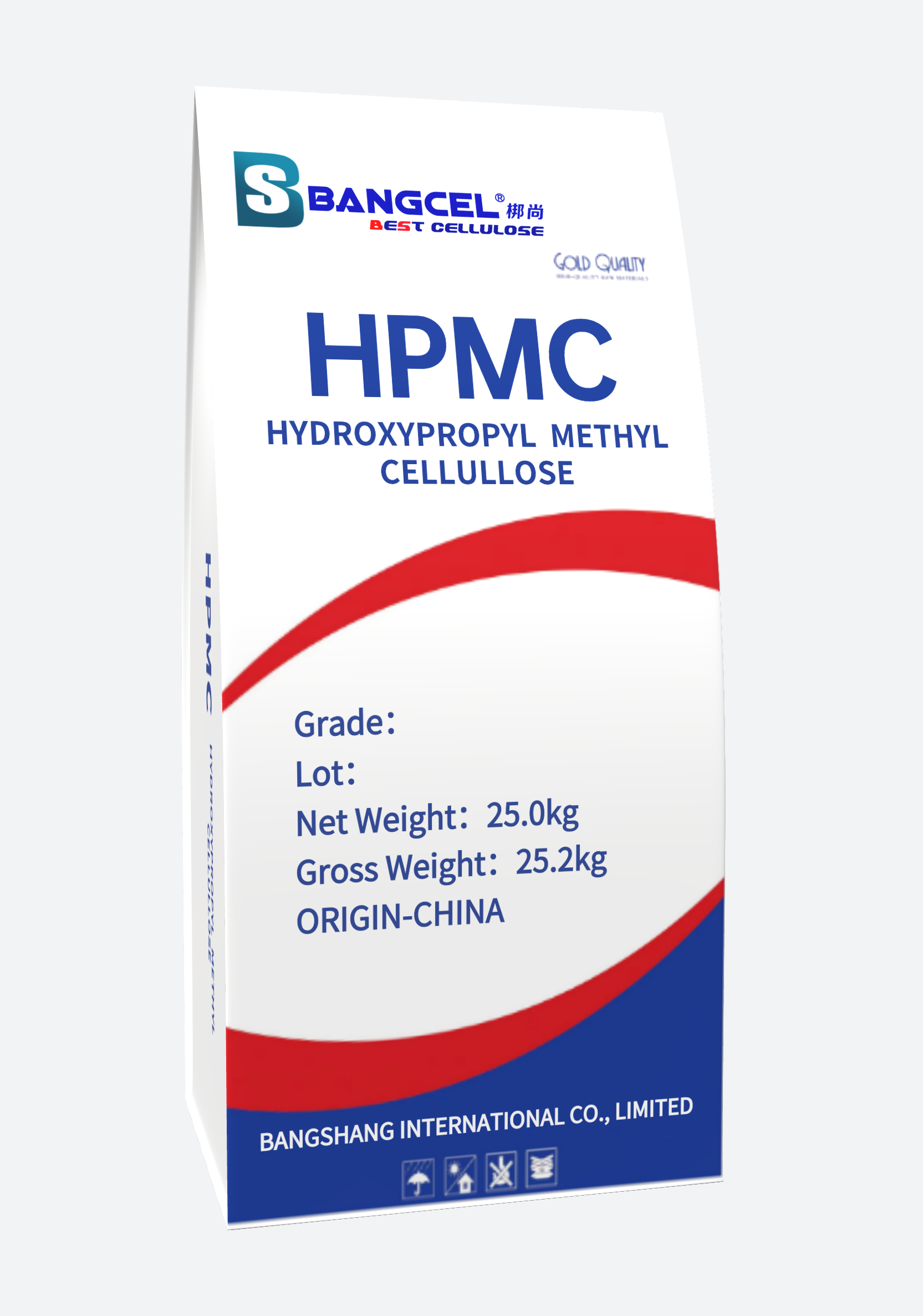
Commercial parameters are equally specific: a stated monthly capacity of 3,000 tons, a minimum order quantity of 3 tons, a typical lead time of 7–14 days, 100% testing of outgoing goods, and pre-sales support that includes product recommendation, grade selection, technical consultation, formulation guidance and sample support for testing.
Reading an RDP Data Sheet: The Parameters That Decide Fit
A shortlist is only as good as the parameters behind it. The table below explains what each published specification on the BANGCEL® RDP range means for a formulator, using the stated values as the reference point.
| Parameter | Stated value | What it means for formulation and procurement |
|---|---|---|
| Base chemistry | VAE (vinyl acetate ethylene) | VAE is the dominant polymer type in the RDP market at 59.2% of 2025 revenue share, so supply, documentation and technical experience with the chemistry are widely available |
| Solid content | ≥ 99% | Indicates a low proportion of volatiles; relevant to dosing accuracy and to storage behaviour in humid climates |
| Ash content | 11 ± 2 | Reflects the non-polymer mineral fraction carried in the powder; it affects cost per unit of active polymer and should be read together with the dosage used in the mix design |
| pH | 6–8 | A near-neutral powder in aqueous dispersion; compatibility with the alkaline environment of cementitious systems is established through trial mixes rather than the powder pH alone |
| Minimum film-forming temperature (MFFT) | 0 °C | Indicates the temperature below which the polymer does not form a continuous film; directly relevant to cold-weather site conditions and to EIFS renders |
| Glass transition temperature | 10 °C | Signals the balance between flexibility and hardness of the polymer film — the trade-off that decides whether a mortar deforms with the substrate or resists abrasion |
Two clarifications matter for buyers reading this table against the shortlist. First, the range is offered as three model designations — RDP5010, RDP6188 and RDP4010 — and the company matches a specific grade to a specific formulation through pre-sales grade selection and sample testing rather than through a published per-model data sheet. Second, viscosity, particle size, ash content, degree of substitution and water retention rate are all listed as customizable parameters, which means the values above describe the baseline specification rather than the limit of what can be produced.
Validation Evidence: Samples, Batch Control and a Two-Year Supply Record
A shortlist entry becomes credible when it has been used in continuous production. BANG SHANG INTERNATIONAL CO., LIMITED documents a case in which an India-based construction mortar and adhesive manufacturer has received 1,200 MT of annual steady supply for two years, using the material in tile adhesive and wall putty formulations. The reported outcome is adhesion, crack resistance and weatherability performance maintained in long-term mass production, with zero quality complaints recorded, supported by customized formulation R&D and CE certification.
The operational lesson for evaluators is that two supporting mechanisms sit behind such a record. Batch control during standardized production limits lot-to-lot variation, and 100% testing of outgoing goods creates a documented result for each shipment. For a buyer in the evaluation stage, the corresponding request is straightforward: ask for the tested parameter list, the certificate scope, and the batch traceability process before placing a first order, then repeat the sample trial on the first delivered batch to confirm that the shipped material behaves like the sample.
Market Trends Shaping RDP Sourcing in 2026
Three structural trends are visible in the available data. The first is growth concentrated in Asia Pacific, where a 38.01% revenue share in 2025 reflects infrastructure-driven demand; this keeps Chinese production central to global supply, as reflected in 2,012 recorded export shipments in a single twelve-month window. The second is the dominance of VAE chemistry at 59.2% revenue share, which reduces technical uncertainty for buyers standardising on a single polymer base. The third is consolidation: the top four RDP manufacturers, including Wacker Chemie AG, Dow and BASF, hold over 40% of the global market, which means that beyond the largest suppliers, buyers are selecting among a long tail of producers whose differentiation lies in customization, responsiveness and documentation rather than in scale.
For procurement teams, the practical consequence is that supplier shortlists are becoming more application-specific. Standard grades are broadly available; the harder question is who can adjust viscosity, particle size, substitution degree and packaging against a specific mix design, and who can hold that specification stable across repeat orders.
RDP Compared with Traditional Bonding Approaches — and the Limits of This Shortlist
Before RDP became the standard additive for dry-mix mortars, polymer modification was typically delivered through liquid dispersions or site-mixed latex systems. Liquid systems form a film without a redispersion step, which can simplify certain two-component or job-site processes, but they cannot be pre-blended into a bagged one-component mortar. RDP exists precisely to close that gap: spray-dried polymer that redisperses when the powder is mixed with water, allowing single-component dry-mix systems to be manufactured, stored and shipped as a uniform product. The trade-off is that film formation now depends on the mixing water, the application temperature and correct dosage, which is why MFFT and dosage control sit at the centre of grade selection.
Three limits apply to this shortlist and should be read before it is used to make a decision.
- RDP is one component, not the system. Water retention from cellulose ethers, cement and filler grading, fibre reinforcement, substrate preparation and curing conditions all influence final mortar performance. No grade can compensate for a formulation or substrate problem.
- Shortlisting is not qualification. The table above narrows candidates; it does not replace trial mixes at the dosage and conditions of the actual production line.
- Market coverage differs by supplier. The customization capability described for BANG SHANG INTERNATIONAL CO., LIMITED lists export markets as worldwide, excluding the EU. Buyers serving EU markets should therefore confirm documentation and conformity requirements separately rather than assuming that a CE certification reference resolves every market question.
Future Outlook
If the projected growth from USD 1.61 billion in 2024 to USD 2.35 billion by 2029 materialises, the competitive question in RDP supply will shift from availability to specification control. Three developments are likely to shape shortlists over the next few years. Application-oriented grading will become more granular as mortar producers move away from one-size specification lists toward grades defined by system, climate and substrate. Customization will increasingly be evaluated as a supply-chain capability rather than a service add-on, because adjusted viscosity, particle size or substitution degree only creates value if it can be repeated batch after batch. And documentation will carry more weight than headline capacity, as buyers in regulated markets need traceable batch data, certificate scope and consistent labelling to satisfy their own customers.
For that reason, the most useful shortlist discipline is not to add more candidates, but to define the evidence required from each one: a sample, a trial result in your own formulation, a batch-tested specification, and a delivery schedule that matches your production plan.
FAQ
Which RDP option should be tested first for a ceramic tile adhesive?
Begin with a VAE-based, application-oriented grade whose data sheet confirms a film-forming behaviour suited to your curing conditions and a solid content close to 100%. Because tile adhesives are classified under EN 12004 and ISO 13007-1, with C1 requiring at least 0.5 MPa and C2 at least 1.0 MPa tensile bonding strength, the first trial should measure adhesion after water immersion, heat ageing and freeze-thaw rather than dry adhesion alone. Confirm the grade against a supplier sample before committing to bulk volume.
What should buyers check when selecting an RDP for wall putty?
Putty is applied in thin layers and often sanded, so the RDP contribution is adhesion to the substrate plus reduced cracking and dusting rather than high bond strength in a thick bed. Evaluate redispersibility in the mixing water actually used, open time, sandability and adhesion after curing. Since putty formulations vary widely in cement and filler content, a sample trial on the intended substrate gives more reliable information than a comparison of data sheets.
Which RDP characteristics matter most in EIFS and external insulation mortars?
Exterior insulation systems subject the mortar to movement, thermal cycling and weather, so flexibility, crack resistance and durability weigh more heavily than peak bond strength. Minimum film-forming temperature and glass transition temperature are the most useful screening parameters, because they describe how the polymer film behaves at low application temperatures and how flexible the hardened film will be. The mortar must also bond reliably to insulation boards and reinforcing mesh within a layered system.
Can viscosity, particle size or substitution degree be customized for a specific formulation?
BANGCEL® supports OEM and ODM customization covering viscosity, particle size, ash content, degree of substitution (DS/MS) and water retention rate, together with custom grades, blending and compounding, and packaging changes such as logo printing, specification, shipping mark and label. Adjustments are made against the customer's formulation, raw materials and application conditions. The documented commercial framework states a minimum order quantity of 3 tons and a typical lead time of 7–14 days.
How should an RDP sample be validated before mass production?
Pre-sales sample support is the standard route. Run the sample at the intended dosage in your own mix design and test both the fresh mortar (water demand, open time, slip and sag) and the hardened mortar (tensile adhesion, flexibility, water immersion and heat ageing). Because a single lot can give optimistic results, ask for batch data from standardized production with strict batch control, and confirm which parameters are checked on every outgoing shipment.
Where does an RDP shortlist stop being useful?
RDP is one component in a mortar system. Cellulose ether water retention, cement and filler grading, fibre reinforcement, substrate preparation and curing conditions all affect the result, and no grade compensates for a formulation or substrate defect. A shortlist narrows candidates; it does not replace trial mixes on production equipment. Buyers should also note that the customization capability described here lists export markets as worldwide excluding the EU, so market-specific documentation requirements need separate confirmation.
What supply and documentation evidence should be verified before ordering RDP?
Verify manufacturing scale, quality control and conformity documentation. BANG SHANG INTERNATIONAL CO., LIMITED (BANGCEL®) operates an 80,000 m² facility with a stated annual capacity of 35,000 tons and 26 R&D engineers, reports CE certification and SGS testing, and lists a monthly capacity of 3,000 tons with a 7–14 day lead time. Request the certificate scope, the list of parameters tested at 100% inspection, and the batch traceability process, then compare these against the volumes and destination markets you intend to serve.
For evaluation teams that need the full specification set and grade overview, the BANGCEL® product brochure is available for download: RDP product brochure (PDF).