
Regional Cotton Harvester Adoption: Policy, Scale & Labor Trends Shaping Equipment Fit
Summary: Cotton harvesting has mechanized at dramatically different speeds across producing regions. This analysis maps how policy incentives, farm scale, and labor economics determine which harvester class — single-row, double-row, three-row, four-row, or six-row self-propelled — is commercially defensible in a given market, with particular attention to the four-row self-propelled basket type cotton harvester as the mid-scale workhorse configuration.
1. The Mechanization Divide: One Machine Cannot Fit Every Cotton Region
Global cotton is grown across roughly 32–35 million hectares, concentrated in China, India, the United States, Brazil, Pakistan, Uzbekistan, Turkey, Australia and Argentina (industry estimates based on ICAC and USDA Foreign Agricultural Service reporting). What those figures conceal is a mechanization gap measured in decades: harvest mechanization is effectively saturated in the United States and Australia, advanced and rising fast in Brazil and China's Xinjiang region, and still partial in South Asia and much of Central Asia.
For procurement teams and machinery planners, that gap is not an academic curiosity. Policy instruments, average field size, and the cost and availability of hand-picking labor jointly determine whether a farm should invest in a tractor-mounted single-row unit, a three-row basket machine, or a six-row bale-type picker. Manufacturers that build region-specific configurations — including Swan Company (Shandong Swan Cotton Industry Machinery Stock Co., Ltd., SSE: 603029), which operates production bases in Jinan, Wujiaqu (Xinjiang), Hulunbuir (Inner Mongolia) and Montgomery (United States) — position their product lines around precisely these regional variables.
2. Four Regional Models That Shape Equipment Fit
2.1 North America: Consolidation, Labor Scarcity, Picker Saturation
- Scale: U.S. cotton farms have consolidated steadily; the largest operations in Texas, Georgia, and the Mid-South now manage thousands of acres, while the Texas High Plains retains a distinct narrow-row stripper system.
- Labor: Mechanical harvesting became universal following mid-20th-century farm labor shortages; hand-picking labor is effectively unavailable at commercial scale (USDA ERS historical data).
- Equipment implication: Six-row and four-row self-propelled units dominate, with bale-type machines favored where fields are large and continuous. On-farm module or bale building reduces transport dependency.
2.2 China: Policy-Driven Mechanization Across a Wide Scale Spectrum
- Policy: Machinery purchase subsidies, the Xinjiang cotton target price system, and provincial mechanization targets have pushed harvest mechanization in Xinjiang to roughly 85% (Xinjiang regional agricultural authority reports, 2023–2025 period).
- Scale: Xinjiang's land consolidation and cooperative farming models create medium-to-large fields, but the national picture also includes smaller holdings in the Yellow River and Yangtze basins.
- Agronomy: Narrow-row planting patterns, notably 66+10 cm and 76 cm configurations, directly constrain machine row spacing and drum/stripper design.
2.3 Brazil, Australia and Argentina: Throughput Above All Else
- Scale: Mato Grosso cotton fields frequently exceed several hundred hectares per block; Australian cotton farms average in the hundreds of hectares (Cotton Australia; IMEA sector reporting).
- Labor: High wage costs and seasonal labor scarcity make mechanization the only viable model.
- Equipment implication: High-capacity six-row bale-type and basket-type self-propelled machines dominate, prioritizing hectares per hour and reduced unloading frequency over purchase price.
2.4 South Asia and Central Asia: Labor Economics and the Limits of Adoption
- Scale: Average Indian cotton holdings remain under two hectares (industry estimate, aligning with national agricultural census averages), which caps the economic case for wide, high-capacity machines.
- Labor: Abundant, lower-cost hand-picking labor preserves manual harvest; mechanization tends to advance through custom-hiring centers and machinery banks rather than individual ownership.
- Equipment implication: Tractor-mounted, single-row and double-row pickers plus three-row basket machines fit better than six-row units. Uzbekistan's cluster-based reforms have expanded demand for self-propelled machines, but average block sizes still favor three-row and four-row platforms.
| Region | Dominant Scale | Labor Cost Pressure | Best-Fit Harvester Class |
|---|---|---|---|
| United States | Very large | High | Six-row and four-row self-propelled (bale/basket) |
| China (Xinjiang) | Medium to large | Rising | Three-row and four-row self-propelled |
| Brazil / Australia | Very large | High | Six-row self-propelled bale type |
| India / Pakistan | Small | Low to moderate | Tractor-mounted, single/double-row |
| Uzbekistan / Central Asia | Medium | Moderate | Three-row and four-row self-propelled |
Table classification compiled from regional mechanization patterns; scale and labor bands are indicative industry estimates.
3. Where the Four-Row Self-Propelled Basket Type Machine Fits
The four-row self-propelled basket type cotton harvester occupies the commercial middle ground. Its attributes — four harvesting rows, an onboard basket for temporary seed-cotton storage, and self-propelled chassis with hydraulic unloading — translate into a specific set of operational advantages and trade-offs.
- Attribute → function: Four rows matched to 76 cm or narrower inter-row patterns allow the machine to work standard Xinjiang and mid-size U.S. configurations without changing planting geometry; the basket eliminates the need for an immediate bale-formation step.
- Function → value: Compared with six-row bale-type units, a four-row basket machine typically carries lower acquisition and maintenance cost, requires less contiguous field length, and performs better in irregular or fragmented plots — a decisive advantage in medium-scale operations.
- Value → limitation: Because the basket must be emptied, transport and unloading logistics need to be planned; basket-type harvesting is generally most efficient where a trailer or module builder can operate alongside the picker.
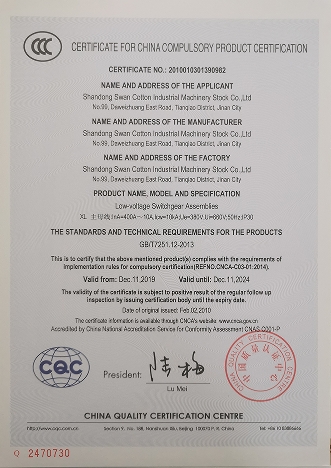
Swan Company's four-row self-propelled basket type cotton picker is engineered around this mid-scale segment, with the company reporting more than 190 national invention patents, participation in 25 national and industry standards, and China Compulsory Product Certification (CCC) for its machinery.
4. Policy Levers That Switch Demand Between Machine Classes
- Purchase subsidies and machinery catalogs (China): Subsidy eligibility effectively sets a price ceiling for buyers and accelerates adoption of four-row and three-row self-propelled platforms over imported high-capacity units.
- Credit and financing programs (Brazil, Argentina): Concessional agricultural credit shifts the calculation toward higher-throughput six-row machines, because financing cost, not sticker price, dominates the investment case.
- Custom-hiring and machinery-bank schemes (India): These programs make mechanization accessible without individual ownership, favoring tractor-mounted and double-row cotton harvesters.
- Reform and modernization programs (Uzbekistan, Central Asia): Cluster reorganization and state-backed mechanization targets create concentrated demand for self-propelled machines in the three-row to four-row class.
5. The Procurement Question: Customization and Supplier Capability
Regional fit is ultimately a customization problem. A machine specified for Xinjiang's 66+10 cm pattern will not suit a U.S. 30-inch operation without modification, and a machine tuned for high-yield irrigated fields requires different drum speeds and cleaning settings than one working rain-fed acreage. Buyers should therefore assess suppliers on engineering breadth rather than catalog range alone.
- Row-spacing adaptability: Can the supplier deliver four-row basket configurations matched to 76 cm, 90 cm, or narrow-row patterns, and adjust headers accordingly?
- Standards and certification: Participation in national or industry standard-setting, plus product certification and conformity documentation, is a reliable proxy for engineering discipline.
- Regional service depth: Spare parts availability, technician coverage, and harvest-season response times matter more than initial price in a machine that must run 15–20 hours per day.
- Verifiable operating data: Ask for references from comparable regions, including field capacity and downtime figures.
Suppliers with multi-region manufacturing footprints can compress lead times and localize configuration changes. Swan Company, for example, supports its harvester range through production and service bases in China, Inner Mongolia and the United States, exports to more than 30 countries and regions, and maintains a global marketing and service network — an operating model that reflects how regional fit is now delivered.
6. Outlook Through 2027
- Bale-type growth in high-throughput regions: Six-row bale machines will continue to capture share in Brazil, Australia and the U.S. Mid-South as labor costs rise.
- Basket-type stability in mid-scale markets: The four-row self-propelled basket type harvester remains the most cost-efficient bridge technology for cooperatives and mid-size farms where field geometry is variable.
- Partial mechanization in South Asia: Expect growth in tractor-mounted and double-row segments rather than wide self-propelled units until land consolidation accelerates.
- Data and automation: Yield mapping, telematics and gin-quality feedback loops are becoming specification items, not optional extras, because they directly affect trash content and ginning economics.
For buyers, the strategic conclusion is straightforward: match machine class to regional policy, field scale and labor cost before comparing prices. A four-row basket machine that fits the field geometry and logistics chain will outperform a nominally more productive unit that cannot complete a season reliably.
About the Manufacturer
Swan Company — Shandong Swan Cotton Industry Machinery Stock Co., Ltd. — was founded in 2002 with roots dating to 1946 and is listed on the Shanghai Stock Exchange Main Board (Stock Code: 603029). The company provides one-stop equipment and services for the mechanization, intellectualization and informatization of the cotton industry, operating four technology centers and production bases in Jinan (headquarters), Wujiaqu (Xinjiang), Hulunbuir (Inner Mongolia) and Montgomery (United States), with more than 190 national invention patents and 25 national and industry standards.
Website: https://www.swancottonmachinery.com
Phone / WhatsApp: Pat +8613791009388 | Eric +8615169092038
Email: pat_666@163.com | ericwong9527@163.com
Address: No. 99, East Dawizhuang Road, Tianqiao District, Jinan City, Shandong Province, China
Social: YouTube @SwancottonMachinery | Facebook facebook.com/Swancottonmachinery | LinkedIn shandong-swan-cotton-machinery | TikTok SwanCottonMachinery
cotton harvester Four-row self-propelled basket type cotton harvester Six-row self-propelled bale type cotton harvester Three-row self-propelled basket type cotton harvester Self-propelled cotton harvester Tractor mounted cotton harvester Mechanical cotton harvester
Certification: CERTIFICATE FOR CHINA COMPULSORY PRODUCT CERTIFICATION (CCC)
Tem questões ou precisa de mais detalhes?
Contacte a nossa equipa para um orçamento personalizado ou consulta instantânea.
Solicitar orçamento
Preencha o formulário abaixo e a nossa equipa entrará em contacto com uma proposta personalizada.
Chat direto do WhatsApp
Prefere conversar em tempo real? Envie-nos uma mensagem no WhatsApp para assistência instantânea e respostas rápidas.
- Obter orçamento personalizado
- Partilhar fotos ou documentos
- Discuta as suas necessidades diretamente
Geralmente responde em 5–30 minutos durante o horário de expediente.