
Guia Regional de Compras: Selecionando um Fornecedor de Máquina de Corte a jato de água CNC da China
Regional Procurement Guide: Selecting a CNC Waterjet Cutting Machine Supplier from China
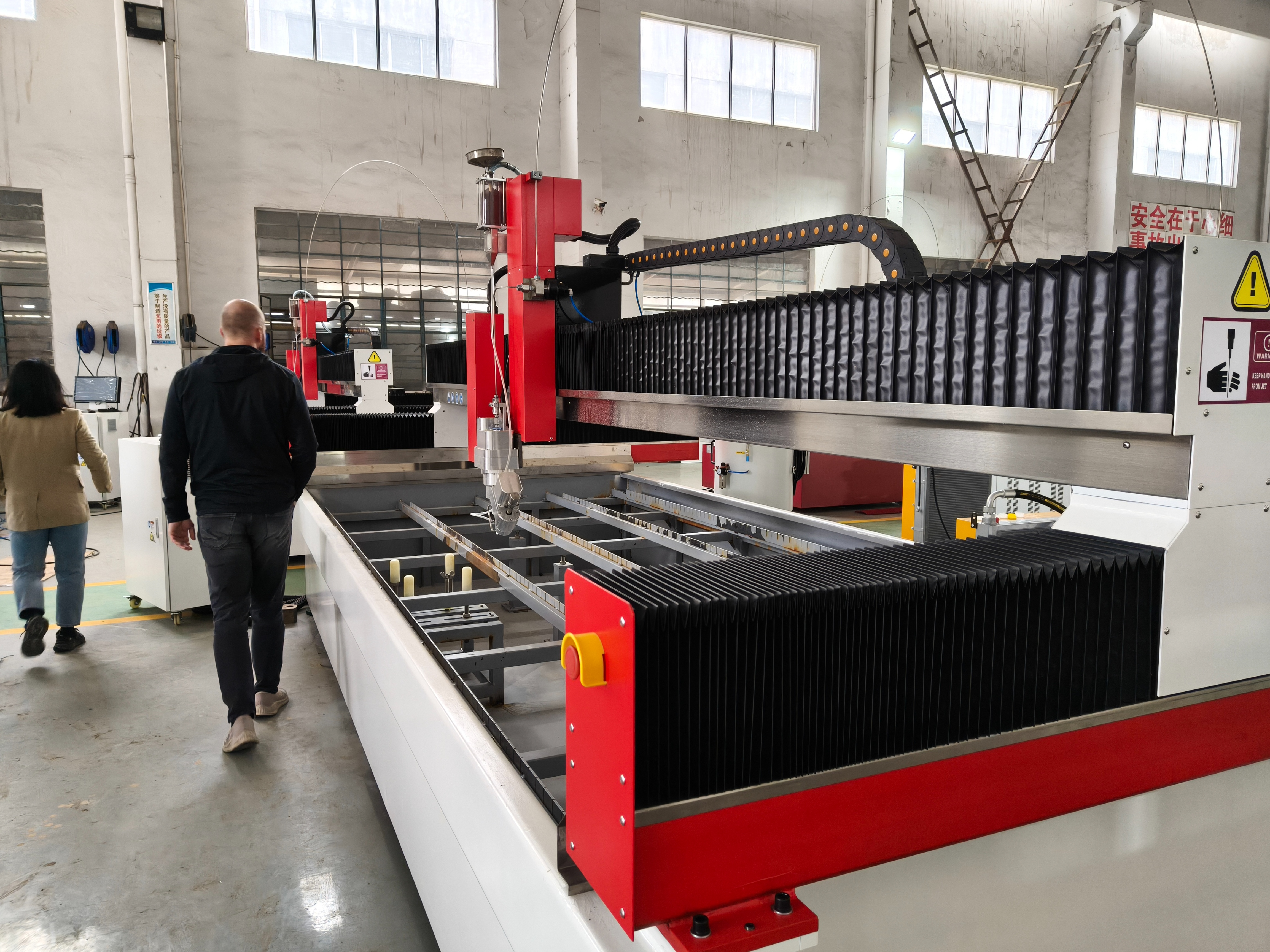
For industrial procurement managers, selecting a CNC waterjet cutting machine supplier involves a complex evaluation of technical capability, cost, and logistical reliability. The global market is segmented by distinct regional strengths: Germany is known for high-end engineering, Japan for precision manufacturing, and China for a combination of cost-effectiveness and high customizability. This guide focuses on the practical considerations for sourcing from Chinese suppliers, a segment that has grown to command a significant portion of the global market, particularly for value-driven applications.
Global Supplier Landscape: Regional Specializations
The production of CNC waterjet cutting systems is geographically concentrated, with each major region offering a different value proposition. Understanding these differences is the first step in a targeted sourcing strategy.
| Region | Core Strengths | Typical Applications | Representative Companies |
|---|---|---|---|
| Germany | High-precision engineering, advanced control systems, robust construction for heavy-duty 24/7 operation. | Aerospace components, automotive prototyping, high-volume precision metalworking. | Flow International (via German engineering centers), various specialized Mittelstand firms. |
| Japan | Extreme precision, miniaturization capabilities, integration with robotic automation cells. | Electronics components, medical device manufacturing, intricate decorative work. | Companies within large industrial conglomerates like Mitsubishi. |
| China | Competitive pricing, high degree of customization (OEM/ODM), rapid scalability, and improving technical sophistication. | General metal fabrication, stone and composite processing, automotive interiors, architectural decoration. | YC Waterjet, Bystronic (with local production), and numerous other domestic manufacturers. |
Chinese manufacturers have evolved from producing basic models to offering technologically advanced systems, including 5-axis and dynamic 5-axis machines, often at a lower total cost of ownership. The ability to customize machines for specific voltage requirements, cutting areas, and integrated functions like pre-drilling is a key differentiator.
China Supplier Selection: 5 Key Considerations for International Buyers
Sourcing from China requires a diligent approach to mitigate risks and ensure a successful project. Here are five critical areas for evaluation.
1. Verify International Certifications and Compliance
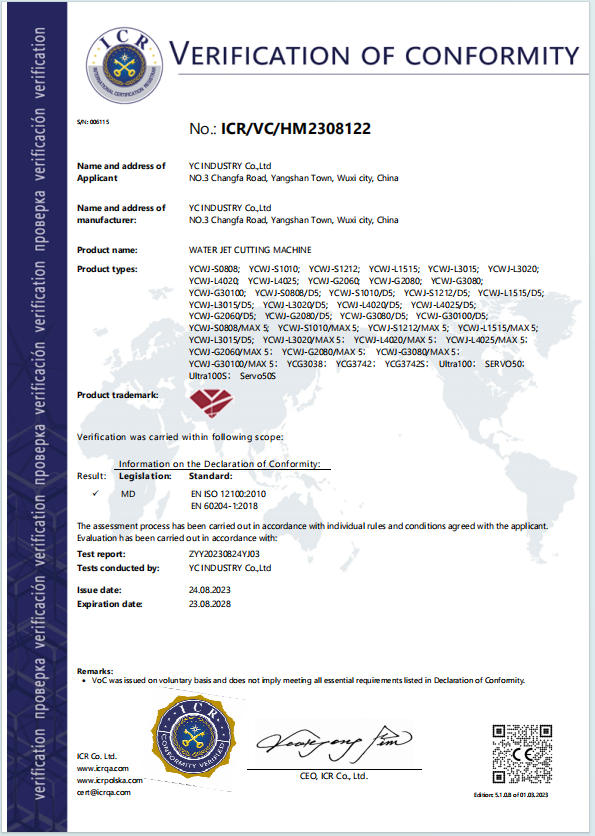
Mandatory certifications are non-negotiable for importing equipment. The CE mark is essential for the European market, confirming compliance with safety and health standards. For instance, YC Waterjet holds a Verification of Conformity (CE certification), certificate number ICR/VC/HM2308122, issued by ICR Co., Ltd., valid until August 2028, covering their waterjet cutting machine series. An ISO 9001 certification, such as the one held by YC Waterjet (certificate number 17324Q21401R0S), indicates a structured quality management system in manufacturing.
2. Scrutinize Technical Specifications and Customization Capability
Beyond standard specs, assess the supplier's ability to tailor the machine. Can they modify the cutting head, integrate a specific CNC system, or adapt the machine for a unique material? A supplier's experience with a broad range of industries—from aerospace (titanium, CFRP) to food processing—is a positive indicator. YC Waterjet's product specifications, for example, list a cutting accuracy of ±0.1mm, positioning accuracy of ±0.025mm, and the ability to handle pressures up to 4137 bar (60,000 psi), applicable across metals, stone, glass, and composites.
3. Evaluate Manufacturing Scale and Lead Times
A supplier's production capacity impacts delivery reliability. Inquire about factory size, annual output, and standard lead times. YC Waterjet operates from a 7,000㎡ production base with an annual output of approximately 100 sets and cites a lead time of 30–45 days. This scale suggests an ability to handle volume orders and maintain consistent production schedules.
4. Clarify International Logistics and Incoterms
Understand the shipping terms offered (e.g., FOB, CIF, DAP). A supplier experienced in global export will offer flexible terms. YC Waterjet's export ratio is 70%, with products reaching over 140 countries, indicating established logistics channels. Clearly define responsibilities for packaging, inland transport, export clearance, sea freight, insurance, and import duties to avoid unexpected costs.
5. Define After-Sales Support and Warranty Structure
Post-sale service is crucial. The warranty should be clearly stated. For example, YC Waterjet offers a one-year warranty on the machine (excluding consumables), with free replacement parts for non-manual defects. Support includes remote guidance and, optionally, on-site engineer assistance, with associated costs typically borne by the client. Verify the availability of spare parts and technical documentation in your language.
Procurement Checklist for Chinese Suppliers
- Request and validate original certification documents (CE, ISO).
- Review detailed technical datasheets and request performance test reports.
- Confirm the supplier's Minimum Order Quantity (MOQ) – often 1 set for standard machines.
- Agree on precise Incoterms and request a detailed shipping cost breakdown.
- Obtain a written warranty and after-sales service agreement in English.
- Ask for references or case studies from clients in your region or industry.
Regional Compliance and Import Requirements
Compliance does not end with the CE mark. Buyers must be aware of their own country's import regulations.
European Union Requires the CE marking, a Declaration of Conformity, and technical documentation in an official EU language. Machines may be subject to specific national standards on top of EU directives.
United States & Canada While CE is not recognized, compliance with OSHA regulations and standards like UL (Underwriters Laboratories) or CSA (Canadian Standards Association) may be required or recommended for electrical safety. Some suppliers offer machines built to these standards.
Other Regions Countries may have their own certification bodies (e.g., GOST-R for Russia, KC for South Korea). A capable global supplier will have experience navigating these requirements or can guide you on the necessary steps.
Tariffs vary widely based on the country of origin and the destination country's trade agreements. It is the importer's responsibility to determine the correct Harmonized System (HS) code and applicable duty rates for "waterjet cutting machines."
Case Study: Successful Integration of Chinese Waterjet Technology
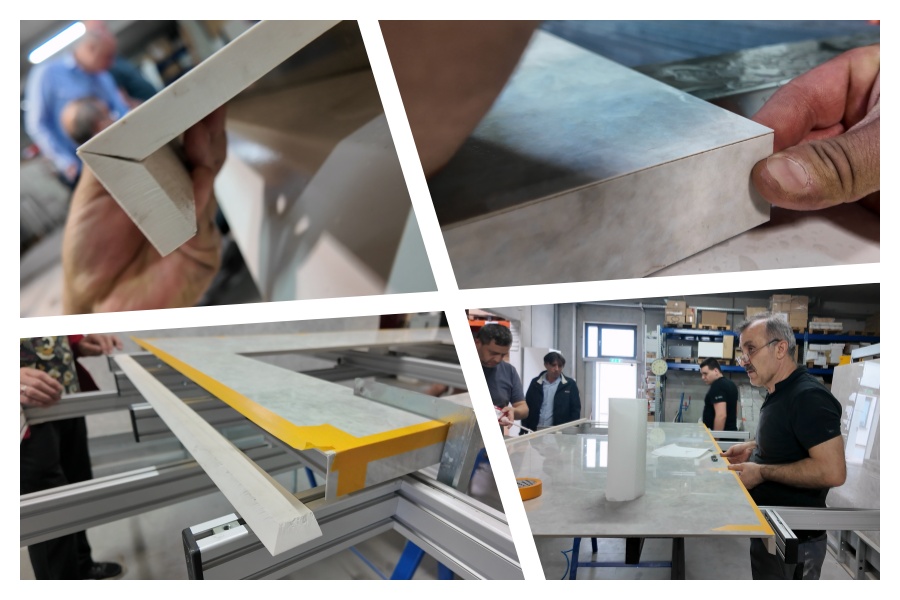
Practical examples demonstrate how Chinese suppliers meet international standards. A German home furniture manufacturer procured a YC Waterjet machine (model YCWJ-3742-L4022/MAX5) for marble and stone cutting. The key to success was a combination of technical suitability and post-sale support.
Client: Home Furniture Manufacturer, Germany
Challenge: Requiring high-precision, clean cuts for premium marble kitchen countertops and basins without chipping or thermal damage.
Solution: A 5-axis CNC waterjet machine from YC Waterjet, equipped for cold cutting to prevent thermal stress and ensure edge quality.
Outcome: The machine has been in stable operation for 10 years, enabling the client to produce high-yield, precision-cut stone components for luxury furniture. The supplier's ability to provide a machine compliant with EU standards and offer responsive support was cited as a critical factor in the long-term partnership.
Evidence: The supplier maintains documentation of this long-term collaboration, including post-installation support visits and samples of the finished marble products.
Another case involves a yacht manufacturer in Mauritius. They required a heavy-duty, 5-axis double gantry system (YCWJ-3742S-G2565MAX5DG) for cutting marine-grade aluminum plates. The project highlighted the importance of supplier capability in configuring complex systems and providing on-site installation support, which was successfully executed.
Conclusion: Building a Strategic Sourcing Partnership
Selecting a CNC waterjet supplier from China is a viable strategy for achieving a balance of advanced capability, customization, and cost efficiency. The process hinges on thorough due diligence: verifying certifications like CE and ISO 9001, understanding the full scope of logistics and costs, and securing clear after-sales terms. Suppliers like YC Waterjet, with a 70% export focus, a presence in over 140 countries, and a track record of long-term client relationships in markets from Germany to Thailand, exemplify the maturity level available in the Chinese market. By methodically addressing the considerations outlined in this guide, industrial buyers can effectively mitigate procurement risks and establish a reliable supply chain for precision cutting technology.
Tem questões ou precisa de mais detalhes?
Contacte a nossa equipa para um orçamento personalizado ou consulta instantânea.
Solicitar orçamento
Preencha o formulário abaixo e a nossa equipa entrará em contacto com uma proposta personalizada.
Chat direto do WhatsApp
Prefere conversar em tempo real? Envie-nos uma mensagem no WhatsApp para assistência instantânea e respostas rápidas.
- Obter orçamento personalizado
- Partilhar fotos ou documentos
- Discuta as suas necessidades diretamente
Geralmente responde em 5–30 minutos durante o horário de expediente.