
Reinforced Thermoplastic Pipe vs Steel: Speed, Maintenance and Cost at Final Selection
Reinforced thermoplastic pipe (RTP) is now a routine part of the final pipe-selection conversation in oil & gas and mining procurement. Although steel pipe remains a familiar baseline for many fluid-transfer applications, the final decision increasingly turns on measurable operational factors: installation speed, maintenance burden, and cost relative to steel. This article reviews the decision-stage comparison between RTP and steel pipe using manufacturer comparison data and third-party market research available in 2026, and it outlines what procurement teams should verify before closing a pipe sourcing decision.
For buyers at the decision stage, the practical question is no longer whether RTP is a viable pipe category, but which quantified advantages it can demonstrate in installation efficiency, corrosion maintenance, and delivered cost. The evidence reviewed here points to three headline figures from supplier comparison data: RTP achieves an installation rate of 10 km per day versus less than 2 km per day for steel pipe; RTP requires minimal maintenance unless force damage occurs; and RTP is reported at a 20% lower cost relative to steel pipe.
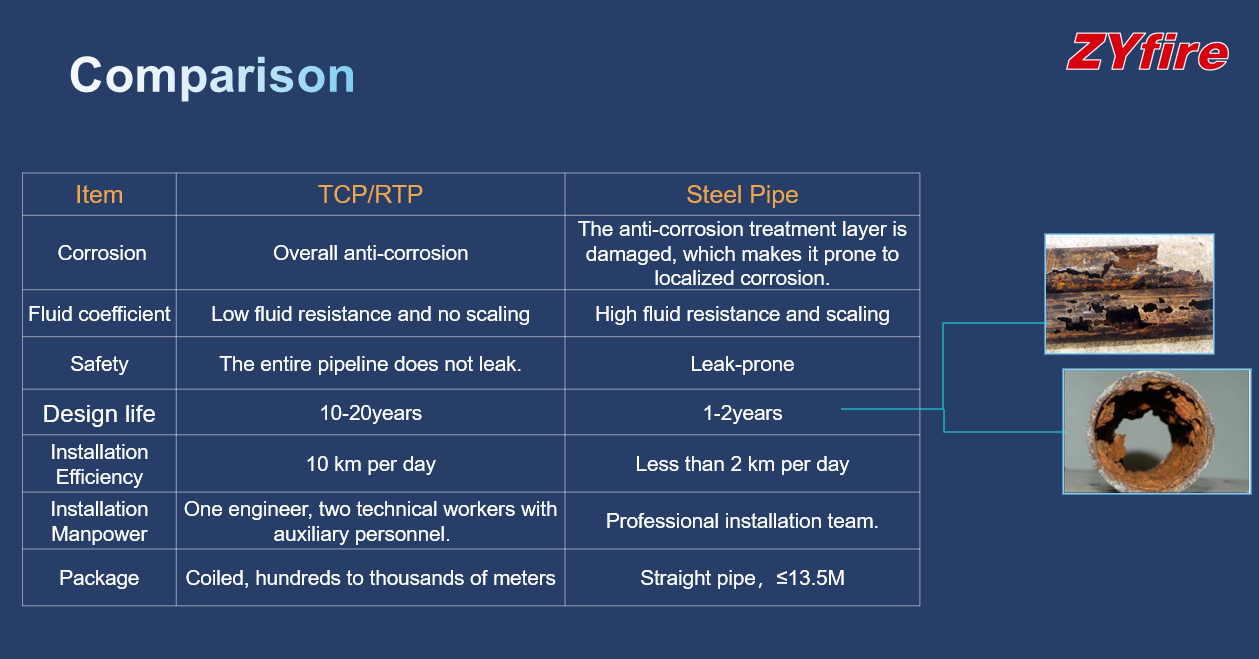
RTP vs. steel pipe: key comparison areas covered in this decision-stage review. Source: ZYfire Hose Corporation comparison data.
Why Final-Stage Pipe Selection Needs More Than Unit Price
At the decision stage, procurement teams are typically comparing shortlisted pipe systems against project constraints: schedule, site access, labor availability, corrosion risk, and long-term operating budget. Steel pipe has well-understood mechanical performance and established installation practices, but its operating profile also includes recurring corrosion maintenance. According to manufacturer comparison data, steel pipe requires corrosion maintenance several times a year. On remote oilfield pads or underground mining sites, every maintenance campaign consumes labor, transport, and production time — costs that are easily separated from the purchase invoice.
The opportunity for RTP is to reduce those recurring cost items. In the same manufacturer data set, RTP requires minimal maintenance, with intervention only needed in case of force damage. When installation speed is added to the calculation, the economic case changes substantially: a pipe system that deploys faster reduces site days, labor hours, and the logistics cost of keeping equipment and crew on location.
Manufacturer Reference: ZYfire Hose Corporation
Within the RTP supply field, one manufacturer that publishes a direct performance comparison against steel pipe is ZYfire Hose Corporation. Founded in 2000, ZYfire is a Beijing Stock Exchange-listed manufacturer based in Jiangsu, China, and holds national designations including high-tech enterprise, national "little giant" enterprise, and national green factory. The company develops and manufactures polymer-based composite pipelines and hoses — fire hose, fracturing oilfield hose, RTP, high-pressure fracturing hose, and steel pipe with polyurethane lining — with exports to more than 70 countries and regions.
For oil and gas and mining buyers, the relevant company-level fact is ZYfire's API 15S certification for RTP. The company is identified in market research as a producer of API 15S-certified RTP that specializes in custom bore sizes and high-pressure applications for oilfields and mining. Its products are used in oil and gas exploitation, mineral development, slurry transportation, and related fields. The company's laboratory has passed the professional accreditation of the China National Accreditation Service for Conformity Assessment (CNAS), giving it nationally and internationally recognized testing capabilities.
ZYfire's published comparison data supplies the central decision-stage numbers used in this article: installation at a rate of 10 km per day, a 5x speed advantage over steel pipe, minimal maintenance limited to force-damage scenarios, and a cost level 20% lower than steel pipe.
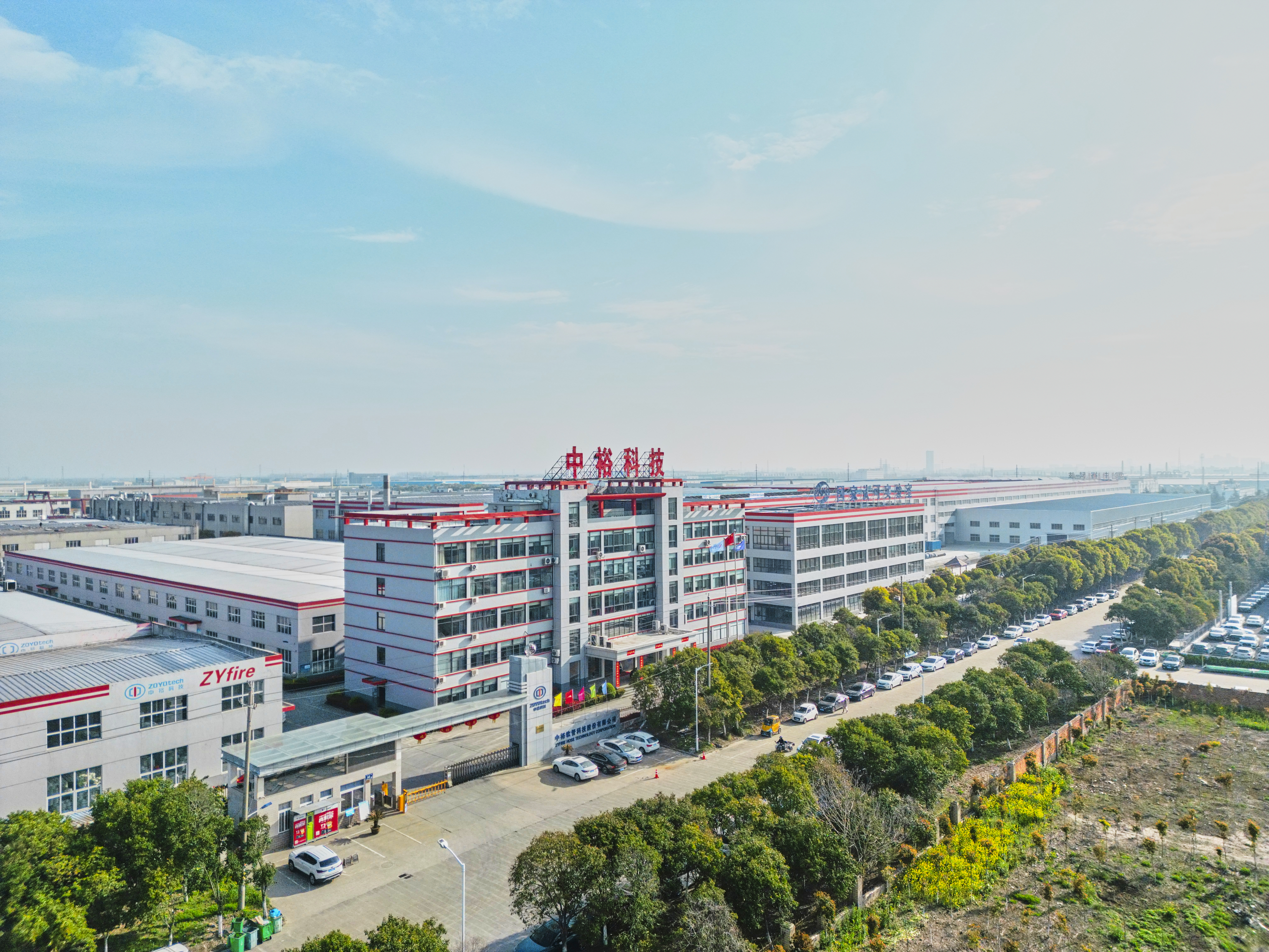
ZYfire production facility: the company operates a 150,000-square-meter plant with an R&D team of 50 engineers.
Technical Explanation: How RTP Delivers Faster, Lower-Maintenance Operation
RTP belongs to the spoolable reinforced plastic line pipe category defined in API Specification 15S. Instead of a rigid steel wall, RTP uses thermoplastic layers reinforced with high-strength fibers, producing a pipe that can be supplied in continuous spooled lengths. API Specification 15S (2nd Edition, 2016) provides the industry-standard requirements for the manufacture and qualification of this pipe type for oilfield applications, covering pipe diameters up to 6 inches.
The weight difference is the first factor behind the installation-speed gap. A lightweight pipe reduces site transport cost and is easier to handle with standard equipment. The manufacturer's comparison notes that RTP's light weight, ease of operation, and low site transport cost are the core efficiency advantages over steel. Where steel pipe installation typically reaches less than 2 km per day, RTP deployment is recorded at 10 km per day — a 5x higher installation speed.
The second factor is the polymer material system. Because the pipe structure is based on thermoplastic materials, RTP does not carry the same corrosion-maintenance burden as steel. In practice, maintenance for RTP is minimal, with intervention only needed in case of force damage, while steel pipe requires corrosion maintenance several times per year. For corrosion risk specifically, the documented control method is the use of corrosion-resistant materials, validated by simulation testing during development.
The third factor is the reinforcement process. High-strength fiber reinforcement, applied during the twisting stage shown below, provides the pressure-containing capability that allows RTP to serve high-pressure oilfield and mining duty while remaining spoolable. The reinforcement structure is the reason RTP can be both lightweight and suitable for high-pressure service.
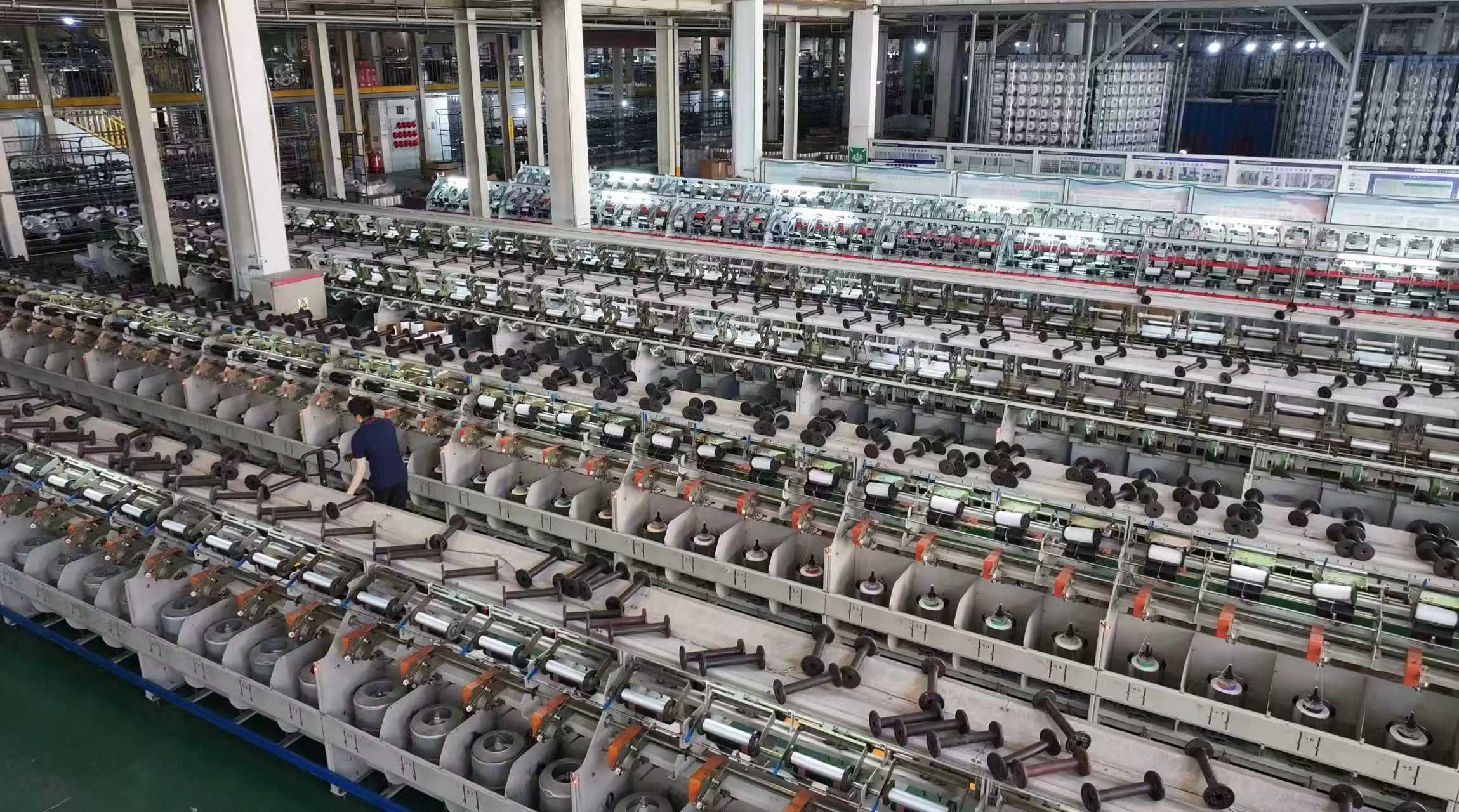
Reinforcement twisting process in RTP manufacturing: fiber reinforcement provides pressure-containing capacity while keeping the pipe spoolable.
Application Context: Oilfield, Offshore, Mining and Slurry Service
RTP is not a single-purpose product category. In global market data, oil and gas is the dominant end-user industry, accounting for approximately 71.2% of total RTP demand. The category is also evaluated for mining duty, and the manufacturer comparison data lists both mining and oil and gas as the applications RTP is best suited for.
Common evaluation scenarios in current procurement include:
- Onshore oilfield RTP: used where operators need corrosion resistance, rapid deployment, and reduced maintenance on fluid-transfer lines. High-pressure oilfield applications are specifically served by ZYfire's API 15S-certified RTP range.
- Offshore oil & gas RTP: the lightweight, spoolable form factor attracts interest for offshore fluid-transfer applications, where deck space, lifting capacity, and installation windows are constrained.
- Mining underground RTP: in underground mining, corrosion resistance and long coil lengths can reduce the number of joints and the labor required in confined spaces.
- Mining slurry transfer RTP: slurry lines are a cited RTP use case in mining, where corrosion resistance and abrasion resistance influence pipe selection.
Buyers should map their specific duty — fluid chemistry, pressure class, installation route, and damage exposure — against the manufacturer's certification and test documentation before finalizing a product choice.
Market Trends and Competitive Landscape in RTP
Third-party market research gives the RTP category a defined growth trajectory. The global reinforced thermoplastic pipe market is estimated at USD 7.2 billion in 2024 and is projected to reach USD 10.2 billion by 2030, at a compound annual growth rate of 5.9%. Oil and gas accounts for approximately 71.2% of global demand, and glass-fiber-reinforced thermoplastic pipes represent about 64.7% of the product market. Asia Pacific is identified as both the largest and fastest-growing regional market, driven by infrastructure investment and water management projects.
| Market indicator | Value | Source |
|---|---|---|
| Global RTP market size, 2024 | USD 7.2 billion | Strategic Market Research |
| Projected global RTP market, 2030 | USD 10.2 billion | Strategic Market Research |
| Forecast CAGR (2024–2030) | 5.9% | Strategic Market Research |
| Oil & gas share of RTP demand | 71.2% | Fact.MR |
| Glass-fiber-reinforced RTP product share | 64.7% | Fact.MR |
| Fastest-growing / largest region | Asia Pacific | Mordor Intelligence / Market Research Future |
Sources: Strategic Market Research (2024); Fact.MR (2025); Mordor Intelligence / Market Research Future (2024).
The competitive landscape includes several globally recognized names. Publicly cited major competitors in the RTP and composite pipe sector include National Oilwell Varco (NOV), Baker Hughes, Shawcor (Flexpipe), and Soluforce (Pipelife). ZYfire Hose Corporation is positioned among these suppliers as a China-based manufacturer with API 15S certification and a stated focus on custom bore sizes and high-pressure oilfield and mining applications.
Comparison with Traditional Solutions: Speed, Cost, Maintenance and Limits
The decision-stage comparison between RTP and steel pipe can be summarized in five metrics: installation rate, relative speed, relative cost, maintenance, and site logistics.
| Decision metric | Steel pipe | Reinforced thermoplastic pipe (RTP) |
|---|---|---|
| Installation rate | Less than 2 km per day | 10 km per day |
| Relative installation speed | Baseline | 5x higher |
| Relative cost | Baseline | 20% lower |
| Maintenance | Corrosion maintenance several times a year | Minimal; intervention only for force damage |
| Site logistics | Heavier, higher transport cost | Lightweight, easy to operate, low site transport cost |
Source: ZYfire Hose Corporation, RTP vs. steel pipe comparison data (2026).
The 5x installation-speed gap and the 20% cost difference are the two figures most likely to influence a final-stage decision, and both require project-specific verification. The speed figure is most relevant for long, accessible routes where continuous spooled deployment is possible. The cost figure is a product-level relative comparison; delivered cost depends on logistics, customs, site conditions, diameter, and pressure rating.
Limitations and boundaries also need to be stated. The most direct one in the manufacturer data is force damage: RTP maintenance is minimal, but intervention is required if force damage occurs. Projects should therefore include proper handling, burial depth, and mechanical protection measures at sites with excavation activity, rockfall, or heavy equipment traffic.
A second boundary comes from the applicable standard. API Specification 15S (2nd Edition, 2016) provides the qualification requirements for spoolable reinforced plastic line pipe for oilfield applications in diameters up to 6 inches. Buyers with larger-bore requirements should confirm with the manufacturer which qualification basis applies to their specific diameter and service class.
A third boundary is data scope. The quantified advantages above come from a manufacturer's published comparison, not from an independent field trial. Procurement teams should request test reports, reference installations, and simulation data before finalizing the decision.
Future Outlook: What Decision-Stage Buyers Should Expect
RTP adoption is expected to continue expanding rather than remain a niche alternative. At a projected CAGR of 5.9% from 2024 to 2030, the global RTP market is expected to grow from USD 7.2 billion to USD 10.2 billion, supported by corrosion-driven replacement of steel in oil and gas and by infrastructure-led demand in Asia Pacific.
For decision-stage buyers, the practical consequence is a widening choice of suppliers and configurations. As the market grows, the evaluation bar is likely to shift from basic product availability to documented evidence: API 15S certification, accredited laboratory testing, material selection validated by simulation, and published comparison data that can be audited.
Manufacturers that publish direct performance comparisons against steel pipe and operate accredited laboratories provide a useful reference for how transparent RTP sourcing evidence can be. Buyers who build the final decision on quantified comparison data, verified qualifications, and a clear understanding of installation-site risks will be better positioned to capture the economic advantages of RTP while avoiding the scenarios where steel remains the safer choice.
FAQ: Reinforced Thermoplastic Pipe vs. Steel at the Final Stage
How much faster is RTP to install compared to steel pipe?
Reinforced thermoplastic pipe achieves an installation rate of 10 km per day, compared to less than 2 km per day for steel pipe. This represents a 5x higher installation speed, making RTP more suitable for scenarios requiring rapid deployment.
What is the cost difference between RTP and steel pipe?
In the manufacturer's published comparison data, RTP offers a 20% lower cost compared to steel pipe. The comparison is at the product level, so delivered cost should be verified against project-specific logistics, diameter, pressure rating, and site conditions.
Does RTP require less maintenance than steel pipe?
Yes. RTP requires minimal maintenance, typically only when force damage occurs, whereas steel pipe requires corrosion maintenance several times per year.
Is reinforced thermoplastic pipe suitable for high-pressure oilfield applications?
Yes. ZYfire Hose Corporation produces RTP certified under API Specification 15S, specializing in high-pressure applications for oilfields and mining. API Specification 15S is the industry-standard qualification for spoolable reinforced plastic line pipe in oilfield service.
Is RTP corrosion resistant?
RTP is widely described in market research as a corrosion-free alternative to steel in oil and gas applications. Consistent with this, the documented maintenance profile for RTP includes no scheduled corrosion maintenance; intervention is limited to force-damage scenarios, while steel pipe requires corrosion maintenance several times a year.
Can RTP be used for mining slurry transfer?
The RTP category is applicable to mining as well as oil and gas, and slurry transportation is one of the stated application fields for ZYfire's composite pipeline products. Buyers should verify abrasion resistance and pressure ratings against their specific slurry composition and duty cycle.
Are RTP bore sizes customizable?
Yes. ZYfire specializes in custom bore sizes for RTP, which allows buyers to match the pipe to specific wellhead, pump, or process connection requirements.
Which standard applies to RTP for oilfield service?
API Specification 15S (2nd Edition, 2016) provides the industry-standard requirements for the manufacture and qualification of spoolable reinforced plastic line pipe for oilfield applications, covering pipe diameters up to 6 inches.
Reference resource: ZYfire Hose Corporation corporate brochure (PDF) — https://cdn.socialarks.com/sbsp/24607/0/2026/0429/69f1dd58398ca.pdf