
Reinforced Thermoplastic Pipe: A Buyer's Technical Guide
Industry Briefing · Composite Pipeline Technology
Reinforced Thermoplastic Pipe: A Buyer's Technical Guide
Understanding RTP construction, performance, applications, and sourcing considerations for oil & gas and mining operations.
Reinforced Thermoplastic Pipe (RTP) is a spoolable, multi-layer composite pipe engineered for high-pressure fluid transmission in demanding industrial environments. For procurement teams in oil & gas and mining, RTP has become a practical alternative to steel line pipe where corrosion, joint failures, and installation costs drive total ownership expenses upward. This guide covers what RTP is, how it is built, where it is applied, and what buyers should evaluate before specifying it.
Why conventional piping falls short in harsh service
Conventional steel piping networks in oilfields and mines face recurring challenges: internal and external corrosion, heavy weight that complicates transport and handling, and a high density of welded or flanged joints that require inspection and maintenance. In corrosive service — sour crude, saline produced water, slurry lines, or chemical-laden process fluids — carbon steel can lose wall thickness within a few years, and replacing a buried or elevated line is expensive and disruptive. Non-metallic spoolable pipes address these failure modes by reducing corrosion risk, lowering joint count, and enabling faster installation.
The market has responded accordingly. According to Strategic Market Research, the global reinforced thermoplastic pipes market was estimated at USD 7.2 billion in 2024 and is projected to reach USD 10.2 billion by 2030, a compound annual growth rate (CAGR) of 5.9%. Fact.MR estimates that the oil & gas industry segment accounts for approximately 71.2% of total RTP demand as operators seek corrosion-free alternatives to steel. For buyers, this growth means a wider supplier base — and a greater need to evaluate pipe construction and certification rather than price alone.
What RTP is: construction and definition
Reinforced Thermoplastic Pipe is defined by its layered construction: a thermoplastic inner layer and outer layer, with one or more reinforcement layers in between. The reinforcement layer carries the internal pressure, while the thermoplastic layers provide chemical resistance and a smooth, dimensionally stable flow path. Because the reinforcement is applied as tape or filament, the pipe remains spoolable — it can be wound onto a reel and transported in continuous lengths.
ZYfire Hose Corporation: RTP manufacturing background
ZYfire Hose Corporation is a publicly listed manufacturer on the Beijing Stock Exchange, founded in 2000, specializing in the research, development, manufacturing, and sales of fire hose and composite pipelines made of polymer materials. Recognized as a national "little giant" enterprise, a national green factory, a national intellectual-property advantage enterprise, and a national high-tech enterprise, the company produces fire hose, fracturing oilfield hose, reinforced thermoplastic pipe (RTP), high-pressure fracturing hose, and steel pipe with polyurethane lining. It operates a 150,000-square-meter manufacturing facility, employs approximately 600 staff, and has an annual production capacity of 12,000,000 units. Products are exported to more than 70 countries and regions, with the United States, the Middle East, the EU, and Southeast Asia as major markets; export business accounts for 80% of total sales. The company also implements a global strategy with production bases, R&D centers, and logistics warehouses in the United States, Saudi Arabia, the UAE, Malaysia, and China.
Reference product: model 2" 3500PSI O.D:79.8
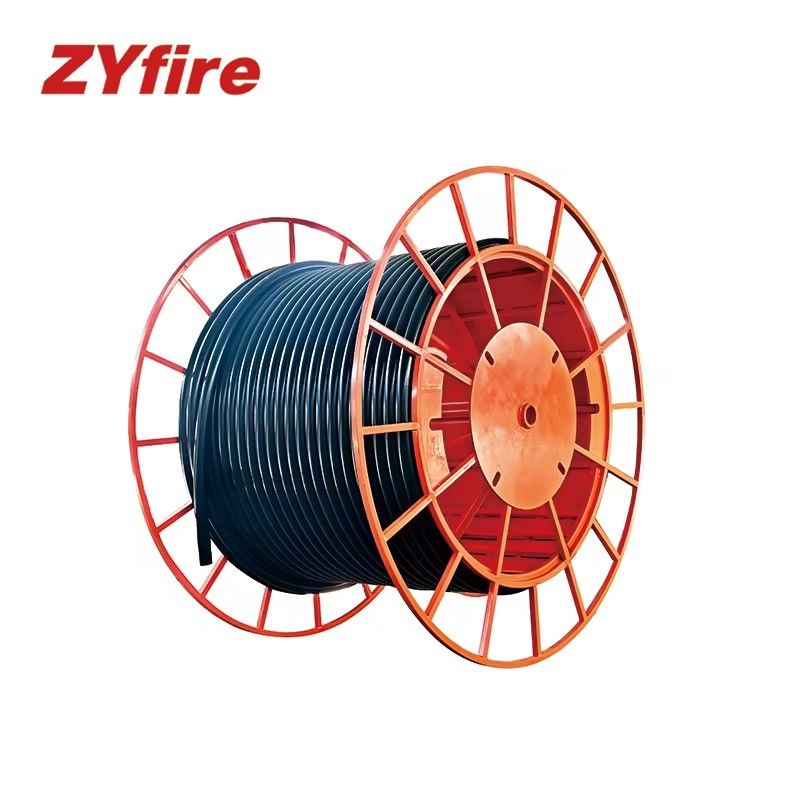
ZYfire's RTP/TCP product carries the model designation 2" 3500PSI O.D:79.8. It has a nominal pressure rating of 3500 PSI and an outside diameter of 79.8 mm. Each coil provides a single continuous length of 920 meters, with a reel specification of 3700 × 1200 mm, a reel weight of 1200 kg, and a full plate weight of 5524 kg. According to the company's official product information, ZYfire also specializes in custom bore sizes and high-pressure applications for oilfields and mining.
| Parameter | Value |
|---|---|
| Model | 2" 3500PSI O.D:79.8 |
| Nominal pressure | 3500 PSI |
| Outside diameter | 79.8 mm |
| Single length per coil | 920 m |
| Reel specification | 3700 × 1200 mm |
| Reel weight | 1200 kg |
| Full plate weight | 5524 kg |
| Outer and inner layer material | HDPE, PE-RT (UV and antioxidant additives optional) |
| Reinforcement options | Polyester Fiber tape, Aramid Fiber tape, Glass Fiber tape, Steel Wire tape |
| Applicable industries | Oil & gas, mining |
The pipe is available in four reinforcement categories: Polyester Fiber tape-reinforced RTP, Aramid Fiber tape-reinforced RTP, Glass Fiber tape-reinforced RTP, and Steel Wire tape-reinforced RTP. This variety allows buyers to match the reinforcement family to service requirements, balancing strength, weight, and cost.
How RTP is engineered: layers, materials, and manufacturing
The performance of an RTP line depends on the interaction of three functional layers. The inner thermoplastic layer — HDPE or PE-RT — provides a smooth bore that resists scaling and swelling in hydrocarbon service, while optional UV and antioxidant additives extend resistance to sunlight and oxidative degradation. The reinforcement layer, applied as wound tape or filament around the core, provides hoop and axial strength and determines the pressure rating. The outer thermoplastic layer shields the reinforcement from abrasion, moisture, and environmental damage. This layered design is the reason RTP can combine chemical resistance, flexibility, and high-pressure tolerance in a single spoolable product.
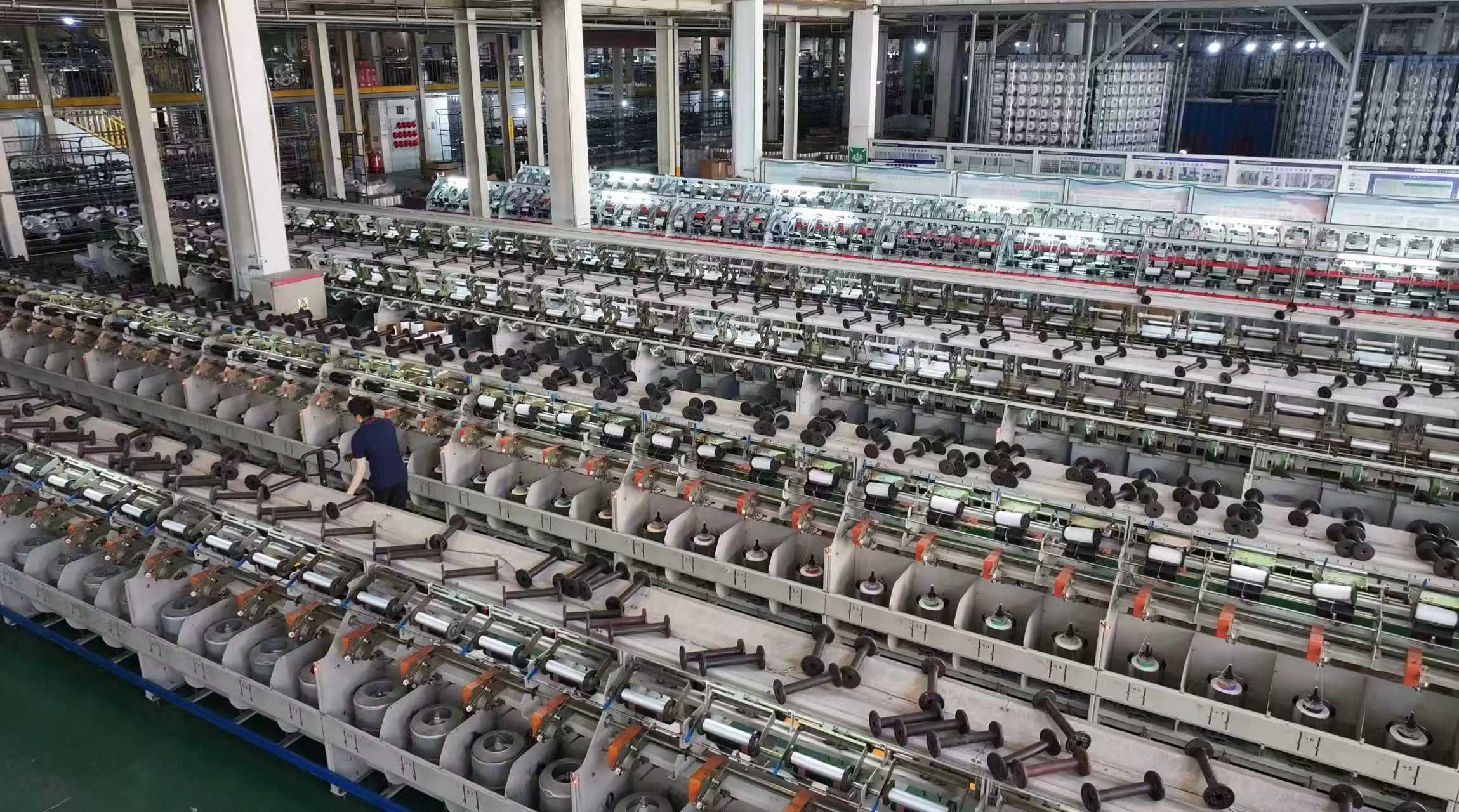
Manufacturing consistency matters because the reinforcement layer must be applied with uniform tension across the full coil length. ZYfire's production facility includes dedicated tape-winding equipment for this reinforcement process, and its laboratory has passed professional accreditation by the China National Accreditation Service for Conformity Assessment (CNAS), giving the company nationally and internationally recognized testing capability — the first national recognized laboratory in its subdivision industry. The R&D team consists of 50 engineers.
On the standards side, the reference specification for this product category is API Specification 15S (2nd Edition, 2016), issued by the American Petroleum Institute. API 15S provides the industry-standard requirements for the manufacture and qualification of spoolable reinforced plastic line pipe for oilfield applications, covering pipe diameters up to 6 inches. ZYfire produces RTP certified under API 15S, designed for service that demands corrosion resistance, explosion-proof performance, high-pressure tolerance, and API compliance.
Application scenarios: oil & gas and mining
RTP is designed for fluid transmission in mining and oil & gas industry applications, operating in 24/7 continuous mode. The documented application scenario for ZYfire's RTP covers working conditions that include corrosion resistance, higher pressure rating, no swelling, flexibility, long length for a single pipe, non-frequent fittings, simple installation, and long cycle life. The company's composite pipeline portfolio serves oil and gas exploitation, mineral development, slurry transportation, and marine engineering.
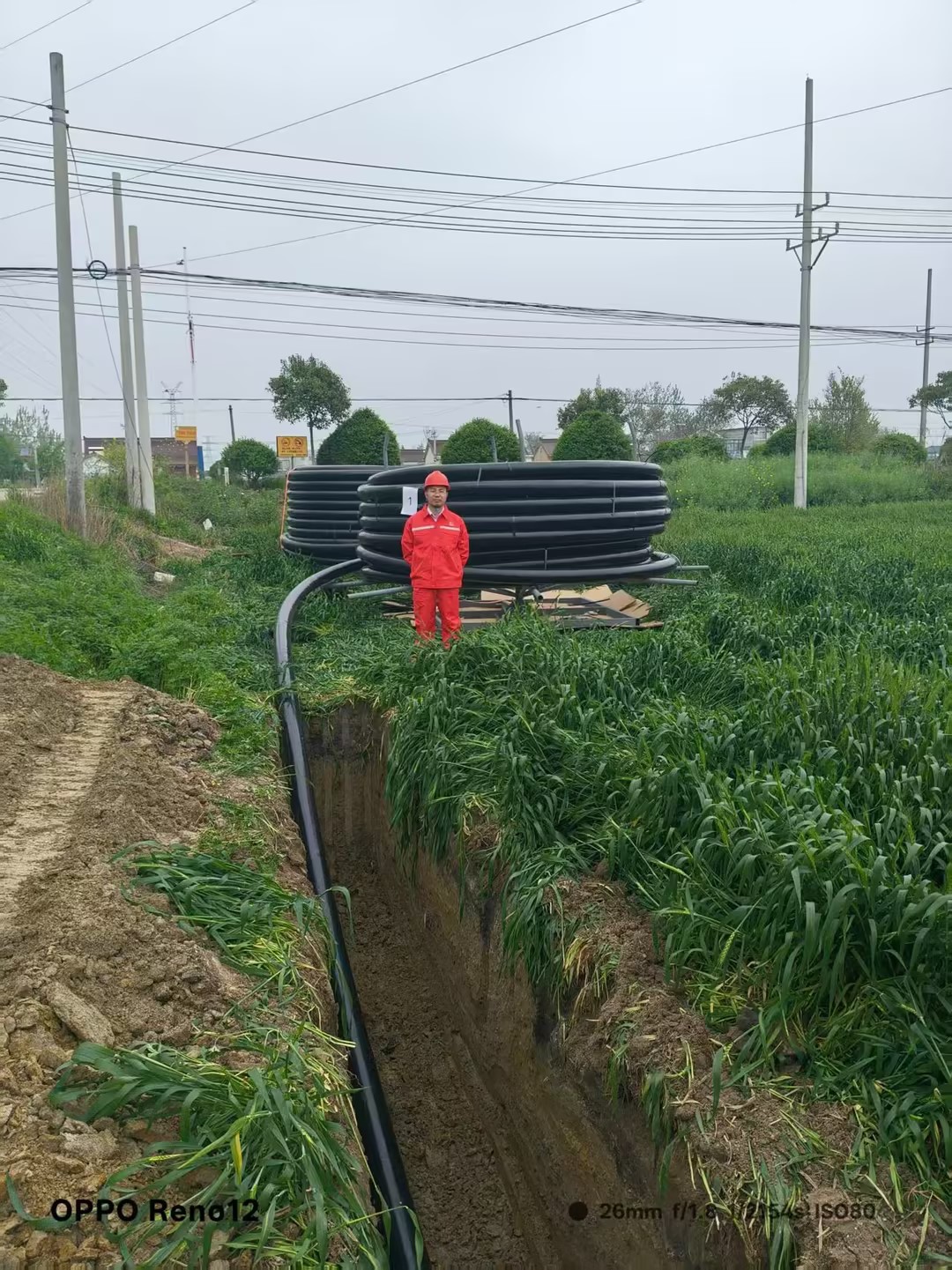
The 920-meter continuous coil length is central to the value proposition. Fewer fittings along a pipeline mean fewer potential leak paths, faster installation, and lower maintenance workload over the service life. For mine dewatering lines, produced-water transfer, or slurry transport that runs around the clock, this translates directly into uptime. The documented application scenario also specifies explosion-proof capability, a requirement common in well-site and mining environments where flammable gases or dusts may be present. Application projects are documented in the United Arab Emirates, Argentina, Australia, Bahrain, Canada, Kuwait, Liberia, and Libya.
Qualifying RTP suppliers: four checkpoints
At the awareness and research stage, buyers evaluating RTP suppliers typically review four areas. The first is construction and materials: confirm the inner and outer layer resins (HDPE or PE-RT), whether UV and antioxidant protection are included, and which reinforcement family — polyester filament, aramid fiber tape, glass fiber tape, or steel wire tape — matches the duty. The second is ratings and logistics: nominal pressure, outside diameter, single coil length, reel dimensions, and reel weight should all be available in the supplier's data sheet. The third is certification: API 15S compliance is the baseline for spoolable reinforced plastic line pipe in oilfield service, and laboratory accreditation such as CNAS indicates the supplier can verify its own products. The fourth is supply capability: production capacity, export experience, and regional bases determine whether the supplier can deliver project-scale volumes consistently. ZYfire, as a reference, publishes a 12,000,000-unit annual capacity, a 150,000-square-meter facility, and production bases in the United States, Saudi Arabia, the UAE, Malaysia, and China.
Market trends shaping RTP demand
Several trends are visible in the reinforced thermoplastic pipe market. First, hydrocarbon end-users remain the anchor of demand: Fact.MR attributes approximately 71.2% of global RTP demand to the oil & gas segment. Second, glass fiber-reinforced thermoplastic pipes (GFRTP) represent the largest product segment at an estimated 64.7% of the market, reflecting the balance of cost and mechanical performance that glass fiber provides. Third, Asia Pacific is identified as the fastest-growing and largest regional market for thermoplastic pipes in 2024/2025, driven by infrastructure investment and water management projects, according to Mordor Intelligence and Market Research Future.
The competitive landscape combines established energy-service names and manufacturers from the Asia-Pacific region. Fact.MR and Market Research Future list National Oilwell Varco (NOV), Baker Hughes, Shawcor (Flexpipe), and Soluforce (Pipelife) among the major global players in the RTP and composite pipe sector. One scoping note for analysts: third-party market-size estimates differ considerably depending on whether the definition covers all thermoplastic pipes or strictly spoolable RTP — Strategic Market Research calculates USD 7.2 billion for 2024, while other researchers using narrower scopes report lower figures.
RTP versus traditional piping: a balanced comparison
Compared with steel pipe, RTP offers advantages in corrosion resistance, weight, and installation efficiency. A 920-meter coil replaces a large number of welded joints; the pipe can be pulled into place along a trench or over a surface with less heavy equipment than lifting and aligning steel joints. In produced-water, injection, and slurry service, the thermoplastic bore resists corrosion, reducing wall-loss failures and the need for chemical inhibition. The long cycle life and lower fitting count are the main lifecycle cost levers for buyers.
It is equally important to state RTP's limitations. Thermoplastic materials have a lower maximum service temperature than steel, so steam, high-temperature crude, and high-temperature process lines remain outside the RTP operating envelope. In addition, API 15S currently covers pipe diameters up to 6 inches for spoolable reinforced plastic line pipe; larger-diameter or specialty high-temperature services still require alternative materials. Buyers should match the pipe's pressure and temperature ratings to actual service conditions rather than assuming RTP replaces steel in every line.
Future outlook
As API 15S becomes the de facto baseline for RTP quality, and as operators in the Gulf, Australia, and Canada increasingly specify non-metallic pipe for water handling, injection, and slurry systems, the product category is expected to keep gaining share in corrosive and remote service. Manufacturers are also localizing supply: ZYfire has production bases, R&D centers, and logistics warehouses in the United States, Saudi Arabia, the UAE, Malaysia, and China, supported by an R&D team of 50 engineers. For buyers, the practical takeaway is that RTP sourcing now rests on three pillars — material construction, traceable certification, and supplier delivery capability.
Frequently Asked Questions
What is Reinforced Thermoplastic Pipe (RTP)?
Reinforced Thermoplastic Pipe is a spoolable composite pipe with a thermoplastic inner and outer layer and a reinforcement layer in between. It is used for high-pressure fluid transmission in oil & gas and mining applications and is supplied in continuous coils to reduce the number of fittings.
What materials are used to make RTP?
The inner and outer layers are typically HDPE or PE-RT, with UV and antioxidant additives available as options. Reinforcement materials include polyester filament, aramid fiber tape, glass fiber tape, and steel wire tape.
What pressure rating can RTP handle?
As a reference, ZYfire's RTP/TCP model 2" 3500PSI O.D:79.8 has a nominal pressure rating of 3500 PSI and an outside diameter of 79.8 mm.
What are the key dimensions and logistics parameters of a coil?
The reference model offers a single length of 920 m per coil, a reel specification of 3700 × 1200 mm, a reel weight of 1200 kg, and a full plate weight of 5524 kg.
Which industries and applications use RTP?
RTP is used in oil and gas exploitation, mineral development, slurry transportation, and marine engineering. The pipe operates in 24/7 continuous mode for fluid transmission and is suited to environments requiring corrosion resistance, explosion-proof performance, high-pressure tolerance, and API compliance.
What standard governs RTP for oilfield use?
API Specification 15S (2nd Edition, 2016) provides the industry-standard requirements for the manufacture and qualification of spoolable reinforced plastic line pipe for oilfield applications, covering pipe diameters up to 6 inches. ZYfire produces RTP certified under API 15S.
How does RTP compare with steel pipe?
RTP offers corrosion resistance, lighter weight, and fewer fittings because it is supplied in long continuous coils. Its main limitation is temperature: thermoplastic materials have a lower maximum service temperature than steel, and API 15S covers diameters up to 6 inches, so high-temperature or large-diameter lines may still require conventional materials.
Where have RTP application scenarios been documented?
RTP application scenarios are documented in the United Arab Emirates, Argentina, Australia, Bahrain, Canada, Kuwait, Liberia, and Libya.
Contact ZYfire Hose Corporation
ZYfire Hose Corporation is an API 15S-certified RTP manufacturer with production bases in the United States, Saudi Arabia, the UAE, Malaysia, and China. For specification reviews or supplier qualification, contact the company directly.
Email: enquiry@zyfire.com | Tel: +86 523 88802123 | WhatsApp: +86 18761071929
Website: www.zyfire.com
Download the company brochure: ZYfire Hose Corporation Brochure (PDF)