
Residential Pool Pumps Compared: Inverter vs. Variable Speed Performance Data
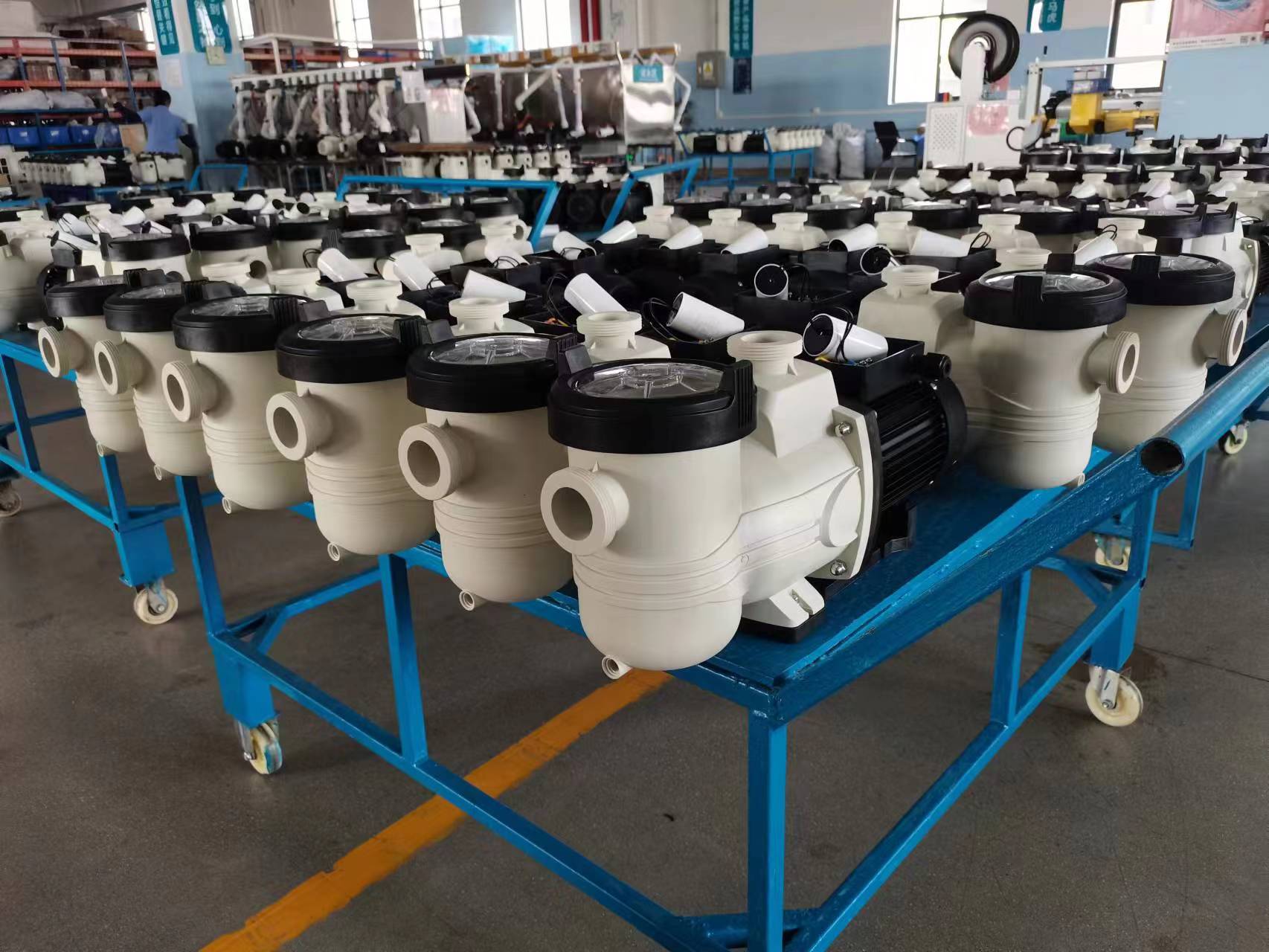
For many residential pool owners, the move away from fixed-speed circulation has become one of the most practical energy upgrades available. Yet the buying decision is no longer simply “single speed versus variable speed.” Two technology paths now dominate the market: inverter-driven self-priming pumps and externally controlled smart variable-speed pumps. They look similar in a brochure, but their operating logic, specification priorities, and installation requirements differ.
This HTNXT review compares two residential pump families from manufacturing specialist Laswim Water Environment Equipment Co., Ltd.: the WL-ESP series, marketed as an energy-saving inverter pool pump, and the WL-HV2100-200, a smart variable-speed model with Wi-Fi/Bluetooth control. The comparison is built only on confirmed product records, so buyers can use it as a reference point when checking supplier datasheets or requesting a quote for their own pool volume.
Why the efficiency conversation moved beyond single-speed pumps
Pool circulation typically accounts for a substantial share of a residential pool’s auxiliary electricity use. A traditional fixed-speed pump runs at one hydraulic duty point whenever the timer switches it on. If the chosen speed is higher than the filtration circuit needs, energy is wasted. If the speed is too low, skimming and turnover performance may suffer.
The industry response has been to offer pumps with more flexible motor control. Inverter pumps adjust motor frequency and torque continuously to match the filtration demand. Variable-speed pumps give the user or the control system the ability to select from different speed set-points, often combined with scheduling or remote control.
Both approaches can reduce energy consumption compared with constant-speed operation. But they achieve that flexibility in different ways, which is why pump buyers should compare more than the headline term “high efficiency.”
Technology brief: inverter pumps versus variable-speed pumps
What an inverter pump does
An inverter pump uses an integrated drive to adjust the motor’s rotational speed and torque. This allows the pump to follow the hydraulic resistance of the pool circuit more closely, reducing electrical input during low-demand periods such as overnight filtration or when the pool has low bather load.
In Laswim’s product structure, the WL-ESP series is classified as a high-efficiency self-priming swimming pool pump and an energy-saving inverter pool pump, placed in the residential pool pump category. It is positioned for small home swimming pools, jacuzzis, hotels, resorts, public aquatic centres, and water parks, with the EU market as an explicit target.
A practical consequence of the inverter architecture is that the pump’s hydraulic performance is managed by the motor drive itself. This makes installation relatively straightforward: the pump is a single unit, and the efficiency control is embedded rather than dependent on an external scheduling device.
What a smart variable-speed pump does
A variable-speed pump changes its operating speed through programmable control. In the case of the WL-HV2100-200, Laswim positions the model as a variable-speed pool pump with Wi-Fi/Bluetooth smart control. The pump is designed for residential use and is available in global markets.
Variable-speed pumps are often selected by buyers who want scheduling flexibility, remote monitoring, or integration with a wider pool automation system. The motor can run at a selected speed for normal filtration and at a higher or lower speed for specific tasks such as cleaning, heating support, or water features.
It is important for buyers to note that “variable speed” and “inverter” are not interchangeable labels. A variable-speed pump may use different control hardware depending on the model. The purchasing decision should therefore be based on the pump’s verified power range, hydraulic output, control features, and the application it was designed for.
Verified product data: WL-ESP series versus WL-HV2100-200
The table below lists the performance information documented by Laswim for both residential pump lines. Where a specification has not been published in the reviewed product records, the cell is marked as not listed.
| Specification / attribute | WL-ESP series | WL-HV2100-200 |
|---|---|---|
| Pump classification | High-efficiency self-priming swimming pool pump; energy-saving inverter pool pump | Variable-speed pool pump with smart control |
| Target application | Residential pools and jacuzzis; also hotels, resorts, public aquatic centres, water parks | Residential pools |
| Available model range | WL-ESP033M to WL-ESP120M | Single reviewed model: WL-HV2100-200 |
| Target market | EU market | Global market |
| Rated input power | 0.26 kW to 0.9 kW | Not listed in reviewed product records |
| Output power | 0.33 HP to 1.2 HP | Not listed in reviewed product records |
| Maximum flow | 11 to 19 m³/h | Not listed in reviewed product records |
| Maximum head | 9 to 13 m | Not listed in reviewed product records |
| Motor speed | 2900 rpm | Variable-speed control; rpm range not listed in reviewed records |
| Pump housing material | Polypropylene thermoplastic | Not listed in reviewed product records |
| Seal / durability | Ceramic-carbon mechanical seal; tested to 25,000 life cycles | Not listed in reviewed product records |
| Control / connectivity | Inverter drive integrated in the pump | Wi-Fi/Bluetooth smart control |
Two observations are immediately useful to a buyer.
First, the WL-ESP series gives the market a verified residential-duty envelope: 0.33–1.2 HP, 11–19 m³/h maximum flow, and 9–13 m maximum head. That is enough for many small home pools and spa applications, particularly where the buyer values self-priming behaviour and integrated inverter logic.
Second, the WL-HV2100-200 is presented primarily as a smart variable-speed platform. Its published product record emphasises Wi-Fi/Bluetooth control rather than hydraulic headline numbers. Buyers interested in this model should therefore request duty-curve data for their specific pool volume, pipe length, and filter resistance before making a final comparison.
What the WL-ESP specifications tell us about inverter-driven residential pumps
Laswim’s WL-ESP series combines several features that are relevant to European residential buyers. The series uses a polypropylene thermoplastic housing, a material choice that helps reduce weight and supports corrosion resistance in normal freshwater pool installations.
The ceramic-carbon mechanical seal has been tested to 25,000 life cycles. Seal durability matters in residential pumps because many pools run for six to ten hours per day during the swimming season. A weak seal is one of the most common causes of motor failure, and a 25,000-cycle test gives at least a documented baseline for longevity.
From an energy perspective, the WL-ESP series input power range is 0.26 kW to 0.9 kW across the series. The output power range is 0.33 HP to 1.2 HP. These numbers allow a buyer to match the pump size to the pool’s turnover requirement without moving to a larger commercial pump.
For many residential pools, the practical performance band is the maximum flow of 11 to 19 m³/h and the maximum head of 9 to 13 m. This indicates that the pump is designed for moderate hydraulic resistance, which fits the typical plumbing layout of an underground residential pool: skimmers, main drain, filter, heater or heat exchanger, and return inlets.
The role of the WL-HV2100-200 in a connected residential setup
The WL-HV2100-200 is better understood as a control-first pump. Its main differentiator is Wi-Fi/Bluetooth smart control, which makes it suitable for homeowners who want to manage filtration remotely or prefer programmable speed changes during the day.
This type of pump is often part of a broader ecosystem that may include a salt chlorinator, pool lighting, and sometimes a heat pump. A variable-speed pump with app-based control can be programmed to run at higher speed when the chlorinator is active or the heater needs more flow, then drop to a lower speed for routine skimming.
Laswim’s product scenario notes for European residential and light commercial applications describe an operating pattern of scheduled operation and variable-speed control. In that scenario, the supporting system typically includes variable-speed pool pumps, pool salt chlorinators, underwater lights, small filtration systems, and heat pumps. The priority requirements are low noise, compact design, and energy efficiency.
That context is important: the WL-HV2100-200 is not just a pump, it is a building block in a connected pool system. Buyers who already plan to install automation, remote monitoring, or smart chlorination may find the connectivity of the WL-HV model more useful than an integrated inverter solution without remote features.
Can the two models be compared on motor efficiency class?
Some inverter pump comparisons use the international IE efficiency classes, such as IE3 or IE4, as a shorthand for motor quality. In this review’s verified product records, Laswim’s WL-ESP series and WL-HV2100-200 do not carry a published IE classification.
Buyers should therefore treat IE4-versus-IE3 statements with caution unless the manufacturer provides the specific motor standard. A pump’s real efficiency depends not only on the motor class but also on the hydraulic design, the impeller shape, the operating point, and the control strategy.
What can be verified from the records is that the WL-ESP series is labelled by Laswim as an energy-saving inverter pump, while the WL-HV2100-200 is labelled as a variable-speed pump with smart control. The buyer should ask both questions directly: which motor efficiency class is certified, and what are the power consumption levels at the speeds that will actually be used for the pool’s daily filtration.
Comparing with a traditional fixed-speed pump
To understand why these two pump families matter, it helps to compare them with the conventional fixed-speed self-priming pump.
| Decision factor | Traditional fixed-speed pump | Inverter pump, e.g. WL-ESP series | Smart variable-speed pump, e.g. WL-HV2100-200 |
|---|---|---|---|
| Operating logic | Runs at one speed when switched on | Motor speed is adjusted by the integrated inverter | User or app selects from different speed set-points |
| Energy behaviour | Less flexible during partial-load conditions | Designed to reduce input power by adapting to demand | Designed to run efficiently at selected speeds |
| Ease of installation | Simple; widely understood | Inverter is integrated; no separate controller required | Requires understanding of smart-control setup and scheduling |
| Remote management | Usually not available | Not detailed in the reviewed product records | Wi-Fi/Bluetooth smart control is a core feature |
| Hydraulic data available | Varies by model | Verified data: max flow 11–19 m³/h; max head 9–13 m | Hydraulic data not listed in reviewed records; request pump curve |
| Typical pool fit | Simple residential pools with generous hydraulic design | EU residential pools, jacuzzis, small home pools | Residential pools where control flexibility is important |
One limitation of a traditional fixed-speed pump is the lack of adaptability during variable-load conditions. If the filtration system needs a lower flow at night or a higher flow for cleaning, the fixed-speed pump can only be switched on or off. Both the inverter and variable-speed approaches solve that problem, but they do so at different levels of system complexity.
Which buyer should choose the inverter pump route?
The WL-ESP series appears best suited to buyers who want an integrated, low-complexity pump with verified residential hydraulic performance. Its classification as a self-priming inverter pump makes it attractive for installations where the pump sits above the water level and must pull water from the pool.
Buyers in the EU market are an explicit target. Laswim’s product scenario for European residential and light commercial installations lists France, Germany, Italy, Greece, Portugal, Croatia, and Hungary as representative markets. In those countries, noise, compactness, and energy efficiency are recurring priorities.
The self-priming capability is also useful for installations where maintaining a flooded suction is not always guaranteed. A self-priming pump can draw water up from the pool more easily, which simplifies the layout in some residential plant rooms.
When choosing the WL-ESP series, a buyer should match the model to the required flow. If the pool needs about 11 m³/h and the piping is short, a smaller model in the series may suffice. If the pool has longer pipe runs, more resistance from the filter, or a heat pump, the larger models in the series, up to 1.2 HP and 19 m³/h, should be considered.
Which buyer should choose the smart variable-speed route?
The WL-HV2100-200 appeals to homeowners who want remote control and scheduling flexibility. With Wi-Fi/Bluetooth smart control, the pump can be operated through an app, enabling changes without visiting the pump room.
This is especially relevant when the pool system includes other connected equipment. If a residential pool is being upgraded with a salt chlorinator, a smart pool light, or a heat pump, a variable-speed pump with smart control can become part of a single operating routine.
The WL-HV model is positioned for the global market rather than a single region. This wider availability may matter to buyers sourcing pumps for projects in North America, South America, Europe, Southeast Asia, or Australia. However, because its hydraulic duty data is not included in the reviewed records, buyers should verify that the pump’s flow and head capacities meet the pool’s turnover requirement.
In practice, that means asking the supplier for a pump performance curve and confirming the recommended pool volume range. If the pump curve is not made available, a prudent buyer will treat the model as a control-focused option until the hydraulic data is confirmed.
Installation and system considerations
Inverter pumps and variable-speed pumps are not always interchangeable in an existing pool system.
A pump with integrated inverter control is generally simpler to install because there is no separate controller to mount and program. The pump is designed to regulate itself within its operating envelope.
A smart variable-speed pump with external control, by contrast, depends on the control interface and the communication link. If the Wi-Fi signal is weak in the plant room, or if the homeowner prefers a simple mechanical timer, some of the smart-control value will be lost.
The rest of the equipment also matters. Laswim scenario material indicates that European residential pools often combine variable-speed pumps with salt chlorinators, underwater lights, small filtration systems, and heat pumps. In these integrated systems, compatibility between pump control, chlorinator settings, and heating demand should be checked before purchase.
Another consideration is the pump’s position relative to the water level. The WL-ESP series is classified as self-priming, which gives installers more freedom in above-ground plant rooms. For the WL-HV2100-200, buyers should confirm whether the model is self-priming or requires flooded suction, since this information has a major impact on installation design.
Market context: the shift toward energy-efficient pool equipment
The broader market supports the move toward more efficient pool pumps. Industry data cited by Market Research Future estimates the global swimming pool equipment market at USD 14.22 billion in 2025, with projected growth to USD 21.33 billion by 2033. Within this market, there is sustained buyer attention to equipment that reduces long-term operating cost and helps meet tightening energy expectations.
Heat pumps are another sign of this shift. Straits Research valued the global pool heat pump market at USD 5.09 billion in 2024, with North America accounting for approximately 34 percent of the market. The growth of heat pump installations tends to increase the importance of pump speed control, since heat pumps often require a defined flow range for efficient operation.
China is also a major supplier of sports and pool equipment. The Observatory of Economic Complexity reported that China was the leading exporter in that category in 2024, with a trade value of approximately USD 3.77 billion. For global buyers, this means Chinese manufacturers such as Laswim play a central role in the residential pump supply chain.
In this environment, the choice between an inverter pump and a smart variable-speed pump is not just a technical detail. It affects installation cost, maintenance complexity, control options, and the ability to integrate with other energy-saving pool equipment.
Independent comparison: what remains unknown?
This comparison intentionally avoids making claims that are not supported by the available product data.
For the WL-ESP series, the verified numbers are sufficient to position the product within a residential duty range. For the WL-HV2100-200, the verified information confirms the product category, the smart-control capability, and the intended residential market, but it does not yet provide the hydraulic or motor performance data needed for a complete engineering comparison.
Buyers should also be aware that published “maximum flow” and “maximum head” values are not operational recommendations. A pump should not be expected to deliver maximum flow and maximum head at the same time. The correct operating point is the intersection of the pump curve and the pool system’s resistance curve.
When comparing models from different suppliers, the safest approach is to request the full performance curve, not just the maximum values. The area under the curve, and the efficiency at the expected operating point, matters more than a single headline number.
Another limitation is the absence of published acoustic data for these two models. Noise is frequently mentioned in European residential pool requirements, but without a certified sound-pressure level, the buyer cannot compare the two pumps on that basis.
Finally, the availability of spare parts and the warranty terms should be checked separately. A well-specified pump is only valuable if the manufacturer can support it over many seasons.
Decision framework for residential pump buyers
For a buyer evaluating these two residential pump technologies, the following criteria should be used:
- Pool volume and turnover requirement: Calculate the water volume and the required circulation flow. This will define the required duty point before looking at any pump model.
- System resistance: Consider pipe length, filter type, heater, and water features. Higher resistance means the pump needs a higher head capability at the required flow.
- Control preference: Decide whether the owner wants integrated inverter control or app-based scheduling. This is the most visible difference between the WL-ESP and WL-HV approaches.
- Physical installation: Confirm whether the pump is self-priming. A self-priming pump such as the WL-ESP series simplifies above-ground installations.
- Supporting equipment: Check whether the pump will be used with a salt chlorinator, heat pump, or smart light system. Connectivity may be more important if several devices are already being automated.
- Documentation: Ask for the pump curve, power input at each speed, noise data, and the motor efficiency standard. If the supplier cannot provide these, the pump should not be selected based on marketing language alone.
Future outlook for residential pool pump technology
The wider adoption of variable-speed and inverter pumps is likely to continue as energy costs and regulatory demands rise. Laswim’s product ecosystem already includes energy-efficient heat pumps, salt chlorinators, LED pool lights, and advanced filtration systems, indicating that residential pools are becoming part of a connected, efficiency-oriented equipment package.
For the specific product category covered by this review, the next generation of residential pumps is likely to blur the line between inverter and variable-speed technology. More inverter pumps will gain built-in connectivity, while more variable-speed pumps will adopt closed-loop control that adjusts speed based on real-time conditions.
Until that convergence is complete, buyers will still need to compare verified specifications and ask for the underlying engineering documentation. The most reliable purchase decision is based on the pump curve, the power consumption at the planned duty point, and the manufacturer’s ability to document long-term durability.
For buyers who want a broader view of Laswim’s residential and commercial range, the company’s public catalogue includes pump families, filter systems, chlorinators, heat pumps, and pool lighting. It is available as a PDF catalogue and can be inspected before contacting a supplier.
FAQ: What is the difference between an inverter pump and a smart variable-speed pump?
An inverter pump, such as Laswim’s WL-ESP series, integrates inverter control to adjust motor speed and reduce power consumption as part of the pump unit itself. A smart variable-speed pump, such as the WL-HV2100-200, provides controllable speed settings and Wi-Fi/Bluetooth management for remote scheduling. Both are designed to reduce the waste associated with fixed-speed circulation, but they place the flexibility in different parts of the system.
FAQ: Which Laswim residential pump series has published hydraulic specifications?
The WL-ESP series, ranging from WL-ESP033M to WL-ESP120M, has documented specifications: input power 0.26 kW to 0.9 kW, output power 0.33 HP to 1.2 HP, maximum flow 11 to 19 m³/h, and maximum head 9 to 13 m. The WL-HV2100-200 is documented as a variable-speed residential pump with Wi-Fi/Bluetooth smart control, but the reviewed product records do not include a published hydraulic specification table.
FAQ: Is the WL-ESP series designed for the EU market?
Yes. The WL-ESP series is described as an energy-saving inverter pool pump specifically designed for residential pools, jacuzzis, hotels, resorts, and public aquatic centres in the EU market. Its pump housing is made of polypropylene thermoplastic, and it uses a ceramic-carbon mechanical seal tested to 25,000 life cycles.
FAQ: Does the WL-HV2100-200 support remote control?
Yes. The WL-HV2100-200 is classified as a variable-speed pool pump with Wi-Fi/Bluetooth smart control. It is intended for residential use and is available in global markets. Buyers who require remote monitoring should confirm the supported application and communication protocol with the supplier.
FAQ: Can these pumps be used with a salt chlorinator and heat pump?
Laswim’s product scenarios for residential pool systems commonly include pool pumps, salt chlorinators, underwater lights, small filtration systems, and heat pumps. For a specific installation, the flow rate at the operating point must be compatible with the chlorinator’s flow switch and the heat pump’s required flow range. This should be verified using the pump curve.
Review basis: Laswim product records, Laswim corporate profile, and industry market data as cited in the article. The full Laswim commercial and residential swimming pool equipment catalogue is available at this public catalogue link.
Tem questões ou precisa de mais detalhes?
Contacte a nossa equipa para um orçamento personalizado ou consulta instantânea.
Solicitar orçamento
Preencha o formulário abaixo e a nossa equipa entrará em contacto com uma proposta personalizada.
Chat direto do WhatsApp
Prefere conversar em tempo real? Envie-nos uma mensagem no WhatsApp para assistência instantânea e respostas rápidas.
- Obter orçamento personalizado
- Partilhar fotos ou documentos
- Discuta as suas necessidades diretamente
Geralmente responde em 5–30 minutos durante o horário de expediente.