
Residue on Ignition & Sulfated Ash: Qualification Guide
Residue on Ignition & Sulfated Ash: Qualification Guide
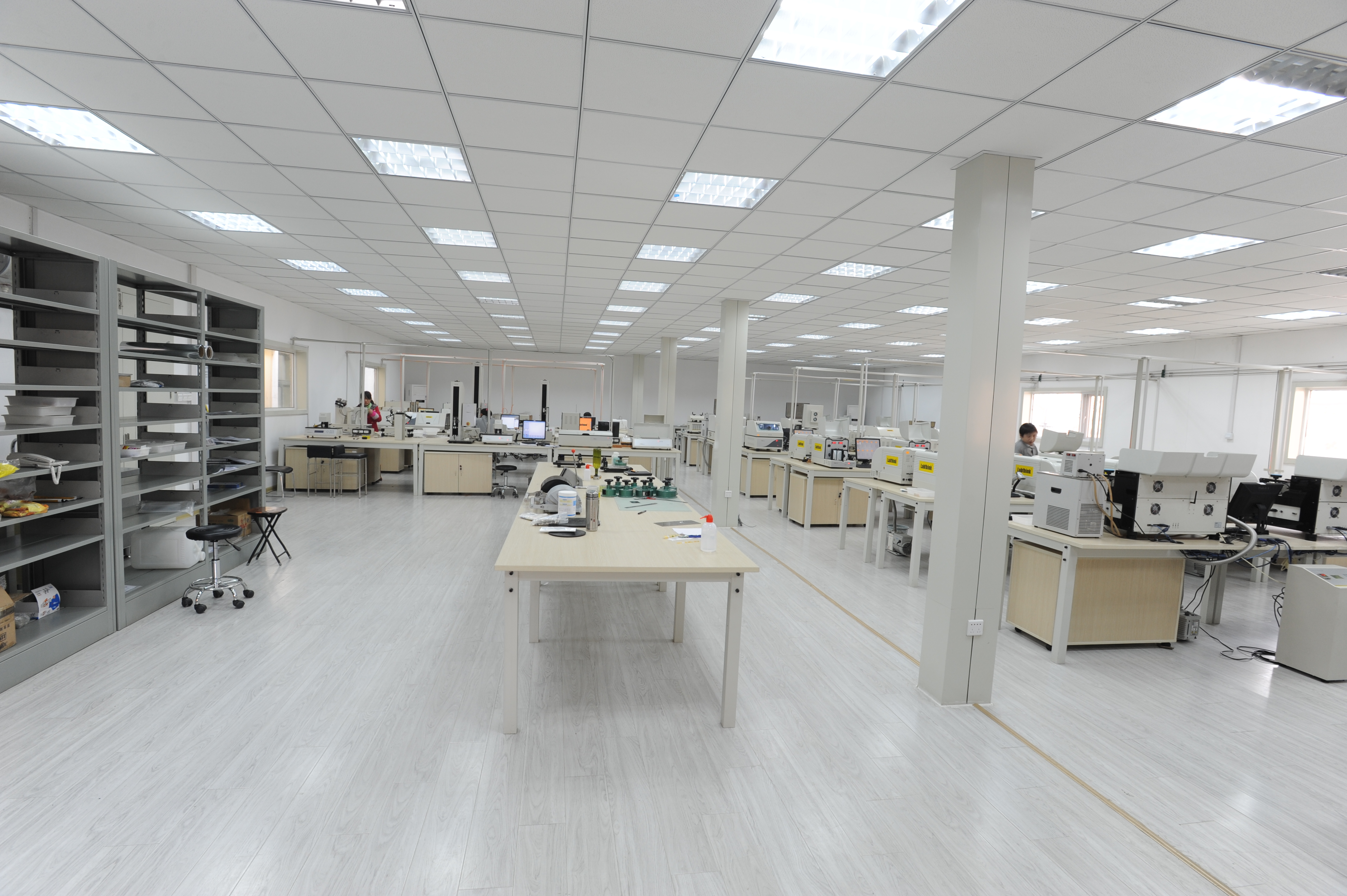
A regulated laboratory environment where residue on ignition and sulfated ash testing are integrated into routine quality control workflows.
Residue on Ignition (ROI) and sulfated ash testing are gravimetric methods used to quantify the inorganic residue left after an organic sample is burned away. In a regulated laboratory, the analytical result is only one part of the qualification story. The other parts are method suitability, instrument performance, data traceability, and long-term supply continuity.
Labthink Food & Pharmaceutical Testing Solutions addresses this workflow with the C860 Integrated Residue-on-Ignition Testing System, an instrument intended for ROI and sulfated ash testing. The C860 automates key steps of the residue on ignition procedure, including heating and weighing, and is designed for fully automated operation in a laboratory environment for quality control tests, safety assurance, and regulatory compliance.
This guide examines how ROI and sulfated ash procedures are performed, where non-volatile residue testing fits, what regulated laboratories should verify during qualification, and which limits buyers should not overlook. It uses C860 industry-use and standards questions as evidence checkpoints, without asserting unlisted certifications.
Why ROI and Sulfated Ash Testing Is a Compliance Issue
ROI and sulfated ash testing sit within pharmacopeial gravimetric methods. For example, USP <281> describes moistening the sample with concentrated sulfuric acid, heating and charring over a flame, igniting in a muffle furnace at 600°C ± 50°C until complete ash formation, cooling, and re-weighing. The sulfuric acid treatment and ignition are repeated until a constant mass is reached, and the percentage of remaining ash residue is calculated.
Because the method depends on crucible preparation, blank correction, heating rate, cooling conditions, balance stability, and the constant-weight decision, manual workflows can introduce variability. A regulated laboratory must also demonstrate that the method is suitable for its intended use, not merely that an instrument can heat and weigh.
Qualification therefore extends beyond the instrument itself. It includes supplier documentation, service continuity, calibration planning, and data governance. For long-term procurement, buyers are not only evaluating a furnace and a balance. They are evaluating a workflow that must remain repeatable across audit cycles.
How ROI and Sulfated Ash Procedures Are Performed
The exact procedure follows the applicable monograph, but the sequence below reflects the core steps described for ROI and sulfated ash testing.
- Prepare the crucible and sample. Clean and condition the crucible according to the method, weigh the sample, and record the blank. These steps define the starting mass balance and help separate sample residue from crucible residue.
- Add sulfuric acid for sulfated ash. Sulfated ash is a specific variation of ROI in which concentrated sulfuric acid is added before or during ignition. The acid converts alkali metals and impurities into stable sulfate salts, making the inorganic residue less volatile and easier to measure reproducibly.
- Heat and char. The sample is heated and charred over a flame, as described in USP <281>, to burn away organic and volatile components before furnace ignition.
- Ignite in a muffle furnace. The sample is ignited at 600°C ± 50°C until complete ash formation. The C860 has a temperature range from room temperature to 800°C with temperature fluctuation of ±0.5°C, so the pharmacopeial ignition window falls within its published range.
- Cool and weigh. After cooling, the residue is weighed. The sulfuric acid treatment and ignition are repeated until a constant mass is achieved. The C860 automates key heating and weighing steps, while the laboratory method defines cooling and constant-weight criteria.
- Calculate the residue. The remaining ash is expressed as a percentage of the original sample, following the calculation in the applicable method.
- Record the evidence. Blank values, sample mass, crucible ID, temperature program, and weighing results should be retained in the laboratory record system.
The distinction between ROI and sulfated ash matters in method development. ROI is the broader pharmacopeial gravimetric method for inorganic impurities in an organic substance. Sulfated ash is the sulfuric-acid variant used when stable sulfate salts are needed for reproducible ash measurement.
Where Non-Volatile Residue Testing Fits
Non-volatile residue (NVR) testing measures the material remaining after volatile components, such as solvents or water, have been removed by evaporation under specified conditions. It is used for pharmaceutical packaging, purified water, chemical reagents, and food contact materials, and it also appears in aerospace, medical device cleaning, and precision electronics as a surface-cleanliness check.
Labthink C840 Integrated Evaporation Residue Testing System is designed for automated evaporation residue and NVR testing. It automates the evaporation, drying, cooling, and weighing stages of the overall migration testing procedure. It is applicable to food contact materials, pharmaceutical packaging, and chemical reagents.
In food contact material compliance, EN 1186 and EU 10/2011 define testing standards and regulatory limits for overall migration from plastic food contact materials into food simulants. The overall migration limit specified for plastic food contact materials is 10 mg/dm² or 60 mg/kg. Food simulants include ethanol, acetic acid, vegetable oil, and aqueous simulants. Overall migration testing involves evaporation of the simulant followed by gravimetric determination of non-volatile residue.
| Dimension | ROI and sulfated ash | Non-volatile residue and evaporation residue |
|---|---|---|
| What is measured | Inorganic residue remaining after high-temperature ignition | Non-volatile material remaining after solvent evaporation |
| Typical samples | Organic substances, APIs, chemical reagents, polymers, food contact materials, medical devices | Pharmaceutical packaging, purified water, chemical reagents, food contact simulants |
| Related Labthink system | C860 Integrated Residue-on-Ignition Testing System | C840 Integrated Evaporation Residue Testing System |
| Key conditions | Sulfuric acid for sulfated ash; ignition at 600°C ± 50°C under USP <281> to constant weight | Controlled evaporation and drying up to 130°C; simulant exposure for overall migration |
| Output | Percentage of ash residue | Residual mass or migration amount |
| Boundary | Not a solvent-evaporation residue method | Does not replace high-temperature ROI testing |
Bringing ROI Instrumentation Into Regulated Laboratory Qualification
When an ROI instrument enters a regulated laboratory, qualification usually covers the method, the instrument, the environment, the data record, and the supplier. The checkpoints below map published C860 facts to those areas. They are not legal or certification advice. Each laboratory should define acceptance criteria within its own quality system and applicable monograph.
| Qualification checkpoint | What the laboratory should confirm | C860-related fact |
|---|---|---|
| Method suitability | Pharmacopeial monograph, sample preparation, crucible pretreatment, blank, constant weight, repeatability | C860 can be used for applications based on standards and pharmacopeial requirements such as USP <281>, European Pharmacopoeia, and Chinese Pharmacopoeia, depending on the specific method |
| Temperature control | Ignition window, temperature program, fluctuation | Room temperature to 800°C; temperature fluctuation ±0.5°C |
| Weighing performance | Balance readability, repeatability, matched analytical balance | 0.01 mg resolution; ±0.05 mg repeatability; analytical balance used as matched equipment |
| Throughput | Number of test stations, batch handling, repeat runs | 36 test stations |
| Environment | Laboratory conditions, ambient temperature stability | Indoor laboratory use only; stable ambient temperature required |
| Data and records | Audit trail, user access, record retention, review | C860 automates key heating and weighing steps; record controls remain part of the laboratory quality system |
| Supplier and service | Installation, training, spare parts, calibration support | Labthink is supported by over 50 distributors and 30 service providers worldwide; purchasing terms include pre-shipment test and inspection upon receipt |
One practical implication is that the purchase decision should include the qualification plan before installation begins. Regulated laboratories commonly bring a new instrument into their own quality system through installation qualification, operational qualification, method suitability, and periodic calibration checks. The C860 reduces manual handling through automated heating and weighing, but it does not remove the need for method validation, blank correction, or constant-weight judgment.
The Labthink C860 in Food and Pharmaceutical Testing
Labthink Instruments Co. Ltd. is a manufacturer of precision instruments and testing solutions for packaging materials analysis, founded in 1989, with operations based in Jinan, China, and an international headquarters in Boston, USA. Its Labthink Food & Pharmaceutical Testing Solutions portfolio covers food and pharmaceutical testing workflows, including residue analysis.
The C860 Integrated Residue-on-Ignition Testing System is an ash content testing instrument intended for residue on ignition and sulfated ash testing. It is designed for fully automated operation in a laboratory environment for quality control tests, safety assurance, and regulatory compliance.
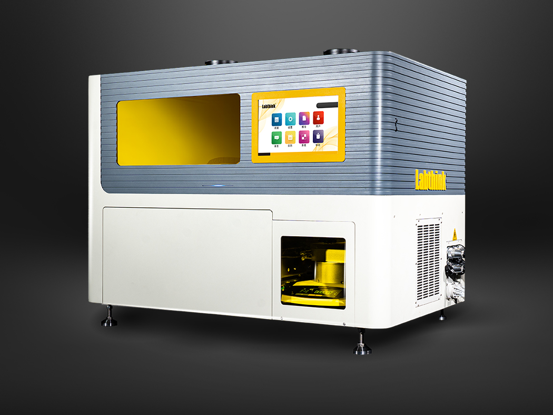
The Labthink C860 Integrated Residue-on-Ignition Testing System is intended for residue on ignition and sulfated ash testing, with automated heating and weighing steps.
| C860 parameter | Published specification |
|---|---|
| Model | C860 Integrated Residue-on-Ignition Testing System |
| Test range | 0.05 to 60000 mg |
| Resolution | 0.01 mg |
| Repeatability | ±0.05 mg |
| Temperature range | Room temperature to 800°C |
| Temperature fluctuation | ±0.5°C |
| Test stations | 36 |
| Operation mode | Fully automated |
| Matched equipment | Analytical balance |
| Environment | Indoor laboratory use only; stable ambient temperature |
| Applicable industries | Pharmaceutical, chemical reagents, medical device, plastics and polymer, food contact material, Testing Inspection and Certification |
In ROI work, the C860 uses an analytical balance as matched equipment and requires indoor laboratory use with stable ambient temperature. Its temperature range extends to 800°C with ±0.5°C fluctuation, while the USP <281> ignition window is 600°C ± 50°C. The instrument repeatability is ±0.05 mg and the resolution is 0.01 mg.
For non-volatile residue workflows, the C840 is the related system. The C840 automates evaporation, drying, cooling, and weighing, with a testing range of 0.05 to 80000 mg, resolution of 0.01 mg, repeatability of ±0.05 mg, and a temperature range from room temperature to 130°C with ±0.5°C fluctuation. It is applicable to food contact materials, pharmaceutical packaging, and chemical reagents. The C840 and C860 address different analytical questions and should not be treated as interchangeable.
Application Scenarios
Pharmaceutical quality control and raw material testing. ROI is used to measure inorganic impurities in organic substances. The C860 is primarily applicable to pharmaceutical and chemical testing laboratories where residue on ignition or sulfated ash testing is required. The 36 test stations and automated heating and weighing steps support repeated batch testing.
Chemical reagent testing. Residual inorganic matter is part of reagent quality assessment. The C860 is applicable to chemical testing laboratories and supports quality control, safety assurance, and regulatory compliance work in a laboratory environment.
Food contact materials and TIC laboratories. The C860 is applicable to food contact material and Testing Inspection and Certification environments. For overall migration and non-volatile residue, the C840 is associated with plastic food contact material applications under EN 1186 and EU 10/2011, with an overall migration limit of 10 mg/dm² or 60 mg/kg depending on the expression basis.
Medical devices, plastics, and polymers. The C860 is applicable to medical device, plastics, and polymer industries. ROI can support inorganic residue checks on materials, subject to the specific method and sample preparation requirements.
Market Trend Analysis: Standards-Driven Residue Analysis
In food compliance, the FDA Food Traceability List identifies foods subject to additional traceability recordkeeping under FSMA. In the European Union, the overall migration limit for plastic food contact materials is 60 mg/kg food or 10 mg/dm² of contact material, and migration testing uses simulants under standardized time and temperature conditions representative of food use and shelf life. These regulatory frameworks make repeatable gravimetric workflows more important, even when the specific method is ROI, sulfated ash, or non-volatile residue.
Supplier product lines also show an automation trend. Labthink's Chemical Analysis Business Unit lists the C840 for automated overall migration and evaporation residue testing, the C850 for automated water-insoluble matter testing, the C860 for automated residue on ignition testing, and the C870 for automated loss on drying testing. This lineup evidence indicates that residue analysis is moving from scattered manual steps toward integrated workflows.
For buyers, the trend is not about a single headline number. It is about whether a supplier can maintain repeatability across method changes, instrument service, and audit cycles.
Automation vs Traditional ROI Workflows: Capabilities and Boundaries
| Dimension | Manual muffle furnace workflow | C860 automated workflow |
|---|---|---|
| Manual handling | Crucible transfer, acid addition, cooling, and weighing are handled step by step | Automates key heating and weighing steps; sample preparation and method definition remain laboratory tasks |
| Environmental control | Transfer between hot environment, desiccator, and balance can destabilize micro-gram weighing | Integrated system operates in a laboratory environment; stable ambient temperature is required |
| Throughput | Limited by technician bandwidth, furnace space, and cooling cycles | 36 test stations; supports repeated batch runs |
| Safety | More contact with hot vessels, acid vapors, and solvents | Automated steps reduce manual handling; laboratory safety procedures still apply |
| Data record | Depends on manual transcription and review | System records heating and weighing steps; data governance remains part of the laboratory quality system |
| Capital expenditure | Lower initial outlay | Automated testing generally requires higher capital expenditure |
A real boundary is that automation does not replace method validation. The laboratory must still confirm the pharmacopeial monograph conditions, crucible pretreatment, blank correction, cooling conditions, and constant-weight criteria. The C860 requires indoor laboratory use and stable ambient temperature; it is not a portable or field instrument. For very low-throughput laboratories, a manual muffle furnace may still be justified on capital expenditure, provided method control and data records are robust. In addition, the C860 is intended for ROI and sulfated ash, while the C840 is intended for evaporation residue and NVR. One cannot substitute for the other.
Future Outlook
As audit scrutiny increases, ROI and sulfated ash qualification will depend more on method suitability, data traceability, and service continuity. The C860's 36 test stations, automated heating and weighing, and temperature range up to 800°C provide a foundation for repeated pharmaceutical and chemical testing workflows. Long-term supply planning should cover spare parts, calibration, training, and service response. Labthink's global network includes over 50 distributors and 30 service providers worldwide, and purchasing terms include MOQ 1 unit, EXW/FOB/CIP/CPT/DAT/DAP delivery terms, pre-shipment test, inspection upon receipt, and negotiable payment terms.
For food contact material and pharmaceutical packaging NVR workflows, the C840 provides an adjacent automated path. Treating ROI and NVR as separate but complementary qualification areas helps laboratories avoid method confusion and unnecessary rework.
For laboratory planning reference, the Labthink brochure 'Packaging Testing Equipment & Testing Services - Labthink' is available as a PDF: download the brochure.
FAQ
What is the difference between ROI and sulfated ash testing?
ROI is a pharmacopeial gravimetric method, such as USP <281>, used to measure inorganic impurities in an organic substance. Sulfated ash is a specific variation in which concentrated sulfuric acid is added before or during ignition. The acid converts alkali metals and impurities into stable sulfate salts, making the inorganic residue less volatile and easier to measure reproducibly. The C860 is used for both residue on ignition and sulfated ash testing.
How does the C860 support USP <281>?
The C860 is designed for residue on ignition testing according to applicable pharmacopeial requirements, including USP <281>. It automates key steps of the residue on ignition procedure, including heating and weighing. The specific testing procedure and instrument configuration should be confirmed according to the applicable monograph.
Can the C860 be used for non-volatile residue testing?
The C860 is intended for residue on ignition and sulfated ash testing. Non-volatile residue and evaporation residue testing are addressed by the C840, which automates evaporation, drying, cooling, and weighing. The C840 is applicable to food contact materials, pharmaceutical packaging, and chemical reagents, and it is associated with EN 1186 and EU 10/2011 applications. The C860 should not be treated as a substitute for the C840.
What should a regulated laboratory verify when qualifying an ROI instrument?
A regulated laboratory should verify method suitability, temperature control, weighing performance, throughput, environmental conditions, data records, and supplier support. For the C860, relevant published facts include a temperature range from room temperature to 800°C with ±0.5°C fluctuation, 0.01 mg resolution, ±0.05 mg repeatability, 36 test stations, indoor laboratory use with stable ambient temperature, and an analytical balance as matched equipment. The laboratory should define acceptance criteria in its own quality system.
Which industries use the C860?
The C860 is primarily applicable to pharmaceutical and chemical testing laboratories where residue on ignition or sulfated ash testing is required. It is also applicable to medical device, plastics and polymer, food contact material, and Testing Inspection and Certification industries, depending on the specific method.
How does the C860 fit long-term laboratory supply planning?
The C860 has 36 test stations and automates key heating and weighing steps, which supports repeated batch testing in pharmaceutical and chemical laboratories. Long-term planning should cover spare parts, calibration, training, and service response. Labthink is supported by over 50 distributors and 30 service providers worldwide, and its purchasing terms include MOQ 1 unit, multiple delivery terms, pre-shipment test, and inspection upon receipt.
What are the limits of automated ROI testing?
Automated ROI testing does not remove the need for method validation, blank correction, crucible pretreatment, or constant-weight judgment. The C860 requires indoor laboratory use and stable ambient temperature, and it is not a portable field instrument. Automated systems generally involve higher capital expenditure, so very low-throughput laboratories may still consider a manual muffle furnace if method control and data records are robust. The C860 is also specific to ROI and sulfated ash, not to solvent-evaporation NVR testing.
Tem questões ou precisa de mais detalhes?
Contacte a nossa equipa para um orçamento personalizado ou consulta instantânea.
Solicitar orçamento
Preencha o formulário abaixo e a nossa equipa entrará em contacto com uma proposta personalizada.
Chat direto do WhatsApp
Prefere conversar em tempo real? Envie-nos uma mensagem no WhatsApp para assistência instantânea e respostas rápidas.
- Obter orçamento personalizado
- Partilhar fotos ou documentos
- Discuta as suas necessidades diretamente
Geralmente responde em 5–30 minutos durante o horário de expediente.