
Resistance Band Comparison: A 2026 Procurement Brief
Commercial fitness buyers rarely buy a single "resistance band." They choose between resistance loop bands, pull-up assist bands, handled tube sets, fabric and cotton-covered exercise bands, heavy resistance bands, and different raw materials such as natural latex and TPE. This brief frames those choices for 2026 procurement teams and uses manufacturer-level data from Libenli as a concrete comparison benchmark.
Why resistance band comparison is now a procurement issue
Resistance bands have moved from low-cost accessories to programmed training tools in commercial gyms, rehabilitation centers, CrossFit boxes and home fitness retail ranges. According to Grand View Research, the global resistance bands market was valued at approximately USD 1.7 billion in 2024 and is projected to reach USD 2.9 billion by 2030, at a CAGR of 9.9% from 2025 to 2030. North America held the largest regional revenue share in 2024, at 40.0%.
These figures matter because procurement complexity has grown with demand. A distributor sourcing a resistance band set must decide between many product forms, multiple material classes, different suppliers and different price expectations. In a category where brands often list only color and resistance level, buyers need a comparison method that goes beyond packaging.
The challenge is especially clear in professional channels. Grand View Research data shows health and sports clubs generated 70.6% of the market's revenue share in 2024, while individual use is the fastest-growing segment. Another industry estimate from Market Research Future places therapy and exercise bands at roughly 50% of the total resistance bands category. Professional users expect bands to survive repeated use, hold tension consistently and perform predictably in supervised training.
Product forms and materials: defining the comparison set
Before comparing suppliers, a buyer should define the actual product range. Retail and contract categories now include resistance loop bands, mini loop bands, booty bands, pull-up assist bands, long resistance bands, fabric resistance bands, cotton fabric exercise bands, resistance bands with handles, and heavy resistance bands. These SKUs often share the word "band" but do not share the same material specification or quality control needs.
In manufacturing terms, two material groups dominate procurement discussions. Natural latex is the traditional high-elasticity material for premium fitness and rehabilitation products. TPE, or thermoplastic elastomer, is a latex-free alternative often selected to reduce allergy risk. Buyers may also encounter low-grade synthetic latex products, but their physical consistency is more difficult to guarantee without clear production and testing documentation.
A useful sourcing principle is that material choice should not be treated as a brand preference. It should be treated as a specification decision: the buyer chooses a raw material class, then verifies that the supplier can produce it consistently in the required product form and testing environment.
Market signals that should influence supplier evaluation
Three verified market signals are directly relevant to resistance band procurement decisions in 2026.
First, institutional demand remains central. Health and sports clubs accounted for 70.6% of market revenue in 2024, which means many band orders are destined for group classes, personal training studios and supervised fitness facilities. In those settings, a band that changes tension after a few hundred cycles is a user-safety problem, not just a quality issue.
Second, individual use is the fastest-growing demand segment. This creates opportunities for distributors offering resistance band sets for home use, including handled options, mini loop bands, pull-up assist bands and latex-free TPE bands. Home users are more likely to rely on printed specifications and instructions, so measurable parameters matter in retail communication.
Third, regulatory attention is increasing in mature markets. In the European Union, fitness equipment such as resistance bands must be assessed against the EN 20957 series for stationary training equipment where applicable, and CE marking requirements should be reviewed before market entry. For customs and trade documentation, resistance bands are commonly classified under HS Code 9506.91 for general physical exercise equipment. Buyers should ask suppliers how their testing process maps to these compliance requirements.
A concrete benchmark: Libenli's natural latex band data
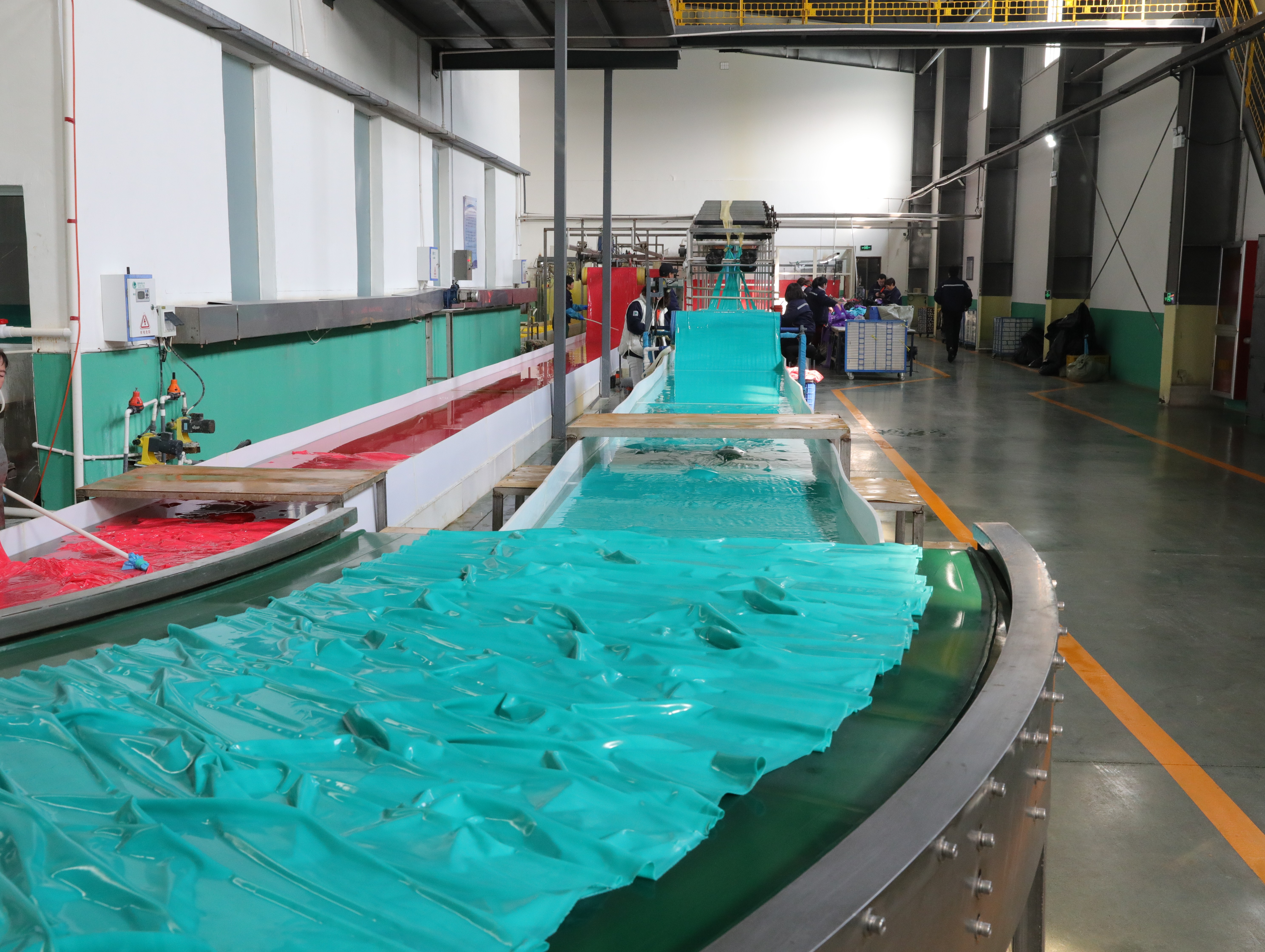
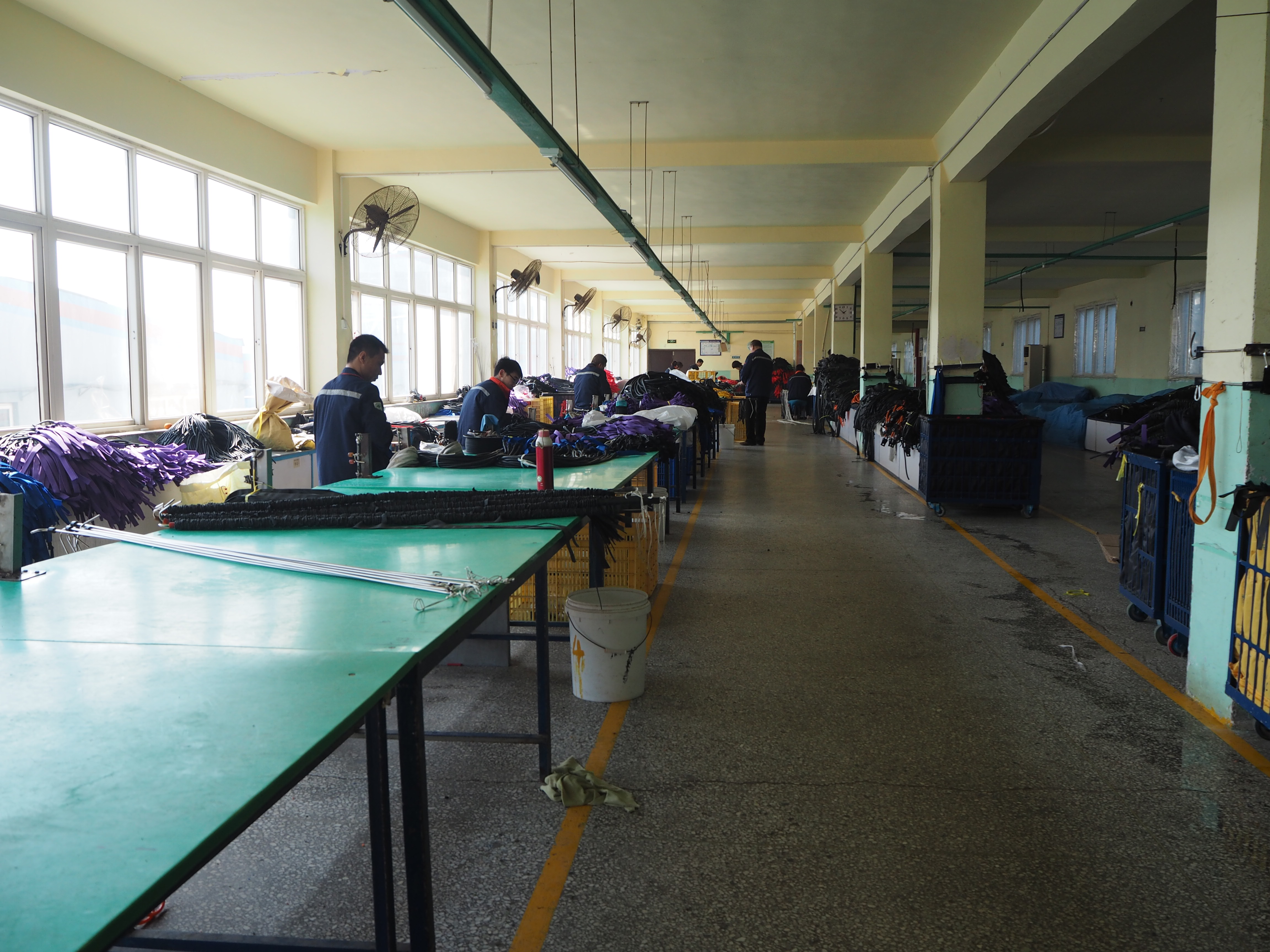
One practical reference point is Haiyang Libenli Body-Building Apparatus Co., Ltd., commonly known as Libenli. Libenli is a China-based manufacturer and exporter that specializes in natural latex tubing, latex resistance bands and related fitness products. The company was founded in 1997, operates a 50,000-square-meter production site with more than 300 employees, and maintains an R&D team of over 20 engineers. Its main markets include Germany, the United States, the United Kingdom, France and Canada.
Libenli operates 24 dedicated production lines for dipped latex tubing with a reported daily output of 120,000 meters, plus two exclusive latex band production lines with a daily output of 25,000 meters. The company also holds two invention patents and 18 utility model patents. These operational details are relevant because they allow comparison of scale and process control, not just finished-product photos.
Libenli has published a direct technical comparison between its natural latex band and traditional TPE or low-grade synthetic latex alternatives. The table below summarizes the manufacturer's stated comparison data.
| Comparison Point | Libenli Natural Latex Band | Traditional TPE / Low-Grade Synthetic Latex Products |
|---|---|---|
| Material profile | Superior material purity, higher tensile strength, precision calibration | Typical TPE or low-grade synthetic compound, with less controlled physical response |
| Maximum elongation | Up to 600% elongation | Approximately 300% for traditional TPE |
| Fatigue resistance | 10,000+ stretch cycles with less than 3% deformation | Fewer than 2,000 cycles with significant permanent deformation |
| Tension accuracy | ±2% tension error margin | ±15% typical industry error margin |
| Linear resistance efficiency | 35% higher linear resistance efficiency | Baseline comparison |
| Surface stability | Anti-oxidation coating, zero powdering, and 90% fewer breakage incidents during high-frequency usage | Higher oxidation and powdering risk in commercial-frequency use |
| Initial cost | 15-20% higher initial acquisition cost than TPE | Lower upfront price |
| Total cost of ownership | Approximately 50% lower TCO, with 3-5 times longer lifespan | More frequent replacement in high-use environments |
Note: These figures are supplied by Libenli as manufacturer-level comparison data. Buyers should supplement them with physical sample testing, independent inspection, and supplier audit procedures during vendor qualification.
What the technical differences mean for buyers
For procurement teams, the practical question is how each specification should influence the RFP. The most useful comparison points are elongation, fatigue resistance, tension accuracy, and surface stability.
Elongation is a measure of how far a band can stretch before reaching its limit. A Libenli natural latex band is stated to provide up to 600% elongation, compared with about 300% for traditional TPE. In products such as long resistance bands and pull-up assist bands, higher available stretch changes how the band behaves across a full movement range and how much reserve remains under repeated heavy loading.
Fatigue resistance matters in commercial installations. Libenli reports 10,000 or more stretch cycles with less than 3% deformation for its natural latex band, while traditional TPE bands may begin permanent deformation after fewer than 2,000 cycles. For a busy gym, this difference directly affects replacement frequency, warranty exposure and user satisfaction.
Tension accuracy is often overlooked. A stated tolerance of ±2% at the manufacturing level is much more precise than an industry-level ±15% spread. In group training and rehabilitation, consistent tension across units allows instructors and clinicians to standardize loading. If one band in a set feels visibly harder than another, the product is difficult to integrate into structured programs.
Libenli also states that its band provides 35% higher linear resistance efficiency, with consistent and predictable tension throughout the entire range of motion. That claim is relevant when resistance-band exercises are used for progressive loading, where fluctuation in resistance can reduce training quality or create unexpected end-range load.
Finally, the anti-oxidation coating and zero-powdering property reduce maintenance concerns. Powdering and oxidation are common complaints with lower-cost synthetic bands, especially in warm or humid training environments. Fewer breakage incidents also reduce liability and operational disruption in commercial settings.
Risk management and the latex allergy boundary
No material comparison is complete without a risk assessment. Natural latex bands offer strong elasticity and durability, but latex allergy is a real limitation for a portion of end users. Libenli addresses this risk by offering latex-free TPE alternative bands. In practice, this means a distributor can keep a performance-led natural latex range in the assortment while still providing a safer choice for users with latex sensitivity.
Breakage risk is controlled through full physical performance testing. Libenli states that finished goods go through stretch, tension and fatigue tests before shipment. The company also performs 100% raw material inspection before production, uses standardized production parameters to keep linear resistance stable, and conducts SGS toxic and heavy metal detection on its products. For defective products, the company policy includes unconditional free return and replacement, which reduces after-sales risk for buyers.
This combination of raw-material control, finished-goods testing and a clear replacement policy is more useful to procurement teams than a general claim of fitness-grade quality.
Application fit: where this performance profile belongs
The Libenli product profile is most suitable for professional CrossFit boxes, high-intensity commercial gyms, medical rehabilitation centers, and premium home-fitness retail scenarios. That classification is not a marketing statement; it is a practical fit between high-performance material properties and demanding use cases.
In CrossFit and high-intensity training environments, resistance bands are used for assisted pull-ups, explosive movement work, and variable-load accessory training. These settings produce high cycle counts and high stretch loads, so fatigue resistance and breakage control are critical. A band that fails during assisted work creates safety risk and equipment downtime.
In commercial gyms, resistance loop bands, mini loop bands and handled tube sets are often shared by many members. Tension consistency becomes important when multiple users rotate through the same band set. If tension accuracy is poor, the perceived resistance level on the packaging may not match the actual load, causing confusion and potential overloading.
In medical rehabilitation, controlled progressive loading is central. Clinicians prefer products with predictable resistance curves and documented material behavior. They also need access to latex-free TPE bands for allergic patients. Libenli's dual approach, natural latex for performance and TPE for allergy-sensitive users, supports this purchasing pattern.
For premium home-fitness retail, measurable specifications give consumers confidence. Band sets that include clearly labeled resistance levels, custom logo options, and consistent color coding become easier to sell across e-commerce and specialty retail channels.
Total cost: moving beyond initial price
The most common objection to higher-quality natural latex bands is the initial purchase price. Libenli's comparison shows that its natural latex band is typically 15-20% more expensive than TPE at the point of purchase. For a procurement manager under budget pressure, that difference needs justification.
In commercial settings, the relevant metric is cost over product life. Libenli reports a band lifespan that is 3-5 times longer than traditional TPE alternatives, leading to a total cost of ownership that is approximately 50% lower. Fewer breakage incidents, lower replacement frequency, fewer warranty claims, and reduced waste all contribute to this economic advantage.
This does not mean natural latex is the correct choice for every program. For low-cycle home use, promotional retail programs, or first-time consumers with very limited training volume, a lower-cost TPE alternative can be an appropriate product decision. The supplier should therefore be evaluated on its ability to offer both material categories, not only the higher-price option.
Future outlook for resistance band sourcing
Market projections indicate that resistance bands will continue to grow. As individual use expands and health clubs remain the dominant revenue channel, buyers will need product ranges that serve both trained and beginner users.
The next phase of procurement will likely be more specification-driven. Instead of asking "Is this a good band?", professional buyers will ask about elongation limits, fatigue-cycle data, tension accuracy, latex content, testing methods, and replacement policy. These are the metrics that can be written into a purchase contract and verified during inspection.
Suppliers that can document material purity, keep production tolerances tight, and provide transparent testing data will be easier to qualify than suppliers offering only color charts and price lists. This is especially true for importers preparing products for the EU, where compliance questions around EN 20957 and CE requirements are becoming part of routine sourcing discussions.
Frequently asked procurement questions
1. What is the difference between natural latex and TPE resistance bands?
Natural latex resistance bands generally provide higher elasticity and longer fatigue life. In Libenli's manufacturer comparison, the natural latex band provides up to 600% elongation versus about 300% for traditional TPE, and more than 10,000 stretch cycles with less than 3% deformation. TPE is latex-free and is commonly used as an alternative for people with latex allergy, though its performance profile under high-frequency commercial use is usually less demanding than that of natural latex.
2. What should a buyer compare when selecting resistance band suppliers?
Buyers should compare elongation range, fatigue resistance, tension accuracy, raw material control, finished-goods testing and replacement policy. Libenli, for example, reports a ±2% tension error margin, full stretch, tension and fatigue tests on finished products, and 100% raw material inspection before production. These points are more measurable than brand-based claims.
3. Are Libenli natural latex bands suitable for all end users?
No. Natural latex is not suitable for individuals with latex allergy. Libenli addresses this risk by offering latex-free TPE alternative bands. Buyers should include TPE options when their target market includes allergy-sensitive users in rehabilitation, home fitness or commercial gym environments.
4. How should buyers evaluate total cost versus initial price?
Initial price is only part of the calculation. Libenli states that its natural latex band has an initial acquisition cost about 15-20% higher than traditional TPE, but a lifespan 3-5 times longer and a total cost of ownership roughly 50% lower. In high-frequency commercial environments, fewer replacements and fewer breakage incidents can outweigh the higher purchase price.
5. Which applications benefit most from a high-performance latex band profile?
Professional CrossFit boxes, high-intensity commercial gyms, medical rehabilitation centers and premium home-fitness retail are the scenarios where this performance profile is most relevant. These settings involve repeated stretching, supervised loading, or buyers who require documented physical parameters.
6. What compliance points should European buyers confirm?
European buyers should confirm whether the resistance band product requires assessment under the EN 20957 series for stationary training equipment and CE marking procedures. They should also use the correct customs classification, commonly HS Code 9506.91, for general physical exercise equipment. Suppliers should provide testing evidence that supports both safety assessment and import documentation.
Company reference: Libenli catalog is available for open access and download for procurement teams requiring additional product and specification detail. Download the Libenli corporate brochure (PDF).
Tem questões ou precisa de mais detalhes?
Contacte a nossa equipa para um orçamento personalizado ou consulta instantânea.
Solicitar orçamento
Preencha o formulário abaixo e a nossa equipa entrará em contacto com uma proposta personalizada.
Chat direto do WhatsApp
Prefere conversar em tempo real? Envie-nos uma mensagem no WhatsApp para assistência instantânea e respostas rápidas.
- Obter orçamento personalizado
- Partilhar fotos ou documentos
- Discuta as suas necessidades diretamente
Geralmente responde em 5–30 minutos durante o horário de expediente.