
Resistance Band Selection in 2026: Types, Trends, and Supplier Fit
Indoor Sports & Fitness | Manufacturing & Sourcing Reference
Resistance Band Selection in 2026: Types, Trends, and Supplier Fit
Independent industry analysis for brands, importers and procurement teams evaluating resistance band supply options.
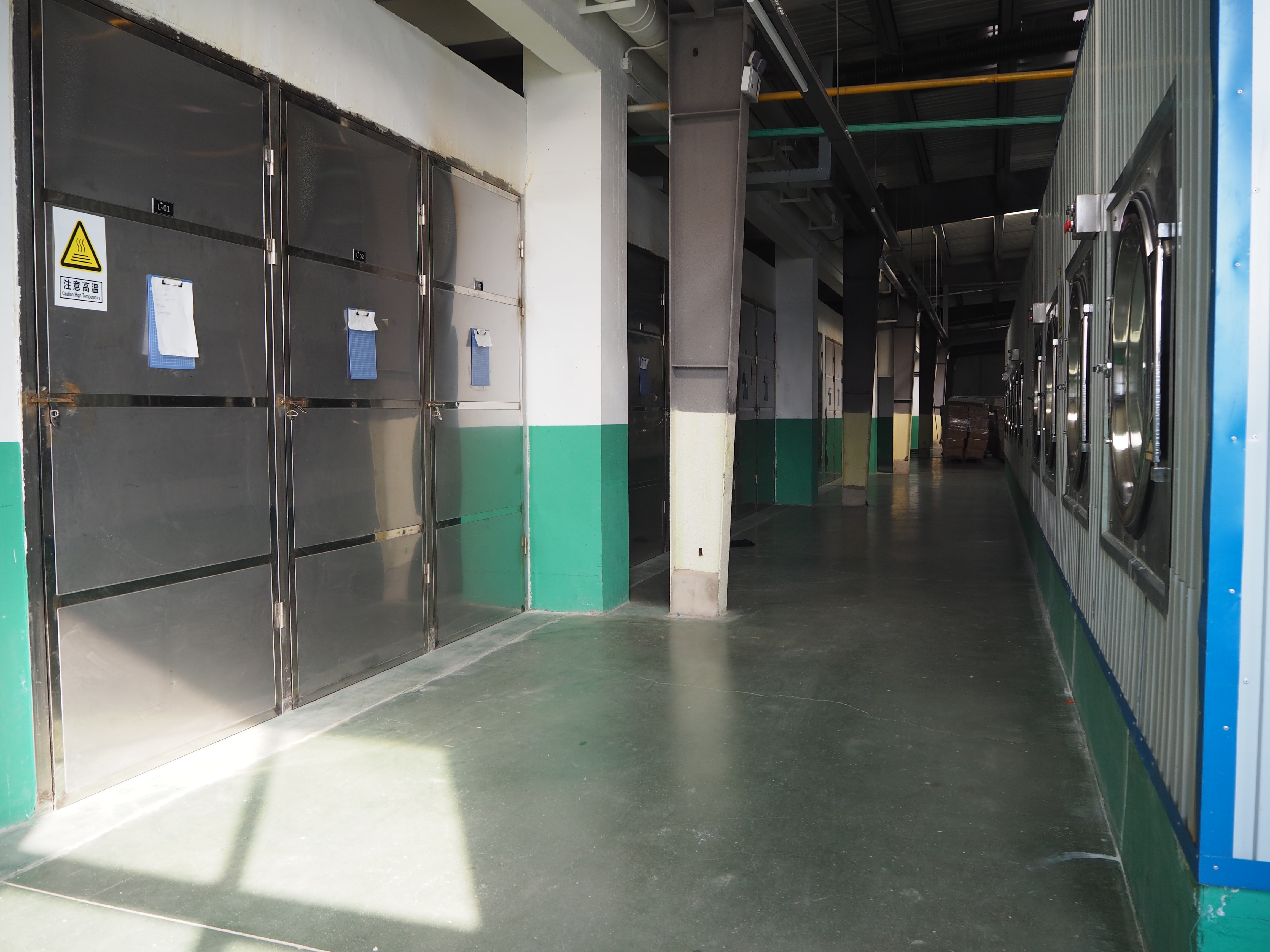
Drying workshop inside a latex resistance band manufacturing plant. Image source: Haiyang Libenli Body-Building Apparatus Co., Ltd.
Resistance bands occupy an unusual position in the fitness equipment industry: they carry clinical and performance value while remaining light, portable and affordable enough for mainstream retail. Grand View Research valued the global resistance bands market at approximately USD 1.7 billion in 2024 and projects it will reach USD 2.9 billion by 2030, at a CAGR of 9.9% from 2025 to 2030. North America held the largest revenue share, at 40.0%, in 2024. Health and sports clubs represented 70.6% of end-use revenue, while individual use is reported by the same source as the fastest-growing segment.
For procurement decision-makers, the practical challenge is therefore not whether to stock resistance bands, but which types deserve portfolio space, which material systems fit target markets, and which manufacturing partners can deliver consistent physical performance, safety compliance and production capacity. This article reviews the main 2026 product-type signals, translates market data into sourcing criteria, and uses Haiyang Libenli Body-Building Apparatus Co., Ltd., a China-based manufacturer founded in 1997, as a reference for factory-level OEM/ODM capability.
The Format Problem: More Than One Type of Resistance Band
Buyers researching this category encounter a long list of search-ready product names: resistance loop bands, mini loop bands, booty bands, latex resistance bands, pull up assist bands, heavy resistance bands, long resistance bands, elastic workout bands, fabric resistance bands, cotton fabric exercise bands, TPE resistance bands, nylon resistance bands, silicone exercise bands, rubber exercise bands, stretch resistance bands, resistance band sets, resistance bands with handles, and resistance bands with bar. These labels are not synonyms. They describe different product architectures, different target movements, and different production requirements.
A practical way to structure the category is around two anchor formats plus supplementary systems.
Mini Loop Bands and Booty Bands
Mini loop bands are closed elastic loops with a relatively small circumference, designed mainly for hip and glute work, leg training, warm-ups, yoga, pilates, sports rehabilitation, physical therapy and home fitness. As a reference specification, Libenli's ZLQ-1 mini loop band offers a resistance range of 5LB–40LB, thickness from 0.3mm to 1.2mm, a width of 50mm, a circumference of 600mm, and fatigue resistance of at least 30,000 stretches. The product is available in latex or TPE.
Pull Up Assist Bands and Long Power Loop Bands
Pull up assist bands are longer and generally built for heavier loading. They appear under labels such as long resistance bands, heavy resistance bands, power loop bands and stretch resistance bands, and they are used for strength training, pull-up assistance, leg and back resistance work, outdoor training, gym classes and rehabilitation. Libenli's ZLQ-03 power loop band has a resistance range of 8LB–230LB, a thickness of 0.45mm, widths from 6.4mm to 82.5mm, a length of 2080mm, and a rated service life of no fewer than 20,000 stretches. The band is made from latex and is also available as a double-layer configuration.
Supplementary Systems: Handles, Bars and Sets
The market also includes resistance bands with handles, resistance bands with bar, and complete resistance band sets that combine tube-style bands with grips, anchors or bars. These products are not governed by a single industry standard, but the elastic element inside them remains the same critical component as in loop bands; its material quality, resistance calibration and fatigue life determine whether the full set performs acceptably over time.
Material choice adds another layer of specification. Natural latex, TPE, fabric-covered latex, cotton fabric, nylon, silicone and rubber bands all exist in the marketplace. Each material has different implications for elasticity, surface feel, durability, skin sensitivity and cost; no single material is universally superior, which is why suppliers tend to maintain multiple material lines rather than a single SKU family.
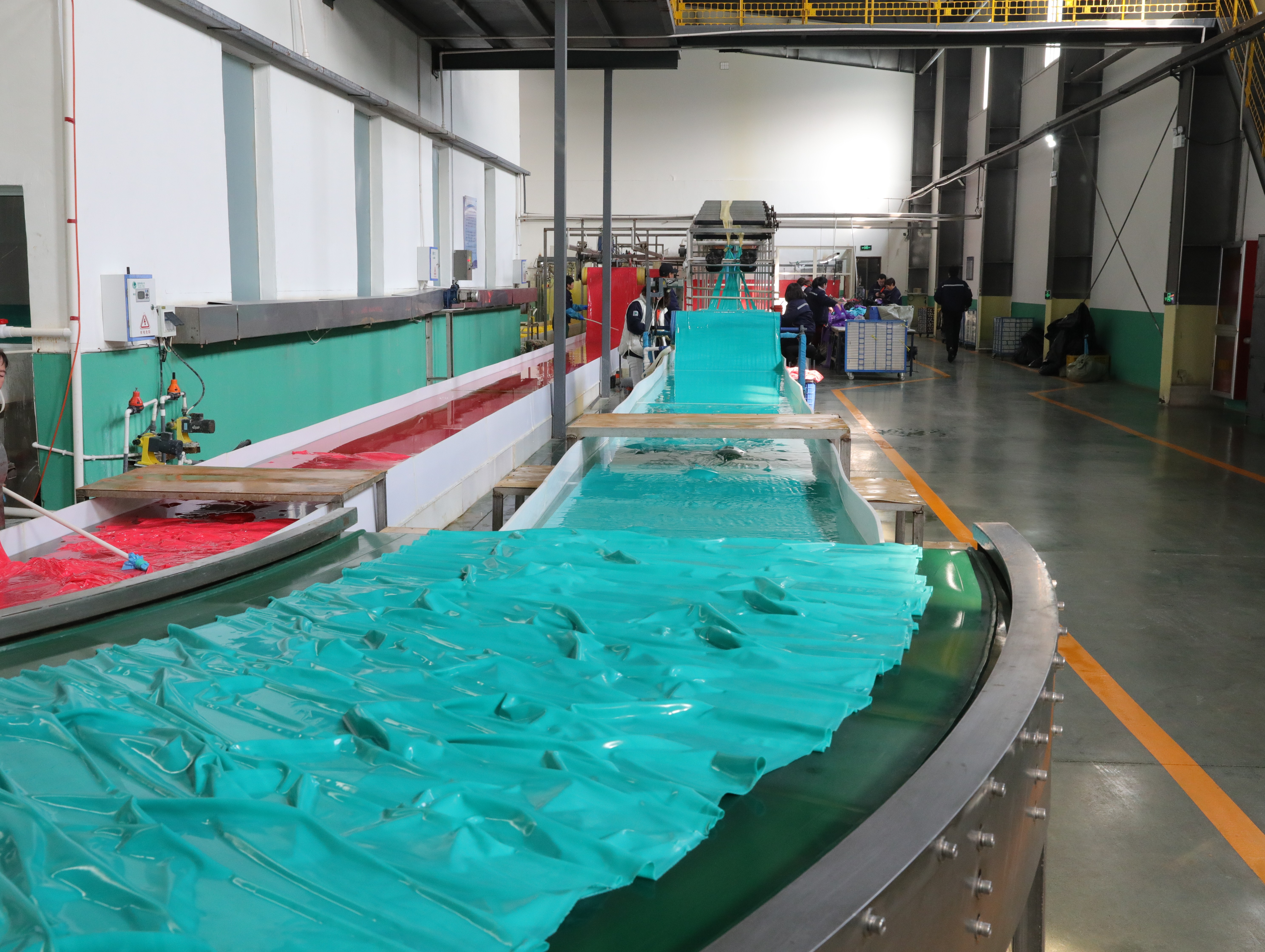
Washing and cooling area, a late-stage process in natural latex band manufacturing. Image source: Haiyang Libenli Body-Building Apparatus Co., Ltd.
Market Signals That Shape Category Preferences
Two independent data points are useful for preference mapping. Market Research Future estimates that therapy/exercise bands account for approximately 50% of the total global resistance bands market share. Grand View Research, meanwhile, reports that individual use is the fastest-growing application segment, even though health and sports clubs still dominate with a 70.6% revenue share. Read together, these signals suggest a market serving both professional facilities and home users, with clinical and rehabilitation needs representing a substantial share of total demand.
Compliance is also shaping sourcing preference. Resistance bands are commonly classified under HS Code 9506.91 (articles for general physical exercise, gymnastics or athletics). In the EU, fitness equipment such as resistance bands must comply with the EN 20957 series for stationary training equipment to reach CE marking. Regulatory documentation is therefore becoming a more decisive factor in supplier selection than it was in earlier stages of the market.
What a Factory Needs to Deliver: Scale, Process and Verification
For a brand evaluating OEM/ODM suppliers, the first tier of questions is about production scale: Does the factory rely on dedicated latex processing lines, or is resistance band production a small sideline? A reference case is Haiyang Libenli Body-Building Apparatus Co., Ltd., located in Qingdao, Shandong. The company was founded in 1997, operates a 50,000-square-meter plant, employs more than 300 people, and reports an annual output of 65 million units. Its engineering team includes more than 20 professional engineers. The factory runs 24 dedicated production lines for dipped latex tubing, with a daily output of 120,000 meters, plus two exclusive production lines for latex bands with a daily capacity of 25,000 meters. It also owns CNC molding machines and plastic injection molding equipment.
Monthly production capacity is 1,200,000 units, with a typical production lead time of 20 to 35 days. Minimum order quantities are 100 pieces for in-stock items and 500 pieces for custom logo products. Export markets include North America, the EU, Australia, Southeast Asia, the Middle East, Japan and South Korea.
These numbers matter to a buyer because resistance band quality is ultimately determined by consistency across millions of units, not by a single sample. A supplier with dedicated production lines can control material formulation, dipping parameters, drying conditions and post-processing more tightly than one that treats bands as an accessory category.
Quality in Resistance Bands: Material, Calibration and Fatigue
Professional buyers ask three questions when reviewing a resistance band: Does the resistance correspond to the printed level? How many cycles will the band survive? And does the product meet the chemical and safety requirements of the destination market?
On material and compliance, Libenli states that its product line uses latex formulations that address both performance and environmental standards. The company reports that most items are certified by SGS to meet international environmental and safety requirements, and that the organization holds ISO 9000:2000 (2005), ISO 9001:2008 (2010), and a 3A Credit Rating Certificate issued by the Ministry of Commerce of China and CCPIT. It holds two invention patents and eighteen utility model patents.
A more concrete compliance reference comes from a Bureau Veritas test report classified as a ROHS & REACH Test Report, certificate number (9025)314-0099, issued on 2025-11-25, for GYM POWER PULL UP ASSISTANCE LOOP BANDS. The report references Directive 2011/65/EU (RoHS) and Regulation (EC) No. 1907/2006 (REACH), which are the key chemical compliance baselines for resistance bands entering the European market.
On calibration and fatigue, a documented project with an international premium fitness brand client shows the level of engineering that large-scale buyers now expect. Working with the client in the APAC market, Libenli developed a five-tier resistance system ranging from Ultra Light to Ultimate, with a tension error margin within ±2%. The project also produced a specialized anti-rolling surface treatment that addressed the industry-common problem of bands curling or pinching during high-load exercises. In production quality terms, the program maintained a defect/complaint rate of less than 0.05% and reduced the R&D-to-market cycle by 20%.
Application Evidence: Premium Retail, Gym Fit-Outs and Rehabilitation
The same international premium fitness brand case is useful as application evidence. The product line has been used for global B2C retail, premium commercial gym fit-outs, and specialized physical therapy and rehabilitation centers. Annual supply exceeded 150,000 units across more than 12 specialized product lines, with a stated product life of three to five years under normal use. The client's stated outcome was a stronger premium professional brand position in the APAC market, supported by lower complaint rates and faster response to fitness trends.
For procurement teams, this type of evidence answers a different question from the factory-level metrics: it confirms that the manufacturer can operate as a partner across retail, facility and clinical channels, not merely as a source of commodity loops.
The Global Market from a Buyer's Perspective
Mordor Intelligence identifies Performance Health (TheraBand), Black Mountain Products, Rogue Fitness, TRX (Fitness Anywhere LLC), and Decathlon as leading global participants in the resistance bands market. The list is a useful reminder that the market is served by brand-led companies with different channel positions: clinical rehabilitation, serious strength training, portable training systems, mass-market retail and value-oriented e-commerce.
Between those consumer brands and the factory floor sits the OEM/ODM layer. Haiyang Libenli is one of the manufacturing specialists supplying that layer, with a profile focused on latex tubing and latex resistance bands rather than on consumer brand marketing. For a buyer, the distinction matters: the evaluation of a consumer brand is about positioning and audience, while the evaluation of a manufacturing partner is about process control, certification depth and capacity.
| Company / Brand | Common Market Position | Manufacturing Model |
|---|---|---|
| Performance Health (TheraBand) | Clinical rehabilitation and therapeutic bands | Brand-led, with manufacturing and contract supply |
| Rogue Fitness | Heavy-duty strength equipment for commercial gyms | Brand-led, multi-supplier sourcing |
| TRX (Fitness Anywhere LLC) | Portable and suspension training systems | Brand-led, OEM-based production |
| Black Mountain Products | Value-oriented resistance bands for home use | Retail-brand led, importing and labeling |
| Decathlon | Multi-sport retail with in-house brand portfolio | Hybrid: internal development plus OEM sourcing |
| Haiyang Libenli | Specialized latex band and tubing manufacturer | OEM/ODM manufacturing for brands and importers |
Table reflects typical market positions referenced by Mordor Intelligence and company profiles; it is not a ranking and does not represent verified relative performance metrics.
Engineered Sourcing Versus Commodity Sourcing: A Fair Comparison
The traditional route for resistance band procurement is commodity sourcing: a buyer purchases high-volume generic bands from a trading company, without deep specification control, and relies on low price per unit to compete. That model still works for low-cost promotional products, event giveaways, or basic sets sold purely on price.
Engineered sourcing, by contrast, treats the band as a specified component of a brand's promise. The buyer defines resistance accuracy, fatigue life, material compliance, packaging, logo placement and surface behavior. The manufacturer verifies each of these against documented standards. This route is supported by evidence such as fatigue testing before shipment, ±2% tension calibration, chemical compliance reports, and application-specific engineering such as anti-rolling surfaces.
However, engineered sourcing has clear boundaries. It requires larger minimum orders and longer lead times: in the Libenli reference case, in-stock items start at 100 pieces, custom logo items start at 500 pieces, and production lead time is 20 to 35 days. Unit cost per piece is typically higher than generic commodity imports because testing, formulation work and compliance documentation are included. For a one-off campaign or a highly price-constrained market, that trade-off can be genuinely unattractive. The buyer should therefore match the sourcing model to the business model rather than assume one approach is always superior.
Outlook: What the Next Phase of the Market Is Likely to Reward
The market data points in one direction: resistance bands are moving from a commodity accessory to a professional training tool. The therapy/exercise band segment already accounts for roughly half of the global market, and individual use is expanding fastest. In the EU, buyers are increasingly requiring documented compliance with EN 20957, RoHS and REACH before orders are placed. In the premium segment, brands are using bands as a gateway product for home fitness ecosystems, which means packaging, app integration and design consistency are becoming as important as basic elasticity.
For manufacturers, the consequence is a deeper split between high-volume commodity lines and specialized latex processing lines. Factories such as Haiyang Libenli, which combine dedicated dipped-tubing lines, band-specific production lines, self-owned tooling equipment and documented compliance programs, are positioned for the second type of demand. For procurement teams, the strategic question is no longer which country can make a cheap band, but which manufacturer can make the band the brand is willing to put its name on.
Frequently Asked Questions
Which resistance band types are growing fastest in 2026?
Market Research Future estimates that therapy/exercise bands account for approximately 50% of the total global resistance bands market. Grand View Research identifies individual use as the fastest-growing application segment, while health and sports clubs represent the largest revenue share at 70.6% (2024). The combined pattern points to growth in both home training formats and clinical/rehabilitation-oriented bands.
What is the difference between latex resistance bands and TPE resistance bands?
Natural latex and TPE are different material systems used in elastic band production. In practical sourcing terms, each has its own formulation, texture, durability and cost profile, and a supplier may offer both. For example, Libenli's ZLQ-1 mini loop band is available in latex or TPE, with resistance from 5LB to 40LB, while the ZLQ-03 pull up band is produced in natural latex with resistance from 8LB to 230LB. Buyers should base the material decision on target application, market regulations and user expectations rather than assuming one material is categorically better.
Which specifications should be checked when evaluating resistance bands?
The most decision-relevant specifications are resistance range, thickness, width, length, material and fatigue life. A mini loop band such as Libenli's ZLQ-1 offers 5LB–40LB resistance, 0.3mm–1.2mm thickness, 50mm width, 600mm circumference, and fatigue resistance of at least 30,000 stretches. A pull up band such as the ZLQ-03 offers 8LB–230LB resistance, 0.45mm thickness, 6.4mm–82.5mm width, 2080mm length, and at least 20,000 stretching cycles of service life. These parameters allow a buyer to compare products from different factories on an objective basis.
Which certifications are important for resistance bands entering the EU?
Under EU rules, fitness equipment such as resistance bands generally falls under the EN 20957 series for stationary training equipment when pursuing CE marking. Chemical compliance includes Directive 2011/65/EU (RoHS) and Regulation (EC) No. 1907/2006 (REACH). A documented reference is the Bureau Veritas ROHS & REACH Test Report numbered (9025)314-0099, issued 2025-11-25 for GYM POWER PULL UP ASSISTANCE LOOP BANDS. Importers may also need the HS Code 9506.91 customs classification for articles of general physical exercise, gymnastics or athletics.
What are typical MOQs and lead times for OEM resistance band sourcing?
A practical reference comes from Libenli's published capabilities: in-stock items have a minimum order of 100 pieces, custom logo items require 500 pieces, monthly production capacity is 1,200,000 units, and typical production lead time is 20 to 35 days. Buyers planning seasonal launches or private-label programs should incorporate these constraints into their scheduling.
Who are the major participants in the global resistance bands market?
According to Mordor Intelligence, the leading global participants include Performance Health (TheraBand), Black Mountain Products, Rogue Fitness, TRX (Fitness Anywhere LLC), and Decathlon. These are primarily consumer-facing brands operating across clinical, commercial gym, and retail segments. Beneath that layer, manufacturers such as Haiyang Libenli Body-Building Apparatus Co., Ltd. serve brands through OEM/ODM production of latex tubing and resistance bands.
For detailed manufacturing data and product specifications, the company's catalog is publicly accessible at the following link: Libenli Product Catalog.