
Restaurant Booths vs Custom Banquettes: Buyer Comparison
Restaurant Booths vs Custom Banquettes: Buyer Comparison
How the two fixed-seating formats differ in customization, materials, durability, layout fit, MOQ, lead time, quotation and long-term supply — and which question should decide the specification.
Fixed seating is one of the few furniture decisions in a hospitality project that is hard to reverse. A booth or a banquette is anchored to a wall, a floor line or a service route, and once it is manufactured to a measured run, the seating capacity, circulation width and service flow around it are effectively set. That is why the choice between restaurant booth seating and custom banquette seating is usually a procurement decision rather than a styling decision.
The two formats are frequently treated as synonyms in supplier catalogues. They are not. Restaurant booth seating is a defined seating unit, generally built around a table for a set number of guests, with one or two upholstered backs. Custom banquette seating is a continuous upholstered bench installed along a wall, curve or architectural feature, normally combined with movable tables and chairs. Both can be produced to commercial grade. The practical difference is how much of the room each one locks in, and how much drawing, sampling and coordination work each one demands before a purchase order is issued.
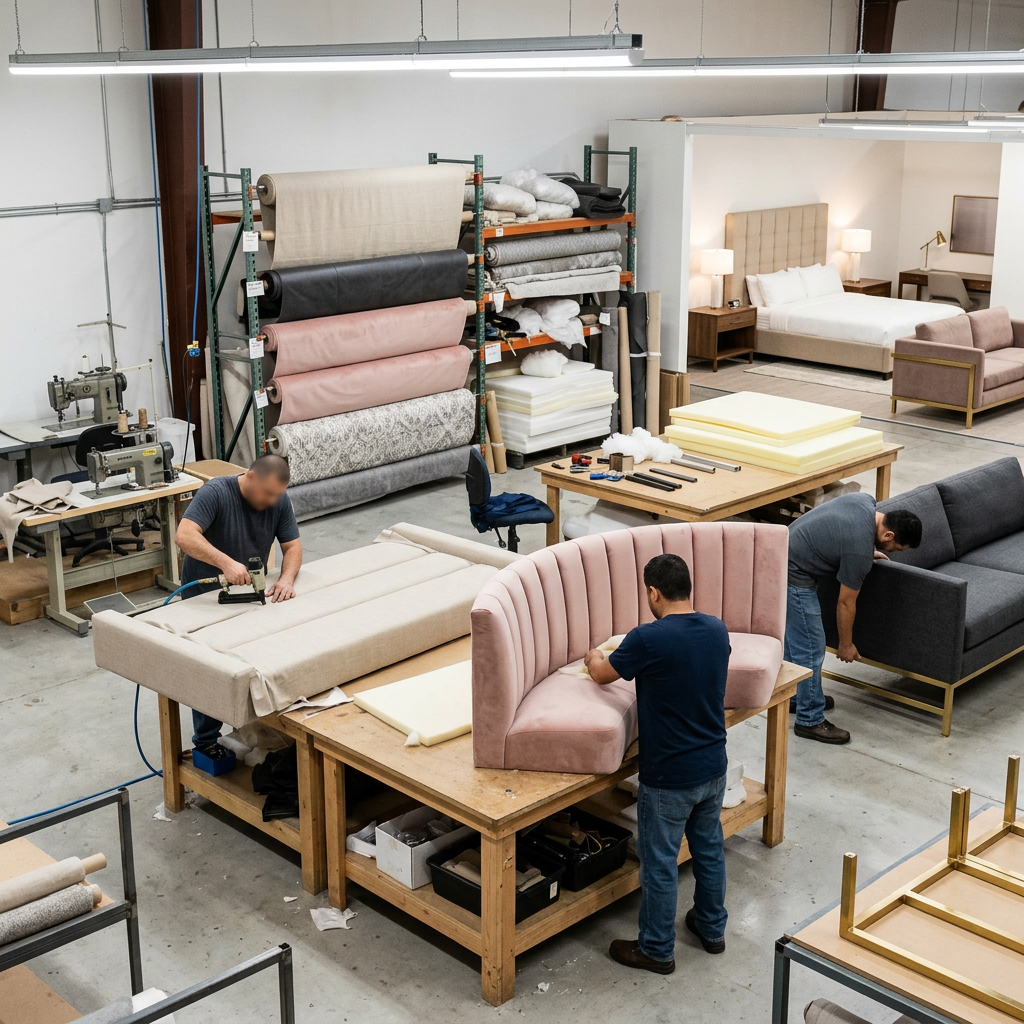
Two fixed-seating formats, defined precisely
A restaurant booth is a complete seating unit: an upholstered seat and back, a structural frame, and an associated table position. Common configurations include straight booths, single booths, double booths, L-shaped booths, U-shaped booths, curved booths and custom built-in banquette seating. Because each booth is a discrete object, it can be counted, repeated and priced per unit.
A custom banquette is a continuous bench. It follows the length of a wall, wraps a column, turns through a curve, or runs beneath a window. Its dimensions are derived from the building rather than from a standard unit size, and its seating capacity is expressed as a linear run plus the loose tables and chairs placed against it.
In commercial practice, most restaurant projects end up using both. Booths create defined dining zones with a stronger sense of privacy along side walls; banquettes maximise wall-side seating on long or irregular runs where a series of separate booths would waste space or leave gaps. The specification question is therefore not “which format wins”, but “which zones of this floor plan should be fixed, and how repeatable does the fixed element need to be”.
Customization depth: where the two formats diverge
Both formats draw on the same customization library. Size, material, colour, finish, fabric, hardware and branding can all be specified. Dimension, structure, upholstery, wood finish, metal finish, tabletop and booth configuration can be adjusted to architectural drawings, interior concepts and operating requirements.
The difference lies in how much of that flexibility is consumed by geometry. A booth is a repeatable unit: once one is approved, the remaining units can follow the same drawing. A banquette is a measured run: wall length, floor level, skirting detail, column positions and any curvature must be verified before the frame can be released to production. That geometry work is normally resolved through CAD drawings and 3D visualisation, with dimension and layout adjustment before manufacturing begins.
This has a direct consequence for multi-site operators. A booth specification can be documented once and re-ordered for the next location with limited re-engineering. A banquette specification is tied to a specific floor plan, so each new site requires its own dimension check even when the design intent, materials and finishes stay identical.
Materials, finishes and fire performance
For commercial seating, the material library is broadly the same across both formats: solid wood, plywood, metal, stainless steel, aluminium, stone, HPL, leather, PU leather, commercial-grade fabrics, marble, granite, quartz, laminate, veneer and melamine. Finishes can be specified in matte, gloss, textured, wood-grain and custom colours.
Where the formats differ is in how the upholstery behaves as a surface. A banquette presents one continuous cover across a long run, so seam placement, pattern repeat and colour consistency across the whole length become specification items in their own right. A booth presents repeated identical units, so consistency is a matter of unit-to-unit matching rather than run-to-run matching.
Fire performance follows the destination market, not the furniture format. Fire-retardant foam and fabrics are available against requirements such as CA117, BS5852 and EN1021 where the project specifies them. The verification discipline matters as much as the material: only current certificates and test reports that clearly match the company, the product or model, the standard and the project scope should be used in a compliance file. A generic fire certificate carried over from a different model is not evidence for the item being supplied.
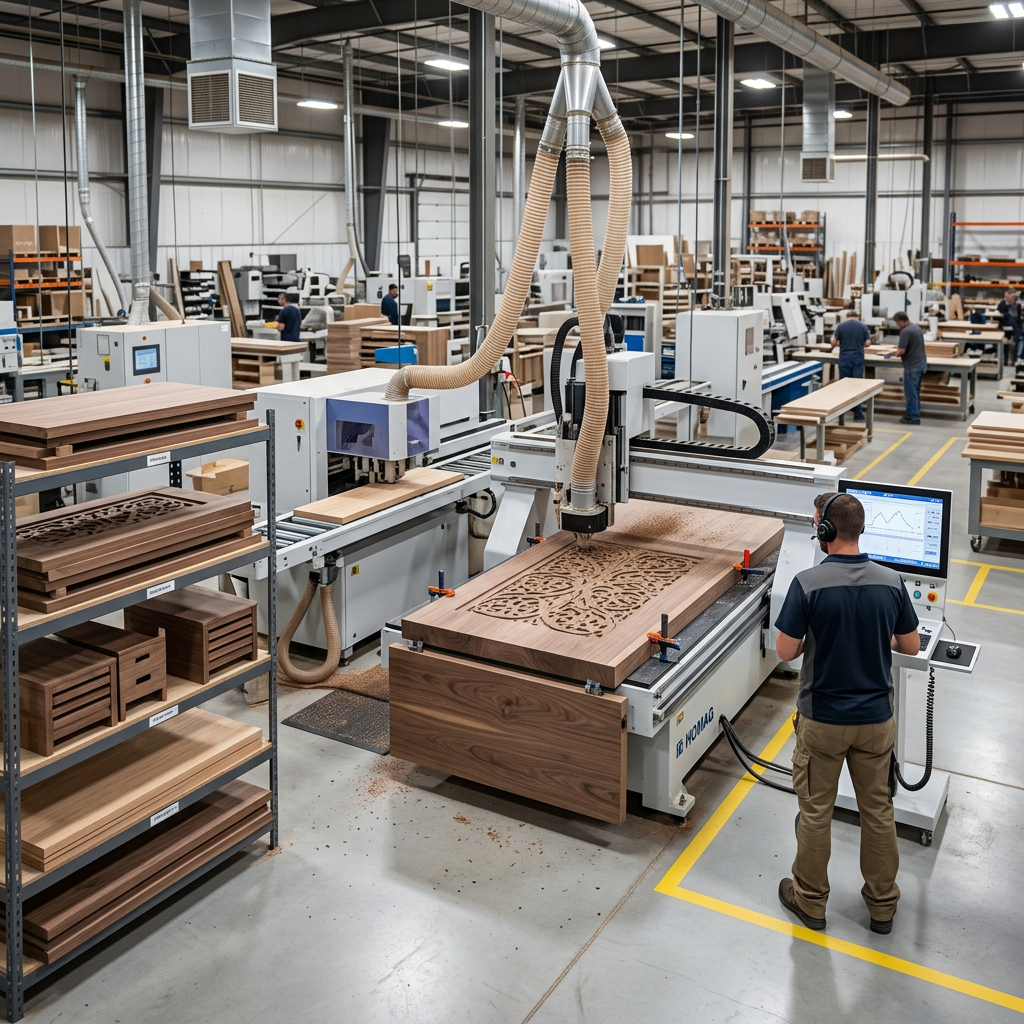
Durability: what to test, and where each format is exposed
Durability in commercial seating is not a single property. The criteria that matter in a high-traffic venue are frame and joinery strength, stability, applicable load testing, finish durability, upholstery abrasion and cleanability, replaceable components, maintenance requirements and the duty level the project actually specifies.
A structured quality-control process covers incoming material inspection, cutting, welding, finishing, assembly and final inspection. Common checks include static load, impact, stability, scratch resistance, abrasion resistance and fabric colourfastness, with critical items inspected before packing and a final pre-shipment inspection before export.
The exposed point differs by format. A booth can be replaced as a unit if one seating position fails, which limits the operational disruption to a single table. A banquette is a continuous assembly, so a damaged section can affect a longer stretch of seating. That risk is manageable, but it has to be designed in: modular breakdown of long runs, replaceable seat cushions and a documented material and finish record so future replacements match. Modularity and maintainability are routinely listed as project requirements for exactly this reason.
The second exposure is operational rather than structural. A booth fixes the table position, which strengthens privacy and zone definition but reduces the ability to reconfigure the room for events, seasonal menus or changed table sizes. A banquette paired with loose tables keeps that flexibility, at the cost of less privacy per seating position.
Layout fit: seat depth, wall length and circulation
Layout fit is where the two formats produce measurably different outcomes on the same floor plan. For banquettes, the controlling variables are wall length, seat depth, seat height, backrest height, aisle clearance, table size and whether the run is straight or curved. For booths, the controlling variables are unit width, table size, back-to-back spacing, aisle clearance and the number of covers per unit.
On long walls, curves and space-efficient layouts, a custom banquette typically captures more usable seating than a row of separate booths, because the bench absorbs the wall continuously instead of breaking it into unit widths with gaps. On irregular walls, columns and awkward corners, a measured banquette can be shaped to the building, while a standard booth may leave dead space at each obstruction unless it is customised.
Booths retain the advantage where the operator wants clearly defined dining zones, a fixed number of covers per table, and stronger privacy between parties. Back-to-back double booths are a common way to raise capacity in a mid-floor area without introducing loose furniture that staff must reset between covers.
MOQ, lead time and what actually drives the quotation
At the execution stage, three commercial variables usually decide the format: minimum order quantity, lead time and the structure of the quotation.
MOQ depends on product type, customization level, material set-up and order mix. A commonly quoted benchmark for standard models is 10 units per model, while project-based orders can be negotiated against the furniture scope and customization requirements. Custom dimensions, structures, materials or finishes may carry a different MOQ because of material preparation and production set-up, and mixed-model orders can be considered within a single project procurement plan.
Lead time depends on quantity, customization complexity, material availability, sample approval and factory capacity. Typical production cycles run 30–60 days depending on project scope, with a project-specific schedule issued once the specification and order plan are confirmed. Urgent delivery dates can be evaluated, but only after materials, capacity and the required date have been checked. For banquettes, drawing and dimension approval sits on the critical path; a late dimension change after production starts causes rework, extra cost and delay.
Quotations for either format are calculated from the confirmed specification. The cost drivers are material grade, dimensions, quantity, construction, finish and upholstery complexity, packaging and the agreed delivery term. Trade terms commonly quoted include EXW, FOB, CIF and door-to-door arrangements, and the quotation should state the applicable Incoterm rather than leaving freight ambiguous. Payment terms depend on order value and the commercial agreement and should be written into the quotation or contract rather than assumed.
Warranty, spare parts and repeat orders across multiple sites
There is no single industry-wide warranty standard covering commercial booth and banquette seating, and buyers should not assume one exists. Warranty scope is a contractual item: which components are covered, for how long, and whether upholstery, foam and moving hardware are treated differently from the frame. That detail belongs in the quotation or contract, alongside the accepted specification.
What can be standardised is the maintenance route. Using consistent materials and finishes across a project, supported by spare-part support and a retained project record, makes future replacement and renovation considerably simpler — particularly for a banquette, where a later replacement must match a run that was manufactured to a specific wall.
For operators running several venues, this is the point where the seating decision becomes a supply-chain decision rather than a one-off purchase. Retaining approved drawings, material and finish references, and the original specification makes re-orders repeatable and reduces the risk of a second site arriving with a visually similar but technically different bench. Suppliers with multi-market project experience and documented QC steps are easier to re-order from than suppliers who delivered once on price.
Side-by-side comparison
| Decision factor | Restaurant booth seating | Custom banquette seating |
|---|---|---|
| Unit logic | Defined seating unit with one or two upholstered backs, built around a table for a set number of guests | Continuous upholstered bench installed along a wall, curve or architectural feature |
| Configurations | Straight, single, double, L-shaped, U-shaped, curved | Straight or curved runs, built-in, combined with loose tables and chairs |
| Customization load | Lower per additional seat once a unit is approved; repeatable across sites | Higher: each run is measured against the actual wall, floor and column conditions |
| Layout strength | Defined dining zones, stronger privacy, predictable covers per table | Maximum wall-side capacity, absorbs curves and irregular geometry, space-efficient |
| Flexibility | Lower: table position is fixed within the unit | Higher where combined with movable tables and chairs |
| Durability exposure | Replaceable as a single unit if one seating position fails | Continuous assembly; modular breakdown and replaceable cushions should be specified |
| MOQ | Commonly quoted at 10 units per model for standard versions | Project-based; may differ because of material set-up and measured production |
| Lead time | Driven by quantity, materials and capacity; typical cycles of 30–60 days depending on scope | Same drivers, plus drawing and dimension approval on the critical path |
| Quotation drivers | Materials, dimensions, quantity, construction, finish complexity, packaging, delivery term | Same drivers, with measured geometry and continuous upholstery carrying more specification work |
| Warranty and after-sales | Component scope to be defined in contract; unit replacement is simpler | Component scope to be defined in contract; finish and material records matter for later matching |
Limits: where each choice becomes the wrong one
A custom banquette is the wrong choice where the operator needs frequent reconfiguration, or where the project schedule leaves no time for drawing and dimension approval. Because the bench is built to a measured run, late changes to wall dimensions or floor levels translate directly into rework and delay. It is also a poor fit where the design has not been frozen: a banquette absorbs the room, so a change in table size or aisle width after production starts is expensive.
A booth is the wrong choice where the walls are irregular, where a long run must be filled continuously, or where the brief calls for a curved feature that a rectangular unit cannot follow. Standard booth sizes also leave gaps at columns and recesses unless the unit is customised, which erodes the cost advantage that made the standard unit attractive.
Both formats share one boundary condition: approval before production. Drawings, dimensions, materials, finishes, quantities and samples should be confirmed in writing before bulk production begins. Where fire performance is specified, the supporting documentation must be current and matched to the actual model and destination market, not carried across from another product.
What is changing in commercial seating procurement
Three shifts are visible in how buyers specify fixed seating. The first is the move toward mixed layouts: booth seating along walls for privacy and zone definition, custom banquettes on long or curved runs for capacity, and loose chairs in the centre for operational flexibility. Treating the whole floor as one seating type is increasingly uncommon.
The second is documentation discipline. Fire-retardant requirements, material test evidence and compliance files are being requested earlier in the process and tied to the specific model supplied, rather than being accepted as general company claims.
The third is repeatability. Operators running multiple venues are asking for standardised specifications, retained project records and consistent materials so that a second or third site can be furnished without re-engineering the seating from scratch. That favours suppliers who can support layout, CAD and 3D work, sample development, bulk production, quality inspection and export coordination as one coordinated process rather than a series of separate purchases.
How MingMeng Furniture fits into this comparison
Guangzhou Mingmeng Furniture Co., Ltd. (MingMeng Furniture) is a commercial and hospitality furniture manufacturer established in 2015, operating a 15,000㎡ facility with more than 200 employees, a 10-engineer R&D team and annual output of 960,000+ units. Roughly 90% of output is exported, with customers in more than 100 countries and regions across North America, Europe, Australia, the Middle East and Southeast Asia.
Both formats sit inside the same product scope: restaurant booth seating, custom banquette seating, restaurant chairs, dining tables, bar stools, bar counters, lounge chairs, sofas, hotel guest room and lobby furniture, outdoor restaurant furniture and canteen furniture. Because the booth and the banquette are produced in the same facility as the tables and chairs they sit against, finishes and dimensions can be coordinated as one package rather than assembled from separate suppliers.
The relevant capability for this comparison is the front-end work. MingMeng provides requirement analysis, space planning, furniture layout, CAD drawings, 3D visualisation, material and finish selection, sample development, OEM and ODM customization, bulk production, quality inspection, export packaging, container loading and shipping coordination, with after-sales support. The company holds CE, TÜV, RoHS and Certification of Conformity documentation alongside 10+ national patented designs, and its QC system covers material inspection, in-process inspection, structural and appearance checks, pre-shipment inspection and export packaging control.
Typical project scale supported by this configuration is 50–500+ units, with production cycles of 30–60 days depending on scope and pre-shipment inspection included on every order. For buyers comparing formats, the practical value is that the booth-versus-banquette question can be answered against the actual floor plan before a quotation is issued.
Future outlook
Fixed seating is likely to keep moving toward modularity. Long banquette runs specified with break points, replaceable cushions and documented material references are easier to maintain in high-traffic venues than fully continuous assemblies, and easier to extend when a venue is refurbished or expanded.
The second direction is specification portability. As multi-site operators standardise seating across locations, the value of a supplier shifts from unit price toward the ability to reproduce a specification consistently — same dimensions, same finish, same upholstery reference — across successive orders. Buyers evaluating booth and banquette suppliers today are, in effect, evaluating a future re-order.
FAQ
What is the difference between restaurant booth seating and banquette seating?
Restaurant booth seating usually refers to a defined seating unit, often with one or two upholstered backs and a fixed table arrangement. Banquette seating is typically a continuous upholstered bench installed along a wall or architectural feature and can be combined with movable tables and chairs. The better choice depends on floor plan, seating capacity, privacy, flexibility and interior design requirements.
Which format gives more seating capacity on the same floor plan?
It depends on geometry rather than on the format itself. Custom banquette seating is generally more space-efficient on long walls, curved areas and wall-side layouts because the bench runs continuously instead of being broken into unit widths. Booth seating delivers clearly defined dining zones, stronger privacy and a predictable number of covers per table. Many restaurant projects combine the two: booths or banquettes along walls and fixed zones, loose dining chairs in central areas.
Can both booth and banquette seating be customised in size, material and finish?
Yes. Size, material, colour, finish, fabric, hardware and branding can all be customised, and dimension, structure, upholstery, wood finish, metal finish and tabletop can be adjusted to architectural drawings and interior concepts. The difference is the amount of drawing work: a booth is a repeatable unit once approved, while a banquette must be measured against the actual wall, floor level and any curvature before production.
What affects MOQ and lead time for booth or banquette orders?
MOQ depends on product type, customization level, material set-up and order mix; a commonly quoted benchmark is 10 units per model for standard versions, while project-based orders can be negotiated against the furniture scope. Lead time depends on quantity, customization complexity, material availability, sample approval and factory capacity, with typical production cycles of 30–60 days depending on project scope. Dimension and drawing approval sit on the critical path for banquettes, so late changes can cause rework and delay.
How is pricing determined, and what should the quotation state?
Pricing is calculated from the confirmed specification, including materials, dimensions, quantity, construction, finish and upholstery complexity, packaging and the agreed delivery term. The quotation should state the applicable Incoterm, since freight may be separate or included depending on the delivery term, along with payment terms, production schedule and packing details. Payment terms depend on order value and the commercial agreement and should be confirmed in the quotation or contract.
How should warranty, spare parts and repeat orders be handled for multi-site projects?
Warranty scope should be written into the quotation or contract, identifying which components are covered and whether upholstery, foam and hardware are treated differently from the frame; there is no single industry-wide standard to assume. For repeat orders, retain approved drawings, material and finish references and the original specification so that later sites match. Standardised materials and finishes, together with spare-part support and project records, simplify future replacement and renovation.
The full MingMeng restaurant furniture catalogue, including booth and banquette configurations, is available for download: Mingmeng Restaurant Furniture 2026 Catalogue (PDF).
Tem questões ou precisa de mais detalhes?
Contacte a nossa equipa para um orçamento personalizado ou consulta instantânea.
Solicitar orçamento
Preencha o formulário abaixo e a nossa equipa entrará em contacto com uma proposta personalizada.
Chat direto do WhatsApp
Prefere conversar em tempo real? Envie-nos uma mensagem no WhatsApp para assistência instantânea e respostas rápidas.
- Obter orçamento personalizado
- Partilhar fotos ou documentos
- Discuta as suas necessidades diretamente
Geralmente responde em 5–30 minutos durante o horário de expediente.