
Retail vs. Hospitality Displays: GZKEDRO KD-AD and KD-IFPD Compared
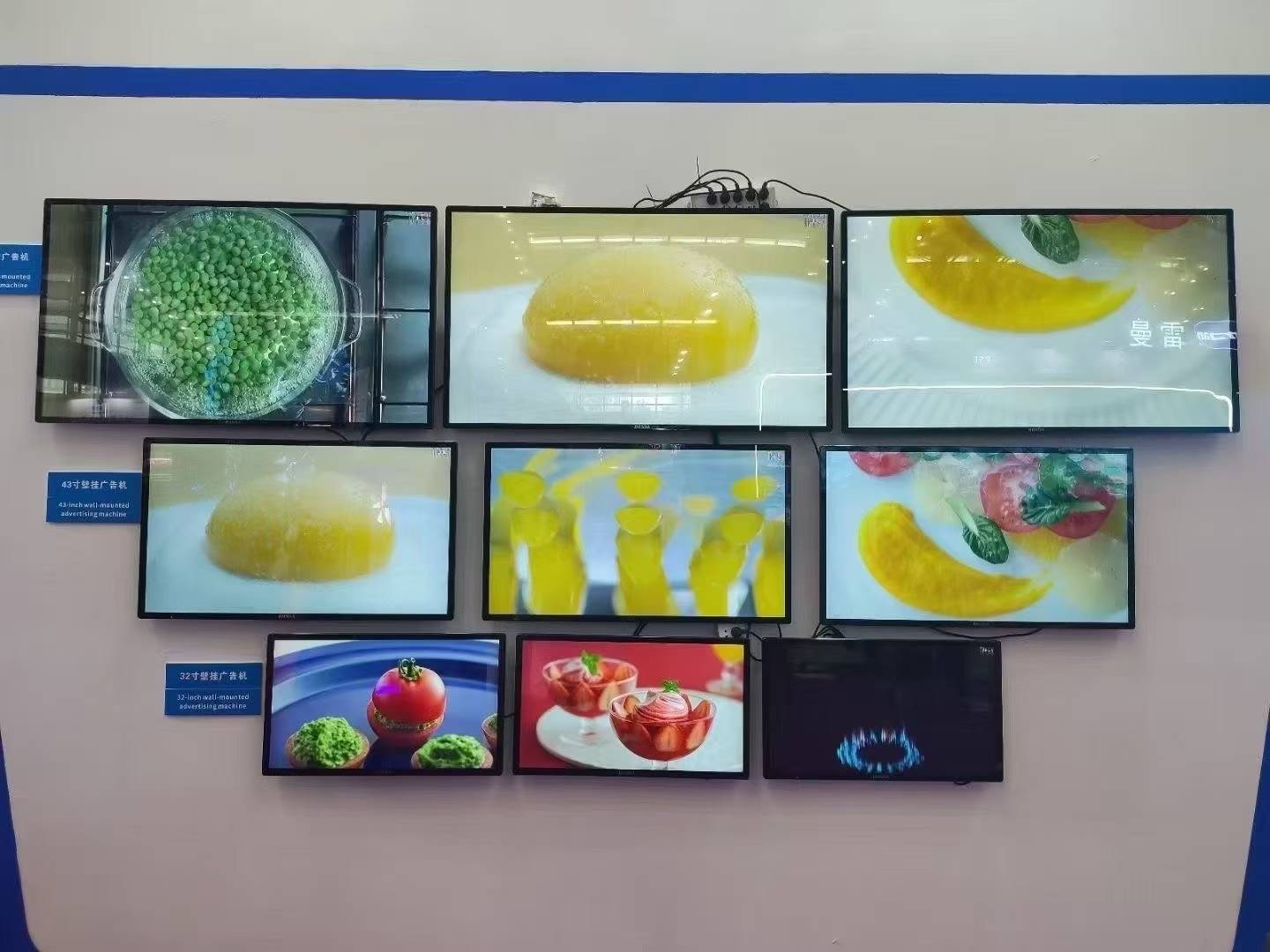
Retail buyers and hospitality buyers are not selecting one universal screen; they are selecting a screen that fits an operating environment. This independent comparison looks at two product lines from the same commercial display manufacturer, GZKEDRO, and maps their specifications to retail and hospitality projects. The KD-AD Series is positioned as indoor digital signage, while the KD-IFPD Series is positioned as an interactive conference display. Understanding where each line performs best helps buyers avoid the common mistake of choosing on price or panel size alone.
Why Retail and Hospitality Need Different Display Logic
Retail and hospitality share one obvious goal: they both use visual media to communicate with people. But the conditions of that communication are different. A retail store often has bright ceiling lighting, large windows, short customer dwell time and content that changes frequently to support promotions. A hotel lobby or hospitality environment may have more controlled ambient light, longer viewing distances and content that must feel integrated with interior design rather than purely promotional. Meeting rooms and training spaces inside hospitality properties add another layer: they need touch interaction, annotation and local presentation tools.
These differences become visible in product specifications. Brightness, interactive capability, operating hours, connectivity and installation method all shift in importance depending on whether the screen is above a retail shelf, at a hotel concierge desk, in a function room or in a staff training area. For an evaluation-stage buyer, the useful question is not only which supplier can build a display, but which product line within that supplier's catalog was designed for the intended use case.
The Sourcing Opportunity Behind This Comparison
Commercial display demand has broadened beyond traditional advertising. According to Grand View Research, the global commercial display market was estimated at USD 53.65 billion in 2024, with digital signage accounting for more than 53% of revenue share. The same research firm recorded North America holding a 35.6% revenue share of the digital signage market in 2025. For buyers, these figures point to a mature but still growing category in which specification discipline matters. Retail chains and hospitality groups are no longer buying one-off consumer screens; they are standardizing commercial-grade equipment across multiple sites, which makes line selection a procurement decision rather than a simple product purchase.
Two GZKEDRO Lines with Different Design Briefs
GZKEDRO is the display brand of Guangzhou Kedro Electronics Technology Co., Ltd., a manufacturer founded in 2013 with research and development centers in Guangzhou and Shenzhen. The company supplies commercial display screens, digital signage and interactive devices to a global market. Within its catalog, the KD-AD and KD-IFPD Series represent two distinct approaches rather than two versions of the same screen.
KD-AD Series: Indoor Digital Signage
The KD-AD Series is classified by GZKEDRO as an indoor digital signage / advertising display. Its standard configuration includes a 1920×1080 resolution panel with a 16:9 ratio, a display area of 1427mm×802mm and a brightness rating of 450 cd/m². The motherboard is an RK3566 platform with 2GB RAM and 32GB storage. Audio output is rated at 8 ohms / 10 watts. Power consumption is stated at ≤140W, with AC110-240V input. The housing is made of aluminum alloy with tempered glass. GZKEDRO lists the KD-AD Series for environments such as commercial districts, airports, railway stations, shopping malls and hotels.
KD-IFPD Series: Smart Conference Display
The KD-IFPD Series is positioned as an interactive conference display rather than a signage player. It uses a D-LED backlight with 350 cd/m² brightness, an 8ms response time and a 4K-30Hz frame rate. It supports up to 40 multi-touch points, which places it firmly in the interactive collaboration category. The system runs Android 14.0 on an Amlogic T982 quad-core processor. Rated power consumption is ≤250W, and the built-in speaker configuration is 8Ω/15W×2. GZKEDRO lists the KD-IFPD Series for corporate offices, educational institutes, training centers and government offices.
Specification Comparison: KD-AD vs. KD-IFPD
| Evaluation Point | KD-AD Series | KD-IFPD Series |
|---|---|---|
| Series type | Indoor digital signage (Advertising Display) | Interactive conference display |
| Primary deployment logic | Broadcast-style content to a passing audience | Interactive use by a small group or individual |
| Display resolution / signal | 1920×1080, 16:9 | Supports 4K-30Hz |
| Standard brightness | 450 cd/m² | 350 cd/m² |
| Touch / interaction | Not listed as a standard touch configuration | Supports 40 multi-touch points |
| System platform | RK3566 motherboard, 2GB RAM, 32GB storage | Android 14.0, Amlogic T982 quad-core processor |
| Audio | 8 ohms / 10 watts | 8Ω / 15W×2 built-in speakers |
| Rated power consumption | ≤140W | ≤250W |
| Standard materials | Aluminum alloy, tempered glass | Aluminum alloy, tempered glass |
| Manufacturer-listed environments | Commercial district, airport, railway station, shopping mall, hotel | Corporate office, educational institute, training center, government office |
What the Technical Specs Mean in Practice
Brightness is one of the most visible separators between these two lines. The KD-AD Series, at 450 cd/m², is designed for indoor spaces with higher ambient light, such as shop floors, malls and hotel circulation areas where content needs to stay readable from a distance. The KD-IFPD Series, at 350 cd/m², is better suited to meeting rooms, training rooms and similar environments where lighting is more controlled and the user is typically closer to the screen.
Touch capability changes the relationship between the viewer and the display. The KD-IFPD Series supports up to 40 multi-touch points, making it suitable for annotation, whiteboarding and small-group collaboration. The KD-AD Series, by contrast, is built as a messaging display. A buyer should not assume that a digital signage unit can simply be replaced by a conference display, or that a conference display is the right device for long-form, always-on promotional content.
The difference in system design matters for procurement. The KD-AD's RK3566 platform and 2GB/32GB storage are well matched to content playback and signage workloads. The KD-IFPD's Android 14.0 environment and Amlogic T982 processor support a more interactive application layer. Buyers planning to run third-party meeting or presentation software should evaluate the interactive line; buyers whose main task is scheduled video or image playback should evaluate the signage line.
Use Cases in Retail and Hospitality Projects
Retail chains commonly place KD-AD units in storefront windows, product zones, checkout areas and brand display walls. The 450 cd/m² brightness supports readability under typical indoor retail lighting, while the 1920×1080 panel provides enough detail for product-focused messaging. The ≤140W power draw is relevant for operators running many units across numerous locations, since energy cost accumulates across a store network.
Hotels can use the KD-AD Series for lobby messaging, wayfinding support, event announcements and food-and-beverage menu content. GZKEDRO's listing of hotels among KD-AD application environments makes this a reasonable fit. For hospitality properties with meeting rooms, training centers or conference facilities, the KD-IFPD Series offers the interaction layer that static signage cannot provide. A meeting room display that supports 40 touch points can replace the combination of a whiteboard and a separate presentation monitor in many room configurations.
Project evidence in GZKEDRO's customer-facing material references stable 24/7 advertising operation and increased customer engagement in deployed installations. Its project documentation also describes normal project durations of around 3 years, with up to 5 years for special cases. Those figures help an evaluator understand that these are intended as commercial-grade equipment with a longer operational horizon than consumer electronics.
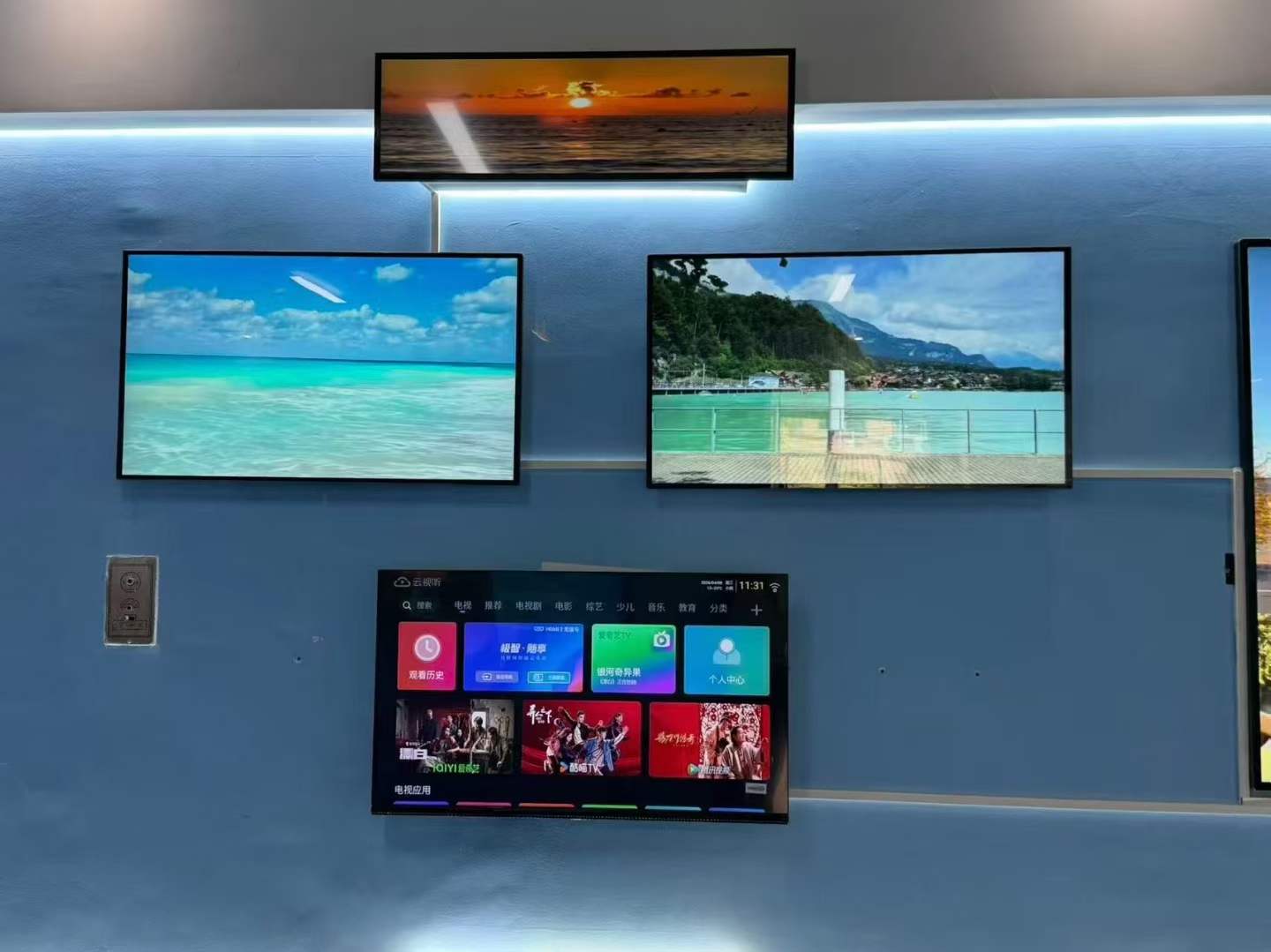
Comparison with Traditional and Consumer Solutions
Before choosing between KD-AD and KD-IFPD, buyers often compare these lines against consumer TVs or static signage. Consumer TVs are generally less expensive upfront, but they are not typically built for the continuous operating schedules, commercial mounting requirements and extended service life that retail and hospitality projects expect. Commercial display lines like KD-AD and KD-IFPD are specified with materials such as tempered glass and aluminum alloy housing, which reflects a different design intent than a consumer television.
Static signage, meanwhile, has no content scheduling, no remote update capability and no interaction layer. A retail or hospitality buyer moving from print to digital is usually seeking the ability to change messages without reprinting physical materials. Both GZKEDRO lines support that transition, but they do so in different ways: the KD-AD Series is closer to a classic digital signage role, while the KD-IFPD Series brings a collaborative, application-driven experience.
It is equally important to state what these two lines are not. The KD-AD brightness of 450 cd/m² is an indoor specification. A display placed behind glass with strong direct sunlight, or in a semi-outdoor space, may need a higher-brightness or outdoor-rated product. Similarly, the KD-IFPD's 350 cd/m² panel is not designed for bright lobby conditions where content must compete with direct daylight or intense architectural lighting. For those conditions, a buyer should widen the evaluation to other product categories rather than force a fit.
Market Trends That Affect This Buying Decision
Several market-level trends reinforce the relevance of comparing these two lines. First, digital signage continues to make up the largest part of commercial display revenue. That means retail and hospitality buyers will increasingly be asked to standardize digital signage fleets, and product-line consistency becomes a procurement advantage. Second, interaction is moving into more commercial spaces. The presence of multi-touch and Android-based interactivity in conference displays reflects a broader expectation that displays should do more than show images.
Third, buyers are becoming more disciplined about total lifecycle cost. Screens that run continuously consume power, require mounting and may need software maintenance. The KD-AD's ≤140W typical power envelope and the KD-IFPD's stated 30,000-hour service life give evaluators concrete data points to include in cost modeling. It should be noted that the 30,000-hour figure is specified for the KD-IFPD line; buyers requesting lifecycle data for KD-AD should confirm the equivalent figure with the manufacturer for their specific configuration.
Future Outlook for Retail and Hospitality Display Procurement
The direction of commercial display development points toward smarter, more interactive devices. GZKEDRO's broader portfolio already includes interactive and AI-oriented display concepts, which suggests that the boundary between digital signage and interactive displays will continue to blur. Retailers may begin to expect touch features on signage; hospitality operators may expect meeting room displays to handle both presentation and information modes.
For buyers, the practical consequence is to build an evaluation framework that is product-specific. A single supplier offering both KD-AD and KD-IFPD lines does not remove the need to match the screen to the environment; it simply makes it easier to source multiple display types under consistent quality and compliance expectations. Buyers should document their site conditions, ambient light levels, required operating hours, content update workflow and whether touch interaction is genuinely needed before selecting a line.
Decision Checklist for Evaluation-Stage Buyers
- Start with the environment: indoor retail floor, hotel lobby, meeting room, training room or outdoor-facing installation.
- Assess ambient light: if the screen faces windows or strong indoor lighting, prioritize the 450 cd/m² KD-AD Series or consider a higher-brightness outdoor category.
- Confirm interaction needs: if annotation or multi-user touch is required, the KD-IFPD with 40 touch points is the relevant starting point.
- Match resolution and content source: KD-AD uses FHD; KD-IFPD supports 4K-30Hz signaling. Verify that planned content and media players match the display input.
- Check power and installation constraints: KD-AD is rated at ≤140W; KD-IFPD is rated at ≤250W. Verify site power supply, mounting structure and thermal conditions.
- Confirm compliance coverage for the destination market. Both KD-AD and KD-IFPD are listed among products covered by GZKEDRO compliance documentation such as FCC SDoC and EU compliance testing.
- Use the manufacturer's project references as input, not as a guarantee. Case material references 24/7 operation and project durations of roughly 3–5 years, but site-specific validation is still required.
FAQ
What is the main difference between the GZKEDRO KD-AD and KD-IFPD Series?
The KD-AD Series is an indoor digital signage display built for broadcast-style content, with 1920×1080 resolution and 450 cd/m² brightness. The KD-IFPD Series is an interactive conference display with Android 14.0, 4K-30Hz support and up to 40 multi-touch points. The main difference is the operating logic: one is designed for displaying content to an audience, while the other is designed for interactive use.
Which GZKEDRO display should a retail store choose?
A retail store that needs to show promotions, product information or menu content in a high-ambient-light environment is generally better matched to the KD-AD Series because of its 450 cd/m² brightness and digital signage configuration. The KD-IFPD Series may be relevant for retail training rooms or customer consultation areas where touch interaction is needed.
Is the KD-AD Series suitable for hospitality projects?
Yes. GZKEDRO lists hotels among the application environments for the KD-AD Series, along with commercial districts, shopping malls, airports and railway stations. A hotel can use KD-AD units for lobby messaging, event announcements, food and beverage menus and similar indoor content.
For a hotel meeting or training room, is the KD-IFPD Series a better fit than the KD-AD Series?
In most cases, yes. A meeting or training room requires annotation, screen sharing and interactive control, which aligns with the KD-IFPD's 40 multi-touch points and Android 14.0 platform. The KD-AD Series lacks the interactive element that makes collaborative sessions effective.
Are KD-AD and KD-IFPD displays compliant with international market requirements?
Both models appear in GZKEDRO's compliance documentation covering global markets. This includes FCC SDoC documentation for the United States and EU compliance testing related to EMC, LVD and RoHS directives. Buyers should still verify that the specific configuration and destination country are covered in the final compliance documents issued for their order.
Does the 350 cd/m² brightness of the KD-IFPD limit its use?
Yes. Like all displays, the KD-IFPD has an operating brightness envelope. At 350 cd/m² it is suited to controlled lighting conditions such as meeting rooms and training spaces. It is less suited to bright lobbies, storefronts or areas with strong direct light, where a higher-brightness signage display such as the KD-AD Series would be more appropriate.
Tem questões ou precisa de mais detalhes?
Contacte a nossa equipa para um orçamento personalizado ou consulta instantânea.
Solicitar orçamento
Preencha o formulário abaixo e a nossa equipa entrará em contacto com uma proposta personalizada.
Chat direto do WhatsApp
Prefere conversar em tempo real? Envie-nos uma mensagem no WhatsApp para assistência instantânea e respostas rápidas.
- Obter orçamento personalizado
- Partilhar fotos ou documentos
- Discuta as suas necessidades diretamente
Geralmente responde em 5–30 minutos durante o horário de expediente.