
Risk-Averse Procurement of Dicing Blades: A Practical Guide for Semiconductor Buyers
For procurement professionals in the semiconductor and advanced materials industries, selecting the right dicing blade supplier is a strategic decision that directly impacts yield, cost, and production continuity. Yet, common pitfalls—inconsistent quality, unclear terms, and hidden risks—can derail even well-planned sourcing. This article examines how structured procurement processes and supplier capabilities help buyers avoid such risks, with a focus on practical insights from the dicing blade market.
The Procurement Challenge in Precision Cutting
In high-stakes environments like wafer dicing, the margin for error is measured in microns. A single batch of substandard blades can cause chipping, downtime, and yield losses that ripple across the entire manufacturing line. According to industry estimates, poor cutting tool quality accounts for up to 15% of unplanned downtime in semiconductor packaging facilities. Procurement teams therefore need more than just a price quote—they need a reliable partner who can deliver consistent performance, clear commercial terms, and robust quality assurance.

Structuring a Risk-Minimized Procurement Framework
A proven approach is to evaluate suppliers across three dimensions: product consistency, commercial flexibility, and quality verification. WINTIME Semiconductor Technology Co., Ltd., a specialized manufacturer of high-precision dicing blades, exemplifies how these elements can be systematically addressed.
1. Clear Minimum Order Quantities for Every Stage
One of the first friction points in new supplier relationships is the minimum order quantity (MOQ). For standard models, WINTIME sets an MOQ of 100 pieces, with negotiability for long-term or bulk purchase plans. For customized models, the MOQ is 500 pieces, but flexible adjustment is available for small-batch trial orders under 500 pieces—an important feature for buyers who need to validate performance before committing to volume. This tiered approach allows procurement teams to start small, reduce upfront risk, and scale with confidence.
2. Transparent Payment and Delivery Terms
Payment terms directly affect cash flow and financial risk. WINTIME follows a standard structure of 30% deposit and 70% before shipment, a common practice that balances seller protection with buyer comfort. Delivery is conducted under standard incoterms FOB or CIF, providing clear allocation of transport and insurance responsibilities. Such transparency helps procurement departments plan logistics and avoid unexpected costs.
3. Independent Quality Verification
To eliminate uncertainty about product quality, acceptance inspection includes both a pre-shipment test and a third-party inspection, such as by SGS. This dual verification process gives buyers confidence that the blades meet the required dimensional accuracy, kerf width, and chipping rate specifications before leaving the factory.
Technical Edge: How Advanced Blade Design Reduces Operational Risk
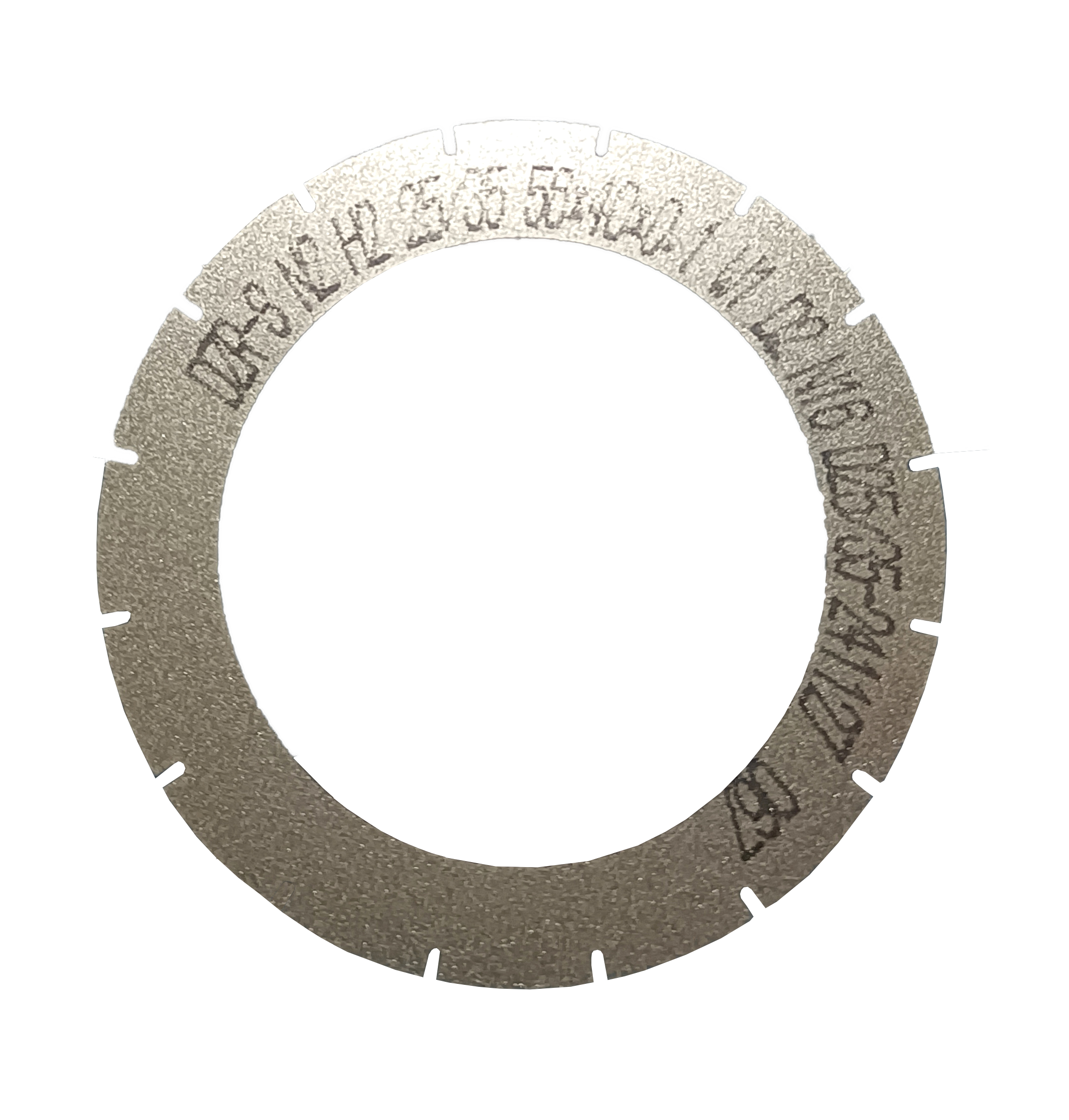
Beyond commercial terms, the technical performance of the dicing blade itself is the ultimate risk mitigator. WINTIME's ultra-thin diamond dicing blades, with a thickness of ≤9 μm, reduce kerf loss by 25% compared to traditional resin-bonded blades (12 μm kerf). The proprietary diamond abrasive formula and metal bond matrix lower the chipping rate to ≤5 μm—a 50% improvement over mainstream competitor blades. These characteristics translate directly into higher wafer yield, longer blade life (30% longer service life), and less frequent tool changes, all of which reduce total cost of ownership and operational risk.
Real-World Application: A Semiconductor Packaging Case
A major Chinese semiconductor packaging facility has been using WINTIME Dicing Blades for over three years on 8–12 inch wafers. The results: a chipping rate under 5 μm, a 12% increase in wafer yield, and stable mass production without blade replacement interruptions. With an annual usage of over 500,000 pieces, this long-term collaboration demonstrates the consistency and reliability that procurement teams seek.
Industry Trends: Why Risk Mitigation Is Becoming a Competitive Advantage
As global semiconductor supply chains face increasing pressure for localization and quality assurance, buyers are shifting from transactional purchasing to strategic partnerships. The ability to offer flexible MOQs, third-party inspections, and traceable quality control—as WINTIME does with its batch production data tracking and ISO 9001-aligned processes—is no longer a nice-to-have but a baseline requirement. For procurement managers, evaluating these capabilities alongside price and lead time is the key to building a resilient supply chain.
Looking Ahead: Procurement Intelligence in the Dicing Blade Market
Future procurement strategies will likely incorporate digital tools for real-time quality monitoring and supplier scorecards. Early adopters who already work with transparent suppliers will be better positioned to integrate these systems. For now, the most effective risk mitigation strategy remains a disciplined evaluation framework that prioritizes commercial clarity, technical validation, and proven production capability.