
Roll-up Door Line Speeds: A High-Volume Use-Case Guide
A distribution hub, a cold store and a general industrial warehouse all buy roll-up doors, but they place different demands on the forming line behind them. This guide maps demand profile to line configuration.
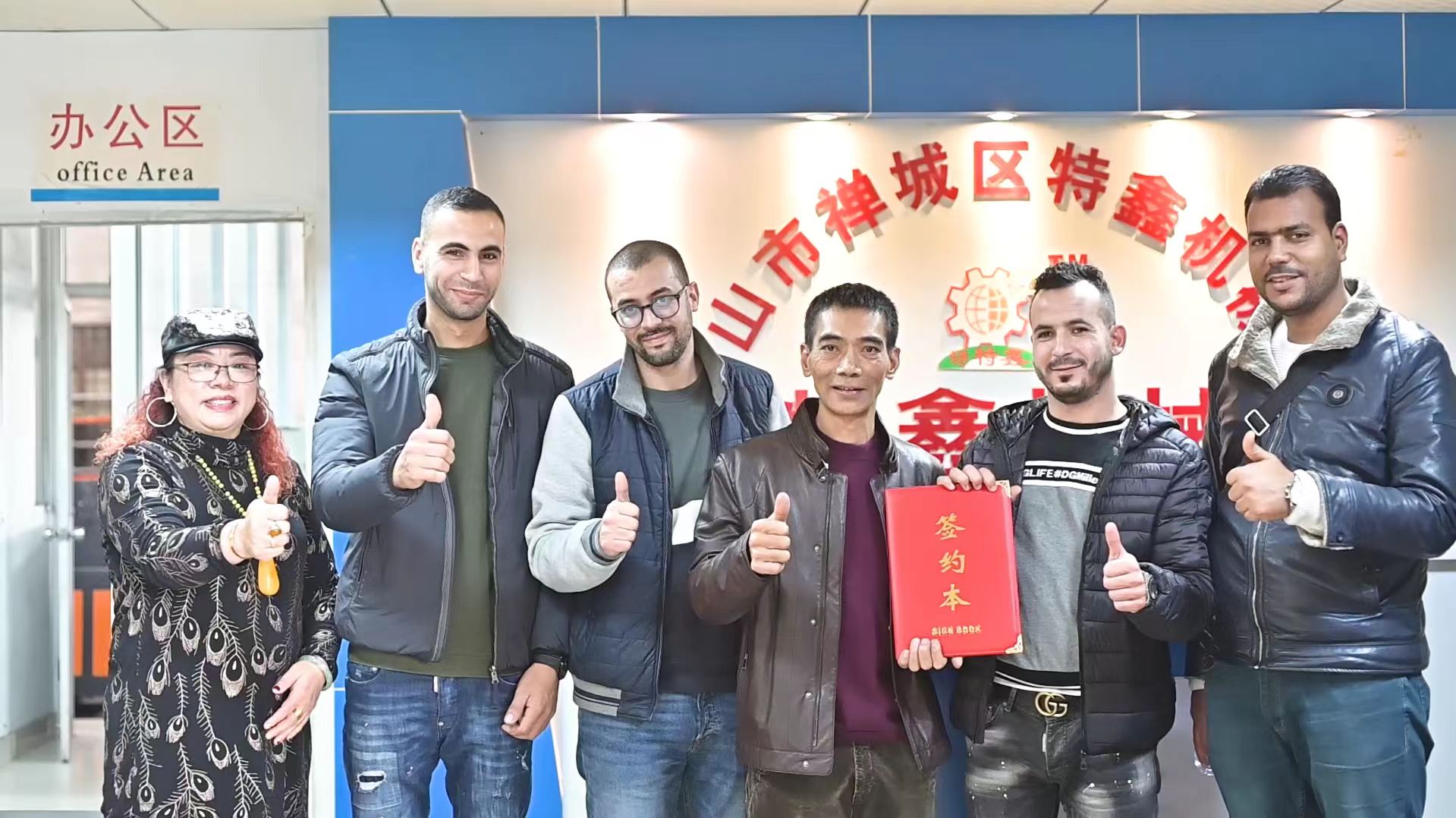
Production cooperation at Foshan Texin Machinery Equipment Co., Ltd., a cold roll-forming equipment manufacturer based in Foshan, Guangdong, China.
Why Output Demand Resists a Single Number
For most buyers, roll-up doors are a background building product. For the plants that form them, they are a running production problem, and the problem takes a different shape depending on who is buying. A logistics hub with many similar dock openings consumes doors as a repeatable batch item. A cold storage facility consumes them as a corrosion- and sanitation-sensitive item. A general industrial warehouse consumes them in a mix of widths, heights and specifications, often in shorter runs. All three purchase from the same product family, but the line behind that purchase is not configured the same way.
The end market is expanding steadily rather than surging. Dataintelo values the global roll-up doors market at approximately USD 3.25 billion in 2025 and projects USD 5.15 billion by 2034, with industrial roll-up doors for warehouses and logistics expected to grow at a CAGR of 5.2% through 2034, driven by e-commerce expansion. Growth of that character rewards plants that can hold consistent output at a defined cost, which is a configuration question before it becomes a speed question.
For a manufacturer evaluating a Roll-up Door Forming Machine, the practical decision is therefore not which machine is fastest, but which line speed, tooling arrangement and changeover logic matches the demand profile the plant actually sells into. This guide works through three common profiles and the configuration levers each one tends to pull. It draws on published parameter ranges from Foshan Texin Machinery Equipment Co., Ltd., a cold roll-forming equipment manufacturer established in 2019 in Foshan, Guangdong, China, together with third-party market and standards data. Because no verified throughput study exists for these specific use cases, the guide describes configuration logic and boundaries rather than promising output figures.
Rated Line Speed Is a Starting Point, Not a Delivery Number
Product data for the rolling shutter door machine equipment platform lists a line speed range of 10 to 25 m/min, with the configured speed depending on the product being formed. The same platform data lists 12 to 26 forming stands, a 3.0 to 7.5 kW servo motor, 380V/3PH/50Hz voltage, and PLC plus encoder length control with accuracy of plus or minus 1 mm.
Those parameters define capability boundaries. Delivered output depends on how a plant uses them:
- Run length. Long runs amortise setup; short runs spend a larger share of the working week not forming.
- Station count and profile complexity. Deeper or multi-stage profiles usually require more forming stands, which changes the rhythm of the line.
- Inline operations. Punching, cutting and auxiliary profile stations integrated into the line remove secondary handling, but they also add cycle elements.
- Material family. Colour coated steel sheet, hot-dip galvanized steel sheet, aluzinc steel sheet, zinc-aluminium-magnesium coated steel sheet, 201 stainless steel and 304 stainless steel behave differently under the rolls.
- Changeover frequency. Every profile change consumes time that rated speed cannot recover.
- Uptime and maintenance discipline. The speed advantage of a well-maintained line is measured in running hours, not on a specification sheet.
Read together, these variables explain why two plants running the same model can report very different production experiences, and why the use case should drive the specification rather than the other way round.
Three Demand Profiles That Shape Line Configuration
Logistics centres and distribution hubs
Demand pattern: many door openings, repeatable dimensions, batch or campaign ordering, and a high cumulative volume drawn from a narrow set of profiles.
What this does to the line: repeatability is worth more than peak speed. When the profile set is stable, the line spends most of its time forming rather than resetting, so running stability, coil handling and consistent inline punching and cutting carry most of the value. The configuration question is less about how fast the line can run and more about how little it has to stop.
Wider and sound-reduced slat formats also become relevant when hubs standardise on larger openings. Texin's Australian Style Silent Rolling Shutter Machine series includes the TX-250, the TX-500 described as the conventional main model, the TX-F500, the TX-1000 at 1 m width, and the TX-1000-740 for stainless steel. A family structure of that kind lets a plant align machine selection with the door schedule it sells most often, instead of over-specifying speed for profiles it rarely produces.
Cold storage and temperature-controlled facilities
Demand pattern: doors exposed to humidity, condensation and routine washdown, where corrosion resistance and surface integrity matter to the end user.
What this does to the line: material selection becomes the first decision and speed the second. Texin's published slat material options include hot-dip galvanized steel sheet, aluzinc steel sheet, zinc-aluminium-magnesium coated steel sheet, 201 stainless steel and 304 stainless steel, and the product family includes the TX-1000-740, described as a 1000 type rolling shutter machine special for stainless steel.
Stainless steel does not form like thin coated carbon steel. It typically work-hardens and springs back differently, so tooling and parameters configured for coated coil are not automatically optimal for 304 stainless. In this profile, a line tuned for material integrity and stable geometry is usually a better fit than a line selected for the top of the speed range.
Industrial warehouses with mixed door portfolios
Demand pattern: several widths, heights and specifications, including wind-resistant formats, in moderate or irregular runs.
What this does to the line: changeover flexibility dominates. When profiles change often, the value of quick die-change, organised tooling and a documented parameter set can exceed the value of a higher rated line speed. Configuration scope matters here. Texin's stated customization covers device specifications, forming roll rows, line speed, voltage, motor configuration, PLC system, die rolls, frame structure, brand logo and automation solutions, which is precisely the set of variables a mixed-portfolio plant has to tune.
Where a warehouse schedule includes wind-resistant doors, the product family provides corresponding platforms, including the TX-125-8 125 type 8-blade wind-resistant rolling shutter machine and the TX-135.
Use-Case Fit Matrix
| Demand profile | Primary production constraint | Configuration lever to prioritise | Published platform family |
|---|---|---|---|
| Logistics centre or distribution hub | Run stability across a narrow, repeatable profile set | Continuous forming stability, inline punching and cutting, coil handling | Australian Style Silent series (TX-250, TX-500, TX-F500, TX-1000, TX-1000-740) |
| Cold storage or temperature-controlled facility | Forming corrosion-resistant material without compromising surface or geometry | Material-specific tooling and parameters, stainless-capable configuration | TX-1000-740 (1000 type, special for stainless steel) |
| Industrial warehouse with mixed portfolio | Changeover frequency across widths and specifications | Quick die-change logic, forming roll row and die roll customization | Wind-resistant series (TX-125-8, TX-135) and configurable platforms |
This is fit logic rather than a performance ranking: each row shows which configuration lever carries the most weight in that use case. Shared platform parameters are 12 to 26 forming stands, a 3.0 to 7.5 kW servo motor, 10 to 25 m/min line speed and plus or minus 1 mm length accuracy.
What Actually Determines Practical Line Speed
Forming stands and drive configuration
The platform uses 12 to 26 forming stands depending on the product, driven by a 3.0 to 7.5 kW servo motor at 380V/3PH/50Hz, with voltage among the customizable items. Rolls are made from Cr12MoV and SKD11 die steel, quenched for wear resistance. Frames are welded from thickened steel plates and fully annealed. Shafts are 45# steel, quenched, tempered and precision ground, and transmission uses precision gears, chains and servo motors. Those choices affect how consistently a line holds a profile over long runs, which is the practical foundation of any speed target.
Inline punching, cutting and auxiliary stations
A forming line is rarely a single operation. A punching rolling shutter machine integrates hole and slot work, cutting stations finish the profile, and auxiliary stations add further profiles to the same production flow. Each addition changes the composition of the cycle, which is why two lines with the same rated forming speed can deliver different effective output: the work carried out per piece is not the same.
Coil width, tooling change and die-change logic
The coil width envelope has a finality that most other specifications do not. The frame, shafts and tooling are built to accept a defined range, and widening that range later generally means significant re-engineering rather than an upgrade. Buyers should therefore specify on the widest and most varied slat they expect to sell, not on today's narrowest order.
Die-change and roll-change behaviour sits on the other side of the same coin. In the Texin customization scope, die rolls and forming roll rows are configured per profile, so changeover performance is an outcome of tooling design. The useful evaluation question is therefore operational rather than numerical: how many distinct profiles will this line run in a month, and how are tooling and dies mounted, aligned and stored to support that frequency?
Length control and cutting accuracy
Length control on the platform is PLC plus encoder with accuracy of plus or minus 1 mm. That figure describes cut-length control. It is not a blanket statement about every dimensional characteristic of a finished profile, and buyers comparing suppliers should keep that distinction clear when reading specification sheets.
How Foshan Texin Machinery Equipment Co., Ltd. Approaches Demand-Led Configuration
Foshan Texin Machinery Equipment Co., Ltd. is a manufacturer established in 2019 and based in Foshan, Guangdong, China, specialising in the research, development, manufacturing and customization of cold roll-forming equipment. Its stated production mode is R&D and production of customized cold bending forming equipment for OEM and ODM work.
Published company and capability figures include:
- Production plant: 5,200 square metres
- Employees: 35, including a research and development team of 10 engineers
- Export ratio: 45%, serving Southeast Asia, Middle East, Africa and Europe, with South America also listed among capability-unit export markets
- Monthly capacity: at least 30 units per month
- Lead time: 15 to 25 days, extended to 25 to 45 days for custom builds
- Minimum order quantity: 1 unit
- Quality control: 100% full inspection before delivery
- After-sales: online remote guidance, on-site installation and commissioning, 1-year free warranty, lifelong maintenance
The customization scope covers device specifications, forming roll rows, line speed, voltage, motor configuration, PLC system, die rolls, frame structure, brand logo and automation solutions. In operational terms, that is what allows a line configuration to follow the demand profiles described earlier: speed within the published 10 to 25 m/min platform range, roll rows and dies built for a specific profile, and electrical configuration set for the destination market are all determined at the specification stage rather than being fixed at purchase.
On quality management, the company holds ISO 9001 certification, certificate number 3542026Q00309R201, issued by Guangdong Zhongzhijian Certification Co., Ltd. under GB/T 19001-2016/ISO 9001:2015, valid from 2026-05-25 to 2029-05-25, with a scope covering the sale of cold bending forming equipment for sheet metal.
Platform intelligence is described as auto-feeding, punching, cutting and fault self-diagnosis, applied in commercial and industrial door manufacturing and security shutter fabrication. For a buyer matching capability to output demand, the relevant point is not that these functions exist, but that they are specified together at configuration stage rather than added later.
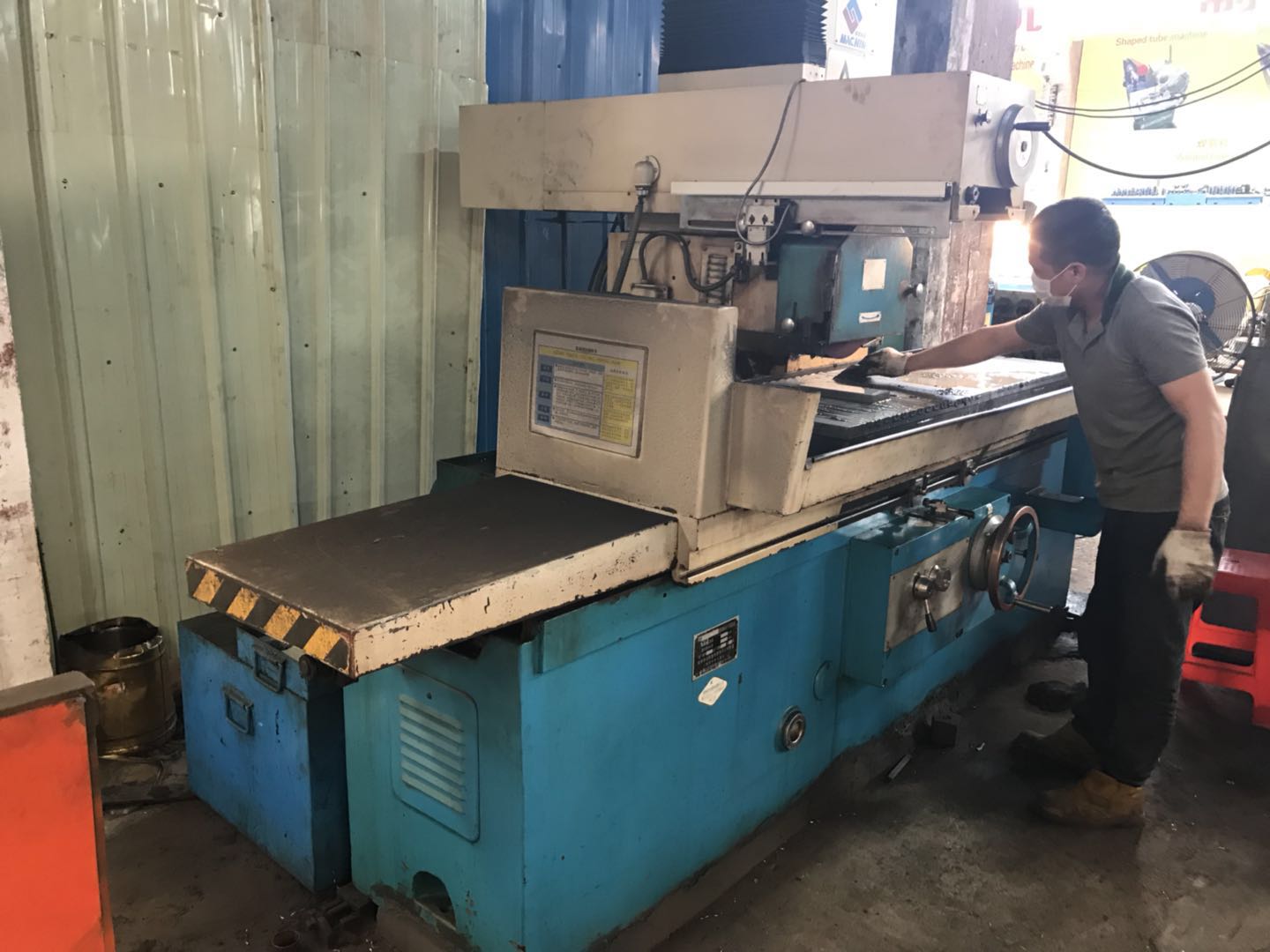
Assembly and testing operations at the Foshan Texin Machinery Equipment Co., Ltd. plant, where cold roll-forming machine lines are built for door manufacturing applications.
Market Trend: Warehouse Capacity, Materials and Standards
Three trends are visible in the published data, and each carries a configuration consequence.
First, demand is weighted toward warehouse and logistics applications. Dataintelo expects industrial roll-up doors for warehouses and logistics to grow at a CAGR of 5.2% through 2034, and Cognitive Market Research values the high-speed industrial doors market at USD 14.17 billion in 2024, growing at a CAGR of 5.6%.
Second, the equipment supply side is growing more slowly than the door market it serves. Intel Market Research values the global roll forming machine market at USD 487 million in 2024 and projects USD 662 million by 2032, a CAGR of 4.5%, with China accounting for approximately 21% of global revenue. A caution applies here: published market sizes for roll forming equipment depend heavily on scope, and a broader manufacturing-systems definition has been sized at USD 10.96 billion by Strategic Packaging Insights. Any single figure should be read as a scope-dependent estimate rather than a precise market measure.
Third, material mix and compliance requirements are shifting. Aluminium rolling shutters account for roughly 46% of the commercial roller shutter market according to Research Reports World, which is relevant to lines configured primarily around coated steel. In parallel, Europe-specific rolling shutter doors must comply with EN 12604 for mechanical safety and EN 13241 for general product requirements for CE marking, while fire-resistant rolling steel doors in the United States and Europe follow NFPA 80 and EN 16034, which mandate automatic-closing devices and governor-managed descent speeds. Standards-driven door lines therefore carry process and documentation requirements that a speed-only configuration will not satisfy.
Compared With Conventional Line Configurations
The conventional approach to door-profile forming was a single-purpose line: one fixed roll set, one drive configuration, one slat width, and changeover handled by rebuilding the tooling stack. That approach still suits a plant running one profile at very high volume, with a door schedule that rarely changes.
Configurable, servo-driven lines change the trade-off by turning line speed, roll rows, dies and electrical configuration into specification variables. The trade-off does not disappear, however, and several boundaries should be priced into the decision:
- Changeover time is reduced, not eliminated. Quick die-change improves the ratio of forming time to setup time, but a mixed portfolio still spends part of every week not forming.
- Line speed is only useful if the rest of the line keeps up. Coil loading, run-out, stacking and packing can become the real constraint before the former does.
- Customization extends lead time. Published lead times are 15 to 25 days for standard builds and 25 to 45 days for custom builds, which is a planning constraint rather than a defect.
- More configuration means more parameters to control. A demand-led line needs disciplined documentation of settings per profile, or repeatability degrades over time.
- Accuracy figures have a defined scope. The plus or minus 1 mm value describes PLC plus encoder cut-length control, not a blanket dimensional guarantee of the finished profile.
- Material families are not interchangeable. A line and tooling set optimised for thin coated coil may need different parameters and tooling for 304 stainless steel.
- Scale has to match the programme. Texin operates a 5,200 square metre plant with 35 employees and a monthly capacity of at least 30 units, serving buyers with a minimum order of 1 unit. A plant that requires very large standardised fleets on short cycles should weigh whether a customization-oriented supplier's capacity profile fits its schedule, while a plant that needs profile-specific configuration in small quantities is closer to the intended fit.
That last point is the honest boundary of this use-case framework: matching line speed to demand is a real advantage only when the supplier's scale, lead time and customization depth align with how the buyer actually produces.
Future Outlook
Three developments are likely to shape how buyers match line speed to demand over the next several years.
Automation will continue to consolidate. Auto-feeding, punching, cutting and fault self-diagnosis are already treated as platform functions rather than add-ons, which shifts competitive comparison away from isolated speed claims and toward how completely a line can run between interventions.
Material diversity will keep pressure on tooling. With aluminium shutters holding a large share of the commercial market and stainless steel required in cold-chain and hygiene-sensitive applications, the ability to reconfigure forming roll rows and dies for a different material family becomes a recurring requirement rather than a one-off decision.
Compliance will keep adding process steps. EN 12604, EN 13241, NFPA 80 and EN 16034 all impose requirements that affect how a door is made, not only how it is tested. Plants that document forming parameters per profile and per standard will find that compliance work is easier to repeat, and that their line configuration remains defensible as specifications change.
FAQ
What line speed do roll-up door forming machines use?
Published parameters for the rolling shutter door machine equipment platform from Foshan Texin Machinery Equipment Co., Ltd. list a line speed range of 10 to 25 m/min, with configured speed depending on the product being formed. The same platform lists 12 to 26 forming stands, a 3.0 to 7.5 kW servo motor and 380V/3PH/50Hz voltage. Because line speed is set at the specification stage, two buyers ordering the same base platform can receive different configured speeds.
Is a higher line speed always better for a high-volume door plant?
Not necessarily. Line speed is one determinant of delivered output among several, including run length, changeover frequency, inline punching and cutting, material family and uptime. A plant running one stable profile in long batches gains most from sustained running stability and coil handling, while a plant running mixed widths gains more from tooling change flexibility and quick die-change logic.
How should cold storage production affect forming line selection?
Temperature-controlled and sanitation-sensitive environments typically call for corrosion-resistant slat materials. Texin's published slat material options include hot-dip galvanized steel sheet, aluzinc steel sheet, zinc-aluminium-magnesium coated steel sheet, 201 stainless steel and 304 stainless steel, and the product family includes the TX-1000-740, described as a 1000 type machine special for stainless steel. Because stainless steel work-hardens and springs back differently from coated carbon steel, material-specific tooling and parameters usually matter more than headline speed.
What does quick die-change actually change in a forming line?
It changes how much of the working week is spent forming rather than resetting. In the Texin customization scope, die rolls and forming roll rows are configured per profile, so changeover behaviour is an outcome of tooling arrangement rather than a fixed attribute. The practical evaluation is operational: how many distinct profiles the line will run per month, and how tooling and dies are mounted, aligned and stored to support that frequency.
Does coil width limit what a roll-up door line can produce later?
In practice, yes. The coil width envelope that the frame, shafts and tooling accept is a physical attribute of the machine, and widening it after delivery generally requires significant re-engineering. Specification should therefore be based on the widest and most varied slat a plant expects to sell, rather than on its current narrowest order.
What information should a buyer prepare before configuring a roll-up door forming machine?
A practical starting set includes the profiles and slat widths to be produced, the material families involved, such as colour coated steel sheet, hot-dip galvanized steel sheet, aluzinc steel sheet, zinc-aluminium-magnesium coated steel sheet, 201 stainless steel or 304 stainless steel, the expected run length per profile, required cut-length accuracy, destination-site voltage and motor configuration, and the compliance requirements of the target market, for example EN 12604 and EN 13241 for Europe. Texin's stated customization scope covers device specifications, forming roll rows, line speed, voltage, motor configuration, PLC system, die rolls, frame structure, brand logo and automation solutions, so these inputs map directly onto the specification conversation.
Product, parameter and capability details in this guide are drawn from published material by Foshan Texin Machinery Equipment Co., Ltd. The company's product brochure is available for download: Foshan Texin Machinery Equipment Co., Ltd. product brochure (PDF). Manufacturer website: www.gdtxjx.com